Message for the Day…”The co-ordination of thought, word and deed is tapas. Whatever thoughts sprout in your mind, to utter them as words and to put them in practice as your work is true tapas.”

Source:  http://media.radiosai.org/

The flower of penance (Tapas pushpam) is very dear to God. Penance does not require you to give up your wife and children, go to a forest, and put your head up and feet down – that is not tapas! To practice real tapas, we should abandon bad thoughts from our minds as soon as they occur! The co-ordination of thought, word and deed is tapas. Whatever thoughts sprout in your mind, to utter them as words and to put them in practice as your work is true tapas. It is in this context that scriptures reveal, “Manas Ekam, Vachas Ekam, Karmanyekam Mahatmanam – the person who can coordinate their thoughts with their words and their words with their deeds is indeed a great soul (Mahatma).” Give up bad thoughts from your mind – that is sacrifice! That sacrifice will become yoga(spiritual path). Remember, giving up one’s property and one’s wife and going to the forest is not yoga!

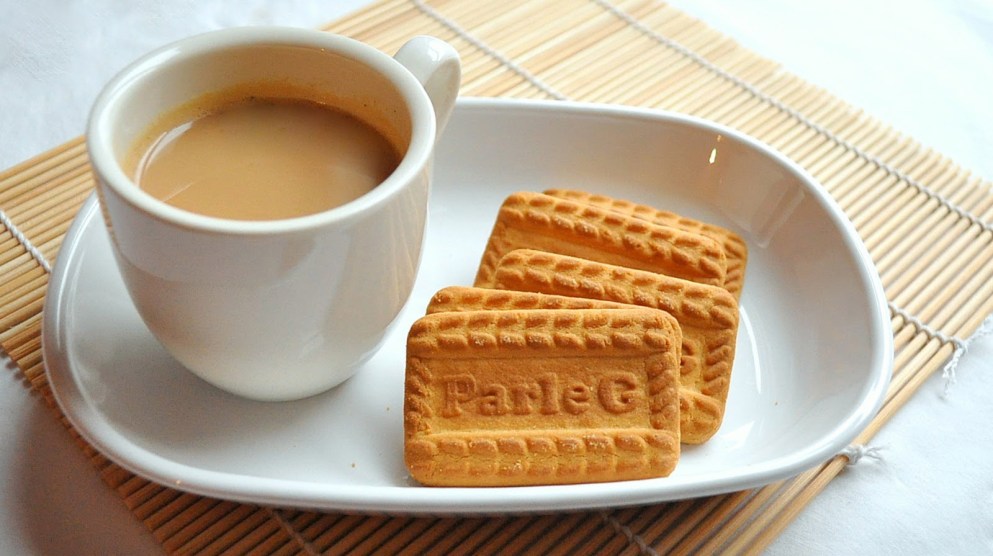
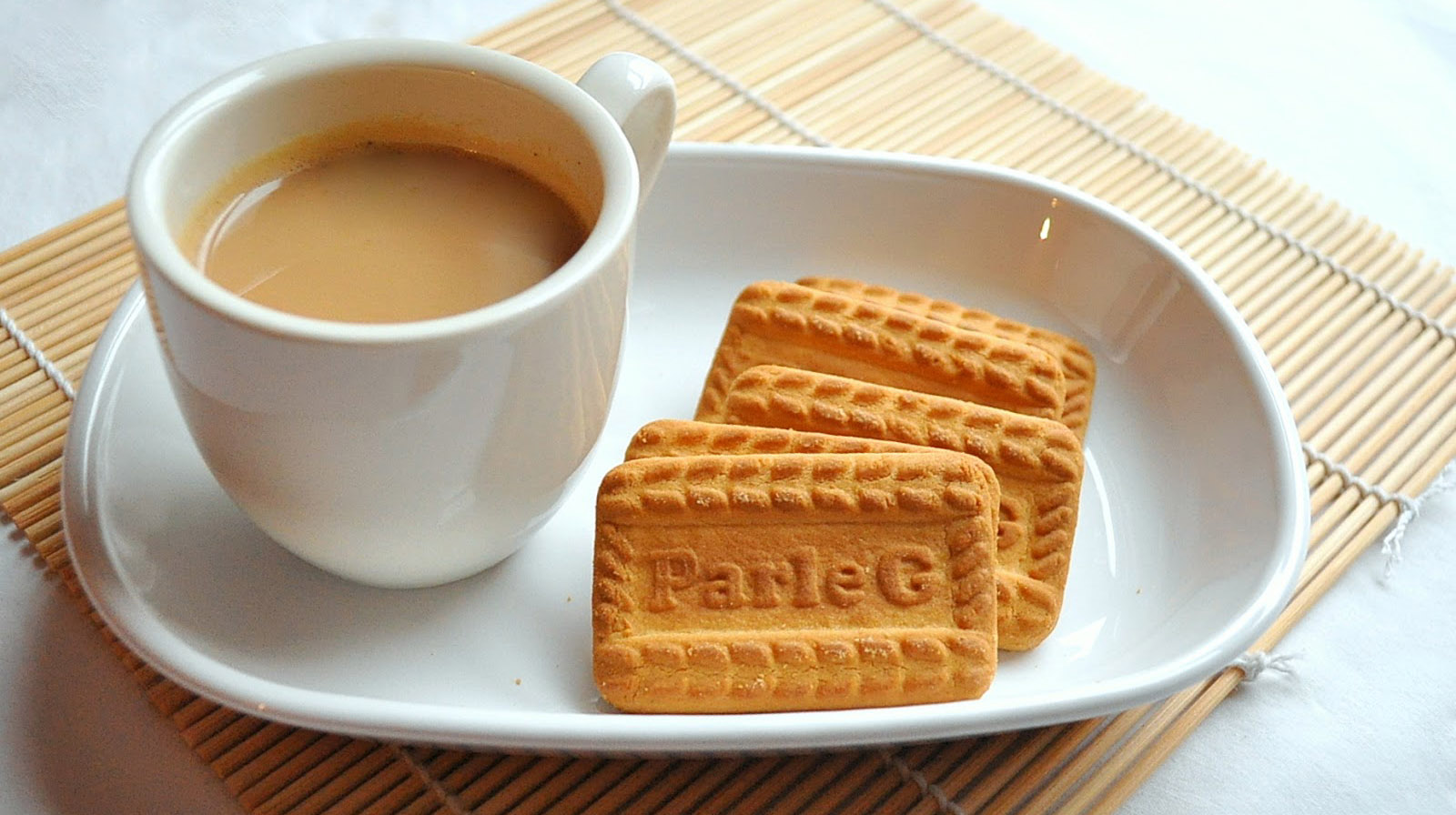
Parle G — a name that instantly brings back childhood memories of dunking crisp biscuits in a hot cup of milk and quickly having the soggy piece before it crumbled back into the milk. A much-loved chai staple in India, the humble rectangular biscuit is something most Indians have grown up eating.

Even today, many people across the country wake up to a cup of tea and Parle-G every morning. Little wonder that for millions of Indians, it isn’t just any other biscuit: it’s comfort food!

So if you are one of Parle-G’s die-hard fans, here’s a tale to tease your taste buds – the story of Parle, India’s largest biscuit maker, and its signature product.                                              


The year was in 1929. Mohanlal Dayal of the Chauhans, a Mumbai-based family of silk traders, had just bought and refurbished a decrepit, old factory to manufacture confectionery (such as boiled sweets).

Deeply influenced by the Swadeshi movement (that promoted the production and use of Indian goods), Chauhan had sailed to Germany a few years ago to learn the art of confectionery-making. He returned in 1929, armed with the required skills as well as the required machinery (imported from Germany for Rs 60,000).

Located between the sleepy villages of Irla and Parla, the small factory set up by the Chauhans employed just 12 men with the family members themselves serving in multiple capacities — as engineers, managers, and confectionery makers.

Interestingly, it is believed that the founders were so busy managing the factory that they forgot to name it.

And so with time, the first Indian owned confectionery brand in the country came to be known after its place of birth — Parle.

Parle’s first product was an orange candy that was soon followed by other confectioneries and toffees. However, it was only 10 years later that it began its biscuit making operations. Even as the bugle for World War II was sounded in 1939, the company baked its first biscuit.

Back then, biscuits were mostly imported, expensive and meant for consumption by the elite classes. United Biscuits, Huntly & Palmers, Britannia and Glaxo were the prominent British brands that ruled the market.

It was to counter this trend that Parle Products launched Parle Gluco as an affordable source of nourishment for the common masses. Made in India, meant for Indian palates and accessible to every Indian, the humble biscuit quickly became popular with the public. It was also much-in-demand by the British-Indian army during World War II.

However, in 1947, a severe shortage of wheat (India was left with only 63% of its wheat cultivation area after Partition) immediately after Independence meant that the production of Parle Gluco biscuits had to stop for a while.

In an ad saluting Indians who had sacrificed their lives for the freedom of their motherland, Parle urged its consumers to make do with barley biscuits till wheat supplies were restored to normal.

In 1960, Parle Products started feeling the pinch when other players in the market began launching their own glucose biscuits. For instance, Britannia launched its first glucose biscuit brand, Glucose D, and had it endorsed by Gabbar Singh (Amjad Khan’s avatar in Sholay). Confused by similar brand names, most people would just ask shopkeepers for glucose biscuits.

To battle the flood of knock-offs, the firm decided to create a packaging that would be unique to Parle Gluco while patenting its own packing machinery. The new packaging was a yellowish wax-paper wrapper with a plump little girl imprinted on it (an illustration by Everest Brand Solutions), along with the brand name and company’s red-coloured logo.

However, while the new packaging clicked with the biscuit’s target audience — kids and their mothers, it still failed to decisively distinguish Parle Gluco from the horde of “me-too” glucose biscuit brands in the market. This prompted the management to rechristen the biscuit and see if it helped it stand out from the crowd.

And so in 1982, Parle Gluco was repackaged as Parle G, with the ‘G’ standing for glucose, of course. To avoid duplication by small biscuit-makers (who sold their low-quality biscuits in a similar yellow wax paper), the packaging material was change to low-cost printed plastic.

Its cheeky new tagline stated, “Often imitated, never equalled”.

This was quickly followed by an innovative TV commercial in which a burly Dadajiand his precocious grandchildren sang in chorus — “Swaad bhare, Shakti bhare, Parle-G”. In 1998, Parle-G found a quirky brand endorser in Shaktiman, the desisuperhero from a telly screen who was immensely popular with Indian kids.

And Parle products have not looked back since. From “G Maane Genius” and “Hindustan ki Taakat” to “Roko Mat, Toko Mat“, Parle- G’s fun yet relatable ads helped it move its image from mono-dimensional to multi-dimensional — from an energy biscuit to a source of strength and creativity.

For instance, its 2013 ad campaign encourages parents to give their kids a free hand in pursuing their dreams. The jingle, for which Gulzar lent his pen and Piyush Mishra lent his voice, celebrates “Kal ke Genius“.

Its most recent campaign, “Woh Pehli Waali Baat“, has people in different scenarios talking of changes that have taken place over the years.

These perfectly-executed campaigns and the biscuits’ reliable quality are among the key reasons for the brand’s success over the years. Today, the company boasts of astounding sales figures of over a billion packets a month. That is around a hundred million packets of Parle G every month, or 14,600 crore biscuits in the entire year, which adds up to 121 biscuits each for 1.21 billion Indians.

In fact, the biscuit is so popular that some restaurants have started using it to make high-end desserts. For example, Farzi Cafe has invented a Parle G cheesecake and Mumbai’s 145 has a Parle G Eatshake!

Nonetheless, despite its swift growth and heavy demand, the brand has remained true to its philosophy. It is consumed by people from every strata of society; from a person sitting in an urban high rise to a person in the smallest of towns. It is also the only brand that is easily available at places like a village of 100 people near the LoC.

Maybe that’s the reason this humble glucose biscuit has retained its special place in the heart of all Indians, despite new biscuits entering the market every other day

Here’s some interesting trivia to end the story of the world’s largest selling biscuit!

  • If you line up all the Parle-G biscuits consumed annually, end to end, you can go around the Earth 192 times.
  • The amount of sugar used to make 13 billion Parle-G biscuits — 16,100 tons — can cover the streets of the world’s smallest city, the Vatican City.
  • 400 million Parle-G biscuits are produced daily, and if a month’s production of the biscuits is stacked side by side, the distance between the Earth and the Moon can be covered.

Source…SanchariPal in http://www.thebetterindia.com

Natarajan
 

Message for the Day…”You will, in your day-to-day life, encounter several people with bad qualities and wrong behaviour. Do not join their company. Offer them a salutation (namaskar) and move away.”

Source:   http://media.radiosai.org/

Human birth is most sacred and rare (Jantunam nara janma durlabham). The word manava (human being) also means one who is sacred. Why do we resort to debasing such a sacred human being? People advocate several good and sacred things, but when it comes to practice, they back out. When a conflict arises between precept and practice, you must have the courage to stand up to the situation and make every effort to tread the sacred path. You will, in your day-to-day life, encounter several people with bad qualities and wrong behaviour. Do not join their company. Offer them a salutation (namaskar) and move away. You may ask, why we should offer salutations to evil people. We salute good people, so as to not lose their company. We also salute the evil people requesting they move away from us. We must join the company of good people, cultivate good qualities, and lead a good life, thus sanctifying this precious life.

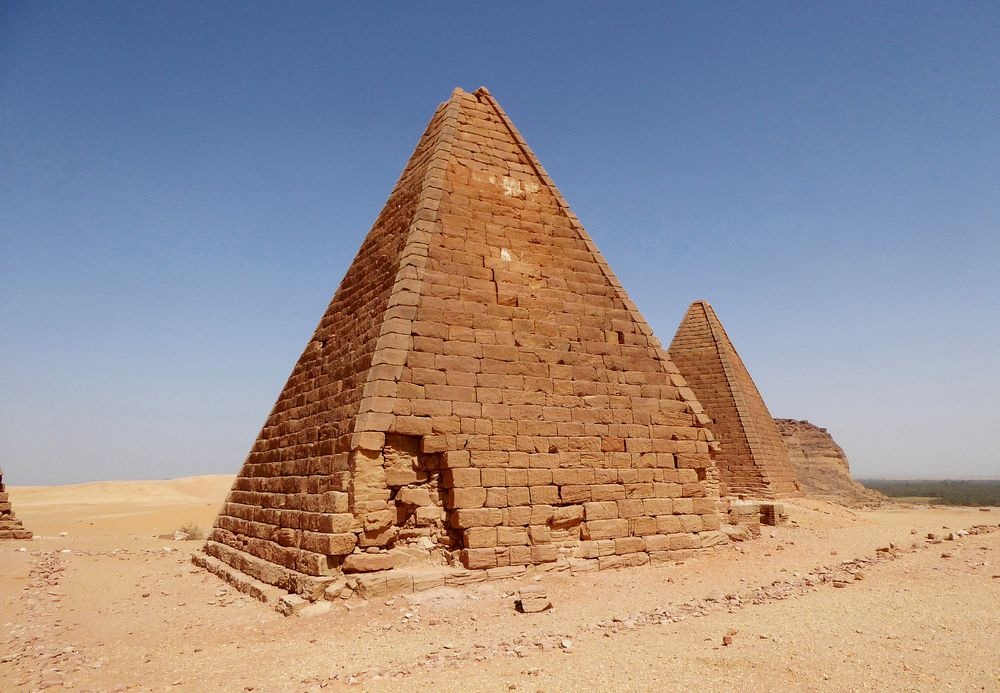
The Forgotten Nubian Pyramids of Menroe….

About 200 km northeast of the Sudanese capital, Khartoum, in a valley known as Nubia, lies the remains of three ancient Kushite kingdoms. Here, one can find the largest concentration of ancient Pyramids ever built.

Although less famous than the Pyramids at Giza in Egypt, and smaller in size than their Egyptian cousins, the Nubian pyramids are no less remarkable. These pyramids were built around 2,500 years ago, long after the Egyptians had stopped entombing their Pharos in massive tombs, a practice that nearly bankrupted them. The Nubian kings, however, were clearly fascinated by these mammoth structures and attempted to imitate them.


Photo credit: Hans Birger Nilsen/Flickr

The Kush Kingdom flourished for 900 hundred years from around 800 BC to 280 A.D. and held power over a vast area covering much of the Nile Delta and as far south as Khartoum. Meroe served as the capital during the final phases of the empire. Here, at their capital city, the Nubians built about 80 radically downsized pyramids over the tombs of kings and queens of the Kushite kingdom. They range in height from 20 feet to 100 feet, and rise from fairly small foundation that rarely exceed 25 feet, giving the sides of the pyramids steep angles. One of the largest of the pyramids built for the rulers of Kush was for a woman, Queen Shanakdakheto (170-150 B.C.E.). The sides of the pyramids are adorned with decorative elements from the cultures of Pharaonic Egypt, Greece, and Rome.

Altogether, the Kush rulers built more than 250 pyramids—more than twice the number of pyramids in the entirety of Egypt. They are distributed in a small region in the Sudanese desert.

Like the ancient Egyptians, the Nubian kings were mummified and laid to rest, covered with jewels, in wooden coffins, before they were entombed. Nearly all of the pyramids have been plundered ages ago. At the time of their exploration by archaeologists in the 19th and 20th centuries, some pyramids were found to contain the remains of bows, quivers of arrows, archers’ thumb rings, horse harnesses, wooden boxes, furniture, pottery, colored glass, metal vessels, and many other artefacts attesting to extensive Meroitic trade with Egypt and the Hellenistic world.

Today, Meroe is the largest archaeological site in Sudan, and one of the main tourist attractions in Sudan. But the country, devastated by civil war, now receives fewer 15,000 tourists per year.

Source….Kaushik in http://www.amusingplanet.com

Natarajan

Message for the Day…”Do not think that only those who worship a picture or image with pompous paraphernalia are devotees. Whoever walks straight along the moral path, whoever acts as they speak and speaks as they have seen, whoever melts at another’s woe and exults at another’s joy — they are devotees, perhaps greater devotees.”

Source:  http://media.radiosai.org

Do not run after all and sundry who repeat textbook materials and wear the cloak of fakir-hood (mendicancy). Examine their daily conduct, motives, their advice, and the relationship between what they say and do. Stick to your faith; do not change your loyalty as soon as something untoward happens or someone whispers about somebody else! Do not pull down Sai Baba’s picture from the wall and hang some other picture at your first disappointment. Leave all to Him; let His will be carried out — that should be your attitude. Unless you go through the rough and the smooth, how can you be hardened? Welcome the light and the shade, the sun and the rain. Do not think that only those who worship a picture or image with pompous paraphernalia are devotees. Whoever walks straight along the moral path, whoever acts as they speak and speaks as they have seen, whoever melts at another’s woe and exults at another’s joy — they are devotees, perhaps greater devotees.

Message for the Day…”What exactly is the meaning of ‘Sai Baba’? Sai means Sahasrapadma (the thousand petalled lotus), it means Sakshatkara (realisation or direct experience of the Lord), Ayi means mother, and Baba means father.”

Source:  http://media.radiosai.org

What exactly is the meaning of ‘Sai Baba’? Sai means Sahasrapadma (the thousand petalled lotus), it means Sakshatkara(realisation or direct experience of the Lord), Ayi means mother, and Baba means father. Thus, ‘Sai Baba’ means He who is both Father and Mother and the Goal of all yogic endeavour; the ever-merciful Mother, the All-wise Father, and the Goal of all spiritual efforts. My advent is to establish righteousness (dharma samsthapana). When you are groping in a dark room, you must seize the chance when someone brings a lamp into the room. You should hurriedly collect your belongings that are scattered there, or discover where they are located, or do whatever else you need to do with the light. Similarly make the best of the chance when the Lord descends in a human form and save yourself from disaster. The undue importance that you now attach to the satisfaction of sensual desires must diminish as a result of your association with sacred books and saintly personages.

The Unfinished Obelisk of Aswan…

The granite quarries located along the Nile, in the city of Aswan, supplied some of the finest quality stones for the construction of temples, sculptures and monuments in ancient Egypt. The famous Cleopatra’s Needle, now located in London, as well as several structures in the pyramids of Khufu, Khafre and at Giza were constructed from stones quarried in Aswan.

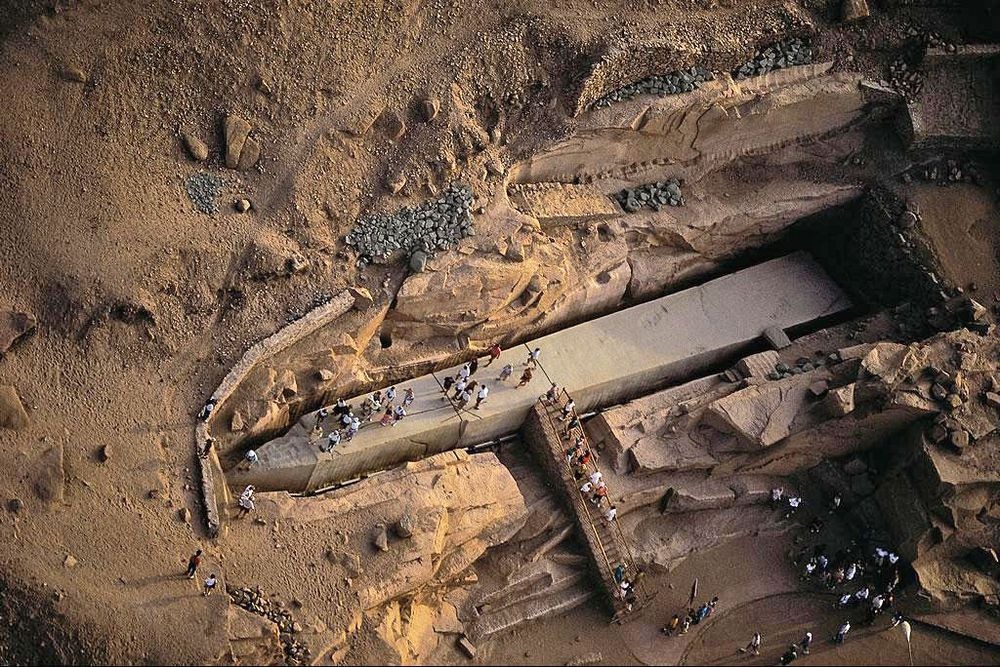
In the northern region of Aswan’s stone quarries lies an Unfinished Obelisk, resting on its side. It was supposed to be the tallest and the largest obelisk ever erected in Ancient Egypt. Unfortunately, the obelisk was never completed. While carving, cracks began to appear in the granite causing the project to be abandoned. Because the carvers had carved it directly out of the bedrock, it can be found exactly where it was 3,500 years ago—its bottom side still attached to the bedrock.


It is believed that the obelisk was constructed and abandoned during the reign of Queen Hatshepsut in the 15th century BC. The obelisk was commissioned perhaps to complement the Lateran Obelisk which originally stood at Karnak Temple in Egypt but was later taken to Rome by the Romans. If completed, it would have stood approximately 137 feet, and would have been the heaviest obelisk ever erected in Ancient Egypt.

The unfinished obelisk offers unusual insights into ancient Egyptian stone-working techniques, as the scratches made by the workers’ tools can still be seen clearly on its rock surface. Some ocher-colored lines were also found on the surface, which were probably drawn to mark the places where the workers were supposed to carve out the granite. Archeologists believe that the Ancient Egyptians used small balls of Dolerite, which is a type of rock harder than granite, to cut through the rock. Once the sides were cut down into the rock, the obelisk had to be separated from the bedrock. For this, they dug small cavities in the body of the rock along the line of desired detachment and those cavities were filled with wood spikes. The wood was then thoroughly wetted with water until it expanded causing the rock to crack along the drawn lines and finally got detached from its base.

The entire quarry is now an open museum and arranged to preserve these structures as archaeological treasures of the country.

Source….Kaushik in http://www.amusingplanet.com

Natarajan

Message for the Day…”Develop self confidence. Where there is self-confidence, there will be self-satisfaction. Where there is self-satisfaction, there will be self-sacrifice. And through self-sacrifice comes self-realisation.”

Source: http://media.radiosai.org/

Do not be carried away by others’ opinions – either good or bad. Develop your own line of thinking, based on your conscience. Develop self confidence. Where there is self-confidence, there will be self-satisfaction. Where there is self-satisfaction, there will be self-sacrifice. And through self-sacrifice comes self-realisation. Self-confidence is the foundation for the building; it remains below the surface of the earth. Self-satisfaction represents the walls, self-sacrifice is the roof, and the life in this house is self-realisation. Without the foundation of self-confidence, self-realisation cannot be achieved. Therefore, build up your self-confidence slowly. In this process, start early, drive slowly and reach your goal of self-realisation safely. First and foremost, develop love. It is easier to cultivate love than all other qualities. There is nothing in this world which cannot be achieved with love.