The Canadian Town Called Asbestos…..

The asbestos mine in Asbestos, Quebec, Canada. Photo credit: Denis-Carl Robidoux/Flickr     

At the heart of the triangle made by the three Canadian cities of Quebec, Montreal, and Sherbrooke, lies a town with the worst name imaginable—Asbestos. So ugly is the word, that local businesses with “Asbestos” painted on their vehicles are denied entry into the United States. Custom agents recoil with horror when they see “Asbestos” stamped on packages of meat.

Asbestos, a fibrous, silicate-based natural mineral has been mined around the world since ancient times. The mineral has several desirable properties, such as the ability to absorb sound, and resist heat, fire and electricity. It is tough and cheap. Large scale production of asbestos began in the mid-19th century and use of the material continued to grow through most of the 20th century until growing evidence of the lethality of asbestos and its association with a particularly painful form of lung cancer forced most countries to ban the product. Today, the word “asbestos” is synonymous with poison and death, but for the 7,000 people in southern Quebec, it is the name of their home.

Asbestos was first discovered in Quebec in the 1870s. The first industrial scale mining began at what is now Thetford hills, and the city became a hub for one of the world’s largest asbestos-producing regions. A couple of years later, the Jeffrey mine opened less than 50 miles south of Thetford hills. The town that developed around Jeffrey mine named itself after the “miracle fiber”. Soon Jeffrey mine became the largest asbestos mine in the world providing half of the world’s supply of asbestos. As the 19th century slid into the 20th century, an increasing number of asbestos mines opened in Quebec, Newfoundland, British Columbia and the Yukon, helping Canada become the world’s largest asbestos exporter by the 1970s.
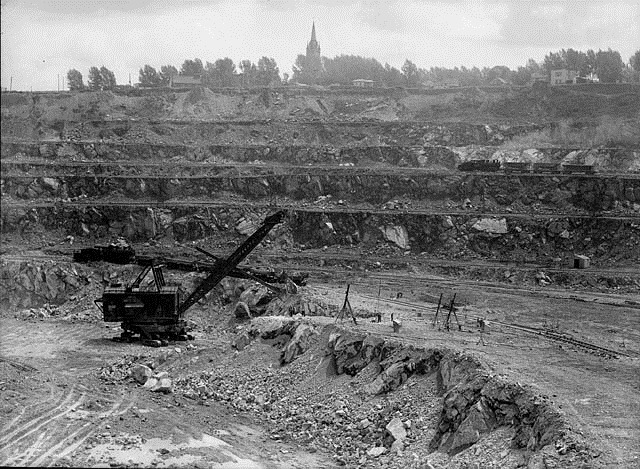
Canada’s biggest power shovel loading an ore train with asbestos at the Jeffrey Mine in Asbestos, Quebec, June 1944.

While the asbestos industry boomed, workers began to get mysteriously sick, coughing up blood, suffering from breathing difficulties and dying. Asbestos resident and long-time head of the Asbestos Historical Society, Pierrette Théroux recalls as a girl how she would wake up to the screens of her home covered in snow-like asbestos dust. Walking on the porch would leave footprints.

The first connection between the disease and the deadly mineral was made in the early 1900s when a coroner at London’s Charing Cross Hospital conducted postmortem investigation of a young man who had died from pulmonary fibrosis after having worked for 14 years in an asbestos textile factory. Traces of asbestos was found in the victim’s lungs. Twenty years later, after another confirmed death by asbestos, a British pathologist William Edmund Cooke testified before a court and forced the government to act. The first Asbestos Industry Regulations came into effect in 1932, and a string of regulation followed. But it took another half a century before the use of asbestos was phased out. Asbestos’  Jeffrey mine continued production until the late 2011.

Today, there is a huge gaping hole in the ground at Asbestos, more than 2 km across, and almost as big as the surrounding town. With Asbestos’ biggest employer shuttering its business, the town is searching for a new identity and new means to support its population. Some debated whether they should change the name of the town, but the residents voted against it.

There is a microbrewery now in Asbestos called Moulin 7, and some of the names of the beers they serve borrow from the town’s history—such as L’Or Blanc (meaning White Gold), Spello (a mining term for a short break), and Mineur (Miner), which picked up a gold medal in 2016 World Beer Awards. Another pale ale called La Ciel Ouvert (The Open Sky) is prepared using water taken from a lake that has accumulated at the bottom of the disused mine. The water was tested to be pure.

Since the closure of the mine, other businesses have found home in the former mining town. A gourmet food products company opened a duck meat processing center providing jobs for over a hundred workers. A ski resort a few minutes north of the town absorbed another couple of hundred employees. The town is slowly stumbling back to life.

Related: The Asbestos Ghost Town of Wittenoom

Source….. Kaushik in http://www.amusing planet .com

Natarajan


Kamikatsu: The Town That Produces No Trash….

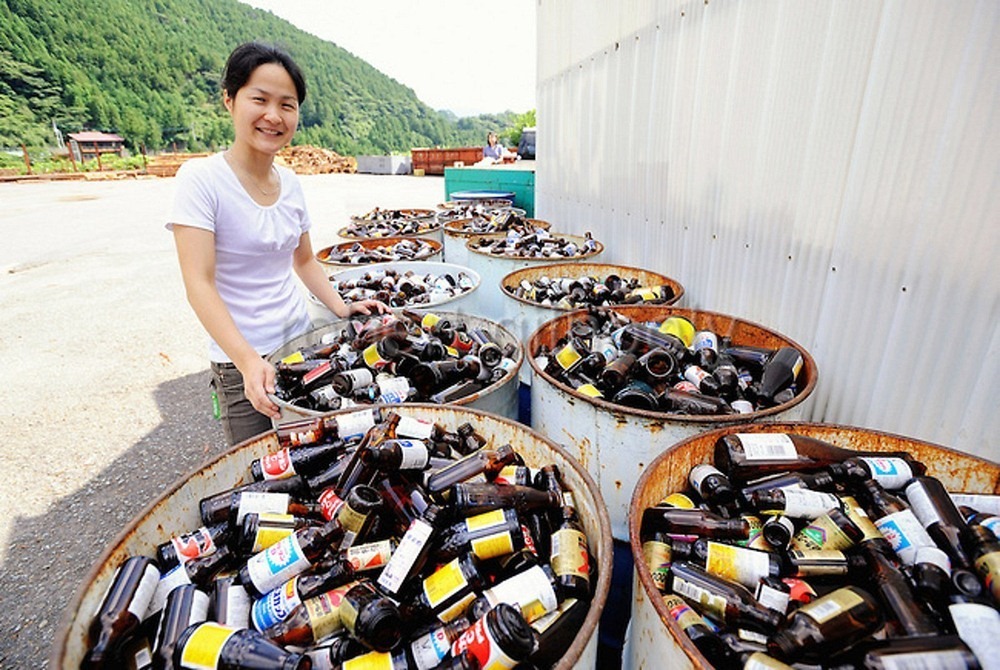
Do you find separating trash by paper and plastic a chore? Then think about the residents of Kamikatsu, a small town in the mountains of Shikoku Island in south-west Japan, who have to segregate trash into 45 different categories. At the waste collection center, there are separate bins for different types of products: newspapers, magazines, cartons, metal caps, plastic bottles, aluminum cans, steel cans, spray cans, fluorescent lights, and so on. You might think this is an overkill, but Kamikatsu’s residents have a goal to achieve—zero waste, and they are already at 80 percent complete.

Originally, Kamikatsu disposed trash just like any other small town around the world: they dumped it in nature or burned it at their homes. But burning trash produces an awful lot of greenhouse gases, and landfills pollute the environment. So Kamikatsu’s people decided to change. In 2003, they introduced the concept of “Zero Waste”.

In the beginning, it was difficult for everyone. Washing and sorting the trash became a tedious and time consuming task. Both glass and plastic bottles must be relieved of their caps and sorted by color. Plastic bottles for soy sauce and cooking oil must be kept separate from Pet bottles that once contained mineral water and green tea. Any plastic or paper wrapping around the bottles must be removed. Newspapers and magazines have to be piled into neat bundles and tied with a twine. The rules are myriad.

There are no garbage trucks to collect trash from homes, so residents have to bring their own trash to the recycling center. Workers at the center then make sure the trash has been properly sorted and goes into the right bins. Used clothes, jewelry and other stuff that people no longer need are dropped off at the recycling store and exchanged for other items that others have dropped off, at no cost. Down the street, there’s a local factory where the women of the town produce items from unwanted goods, like teddy bears from old kimono.

What was originally a huge burden became a way of life in Kamikatsu. People began to look at trash differently. They became more conscious of what they buy, how they use and how they dispose things. One store owner in Kamikatsu said that since the program started, he began to buy things that only came in cardboard boxes so that boxes can be used for packing other things.

Eventually, the small town of just over 1,700 people become so good at recycling that only 20 percent of trash produced goes to the landfill, but they hope to eliminate even that by 2020.

Source….www.amusingplanet.com

Natarajan


Ice Stupas: These Artificial Glaciers Are Solving Water Crises in The Himalayas….

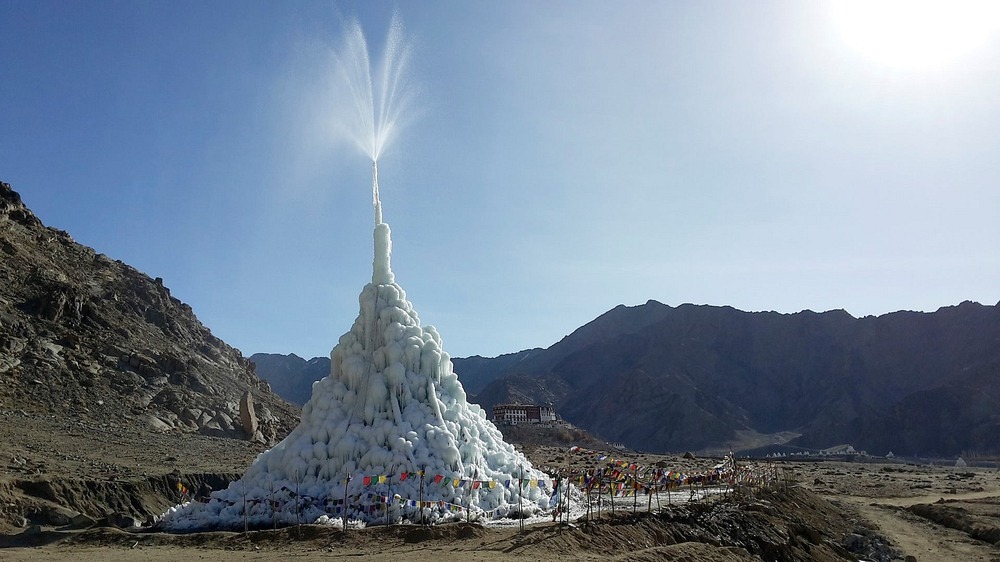
High in the Himalayas in northern India, at a remote village near Phyang Monastery in Ladakh, stands two gigantic ice cones. They were built last winter by piping water from glaciers and streams high up in the mountains, and allowing the water to freeze in the cold winter nights. All throughout spring, the sun slowly melted the cones providing a steady supply of water for the villagers to irrigate their fields of barley, apples, and other crops. These ice cones are called ice stupas, because of their distinct shape resembling the mound-like Buddhist shrine. If everything goes as planned, there will be fifty more of these ice stupas everywhere in Ladakh providing farmers with tens of millions of liters of water to irrigate their crops with it.

The Ladakh region in  in India is a cold desert. Being located on the leeward side of the Himalayas, monsoon clouds are denied entry leading to a dry and rainless climate. The main source of water here is the winter snowfall on the mountains.

Each winter large shelves of ice form at high altitudes and melt throughout the spring, flowing downwards as streams around which civilization thrive on the mountain. But during the two crucial months of April and May, when farmers plant new crops, the streams dry up. By mid-June, as temperature rise sharply, fast melting of the snow and glaciers in the mountains causes an excess of water and even flash flooding at times. By autumn, all farming activities ceases and yet, a small stream continue to flow throughout the winter steadily and wastefully going into the Indus river without being of use to anybody.                                                                                                                                                   Photo credit: Sonam Wangchuk

In 2014, a Ladakhi engineer, innovator and education reformist Sonam Wangchuk, came up with a solution to the problem—collect the wasting winter water from the streams and store it in giant ice mountains that melt in spring and feed the farms when water is most needed.

The idea grew in his mind one warm May morning when Wangchuk noticed ice under a bridge, which made him realize that it was direct sunlight that was melting the ice on the ground and not ambient temperature.

Wangchuk’s solution is very simple and elegant that requires no pumps or power to work. An underground pipe brings water from high up the mountains, usually 60 meters or more, to lower altitude where it is allowed to spray out into the freezing winter air by the pressure of gravity alone. The water instantly freezes before it falls to the ground, slowly forming a huge ice cone roughly 30 to 50 meters tall. The cone shape also has the advantage of having a low surface area in comparison to its volume, exposing very little of the ice to direct sunlight, and thus delaying its melting.

One of the first prototypes Wangchuk built was 20 feet tall and contained 150,000 liters of water. It lasted throughout the spring and into mid-May even when the temperature was above 20°C. Another much larger stupa grown near a forest survived until July.

The two ice stupas Wangchuck built near Phyang Monastery are about 80 feet tall and contained enough water to irrigate 10 hectares of land throughout the dry months. It was entirely a crowdfunded project. For his work, Wangchuck also received financial assistance from the Swiss watch giant Rolex. The money, he says, will be used to build more ice towers.

Source…..Kaushik  in http://www.amusingplanet.com

Natarajan


The Lost City of Cahokia….

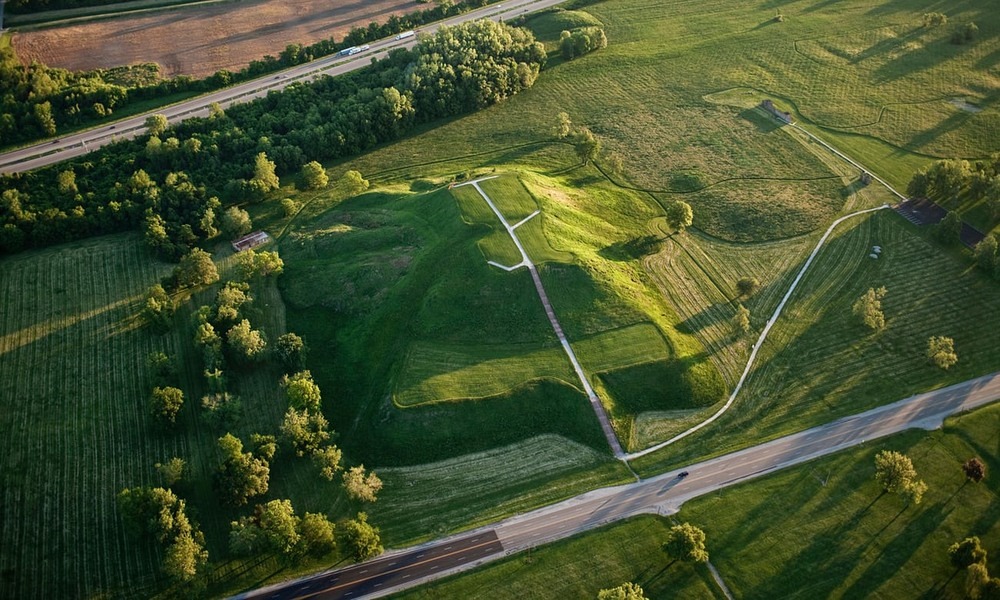
A thousand years before Columbus’s men would land on the shores of America, a new city was sprouting on the floodplains of modern-day St. Louis, Missouri—one that would become, within the course of just five decades, the the largest city ever built north of Mexico. The city of Cahokia, at its peak between the 10th and 12th centuries, was spread over 16 square kilometers—puny by today’s standards, but at that time it was larger than many European cities, including London. Cahokia boasted a population between 10,000 and 20,000 people and had at least 120 monumental earthen mounds that acted as foundations for many great buildings. Today, fewer than 80 mounds survive. How and why Cahokia declined remains one of America’s great mysteries.


Monk’s Mound, the centerpiece of Cahokia Mounds State Historic Site. Photo credit: The Guardian

Cahokia was founded sometime around 600 CE by the Mississippians, a group of Native Americans who occupied much of the present-day south-eastern United States, from the Mississippi river to the shores of the Atlantic. These people didn’t have a written language, so we don’t know what they called themselves or their city. It was much later in the 17th century, the area was named Cahokia by the French explorers after a tribe living in the area.

Archeological finds suggest that the city was laid around a vast urban center with clearly defines zones for administrative and ceremonial functions, elite compounds, residential neighborhoods, and even suburbs, all with similar orientation on the cardinal directions. Around this were farmlands were residents grew maize, beans and gourds. At the high point of its development, Cahokia was the largest urban center north of the great Mesoamerican cities in Mexico and Central America, and was larger than any subsequent city in the United States until the 1780s, when Philadelphia’s population overtook Cahokia’s historical high.

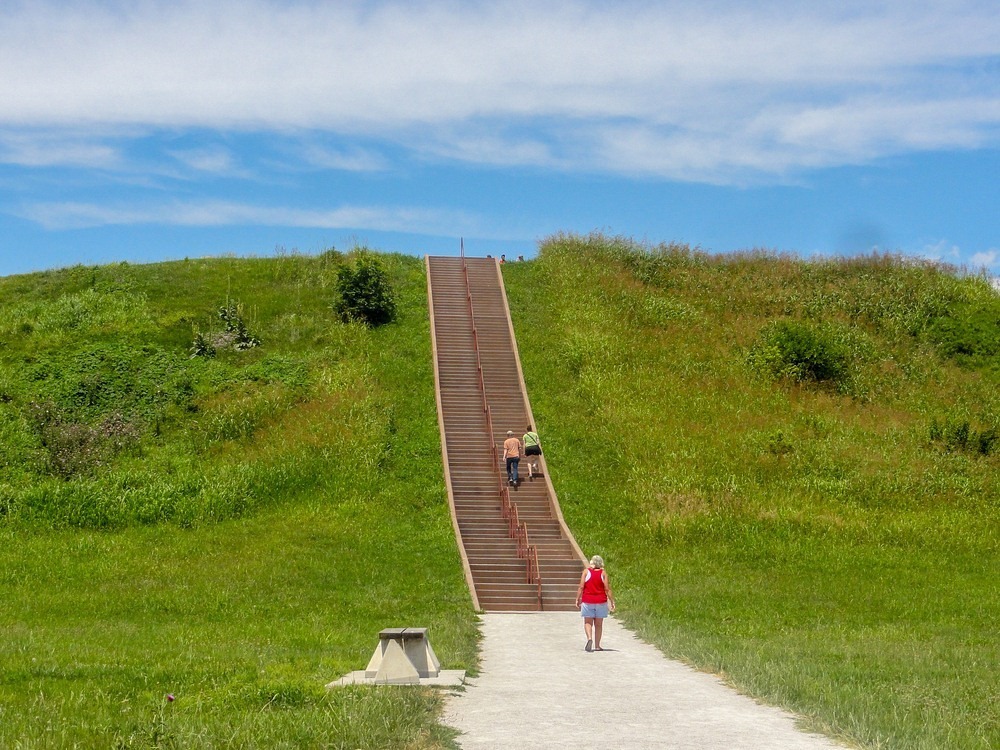
Cahokia’s most notable feature are its mounds, the largest of which is the Monks Mound standing a 100 feet tall. It is believed that the Monks Mound was the seat of governance for Cahokia, and was originally topped by a building some 100 feet long and possibly 50 feet tall. The mount building must have been back breaking work since everything—from digging up, hauling and stacking million of cubic feet of earth—was done by manual labor.

Cahokia reached its peak population in around 1100, after which the population started to decline and eventually vanished by 1350. Over-hunting, environmental degradation, climatic change, diseases and warfare may have been contributing factors, but the biggest cause of abandonment of the site was flooding.

In 2015, analysis of sediments collected from Horseshoe and Grassy Lakes, located a few miles north of Cahokia, showed signs of at least two major floods between 1100 and 1400—corresponding to the period when Cahokia’s population started to decline. In order to deposit sediments into these lakes, the Mississippi River would have had to rise 10 meters above its base elevation, enough to inundate the region’s crops and create food shortage. Eventually, the Mississippians migrated away from their city and the population assimilated with other native American tribes.

The site where Cahokia once flourished is today a National Historic Landmark and a UNESCO World Heritage Site. More than 70 mounds are scattered around this area of 2,200 acres.


Photo credit: Bart Everson/Flickr

Source……Kaushik in http://www.amusingplanet.com

Natarajan

China”s Bicycle graveyards….

Over the last few years, the bicycle-sharing phenomenon has taken the world by storm, especially in China, where—according to one report—there are over 70 private bike-sharing companies in operation with a collective pool of 16 million cycles and over 130 million users. These bikes, especially the dockless variety, can be picked up from anywhere on the streets using a smartphone to unlock them first, and then dropped off anywhere without the need to park it at a dock. Regular users say these bikes are godsend because it allows them to avoid congested public transport routes and reduce travel costs, while also reducing pollution and encouraging users to stay fit.

However, the supply has vastly outpaced demand. Many Chinese cities ill-equipped to handle the sudden flood of millions of shared bicycles have been overwhelmed. Illegal parking have led to clogged sidewalks, while damaged and mangled bikes are routine occurrence.


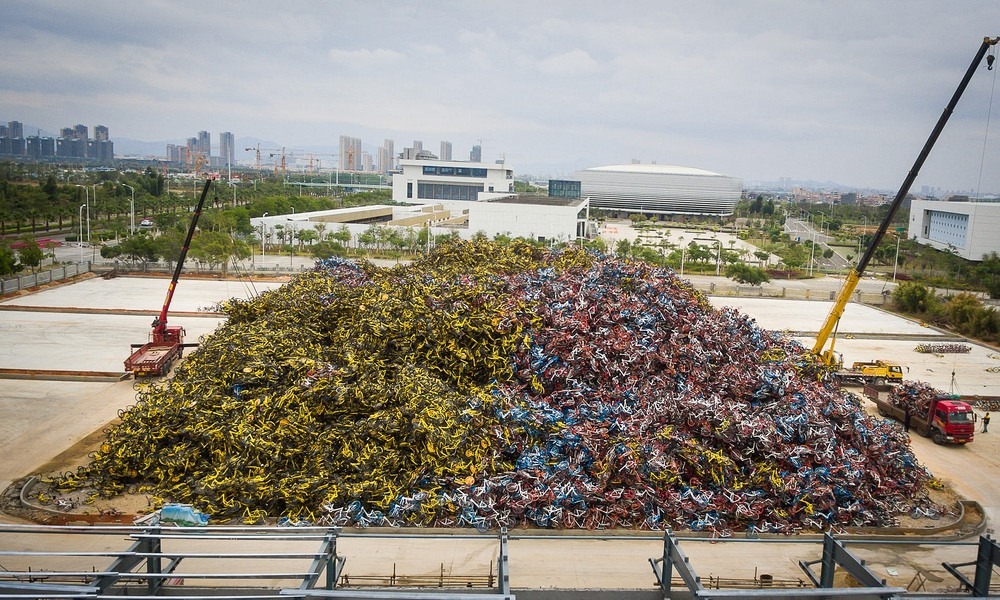
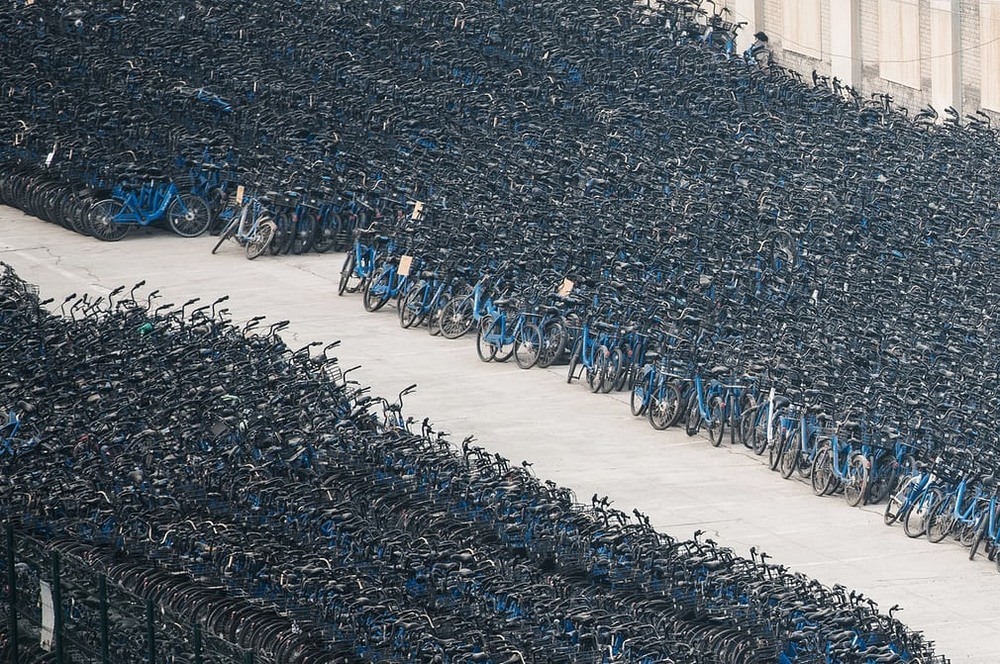
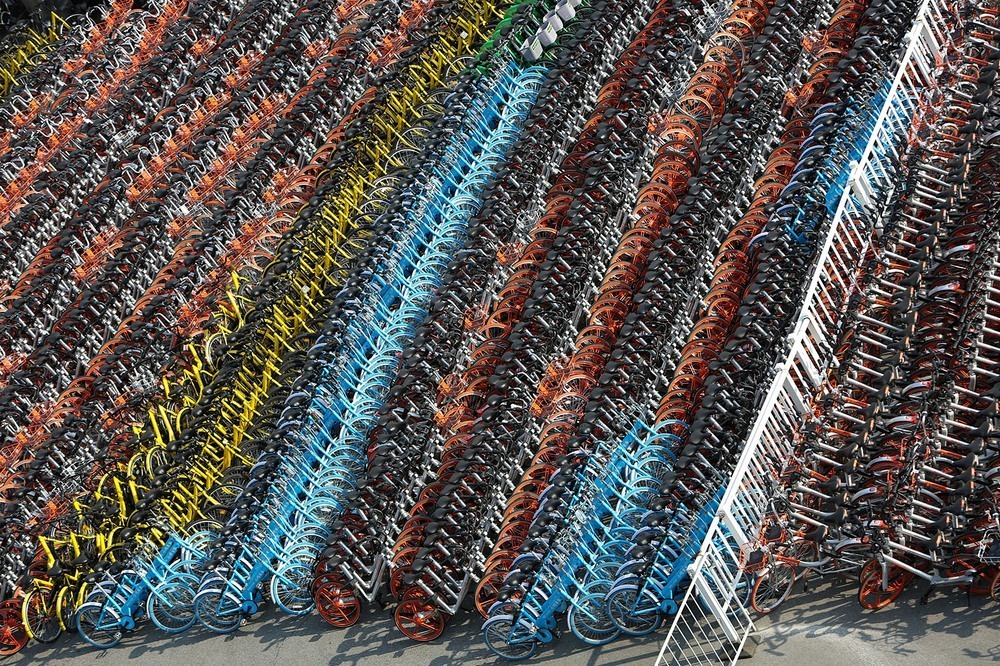
A giant pile of mangled bicycles in Xiamen, south-east China. Photo credit: Chen Zixiang for the Guardian

Recently, a number of bike sharing companies went out of business, the largest of which was Bluegogo. Almost overnight, websites became defunct and apps stopped working. Thousands of bicycles were left abandoned on the streets, attracting vandalism and abuse on those uncollected bikes. As cities impounded derelict and abandoned bikes by the thousands, scenes such as these became a familiar sight in many big Chinese cities.

The public, authorities, and existing bike-sharing companies themselves now hope that they could learn from the mistakes of earlier ventures and avoid the kind of oversaturation seen in China.


Source….www.amusingplanet.com

Natarajan


Message for the Day ….” The troubles and anxieties you experience presently are the crop collected from your previous harvests, so do not grieve and lose heart”

Many grieve: “It is said that having the vision of a holy person (darshanam) destroys our sin (papanasam). Well, I have had darshan not once but many times, and yet, my evil fate has not left me and I am suffering even more than before.” True, you may have come and had not one, but several darshans, and you may have sowed fresh seeds secured from the Divine — seeds of love, faith, devotion, good company, Godly thoughts, remembering God’s name, etc. So you have learnt the art of intensive cultivation and soil preparation. You have just now sown the seeds in well-prepared fields of cleansed hearts. The troubles and anxieties you experience presently are the crop collected from your previous harvests, so do not grieve and lose heart. Everyone must consume the grain they’ve already stored from their previous harvests. Bear with it patiently, until the new harvest comes in!

Source…..http://media.radiosai.org

Natarajan