Source….www.earthsky.org
Natarajan
நங்க நல்லூரைப் பற்றி என்ன சொல்லலாம்?
ஒரு பழைய கிராமம் புதிய பரிமாணத்தில் என்றா? ஒரு அதிசய ஊர்? குட்டி காஞ்சிபுரம்,
சின்ன கும்பகோணம்? மூத்தோர் வாழுமூர்?
ஏன் இப்படிச் சொன்னால் ஒருவேளை பொருத்தமாயிருக்குமோ?
ஒரு புறம் பார்த்தால் திருவல்லிக்கேணி, மறுபுறம் பார்த்தால் மாம்பலம், ஒருகோணத்தில் அடையார், வேறு பார்வையில் நுங்கம்பாக்கம்.
மொத்தத்தில் இங்கு எல்லா கோவில்களும் உள்ளன. அதனால் வெல்லத்தை மொய்க்கும் ஈயாக முதியோர், ஆன்மீக நாட்டம் கொண்டவர்கள் வந்து குடியேறி விட்டனர்.
நிலத்தின் விலை உயர்ந்து உயர்ந்து மேலே செல்ல குடிநீர் வசதி போக்குவரத்து போன்றவை கொஞ்சம் திண்டாட வைத்துள்ளன.
வளர்ச்சிக்காக கொடுக்கும் காணிக்கை இது. நிறைய வங்கிகள், பெரிய வியாபார நிறுவனங் களின் கிளைகள் எங்கும் கண்ணில் படுகின்றன.
நங்கநல்லூரில் இடறி விழுந்தால் ஏதோ ஒரு கோவில்.
புண்ணியம் பெற.
இல்லாவிட்டால் ஏதோ ஒரு வங்கி. பணத்தைப் போட எடுக்க.
நிறைய எதிர்பார்க்கும் ஆட்டோக்கள், சாலை விதி என்றால் கிலோ என்ன விலை என்று கேட்கும் வாகன ஓட்டிகள். பள்ளிகள், பல சரக்கு கடைகள், பாதையை மடக்கி கூவும் கரும்பலகையில் விலை காட்டும் காய்கறி கடைகள். விதிமீறல்களைப் பார்த்துக்கொண்டு வேர்கடலை தின்று கொட்டாவி விடும் காவல் சிப்பந்திகள்.
மலை போல் மஞ்சளும் வேறு நிறங்களும் கொண்டு ஒரு அங்குல இடைவெளி இல்லாமல் சாலையை முழுதுமாக விழுங்கும் தொழில் நுட்ப கல்லூரிகளின் பேருந்துகள்.
முடிச்சு முடிச்சாக அங்கங்கே மஞ்சள் பையுடன் டப்பா கட்டு வேட்டிகளுடன் நடு வீதிகளில் நிற்கும் முதியோர்கள்,
கூட்டமாக கோவிலுக்கு உள்ளும் வெளியும் அலையும் பக்தி மிகுந்த பெண்கள்.
இன்னும் எத்தனையோ இருக்கிறது சொல்ல.
இடம் தான் இல்லை எழுத. நங்கநல்லூர் கோவில்களில் சிலவற்றை மட்டும் எடுத்துக் கூறுகிறேன்.
இந்த ஊரின் ஒரு பழம் பெரும் ஆலயம் வரசித்தி விநாயகர் கோவில். தெருவில் இருந்தே தரிசனம் செய்ய வசதி.
எதிரே தெருவில் நுழைந்தால் கூப்பிடு தூரத்தில் உத்தர குருவாயுரப்பன் கோவில். சட்டையை கழட்ட வேண்டும்.
தயிர் சாதம் தொன்னையில் கிடைக்கும். அழகிய உன்னி கிருஷ்ணன் ஒரு ஆள் மயக்கி.
உள்ளே ஒரு பழைய வயது மிகுந்த அரச மரம். அதை பிரதட்சிணம் வரும்போது மனம் குளிருகிறது.
அதன் அடியில் சங்கர்ஷணர் தரிசனம் தருகிறார். இதை ஒட்டினாற்போல் சக்தி வாய்ந்த பகவதியின் சந்நிதி. சாந்தஸ்வரூபிணி.
சட்டையை மாட்டிக்கொண்டு வெளியே நடந்தால் ஆஞ்சநேயரை தரிசிக்குமுன் இடது பக்க தெருவில் ராகவேந்திரர் அழைக்கிறார்.
இந்த தக்ஷிண மந்திராலயத்தில் பூஜைகள் நடக்கும் அழகு ஒரு கண்கொள்ளாக் காட்சி.
கோவில் எதிரிலேயே ஒரு தியான மண்டபம். ஆளுயரத்தில் ராகவேந்திரர் மேடை மீது கம்பீரமாக உட்கார்ந்து நமது தியானத்தை ஏற்றுக்கொள்கிறார். நமக்குள்ளே தவறுகள் திருந்துகின்றன.
கோவிலை ஒட்டிய கிரி ட்ரேடிங் வியாபார ஸ்தலத் தை வாசலில் நடந்துகொண்டே பார்த்துக்கொண்டு இடமாக திரும்பினால் ஆதிவ்யாதிஹர பக்த ஆஞ்சநேயர்.
இவரை யாரும் பார்க்காமல் போக முடியாது. தரிசனம் கிடைக்கவில்லை என்று சொன்னால் கண் இல்லை என்று பொருள்.
ஏனெனில் அவர் 32அடி உயரமானவர்.
எவர் தலையும் மறைக்க முடியாதவர்.
வடக்கு பார்த்து கை கூப்பி நிற்பவர்.
அவர் எதிரே ராமர் லக்ஷ்மணர் சீதை தரிசினம் தருகிறார்கள்.
கண்ணைக்கவரும் அலங்காரம் விசேஷமாக பார்க்க வேண்டியது. ஆஞ்சநேயர் எதிரே பெரிய அகண்ட விளக்குகளில் நெய் வழிய வழிய தீபம். காலையில் ஆஞ்சநேயரை தரிசனம் செய்தவர்கள் எந்த ஓட்டலுக்கும் போக முடியாதே.
இங்கேயே சுடச்சுட நெய் ஒழுகும் பொங்கல் முந்திரிப்பருப்புடன் சேர்ந்து தனிச் சுவை கூட்டி வயிற்றை நிரப்பிவிடும்.
ஆஞ்சநேயருக்கு பின்னால் தெருவில் சபரிகிரிசன் ஆலயம் சென்றால் நம்மை கிள்ளிப்பார்க்க வேண்டிய அவசியம் ஏற்படும்.
எங்கிருக்கிறோம்?. சென்னையிலா சபரிமலையிலா?
மலையாள மணம் வீசும் கேரள பாணியில் சம்ப்ரதாய சந்நிதிகள்.
”சாமியே சரணம் ஐயப்பா” காதில் எங்கும் கூட்டத்தில் எதிரொலிக்கும் சந்தர்ப்பங்களில் இருபக்க கண்ணாடியிலும் சாஸ்தாவை தரிசனம் செய்ய வசதி. .
கிழக்கு பக்க வீதியில் வடக்கு நோக்கி குறுக்காக நடந்தால் கிடைப்பது ஸ்ரீ லக்ஷ்மி நரசிம்ஹரின் ஆஜானுபாகுவான தோற்றம்.
முதல் மாடியில் வீற்றிருக்கிறார். இந்த இடம் தில்லை கங்கா நகர் என்ற பகுதி.
வழக்கத்திற்கு மாறாக இவர் சாந்த ஸ்வரூபி. படி இறங்குமுன் அல்லது படி இறங்கியவுடன் நிச்சயம் பானகம் ஒரு எவர் சில்வர் தம்ப்ளரில் உ ங்களுக்காக காத்திருக்கும்.
தயிர் சாதமோ, வேறு சித்ரான்னமோ நேரத்தைப் பொருத்தவாறு தொன்னையில் தோன்றும்.
பக்கத்துக் கட்டிடமாக தேவி கருமாரி அம்மன் ஆலயம். நுழைந்தவுடன் நாம் இருப்பது என்ன திருப்பதி திருமலையா? ரோமாஞ்சலி உண்டாக்குகிறார் பாலாஜி.
வெங்கடேச பெருமாளைப் பார்க்கும்போது மனம் நிறைகிறது. எவ்வளவு நேரம் வேண்டுமானாலும் கண் குளிர அவரைத் திரிசிக்கும்போது யாரும் ”ஜருகண்டி” என்று பிடித்து இழுக்கமாட்டார்கள்.
பெருமாள் என்றாலே எண்ணற்ற கூட்டம் தானே. கோவில் வாசலில் ஆகாய மார்க்கமாக ரயில் ஓடப்போகிறது. வேலை இதோ இதோ என்று பல வருஷங்களாக நடந்து வருகிறது.
கீழே பெரிய தெருவில் கவனமாக இருக்க வேண்டும். வேக மாக நடமாடும் வாகனங்களை தவிர்க்கவேண்டும். வேளச்சேரி நோக்கியோ GST ரோடு நோக்கியோ தலை தெறிக்க நிறைய வாகனங்கள் ஓடிக்கொண்டே இருக்கும். இனி மேற்கு நோக்கி நகர்வோம்.
சற்று தூரத்தில் பண்டைப் புகழ் பெற்ற நங்கநல்லுரின் புராதன முதல் கோவில் ஸ்ரீ ராஜ ராஜேஸ்வரி ஆலயம்.
படிக்கட்டுகள் பல ஸ்தலங்களின் பெயர்களை நினைவூட்டுபவை. நங்கநல்லூர் ”நங்கை நல்லூர் ” என்ற பெயரால் அழைக்கப்படுவதும் இந்த ஸ்ரீ ராஜ ராஜேஸ்வரியின் அருமையினாலும் பெருமையினாலும் தான்.
ராஜ ராஜேஸ்வரி ஆலயத்தின் மேற்குப் பகுதியாக விளங்குவது ஸ்ரீ லக்ஷ்மி சமேத சத்ய நாராயணரின் ஆலயம்.
இது ஸ்ரீ ராஜகோபால சுவாமிகள் என்கிற மகானால் நிர்மாணிக்கப் பட்ட ஆலயம்.
ராஜ ராஜேஸ்வரியை தரிசிக்கும் வழியில் சங்க நிதி பத்ம நிதி வாழ்த்துகளை ஆசிகளை நிச்சயம் பெறுகிறோம்.
தரிசனத்தின் பின் கிழக்கு நோக்கி நடந்தோமா னால் லக்ஷ்மி ஹயக்ரவர் ஆலயம் ஹயக்ரீவரின் தரிசனம் பெற வழி வகுக்குகிறது.
நங்கநல்லூரிலிருந்து வெளியேயும் உள்ளேயும் போய் வர ஒரே பாதையாக இருந்த சிறிய தெரு இப்போது ஒருவழிப்பாதை.
நங்கநல்லூரில் எத்தனை பேர் என்று தெரிய வேண்டுமானால் இந்த பெரிய கடைத் தெருவில் வருவோர் போவோரை கவனித்து எண்ணினால் போதுமானது.
அத்தனை கடைகள், கோவில்கள், வங்கிகள், தெருவே தெரியாதவாறு ஆக்ரமிப்பு. கடைகள் கொஞ்சம் கொஞ்சமாக நகர்ந்து நடுத்தெரு வரை வந்துவிட்டன. நடப்பவர்கள் நடுத்தெருவில் நடந்தால் வாகனங்கள் அவர்கள் மீது தானே நகரவேண்டும்.
அர்த்தனாரீஸ்வரர் கோவில் கடைத்தெருவில் மத்தியில் உள்ளது. இந்த கோவிலுக்கு தனிச் சிறப்பு உண்டு.
இந்த ஆலயத்தின் சிவலிங்கம் அருகில் இருந்த குளத்தில் வெகுகாலம் நீரில் அமிழ்ந்திருக்கிறது. புராதன லிங்கம்.
மகா பெரியவா ஒரு முறை இந்த ஊருக்கு வந்திருந்த போது அங்கே அர்த்தனாரீச்வர் கோவில் கிடையாது.
அதக் குளத்தருகே தங்கியிருந்தபோது அவருக்கே உரித்தான ஞான திருஷ்டியால் ஔ அதிசயத்தைக் கண்டார்.
ஒரு சிலர் அந்தக் குளத்தில் ஒரு கல்லின் மேல் துணி துவைத்துக் கொண்டிருந்ததைக் கவனித்த பரமாச்சார்யர் ”துணி அது மேலே துவைக்காதே ங்கோ. அது துணி துவைக்கிற கல் இல்லே” என்றார்.
பெரியவா அருகில் இருந்தவர்களை அழைத்து ”இது ஒரு புண்ய க்ஷேத்ரம். மகான்கள் வந்து பூஜித்த இடம். இங்கே ஒரு பழைய சிவலிங்கம் இருக்கு. அதை வெளியே எடுத்து ஒரு இடத்திலே வைத்து பூஜை எல்லாம் செய்யுங்கோ” என்று அருளினார்.
அர்த்தநாரீஸ்வரர் தோன்றினார். புனருத்தாரணம் செய்யப்பட்டு ஆலயம் உருவானது. நங்கநல்லூர் செல்பவர்கள் இந்த ஆலயங்களை, சிறப்பு மிக்க இறைவன் குடிகொண்ட திருக் கோவில்களை தரிசனம் செய்ய தவறாதீர்கள்.
அர்த்தனாரீஸ்வரருக்குப் பின் புறம் அஷ்டபுஜ துர்க்கை காட்சி தருகிறாள். சர்வாபீஷ்ட சித்தி அருளும் சக்தி வாய்ந்த அம்மன். பெரிய மண்டபம் பக்தர்கள் அமர்ந்து தியானத்தில் ஈடுபட வசதியாக உள்ளது. சர்வாபீஷ்ட பல தாயகி.வேண்டியதைக் கொடுப்பவள்.
வண்டியில் மாட்டிக்கொண்டு நசுங்காமல் தெற்கு நோக்கி பொடிநடையாய் ஒரு கிலோ மீட்டர் நடந்தால் செம்பொற் கோவில் தன்மீசரைக் காணலாம்.
யார் இவர்? அடடா நான் பல்லவ காலத் தமிழில் சொல்லிவிட்டதால் புரியவில்லையோ.? யாரோ ஒருவர் நிலம் வாங்கி வீடு கட்ட தோண்டும்போது அவருக்கு ஒரு கோவில் கீழே புதைந்திருந்தது புரிபட்டது. புதை பொருள் ஆராய்ச்சி நிபுணர் திரு நாகசாமி ஒரு இரவில் அங்கு வந்து விளக்கினார்.
அந்த கூட்டத்தில் எத்தனையோ வருஷங்களுக்கு முன்னர் ஒரு இரவில் ஸ்ரீ ராஜகோபால சுவாமிகள் முன்னிலையில் அது நடந்தது.
பல்லவர்கள் காலத்தில் ஒரு தர்மிஷ்டன் கட்டிய சிவன் கோவில். செம்பொன்னாலான கோவில் கொண்ட தர்மலிங்கேச்வர் என்ற பெயர் கொண்ட சிவபெருமானின் ஆலயம் அங்கிருந்திருக்கிறது. அது அழகாக வேகமாக பொதுமக்கள் ஆதரவில் புனருத்தாரணம் செய்யப்பட்டு நங்க நல்லுரின் பெருமையை உயர்த்திக்கொண்டிருக்கிறது.
அங்கிருக்கும் கல்வெட்டில் தான் செம்பொற் கோவில் தன்மீசர் என்று அவர் பெயர் பொறிக்கப்பட்டுள்ளதை இன்றும் காணலாம்.
-படித்ததில் பிடித்தது
This Friday, two local Brazilian football clubs—Santos FC and Macapá—will face each other at the Estádio Milton Corrêa, a multi-purpose stadium in the city of Macapá, Brazil. When the whistle blows at 5:00 PM local time, each team will defend the goal on their side. But that’s not the only thing they will be defending.
Estádio Milton Corrêa is the most centrally located stadium anywhere in the world. It straddles right over the equator. In fact, it’s so precisely built that the mid-field line coincides exactly with the equator line, so that each half of the field lies on a different hemisphere. In every soccer game that’s played here, each team isn’t just defending its own goal. One side is defending the northern hemisphere, and the other side the southern hemisphere.
Photo credit: Niels Sienaert/Flickr
Estádio Milton Corrêa is nicknamed Zerão, which means “Big Zero”, denoting the zeroth latitude, the equator.
However, Estádio Milton Corrêa’s claim to fame is marred by a slight problem—it does not lie at the equator, at least, not by the WGS 84 geodetic datum.
A geodetic datum is a coordinate system used to locate places on earth, the accuracy of which depends greatly on how well the shape and size of the earth, as well as the orientation of the coordinate system has been defined. Over the centuries hundreds of different datums have been developed, used and discarded as our knowledge of the earth’s shape became more and more refined.
There are many different geodetic datums in use today, each one having a specific purpose. There are flat-earth models used for plane surveying, and complex ones that completely describe the size, shape, orientation, gravity field, and angular velocity of the earth.
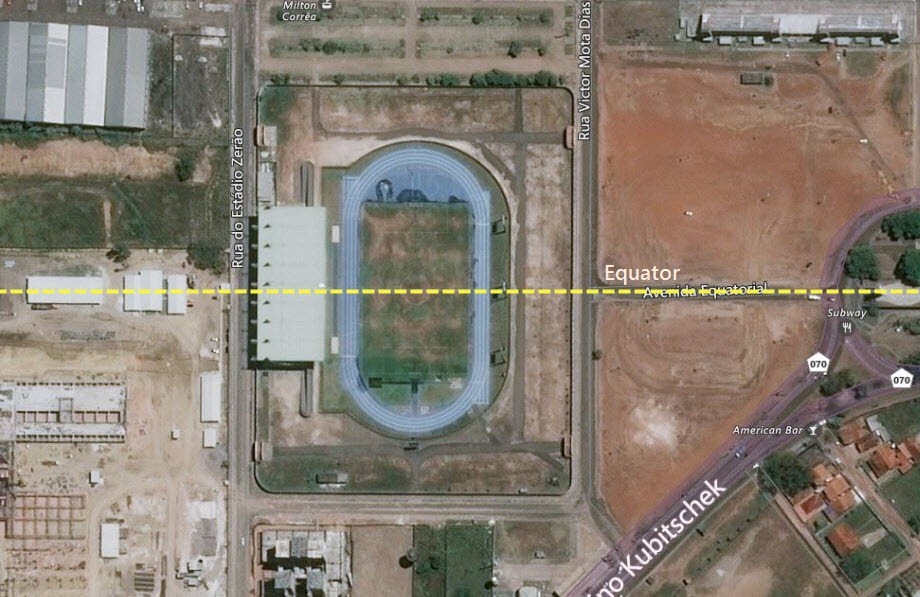
Position of the equator according to the Brazilian Geodetic System.
WGS 84 stands for World Geodetic System, established in 1984. It is an internationally agreed standard used in cartography, navigation and in GPS. But because the earth is an imperfect ellipsoid, cartographers and scientists sometimes use localized datums that can give a more accurate representation of the area of coverage than WGS 84. For instance, the geodic covering of the British Isles can be better described by OSGB36, a geodetic datum, than WGS 84 does.
Similarly, Brazil has its own geodetic system called Brazilian Geodetic System or SGB.
When the pitch on the stadium, Estádio Milton Corrêa, was laid down, engineers used the Brazilian Geodetic System. In this system, the mid-field line runs exactly along the equator, but not according to the World Geodetic System 84.

Position of the equator according to the World Geodetic System 84.
If you were to stand on the mid-field line and take out your GPS device, you’ll not get a zero reading. You have to walk south until you are completely off the pitch, before your GPS device finds the equator. The stadium lies 2 seconds north in the World Geodetic System 84, in other words, entirely in the northern hemisphere.
But don’t let the small technicalities bother you. Irrespective of which hemisphere the stadium lies, I’m sure some great football is played here.
Source…..Kaushik in . http://www.amusingplanet.com/
Natarajan
Squeaky floors are annoying, which is why when you search for “squeaky floors” in Google, you get hundreds of articles offering you tips and advice on how to make your floors squeak less. But in ancient Japanese societies, especially among royal families, squeaky floors were not hated but desired—because a floor that screeched and groaned with each step was an effective anti-burglar alarm system.
Some Japanese castles built during the Edo period had these kind of flooring in the hallways. They are known as uguisu-bari, where uguisu refers to the Japanese bush-warbler or the Japanese Nightingale—a very shy bird that prefers to stay hidden among the foliage, but its distinctive breeding call can be heard throughout much of Japan from the start of spring.
It is said that these specially designed creaking floors sound much like the bush warbler singing. In English, they are known as nightingale floors.

Inside Ninomaru Palace of the Nijo castle where nightingale floors are installed. Photo credit: Fran Sastre/Flickr
Nightingale floors were popular during the Edo period—a period stretching from the early 17th century to the mid-19th century, when Japan was under the rule of the Tokugawa shogunate. The Edo period was considerably peaceful with fewer wars and rivalry, but the threat from the shogun’s subordinate feudal lords and other enemies was always there.
When Tokugawa Ieyasu, the founder of the Tokugawa shogunate, built the Nijō Castle in Kyoto as his residence, he ordered his carpenters to install nightingale floors in its hallways so that any assassin trying to sneak into the castle will immediately alert his guards.
While dry boards naturally creak under pressure, nightingale floors have extra metal clamps located between the beams that support the floorboards of the corridor. Each clamp has two spike holesthrough which an iron spike goes through. When someone walks over the boards, the clamp moves up and down causing the spike to rub against the clamp, producing a shrilling noise.
Because it was impossible walk across these hallways without making their presence known, guards and sentries developed a special rhythm that they would use when walking over the boards so that other guards know that it’s one of them. If the guards heard the floors singing a different tune, they knew they had an uninvited guest, and that it was time to sound the alarm.
The two best places to see and experience nightingale floors are the Nijo castle in Kyoto, and Chion-in, a temple where the Tokugawa family used to stay.
Source…..kaushik in http://www.amusingplanet.com
Natarajan
In the mountains of the Shanxi province in China, is the country’s biggest ice cave—an 85-meter deep bowling pin shaped subterranean structure set into the side of the mountain. Its walls and floors are coated with thick layers of ice, while large icicles and stalactites stretch from the ceiling to floor. The Ningwu Cave has the unique ability to stay frozen throughout summer even when the outside temperature climbs into the high teens.
Across continental Europe, Central Asia, and North America are many such ice caves where winter lasts all round the year. The majority of these ice caves are located in cooler regions, such as Alaska, Iceland and Russia, where the year-long low temperature helps keep the caves naturally cool and frozen. However, ice caves also exist in warmer climates.
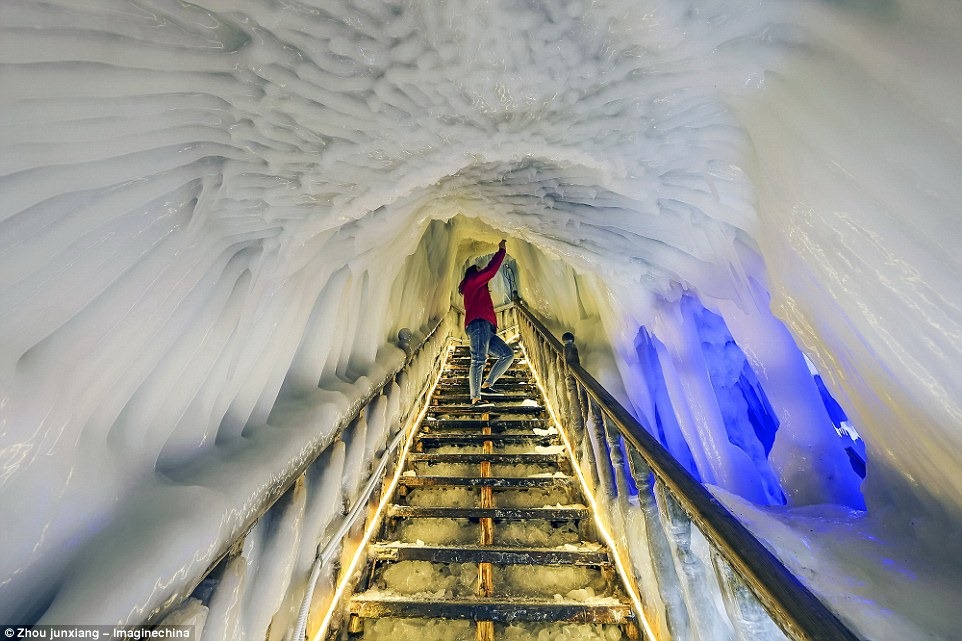
The Ningwu Ice Cave in China. Photo credit: Zhou Junxiang/Image China
Most of these caves are what is known as “cold traps”. These caves have conveniently located chimneys and exits that allow cold air to enter during the winter, but not the warm air in summer. In winter, the cold dense air settles into the cave, displacing any warmer air which rises and exits the cave. In summer, the cold cave air remains in place as the relatively warm surface air is lighter and cannot enter.
The ice inside the cave also acts as a buffer that helps stabilizes the temperature inside the cave. Any warm air entering the cave is immediately cooled by the ice before it can cause any significant warming of the cave’s inside. Sure, it melts some ice, but the ambient temperature inside the cave stays pretty much constant. The reverse is also true: in winter, when very cold air cascades in, any liquid water in the cave freezes, releasing heat and stopping the cave’s temperature from plummeting too low.
For ice caves to form there must also be sufficient quantities of water available over the right period of time. In winter the climate must be such that the mountains are sufficiently covered in snow, and in summer the temperature should be high enough to cause the snow to melt but without significant warming of the air which streams into the caves. There needs to be a delicate balance between all these factors for an ice cave to form and maintain itself.
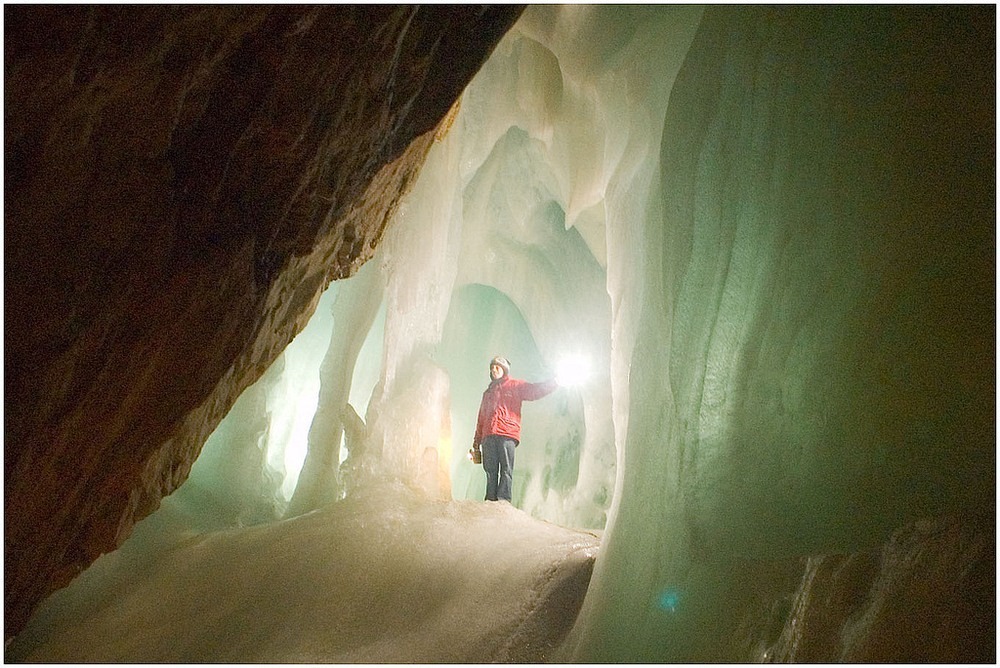
The largest ice cave in the world is Eisriesenwelt, located in Werfen, Austria, about 40 km south of Salzburg. The cave stretches for more than 42 kilometers. Photo credit: Michael & Sophia/Flickr
The Decorah Ice Cave in Iowa, the US, is one of the largest caverns containing ice in the American Midwest. The cave remains relatively ice free during fall and early winter. During this period, chilly winter air enters the cave and lowers the temperature of the rock walls. When snow starts to melt in spring, the melt water seeps into the cave and freezes upon contact with the still-cold walls, reaching maximum thickness of several inches in May-June. Ice often remains inside the cave until late August, while outside temperature breaks into the high thirties (high nineties for Americans).
A similar phenomenon is seen at Coudersport Ice Mine in Pennsylvania. It’s a small pit, where ice forms only during the summer months, and melts away in winter
The Booming Ice Chasm in the Canadian Rockies in Alberta is known for its incredible acoustics. It is said that as rocks tumble down and crash to the cave floor, 140 meters below, it causes booming echoes. The cave was discovered only in 2005 on Google Earth. Photo credit: Francois-Xavier De Ruydts
Source….Kaushik in http://www.amusingplanet.com
Natarajan
Today people ignore the law of action and act as they please. It is easy to indulge in sinful deeds but is extremely difficult to bear the bad results they yield! Good and evil, happiness and misery, merit and sin depend on your actions. As is the action, so is the result. Hence the Upanishads teach – “Salute the action” (Tasmai Namah Karmane). Offer salutations to the actions you perform, so they become sacred, bring you good name and contribute to the welfare of the world. Since time immemorial, Bharatiyas offer respect to action, be it big or small, before undertaking it. A dancer pays her respects to the anklets she wears before commencing her performance. An illiterate lorry driver offers his obeisance to the steering wheel before driving the vehicle. Why salute the action? It is to discriminate and choose right actions and to give up the sense of ego or doership! This is the sacredness that our culture imparts to action.
Source……… http://media.radiosai.org
Natarajan
While travelling, you must have seen milestones painted in different colours with the nearest place, along with the distance written on
How To Use Milestones If You Are Lost, And What Does Each Colour Indicate
Source….www.laughingcolors.com
Natarajan

