DO Not Undermine the Auditor…..

SOURCE:::::: ARTICLE BY ERA SEZHIYAN…in ‘THE HINDU” ON SEP 4 2012….AN eye opener for all our political leaders …must read…

Natarajan

The Prime Minister is out of line in asserting that the Public Accounts Committee “will” challenge the findings of the CAG. It is akin to issuing a whip to the committee
When the draft provisions relating to the Comptroller and Auditor General were under consideration in the Constituent Assembly, Dr. B.R Ambedkar, Chairman of the Drafting Committee, said: “I am of the opinion that this dignitary or officer is probably the most important officer in the Constitution of India. He is the one man who is going to see that the expenses voted by Parliament are not exceeded, or varied from what has been laid down by Parliament in the Appropriation Act. If this functionary is to carry out the duties — and his duties, I submit, are far more important than the duties even of the Judiciary — he should have been certainly as independent as the Judiciary. But, comparing the Articles about the Supreme Court and those relating to the Auditor General, I cannot help saying that we have not given him the same independence which we have given to the Judiciary, although I personally feel that he ought to have far greater independence than the Judiciary itself” (May 30, 1949)

‘WITHOUT FEAR OR FAVOUR’

While laying the foundation stone of the CAG office building in New Delhi in July 1954, President Rajendra Prasad said: “… At the present moment when the Government is incurring a huge expenditure on so many welfare projects … it is essential that every rupee that we spend is properly accounted for. This important task — I am afraid, a task not always very pleasant — devolves upon the Comptroller and Auditor General and his office. In accordance with the powers vested in him, he has to carry on these functions without fear or favour in the larger interests of the nation.”

At a similar function in Madras in June 1954, Vice President Sarvepalli Radhakrishnan stated: “Ours is a poor country, its resources are limited and we cannot afford to risk any kind of waste and the Audit and Accounts Department will have to look upon their functions as the functions of the greatest public utility …” In conclusion, he asserted: “If I have one advice to give and if I am presumptuous enough to give any advice to the officers of the audit and accounts, it is this: ‘Do not shrink from the truth for fear of offending men in high places’.”

At the time President Prasad spoke about “huge expenditure of government projects,” the combined budgetary transactions of the Centre and the States were Rs.1,354 crore (1954-55). In 2010-2011, the total had zoomed to Rs.22, 92,510 crore according to the Economic Survey 2011-12.

When there was some criticism of the CAG’s reports in December 1952, Prime Minister Jawaharlal Nehru chastised the Member: “He [the CAG] is not responsible to the Government and it is open for him to criticise the Government in reports. For him to be criticised on the floor of the House would tend to undermine the special position that has been granted to him to discharge his duties without fear or favour.”

Against the audit’s findings on deficiencies in defence preparedness on May 31, 1962, during the debate on Demands for Grants, Defence Minister Krishna Menon flared up: “Criticism offered by Audit to Parliament must be limited to financial question based on accounts. It is not the function of Auditor General to range over the field of administration and offer suggestion as to how the Government could be better conducted.” Immediately there were points of order and Speaker Sardar Hukam Singh pacified both sides. On June 18, the matter was again raised and the Speaker accepted the suggestion of the Finance Minister to seek elucidation from the Public Accounts Committee on the role of the CAG on the points raised.

In the 1950s and 1960s, with Prime Minister Jawaharlal Nehru as its leader, the Congress had more than 70 per cent strength in both Houses, which naturally gave the ruling party a sufficient majority in all Committees, including the PAC. In 1962, the PAC chairman was Mahavir Tyagi, a senior Congress leader, bold and free in his views.

The PAC made an extensive study of the objectives and practices in the United Kingdom, and of explanations and documents offered by CAG A.K. Roy. Then, Tyagi submitted the PAC report with the following recommendations: “The Committee is definitely of the view that it is the function of the CAG to satisfy himself not only that every expenditure has been incurred as per prescribed rules, regulations and laws, but also that it has been incurred with ‘faithfulness, wisdom and economy.’ If, in the course of the audit, the CAG becomes aware of facts which appear to him to indicate an improper expenditure or waste of money, it is his duty to call the attention of Parliament to them through his Audit Reports. At the present time when there is heavy taxation and heavy expenditure, the Committee hopes that the CAG will pay even greater attention than in the past to this aspect of his duties and that the government will give him every facility to perform them.”

Four months later, in October 1962, the Chinese aggression on India proved the validity of the points raised in the Audit Report. The debacle forced Krishna Menon to resign.

Now scam after scam comes to be reported about the bewildering loss of public funds, counted in lakhs of crores. But at every revelation, the Manmohan Singh government, noted for its zero administrative capacity, maintains there is zero loss.

Can we expect the President and the Vice-President to follow in the footsteps of Rajendra Prasad and Sarvepalli Radhakrishnan, and ask the CAG to carry on his functions “without fear or favour” or advise the Audit officers “not to shrink from truth for fear of offending men in high places?”

On August 27, Prime Minister Manmohan Singh submitted to both Houses his report refuting many points raised in the CAG Report on the allocation of coal blocks. I am not going to analyse the contents of the report.

HORRIFYING

I am horrified at the remarks he made to the media before going to the Lok Sabha with his report. His message to the media in Parliament House on August 27 was released by the Prime Minister’s Office. The fourth paragraph of the news release said: “I wish to assure the country that we have a very strong and credible case, the observations of the CAG are disputable, and they will be challenged when the matter comes before the Parliament’s Public Accounts Committee.”

I am not concerned here with the Prime Minster’s affirmations about the strong case of the government or the disputable observations of the CAG. What I am strongly against is this sentence in his statement: “…they [observations of the CAG] will be challenged when the matter comes before the Parliament’s Public Accounts Committee.”

How can the Prime Minister say now that the observations of the CAG ‘will’ be challenged when the matter comes before the PAC?

The PAC is set up by Parliament and its proceedings cannot be passed on to others until its report is submitted to Parliament. The Prime minister, however high his position, should not take the PAC for granted. He cannot issue a whip now that the observations of the CAG are to be challenged. He may as well abolish the entire Committee system.

When Hitler came to power in Germany, he proscribed all political parties excepting the Nazi Party; then he amended the law to end all forms of accountability through audit of finance. It is to be hoped that Manmohan Singh and his ministers are not trying to adopt this method to avoid struggling with the cumbersome parliamentary system of a functioning democracy.

(Era Sezhiyan is an eminent parliamentarian and author. He was chairman of the Public Accounts Committee from 1971 to 1973.)

Keywords: Comptroller and Auditor-General of India

Facts about Asia

Source:::: Google Search

We have read a lot about Asia, just wanted to write a concise information about ASIA, there is one meaning of Asia which means ‘East’. – Natarajan

The continent largest in landmass and that of population is Asia. Asia has the world’s 60% of population that accounts to almost 4 billion people. The statistics prove that two countries hold half of Asia’s population; one being India and other is China. Though China is ahead India but it is believed that in another 20 years India will have the highest population.

The highest and the lowest point on the Earth both lie in Asia, the highest point is the Mount Everest and the lowest is the Dead Sea. The top ten highest mountains are also located in Asia.

The boundaries of Asia are made of Suez Canal and Ural Mountains in the west, the Caucasus Mountain and the Caspian and the Black Seas to the south. The south also extends to the Indian Ocean, to the north the Arctic Ocean and to the far- east the Pacific Ocean. Further Asia is divided into six sub- continents; Central Asia, East Asia, North Asia, India Subcontinent, Southeast Asia, Southwest Asia. The western most point of Asia is Cape Baba in the Northwestern Turkey. Its eastern most point is Cape Chelyuskin in Siberia

Extraordinary Stories about Ordinary People… Must Read….

Received from a friend; found it worth sharing.Hence it is before you for reading and sharing….

Natarajan

Extraordinary Stories About Ordinary People

Sudha Murty, chairperson, Infosys Foundation and author, is known for her ability to glean interesting stories from the lives of ordinary people and weave these narratives into a unique blend of anecdote and fable.

Her latest collection of stories, ‘The Day I Stopped Drinking Milk’, features a fascinating cast of characters, each of whom made an indelible impression on the author. Extracted here is a nugget from ‘Bombay to Bangalore’, one of the most heartwarming stories in this collection:
It was the beginning of summer. I was boarding Udyan Express at Gulbarga railway station. My destination was Bangalore. As I boarded the train, I saw that the second-class reserved compartment was jam-packed with people. I sat down and was pushed to the corner of the berth. Though it was meant for three people, there were already six of us sitting on it…

The ticket collector came in and started checking people’s tickets and reservations.. Suddenly, he looked in my direction and asked, ‘What about your ticket?’ ‘I have already shown my ticket to you,’ I said.
‘Not you, madam, the girl hiding below your berth. Hey, come out, where is your ticket?’ I realized that someone was sitting below my berth. When the collector yelled at her, the girl came out of hiding.

She was thin, dark, scared and looked like she had been crying profusely. She must have been about thirteen or fourteen years old.She had uncombed hair and was dressed in a torn skirt and blouse. She was trembling and folded both her hands.. The collector started forcibly pulling her out from the compartment. Suddenly, I had a strange feeling. I stood up and called out to the collector. ‘Sir, I will pay for her ticket,’ I said.

Then he looked at me and said, ‘Madam, if you give her ten rupees, she will be much happier with that than with the ticket.’

I did not listen to him. I told the collector to give me a ticket to the last destination, Bangalore, so that the girl could get down wherever she wanted.

Slowly, she started talking. She told me that her name was Chitra. She lived in a village near Bidar. Her father was a coolie and she had lost her mother at birth. Her father had remarried and had two sons with her stepmother. But a few months ago, her father had died. Her stepmother started beating her often and did not give her food. She was tired of that life. She did not have anybody to support her so she left home in search of something better.

By this time, the train had reached Bangalore. I said goodbye to Chitra and got down from the train. My driver came and picked up my bags. I felt someone watching me. When I turned back, Chitra was standing there and looking at me with sad eyes. But there was nothing more that I could do. I had paid her ticket out of compassion but I had never thought that she was going to be my responsibility!…

I told her to get into my car. My driver looked at the girl curiously. I told him to take us to my friend Ram’s place. Ram ran separate shelter homes for boys and girls. We at the Infosys Foundation supported him financially. I thought Chitra could stay there for some time and we could talk about her future after I came back from my tours.

I was not sure if Chitra would even be there. But to my surprise, I saw Chitra looking much happier than before. Ram suggested that Chitra could go to a high school nearby. I immediately agreed and said that I would sponsor her expenses as long as she continued to study. I left the shelter knowing that Chitra had found a home and a new direction
in her life.

I got busier and my visits to the shelter reduced to once a year. But I always enquired about Chitra’s well-being over the phone. I knew that she was studying well and that her progress was good.. I offered to sponsor her college studies if she wanted to continue studying. But she said, ‘No, Akka. I have talked to my friends and made up my mind. I would like to do my diploma in computer science so that I can immediately get a job after three years.’ She wanted to become economically independent as soon as possible.. Chitra obtained her diploma with flying colours. She also got a job in a software company as an assistant testing engineer. When she got her first salary, she came to my office with a sari and a box of sweets.

One day, when I was in Delhi, I got a call from Chitra. She was very happy. ‘Akka, my company is sending me to USA! I wanted to meet you and take your blessings but you are not here in Bangalore.’.

Years passed. Occasionally, I received an e-mail from Chitra. She was doing very well in her career. She was posted across several cities in USA and was enjoying life. I silently prayed that she should always be happy wherever she was.

Years later, I was invited to deliver a lecture in San Francisco for Kannada Koota, an organization where families who speak Kannada meet and organize events. The lecture was in a convention hall of a hotel and I decided to stay at the same hotel. After the lecture, I was planning to leave for the airport. When I checked out of the hotel room and went to the reception counter to pay the bill, the receptionist said, ‘Ma’am, you don’t need to pay us anything. The lady over there has already settled your bill. She must know you pretty well.’ I turned around and found Chitra there.

She was standing with a young white man and wore a beautiful sari. She was looking very pretty with short hair. Her dark eyes were beaming with happiness and pride. As soon as she saw me, she gave me a brilliant smile, hugged me and touched my feet. I was overwhelmed with joy and did not know what to say. I was very happy to see the way things had turned out for Chitra. But I came back to my original question. ‘Chitra, why did you pay my hotel bill? That is not right.’ suddenly sobbing, she hugged me and said, ‘Because you paid for my ticket from Bombay to Bangalore!’

(Excerpted with permission from Penguin Books India from Sudha Murty’s ‘The Day I Stopped Drinking Milk: Life Stories From Here and There’
Courtesy: Rajendra Deshpande)

10 Corporate Decisions that Wrecked Their Reputation……

SOURCE:::::Silicon India Net……

Natarajan

 Making mistakes is human, but not if you are a multinational giant and have millions of shareholder’s hard-earned money invested in your company. In such cases, these mistakes make you fall on your face and it is not only you who gets hurt but the all those million investors too.

Here is a list of such decisions that some corporate took and got their reputation hit very bad. Have a look:

1. Company: Coca-Cola
Decision: Changes the formula of their decade old and widely popular Cola and rebranded it as New Coke.
Why it was bad: Coca-Cola was undisputedly the most popular and favorite cola drink and despite numerous claims from Pepsi in which it used to brand it number one, Cola was a distant lead. Still, Cola thrashed its age old formula that made it so popular and tried something as New Coke. No wonder it was disliked by everyone and the company had to face the wrath.
Consequence: Cola bounced back but only as a weakened company whose executives having no clue about anything.

2. Company: IBM
Decision: Paid Microsoft a one-time fee for developing PC-DOS.
Why it was bad: IBM was a standalone name that stood synonymous for computers during the 80’s. It believed that hardware is the only evolving thing in the computers and it is easy to clone hardware but not software. They paid Microsoft a one-time fee for developing PC-DOS and as a result it gave Microsoft a chance to develop MS-DOS alongside that swept the market clean. The same is happening with Microsoft today with Linux and other open-source companies dominating the software market. It will be worth noticing if Microsoft will meet IBM’s fate.
Consequence: IBM lost a lot of money to Microsoft’s MS-DOS and the blooming software market.

 Making mistakes is human, but not if you are a multinational giant and have millions of shareholder’s hard-earned

3. Company: Microsoft
Decision:
 Introduces Microsoft Bob.
Why it was bad: Microsoft has been a rash player in the market with its arrogant behavior most of the times. Introducing Bob pushed the hate-parade against Microsoft even more. The worst part was that it was not alone; it came along with idiotic cousins with an aim to simplify the Windows 3.1 user interface. Most of us might not have experienced Bob exactly but have definitely experienced Clippie that annoyed us every time it popped with MS Office.
Consequence: Annoys even its most faithful users.

4. Company: Apple
Decision: Doesn’t give Gateway 200 license sales of Mac OS.
Why it was bad: Microsoft is today the standalone player in the software market because of a bad decision that Apple took. Apple was continuously innovating in the software field and came out with easy-to-use operating system. Only if it had licensed its software to Gateway it could have easily gained large chunk of market and stopped Microsoft from becoming the lone player. Instead it licensed to smaller clone makers and that hampered its value.
Consequence: Microsoft takes over as the dominating player in the software market.

5. Company: British Airways
Decision: Paints tailfins with ethnically inspired figures.
Why it was bad: BA, hurt by then Prime Minister’s public statement that the airlines was being unpatriotic went way beyond by painting the tail fins of its planes with colorful figures. This did not go down well with its customers and it had to face wide criticism. Within a span of two years the decision was rolled back and the planes were painted with the British flag.
Consequence: The entire decision lead to wastage of money and loss in popularity among the masses.6. Company: CBS and NBC
Decision:
 Did not broadcast Monday Night Football.
Why it was bad: During the late 60’s, football was not as popular in the masses as today but still it was gaining momentum. When CBS was proposed to telecast the Monday Night Football, it rejected the show which later went to ABC. It has been the second longest running show in the history of television, only after 60 Minutes. It had been tremendously popular and for the same reason CBS and NBC gave up on their Monday night programming given ABC’s ratings. The show is now aired on ESPN but gave ABC a strong base.
Consequence: CBS and NBC lost their Monday night programming to ABC’s popularity.

7. Company: Western Union
Decision: Sticks to its own version of telephone and avoids using Graham Bell’s invention.
Why it was bad: Western Union was one major player in earlier days that was using the telegraph as the means of communication over long distances. It considered Bell’s invention as a toy and invented its own version somewhere around the same time that ultimately led them to fall into a series of patent battle. Bell, won eventually.
Consequence: Such comments wrecked Western Union’s reputation to irreparable levels.

8. Company: M&M
Decision: Walks out of the movie, E.T.
Why it was bad: M&M was first approach to feature in the Stephen Spielberg’s cute little alien movie, E.T. M&M though it will be a flop and hence walked out of the movie. This allowed Reese’s Pieces to feature in the movie which turned out to be a huge hit. M&M lost a rat market share to Reese’s Pieces and were almost sold out.
Consequence: Lost huge market share and was almost sold out to Reese’s Pieces, until the movie no one ever heard of the latter snack.

SANATANA DHARMAM….MAHA PERIAVAA”S VIEW POINT…

SOURCE::::INPUT FROM ONE OF MY FRIENDS…. SHARED WITH YOU ALL….

Natarajan

Sanatana dharmam explained in simple words…..

Once a foreigner interested in the philosophy of Hinduism was waiting for
Darshan of Mahaperiyaval ( Most revered Mahaswami) at Kanchi Mutt to
clarify his doubt. Shortly, he got his appointment and without wasting time,
he put forth his question.

Swamiji, I understand all your concepts, value them but for one particular
faith (i.e.) same soul taking various births, papa, punya being carried
forward to the next births etc. Can you please make me comfortable on this
aspect? Because, in all our religions, we get the reward for what we do in
this birth only. (i.e.) if we are honest, God is pleased and blesses us
with benefits and we are dishonest, we get punished by Him.

At this point, Periyaval asked him, whether he owns a car and if he could
do a favour of collecting some statistical information within Kancheepuram
using his vehicle. The guest readily agreed, at the same time wondering why
his question was not answered spontaneously.

Please, Swamiji, go ahead, What is the service you expect me to do now?

Periyaval said, Please go around 10 maternity centres within Kancheepuram
and collect the data of children born within the last 2 days – Child’s
gender, health condition, parents name, status, educational qualification,
time of birth.

The man said – Fine, this is nothing, – immediately rushed in his car like
Lord Muruga goes in Thiruvilayadal and within a day he was back in the
matam with exact statistics in front of Mahaperiyaval. He went through the
statistics, about 15 children were born in 10 hospitals, 8 female and 7
male infants, out of which 3 children had malnutrition defects, 2 children
were the first child of highly rich parents born in luxury hospitals, while
4 were children of coolie labourers who already had few children.

Mahaperiyaval now looked at the gentleman and started asking few questions:

Do you think any of these children have been honest / dishonest within 2
days of their birth? Probably they could not even recognize their own
mother. So, they have neither earned papa or punya in this birth. According
to your concepts, all these children should be living exactly identical to
each other, but not so practically, some are ill, some are healthy, some
are born to rich parents, some are born to poor parents.
Remember all children born in the same day, same longitude, latitude, you
can’t blame their horoscope which is going to be almost identical.

The gentleman was dumbfounded!

It is here the concept of previous birth erupts! All these children have
taken their present birth according to their deeds (karma) and the
resultant papa, punya which they have assimilated in their previous births.

Sanatana Dharma was smiling at the gentleman through Maha Periyaval.

Invisible Helmet

Interesting invention, but is style so much more important than safety? – Read below to know more

HOW

HÖVDING

WORKS

Hövding is a bicycle helmet unlike any other currently on the market. It’s ergonomic, it’s practical, it complies with all the safety requirements, and it’s also subtle and blends in with what else you are wearing.

Hövding is a collar for bicyclists, worn around the neck. The collar contains a folded up airbag that you’ll only see if you happen to have an accident. The airbag is shaped like a hood, surrounding and protecting the bicyclist’s head. The trigger mechanism is controlled by sensors which pick up the abnormal movements of a bicyclist in an accident.

The actual collar is the visible part of the invention. It’s covered by a removable shell that you can change to match your outfit, and we’ll be launching new designs all the time. Hövding is a practical accessory that’s easy to carry around, it’s got a great-looking yet subtle design, and it will save your life.

Enter Alternative Text here

AIRBAG

The airbag is shaped like a hood that surrounds your head. It’s made in an ultra-strong nylon fabric that won’t rip when scraped against asphalt. The way the hood is designed and folded into the collar ensures that it will inflate quickly and safely. It takes about 0.1 seconds to inflate and the airbag will be fully inflated before head impact. Hövding protects nearly all of the head while leaving the field of vision open. The airbag provides soft and effective shock absorption and maintains constant pressure for several seconds, making it able to withstand several impacts to the head in the same accident. After that the airbag slowly starts to deflate.

GAS INFLATOR

The gas inflator that inflates the airbag is placed in a holder in the collar on the bicyclist’s back. Hövding’s gas inflator is a cold gas inflator that uses helium and it’s one of the smallest gas inflators on the market. A similar inflator is used in a motorcycle helmet with airbag system.

SENSORS

The airbag is deployed by sensors – accelerometers and gyros – that pick up a bicyclist’s abnormal movements in the event of an accident. The sensors then send a signal to the gas inflator to inflate the airbag.

COLLAR

The collar with its shell is the visible part of Hövding, which encases the whole airbag system. All the components are located inside the collar for optimum ergonomics and performance. The weight of the collar is evenly distributed across the shoulders and it is heavier at the back than at the front so that when bicycling the weight is resting on your back. The instant it is triggered, the pressure from the airbag splits open the upper seam of the collar, allowing the hood to inflate around your head.

The collar is made of waterproof functional fabric, chosen to provide the ultimate protection for the airbag system it contains. The collar isn’t washable but it is protected from wear, sweat and dirt by the surrounding fabric shell. Any marks on the collar can be rubbed off carefully with a damp cloth.

Enter Alternative Text here

SHELL

The shell surrounds the collar. The most important function of the shell is to enable you to change the look of your Hövding – every day if you feel like it. The shell is removable and attaches to the collar with zips. It’s easy to change the shell to match your outfit, to suit the season or to wash it.

The shell’s appearance can be varied in a virtually endless number of designs, colours, patterns and fabrics, turning Hövding into a fashion accessory. At the moment there are two different shell designs to choose from but we will be launching new collections all the time.

Unlike the collar, the shell is washable.

Enter Alternative Text here

CENTRE

FRONT ZIP

To put on your Hövding, place it around your neck and pull the zip at the front up under your chin. The zip needs to be completely closed for Hövding to work correctly. Hövding’s on/off button is on the zip tag.

ON/OFF

BUTTON

Hövding is switched on and off using the zip at the front of the collar. There is an on/off switch on the zip tag. Pull up the zip and button the on/off snap fastener on the right-hand side of the collar to turn Hövding on. Turn it off by unbuttoning the on/off snap fastener.

You’ll hear a sound and LEDs light up to tell you that Hövding is switched on. When you turn it off, the lights go out and you’ll hear another sound to tell you that Hövding has been switched off.

Enter Alternative Text here

BATTERY LIFE INDICATOR

AND USB PORT

At the front of the collar there is a plastic section with the following functions:
–     An LED logo that lights up when Hövding is on
–     Six LEDs showing the battery level
–     A micro USB port for charging the battery

Read more.

THE “BLACK BOX”

Inside Hövding there is a black box. The box records 10 seconds of data on the bicyclist’s movement patterns during (and just before) a cycling accident. This data is interesting and valuable to us in our ongoing development work. We would be grateful if you could send in your Hövding to us if you are involved in a bicycling accident. We will examine the black box and recycle the product. To say thank you for your help, we’ll give you a discount on a new Hövding in return.

படித்ததில் பிடித்தது …பஹிர்ந்து கொள்கிறேன் ….

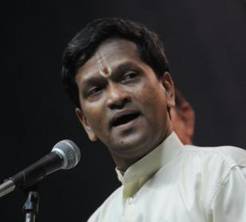
 SOURCE::: Input recd  from one of my friends who is an ardent devotee of kanchi mutt…. The “MISSING BOY” referred to in this blog is yet another good friend of mine!!!…Thanks to my kanchi mutt friend  for the divine input  and  to the ‘LOST AND FOUND ” FRIEND  who has given me  “GO AHEAD ” for sharing this divine incident with all of you…IT is due to the Grace of  Maha Periavaa , we are all blessed with an opportunity of listening to a Great Music Legend..today,,,,,,.what a divine miracle it is !!!!!

natarajan,

TRIVANDRUM INTERNATIONAL AIRPORT….A NEW GATEWAY TO INDIA….

Wednesday, 15 August 2012 1:43 PM
SOURCE:::: “THE HINDU”    TRIVANDRUM…
 Nice photograph of equally nice terminal….I am naturally going back to my Trivandrum days  espicially to the DAY …NOV 1 2006….when Hon. PM laid the foundation stone for this terminal and the DAY on which Bhoomi Pooja was performed for the beginning of construction activity at site…some time in the first week of FEB 2007…..I had the unique opportunity of participating in that pooja  in my capacity as Airport Director of  TVM Airport  and placed bricks alongwith precious stones and coins in the first pit dug on that day amidst pooja mantra slogams ….
Very nice to note that this airport is becoming a new gateway to our country ….
Natarajan

Thiruvananthapuram new gateway to India

S. ANIL RADHAKRISHNAN

DREAM VACATION: The Thiruvananthapuram international airport is joining four other airports to become a gateway to India for holidaymakers.Photo: S. Mahinsha
The HinduDREAM VACATION: The Thiruvananthapuram international airport is joining four other airports to become a gateway to India for holidaymakers.Photo: S. Mahinsha
At Thiruvananthapuram airport for citizens of 11 countries
God’s Own Country will soon become the fifth gateway to India for holidaymakers from 11 countries who can get tourist visa on arrival (T-VoA) as the international airport here will join the airports in Delhi, Mumbai, Chennai and Kolkata in issuing this passport to a dream vacation.
Citizens of Finland, Japan, Luxembourg, New Zealand, Singapore, Cambodia, Vietnam, the Philippines, Laos, Myanmar and Indonesia can get T-VoA. The Union Ministry of External Affairs has approved it for the citizens of France, Germany and Russia, and nod from the Bureau of Immigration (BOI), which functions under the Union Ministry of Home Affairs, is awaited.
Being introduced as part of a plan of the Union Ministry of Tourism to double the number of foreign tourists visiting the country in three or four years, T-VoA is expected to give a fillip to the burgeoning tourism sector of Kerala. The State registered 7,32,985 foreign tourist arrivals in 2011, earning Rs. 4,221.99 crore in foreign exchange. The recently unveiled tourism policy of the State targets 30 lakh foreign tourist arrivals by 2021.
The Airports Authority of India has informed the State government about the move to introduce the visa. The authority, which manages the airport, has informed the BOI that it is ready to allocate a facilitation centre, an exclusive visa desk, facilities for taking photographs of the visiting foreign nationals, a foreign exchange counter, a holding area, signboards and other infrastructure at the international terminal, official sources told The Hindu.
Thiruvananthapuram figures along with Goa and Bangalore on the shortlist of the BOI for granting T-VoA. Since the AAI has informed the bureau that the facilities sought are in place, T-VoA is expected to be introduced soon, sources said.
The bureau has approached the State police to get officials of the rank of sub-inspector deputed to the visa desk.
A tourist can get a visa on arrival with a maximum validity of 30 days. BOI norms say the objectives of the visit should only be recreation, sightseeing and meeting friends or relatives and no other purpose or activity. Those applying for the visa should not have a residence or occupation in India and should hold a passport with minimum six-month validity.

MOST USED SHORT WORD IN ENGLISH…. UP !!!!

WHAT IS THIS WORD “UP ” up to ?!!!!……AN input recd from one of my friends today…. i am sharing with you all …

Natarajan

Lovers of the English language might enjoy this. It is yet another example of why people learning English have trouble with the language. Learning the nuances of English makes it a difficult language. (But then, that’s probably true of many languages.)

There is a two-letter word in English that perhaps has more meanings than any other two-letter word, and that word is ‘UP.’

It is listed in the dictionary as being used as an [adv], [prep], [adj], [n] or [v].

It’s easy to understand UP, meaning toward the sky or at the top of the list, but when we awaken in the morning, why do we wake UP?
At a meeting, why does a topic come UP ? Why do we speak UP, and why are the officers UP for election and why is it UP to the secretary to write UP a report? We call UP our friends and we use ! it to brighten UP a room, polish UP the silver, we warm UP the leftovers and clean UP the kitchen. We lock UP the house and some guys fix UP the old car.
At other times the little word has a real special meaning. People stir UP trouble, line UP for tickets, work UP an appetite, and think UP excuses.

To be dressed is one thing but to be dressed UP is special.

And this UP is confusing: A drain must be opened UP because it is choked UP.

We open UP a store in the morning but we close it UP at night.We seem to be pretty mixed UPabout UP !

To be knowledgeable about the proper uses of UP , look the word UP in the dictionary. In a desk-sized dictionary, it takes UP almost 1/4 of the page and can add UP to about thirty definitions

If you are UP to it, you might try building UP a list of the many ways UP is used. It will take UP a lot of your time, but if you don’t give UP, you may wind UP with a hundred or more.

When it threatens to rain, we say it is clouding UP . When the sun comes out we say it is clearing UP. When it rains, it wets UP the earth. When it does not rain for awhile, things dry UP.

One could go on & on, but I’ll wrap it UP , for the time being!!!!!!!!!!!!!!!!!!!!

natarajan….

90/10 PRINCIPLE WILL CHANGE YOUR LIFE !!!!

SOURCE:::: STEPHEN COVEY on “choosing success”….Many of you must have read about this theory earlier… but still it is posted in my site today for the benefit of those who missed this till today!!!!

Natarajan

Discover The 90/10 Principle

It will change your life (or at least, the way you react to situations) 10% of life is made up of what happens to you …. 90% of life is decided by how you react…

What does this mean?

We really have NO control over 10% of what happens to us. We cannot stop the car from breaking down. The plane will be late arriving, which throws our whole schedule off. A driver may cut us off in the traffic. The other 90% is different. You determine the other 90%.

How? … By your reaction.

Do not let people fool you. YOU can control how you react. Let us use an example… You are having breakfast with your family. Your daughter knocks over a cup of coffee onto your business shirt. You have no control over what has just happened. What happens next will be determined by how you react. You curse. You harshly scold your daughter for knocking the cup over. She breaks down in tears. After scolding her, you turn to your wife and you criticize her for placing the cup too close to the edge of the table. A short verbal battle follows.

You storm upstairs and change your shirt. Back downstairs, you find your daughter has been too busy crying to finish her breakfast and getting ready to go to school. She misses the bus. Your spouse must leave immediately for work. You rush to the car and drive your daughter to school. Because you are late, you drive 40 miles per hour in a 30 mph speed limit zone. After a 15-minute delay and throwing $60.00 traffic fine away, you arrive at school. Your daughter runs into the building without saying goodbye. After arriving at the office 20 minute late, you realize you forgot your briefcase. Your day has started terrible. As it continues, it seems to get worse and worse. You look forward to coming home. When you arrive home, you find a small wedge in your relationship with your wife and daughter.

Why? Because of how you reacted in the morning.

Why did you have a bad day?

A) Did the coffee cause it?
B) Did your daughter cause it?
C) Did the policeman cause it?
D) Did you cause it?

The answer is “D”

You had no control over what happened with the coffee. How you reacted in those 5 seconds is what caused your bad day. Here is what could have and should have happened.

Coffee splashes over you. Your daughter is about to cry. You gently say: “It’s okay, honey, you just need to be more careful next time.” Grabbing a towel you go upstairs and change your shirt. You grab your briefcase, and you come back down in time to look through the window and see your child getting on the bus. She turns and waves. You arrive 5 minutes early a cheerfully greet the staff.

Notice the difference?

Two different scenarios. Both started the same. Both ended different.

Why? Because of how you reacted .

You really have no control over 10% of what happens in your life. The other 90% was determined by your reaction.

Here are some ways to apply the 90/10 Principle.

If someone says something negative about you, do not be a sponge. Let the attack roll off like water on glass. You do not have to let the negative comments affect you. React properly and it will not ruin your day. A wrong reaction could result in losing a friend, being fired, or getting stressed out. How do you react if someone cuts you off in the traffic? Do you lose your temper? Pound on the steering wheel? (a friend of mine had the steering wheel fall off), Do you curse? Does your blood pressure skyrocket? Who cares if you arrive 10 seconds later at work? Why let the cars ruin your drive?

Remember the 90/10 Principle and don’t worry about it.
You are told you lost your job. Why lose sleep and get irritated? It will work out. Use your worrying energy and time to find a new job. The plane is late. It is going to mangle your schedule for the day. Why take out your frustration on the flight attendant? She has no control over what is going on. Use your time to study, get to know the other passenger, why stress out? It will just make things worse.

Now you know the 90/10 Principle. Apply it and you will be amazed at the results. You will lose nothing if you try it. The 90/10 Principle is incredible. Very few know and apply this Principle. The result? You will see it by yourself! Millions of people are suffering from undeserved stress, trials, problems and headaches. We all must understand and apply the 90/10 Principle. It can change your life! Enjoy it! It only takes willpower to give ourselves permission to make the experience. Absolutely everything we do, give, say, or even think, it’s like a Boomerang. It will come back to us. If we want to receive, we need to learn to give first. Maybe we will end with our hands empty, but our heart will be filled with love. And those who love life, have that feeling marked in their hearts.

Stephen Covey, Submitted by Kartik Bodawala, India