Jeff Skiles: The “Miracle On The Hudson” Co-Pilot Who Rescued US Airways Flight 1549

Captain Sully didn’t land his flight on the Hudson River by himself — he had the help of a very talented co-pilot named Jeff Skiles
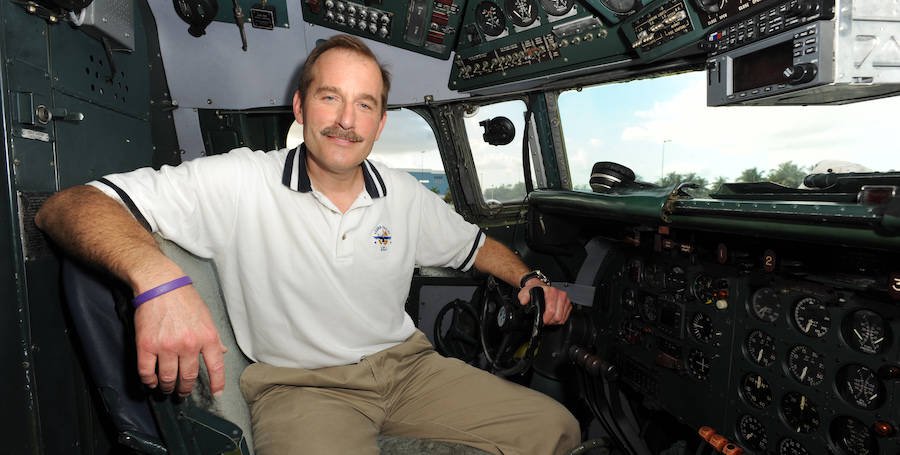
Larry Marano/Getty Images ….Jeff Skiles poses in the cockpit of a 1958 DC7 on November 17, 2011 in Miami, Florida.


When people think of the emergency plane landing into the Hudson River known as the “Miracle on the Hudson”, people usually think of Chesley “Sully” Sullenberger — the pilot of US Airways Flight 1549. But Captain Sully didn’t land the plane on the Hudson River in New York City alone.

There was another man responsible for bringing the passengers of flight 1549 to safety: Sully’s co-pilot, Jeff Skiles.

Skiles is the son of two pilots and started flying at the age of 16. With more than 21,000 hours logged in the sky and 30 years experience as a U.S. Airways pilot, Skiles’ ability to bring the plane to safety wasn’t just in his training, it was in his blood.

Jeff Skiles’ Second Flight On The Airbus A320

This was Skiles’ second time flying an Airbus A320, which would be en route from LaGuardia Airport in New York City to Seattle. “I’d never flown with anybody [in Flight 1549’s crew] until I’d met them that Monday [three days before the accident],” Skiles reported.
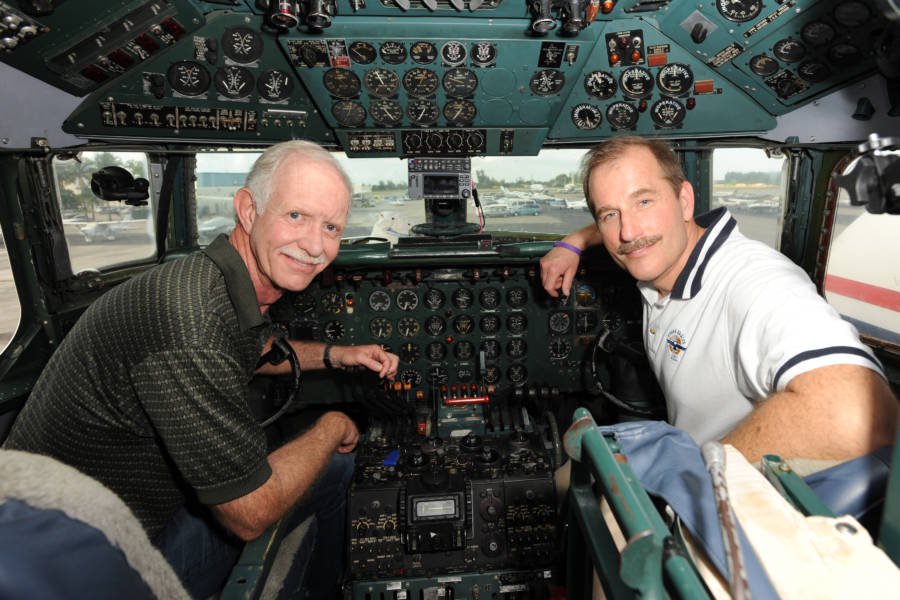


Larry Marano/Getty ImagesCaptain “Sully” Sullenberger and co-pilot Jeff Skiles pose in the cockpit of a 1958 DC7.

So on Jan. 15, 2009, Sullenberger and Skiles took off from LaGuardia Airport in New York City, headed down to Charlotte, North Carolina for a stopover before continuing to Seattle which was the flight’s final destination.

The Engines Fail

Only a few minutes after takeoff, the plane struck a flock of geese at an altitude of 2,818 feet, causing both engines to fail. With both engines shut down, Captain Sullenberger ultimately decided to make an emergency landing on the Hudson River. While Captain Sully focused on this, Skiles took all the necessary measures in order to try to complete an engine restart.

For pilots, there is a myriad of procedures at their disposal in the event of an emergency. Skiles, therefore, consulted their QRH or Quick Reference Handbook thatoutlined procedures for restarting the engines in the event of a failure. Unfortunately, the procedure is meant to be done at a significantly higher altitude, like 20-30,000 feet, and so by the time Skiles would get through the first page of references, the plane would already be in the water.

Skiles would have to rely on his lifetime experiences and intense training preparation to save the passengers of US Airways Flight 1549.                                                                                John Roca/NY Daily News Archive via Getty Images   US Airways Flight 1549 in the Hudson River. Rescue crews surround the US Airways plane where passengers can be seen being rescued.
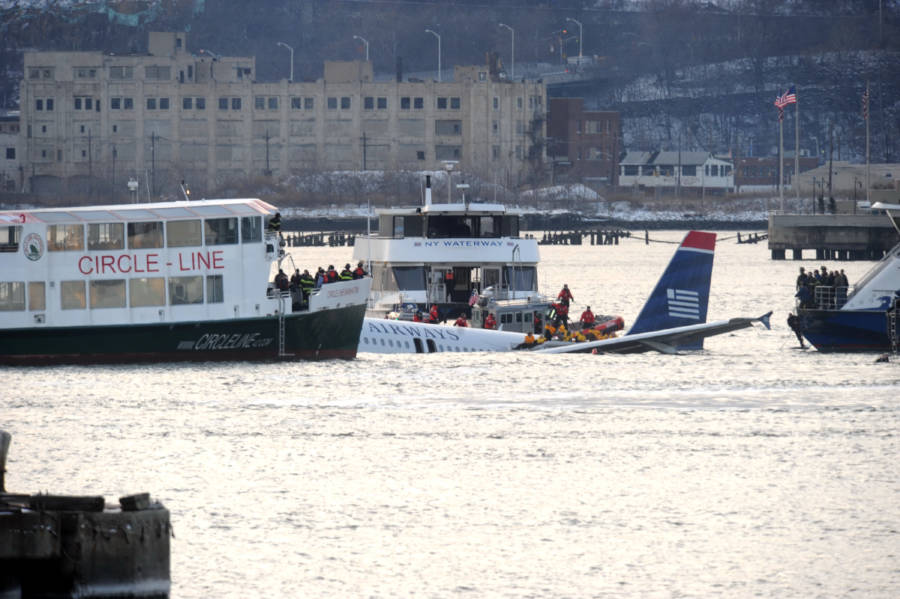
It was Skiles’ responsibility to warn the crew to brace for landing and to assist the passengers in evacuating the plane. He recalls that the passengers did not know how to brace for impact and following the impact, did not remember to take flotation devices with them. Skiles says that’s “because they didn’t read the [safety briefing] card, instead they were reading the paper.”

Skiles says a flight attendant reported to him after the accident that all of the passengers on her subsequent flights in the week after “had their cards out and were following along. She’d never seen that in thirty years of flying.”

Jeff Skiles And His Life After The “Miracle On The Hudson”

Following the “Miracle on the Hudson,” Skiles switched career gears. In 2010, he and Sullenberger began co-chairing the Experimental Aircraft Association’s (EAA) Young Eagles program, which aims to get young people interested in aviation.

Two years later, Jeff Skiles was named Vice President of Chapters and Youth Organizations for the EAA, at which point he announced his retirement from flying.

“With this (new position), I won’t be going back there,” Skiles said at the time. “My future will be with the EAA.”

Skiles uses his role in the “Miracle on the Hudson” landing to make speeches on crisis management and overcoming adversity in business at conferences nationwide. He’s represented by Leading Authorities, an agency that specializes in various types of speakers. According to his representatives, Skiles makes anywhere from $10,000 to $20,000 for each speech.

In addition to his speeches, Skiles also writes a monthly column for Sport Aviation magazine and has done so since 2011.

But Jeff Skiles’ “retirement” from flying didn’t last long. He left the EAA and now flies international flights for American Airlines. There’s a chance that you may have flown with one of the “Miracle on the Hudson” pilots if you’ve flown overseas with American recently.

A Future In Hollywood?

The story of the “Miracle on the Hudson” was made into a big-budget biopic called Sully starring Tom Hanks as Captain Sully and Aaron Eckhart as Jeff Skiles.

Obviously, much of the film focused on Captain Sully., but Skiles’ role wasn’t left out from the movie by any means.

Eckhart talked to both Sullenberger and Skiles in preparation for the role. Skiles and Eckhart specifically spoke about the disparity between how much fame he received compared to his captain.

“Jeff and I talked about this, and he said he realized that there has to be a face to the story — that the media is going to pick out a hero and Sully was that guy. Sully was the captain of the flight and Jeff came to terms with that and receded into the background,” said Eckhart.

Eckhart also made sure to note that Skiles and Sullenberger are still friends to this day, despite Captain Sully being the more recognizable face of the two.

The crew and passengers also have organized meetups in the past to commemorate the day their flight landed safely on the Hudson River.

Skiles also appeared on David Letterman and other talk shows alongside Captain Sully to recount how they landed the plane and the decision-making process that led them to land on the Hudson river.

Source….. https://allthatsinteresting.com

Natarajan


Message for the Day…” when faith dawns, fence it around with discipline and self-control, so that the tender shoot might be guarded against the goats and cattle – the motley crowd of cynics and unbelievers”

You have not yet realised the secret of this Advent. You are indeed lucky, more fortunate than many others. Only when Yasoda found every length of rope a little short to go round Krishna’s belly that she discovered that He was the Lord. So too, you will realise every description of My Divine Glory a little too short of the actuality. Do not argue and quarrel amongst yourselves. Examine, experience! Then you will know the truth. Do not proclaim before you are convinced. Be silent when you are undecided or evaluating. Of course, you must discard all evil in you before you can attempt to evaluate the mystery. And when faith dawns, fence it around with discipline and self-control, so that the tender shoot might be guarded against the goats and cattle – the motley crowd of cynics and unbelievers. When your faith grows into a big tree, those very cattle can lie down in the shade that it will offer!

Source….http://media.radiosai.org

Mumbai Dubbawalas Show the Way….


Mumbai’s Dabbawalas Choose Spades Over Tiffins, Clean Up Girgaum Chowpatty After Ganesh Visarjan.

Every year, the ten-day Ganesh Utsav, which is celebrated with much excitement ends with the immersion of Lord Ganesh idol. The entire country celebrates the festival with music, dance and modak, but the Mumbai Ganesh Visarjan has its own charisma. This year more than 41,828 Ganesh idols were immersed in various beaches of the city. Sadly, the immersion ceremony also resulted in the accumulation of debris and clogging of beaches with paraphernalia related to the idols and the festival. That is when Mumbai’s iconic dabbawalas with their garbage bags and spades reached Girgaum Chowpatty to clean it.

Like every other year, the Brihanmumbai Municipal Corporation (BMC) had already taken up the task to clean the city. But this year the dabbawalas – who, incidentally, are one of the brand ambassadors for Swachh Bharat Mission (SBM), along with some students of Kamlabai Educational & Charitable Trust, decided to take the task on their shoulders.


Not tiffins but spades in dabbawalas’ hands

September 23 marked the Ganesh Visarjan, and from that morning to the next day morning, the idols kept coming to the beach for the immersion. On September 24, at around 9 AM, more than two dozens of people from the Mumbai Dabbawala Association, along with students started cleaning the beach.

The hands that usually carry tiffins were holding spades with equal enthusiasm. With passion and zeal, the volunteers started to clean the beach which was strewn with broken idols, garlands and food offerings. The cleaning drive went on for more than three hours.

The Logical Indian got in touch with the Mumbai Dabbawala Association spokesperson, Subhash Talekar, who also participated in the cleanliness drive. He said that even after the BMC has made so many artificial ponds to immerse idols and ‘Nirmalya Kalash’ to dispose of garlands and flowers, the Mumbaikars still leave it on the beach or in the water.

“This adds to a lot of pollution, land and water. Our drive this year was not just for cleaning but also to make the people aware of the Swachh Bharat Mission,” he added.


“These people do not love the country enough”

While talking about the responsibilities of a citizen, he said that when an Indian citizen visits other countries, they follow their rules. They make sure not to make a menace in that country. However, when it comes to clean our own country, they just don’t follow the rules. “These people do not love the country enough. If they did, they would not have littered things here and there, as they do not do it in their homes.”

“After every festival, the roads are filled with the leftovers, that is why we have decided to organise our drive after every festival,” he added.

The Mumbai Dabbawala Association also held a cleanness drive after the “Dahi Handi” celebration in the city. Talekar says that their cleanliness drive is not just restricted to festivals, they also go to schools and colleges to help them clean their area.

While urging the people to participate in the Swachh Bharat Mission, he says that as a citizen we should laud this initiative and try to participate in it to make the country clean.

The Logical Indian appreciates the work done by Mumbai’s Dabbawalas and we hope more people realise the need for such initiatives.

Source…..The Logical Indian Crew ….www.https://thelogicalindian.com/

Natarajan


Message for the Day…” Upanishads and the Gita are your maps and guidebooks. Study Upanishads and scriptures with the goal to put the advice into practice and experience them.”

The greatest defect today is the absence of inquiry into the nature of the Self. That is the root cause of all this restlessness. If you are eager to know the truth about yourself, then, even if you do not believe in God, you will not go astray. All agitations must cease one day, isn’t it? Inquiry into the nature of your Self is best explained in the Upanishads. Just as a river’s flow is regulated by bunds and flood waters, and is directed to the sea, so too the Upanishads regulate and restrict the senses, the mind, and the intellect and help one to reach the sea and merge one’s individuality in the Absolute. Will scanning a map or turning over a guidebook give you the thrill of the actual visit? Will it even give you a fraction of the joy and knowledge of a journey through that land? Upanishads and the Gita are your maps and guidebooks. Study Upanishads and scriptures with the goal to put the advice into practice and experience them.

Source….http://media.radiosai.org/

Message for the Day…” When desires go down, automatically the mind is turned toward God. Desires only imprison you; they don’t set you free as you think. “

Today, desires are growing at an alarming pace. Even if people are about to die in a couple of minutes, they still express some desire or the other! What are these desires? What are you gaining from these? Nothing! On the other hand, if you had no desires, you would be so very peaceful. You may believe it or not, I have no desires within Me. That is why I have no worries. Follow Me! When you too have no desires your heart will be blissful. When desires go down, automatically the mind is turned toward God. Desires only imprison you; they don’t set you free as you think. Today, controls are being exercised on everything except the mind and desires. It is the desires that must first be controlled. This will give you a great deal of peace. You will be surprised to see so much peace in yourself. Peace is natural to you and will arise on its own, once desires are controlled.

Source…. http://media.radiosai.org

Message for the Day….” First, start with the idea, “I am in the Light.” Then the feeling, “The light is in me,” becomes established, leading to the conviction, “I am the Light.””

Devotion is referred to as upasana, which means dwelling near, feeling the Presence, or sharing the sweetness of Divinity. The yearning for upasanaprompts you to go on pilgrimages, to construct and renovate temples, and to consecrate images. All this is karma of a high order; they lead to spiritual wisdom. First, start with the idea, “I am in the Light.” Then the feeling, “The light is in me,” becomes established, leading to the conviction, “I am the Light.” That is supreme wisdom. A dog caught in a room of mirrors sees all its myriad reflections as not itself but as rivals, competitors, and other dogs that must be barked at. So it tires itself out by jumping on these reflections, and when the images also jump, it becomes mad with fury. A wise person, however, sees oneself everywhere and is at peace, even happy that there are so many reflections all around. That is the attitude you must learn to possess, that will save you from needless bother.


Source…..http://media.radiosai.org

HOW COMMERCIAL AIRPLANES KEEP A STEADY SUPPLY OF FRESH AIR AND HOW THE EMERGENCY OXYGEN MASKS SUPPLY OXYGEN GIVEN THEY ARE NOT HOOKED UP TO ANY AIR TANK

Jimmy K. asks: Why is there a plastic bag attached to airline oxygen masks if they don’t inflate?

Because the economics of having large oxygen tanks aboard airliners simply doesn’t work out (not to mention that the air quality inside the plane would rapidly become unpleasant if fresh air wasn’t constantly supplied, regardless of the oxygen levels), commercial airplanes have a very clever system installed to solve the problem of ultra-low pressure atmosphere at cruising altitudes.

In most modern airliners (the Boeing 787 Dreamliner not withstanding), outside air is “bled off” from the compressor stage of the turbine engines and eventually piped into the passenger areas. However, a bit of processing is needed first as the compressed air is extremely hot (on the order of nearly 400 degrees Fahrenheit or 200 degrees Celsius) at this stage. Thus, before it enters the passenger compartment, it is first allowed to expand and is run through a heat exchanger and air cycle system to cool it off sufficiently. This system also can work as a heater, with some of the hot air mixed in with the cooled air to regulate cabin temperature.

1280px-Turbofan_operation.svg

Once cooled and filtered, the pressurized air, which now has sufficient oxygen density to keep people happily conscious, is piped into the cabin area, usually at levels around 12 psi (about equivalent to atmospheric pressure at 7,000 feet).  Why 12 psi instead of something like sea-level pressures of about 14.7 psi? 12 psi is sufficient for the majority of passengers while simultaneously reducing the structural strain on the aircraft itself over something like sea level atmospheric pressures.

As for the air already in the cabin, this is vented out through an outflow valve (or multiple valves in larger aircraft), usually located near the rear of the plane. (FunNote: Before smoking was banned on commercial aircraft, the area around this outflow valve was generally stained dark brown from tobacco smoke.)

This outflow valve opens and closes automatically to maintain a steady pressure inside the cabin, while the entire system is ensuring that fresh air is continually being piped into and eventually blown out of the aircraft. In fact, while many complain of airplanes seeming “stuffy,” this system ensures that all the air in the aircraft is being completely replaced on average every 2-3 minutes. Yes, that means that your car, house or office is likely significantly more “stuffy” than a commercial airplane flying at 35,000 feet.

(Note: the Boeing 787 Dreamliner handles cabin pressurization a little differently, using a modernized version of the old, somewhat inefficient, electric compressor system seen on many older aircraft.)

Unfortunately, sometimes planes lose cabin pressure. Whatever the cause, the loss of pressure (usually set at atmospheric pressures past 14,000 ft) will result in oxygen masks deploying. From here, useful consciousness may only last as little as 5-15 seconds, depending on remaining cabin pressure, which is why it’s critical to immediately put your mask on, rather than helping someone else first. You can help them much better when you’re not unconscious or dead.

So how do these airline oxygen masks actually work? It turns out, the economics of having a centralized oxygen tank to provide even emergency oxygen for passengers likewise simply doesn’t add up. Similarly, having tiny individual pressurized oxygen tanks also isn’t feasible. In fact, these masks aren’t hooked up to any tank or air line at all. So how are you able to breathe oxygen through them?

Science.

While designs can vary slightly, in general, when you pull on the device to place it over your face, the tug on the mask’s lanyard releases a spring-loaded mechanism that sets off a small explosive charge. (Yep.) The resulting spark triggers a mixture of lead styphnate and tetracene to generate heat, which will eventually cause a chemical reaction that produces oxygen for your mask. (This is why they tell you to tug on the mask to get the oxygen flowing- you’ve got to set off the explosive charge to get the whole thing going.)

That’s right. What you breathe through the mask didn’t begin as pure oxygen. Rather, the plane is equipped with numerous small chemical oxygen generators (also known as “oxygen candles,” about the size of a small package of tennis balls) which contain a mixture of mostly sodium chlorate (NaClO3), less than 5% barium peroxide (BaO2) and less than 1% potassium perchlorate (KClO4). When these chemicals are heated by the lead styphnate and tetracene, each undergoes a reaction that ultimately results in a fair bit of filtered, life sustaining oxygen running through the tube to you.

Of course, you might also smell a faint burning odor, but this is nothing to be alarmed about; it just assures you that the system is working. In fact, if the plane is actually on fire, the masks usually won’t deploy, so as not to make the fire worse with the extra oxygen.

This brings us to the question of why the plastic bag on the breathing apparatus won’t necessarily inflate as you’re using the device. More than just cosmetic, the bags serve as something of a reservoir for oxygen. If you aren’t taking a breath at all (and have a good seal with the mask tight against your face) the bag keeps the precious, continuously flowing oxygen from escaping into the thin air around you, enabling more of the collected oxygen to be taken in when you do take a breath.  When this is happening, or you are breathing out with the valves on the mask releasing much of the used air, the bag may begin to inflate as oxygen collects. When you breathe in, it will deflate.

So why won’t it always inflate at least a little to show its working? To begin with, you may not have a great seal with the mask on your face, particularly if you have facial hair.  This will allow any produced oxygen (and air you exhale) to more readily escape. (As long as the mask is reasonably secure on your face, this should still provide you with sufficient oxygen to get by on as long as the plane isn’t flying above 40,000 feet and the pilot does his or her job and gets the plane down below 10,000 feet as rapidly as safely possible.)

Even if you have a good seal, however, the rate at which the oxygen is generated is often not enough to fully inflate the masks’ bag before you take deep, potentially panicky breaths, deflating it. This is simply because the oxygen generation isn’t on-demand (for the passengers anyway), but simply a continuous-flow production of oxygen.

Despite the potentially slow production, the chemical oxygen generators do provide oxygen at a sufficient rate to sustain passengers, generally designed such that peak oxygen production occurs right away (when the plane may be at very high altitude) with the oxygen production rates tailing off over the course of approximately 12-20 minutes before the system burns itself out.

This should be long enough for the pilots to get the plane low enough so that the air pressure is high enough for (relatively) normal atmospheric breathing. And if you’ve ever been lucky enough to be in this sort of situation, you know that those pilots can get the plane from altitudes like 35,000+ feet to safer atmospheric levels alarmingly quickly in an emergency; while it may not be literally true, it at least can seem like roller coasters have nothing on them, which is a good thing in this case.

Bonus Fact:

  • As a result of the way the system works for pressurizing the airplane cabin and keeping a steady supply of fresh air, the humidity levels are ultra-low, making it so you dehydrate very quickly on flights.  Particularly for long flights, it’s critical then that you drink plenty of fluids. This ultra-low humidity level, combined with the low cabin pressure, also reduces your sense of taste and smell by as much as 30%, which is why airline food generally tastes so bland. To try to compensate for this somewhat, many airlines make sure their food is much more strongly flavored or spiced than you’d normally find appetizing.

Source…..www.today i found out.com

Natarajan

Message for the Day…. “Man, living in this vast world, should not have narrow feelings. It is wrong to find faults in others. There may be faults in them. But do not see their faults, see their good qualities.”

You are born in this vast universe. You are living in this wide world. So, you should have broad feelings. Man, living in this vast world, should not have narrow feelings. It is wrong to find faults in others. There may be faults in them. But do not see their faults, see their good qualities. Then the entire universe becomes one family. This is the spirit of ‘brotherhood of man and fatherhood of God’. Such feelings promote universal brotherhood. Mamai Vamso Jeevaloke Jeevabhuta Sanatana (the eternal Atma in all beings is a part of My Being). The Divine is the source of the entire creation. He is the creation, the Creator and the director of the universe. Divinity is invisible. It cannot be understood. Recognise that you all are the reflections of the Divine. Then you will not hate anyone or feel jealous of anyone; you will be free from egotism.

Source…….http://media.radiosai.org/