Coldest Place on Earth !!!

NASA scientists have discovered the coldest place on our planet. It’s a high ridge in Antarctica on the East Antarctic Plateau. On a clear winter night, temperatures can dip below -133.6 degrees F (-92 degrees C)

The new record is several degrees colder than the previous low of minus 128.6 F (minus 89.2 C), set in 1983 at the Russian Vostok Research Station in East Antarctica. The coldest permanently inhabited place on Earth is northeastern Siberia, where temperatures dropped to a bone-chilling 90 degrees below zero F (minus 67.8 C) in the towns of Verkhoyansk (in 1892) and Oimekon (in 1933).

Scientists at the National Snow and Ice Data Center made the discovery by analyzing 32 years of data from several satellites that have mapped Antarctica’s surface temperature.

Near a high ridge that runs from Dome Arugs to Dome Fuji, the scientists found clusters of pockets that have plummeted to record low temperatures dozens of times. The lowest temperature the satellites detected was minus 136 F (minus 93.2 C), on Aug. 10, 2010.

With remote-sensing satellites, scientists have found the coldest places on Earth, just off a ridge in the East Antarctic Plateau. The coldest of the cold temperatures dropped to minus 135.8 F (minus 93.2 C) -- several degrees colder than the previous record. Image Credit: Ted Scambos, National Snow and Ice Data Center

With remote-sensing satellites, scientists have found the coldest places on Earth, just off a ridge in the East Antarctic Plateau. The coldest of the cold temperatures dropped to minus 135.8 F (minus 93.2 C) — several degrees colder than the previous record. Image Credit: Ted Scambos, National Snow and Ice Data Center

 
The quest to find out just how cold it can get on Earth – and why – started when the researchers were studying large snow dunes on the East Antarctic Plateau. When the scientists looked closer, they noticed cracks in the snow surface between the dunes, which were possibly created when wintertime temperatures got so low the top snow layer shrunk. This led scientists to wonder what the temperature range was, and prompted them to hunt for the coldest places using data from satellite sensors.

Video Link is given below …

Read more about how scientists found and measured Earth’s coldest place, from NASA

source::::: Earth sky News site

natarajan


World Outside My Window !!!


Some people look outside their window and see a beautiful tree. Then there are some who can see a beautiful view of the surrounding area. Then there are some, like those on the internation space station, that can look outside their windows and see the entire world. One might say that is the ultimate of views.

A beautiful video of the view one sees from outside this particular window… 

pl click the link above  for the video and watch the world as seen from ISS  WINDOW !!!!

NATARAJAN

source::::: youtube

natarajan


How the Himalayas were Formed ….

How the Himalayas Were Formed

EMILY UPTON   DECEMBER 4, 2013 

himalayasToday I found out how the Himalayas formed.

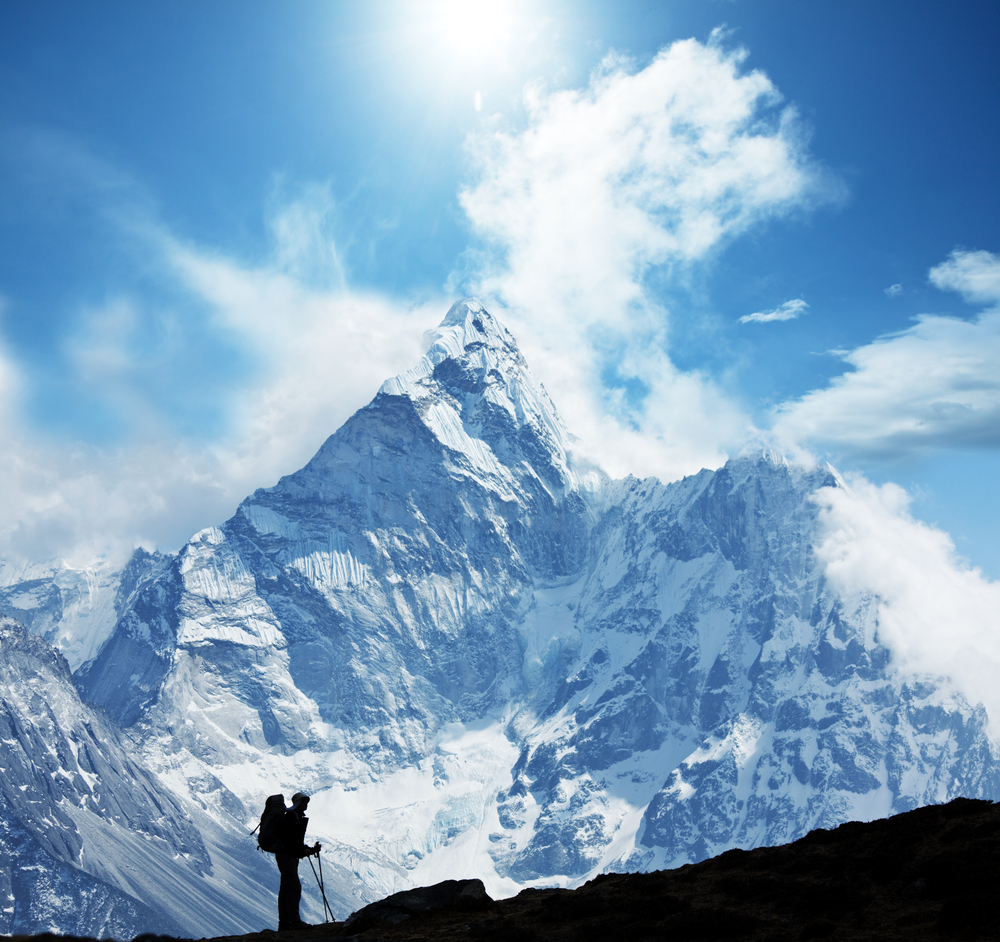
The Himalayas, which stretch some 2,900 kilometres between India, Pakistan, China, and Nepal, is the world’s tallest mountain range. In addition to Mount Everest, the world’s tallest mountain by peak elevation standing at 8,848 meters tall, the range also features several other mountain peaks over 8,000 meters. It is the only mountain range to boast mountains over 8,000 meters—the runner-up is a mountain range in South America, whose tallest peak is just 6,962 meters tall.

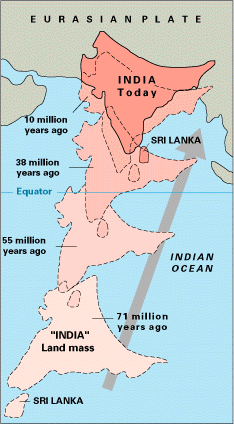
Millions of years ago, these mountain peaks didn’t exist. The Asian continent was mostly intact, but India was an island floating off the coast of Australia. Around 220 million years ago, around the time that Pangea was breaking apart, India started to move northwards. It travelled some 6,000 kilometres before it finally collided with Asia around 40 to 50 million years ago. Then, part of the Indian landmass began to go beneath the Asian one, moving the Asian landmass up, which resulted in the rise of the Himalayas. It’s thought that India’s coastline was denser and more firmly attached to the seabed, which is why Asia’s softer soil was pushed up rather than the other way around.

indiaThe mountain range grew very rapidly in comparison to most mountain ranges, and it’s actually still growing today. Mount Everest and its fellows actually grow by approximately a net of about a centimetre or so every year. That’s in comparison to the Appalachian Mountains, which developed some 300 million years ago or more, which is actually decreasing in peak elevations as it erodes.

The continued growth in the Himalayas is likely due to the Indian tectonic plate still moving slowly but surely northward. We know the plate is still moving in part because of the frequent earthquakes in the region.

Now, if you do the math, you’d find that if the Himalayas had been growing at the current rate for 40 million years, they should be about 400 km tall! Once the infrastructure was in place, this would have given us a much cheaper way to put things into low Earth orbit and beyond. (For reference, the International Space Station typically orbits at between 300 km to 400 km.)

So what happened? In part, the rate of vertical growth has varied over time, including in favor of more horizontal growth. And, of course, gravity and erosion having limited the mountains’ growth significantly.

India merging into Asia became the accepted theory about how the Himalayas were formed around 1912. That’s when Alfred Wegener, a German meteorologist, came up with the “Theory of Continental Drift” which gave us our first ideas about Pangea, tectonic plates, and the thought that continents were moving away from or closer to each other.

What does the future for the Himalayas look like? Undoubtedly, the mountains will continue to grow, though at the same time eroding too; but the net is expected to continue to grow as the Indian tectonic plate doesn’t look like it’s going to slow down any time soon. That means more earthquakes and, over time, slightly taller mountains to climb.

source::::today i foundout .com

natarajan

An Eagle”s Eye View…Spectacular Footage !!!

Spectacular footage of Australia’s north west desert region has been captured, inadvertently, by a sea eagle that ‘stole’ a video camera and took it for a 70-mile flight.

The lens recorded the bird’s flapping wings – in sound and vision – the crevasses it flew through, the desert it crossed and finally the amusing moments when it landed and began pecking at the device.

The motion-sensor camera had been set up by Aboriginal rangers in a gorge near the Margaret River last May in the hope of capturing images of fresh-water crocodiles.

The sea eagle stole a camera set up to record crocodiles and inadvertently captured stunning footage of the Australian outback
The camera picks up the sound and view of the bird's wings as it flies for 70 miles

The camera had been set up to record fresh-water crocodiles but instead recorded the crevasses along the route taken by the bird

The camera had been set up to record fresh-water crocodiles but instead recorded the crevasses along the route taken by the bird

But within weeks the camera had disappeared. No-one, they agreed, would dare to steal it from croc territory, so they believed it had somehow fallen into the water.

Then, just a few weeks ago, ranger Roneil Skeen and his colleagues received a message from a Parks and Wildlife ranger saying a small device had been found near another river more than 70 miles away.

The video camera revealed the identity of the thief and just where the scoundrel had taken it.

Rangers were able to extract three 30-second clips that showed the juvenile sea eagle scooping up the camera and taking to the air with it, capturing amazing scenes of the Australian outback.

The stolen camera captured the stunning scenery of Australia's desert region

The curious sea eagle is then seen pecking at the camera after it finally lands after a long flight

When the camera was eventually deposited on firm ground, the eagle can be seen approaching the lens and pecking at it.

‘There are 14 of us rangers and we’ve been pretty amazed at what we’ve seen on the camera,’ said Mr Skeen, a member of the Gooniyandi Aboriginal tribe.

‘We’ve had camera traps moved by animals before, but none of them have taken off – a sort of flying camera. It was quite incredible to see it’.

Mr Skeen told the ABC: ‘We knew this was a juvenile eagle because the adult sea eagles, once they get their food or their prey, they usually take it right up into the sky and drop it

But this one was still learning because he just took it near the cliff-side and he never dropped it. He just put it down and started pecking at it.

‘An adult one would have flown it right up the top and yeah, for sure, it would have smashed that camera.’ It won’t happen again, said Mr Skeen.

He and his colleagues have resolved to bolt their camera down next time.

source:::: RICHARD SHEARS  in mailonline.com UK

natarajan