Image of the Day…Geologic Map of Mars …

Geologic map of planet Mars

USGS released this cool geologic map of Mars this week, which was prepared for NASA. What to see first? Notice impact craters, in yellow.

View interactive map sheet. | Geologic map of Mars via Denneth Tanaka et.al. 2014

USGS released this geologic map of Mars yesterday (July 14, 2015), which was prepared for NASA. If you click to the map at USGS’ site, and use the tools at the lower right, you can explore Mars. Popular Science has a good explanation of what you’ll be seeing:

All the different colored parts represent areas of crust that were formed at different times and from different processes. For example, the extensive green area near the north pole represents lowland plains formed during the Red Planet’s Hesperian Epoch, about 3.7 billion to 3 billion years ago. Scientists think those northern plains are covered in sediment from what were once Martian rivers and lakes. You can learn more about the green area, or any other colored area, in the extensive key on the right side of the map sheet.

One easy thing to spot are impact craters, which are roundish and marked on the map in bright yellow. Can you find Gale Crater, the site where NASA’s Curiosity rover landed? Gale Crater is just southwest of Elysium Planitia, which is the mostly pink area on the right side of the map.

Explore the larger, interactive map sheet here, from USGS


Source:::: Earth sky news site

Natarajan

” Why MH 17 was flying over Eastern Ukraine ? …”


The site of the Malaysia Airlines plane crash in eastern Ukraine.The site of the Malaysia Airlines plane crash in eastern Ukraine.

The former head of safety at Qantas has questioned whether Malaysia Airlines flight MH17 should have been flying over the eastern Ukraine given the heightened state of the conflict with Russia.

Ron Bartsch, who now heads international aviation consultancy AvLaw International, said airline network planners had a choice over whether they wanted to fly over dangerous areas or to go around them, even if it would require more fuel.

Mr Bartsch said that while bodies like the International Air Transport Association issued advisories and warnings from time to time, incidents like MH17 “really hit home that it is up to individual airlines to continually monitor and assess the risk on a daily basis”.

Ultimately it was up to the airlines themselves to determine whether potential hazards on their routes were within “an acceptable level of safety”, he said.

Mr Bartsch said there had been instances, such as a volcano eruption in Chile, when Australian airlines had chosen not to fly even though the airspace was declared safe by authorities.

“You can use the analogy of a policeman can’t be there to tell you when to cross the road and when not to,” he said. “It is up to the individual, in the case of airlines, to make that assessment.”

European air traffic control group Eurocontrol said Ukrainian authorities had closed the airspace from the ground level to 32,000 feet but the airspace at 33,000 feet, where MH17 was flying at the time it was shot down, had remained open.

Malaysia Airlines said the usual flight route was earlier declared safe by the International Civil Aviation Organisation. The International Air Transportation Association has stated that the airspace the aircraft was traversing was not subject to restrictions.

However, other airlines had chosen to avoid that airspace. Qantas said none of its flight paths track across the Ukraine and its London to Dubai services flew 400 nautical miles south of the region, having been rerouted several months ago amid the conflict between Russia and Ukraine.

Emirates said it had suspended flights from Dubai to Kiev subject to further notice, but added its flights to and from Europe and the US flew a different route outside the zone where MH17 was shot down. Cathay Pacific confirmed its flights did not fly over the concerned airspace.

Singapore Airlines would not say whether it had been flying over Ukraine until the incident occurred.

“We generally have a number of pre-existing flight paths for our flights to and from the destinations that we are operating to,” a Singapore spokeswoman said. “At this point, we are no longer using Ukrainian airspace and have re-routed all our flights to alternative flight paths that are away from the region.”

Mr Bartsch said deciding not to fly over a conflict zone such as Ukraine, Syria, Israel, Libya or Iraq would come at a commercial cost to an airline, because more fuel would be required at a time of high fuel prices.

“Obviously with airline operations now, they are increasingly commercially competitive,” he said.

“It means that unless they perceive a risk that is sufficient, they are not going to do anything other than the lowest cost route.”

Source:::::

The site of the Malaysia Airlines plane crash in eastern Ukraine.The site of the Malaysia Airlines plane crash in eastern Ukraine.

The former head of safety at Qantas has questioned whether Malaysia Airlines flight MH17 should have been flying over the eastern Ukraine given the heightened state of the conflict with Russia.

Ron Bartsch, who now heads international aviation consultancy AvLaw International, said airline network planners had a choice over whether they wanted to fly over dangerous areas or to go around them, even if it would require more fuel.

Mr Bartsch said that while bodies like the International Air Transport Association issued advisories and warnings from time to time, incidents like MH17 “really hit home that it is up to individual airlines to continually monitor and assess the risk on a daily basis”.

Ultimately it was up to the airlines themselves to determine whether potential hazards on their routes were within “an acceptable level of safety”, he said.

Mr Bartsch said there had been instances, such as a volcano eruption in Chile, when Australian airlines had chosen not to fly even though the airspace was declared safe by authorities.

“You can use the analogy of a policeman can’t be there to tell you when to cross the road and when not to,” he said. “It is up to the individual, in the case of airlines, to make that assessment.”

European air traffic control group Eurocontrol said Ukrainian authorities had closed the airspace from the ground level to 32,000 feet but the airspace at 33,000 feet, where MH17 was flying at the time it was shot down, had remained open.

Malaysia Airlines said the usual flight route was earlier declared safe by the International Civil Aviation Organisation. The International Air Transportation Association has stated that the airspace the aircraft was traversing was not subject to restrictions.

However, other airlines had chosen to avoid that airspace. Qantas said none of its flight paths track across the Ukraine and its London to Dubai services flew 400 nautical miles south of the region, having been rerouted several months ago amid the conflict between Russia and Ukraine.

Emirates said it had suspended flights from Dubai to Kiev subject to further notice, but added its flights to and from Europe and the US flew a different route outside the zone where MH17 was shot down. Cathay Pacific confirmed its flights did not fly over the concerned airspace.

Singapore Airlines would not say whether it had been flying over Ukraine until the incident occurred.

“We generally have a number of pre-existing flight paths for our flights to and from the destinations that we are operating to,” a Singapore spokeswoman said. “At this point, we are no longer using Ukrainian airspace and have re-routed all our flights to alternative flight paths that are away from the region.”

Mr Bartsch said deciding not to fly over a conflict zone such as Ukraine, Syria, Israel, Libya or Iraq would come at a commercial cost to an airline, because more fuel would be required at a time of high fuel prices.

“Obviously with airline operations now, they are increasingly commercially competitive,” he said.

“It means that unless they perceive a risk that is sufficient, they are not going to do anything other than the lowest cost route.”

“I think the problem is if sometimes every other airline is doing it or the majority of airlines are doing it, airlines are drawn into a false sense of comfort, if you like, to think ‘if it is good enough for them, it is good enough for us’.”

Source::::: Jamie Freed in http://m.smh.com.au/business/aviation

Natarajan
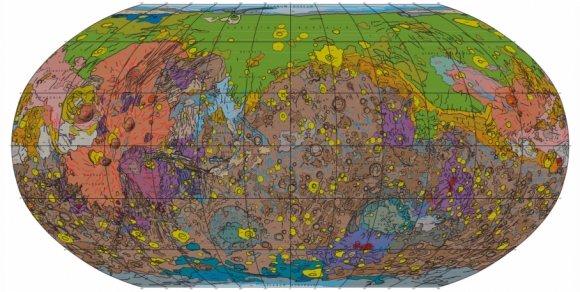
Image of the Day…

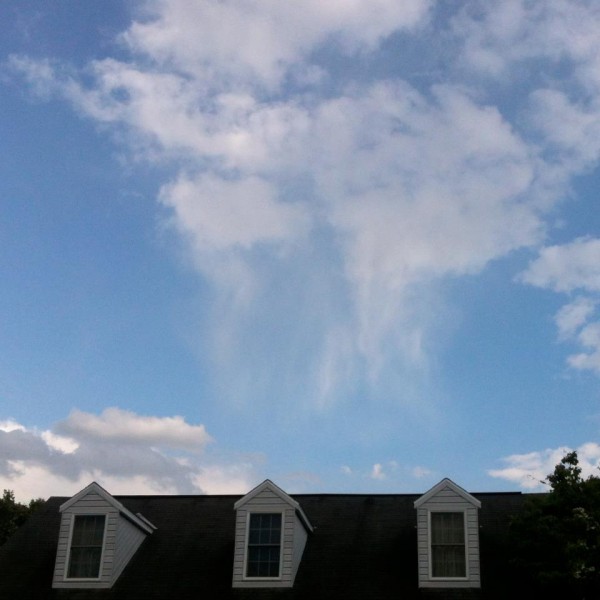
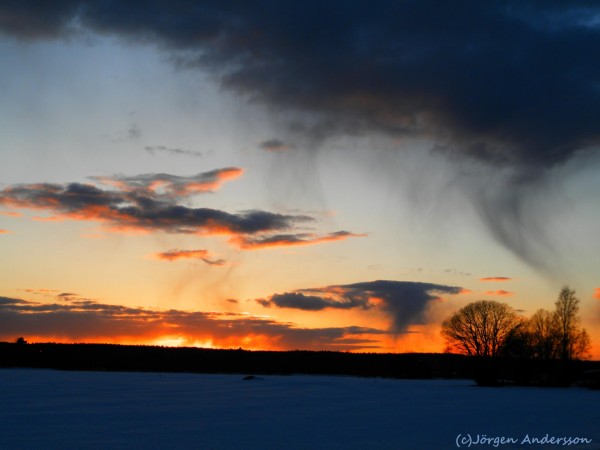
” VIRGA”… The Rain that Never Reaches Ground ….!!!

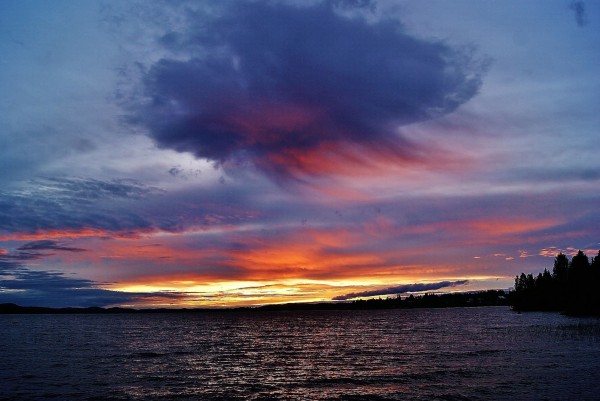
Birgit Boden captured virga during a midnight sunset in the month of June, from northern Sweden.

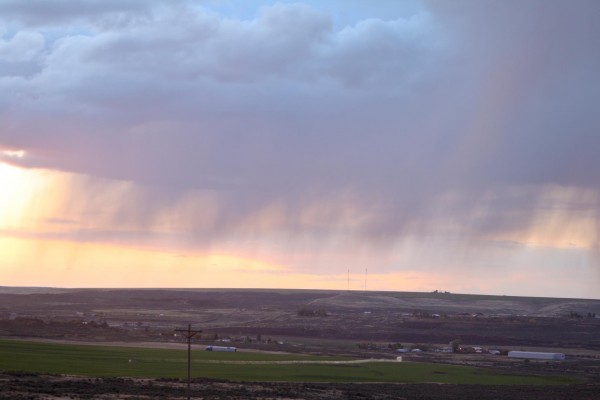
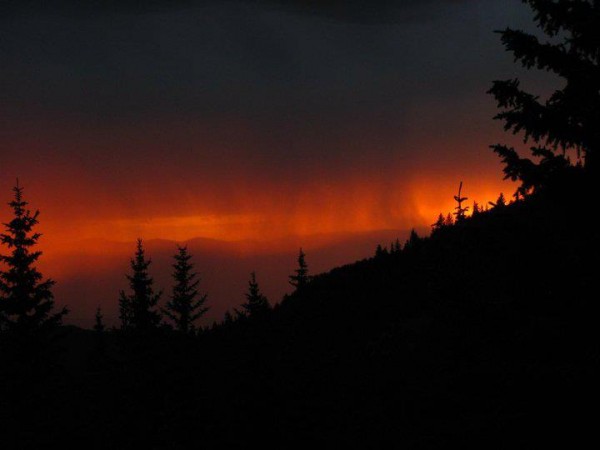
We’ve all seen virga, but maybe not known what it’s called. Virga is rain that evaporates before it hits the ground. It often appears in streaks or shafts extending from the bottoms of clouds. You often see virga over a desert, where low humidity and high temperatures can cause rain to evaporate shortly after being released by clouds. Or you might see virga at high altitudes; in fact, the precipitation often starts out in the form of ice crystals. Virga is commonly seen in the U.S. West and above the Canadian Prairies, in the Middle East, Australia and North Africa. At some northerly latitudes, too – as in the photos from Sweden on this page – virga sometimes paints the sky above.

The word virga is derived from Latin meaning “twig” or “branch”.

It’s an especially dramatic sight at sunrise or sunset.

The photos on this page are from EarthSky friends on Facebook.

Susan Jensen captured this image of virga in eastern Washington.

Timothy Busch caught this virga at sunset in New Mexico.

Ron Ratliff caught this virga near Mexican Hat, Utah.

Virga over Montana, by Jessica Gutliph Karr.

Virga over west Texas by Deborah Byrd.

Virga over Lancaster County, Pennsylvania by Beth Katz.

Virga over Sweden in the month of April, by Jorgen Norrland Andersson.

Bottom line: Virga is rain that evaporates before it reaches the ground. It appears in streaks or shafts extending from the bottoms of clouds. You often see virga over a desert, where low humidity and high temperatures can cause rain to evaporate high in the sky.

Source::: Earth sky news

Natarajan

Image of the Day…A Rocket Reentry over the Skies of Australia…


Bright meteor over Australia on July 10 was a rocket reentry

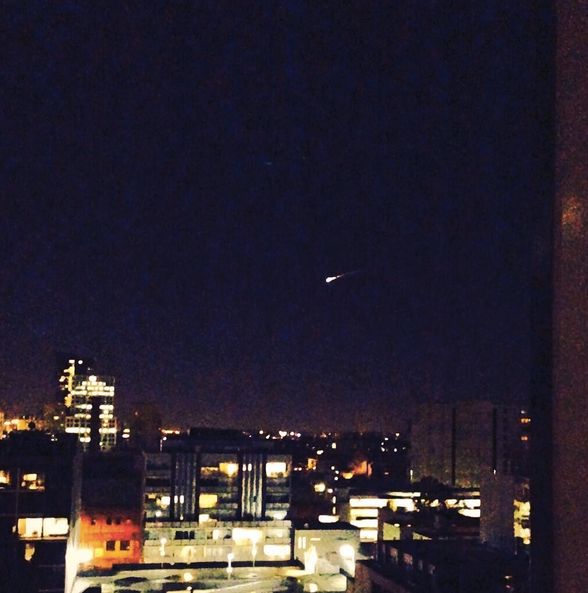
That bright meteor over Australia – seen by many – was likely the reentry of the upper state of a Soyuz rocket, launched two days earlier. over

Bright meteor over the city of Melbourne, Australia on July 10, 2014 via Nathalie J. Berger (@najube).

UPDATE JULY 10 AT 1815 UTC (1:15 P.M. CDT). Experts are now reporting that today’s bright meteor – widely reported over southeastern Australia today (July 10, 2014) – was not a piece of natural space debris, but instead was the reentry of the upper state of a Soyuz rocket, launched on July 8. It seems the meteor was part of the vehicle used to launch Russia’s second Meteor-M weather satellite. Jonathan McDowell (@planet4589), an astronomer at the Harvard-Smithsonian Center for Astrophysics, tweeted that the Australian meteor was:

… Object 40077, 3rd stage from Meteor-M launch, reentered over Australia at about 1145 UTC Jul 10

Daniel Fischer (@cosmos4u) pointed out that time and location of the Australian meteor event appear to match the last TIP (Tracking and Impact Prediction) message for the reentry. And, as Fischer pointed out on Twitter just now:

He’s talking about the video below, caught by in Australia via mobile phone. You can see that the meteor does take awhile to streak across the sky, and, indeed, in verbal reports of the meteor from earlier today, people were commenting on how slow it was.


Thursday night in Australia, reports of a very bright and slow-moving shooting star flooded into the Brisbane Times, which covers the widely populated states of Victoria and New South Wales in southeastern Australia. People in the city of Melbourne, Australia’s second-largest city, also reported a bright object streaking through the sky. The Sun Herald in Melbourne reported:

Social media lit up when the unusual spectacle was seen at around 10pm.

The object – described by witnesses as like a flame – was reported to be flying rapidly.

Charmaine Harris from Thornbury said it lasted more than a minute.

The Australia Bureau of Meteorology, which received reports of the July 10 meteor around 10 p.m., at first said it could be natural debris from space or artificial space junk. Now, it appears it was space junk.

Aviation Week reported on the launch of a Russian Soyuz-2.1b rocket with a Fregat upper stage – carrying a Russian weather satellite and six small spacecraft to orbit on July 8. According to Aviation Week, liftoff took place at 9:58 p.m. local time from the Baikonur Cosmodrome in Kazakhstan.

They said this satellite – Russia’s second Meteor-M weather satellite – is designed to monitor global hydrometeorological data for weather forecasting and to gather data on the ozone and radiation environment in near-Earth space. It will also measure sea-surface temperature, monitoring icy conditions at the poles for navigation. The satellite itself, presumably still safely in orbit, has a design life of five years.

Bottom line: A bright meteor was seen by many in Australia around 10 p.m. local time on July 10, 2014. Experts are now reporting that the meteor was not a piece of natural space debris, but instead was the reentry of the upper state of a Soyuz rocket, launched on july8.

Source:::: Earth sky news

Natarajan

Image of the day… Super moon on 12 july…

July 12 full moon first of 3 full-moon supermoons in 2014…

Image credit: Stefano Sciarpetti

Courtesy U.S. Naval Observatory

The moon has reached the crest of its full phase. The full moon crested this morning (July 12, 2014) at 6:25 a.m. CDT. (11:25 UTC). Saturday night’s moon will still look full, however, and it’ll be closest to Earth for this month. The moon’s perigee or closest point comes at at 3:37 a.m. CDT (8:27 UTC) Sunday morning, July 13. For all of us, around the world, the moon on both Friday and Saturday night rise around the time of sunset and set at dawn.

Thus on July 12 we have the first full moon after the June 21 solstice. Around this time of year, in North America, buck deer start growing antlers, thunder storms rage and farmers struggle to pile up hay in their barns. Thus, according to folklore, we call this full moon the Buck Moon, Thunder Moon or Hay Moon. The July 2014 full moon is also the first of three full-moon supermoons in 2014. Previously, we had two supermoons in January – on January 1 and 30 – but they were new-moon supermoons. The full moons on July 12, August 10 and September 9 all enjoy the supermoon designation because the centers of these full moons and the center of Earth are less than 361,863 kilometers (224,851 miles) apart. The closest supermoon of the year comes with the August 10 full moon, presenting a moon that’s only 356,896 kilometers (221,765 miles) from Earth.

Because it’s a supermoon, and relatively close to Earth, expect higher-than-usual tides in the days ahead.

Source:::: Earth sky news

Natarajan

What is a supermoon?

Image of the Day… Night Shining Clouds !!!


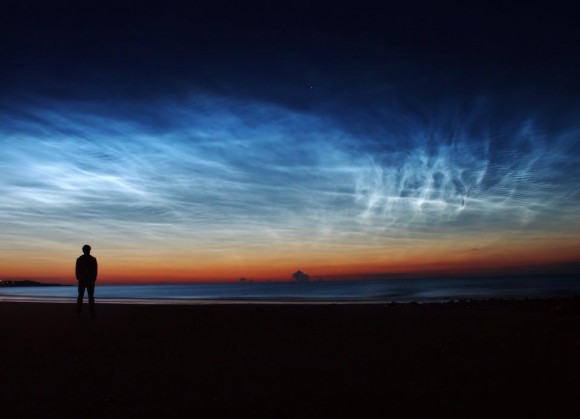
Electric blue night-shining clouds

2014 has been a great year for noctilucent, or night-shining, clouds, seen at high latitudes only from about mid-May to August. Wondrous, if you can catch them!

Matt Robinson in Sunderland, U.K., saw this wonderful, electric-blue noctilucent clouds on July 7, 2014.  They are sometimes called night-shining clouds.

The secrets of night-shining clouds: Everything you need to know

Europe got a fabulous display of noctilucent clouds on July 3

NASA’s Astronomy Picture of the Day (APOD) is featuring noctilucent clouds today, too

Source:::: Earth sky news

Natarajan


Image of the Day………Glacier in Pakistan !!!

Baltoro Glacier is a river of ice in Pakistan

EarthSky Facebook friend Muhammad Umair posted this photo of the Galtoro Glacier in the Gilgit region of Pakistan in July, 2014.  It's one of the longest non-polar glaciers in the world.

This isn’t the Arctic. It isn’t Greenland. It’s Pakistan. At 63 kilometers (39 miles) in length, Baltoro Glacier in Pakistan is one of the longest glaciers outside the polar regions.

Source:::Earth sky news

Natarajan

Image of the Day….


Stairway to heaven

“I saw this stairway leading into the Milky Way and figured I would give it a try.”

Photo by Wesley Liikane, aka Cowboy with a Camera.  Visit him on Facebook.

Wesley Liikane caught this shot on the last weekend in June, when he hosted a photography workshop at a very dark site, Algonquin Park in central Ontario, Canada. He wrote:

… at the second location I saw this stairway leading into the Milky Way and figured I would give it a try. I used multiple exposures, as I did not want to have light ruining the others night vision. One exposure was 155 seconds to let the natural light bring out the foreground while the other image was a 35-second exposure.

You can see the result here. Beautiful. Thank you, Wesley.

More photos by Wesley Liikane, aka Cowbody with a Camera


Source::::Earth Sky News

Natarajan