Is it True NASA Used Space pens and Russia Used Pencils ???!!!


NASA Spent $12 Million For a Space Pen While the Russians Just Use Pencils-Fiction!

Summary of the eRumor
The message says that the U.S. National Aeronautics and Space Administration spent ten years and $12 million developing a pen that writes in zero gravity for use by astronauts. The pen will write upside down, underwater, on almost any surface and is functional at extremely hot and cold temperatures. The Russians, however, filled the need for a space writing instrument by simply using pencils.
The Truth
For some people, it’s sport to point out government waste and bureaucratic stupidity, but this story about the space pen won’t provide ammunition for it. The government did not fund the development of the pen, it did not cost $12 million to perfect, and neither the Americans nor the Russians consider it desirable to use pencils in space. In fact, both Americans and Russians use the space pen for their flights.

The famous space pen, which is still a popular product today, was developed by Paul Fisher the founder of the Fisher pen company. An engineer who improved ball point technology, he created his “bullet pen” in the 1940’s, which became one of the best-selling pens of the Twentieth Century. Later, he perfected a pen that was sealed with pressure inside of the cartridge that made the ink to flow regardless of gravity. It also worked in high and low temperature extremes, underwater, and wrote on many kinds of surfaces. According to the Fisher Pen company, after extensive testing, NASA chose the pen in 1967 for use by Apollo astronauts and it’s been a part of space travel ever since. The company says it took Fisher about 2 years and $2 million to develop the space pen. Prior to 1967, there were no pens that worked in space so there were pencils used, but there were concerns about pencil dust floating around the space capsules as well as fears that if the tip of a pencil broke off and drifted into the electronics, there would be problems.
A real example of the eRumor as it has appeared on the Internet:

When NASA first started sending up astronauts, they discovered that ball-point pens would not work in zero gravity. To combat this problem, NASA scientists spent a decade and $12 million developing a pen that writes in zero gravity, upside down, underwater, on almost any surface including glass and at temperatures ranging from below freezing to over 300C.

When confronted with the same problem, the Russians used a pencil.

source:::::true or fiction .com

natarajan

Stunning Images of Planes !!!…A Visual Treat for the Eyes !!!

A flock of birds surround a Boeing 777 at London's Heathrow Airport. Picture: Air...

A flock of birds surround a Boeing 777 at London’s Heathrow Airport. Picture: AirTeamImages Source: Supplied

SO THIS is what the plane spotters hang out for.

These unbelievable mile-high snaps have been released by aviation photographersAirTeamImages to celebrate its 10th birthday, and they provide a unique glimpse into life in the skies.

From hundreds of birds surrounding a Boeing 777 at Heathrow Airport, to a Boeing F/A-18 Super Hornet visibly breaking the sounds barrier above San Francisco, these remarkable mile-high moments are usually never witnessed by passengers.

Other highlights include the look on a pilot’s face as his small plane turns upside down, a jumbo jet swooping low over sunbathers, and a view of lightning from the cockpit of a Jetstar plane.


Lightning strikes a Jetstar plane. Picture: AirTeamImages

Lightning strikes a Jetstar plane. Picture: AirTeamImages Source: Supplied


The Red Arrows put on a patriotic show at Fairford, UK. Picture: AirTeamImages

The Red Arrows put on a patriotic show at Fairford, UK. Picture: AirTeamImages Source: Supplied


US Airways Boeing 757 flies over the heads of sunseekers at St Maarten. Picture: AirTeamImages

US Airways Boeing 757 flies over the heads of sunseekers at St Maarten. Picture: AirTeamImages Source: Supplied

AirTeamImages was established in 2003 by the world renowned aviation photographer Derek Pedley.

“We are the largest supplier of aviation images in the world,” he said. “We have 200 photographers which I have hand-picked and we have a portfolio of images that tell the whole history of aviation right back to the 1900s.

A Boeing 747 cuts through the heart-shaped clouds at Paris - the City of Love. Picture: Ai...

A Boeing 747 cuts through the heart-shaped clouds at Paris — the City of Love. Picture: AirTeamImages Source:Supplied


Pedley’s love of planes began when he was a child.

“I have a real fascination with planes, which was probably kickstarted by me growing up next to Birmingham Airport,” he said.

“I would go with my friends and play football behind the fences which ran alongside the runways. When photography came along it helped to keep the interest going, and here I am today.”

All the colours of a rainbow - created from the aircraft's emissions. Pic...

All the colours of a rainbow — created from the aircraft’s emissions. Picture: AirTeamImages Source: Supplied

The pilot of this Aviat Christien Eagle II hangs on in Argentina. Picture: AirTeamImages

The pilot of this Aviat Christien Eagle II hangs on in Argentina. Picture: AirTeamImages Source: Supplied


An Embraer ERJ190 and the larger Boeing 777 appear to be one at Amsterdam. Picture: AirTeamImages

An Embraer ERJ190 and the larger Boeing 777 appear to be one at Amsterdam. Picture: AirTeamImages Source:Supplied


A British Airways Airbus A319 flies to the moon and back. Picture: AirTeamImages

A British Airways Airbus A319 flies to the moon and back. Picture: AirTeamImages  

A Pakistan International Airlines Boeing 777 in the fog at Oslo, Norway. Picture: AirTeamImages

A Pakistan International Airlines Boeing 777 in the fog at Oslo, Norway. Picture: AirTeamImages Source: Supplied

Blink and you won't miss this distinctive tailfin of a Boeing 777. Picture: AirT...

Blink and you won’t miss this distinctive tailfin of a Boeing 777. Picture: AirTeamImages  

Arbus planes come into land at Heathrow Airport. Picture: AirTeamImages

Airbus planes come into land at Heathrow Airport. Picture: AirTeamImages

A KLM Airlines 747 plane. Picture: AirTeamImages

A KLM Airlines 747 plane. Picture: AirTeamImages


Up close. Picture: AirTeamImages

Up close. Picture: AirTeamImages


The most awesome plane photos you'll...

An Air India Boeing 777. Picture: AirTeamImages


It's the aircraft in the background that gets the most attention! Picture: AirT...

It’s the aircraft in the background that gets the most attention! Picture: AirTeamImages


A Qantas plane takes off. Picture: AirTeamImages

A Qantas plane takes off. Picture: AirTeamImages

A Boeing 747 lands at Amsterdam. Picture: AirTeamImages

A Boeing 747 lands at Amsterdam. Picture: AirTeamImages


source:::::news.com.au      See more incredible aviation photography at AirTeamImages.com.

natarajan

Difference Between an Asteroid and Comet …

Today I found out the difference between an asteroid and a comet.

A comet is simply a relatively small astronomical object that has a “tail”, known as a coma, which makes up a temporary atmosphere for the comet.  Asteroids, on the other hand, do not exhibit this tail and are classically defined as simply an astronomical object that orbits around the Sun, but isn’t a planet or a comet.

The tail of a comet is made from the Sun heating various substances in the comet, such as water in the form of ice, to beyond the boiling point level in the vacuum of space.  These vaporized substances are then ejected from the comet and carried off by solar winds, creating the tail.  This is why the tail of a comet always points away from the Sun, relative to the position of the comet, and not, as often depicted, directly behind the comet relative to its vector through space.

These tails gave rise to the notion that comets were made mostly of ice surrounding some relatively small core with various particles embedded in the ice.  Asteroids, on the other hand, are typically considered to be made up primarily of metals and various types of rocks that formed close enough to the Sun that most of the ice or other such relatively easily vaporized materials have long since been expelled.  However, in just the last decade or so, it has been found that, in fact, this is not always the case and that the makeup of asteroids and comets is really not all that different, though the comets do typically have more ice, thanks to initially being formed beyond the “snow zone”.

To study this and other things, in 2001, NASA’s Deep Space 1 team discovered that the surface of the comet Borrelly was not made up of ice, but rather, was very hot and completely dry, with no visible water or ice, much like many asteroids.  Except, of course, the object was exhibiting a tail, so it was known that there had to be relatively easily vaporized matter in there somewhere.  So, the theory at this point was that the ice must be just below the surface or there was some sort of matter covering the layer of ice, essentially blocking the ice from being observable.

Further research in 2005 was done on the comet Tempel 1. In this case, they used a probe to blast a crater in this comet in order to have a look at the innards.  What they found was that the above theory was correct and the ice is concentrated below the surface.

From there, the distinction between a typical asteroid and a comet becomes murkier because some asteroids also are thought to contain significant amounts of water in the form of ice below their surface.  Further, recent discoveries have shown that comet dust very closely resembles asteroid dust in makeup, contrary to former theories, suggesting they are made of much the same things, excepting the probable larger quantities of ice still remaining on the comets.

So we once again come back to the main difference simply being that comets still have sufficient easily vaporizable material, principally water,  that when they get within the inner part of our solar system, some of the water in the form of ice melts and is expelled, giving them nice “tails”.  Eventually, all the water and other easily vaporized materials will all be ejected from the comet, which then becomes an asteroid.

source:::::today i foundout .com

natarajan

“One Small Step For Man or One Small Step For A man “…What did Neil Armstrong really say? …


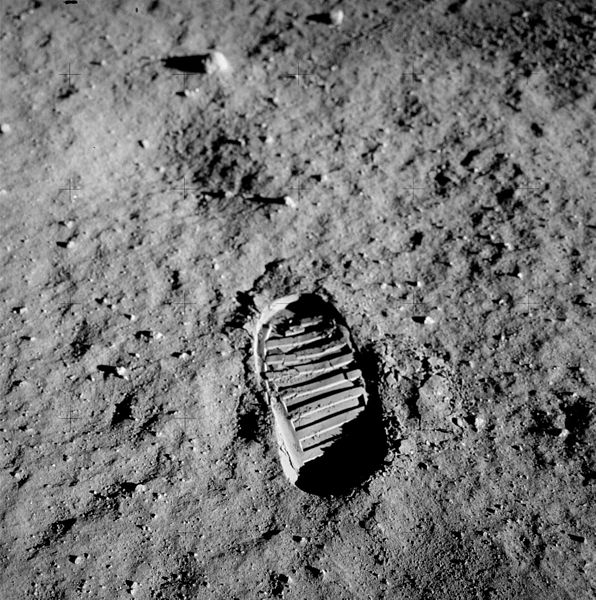
moonprintWhen Neil Armstrong set his left boot on the surface of the moon on July 21, 1969, becoming the first person to ever walk on the moon. He then spoke some of the most famous words in the history of mankind, ”That’s one small step for man, one giant leap for mankind.”

So true, so brilliant, so inspirational yet…so contradicting? The word “man” and “mankind” are used synonymously, meaning that the oh-so-famous quote quite simply put was, “That’s one small step for man, one giant leap for man.” Huh?

A one-lettered indefinite article is all it would take to turn this quote into the inspirational words our brains all process when we hear them. That article is “a”- “One small step for “a” man, one giant leap for mankind.” That is how most people interpret his words and, according to Neil Armstrong, those are the words he intended to speak.

NASA’s official transcript of the quote still shows the “a” in parentheses, “That’s one small step for [a] man, one giant leap for mankind.” This is because the “a” is not audible in the broadcast. For years, both NASA and Armstrong insisted that static had obscured the “a”. Armstrong himself stated that he would never make such a mistake (omitting such an important part) but after listening to recordings of his quote, finally conceded that it’s possible that he may not have said the “a”. When he admitted this, he stated, “I would hope that history would grant me leeway for dropping the syllable and understand that it was certainly intended, even if it was not said—although it might actually have been”.

An Australia-based computer programmer named Pater Shann Ford conducted a digital audio analysis to support Armstrong’s claim that he did say “a” and concluded that he did, in fact, say “a man”, but the “a” was inaudible due to technological limitations of the time. However, linguists David Beaver and Mark Liberman wrote their own digital audio analysis of the infamous quote on Language Log blog and concluded that, “The acoustic evidence seems to be against Ford’s theory.”

But that’s not the end of the story. Support for Armstrong  has been found in a team of researchers from Michigan State University and Ohio State University who have concluded that Armstrong did indeed speak the words he claims to have spoken but static or technological limitations are not to blame for its apparent omission.  According to them, Armstrong’s Ohion accent is to blame y’all.

According to a Michigan State University specialist in communicative sciences, assistant professor Laura Diller, because of the dialect of his hometown, if Neil Armstrong did voice the word “a”, it was short and fully acoustically blended with the preceding word “for”.


The Acoustical Society of America’s article on this topic states that,

Dilley and her colleagues, who include MSU linguist Melissa Baese-Berk and OSU psychologist Mark Pitt, thought they might be able to figure out what Armstrong said with a statistical analysis of the duration of the ‘r’ sound as spoken by native central Ohioans saying ‘for’ and ‘for a’ in natural conversation. They used a collection of recordings of conversational speech from 40 people raised in Columbus, Ohio, near Armstrong’s native town of Wapakoneta. Within this body of recordings, they found 191 cases of ‘for a’. They matched each of these to an instance of ‘for’ as said by the same speaker and compared the relative duration. They also examined the duration of Armstrong’s ‘for (a’) from the lunar transmission.

The researchers found a large overlap between the relative duration of the ‘r’ sound in ‘for’ and ‘for a’ using the Ohio speech data. The duration of the ‘frrr(uh)’ in Armstrong’s recording was 0.127 seconds, which falls into the middle of this overlap, though it is a slightly better match for an ‘a’-less ‘for’. In other words, the researchers conclude, the lunar landing quote is highly compatible with either possible interpretation, though it is probably slightly more likely to be perceived as ‘for’ regardless of what Armstrong actually said. Dilley says there may have been a ‘perfect storm of conditions’ for the word ‘a’ to have been spoken but not heard.

source:::::today i foundout.com

natarajan

“Ready to Go to Mars “… Meet India”s Prospective Martians !!!


India may have just launched its satellite to Mars but there are 80,000 among us who are readying for their very own ‘mission’ to the Red Planet in the year 2023. Rediff.com catches up with a few space enthusiasts who worry little about the ‘one-way trip’.   

In PHOTOS: Meet India's wannabe Martians

In 2011, Bas Lansdrop did the unthinkable.

The founder and former director of a successfully running company which specialises in clean power, called Ampyx, sold all his shares two years ago to launch a project called Mars One. The objective of this project was clear — to set up a human colony on the red planet.

The catch: It’s a one-way ticket.

Mars One is a Netherlands-based non-profit organisation which began its search for ‘astronauts’ — volunteers who would be tested and trained to be the first human settlers on Mars — began in April 2013. Seventy eight thousand people across 140 countries signed up within the first two weeks. A total of 2,02,586 have signed up so far, of which roughly 10 per cent (8,107) are Indians.

Despite having only one space traveller in its history, India stands second when it comes to the amount of applicants, the first being the United States of America at 24 per cent.

And if selected, potential settlers will train for almost a decade before leaving Earth for Mars forever in 2023.

While the thought of surviving on a foreign planet in uninhabitable conditions might seem like a bit too much to handle compared to the comforts of Earth, for 31-year-old Jiten Khanna of Bengaluru, who has sent an application for the mission, it’s a challenge he would love to accept.

“I don’t think there’s anything that can stop me,” he says confidently. “I am very dedicated. I took a lot of time and did my research. I thought about it — whether I am ready, whether I have the will to survive. I filled out my form very carefully. I will not back out now.”

A self-confessed adventure sport addict, Khanna is confident that “if not the first four, then I’ll definitely get selected in the batch of the first 40.”   


Vinod Kotiya ,, a software engineer, who is currently working at National Thermal Power Corporation, isn’t as confident. “I think I can go through round one and two because I have already worked in the Himalayas near Gangotri in extreme weather conditions. But round three and four are in the public’s hand; it’s all about whom they vote for.”

It’s not just humans who will be launched into space. Mars One will complete a demonstration mission with an unmanned lander that will deliver cargo consisting of basic supplies to the red planet in 2016 before the settlers finally arrive in 2023-24.

It is entirely possible that the supplies may expire or become damaged. The possibility of perishing in the unknown is very real.

But the prospect of death has not deterred aspiring space travellers from reaching for their dreams. 


Amulya Rastogi (left) sounds optimistic about making it to Mars. He says the news of the mission gave him a purpose in life. “People want to be journalists, lawyers, engineers. I want to be an astronaut,” Rastogi, a mechanical engineering student, says.

Should he miss out on the opportunity to Mars, Rastogi said he’d probably pursue a doctoral degree in aerospace engineering and join one of the international space agencies “or ISRO”.

“I am resilient, patient and mentally stable and am capable of constructing a permanent settlement on Mars,” he says admitting that he’s hardly been away from his family and has led a fairly sheltered life.

As it happens he also has a girlfriend, a fact he admits with some hesitation. Needless to say, she hasn’t taken the news too well. “She doesn’t support the idea,” he says deflecting questions about the future of their relationship if he does go to Mars. “I’ll try to convince her to apply and hope that she comes around.”  


Rastogi is not the only one who’s facing resistance from loved ones. Arindam Saha, a BTech graduate from Kolkata, is another Indian who is adamant on becoming a Mars settler. “My goal is space,” he says, though his immediate concern is finding a job and pacifying his girlfriend who was rather put out when she learnt about his Martian dreams.

Perhaps that explains why Khanna has refrained from any talk about his space ambitions, “I have not told my parents yet. I know they will be worried. I’ll listen to their point of view and I will patiently tell them mine. I’m sure once they know the reasons why I am doing this and how much it means to me, they will understand.”  


Abhimanyu Singh (left) faces no such troubles. He works as a software developer in Mumbai and lives alone in a rented apartment in Malad, the city’s northern suburb, practising what he calls “isolation”.

He’s been hitting the gym to prepare for the mission and believes he’s the best choice for it.

Singh’s parents passed away some years ago and his tale is extraordinary even without the mission to Mars.  “My father was an agarabatti (incense sticks) salesman who drank and smoked a lot. I grew up with my mother and three sisters in a slum (in Mumbai),” he says.

Thanks to the generosity of the people who spotted his talent, Singh completed his graduation in information and technology and got a job in a multinational corporation.

Singh speaks in short sentences and says that he’s been reading about the planet and sharpening his problem-solving skills which he believes will come handy on Mars.

Even though he puts his chances to be selected “at 60 per cent”, he believes his age and his social conditions make him the most ideal candidate. “I am 26 now. By 2023, I will be 36. I also don’t have any family ties binding me here (his sisters are married). It makes perfect sense to send me to Mars,” he says.   


 Sourabh Roddey (left), a young software engineer from New Delhi, is more realistic. “There is a good possibility I won’t be the one going,” he says, “In some ways my application is a way of showing support (to the mission).”

Roddey says that there will come a time when humans will have to make home on other planets. “We are consuming resources at a fast pace; the earth is overpopulated. It really does come down to the question of survival,” he says.

Roddey’s statement makes one wonder if consuming the resources of Mars would be next after Earth.

But for Kotiya, forward is the only way to go. “I  t is progress!” he insists, “It is a part of evolution. We have to do this. You cannot stop this. To save the human race we have to do it. The first priority is survival of humans and only then we can think about resources.”

Mars One estimates that putting just the first four people on the red planet will cost a whopping $6 billion. But Lansdrop has devised a way to raise that money. Mars One plans to make the mission — from the selection to the settlement — the ‘biggest media spectacle in history’.

Advertisers are already lining up. Merchandise is selling. But all that the applicants can do is cross their fingers. The selection process is a gruelling one. Only people over 18 years of age may apply. In order to be selected, the applicant must not only be physically fit but also be emotionally stable. 

SOURCE::REDIFF.COM

natarajan 

“செவ்வாயில் செவ் வாய்க்கு மங்கல்யான் ” !!!

செவ்வாயில் செவ்வாய்க்கு.. களம் தேடும் கலம்


marsதேடல் தேடல் தேடல்

தேடல் ஒன்றையே
ஜீவனாய் கொண்டு வாழும்
மானுட இனம்!

தேடித்தேடி பெற்றது
ஏராளம்- இருப்பினும்
இன்னொரு தளம் தேடி
வேற்றொரு கிரகத்துக்கு
கலம் விடுகிறோம்…!

செங்கடலில் தோன்றி
செங்கடலில் மறையும்
நீலவானின் சூரியன் போல்

செவ்வாயில் புறப்பட்டு
செவ்வாய்க்கு சென்றது
மங்கள்யான்..!

பூமியில் சேர்த்தது
பூமியில் படித்தது
பூமியில் கண்டுபிடித்தது
எல்லாவற்றையும்..
முடிந்தால் இந்த பூமியையும்
செவ்வாய்க்கு கொண்டு சேர்ப்போம்..!

நாளைய தலைமுறைகள்
செங்கோலாட்சி செய்யட்டும்
செவ்வாயில்…!
அதற்கான வாயில் வகுக்கட்டும்
மங்கள்யான் !

source ::::  -கவிஞர். திருமலைசோமு  In Dinamani …Tamil daily

natarajan

Moon and Venus in the Sky on Nov 6….


Some wonderful images of last night’s moon and Venus, as seen from around the world.


Early in the day of November 6, 2013, Jv Noriega in Manila captured this beautiful image of Venus and the moon.  Note the moon's location below Venus.  As the day passes, the moon will move up past Venus.  Why?  Because the moon is moving in orbit around Earth.  Thank you, Jv!

Early in the day of November 6, 2013, Jv Noriega in Manila captured this beautiful image of Venus and the moon. Note the moon’s location below Venus. As the day passes, the moon will move up past Venus. Why? Because the moon is moving in orbit around Earth.

Moon and Venus on November 6, 2013 as captured by Kat Baker in northern Italy.  Thank you, Kat!

Moon and Venus on November 6, 2013 as captured by Kat Baker in northern Italy.


Interesting view of last night's moon and Venus - November 6, 2013 - over the Ligurian Sea, Sestri Levante, in Genoa, Italy.  Photo by Maranatha.it Photography.  View from Maranatha.it Photography here.

Interesting view of last night’s moon and Venus – November 6, 2013 – over the Ligurian Sea, Sestri Levante, in Genoa, Italy. Photo by Maranatha.

Another cool photo from Italy of the moon and Venus on November 6 next to the Tower of Pisa.  Photo by Giuseppe M.R. Petricca.  Thank you, Giuseppe!

Another cool photo from Italy of the moon and Venus on November 6 next to the Tower of Pisa. Photo by Giuseppe M.R. Petricca.

Moon and Venus on November 6 as captured in Silverthorne, Colorado by Daniel McVey.  Visit Photography by Daniel McVey here.  Thank you, Daniel!

Moon and Venus on November 6 as captured in Silverthorne, Colorado by Daniel McVey.

By the time we posted the November 6 photos, it was already the evening of November 7 in Asia.  As you can see, the moon is now moving higher in the sky, away from Venus.  Photo from Guwan Elder Panbil at Villa Batam in Batam, Indonesia.  Thank you, Guwan!

By the time we posted the November 6 photos, it was already the evening of November 7 in Asia. As you can see, the moon is now moving higher in the sky, away from Venus. Photo from Guwan Elder Panbil at Villa Batam in Batam, Indonesia.

source::::Deborah Bird in earthskynews site

natarajan

Fly Thro ‘ A Crater on Mars!!!…A Stunning View Of Mars!!!

Mountains

Wow. Wired’s Adam Mann directed us toward this stunning overhead view of a crater rim on Mars, posted by NASA. The image is actually a screen shot from a simulated movie about the Mojave Crater called “Soaring over Mars,” which you can watch below.

The terrain models in the movie were generated from images taken by a camera on the Mars Reconnaissance Orbiter, a satellite that has been orbiting Mars since 2006.

Mojave Crater is 37 miles in diameter and 1.6 miles deep. It’s estimated to be around 10 million years old, which is quite young for a crater of this size, NASA scientists say. It was created when a meteor or something else from space crashed into the planet.


source:::::businessinsider australia

natarajan