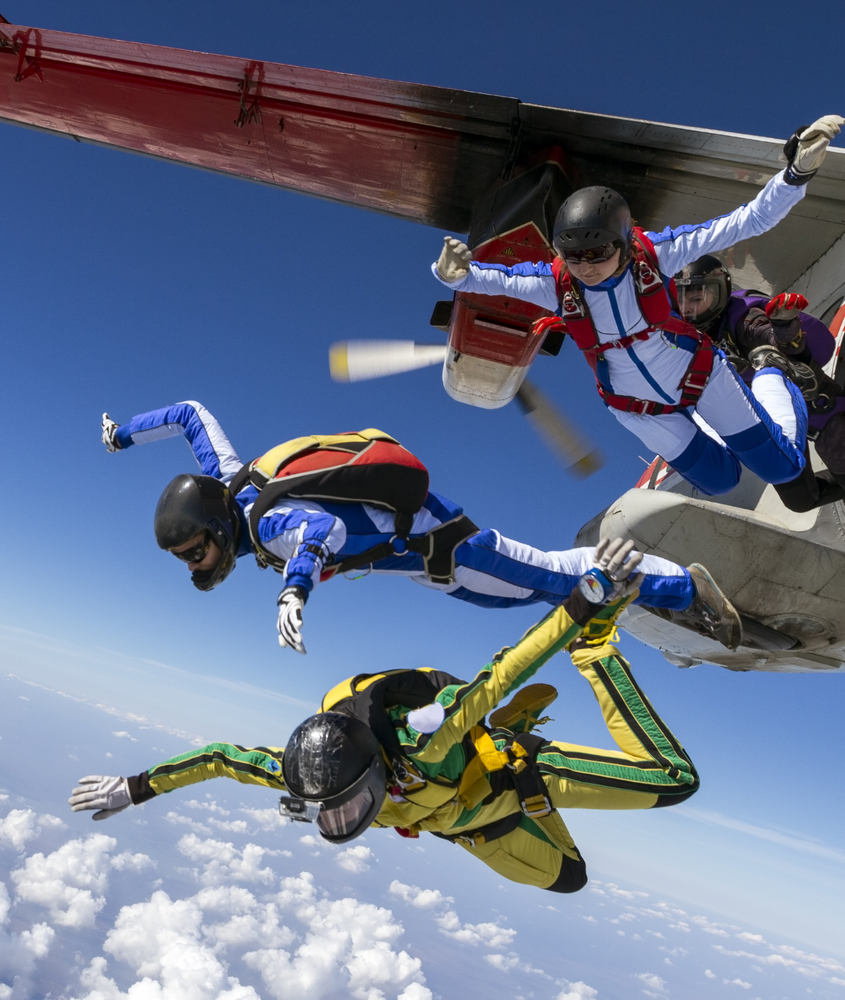
Best Views From Above … Plane”s Eye View !!!

Who wouldn’t want to be a pilot with views like this?

Who wouldn’t want to be a pilot with views like this? Source: ThinkStock

WHEN it comes to the ideal place for a spot of sightseeing, it’s hard to get better than the pointy end of the plane, where lucky pilots get to soak up the best views Earth has to offer in an office that the rest of us could only dream of having.

Our jealousy has soared to new heights with the release of a survey by British Airways of their pilots’ favourite destinations seen from above.

The pilots were asked to chose from the airline’s 180+ different routes, and came up with a top 10 list.

Here are the winners, along with pilots explaining why they are so incredible.

1. Northern Lights, North America

Captain Dave Willsher: “If you’re not already asleep this is an amazing sight three to four hours into most long North America flights. Well worth staying up for.”


Still awake? Picture: Jason Jenkins

Still awake? Picture: Jason Jenkins Source: Flickr


2. Central London, approach into Heathrow

Captain Mark Mannering-Smith: “Most flights approach Heathrow from the east — a great opportunity to get an unbeatable view of London.”


Wave hi to the Poms. Picture: Advait Supnekar

Wave hi to the Poms. Picture: Advait Supnekar Source: Flickr


Another Heathrow shot. Picture: Jessica Spengler

Another Heathrow shot. Picture: Jessica Spengler Source: Flickr


Coming in to land. Picture: Andy Mitchell

Coming in to land. Picture: Andy Mitchell Source: Flickr


3. Mont Blanc, Pisa

First Officer Caroline Robinson: “A breathtaking view of the Alps, and especially of Mont Blanc.”


The majestic Alps.

The majestic Alps. Source: ThinkStock


4. Sydney Harbour

Captain Derek May: “When leaving Sydney, sit on the right hand side of the aircraft to get the best views of Sydney Harbour.”


There’s a lot to see at Sydney Harbour.

There’s a lot to see at Sydney Harbour. Source: ThinkStock


Meanwhile, flying over South Sydney.

Meanwhile, flying over South Sydney. Source: ThinkStock


An aerial photo of Goat Island on Sydney Harbour.

An aerial photo of Goat Island on Sydney Harbour. Source: Supplied


View of Manly, with Sydney Harbour and the city centre in the background.

View of Manly, with Sydney Harbour and the city centre in the background. Source: Supplied


5. Golden Gate Bridge and Alcatraz, San Francisco

Captain Simon Scholey: “You get great views of the bridge on the left hand side of the aircraft, Alcatraz from the right, and the bay from both!”


It’s a pretty cool sight. Picture: Paul Williams

It’s a pretty cool sight. Picture: Paul Williams Source: Flickr


The Golden Gate Bridge.

The Golden Gate Bridge. Source: News Limited


Flying over San Francisco. Picture: Jessica “The Hun” Reeder

Flying over San Francisco. Picture: Jessica “The Hun” Reeder Source: Flickr


6. Greenland, North Atlantic flights

Senior First Officer Peter Nye: “Greenland is visually stunning. The tips of mountains can be seen poking through the snow which is over a mile deep. Occasionally you will be able to see icebergs carving off glaciers around the coast.”


Ice, ice, baby. Picture: My Faily Sublime

Ice, ice, baby. Picture: My Faily Sublime Source: Flickr


A frozen meltwater lake along the northeast Greenland coast. Picture: NASA

A frozen meltwater lake along the northeast Greenland coast. Picture: NASA Source: Flickr


7. Venetian canals

First Officer Joanne Tait: “This is especially good on a departure to the north east as you circle back over the city.”


Venice down below.

Venice down below. Source: ThinkStock


8. Cape Town, Table Mountain

Senior First Officer Kate Laidler: “On early morning arrivals from the north it’s great for Table Mountain and the bay.”


Cape Town aerial view.

Cape Town aerial view. Source: ThinkStock


9. Dubrovnik

Captain Al Bridger: “It’s a terrific approach into Dubrovnik over the bay to the north east.”


Dubrovnik from above.

Dubrovnik from above. Source: ThinkStock


10. Mount Fuji

Captain Chris Hanson: “Whether arriving or departing from Tokyo (Narita) you can see Mount Fuji sticking out of the clouds.”


Pilots enjoy great views of Mount Fuji.

Pilots enjoy great views of Mount Fuji. Source: ThinkStock


Source:::: news.com.au

Natarajan

“அலுமினய பறவையோடு மோதும் நிஜ பறவைகள் …”


“பறவையைக் கண்டான், விமானம் ப டைத்தான்” என்று ஒரு பாடலில் கவிஞர் கண்ணதாசன் குறிப்பிட்டி ருந்தார். ஆனால் பறவையும், விமானமும் ஒன்றுக்கொன்று எதிரிகளாகிவிட்டது காலத்தின் கொடுமை.

‘பறவை மோதி விமானம் கீழே விழுந்து பயணிகள் இறந்தனர்’ என்ற செய்தி ஆச்சரியமாக இருக்கலாம். ஆனால்,வருடந்தோறும் பறவைகளால் விமான விபத்துகள் ஏற்படுகின்றன.

சென்ற ஆண்டு இப்படி 50 முறை விமானங்களில் பறவைகள் சிக்கிக்கொண்டதாக இந்திய விமான நிலையங்களின் நிர்வாகம் (AAI) குறிப்பிட்டிருக்கிறது. புறாவி லிருந்து காக்கைகள்வரை (சில சமயம் மயில்கள்கூட) இப்படி சிக்கியிருந்தாலும், பெரும்பாலான பிரச்சினைகள் பருந்துகளிடம் இருந்துதானாம்.

முதல் விபத்து

முதலில் பதிவான இப்படிப்பட்ட ஒரு விபத்து 1912- ல் கலிஃபோர்னியாவில் நடந்தது. கடல் காகம் (சீகல்) பறவை ஒன்று மோதி விமானம் பாதிப்படைய, விமான ஓட்டிகள் மரணமடைந்தனர். பறவையால் விமானத்தில் பயணித்தவர்கள் உயிரிழந்தது அதுவே முதல்முறை.

பெரும்பாலும் விமானம் தரைத் தளத்துக்கு அருகில் பறக்கும்போதுதான் (புறப்படும் நேரத்திலும், வந்துசேரும் நேரத்திலும்) பறவைகள் அவற்றின்மீது மோதுகின்றன. அமெரிக்காவில் மட்டுமே சென்ற ஆண்டு பத்தாயிரத்துக்கும் மேற்பட்ட ‘பறவைகளால் விமான விபத்துகள்’ நிகழ்ந்துள்ளன.

சமீபகாலமாகப் பறவைகளுக்கும் அலுமினியப் பறவைகளுக்கும் நடக்கும் இந்த விபத்துகள் அதிகமாகி வருவதற்குப் பல காரணங்கள். விமானங்களின் எண்ணிக்கை அதிகமாகி வருவது முக்கியக் காரணம்.

தொழில்நுட்பக் காரணம்

தவிரப் பழைய விமானங்களில் பிஸ்டன் இன்ஜின்கள் பொருத்தப்பட்டிருந்தன. இவற்றை இயக்கும்போது (விமானத்தின் முன், பின் புறங்களில்) அதிக சப்தம் உருவாகும். இதனால் தங்களை அணுகும் ஆபத்தை உணர்ந்து பறவைகள் விலகிச் செல்ல வாய்ப்பு இருந்தது. தவிர, விமானத்தின் மீது பறவை மோதினாலும் விமானத்தின் பிஸ்டன் இன்ஜின் அருகே பொருத்தப்பட்டுள்ள புரொபெல்லர்கள் சுற்றிக்கொண்டே இருப்பதால், பறவையின் ஒரு பகுதியை அவை வெட்டிவிடும். அல்லது பறவையை அந்த இடத்திலிருந்து தள்ளிவிடும். இதனால் விமானத்துக்குப் பாதிப்பு இல்லாமல் இருந்தது.

ஆனால், ஜெட் இன்ஜின்கள் அறிமுக மான பிறகு காட்சிகள் மாறின. இவற்றின் வேகம் அதிகம். எழுப்பும் ஒலியோ மிகக் குறைவு. தவிர ஜெட் இன்ஜின்கள் காற்றை உள்ளிழுத்துக் கொள்ளும் வகையில் வடிவமைக்கப்பட்டவை. எனவே, இவை காற்றோடு பறவையையும் உள்ளே உறிஞ்சி கொள்கின்றன. இதனால் இன்ஜின் திடீரெனச் செயலிழந்துவிடும் ஆபத்து உருவாகிறது.

சில சமயம் இன்ஜினில் உள்ள விசிறியின் இறக்கை மீது பறவை வேகமாக மோதும்போது, அந்த இறக்கை நகர்ந்து அருகிலுள்ள மற்றொரு இறக்கையின் விசையுடன் மோதலாம். இந்தக் காரணங்களால் மொத்த விமானமும் நிலைகுலைந்து விழுந்து பயணிகள் இறந்த சம்பவங்களும் உண்டு.

பறவை நடமாட்டம்

பொதுவாகவே விமான நிலையங்களில் பறவைகள் நடமாட்டம் அதிகமாக இருக்க வாய்ப்பு உண்டு. ஏனென்றால், விமான நிலையங்கள் அமைந்துள்ள பகுதி பெரும்பாலும் புறநகர் பகுதியாக இருக்கும். கடுமையான இடநெருக்கடி கொண்ட நகரங்களைவிட, புறநகர் பகுதிகளில் வசிப்பதையே பறவைகளும் விரும்புகின்றன. தவிர விமான நிலையங்களுக்கு அருகே குளங்கள், கால்வாய்கள் போன்ற நீர்நிலைகள் இருப்பது சாதாரணமாக உள்ளது. மேலும் விமான நிலையத்தைச் சுற்றியிருக்கும் சில பகுதிகள் குப்பை கொட்டப்படும் இடங்களாகவும் இருப்பதுண்டு. அதிலுள்ள கழிவுகள், இறைச்சித் துண்டுகள், அப்பகுதிகளுக்கு வந்து சேரும் பூச்சிகளை உண்பதற்காகவும் பறவைகள் அங்கேயே வட்டமடிக்கின்றன.

விமானத் தளங்களில் பறவை நடமாட்டம் அதிகமாக இருப்பதற்கு மற்றொரு காரணமும் உண்டு. அங்கிருந்து சுற்றுப்புறம் முழுவதும் பரந்து விரிந்து பளிச்சென்று தெரிகிறது. எனவே, இரைகொல்லிப் பறவை தாக்க வந்தால் இரைப் பறவையால் உடனடியாகத் தப்பித்துவிட முடியும். இந்த வசதியாலும் விமானத் தளங்களைப் பறவைகள் அதிகம் நாடுகின்றன.

விரட்டும் நடவடிக்கைகள்

ஆனால், இந்தப் பறவைகளை அகற்றுவதற்காக எடுக்கப்படும் நடவடிக்கைகளில் பலவும் இயற்கைக்கு முரணானவை. விமான நிலையத்துக்கு அருகிலுள்ள மரம், செடிகளை அப்புறப்படுத்துகிறார்கள். இதன் மூலம் பறவைகளுக்குத் தேவையான உணவு குறைகிறது. அவை கூடு கட்டுவதற்கான இடங்களும் அழிக்கப்படுகின்றன. அப்பகுதிகளில் பூச்சி மருந்துகளை ஏராளமாக அடிக்கிறார்கள். இதன் மூலமாகவும் பறவைகளின் உணவு (பூச்சிகள்) அழிக்கப்படுகிறது.

பறவைகளுடைய எதிரிகளின் குரல்களைப் பதிவு செய்து அவ்வப்போது ஒலிக்கவிடுவதன் மூலம் பறவைகளை மிரண்டு ஓடச் செய்கிறார்கள். வெடி வெடித்தும் இதைச் சாதிக்கிறார்கள்!

ஆர்வலர்கள் கருத்து

சுற்றுச்சூழல் ஆர்வலர்கள் இந்த நடவடிக்கைகளை ஏற்பதில்லை. அவர்கள் அளிக்கும் ஆலோசனைகள் இவைதான். விமான நிலையப் பகுதிகளில் குப்பைகளைக் கொட்ட வேண்டாம். விமானத் தளங்களைத் தொடர்ந்து பைனாகுலர்கள் மூலம் பார்த்துப் பறவைகள் தென்பட்டால் விரட்டலாம்.

பறவைகள் தங்கள் தினசரி இரைதேடலைக் குறிப்பிட்ட நேரத்தில்தான் வைத்துக் கொள்ளும். அந்த நேரங்களில் விமானம் புறப்படவோ, வந்து சேரவோ இல்லாதபடி அவற்றின் நேரத்தை மாற்றிக் கொள்ளலாம்.

‘அற்பப் பறவைகளுக்காக விமான நேரத்தை மாற்றி அமைப்பதா?’ என்று உங்களுக்குத் தோன்றுகிறதா? அப்படியானால் வழக்கம்போல இயற்கை சமநிலையைப் பாழ்படுத்திவிட்டு, அதற்கான பலனை அனுபவிக்க நாம் தயாராக வேண்டியதுதான்.

– ஜி.எஸ்.எஸ்., எழுத்தாளர், தொடர்புக்கு: aruncharanya@gmail.com

Have a Look at The Customozied Jumbo Jets of Billionaires !!!


Boeing 747 8 Interior

Boeing

Boeing 747-8 custom interior with 4786 sq. ft. of space.


The $65 million Gulfstream G650 may be the pinnacle of the private jet market, but it just doesn’t do the job for billionaires who prefer to fly with more than a dozen or so passengers.


For that, the uber wealthy turn to Airbus and Boeing, who are more than happy to customize their jets — even the widebodies that can carry hundreds of people — for private use.

Commercial jet manufacturers have been replacing the rows of economy seats in their aircraft with sofas and entertainment centers since the late 1990s. A recent influx of billionaires from Russia, the Middle East, and China has led to a new focus on this part of the business. Since opening the private jet branch in 1997, Airbus has sold over 170 aircraft. Boeing got started in 1996, and has delivered on 195 of 217 total orders received.

The main reason to go with an Airbus A380 or a Boeing 747 over a puny Gulfstream or Bombardier? According a “Billionaires Study” commissioned by Airbus, the wealthiest among us like to travel with family members and business associates. (This, apparently, is particularly true for Middle Eastern oil magnates.)

That’s not to say outfitting a jumbo jet for personal use is always a rational economic decision. For some, the bigger and more luxurious the plane, the better. That’s why Airbus and Boeing don’t just sell their planes, they offer a wide variety of customization options to give customers exactly what they want.

So how much does a personalized widebody plane cost? The manufacturers don’t exactly publish price lists, but we’ve seen figures between $80 million for a Boeing 737, $280 million for a Boeing 747-8, and up to $300 million for an A380.

Here’s a look at what’s available for billionaires ready to spend that big a pile of dough:


Boeing 787 Interior

Boeing

Boeing 787 interior ready for conversion.


ACJ319_Cabin_Tyrolean_Jet_Services_Airbus1

Airbus

Airbus A319 Corporate Jet.


Boeing Deer Jet

Deer Jet

Deer Jet owned Boeing with bedroom suite and shower.


Boeing Jet Interior

Boeing

Boeing interior with shower and king-sized bed.


Boeing 747 8 Sleeping Space

Boeing

Boeing 747-8 with sleeping space for 8.


ACJ318_Airbus_Tyrolean_Jet_Services_cabin1

Airbus

Airbus A318 Corporate Jet.


Airbus Phoenix_cabin_concept_Majhong_table_arrangement1

Airbus

Airbus Asian market interior with mahjong table.


Boeing Jet Shower

Boeing

Boeing interior shower.


ACJ319_Acropolis_Aviation_on_VVIP _angled_view_1

Airbus

Airbus A319 custom interior.

Read more: http://www.wired.com/2014/06/the-jumbo-jets-boeing-and-airbus-turn-into-posh-private-planes/#ixzz352DvEjqr

Source:::: Business Insider Select.au

Natarajan


Joke of the Day !!!

A pilot landed a plane with a rather bumpy landing. As part of his job he was required to stand by the terminal door and say goodbye to the passengers as they exited the airplane. He was afraid that someone might say something about his rather less than perfect landing, but everyone left without saying a word except for one passenger, an elderly lady, she slowly approached the pilot after most passengers had exited the plane and asked, “Did we land? Or were we shot down?”


Source::::joke a day .com

Natarajan

Image of the Day !!!


Jet zips past moon

“Aimed at the moon and started to focus when I saw the jet enter the frame … “

By GregDiesel Landscape Photography.  Visit his online gallery on Facebook.

Check out this cool image of an airplane passing in front of the moon. GregDiesel Landscape Photography captured it on May 31, 2014. He wrote:

Unless you live by an airport and try all day/night it’s a really tough shot to get! Story behind it was that I was just taking my ‘daily moon’ shot and my shutter froze. I took the lens off cleaned the sensors and snapped it back on. Aimed at the moon and started to focus when I saw the jet enter the frame and then, I mean, I needed split-second reaction to focus and get about 5 shots as it flew through in about 2 seconds start to finish. Got lucky with the timing.

Lucky for us! .

Click here to see Greg’s daily moon shots.

Source:::::Earth sky News site

Natarajan

A Plane in Space for 500 Days… How and Why ?… No Answer !!!

Featured Image for A plane has been in space for 500 days, and no one knows why

The X-37B is a kind of robotic space plane, built by the US. It’s been in Earth’s orbit for more than 500 days. And its real purpose is a complete mystery. Intrigued?

Here’s what we do know about X-37B

Constructed in California, the Boeing-built X-37B Orbital Space Vehicle was built for the US Air Force as a test vehicle; not intended to reach production. It is a quarter the size of the Endeavour Space Shuttle. It is equipped with heat-shield protection for re-entry to Earth’s atmosphere.

Currently the X-37B is orbiting at 28,044km/h, at a distance of around 350km in the sky. It can land, but no one will say when that will be.

It’s been in the sky before, after being launched on April 22, 2010, on a rocket. It then landed on December 3, 2010 – blowing a tire and suffering minor damage to its underbelly.

It took off again from Cape Canaveral on December 11, 2012 – now reaching 500 days in orbit.

The Air Force also launched a second model of X-37B on March 5, 2011. Described by the U.S. military as an “effort to test new space technologies”, it landed safely at Vandenberg Air Force Base on June 16, 2012, after 469 days in space. This third mission has now smashed this previous record.

X-37B’s actual functions are still heavily classified.

As you’d imagine, conspiracy theorists are having a field day, and here’s why:

Powered by a solar panel that unfurls once in orbit, X-37B can open with small, shuttle-like payload bay in its middle – think of a clamshell opening from underneath. There’s room for more than just a solar panel too. Exactly what items it carries, and why they need to be in space so long, has proved elusive for analysts, the space community, and the media.

To add further intrigue, the plane is classified as a secret project, yet maker Boeing has released pictures and more than two pages of details on the X-37B. That’s not how secrets are usually dealt with. By contrast, the secretLockheed SR-71 Blackbird was not declassified until decades after it had been flown in the Vietnam War.

The X-37 started life way back in 1999 when NASA asked Boeing’s Phantom Works division to develop an orbital test vehicle. This was a civilian project, and the X-37 was originally spec’d as an unmanned, robotic spacecraft that would rendezvous with satellites to refuel, repair them, or crash them back to Earth once their lifecycle was complete. But, in 2004, the project was transferred to DARPA and since then, it has been highly classified.

The amateur skywatching community that documents satellites say it’s orbiting between 43.5 degrees north latitude to 43.5 degrees south latitude. That’s a band around the middle of Earth that takes in much of the US, Middle East, and Asia, but is away from Russia, and Europe. Spotters suggest that at the altitude of 350km, it is ideal altitude for spying, but too low to refuel or fix other satellites.

It’s versatile, and has worked well enough that Boeing is contracted to create the next model, the X-37C. It will be at least 65% larger and have the ability to carry up to six astronauts, while operating unmanned.

The X-37B Orbital Test Vehicle

What we can guess

The two most popular theories suggest the vehicle is simply running an extended duration test – a marathon in space. The other theory is that the two previous missions prove the testing phase is complete, and it is now on an extended operation running a mission, or multiple missions.

The long endurance run theory has credit; proving that new, experimental critical components can work reliably for a long-duration in space, close to Earth.

The running-mission has credit too – with two previous missions complete, X-37B can now operate at length. And perhaps it is – observing, spying, experimenting, hosting space-weapons, or collecting data for the NSA. We just don’t know.

Both theories are plausible.

What it isn’t

Plenty of conspiracy theorist have posed the question of X-37B carrying a nuclear payload, to guarantee a ‘first strike’ opportunity (or to have a counter-option in place).

If you have any hope for humanity, that can’t be right. The US is a signatory to The Space Treaty, which is no joke. Space-based weapons of mass destruction are banned.

(One curious example of a space-based weapon that isn’t banned is a Kinetic strike, where objects whizzing around the Earth at great speed are intentionally sent to the ground, causing a meteorite-like impact and widespread damage. This type of attack is also known as ‘Rods from God’.)

An artist's conception of the X-37 Advanced Technology Demonstrator as it glides to a landing on earth.

source::::  Tristan Rayner in Exhale  …. http://www.techly.com.au

Natarajan

In Search of MH 370… Mapping of Underwater Terrain …


A new illustration of the seafloor, created by two of the world’s leading ocean floor mapping experts, details underwater terrain where the missing Malaysia Airlines flight might be located.


Image credit: AGU


Seafloor topography in the Malaysia Airlines flight MH370 search area. Dashed lines approximate the search zone for sonar pings emitted by the flight data recorder and cockpit voice recorder popularly called black boxes. The first sonar contact (black circle) was reportedly made by a Chinese vessel on the east flank of Batavia Plateau (B), where the shallowest point in the area (S) is at an estimated depth of 1637 meters. The next reported sonar contact (red circle) was made by an Australian vessel on the north flank of Zenith Plateau (Z). The inset in the top left shows the area’s location to the west of Australia. Image credit: Walter H.F. Smith and Karen M. Marks


Seafloor experts have created a new topography map that could shed additional light on what type of underwater vehicles might be used to find the missing airplane and where any debris from the crash might lie.

The seafloor topography map illustrates jagged plateaus, ridges and other underwater features of a large area underneath the Indian Ocean where search efforts have focused since contact with Malaysia Airlines flight MH370 was lost on March 8. The image was published today in Eos, the weekly newspaper of the Earth and space sciences, published by the American Geophysical Union.

The new illustration of a 2,000 kilometer by 1,400 kilometer (1,243 miles by 870 miles) area where the plane might be shows locations on the seafloor corresponding to where acoustic signals from the airplane’s black boxes were reportedly detected at the surface by two vessels in the area. It also shows the two plateaus near where these “pings” were heard.

It points out the deepest point in the area: 7,883 meters (about five miles) underneath the sea in the Wallaby-Zenith Fracture Zone – about as deep as 20 Empire State buildings stacked top to bottom. Undersea mountains and plateaus rise nearly 5,000 meters (about three miles) above the deep seafloor, according to the map.

The illustration, designated as Figure 1 of the Eos article, was created by Walter H.F. Smith and Karen M. Marks, both of the National Oceanic and Atmospheric Administration’s Laboratory for Satellite Altimetry in College Park, Maryland, and the former and current chairs, respectively, of the Technical Sub-Committee on Ocean Mapping of the General Bathymetric Chart of the Oceans, or GEBCO. GEBCO is an international organization that aims to provide the most authoritative publicly available maps of the depths and shapes of the terrain underneath the world’s oceans.

Satellite altimetry has made it possible to depict the topography of vast regions of the seafloor that would otherwise have remained unmapped, Smith said. To illustrate the topography of the search area, Smith and Marks used publicly available data from GEBCO and other bathymetric models and data banks, along with information culled from news reports.

Smith said the terrain and depths shown in the map could help searchers choose the appropriate underwater robotic vehicles they might use to look for the missing plane. Knowing the roughness and shape of the ocean floor could also help inform models predicting where floating debris from the airplane might turn up.

Smith cautions that the new illustration is not a roadmap to find the missing airplane. Nor does the map define the official search area for the aircraft, he added.

“It is not ‘x marks the spot’,” Smith said of their map. “We are painting with a very, very broad brush.”

Search efforts for the missing airplane have focused on an area of the southern Indian Ocean west of Australia where officials suspect that the plane crashed after it veered off course. After an initial air and underwater search failed to find any trace of the airplane, authorities announced this month that they will expand the search area and also map the seabed in the area.

Smith pointed out that the search for the missing plane is made more difficult because so little is understood about the seafloor in this part of the Indian Ocean. In the southeast Indian Ocean, only 5 percent of the ocean bottom has been measured by ships with echo soundings. Knowledge of the rest of the area comes from satellite altimetry, which provides relatively low-resolution mapping compared to ship-borne methods.

“It is a very complex part of the world that is very poorly known,” Smith said.

A lack of good data about Earth’s seafloors not only hinders search efforts, it also makes it harder for scientists to accurately model the world’s environment and climate, Smith noted. Today, our knowledge of our planet’s undersea topography is “vastly poorer than our knowledge of the topographies of Earth’s Moon, Mars and Venus,” Smith and Marks write in Eos. This is because these other planetary bodies have no oceans, making their surfaces relatively easy to sense from space.

Smith said he hoped that “the data collected during the search for MH370 will be contributed to public data banks and will be a start of greater efforts to map Earth’s ocean floor.”

Via AGU

source:::: Earth SKY News site

Natarajan

Image of the Day…


Kelvin Helmholtz clouds

It looks like someone painted the sky with breaking ocean waves. They are called Kelvin Helmholzt clouds, aka as billow clouds or shear-gravity clouds.

View larger. |  Photo credit: Paul Chartier

Here’s a special kind of cloud known to scientists as a Kelvin Helmholtz cloud. They look like breaking ocean waves, with the rolling eddies seen at the top of the cloud layers usually evenly spaced and easily identifiable. Kelvin Helmholtz clouds are named for Lord Kelvin and Hermann von Helmholtz, who studied the physics of the instability that leads to this type of cloud formation.

How Kelvin Helmholtz clouds form. A Kelvin Helmholtz instability forms where there’s a velocity difference across the interface between two fluids: for example, wind blowing over water. You’ll often see the characteristic wave structure in this type of cloud when two different layers of air in our atmosphere are moving at different speeds. The upper layers of air are moving at higher speeds and will often scoop the top of the cloud layer into these wave-like rolling structures.

The clouds often form on windy days, when there’s a difference in densities of the air, for exmaple, during a temperature inversion.

These clouds are often good indicators of atmospheric instability and the presence of turbulence for aircraft.


source::::Earth sky news site

Natarajan


Why Don’t Commercial Airplanes Have Parachutes for Passengers? ….


parachuteSeatbelts and airbags in cars save passengers lives. Parachutes save people who, for a variety of reasons, exit a plane in mid-flight. So why aren’t parachutes provided to passengers on commercial airline flights, in case of emergencies?

Because they almost certainly would not save anyone’s life.

Parachuting Basics

When your average daredevil skydives for fun, the plane is typically travelling at between 80 and 110 mph when the skydiver jumps.Tandem and accelerated free fall (AFF) jumps occur between 10,000 and 13,000 feet, while static jumps can be as low as 3,500 feet.

Student divers choosing the easiest, tandem jump, where the newbie is physically and securely attached to an experienced instructor, are still required to undergo “a half hour of basic ground instruction.”

Braver neophytes who wish to fly untethered will have to endure:

Four to five hours of intense ground instruction, including learning body flight maneuvers and hand signals that instructors use to coach the student as they fly alongside.

For an AFF jump, although not harnessed together, freshman flyers are accompanied by two instructors who “hold onto the student’s harness until” it’s deployed.

Those who choose a static line jump also have to take four + hours of training prior to the jump, although the parachute is deployed as the rookie flyer leaves the aircraft.

When skydivers leave a plane, they do it alone or in small groups. When successive groups will be jumping, they try to keep separated by anywhere between 500 and 1500 feet; this is often accomplished by waiting until the preceding group is “back under the tail to 45 degrees behind the airplane” or several seconds in between groups.

Experienced skydivers can make even riskier jumps, although when descents begin at higher than 15,000 feet, “the risk of hypoxia and being significantly affected by altitude” increases dramatically and divers are less able “to make effective safe decisions at critical times.” Therefore, divers who jump from 15,000 feet or higher carry supplemental oxygen.

Further, each parachute weighs around 40 pounds and the equipment is expensive. To be fully outfitted with “rig, main, reserve, ADD, altimeter, jumpsuit, helmet [and] goggles” can run between $5,900 and $9,000.

Commercial Airplane Basics

Perhaps the most popular commercial jetliner is the Boeing 737 family. Its 737-800 can carry nearly 200 people (including the crew).

Although speeds can vary slightly, the 737-800 travels at approximately 600 mph when at its cruising altitude of 35,000 feet. Cruising altitudes are assigned by air traffic controllers and are usually up to 39,000 feet, except for longer flights that may fly higher.

Individual Parachutes Won’t Improve Passenger Safety

Doing the math . . .

Passenger Training

Since four hours of training just to board a plane is unrealistic, passengers would have to read and execute detailed skydiving instructions including how to properly strap the chute on in order to benefit from the parachute. Not everyone is good at following detailed, technical instructions even when time and stress aren’t a factor.  In a situation where the plane is going down and one has only a moment to get the parachute properly strapped on (likely while keeping an oxygen mask firmly attached and perhaps also needing to keep the seat belt on to keep from being thrown about in the cabin), it’s unlikely most would be able to even get this far.

Every Man for Himself

Unless passengers wanted to fly suited up and tethered for a static jump, parachuting from a commercial airplane will be an AFF jump; however, unlike the conditions that students get – training and trained instructors to assist, commercial passengers will just have to learn as they go.

In addition, they will have to keep calm and proceed in an orderly fashion, which will require most to patiently wait their turn to exit. This is not likely to happen.

Parachuting Equipment is Bulky

Adding just parachutes (not counting helmets, altimeters, etc.) for each passenger would add another 8,000 pounds or so to the flight’s weight. In addition, that equipment would take up space, that is already at a premium.

Parachuting Only Makes Sense if Something Happens in Mid-Flight

The only feasible time for people to jump from the plane is while it’s cruising. However, most fatal airline accidents occur on airplanes during takeoff and landing.

Consider that between 2003 and 2012, only 9% of all fatal accidents on commercial flights, seven total, occurred while the plane was cruising; moreover, at least one of those accidents happened as a result of wind shear or thunderstorm. This is a situation where parachuting is extremely dangerous even if you’re an expert.

So even if parachuting were feasible from a jetliner, the conditions in which parachutes could theoretically save lives are almost never apparent in fatal commercial accidents. But even if they were, it still wouldn’t be a good idea.

Jetliners Cruise Very High and Very Fast

At 35,000 feet (three times higher than a typical jump) every passenger would need high altitude equipment (HALO) that includes an oxygen tank, mask and regulator, flight suit, ballistic helmet and altimeter just to manage the thin air. Or they could just pass out from hypoxia and wake up later, hopefully when the parachute automatically deployed at under 15,000-20,000 feet.

Of course, none of this would matter since the plane is moving so fast (600 mph), and it is so large, that many passengers would almost certainly smash into it and suffer debilitating if not fatal injuries.

Whole Plane Parachutes May Save Lives

There is hope, however. Over the past few years, many small planes have been equipped with whole-plane parachutes that slow the craft’s descent. As of late 2013, the largest planes equipped with these safety devices carry five people, but plans are in the works for putting them on larger crafts. As one manufacturer said, “There is no doubt that big commercial airlines of the future will be equipped with some kind of parachute recovery system.”

source:::: Today i foundout.com

natarajan

Drone Delivers Pizza @ Mumbai !!!


  Mumbai, notorious for its traffic snarls, has achieved a first in the country after a city-based pizza outlet used an unmanned drone to execute a delivery by taking the aerial route recently.

“All of us had read about (global e-commerce giant) Amazon’s plans of using drones. We successfully carried out a test-delivery by sending a pizza to a customer located 1.5 km away from our outlet on May 11,” Francesco’s Pizzeria chief executive Mikhel Rajani said.

He stressed that this was only a test-flight but its results confirm that it can be used routinely in a few years.

A four-rotor drone took off with the order from its outlet in central Mumbai’s Lower Parel area and delivered it to a high-rise building in adjacent Worli area, Rajani said, claiming that it is for the first time that the ubiquitous drone has been used for such a purpose in the country.

The eatery, which has been in operations for two years, has made a video of the delivery, he said, adding an auto engineer friend helped with making the flight possible.

Rajani, who comes from a family that is into textiles, said the drone saves time and costs for a company like his, which would otherwise depend on a two-wheeler borne agent to deliver the pizzas.

“What we have done now will be common place in the next four-five years,” he said, adding every such customised drone costs around USD 2,000.

At present, there are certain restrictions on the regulatory front like the drone not allowed to fly above 400 feet altitude and barred from flying over security establishments, he said, adding the American Federal Aviation Authority’s regulations on usage of drones, expected next year, will help.

Apart from that there are technical difficulties like a limited operating radius of 8 km after which the batteries go dry, he said, adding proper infrastructure like having charging stations can help.

Even though the four-rotor version drone had a limited carrying capacity, he said the payload capacity can be increased to up to 8 kg in case of a an eight-rotor drone.   

source:::: NDTV.COM  & YOU TUBE

Natarajan