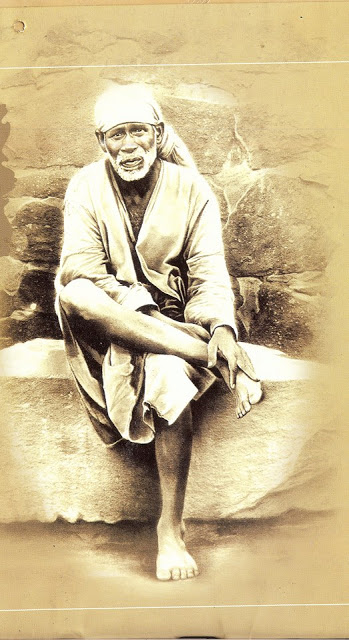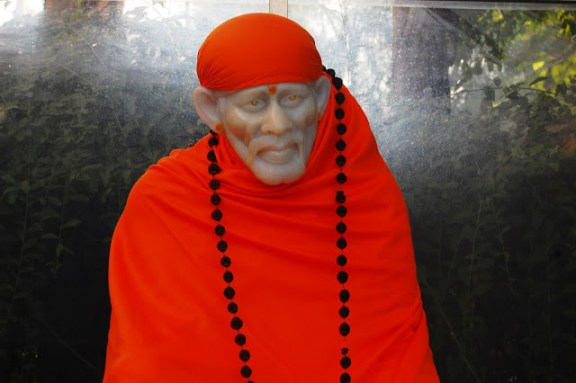
Those who remember me, I always remember them. I do not require carriage, airplane or rail coach. Whoever calls me with love. I manifest the same moment instantly.
source::::H.Deepa in shirdi sai speaks…
Natarajan
Visually impaired Delhi student Kartik Sawhney has repeatedly been denied permission to appear for the IIT-JEE in the past three years because of his disability. However, in March 2013, he was awarded a fully funded scholarship to pursue engineering at Stanford University in the US. This is his story.
On May 27, 2013, when 18-year-old Kartik Sawhney scored 96 per cent in his Class 12 CBSE examination, he became the country’s first ever visually impaired student to have achieved the feat in the science stream.
Appearing from Delhi Public School, RK Puram, he scored 99 in computer science (his favourite subject) and 95 each in English, mathematics, physics and chemistry; his total is 479 out of 500.
Recalling some of the challenges, he says, “Studying with normal students wasn’t easy, and neither was choosing a stream of my choice.”
Determination and perseverance are the key factors to his success — he simply would not take no for an answer.
“A lot of people think that disabilities limits you from doing certain things. But I think success comes to those who believe in their strengths,” he states.
Sawhney, who comes from a middle class family — his father Ravinder Sawhney is a businessman and mother Indu Sawhney a homemaker — confesses that aiming high and making tough decisions at every stage was still easier than executing them.
For three years in a row, he has been denied permission to appear for the IIT-JEE; he was told that there is no provision for blind students to take the competitive exam. But he did not lose hope and applied to universities abroad.
And in March 2013, Sawhney received a fully funded scholarship to pursue a five-year engineering programme at Stanford University. Once armed with this degree, he intends to “improve the condition of visually impaired back in India”.

Karthik Sawhney

Image: Kartik (second from left) displays the certificate announcing his first place victory at the Global IT Challenge for Youth with Disabilities in South Korea in November 2012; seated to his right is mother Indu Sawhney and to his left, Delhi Public School, RK Puram principal Dr D R Saini and vice principal Shobha Mehta
Photographs: Courtesy Delhi Public School, RK Puram
source::::rediff.com
Natarajan
Texas banker and self-taught mathematician D. Andrew Beal has increased the cash prize for proving a conjecture he discovered in 1993, the Associated Press reported.
Held by the American Mathematical Society, the $1,000,000 cash prize goes to the first to prove the Beal Conjecture, an offshoot of the legendary Fermat’s Last Theorem proof that was solved by Andrew Wiles in 1994.
Here’s the problem that can make you rich.

Fermat’s Last Theorem went unsolved for hundreds of years. It said that no three positive integers a, b and c can satisfy
when integer x is greater than two. While this may seem somewhat simple, and if you play around with it it becomes self-evident, it’s a complete pain to prove.
Andy Beal had been working on Fermat’s Last Theorem when he stumbled upon a different problem. At the time, he was using computers to look at similar equations with different exponents.
Beal’s Conjecture is related. If a, b, c, x, y, and z are all positive integers and x, y, z are greater than two,
is only possible when a, b and c have a common prime factor.
Beal found during his computations that the only solutions to the equation were when a, b and c had a common factor — like how 8, 6 and 10 all have a common factor of 2 — so he contacted folks in academia to confirm that the problem was new, then set up a prize with the AMS for the person who proves his conjecture.
So, if you find a proof or counterexample to Beal’s Conjecture that gets approved by the AMS-appointed committee and gets into a journal, you get a million bucks.
Click here to see the terms of the prize >
source:::::businessinsider.com
Natarajan
Read more: http://www.businessinsider.com/beale-conjecture-1-million-dollar-prize-2013-6#ixzz2VSDh2GMl