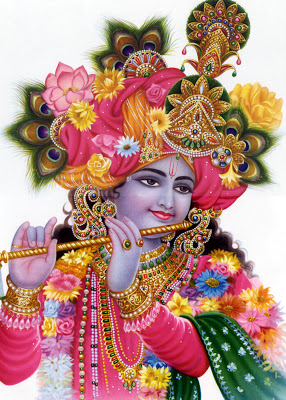
உத்தவ கீதை யின் முத்துக்கள் சில உங்கள் பார்வைக்கு !!!!

 உத்தவ கீதை
பகவான் கிருஷ்ணனின் குழந்தைப் பருவம் முதலே, அவருக்குப் பணிவிடைகள் செய்து, தேரோட்டி, பல்வேறு சேவைகள் புரிந்தவர், உத்தவர். இவர் தனது வாழ்நாளில், தனக்கென நன்மைகளோ வரங்களோ கண்ணனிடம் கேட்டதில்லை. துவாபர யுகத்தில், தமது அவதாரப் பணியை முடித்துவிட்ட நிலையில், உத்தவரிடம் ஸ்ரீகிருஷ்ணர், உத்தவரே, இந்த அவதாரத்தில் பலர் என்னிடம் பல வரங்களும், நன்மைகளும் பெற்றிருக்கின்றனர். ஆனால், நீங்கள் எதுவுமே கேட்டதில்லை. ஏதாவது கேளுங்கள், தருகிறேன். உங்களுக்கும் ஏதாவது நன்மைகள் செய்துவிட்டே, எனது அவதாரப் பணியை முடிக்க நினைக்கிறேன் என்றார். தனக்கென எதையும் கேட்காவிட்டாலும், சிறு வயது முதலே கண்ணனின் செயல்களைக் கவனித்து வந்த உத்தவருக்கு… சொல் ஒன்றும், செயல் ஒன்றுமாக இருந்த கண்ணனின் லீலைகள், புரியாத புதிராக இருந்தன. அவற்றுக்கான காரண, காரியங்களைத் தெரிந்துகொள்ள விரும்பினார். பெருமானே! நீ வாழச் சொன்ன வழி வேறு; நீ வாழ்ந்து காட்டிய வழி வேறு! நீ நடத்திய மகாபாரத நாடகத்தில்… நீ ஏற்ற பாத்திரத்தில், நீ புரிந்த செயல்களில், எனக்குப் புரியாத விஷயங்கள் பல உண்டு. அவற்றுக்கெல்லாம் காரணங்களை அறிய ஆவலாக இருக்கிறேன் நிறைவேற்றுவாயா? என்றார் உத்தவர்.

உத்தவரே! அன்று குரு÷க்ஷத்திரப் போரில் அர்ஜுனனுக்காக நான் சொன்னது, பகவத் கீதை. இன்று உங்களுக்குத் தரும் பதில்கள், உத்தவ கீதை. அதற்காகவே உங்களுக்கு இந்தச் சந்தர்ப்பத்தைத் தந்தேன். தயங்காமல் கேளுங்கள் என்றான் பரந்தாமன்

 
 உத்தவர் கேட்க ஆரம்பித்தார்; கண்ணா! முதலில் எனக்கு ஒரு விளக்கம் வேண்டும். உண்மையான நண்பன் யார்? நண்பனுக்கு ஏற்படும் துயரத்தைத் தீர்க்க, உடனே அழைப்பு இல்லாமலேயே வந்து உதவி செய்பவனே உற்ற நண்பன் என்றான் கண்ணன். கிருஷ்ணா! நீ பாண்டவர்களின் உற்ற நண்பன். உன்னை அவர்கள் ஆபத்பாந்தவனாக, பரிபூரணமாக நம்பினார்கள். நடப்பதை மட்டுமல்ல; நடக்கப் போவதையும் நன்கறிந்த ஞானியான நீ… உற்ற நண்பன் யார் என்பதற்கு நீ அளித்த விளக்கத்தின்படி… முன்னதாகவே சென்று, தருமா! வேண்டாம் இந்தச் சூதாட்டம் என்று தடுத்திருக்கலாம் ஏன் அப்படிச் செய்யவில்லை? போகட்டும். விளையாட ஆரம்பித்ததும், தருமன் பக்கம் அதிர்ஷ்டம் இருக்கும்படி செய்து, வஞ்சகர்களுக்கு நீதி புகட்டியிருக்கலாம். அதையும் நீ செய்யவில்லை. தருமன் செல்வத்தை இழந்தான்; நாட்டை இழந்தான்; தன்னையும் இழந்தான். சூதாடியதற்குத் தண்டனையாக, அதோடு அவனை விட்டிருக்கலாம். தம்பிகளை அவன் பயணம் வைத்த போதாவது, நீ சபைக்குள் நுழைந்து தடுத்திருக்கலாம். அதையும் நீ செய்யவில்லை. திரௌபதி அதிர்ஷ்டம் மிக்கவள். அவளைப் பணயம் வைத்து ஆடு. இழந்தது அனைத்தையும் திருப்பித் தருகிறேன் என்று சவால் விட்டான் துரியோதனன். அப்போதாவது, உனது தெய்வீக சக்தியால், அந்தப் பொய்யான பகடைக் காய்கள் தருமனுக்குச் சாதகமாக விழும்படி செய்திருக்கலாம். அதையும் செய்யவில்லை.

மாறாக, திரவுபதியின் துகிலை உரித்து, அவளின் மானம் பறிபோகும் நிலை ஏற்பட்ட போதுதான் சென்று, துகில் தந்தேன். திரவுபதி மானம் காத்தேன் என்று மார்தட்டிக் கொண்டாய். மாற்றான் ஒருவன், குலமகள் சிகையைக் பிடித்து இழுத்து வந்து, சூதர் சபையில் பலர் முன்னிலையில், அவள் ஆடையில் கை வைத்த பிறகு, எஞ்சிய மானம் என்ன இருக்கிறது? எதனைக் காத்ததாக நீ பெருமைப்படுகிறாய்? ஆபத்தில் உதவுபவன்தானே ஆபத்பாந்தவன்? இந்த நிலையில் உதவாத நீயா ஆபத்பாந்தவன்? நீ செய்தது தருமமா? என்று கண்ணீர் மல்கக் கேட்டார் உத்தவர். இது உத்தவரின் உள்ளக் குமுறல் மட்டுமன்று; மகாபாரதம் படித்துவிட்டு நாம் அனைவருமே கேட்கும் கேள்விகளே இவை. நமக்காக இவற்றை அன்றே கண்ணனிடம் கேட்டிருக்கிறார் உத்தவர். பகவான் சிரித்தார். உத்தவரே… விவேகம் உள்ளவனே ஜெயிக்க வேண்டும் என்பது தர்ம நியதி. துரியோதனனுக்கு இருந்த விவேகம் தருமனுக்கு இல்லை. அதனால்தான் தருமன் தோற்றான் என்றான் கண்ணன். உத்தவர் ஏதும் புரியாது திகைத்து நிற்க, கண்ணன் தொடர்ந்தான். துரியோதனனுக்கு சூதாடத் தெரியாது. ஆனால், பணயம் வைக்க அவனிடம் பணமும், ஏராளமான ஆஸ்தியும் இருந்தது. பணயம் நான் வைக்கிறேன். என் மாமா சகுனி, பகடையை உருட்டிச் சூதாடுவார் என்றார் துரியோதனன். அது விவேகம். தருமனும் அதுபோலவே விவேகத்துடன் செயல்பட்டு, நானும் பணயம் வைக்கிறேன். ஆனால், என் சார்பாக என் மைத்துனன் ஸ்ரீகிருஷ்ணன் பகடைக்காயை உருட்டுவான் என்று சொல்லியிருக்கலாமே?

சகுனியும் நானும் சூதாடியிருந்தால், யார் ஜெயித்திருப்பார்கள்? நான் கேட்கும் எண்ணிக்கைகளைச் சகுனியால் பகடைக் காய்களில் போடத்தான் முடியுமா? அல்லது, அவன் கேட்கும் எண்ணிக்கைகளை என்னால்தான் போட முடியாதா? போகட்டும். தருமன் என்னை ஆட்டத்தில் சேர்த்துக் கொள்ள மறந்துவிட்டான் என்பதையாவது மன்னித்து விடலாம். ஆனால், அவன் விவேகமில்லாமல் மற்றொரு மாபெரும் தவற்றையும் செய்தான். ஐயோ…. விதிவசத்தால் சூதாட ஒப்புக்கொண்டேனே! ஆனால், இந்த விஷயம் ஸ்ரீகிருஷ்ணனுக்கு மட்டும் தெரியவே கூடாது. கடவுளே! அவன் மட்டும் சூதாட்ட மண்டபத்துக்கு வராமல் இருக்க வேண்டும் என்று வேண்டிக் கொண்டான்; என்னை மண்டபத்துக்குள் வர முடியாதவாறு, அவனே கட்டிப் போட்டுவிட்டான். நான் அங்கு வரக்கூடாதென என்னிடமே வேண்டிக்கொண்டான். யாராவது தனது பிரார்த்தனையால் என்னைக் கூப்பிடமாட்டார்களா என்று மண்டபத்துக்கு வெளியில் காத்துக்கொண்டு நின்றேன். பீமனையும், அர்ஜுனனையும், நகுல சகாதேவர்களையும் வைத்து இழந்தபோது, அவர்களும் துரியோதனனைத் திட்டிக் கொண்டும், தங்கள் கதியை எண்ணி நொந்து கொண்டும் இருந்தார்களே தவிர, என்னைக் கூப்பிட மறந்துவிட்டார்களே! அண்ணன் ஆணையை நிறைவேற்ற துச்சாதனன் சென்று, திரவுபதியின் சிகையைப் பிடித்தபோது, அவளாவது என்னைக் கூப்பிட்டாளா? இல்லை. அவளும் தனது பலத்தையே நம்பி, சபையில் வந்து, வாதங்கள் செய்து கொண்டிருந்தாளே ஒழிய, என்னைக் கூப்பிடவில்லை! நல்லவேளை… துச்சாதனன் துகிலுரித்தபோதும் தனது பலத்தால் போராடாமல், ஹரி…. ஹரி… அபயம் கிருஷ்ணா… அபயம் எனக் குரல் கொடுத்தாள் பாஞ்சாலி. அவளுடைய மானத்தைக் காப்பாற்ற அப்போதுதான் எனக்குச் சந்தர்ப்பம் கிடைத்தது. அழைத்ததும் சென்றேன். அவள் மானத்தைக் காக்க வழி செய்தேன். இந்தச் சம்பவத்தில் என் மீது என்ன தவறு? என்று பதிலளித்தான் கண்ணன்.

அருமையான விளக்கம் கண்ணா! அசந்துவிட்டேன். ஆனால் ஏமாறவில்லை. உன்னை இன்னொரு கேள்வி கேட்கிறேன் என்றார் உத்தவர். கேள் என்றான் கண்ணன். அப்படியானால், கூப்பிட்டால்தான் நீ வருவாயா? நீயாக, நீதியை நிலை நாட்ட, ஆபத்துகளில் உன் அடியவர்களுக்கு உதவ வரமாட்டாயா? புன்னகைத்தான் கண்ணன். உத்தவா, மனித வாழ்க்கை அவரவர் கர்ம வினைப்படி அமைகிறது. நான் அதை நடத்துவதும் இல்லை. அதில் குறுக்கிடுவதும் இல்லை. நான் வெறும் சாட்சி பூதம். நடப்பதையெல்லாம் அருகில் நின்று பார்த்துக்கொண்டு நிற்பவனே! அதுதான் தெய்வ தர்மம் என்றான். நன்றாயிருக்கிறது கிருஷ்ணா! அப்படியானால், நீ அருகில் நின்று, நாங்கள் செய்யும் தீமைகளையெல்லாம் பார்த்துக் கொண்டிருப்பாய். நாங்கள் தவறுகளைத் தொடர்ந்து செய்து கொண்டேயிருந்து பாவங்களைக் குவித்து, துன்பங்களை அனுபவித்துக் கொண்டே இருக்க வேண்டும். அப்படித்தானே? என்றார் உத்தவர். உத்தவரே! நான் சொன்ன வாசகங்களின் உட்பொருளை நன்றாக உணர்ந்து பாருங்கள்.


நான் சாட்சி பூதமாக அருகில் நிற்பதை நீங்கள் உணரும் போது, உங்களால் தவறுகளையோ தீவினைகளையோ நிச்சயமாகச் செய்ய முடியாது. அதை நீங்கள் மறந்துவிடும்போதுதான், எனக்குத் தெரியாமல் செயல்களைச் செய்துவிடலாம் என்று எண்ணுகிறீர்கள்.


 SOURCE:::: input from a friend of mine
Natarajan

Message For The Day…You Are Essentially a Bliss!!!

Believe Me, your nature is Sath-Chith-Ananda (Existence, Consciousness and Absolute Bliss). That is why you behave in the way you do. You desire to exist for ever; you enjoy life and avoid all talk of your own death. That is enough evidence to conclude that you are Reality in essence (Sath-swarupa). Then, again, you are filled with wonder and curiosity and a desire to know the world around you. You ask continuously what, why, how and when, about all and sundry. This is the prompting that is given by the Consciousness (Chith). Lastly, you are always seeking joy and try to avoid grief. It is your nature to do so, for you are essentially Bliss. When someone asks you, “How do you do?” and you answer, “Quite well, thank you,” they do not stop to enquire why you are well. It is only when you answer that you are ill, you are further questioned anxiously. “Well-ness” is natural; “illness” unnatural. Anxiety is caused only by the unnatural. So, in essence you are happiness.

 Sathya Sai Baba

Message For The Day….Meditation is Like Learning a Bicycle Ride !!!


Sathya Sai Baba


When you learn to ride a bicycle, you do not get the skill of balancing immediately. You push the cycle along to a safe and open ground, hop and skip, leaning now and then on one side and another, and make many an attempt to get the balance. Once you get the skill, you never even think or worry about balancing. You automatically make the necessary adjustments. You can now ride through narrow streets and lanes, and even through crowded alleys – you no longer need the large, safe, open ground! So too, practice alone will equip you with deep concentration, that will sustain you even in your most difficult situation. Hence, do not get discouraged that you are not able to concentrate on prayer or meditation for long. It is just the start!


Swami Sathya Sai in one of  HIS  discourses..

Natarajan


With Humour, You Can Fight Many a Battle !!!!!

Humour is a bulletless gun, an anger dousing foam, a tension reliever, a face-saving shield, a pin to prick bloated egos!!!!

In primitive days, nations settled their disputes only through wars. In feudal times, gentlemen settled all their quarrels with gun duels as if bullets could decide the justice or otherwise of things. In all dictatorships the army and suppression are of critical importance to the survival of the regime. Modern man tries to settle differences through the more civilised ways of diplomacy and dialogue. In his arsenal of non-lethal weapons humour occupies the prime place in negotiating potholes in both the public domain and private lives. For the civilised man a sense of proportion of things and a razor-sharp intellect replace the savage’s fist of fury. Perhaps like our shrinking integrity in public life, our sense of humour is taking a beating and intolerance is becoming pervasive and shooting up by the day. Like the paradoxical common sense it is becoming rare to find.

Humour is a bulletless gun, an anger dousing foam, a tension reliever, a face-saving shield, a survival tool in the face of grim oppression, a social friction lubricant, a pin to prick bloated egos. So it is heartily loathed and outlawed by dictators who ban all cartoons. But it is the refuge of the underdog, and the unfailing weapon of debaters. It is the essence of the democratic spirit. Autocrats dread and proscribe it since they cannot silence ideas with bullets.

Great men and women possessed it in abundance. They never attempted to cage or muzzle it. Wise kings of old kept court fools who had the freedom to jest about imperial follies. We see a number of such ‘wise fools’ in Shakespearean plays. Even in the circus we have clowns who ape the artists clumsily, arousing peals of laughter, thereby relieving the tension of the high-strung trapeze artists.

Winston Churchill, who successfully led England through two world wars, was an exceptionally witty man. Once a society lady insulted him saying if he were her husband she would poison him. He coolly quipped that if she were his wife he would drink it.

Another time dramatist Bernard Shaw attempted the snob game with him saying. “I invite you to the first performance of my play and bring a friend … if you have one.” Pat came his blistering reply: “Impossible to be present for the first performance. Will attend the second … if there is one.”

When Gandhiji was visiting King George in London he made no change in his sparse attire, with no shirt to his back. A palace officer condescendingly dropped a hint, “Mr. Gandhi, do you think you are sufficiently dressed for the occasion? “ On the instant came his unfazed reply. “His majesty has enough clothes for both of us”.

Pomposity and petty jealousies can be seen even in religious circles. Once a hushed dispute arose among the close disciples of Jesus over who was the greatest among them. The wise master called a child and, placing it in the centre of their circle, said: “Unless you become like this little child, you will not enter the kingdom of God.” Their egos then shrank to healthy dimensions.

John Paul II, while fighting communist oppression in Poland when he was a young bishop, was forbidden by the government from holding the annual traditional procession with the picture of the famous Black Madonna. He did not despair. He held the procession all the same with just the frame of the picture and the knowing huge crowd of devotees gallantly joined in. The bamboozled authorities were at their wits’ end at this out-of-the-box thinking coming from the unlikely quarter of a churchman.

Once an emperor was visiting prisoners in a crowded jail and he asked each of them his life and crimes. All of them protested their innocence and blamed the government and the courts for their plight. One man alone confessed his crime honestly and had no complaints against the authorities. The emperor ordered his immediate release and told the rest that the presence of such a criminal would be undesirable among so many innocents.

We can see this subtle irony in Shakespeare in the classic speech of Mark Antony after the assassination of Julius Caesar. Not even once did he speak disrespectfully of the chief conspirator Brutus but he rubbed in layers of irony with his repeated epithets of ‘honourable’ and ‘noble Brutus.’ When wit takes a back seat, then the powers that be order arrests and detentions. Great statesmen like Nehru never objected to any cartoons and, in fact, looked forward to be amused by the great cartoons of R.K. Laxman.

(The writer’s email: adukanildb@gmail.com)

Keywords: humour sense, tension reliever, R.K. Laxman

source:::: THE HINDU ….English Daily
Natarajan

When I Started Loving Myself…A Poem By Charlie Chaplin !!!!


A poem by Charlie Chaplin written on his 70th birthday on April 16, 1959:


When I started loving myself
I understood that I’m always and at any given opportunity
in the right place at the right time.
And I understood that all that happens is right –
from then on I could be calm.
Today I know: It’s called TRUST.

When I started to love myself I understood how much it can offend somebody
When I tried to force my desires on this person,
even though I knew the time is not right and the person was not ready for it,
and even though this person was me.
Today I know: It’s called LETTING GO

When I started loving myself
I could recognize that emotional pain and grief
are just warnings for me to not live against my own truth.
Today I know: It’s called AUTHENTICALLY BEING.

When I started loving myself
I stopped longing for another life
and could see that everything around me was a request to grow.
Today I know: It’s called MATURITY.

When I started loving myself
I stopped depriving myself of my free time
and stopped sketching further magnificent projects for the future.
Today I only do what’s fun and joy for me,
what I love and what makes my heart laugh,
in my own way and in my tempo.
Today I know: it’s called HONESTY.

When I started loving myself
I escaped from all what wasn’t healthy for me,
from dishes, people, things, situations
and from everyhting pulling me down and away from myself.
In the beginning I called it the “healthy egoism”,
but today I know: it’s called SELF-LOVE.

When I started loving myself
I stopped wanting to be always right
thus I’ve been less wrong.
Today I’ve recognized: it’s called HUMBLENESS.

When I started loving myself
I refused to live further in the past
and worry about my future.
Now I live only at this moment where EVERYTHING takes place,
like this I live every day and I call it CONSCIOUSNESS.

When I started loving myself
I recognized, that my thinking
can make me miserable and sick.
When I requested for my heart forces,
my mind got an important partner.
Today I call this connection HEART WISDOM.

We do not need to fear further discussions,
conflicts and problems with ourselves and others
since even stars sometimes bang on each other
and create new worlds.
Today I know: THIS IS LIFE!    

source:::babamail

Natarajan

Message For The Day…Move From Karmakshetra to Dharmakshetra With The Help Of Guru…

You are all pilgrims, moving along this land of action (Karmakshethra) to the goal – the land of righteousness (Dharmakshethra). The literary men, the poets and teachers who address you are all guides who help you along; but, the road has to be trodden by you, every inch of it. “Kavim Puranaam Anusaasitharam” – scriptures declare that a kavi (a poet or the learned one) places the rules of right conduct before people and warns them when they go astray. These individuals should also be very careful that they themselves do not stray, while professing the right path. The learned are those that have a noble vision, whose role is to interpret God for the benefit of one and all. They should not indulge in meaningless talk or writing about less significant topic.

source:::: Swami Sathya Sai in one of His Discourses

Natarajan

Message For The Day…Japam and Dhyanam For Divine Grace….

Repetition of God’s Name (japam) and meditation (dhyana) are the means by which you can accelerate the concretisation of Divine Grace, in the Name and Form you yearn for. The Lord has to and will assume the Form you chose, the Name you fancy and the way you want Him to be. Therefore do not change the Name and Form you adore mid-way; but select and stick to the One that pleases you most, whatever the difficulty you encounter or however long it takes! All agitations must cease one day, is it not? The dhyana of the Form and the japam of the Name – that is the only means for this task.

Swami Sathya Sai in one of HIS Discourses

Natarajan

An Indian Village Where 60 Millionaires Live !!!!!

India is a leadership driven society—it suffices to look at Popatrao Pawar, the village head of Hiware Bazar in the Ahmednagar district of Maharashtra. In the span of twenty years, he transformed his drought-struck poverty-ridden village into one of the best models India has seen.

Before he took over the reins, the village suffered many problems: there was hardly any agriculture in the village from a lack of water, causing villagers to migrate elsewhere as daily wage labourers; the school was non-functional; domestic violence and village fights punctuated lives as alcoholism was rampant; and the surrounding eco-system was seriously degraded.

So how does one actually make a village rise against such problems?
The first thing Pawar did was get rid of the 22 illicit liquor dens, ban consumption of liquor all together, and ban tobacco and gutka.

Then he inspired the villagers to pitch in to build dams and dig ponds to trap the little rain that came in. This new water management system helped immensely as the wells soon filled, allowing farming to begin anew with fields becoming lush and green.

Not wanting to take change for granted, Pawar got water audits done so that there was a close check on water availability. Water was never wasted, as selfless villagers built 52 earthen bunds, two percolation tanks, 32 stone bunds and nine check dams—All through the use of the same government funds available to any other village.

Before 1995, there were 90 open wells with water at 80-125 feet, whereas today, there are 294 open wells with water at 15-40 feet. To put this into context, other villages in the Ahmednagar district have to drill nearly 200 feet to reach water.

Farming flourished as Pawar got farmers to invest in milch cattle, making milk the new gold of the village. While milk production was only 150 litres per day in 1995, today, it has crossed the 4,000 litre threshold! All this helped reverse migration see over 60 families return with the desire of becoming farmers once again to live life with dignity.

Now there are decent-looking houses all over and villagers look content, glowing with happiness. The monthly per capital income has crossed Rs. 30,000, and in a village of 235 families and 1,250 individuals, there are 60 millionaires!

Today there are only three families who live below the poverty line, but the village is now working to help them improve their income with hopes that in another year, no villager be poor. All this is more amazing when taking into account that in 1995, there were 168 BPL families in the village.

But Pawar has not only tackled the economic needs of the village. With regards to the waning ecosystem, he facilitated the planting of over ten lakh trees to fuel languishing bio-diversity; even Babool trees that were earlier cut for fuel are now cared for, as villagers began harvesting its gum that sells for Rs. 2,000 a kilo.

One would think that these accomplishments already make Pawar one of the great leaders of India, but on top of everything, Hiware Bazar is spotlessly clean—all without sweepers; villagers take pride in keeping their home clean, and defecation or urination in public is unheard of. Best of all, now that cleanliness has overtaken the village there is a crucial benefit for the villagers: widespread disease has become a thing of the past.

In addition, to get children to learn the benefits of good governance, Pawar began a children’s parliament giving them specific roles to work under. The “Education Minister” for example, goes from house to house inquiring if the school is functioning well. Even the teachers themselves learn from their students and respect this monitoring to incorporate the childrens’ advice into their work!

But how did Pawar address caste and communal conflicts that often divide society into sparring aggressive groups? It was very simple: he relentlessly stressed that change could not be brought about without communal amity, and his efforts were so beautifully embodied when the village Hindu community built a mosque for the only Muslim family in the village for them to not have to pray in the open.

And how has Hiware Bazar brought a new respect to women in the face of strong gender inequality in India? First of all, Pawar has got the gram panchayat to take care of the education and marriage expenses of the second daughter of any family, but also, out of the seven-member panchayat, three are now women. In addition, Pawar has stepped down from the village headman’s position (remaining as deputy sarpanch) to allow a woman to replace him.

Finally, to bring in holistic change, Pawar is now motivating villagers to adopt family planning. A lot of stress is being put on health and hygiene as it is crucial for the future of the village. In fact, Hiware Bazar is also the first village in India to persuade couples take an HIV test before marriage.

Interestingly, none of Pawar’s suggestions or schemes are opposed as the village has full confidence in him as he goes about trying to better their lives.

Hiware Bazar has shown that stimulating change is easy.  All it requires is good leadership and the political will to empower others in rising to a better future.

source:::::yahoo news

Natarajan