“Planes Fly Themselves…No Need For Pilots ” …. Is It True ?

We are told that planes basically fly themselves. How true is this?

Air travel has always been rich with conspiracy theories, urban legends, and old wives’ tales. I’ve heard it all. Nothing, however, gets me sputtering more than the myths and exaggerations about cockpit automation—this pervasive idea that modern aircraft are flown by computer, with pilots on hand merely as a backup in case of trouble. The press and pundits repeat this garbage constantly, and millions of people actually believe it. In some not-too-distant future, we’re told, pilots will be engineered out of the picture altogether.

This is so laughably far from reality that it’s hard to get my arms around it and begin to explain how the idea even arose, yet it amazes me how often this contention turns up—in magazines, on television, in the science section of the papers. Perhaps people are so gullible because they simply don’t know any better. Flying is mysterious, and information is hard to come by. If the “experts” say automatic planes are possible, then why not?

But one thing you’ll notice is that these experts tend to be academics—professors, researchers, etc.—rather than pilots. Many of these people, however intelligent and however valuable their work might be, are highly unfamiliar with the day-to-day operational aspects of flying planes. Pilots too are guilty. “Aw, shucks, this plane practically lands itself,” one of us might say. We’re often our own worst enemies, enamored of gadgetry and, in our attempts to explain complicated procedures to the layperson, given to dumbing down. We wind up painting a caricature of what flying is really like and in the process undercut the value of our profession.

Essentially, high-tech cockpit equipment assists pilots in the way that high-tech medical equipment assists physicians and surgeons. It has vastly improved their capabilities, but it by no means diminishes the experience and skill required to perform at that level and has not come remotely close to rendering them redundant. A plane is as able to fly itself about as much as the modern operating room can perform an operation by itself. “Talk about medical progress, and people think about technology,” wrote the surgeon and author Atul Gawande in a 2011 issue of The New Yorker. “But the capabilities of doctors matter every bit as much as the technology. This is true of all professions. What ultimately makes the difference is how well people use technology.” That about nails it.

And what do terms like “automatic” and “autopilot” mean anyway? Typically I click off the autopilot around a thousand feet or so and hand-fly the rest of the landing. On takeoff, I fly manually at least through 10,000 feet, and sometimes all the way up to cruise.

The autopilot is a tool, along with many other tools available to the crew. You still need to tell it what to do, how to do it, and when to do it. I prefer the term autoflight system. It’s a collection of several different functions controlling speed, thrust, and both horizontal and vertical navigation—together or separately, and all of it requiring regular crew inputs to work properly. On the jet I fly, I can set up an automatic climb or descent any of about six different ways, depending what’s needed. The media will quote supposed experts saying things like “pilots fly manually for only about ninety seconds of every flight.” Not only is this untrue, but it also neglects to impart any meaningful understanding as to the differences between manual and automatic, as if the latter were as simple as pressing a button and folding your arms.
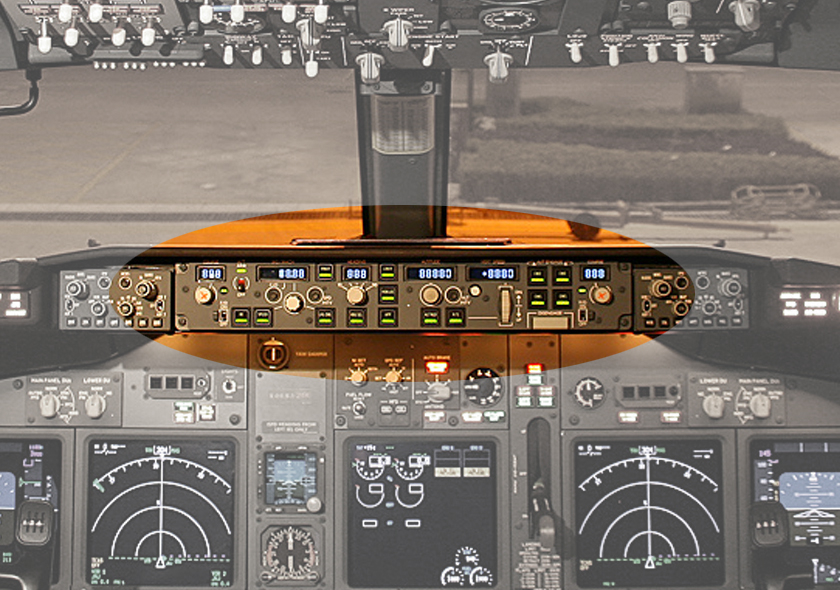
The autopilot control panel of a Boeing 737 (color highlight)

One evening I was sitting in economy class when our jet came in for an unusually smooth landing. “Nice job, autopilot!” yelled some knucklehead behind me. Amusing, maybe, but wrong. It was a fully manual touchdown, as the vast majority of touchdowns are. Yes, it’s true that most jetliners are certified for automatic landings, called “autolands” in pilot-speak. But in practice they are rare. Fewer than 1 percent of landings are performed automatically, and the fine print of setting up and managing one of these landings is something I could talk about all day. If it were as easy as pressing a button, I wouldn’t need to practice them twice a year in the simulator or periodically review those tabbed, highlighted pages in my manuals. In a lot of respects, automatic landings are more work-intensive than those performed by hand. The technology is there if you need it for that foggy arrival in Buenos Aires with the visibility sitting at zero, but it’s anything but simple.

A flight is a very organic thing—complex, fluid, always changing—in which decision-making is constant and critical. For all of its scripted protocols, checklists, and SOP, hundreds if not thousands of subjective inputs are made by the crew, from deviating around a cumulus buildup (how far, how high, how long), to troubleshooting a mechanical issue to handling an onboard medical problem. Emergencies are another thing entirely. I’m talking about the run-of-the-mill situations that arise every single day, on every single flight, often to the point of task saturation. You’d be surprised how busy the cockpit can become.

Another thing we hear again and again is how the sophisticated, automated Boeing or Airbus has made flying “easier” than it was in years past. On the contrary, it’s probably more demanding than it’s ever been. Once you account for all of the operational aspects of modern flying –- not merely the hands-on aspects of driving the plane, but familiarity with everything else that the job entails, from flight-planning to navigating to communicating—the volume of requisite knowledge is far greater than it used to be. The emphasis is on a somewhat different skill set, but it’s wrong to suggest that one skill set is necessarily more important than another.

But, you’re bound to point out, what about the proliferation of remotely piloted military drones and unmanned aerial vehicles (UAVs)? Are they not a harbinger of things to come? It’s tempting to see it that way. These machines are very sophisticated and have proven themselves reliable—to a point. But a drone is not a commercial jet carrying hundreds of people. It has an entirely different mission and operates in a wholly different environment—with far less at stake should something go wrong. You don’t simply take the drone concept, scale it up, build in a few redundancies, and off you go.

I would like to see a drone perform a high-speed takeoff abort after a tire explosion, followed by the evacuation of 250 passengers. I would like to see one troubleshoot a pneumatic problem requiring an emergency diversion over mountainous terrain. I’d like to see it thread through a storm front over the middle of the ocean. Hell, even the simplest things. On any given flight there are innumerable contingencies, large and small, requiring the attention and subjective appraisal of the crew.

And adapting the UAV model to the commercial realm would require, in addition to gigantic technological challenges, a restructuring of the entire commercial aviation infrastructure, from airports to ATC. We’re talking hundreds of billions of dollars, from the planes themselves to the facilities they’d rely on. We still haven’t perfected the idea of remote control cars, trains, or ships; the leap to commercial aircraft would be harder and more expensive by orders of magnitude.

And for what? You’d still need human beings to operate these planes remotely. Thus I’m not sure what the benefit of this would be in terms of cost.

It amuses me that as aviation technology progresses and evolves, so many people see elimination of the pilot as the logical, inevitable endpoint. I’ve never understood this. Are modern medical advances intended to eliminate doctors? Of course not. What exists in the cockpit today is already a fine example of how progress and technology have improved flying—making it faster, far safer, and more reliable than it once was. But it has not made it easy, and it is a long, long way from engineering the pilot out of the picture—something we needn’t be looking for in the first place.

I know how this sounds to some of you. It comes across as jealousy, or I sound like a Luddite pilot trying to defend his profession against the encroachment of technology and an inevitable obsolescence. You can think that all you want. I am not against the advance of technology. I’m against foolish extrapolations of it.

source::::Patrick Smith in” Ask The Pilot..”

natarajan.

Changi Airport in Singapore to get new retail and leisure complex….

An artist impression of Project Jewel at Changi Airport. Picture: Supplied

An artist impression of Project Jewel at Changi Airport.

A NEW architecturally striking shopping and leisure complex is being built at Changi Airport in Singapore. Codenamed “Project Jewel”, the complex will be built on a 3.5ha site where the carpark in front of Terminal 1 now lies.

It is expected to open in 2018.

Built to link terminals one, two and three, it is being designed by a consortium of consultants led by architect Moshe Safdie.

The complex will have a glass and steel facade with a large indoor garden and a waterfall.

A new, multi-storey basement carpark will be built as part of the redevelopment and Terminal 1 will be expanded to allow more space for the arrival hall, baggage claim areas and
taxi bays.

The improvements will increase the terminals’ passenger handling capacity to 24 million a year.
The gardens and waterfall at the complex at Changi Airport in Singapore. Picture: Supplied

The gardens and waterfall at the complex at Changi Airport in Singapore.


An artist impression of inside the complex. Picture: Supplied

An artist impression of inside the complex….


Playing Tennis on the Wings Of a Flying Plane !!!

Dare Devil – Ivan Unger and Gladys Roy playing tennis on the wings of a flying airplane in 1927. — with Martim Alves de LimaNuri LomelinKhawar Mehmood,Juanjo Moreno Vélez and Bilal Ahmed…


source::::: input from a friend of mine…

natarajan

Boeing 747 Jumbo Jet Yesterday…. Hostel cum Hotel on Ground Today !!!!

Aviation fans are in for a treat as a 450-seater jumbo jet has been converted into a unique hotel – letting guests sleep on a Boeing 747.

The unique Jumbo Stay hostel has a selection of 27 cabins to choose from, with some en-suite and all with Wi-Fi and flatscreen TVs.

For frequent flyers it might not exactly be their cup of tea, in fact far from it, but for aeroplane enthusiasts, it could be the next big buzz.
Jumbo Stay: For those who have never had a Jumbo experience, they can now book a cheap night in a converted jet in Sweden for as little as £42 a night

Jumbo Stay: For those who have never had a Jumbo experience, they can now book a cheap night in a converted jet in Sweden for as little as £42 a night


Guests can even stay in the luxurious cockpit suite, which has panoramic views of the airport in Arlanda, near Stockholm, Sweden
.

The plane – which now remains grounded – can also be used for conferences and is open 24 hours a day, seven days a week for guests to come and visit.

The owner and the man behind Jumbo Stay is Swedish business man Oscar Divs, who bought the 1976 Boeing 747-200 and converted it into the hostel.

 The grounded Boeing 747 is now a fixed hostel at Arlanda airport, near Stockholm, where gusts can even pay to stay in the cockpit suite


The rooms are all kitted out with flatscreen TVs, WiFi and en-suites


Unusual: The unique Jumbo Stay hostel has a selection of 27 cabins to choose from with rooms having elevated views of the airport  The unique Jumbo Stay hostel has a selection of 27 cabins to choose from


The 1976 Jumbo is now a fixed hostel feature at the Arlanda airport near Stockholm, in Sweden

Open for business: The 1976 Jumbo is now a fixed hostel feature at the Arlanda airport near Stockholm, in Sweden


Oscar said: ‘I was getting ready to expand my hostel business in 2006 when I heard about an old wreck of an aircraft for sale at Arlanda.

‘Since I had for a long time wanted to establish my business at Arlanda I didn’t hesitate for a second when this opportunity struck.’

The airplane, a decommissioned jumbo jet built in 1976, was last operated by Transjet, a Swedish airline that went bankrupt in 2002

The airplane, a decommissioned jumbo jet built in 1976, was last operated by Transjet, a Swedish airline that went bankrupt in 2002

The unique style of accommodation is likely to appeal to aviation enthusiasts, but perhaps not frequent flyers


Mr Divs said the opportunity to buy the Jumbo came at exactly the right time: 'Since I had for a long time wanted to establish my business at Arlanda I didn't hesitate for a second when this opportunity struck'


Cosy: Guests have the same hotel luxuries as standard accommodation, including en-suites, flatscreen TVs and WiFi


Guests have a hefty flight of stairs to climb if they want to stay in the Jumbo, climbing to entrances either at the front or the back of the plane

Guests have a hefty flight of stairs to climb if they want to stay in the Jumbo, climbing to entrances either at the front or the back of the plane

The prices at the Jumbo hostel range from 50 euros – around £42 – for a shared single sex dorm to almost 200 euros – £170 – a night for the exclusive pilot’s suite.

The airplane, a decommissioned jumbo jet built in 1976, was last operated by Transjet, a Swedish airline that went bankrupt in 2002.

Guests will recognise the jet as one of the most popular planes for holiday travel, and the owner promises guest will have an experience like no other in this novelty hostel.
Transformation: Much work has gone into converting the decommissioned Jumbo from a passenger plane to a comfortable hostel with places to kick back and relax

Transformation: Much work has gone into converting the decommissioned Jumbo from a passenger plane to a comfortable hostel with places to kick back and relax

Some parts of the aeroplane still resemble the traditional Boeing 747 interior

Some parts of the aeroplane still resemble the traditional Boeing 747 interior

source:::: mailonline.com UK

natarajan


Strange But True !!!…Reasons for Aircraft Delays !!!!!

Weird reasons for aircraft delays

An Air India flight was delayed by an hour earlier this year after the pilot, Captain Smiriti Trehan, refused to fly. Her objection was due to the fact that the original Mumbai-Jodhpur-Delhi route had been altered by the airline, cutting out the stopover in Jodhpur. Not a problem, you’d assume. However, Trehan had already arranged for some of the city’s famous onion kachoris to be delivered to her at the airport while the plane waited. Angered by her employers’ inflexibility, she declined to take charge of the flight.


Weird reasons for aircraft delays

Amateur aviator Larry Walters famously built a flying machine in 1982 that consisted of a patio chair with 45 helium-filled weather balloons attached to it. He took flight, reaching an altitude of 15,000ft, before floating into controlled airspace above Los Angeles International Airport, causing widespread disruption to services.


Weird reasons for aircraft delays

In a widely disputed incident at the same airport, former President Bill Clinton allegedly delayed several departures so a stylist could finish cutting his hair cut on board Air Force One.


Weird reasons for aircraft delays

An American Airlines flight from Dallas was delayed in 2012 after a flight attendant began “ranting” over the PA system that the plane had technical difficulties and was likely to crash. A colleague attempted to reassure passengers, who became understandably unnerved. The plane returned to the gate and the flight attendant was removed.


Weird reasons for aircraft delays

A Delta flight from Istanbul to New York was diverted to Dublin last year after a passenger attempted to charge their mobile phone using the shaving socket in the aircraft’s lavatory. The device was discovered by staff, who feared it was a bomb.


Weird reasons for aircraft delays

Two flights were cancelled in Australia in 2009 following scenes reminiscent of the cult movie Snakes on a Plane. A dozen Stimson’s pythons were being transported from Alice Springs to Melbourne on a Qantas flight, but when the plane landed it was discovered that four were missing. Despite an extensive search, the four creatures were never recovered.


Weird reasons for aircraft delays

In April 2011, a Rhodesian Ridgeback puppy caused delays at New York’s La Guardia Airport after it broke free as it was being loaded onto a plane. Ground staff frantically chased the dog for 20 minutes before it was captured. A similar incident involving a whippet occurred at Manchester Airport later that year, delaying a dozen flights.


Weird reasons for aircraft delays

A flight from Paris to Dublin was delayed for two hours after Gerard Depardieu urinated on the floor. The plane had been waiting to take-off when the portly French actor demanded to use the loo. After cabin crew refused, he decided to go on the carpet. The jet was forced to return to the gate so staff could clean up. “You could tell he’d been drinking,” one passenger claimed.


Weird reasons for aircraft delays

An easyJet flight to Geneva was delayed for an hour-an-a-half in January after it was deemed too heavy to take off. A man on board claimed he and fellow passengers stumped up £400 in cash to convince four people to disembark, allowing it to fly.


Weird reasons for aircraft delays

n 2009 a Continental flight from Houston to Columbus, Ohio, was delayed for an hour after a pair of otters escaped from the cargo hold. Passengers assumed cabin crew were joking when an announcement was made, until they saw the animals dashing across the tarmac. They were eventually captured and the plane was cleared for Tarka-off.


Weird reasons for aircraft delays


Slow-moving turtles interrupted services at JFK Airport in 2011. The animals wandered onto the runway in search of their seasonal breeding grounds, shutting runway 4L for an hour.


source::::: The Telegraph UK

natarajan


“Welcome on -Board…Sit Down You Idiot ” !!!

A PASSENGER was hit with a case of mile-high shock after being called an ‘idiot’ by the in-flight entertainment unit.
The bizarre incident happened on board a recent Air India flight from London to Mumbai, the Times of India reported.

An Air India plane. Picture: Aero Icarus/Flickr
The woman, whose identity has not been revealed, said she tried to watch a movie about five hours into the flight but the entertainment unit wouldn’t work properly.
She adjusted the switches and buttons, at first with no response. The next thing she knew, a rather rude message popped up on the screen.
At the top it read: “The selection is no currently available. Please try again.” The message continued towards the bottom of the screen: “Lie low … Sit down you idiot!”.
The passenger complained to cabin crew and took a photo of the screen, which kept going blank. She said an airline employee apologised.
It’s unclear exactly why the message popped up, with airline sources speculating it’s only possible it was the handiwork of a disgruntled employee.
An Air India spokesperson said the incident is being investigated but it appears to be an unfortunate coincidence: “Our investigation indicates that it was the English subtitle of a Hindi movie that the lady passenger was watching, which froze on the screen when the server went offline. The matter has been taken up with the concerned authorities for rectification”.
However, the messages at the top and bottom of the screen were in the same font, and the woman said this was not the case.
source :::: News.com.au

Read more: http://www.news.com.au/travel/news/welcome-onboard-you8217re-an-idiot8217/story-e6frfq80-1226706306941#ixzz2dTBjMy35

natarajan

What Causes Turbulance ?….Is It Dangerous ?

Turbulence is what nervous fliers fear the most when they board an aircraft. It is also the most common cause of injury to air passengers – pilots will always keep their seatbelts fastened while seated on an aircraft and will usually advise you to do the same. But is it really something to be afraid of? British Airways pilot Steve Allright explains.

What causes turbulence, and is it dangerous?
What causes turbulence?
Many different things may cause turbulence, but each and every one of them is known and understood by pilots. Every day I fly, I expect a small amount of turbulence, just as I’d expect the odd bump in the road on the drive to work. Turbulence is uncomfortable but not dangerous. It is part of flying, and is not to be feared.
Different aspects of the weather cause different types of turbulence. CAT is an abbreviation for Clear Air Turbulence – the most common form of turbulence you are likely to experience.

Air tends to flow as a horizontal snaking river called a jet stream. A jet stream can sometimes be thousands of miles long but is usually only a few miles wide and deep. Depending on the direction of travel, our flight planners either avoid (into a headwind) or use (into a tailwind) these jet streams to cut fuel costs, as they can flow up to 250 mph. Just like a fast-flowing river swirling against the riverbank, where the edge of the jet stream interacts with slower moving air, there may be some mixing of the air which causes turbulence.

Can it be avoided?

You cannot see CAT, you cannot detect it on radar and you cannot accurately forecast it, but there are other ways of avoiding it. In the main we rely reports from other aircraft, which we hear either directly or which are passed on by air traffic control. We then consider the options available to us. Our endeavours to fly at an altitude that has been reported as smooth may be prevented by several constraints such another aircraft occupying that level, or the weight of the aircraft at that time.

Whatever the circumstances, your pilot will find the most comfortable path to your destination without compromising your safety. Just like you, we experience the movement and would prefer a smoother ride.

Is turbulence more likely on certain routes?

Any airport is at the mercy of strong winds on any given day. The same applies to jet streams on any given route, although there is generally more chance of turbulence crossing the ITCZ (Intertropical Convergence Zone) when flying south across Africa, for example.

How bad can turbulence get?

Flight crews around the world share a common classification of turbulence: light, moderate and severe. The definitions are laid down in our manuals and help us to make an assessment as to what our course of action should be. For the fearful flyer, even light turbulence can be upsetting. For pilots, light turbulence is no different to a bumpy road for a taxi driver or a slightly uneven section of track for a train driver – a small, but totally safe, inconvenience and very much part of our daily lives. In light turbulence, the aircraft may be deviating by just a few feet in altitude.

Moderate turbulence strikes no fear into pilots, as they will experience this level of turbulence for a few hours in every thousand hours they fly. It usually lasts for no more than 10 or 15 minutes, but occasionally may last for several hours, on and off. This sort of turbulence will unsettle even some regular travellers and will cause drinks to spill. The aircraft may be deviating in altitude by 10 or 20 feet. No action is required by the pilot to control the aircraft, but the flight crew may decide to try a different altitude if the turbulence persists.

Severe turbulence is extremely rare. In a flying career of over 10,000 hours, I have experienced severe turbulence for about five minutes in total. It is extremely uncomfortable but not dangerous. The aircraft may be deviating in altitude by up to 100 feet (30 metres) or so, up as well as down, but nothing like the thousands of feet you hear some people talking about when it comes to turbulence.

I should stress that this level of turbulence is so rare that leisure travellers will almost certainly never experience it and nor will most business people.

  • Steve Allright is a British Airways training captain and co-author of the new book Flying with Confidence. British Airways regularly runs “Flying with Confidence” courses at airport around the UK. Seewww.flyingwithconfidence.com

source:::::The Telegraph UK

natarajan

Golden Age Of AirTravel…. Thro ” The Lense of a Flight Attendant !!!

A Lebanese photographer who worked as a flight attendant for nearly ten years has documented the behind-the-scenes life of air crew.
Lucien Samaha’s love affair with aircraft started when he was a young boy. His father and uncles worked for an airline and he spent the first ten years of his life flying first class to spend time with his family.
Samaha, who always carried a camera with him, has recently exhibited a selection of the 600 plus images he took during his time flying with TWA.


Team work: Crew members enjoy a mid-flight shoulder rub in 1982

Team work: Crew members enjoy a mid-flight shoulder rub in 1982


Boarding pass: Pilots and flight attendants sit on the steps of the plane in Frankfurt in 1983

Boarding pass: Pilots and flight attendants sit on the steps of the plane in Frankfurt in 1983

Light hearted: A stewardess jokes around on board a flight in 1985

Light hearted: A stewardess jokes around on board a flight in 1985


‘Flight Attendants epitomized international glamor and adventure to me. Growing up, I often dreamed of becoming one,’ he said.

High life: Samaha with his father in 1958, who also worked on airlinesHigh life: Samaha with his father in 1958, who also worked on airlines

As his 18th birthday approached Samaha, who had studied photography in high school, realized the life of luxury he had experienced for free on board planes would end.

‘I wouldn’t be able to jaunt around the world at will, for free – something I had been used to all my life,’ he said.

‘My only solution was to follow my childhood dream and become a flight attendant.’


On his 20th birthday Samaha was hired by TWA and began studying at the Breech Training Academy. He took photographs nearly the entire time, according to Slate.

‘I was shooting everything during that time, from fashion photography in Milan to photographing on layovers … street photography around the world,’ he said.

It was a glamorous period for flying. Samaha learned how to carve chateaubriand and how to serve caviar in first class as he worked on flights from Chicago, Tel Aviv, Rome and Paris.

Samaha, a documentary photographer who was part of the launch team for Kodak’s first digital camera and explained that he often used small cameras to help his subjects feel more relaxed.

 Sky's the limit: The moon shines over this passenger jet as it waits at JFK in New York in 1982
 Sky’s the limit: The moon shines over this passenger jet as it waits at JFK in New York in 1982

Driving seat: A first officer sits in the cockpit of a TWA aircraft in 1978

Driving seat: A first officer sits in the cockpit of a TWA aircraft in 1978

Ground crew: Drivers in Cairo wait to meet the plane in 1982

round crew: Drivers in Cairo wait to meet the plane in 1982


‘People become relaxed with a small point-and-shoot camera, and that’s my aesthetic. I like intimacy … the smaller and quirkier the camera, the better—and I feel l can take great pictures with it,’ he said.

A collection of photos from that time, entitled The Flight Attendant Years: 1978-1986, is being shown at the Lombard Freid Gallery in New York. Many of Samaha’s former colleagues on the airlines have been invited to the gallery to view the images.

His work can also be viewed at Luciensamaha.net.

Turbo: Crew pose in one of the engines in 1978

Turbo: Crew pose in one of the engines in 1978

Training camp: New recruits at the Breech Academy in 1978

Training camp: New recruits at the Breech Academy in 1978.

High jinx: Air crew celebrate Easter in Las Vegas in 1982

High jinx: Air crew celebrate Easter in Las Vegas in 1982

Arrivals: An attendant rides the shuttle bus at Cairo airport in 1983

An attendant rides the shuttle bus at Cairo airport in 1983

Going places: Samaha combined his love of air travel and photography for eight years

source::::mailonline .com uk

natarajan


“World”s Best Airport” to Double Its Capacity with New Terminal !!!

Airs and graces: Singapore's Changi Airport.

Singapore will build a new terminal that will double the capacity of Changi Airport in a bid to retain its edge as a regional aviation hub, Prime Minister Lee Hsien Loong said on Sunday.

Construction work will begin soon and will be completed in 12 to 15 years, Lee announced in his annual policy speech.

“T5 (Terminal 5) sounds like a terminal, but it is actually a whole airport by itself, as big as today’s Changi Airport,” said Lee.
Singapore's Changi Airport: you could spend a few weeks here and not realise you missed your flight.

SINGAPORE’S CHANGI AIRPORT

Singapore’s Changi Airport: you could spend a few weeks here and not realise you missed your flight!!!

He did not reveal the cost of the new facility, but said it would include a third runway that would double the capacity of Changi, which handled 51.2 million passengers last year.


Changi Airport, named the world’s best by Britain-based consultancy Skytrax this year, currently has three terminals with a total capacity of 66 million passengers a year.

In February it started to demolish its terminal for budget airlines to replace it with a larger facility.

The new facility, Terminal 4, will have the capacity to handle 16 million passengers a year when it opens in 2017.

In his speech late Sunday, Lee said there was growing competition from other major international airports in Southeast Asia.

He noted that Malaysia’s Kuala Lumpur International Airport and Thailand’s Suvarnabhumi Airport are planning to expand.

“The question is do we want to stay this vibrant hub of Southeast Asia, or do we want to let somebody take over our position, our business and our jobs?” Lee said.

Passenger traffic at Changi totalled 51.2 million last year, the first time in the airport’s 31-year history that the number of people passing through crossed 50 million.

As of January 1, 2013, Changi handled more than 6500 weekly scheduled flights with 110 airlines connecting Singapore to 240 cities in 60 countries.

source::::Sydney Morning Herald

natarajan

An Airline Turns Around to Pickup A Child Left Behind @Terminal !!!

An Israeli airline – with the support of everyone on-board – turned around a plane to pick up an 11-year-old cancer patient.

All set to fly to New York August 7 to attend a camp for paediatric cancer patients, Inbar Chomsky, was taken off an El-Al Airlines flight after her passport went missing. Despite a frantic search by airline staff, passengers and the group Chomsky was travelling with, her passport was gone, flight attendants had no choice but to remove the sick girl.

Tears in their eyes, everyone said good bye to the devastated young girl after a half hour search aided by airline staff and passengers failed to turn up the girl’s passport, according to Haaretz.

She made it: A very happy Inbar Chomsky with her found passport at Camp Simcha

She made it: A very happy Inbar Chomsky with her found passport at Camp Simcha

‘El Al sadly called her mother to tell her that Inbar’s passport was lost and that the girl, who had been fighting illness so valiantly, would not be able to fly to Camp Simcha’ Rabbi Yaakov Pinsky, director of of the Israeli branch of  Chai Lifeline wrote in Yeshiva World News. ‘What a horrible experience for an 11 year old girl.’

Minutes after the doors closed and the plane taxied away from the gate, a fellow camper looking through another girl’s backpack found Chomsky’s passport and told flight attendants, according to Haaretz.

What happened next is virtually unheard of, especially post-9/11.

The plane’s pilots immediately stopped the plane, according to Haaretz, and after about 45 minutes were able to convince air traffic control to let them return to the gate to pick Chomsky up, Pinsky wrote.

Planes almost never turn around: No one could believe the plane returned to pick up Chomsky

Planes almost never turn around: No one could believe the plane returned to pick up Chomsky

Still overcoming her disappointment while at the gate with Elad Maimon, program director of the Israeli branch of Chai Lifeline, Chomsky and others watched in disbelief as the plane turned around, said Haaretz. ‘The flight attendants could not believe their eyes,’ Maimon told the paper. ‘They told me they had never seen such a thing.’

‘Planes rarely return to the gate after departing, read an El Al statement, continuing that ‘after consulting with El Al crew on the plane and El Al staff at the airport the decision was made and the plane returned to pick up Inbar.’

Passengers cheered and cried, wrote Pinsky, saying they shared ‘Inbar’s happiness and excitement,’ and calling it ‘one of the greatest moments’ he has ever witnessed.


source:::::mailonline.comUK

NATARAJAN