Message For the Day…” Know That YOU are the Spark of the Divine…”

Lord Krishna said, “Don’t conduct yourself like a beast, not even like a human being. Know that you are the spark of the Divine. You are ancient, eternal and essentially Divine. Mamaivamsho Jeeva Loke Jeeva Bhoota Sanatanaha.” Being the sparks of Divine, you must have the sacred qualities of Truth, Righteousness, Peace, Love and Nonviolence. Instead of behaving in accordance with these noble virtues, people submit themselves to evil qualities like lust, greed, anger, jealousy, hatred and avarice which does not befit a human being. These changes are due to one’s food habits and behavior. The food you take and the water you drink must be pure, and timely. Lead a well regulated human life and realise the Divine within you.

Sathya Sai Baba

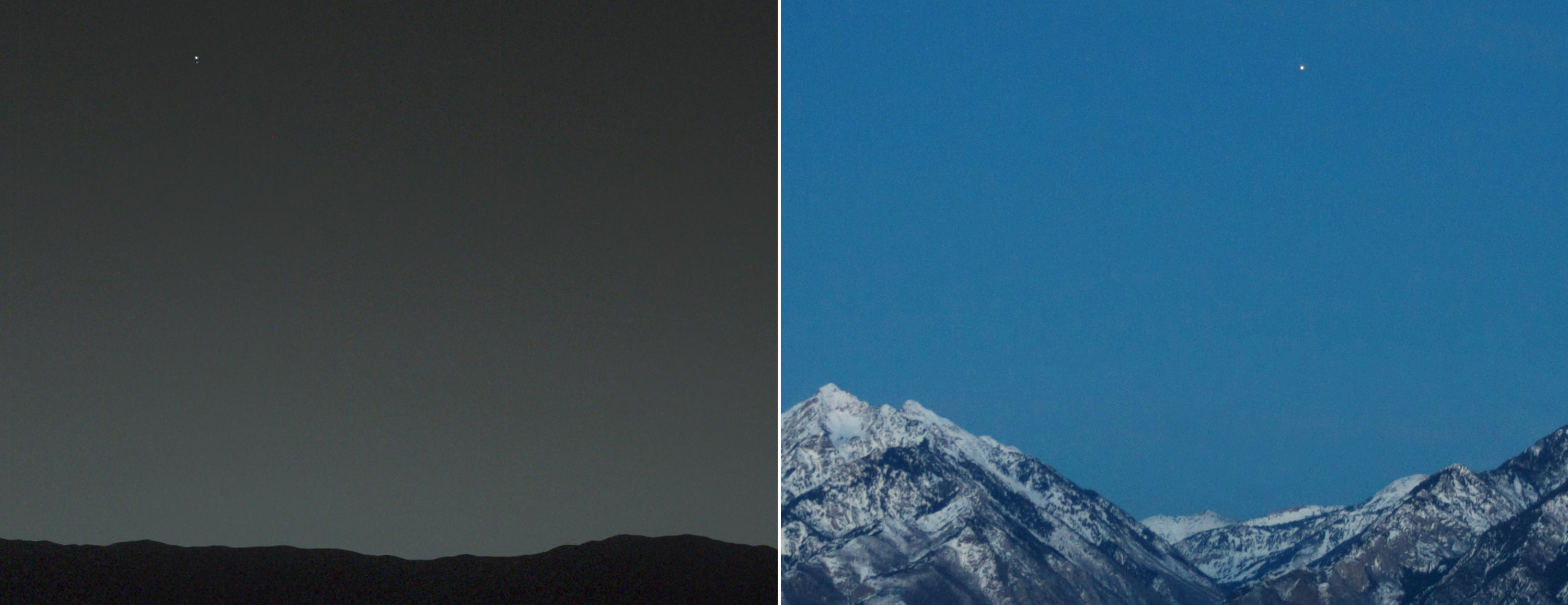
Image of the Day… Earth Seen From Mars & Mars Seen From Earth !!!


View larger. | Via ridingwithrobots.org.

Click on the picture for a larger view. To learn more about viewing Earth in Mars’ sky, see the postCuriosity rover sees Earth and moon from Mars. To learn more about viewing Mars in Earth’s sky, see EarthSky’s February 2014 guide to the five visible planets.

Source::::Earth sky news site

Natarajan


” இதை மாற்றினால் போதும் …”

இதை மாற்றினால் போதும்!

ஒரு பக்கம் சாஸ்திர நம்பிக்கையுள்ள கட்டுப் பெட்டிகள், மறுபக்கம் நவீனக் கல்வி படித்தவர்கள் என்று பிரிந்திருப்பதே தவறு. சாஸ்திரத்தில் நம்பிக்கை மட்டுமில்லாமல், நாமே எல்லா சாஸ்திரங்களையும், வித்யைகளையும் படித்தால் கட்டுப்பெட்டிகளாக இருக்க வேண்டியதேயில்லை. அதனால் அவற்றையும் படித்து, மாடர்ன் ஸயன்ஸ்களையும் படித்து, இந்த ஸயன்ஸிலும் நிறைய அம்சங்கள் நம் சாஸ்திரங்களில் இருக்கின்றன என்பதைப் புரிந்து கொள்ள வேண்டும். இதே மாதிரி ஸயன்ஸ்காரர்களும் சாஸ்திரங்களைப் படித்துப் புரிந்து கொள்ள வேண்டும் என்பது என் ஆசை. இதற்காக பகவானைப் பிரார்த்தனை பண்ணுகிறேன். ஒன்றுக்கொன்று ‘காம்ப்ளிமென்டரி’யாக பழசும் புதிசும் இட்டு நிரப்பிக் கொள்ள வேண்டும்.

நானும் சரி, மற்றவர்களும் சரி எவ்வளவு பேசினாலும் லெக்சரால் கல்சர் (கலாசாரம்) வளராது. படிப்பதாலும் வளராது. நமக்கென்று காரியத்தில் பின்னி வைத்திருக்கிற அநுஷ்டானங்களைப் பண்ணினால்தான் சித்த சுத்தி ஏற்பட்டு, நாம் படிப்பதில் ஸாரம் எது என்று புரிந்துகொண்டு அதைக் கிரஹித்துக் கொண்டு கல்சரை வளர்க்க முடியும். பிற தேச விஷயங்களில் எதை எடுத்துக் கொள்வது என்று பரிசீலித்து முடிவு செய்வதற்கு அஸ்திவாரமாக முதலில் நம் சாஸ்திரப்படி வாழ முயற்சி பண்ண வேண்டும்.

இக்காலத்தில் ஆஹாரம், விஹாரம், வாஹனம் எல்லாமே மாறித்தான் விட்டது. அத்தனையும் நம் பண்பாட்டுப்படி மாற்ற முடியுமா என்று மலைப்பாயிருந்தாலும், கொஞ்சம் strain பண்ணிக் கொண்டாவது (சிரமப்படுத்திக் கொண்டாவது) சிலதையாவது மாற்ற ஆரம்பிக்கத்தான் வேண்டும். நம் மதத்துக்கு ஆதாரமான ஆசாரங்கள், ஆஹார சுத்தி முதலியவை, பழக்கத்தில் இருந்தால்தான் போஷிக்கும். முதலில் லெக்சராகவும் அப்புறம் லைப்ரரியில் புஸ்தகமாகவும் மட்டும் இருந்தால் வெறும் வறட்டுப் பெருமை தவிர பிரயோஜனமில்லை.

நான் சொல்கிறபடி மாறுவது ஒன்றும் பெரிய கஷ்டமில்லை. ஒரே ஒரு அம்சத்தை மட்டும் நாம் பிடிவாதமாக மாற்றிக் கொண்டு விட்டால் இது ஸாத்யம்தான். ‘பணம்தான் பிரதானம்’ என்பதே அந்த அம்சம். பணமே குறி என்று நாம் இறங்கின பிற்பாடுதான் ஆசாரங்கள், வித்யா ஞானம் எல்லாமே போய்விட்டன. நம் தேசத்தில் பணம் முக்யமாய் இருந்ததேயில்லை. லௌகிக வாழ்க்கையை ஆத்ம அபிவிருத்திக்கு உபாயமாக மட்டும் வைத்துக் கொள்வதுதான் நம்முடைய தேசாசாரம்.

ஜகத்குரு காஞ்சி காமகோடி ஸ்ரீ சந்திரசேகரேந்திர சரஸ்வதி சங்கராச்சார்ய ஸ்வாமிகள்

Source::::Input from a friend of mine

Natarajan

Image of the Day… Glass Butterfly !!!


The Glass Butterfly

This beautiful butterfly, named ‘Greta oto‘ but nicknamed the ‘glass butterfly’ opens to each side 6 cm of incredibly beautiful, and completely transparent, wings. A close look at the glass butterfly’s wings will show you that through the veins running across its wings, you can see a perfect image. Most butterflies come with painted wings, using tiny scales to draw incredible designs we humans love to see.
glass butterfly photos
The reasons are usually the same: Either deter enemies or attract other butterflies. The glass butterfly’s wings have the same purpose: They hide the butterfly in plain sight, therefore allowing it to escape detection by birds, who have great eyesight, especially for color.
glass butterfly photos
To achieve this kind of transparencly, the wing is coated with numerous sub-microscopic tiny bumps that break light and prevent it from bouncing back from the wing, thereby creating transparency.


Source::::Carolina in ba-ba mail site

Natarajan

Dead Sea …Few Live Facts about This Unique Place in Earth !!!


The Dead Sea, also known as the Salt Sea, is a salt lake bordering Jordan to the east and Israel and the West Bank to the west. It’s a hypersaline lake that is truly one of Earth’s unique places. Not only is it the saltiest body of water in the world, but it is also the lowest place on the entire globe, and one of the only bodies of water you can freely float in!

Here are 10 amazing facts about this unique place, ……


facts about the dead sea
1. The surface and shores of the Dead Sea are 423 metres (1,388 ft) below sea level, making it Earth’s lowest elevation on land.
facts about the dead sea
2. The Dead Sea is 377 m (1,237 ft) deep, making it the deepest hypersaline lake in the world. A hypersaline lake is a landlocked body of water that contains significant concentrations of sodium chloride or other mineral salts, with saline levels surpassing that of ocean water.
facts about the dead sea
3. With 33.7% salinity, the Dead Sea is one of the world’s saltiest bodies of water. Although Lake Assal (Djibouti), Garabogazköl and some hypersaline lakes of the McMurdo Dry Valleys in Antarctica (such as Don Juan Pond) have reported higher salinities.
facts about the dead sea
4. The Dead Sea’s unusually high salt concentration means that people can easily float in the Dead Sea due to natural buoyancy. In this respect the Dead Sea is similar to the Great Salt Lake in Utah in the United States.
facts about the dead sea
5. The Dead Sea is roughly 8.6 times saltier than the ocean. This salinity makes for a harsh environment in which animals cannot flourish (hence its name). The high salinity prevents macroscopic aquatic organisms such as fish and aquatic plants from living in it, though minuscule quantities of bacteria and microbial fungi are present.
facts about the dead sea
6. The Dead Sea is 67 kilometres (42 mi) long and 18 kilometres (11 mi) wide at its widest point. It lies in the Jordan Rift Valley and its main tributary is the Jordan River.
facts about the dead sea
7. The Dead Sea area has become a major center for health research and treatment for several reasons. The mineral content of the water, the very low content of pollens and other allergens in the atmosphere, the reduced ultraviolet component of solar radiation, and the higher atmospheric pressure at this great depth each have specific health effects.
facts about the dead sea
8. Biblically, the Dead Sea was a place of refuge for King David. It was one of the world’s first health resorts (for Herod the Great), and it has been the supplier of a wide variety of products, from balms for Egyptian mummification to potash for fertilizers.
facts about the dead sea
9. An unusual feature of the Dead Sea is its discharge of asphalt. From deep seeps, the Dead Sea constantly spits up small pebbles and blocks of the black substance. Asphalt coated figurines and bitumen coated Neolithic skulls from archaeological sites have been found. Egyptian mummification processes used asphalt imported from the Dead Sea region.
facts about the dead sea
10. The world’s lowest road, Highway 90, runs along the Israeli and West Bank shores of the Dead Sea at 393 m (1,289 ft) below sea level.
facts about the dead sea
 Source:::::Ba-ba mail site

Natarajan

வாழ்த்துக்கள் சஞ்சய் ராஜாராம் …

சஞ்சய ராஜாராம்


கோதுமை உற்பத்தியை உயர்த்திய இந்திய விஞ்ஞானிக்கு உலக

உணவு விருது

இந்திய தாவரவியல் விஞ்ஞானி சஞ்சய ராஜாராமுக்கு 2014-ம் ஆண்டுக்கான உலக உணவு விருது அறிவிக்கப்பட்டுள்ளது.

உலக கோதுமை உற்பத்தியை பசுமைப் புரட்சி மூலம் 20 கோடி டன் உயர்த்தியமைக்காக இவ்விருது அறிவிக்கப்பட்டுள்ளது.

உலக உணவு விருது அறக்கட்டளை நிறுவனர் கென்னத் எம். குய்ன், அமெரிக்க வெளியுறவுத்துறை அமைச்சர் ஜான் கெர்ரி ஆகியோர் இதனை அதிகாரப்பூர்வமாக அறிவித்தனர். இவ்விருதுக்கான பரிசுத் தொகை 2.5 லட்சம் அமெரிக்க டாலர்களாகும் (சுமார் ரூ.1.5 கோடி).

ராஜாராம், குளிர்காலம் மற்றும் கோடைகாலத்துக்கு ஏற்ற ஒட்டுவகை கோதுமை ரகங்களைக் கண்டுபிடித்தார். இவ்வகைக் கோதுமை அதிக அளவு மகசூல் கொடுக்கக்கூடியவை.

மொத்தம் 480-க்கும் அதிகமான அதிக மகசூல் தரும் கோதுமை ரகங்களை ராஜாராம் கண்டறிந்தார். இந்த கோதுமை ரகங்கள் 51 நாடுகளில் சிறு மற்றும் பெரு விவசாயிகளால் பெரிதும் பயிர் செய்யப்படுகின்றன. உலகம் முழுதும் சுமார் 6 கோடி ஹெக்டேர் வயல்களில் இவரது கோதுமை ரகங்கள் பயிர் செய்யப்பட்டன என்பது குறிப்பிடத்தக்கது.

விருது குறித்த அறிவிப்பை வெளியிட்ட அமெரிக்க வெளியுறவுத் துறை அமைச்சர் ஜான் கெர்ரி கூறுகையில், “ராஜாராமின் சேவை, நாம் இன்னும் பணி செய்ய வேண்டும் என அனைவரையும் தூண்டுவதாக இருக்கிறது. அடுத்த 30 ஆண்டுகளுக்கு 200 கோடிக்கும் அதிகமான மக்களுக்கான தேவையைப் பூர்த்தி செய்வது என்பது கணக்கிடுவதற்குத் சிரமம். இது இரண்டாவது பசுமைப் புரட்சிக்கான நேரமாகும்.

ராஜாராம் கண்டறிந்த நூற்றுக்கணக்கான கோதுமை ரகங்களுக்காக நாம் நன்றி சொல்லக் கடமைப் பட்டிருக்கிறோம். அவர் கண்டுபிடித்த கோதுமை ரகங்கள் ஆண்டுக்கு 20 கோடி டன் கோதுமை உற்பத்தியை அதிகரித்து, உலகம் முழுவதும் லட்சக் கணக்கானவர்களின் உணவுத் தேவையை நிறைவு செய்துள்ளது” என்றார்.

பசுமைப் புரட்சியின் தந்தை என கூறப்படும் நார்மன் இ போர்லாக், சர்வதேச மக்காச்சோளம் மற்றும் கோதுமை மேம்பாட்டு மையத்தின் (சிஐஎம்எம்ஒய்டி) கோதுமைத் திட்டத்தை 1976-ம் ஆண்டு முதல் 2001-ம் ஆண்டு வரை வழிநடத்தி வந்தார். அவருக்குப் பிறகு அத்திட்டத்தின் இயக்குநர் பொறுப்பை ராஜாராம் ஏற்றார்.

உத்தரப்பிரதேச மாநிலத்தில் பிறந்த ராஜாராம், ஆஸ்திரேலியாவின் சிட்னி பல்கலைக் கழகத்தில் டாக்டர் பட்டம் பெற்றார். தற்போது மெக்ஸிகோவில் வசித்து வருகிறார்.

Topics: வணிகம்| வணிகம்| வேளாண்மை|

Source::: The Hindu …Tamil

Natarajan

Human Body… Most Incredible and Complex Machine !!!


The human body is, without a doubt, the most incredible and complex “machine” on the face of the planet, maybe the universe. In an age where mankind sends people into space and keeps coming up with more and more great inventions, the human body is still full of undiscovered mysteries. To help you understand just how amazing you are, here are some facts that left me with a great sense of admiration for the workings of the human body.
human body
human body
human body
human body
human body
human body
human body
human body
human body
human body
human body
human body
human body
human body
human body
human body
human body
human body

Source: Lucas B. in ba-ba mail site

Natarajan

A Man was Out in the Wild Enjoying the Nature … And Suddenly ….OMG !!!

Are you a nature lover? Me too. I love to go into the wild and watch the animals in their native environment. Although by animals I don’t mean anything that could eat me. ;)

So when Alaskan bear enthusiast Drew Hamilton recently set up camp near the McNeil River to watch the area’s numerous brown bears fish, you can imagine the shock he got when a certain visitor came a little too close for comfort. Here’s a hint. He could eat you!

Drew-Hamilton-Bear-watching-685x301


How scary is that?! One minute you think you’re being careful, staying out of the fray, and observing from a distance. And then… suddenly… OMG. Awesome.


Source::::You Tube and Viral nova trending site

Natarajan


Seeing Things That are Not There … !!!


Seeing things that aren’t there!!!

Seeing animals in clouds, or a face in the moon, are examples of pareidolia. Look here for photos and to test your own ability to see things that aren’t there.

Maybe you’ve seen the proverbial bunny in a patch of clouds, or a clown’s face in a mud splatter on the side of your car? Seeing recognizable objects or patterns in otherwise random or unrelated objects or patterns is called pareidolia. It’s a form of apophenia, which is a more general term for the human tendency to seek patterns in random information. Everyone experiences it from time to time. Seeing the famous man in the moon is a classic example from astronomy. The ability to experience pareidolia is more developed in some people and less in others. Look at the photos below to learn more and test your own ability to see things that aren’t there.

Aurora borealis by Dave Bachrach.  Used with permission.

Can you see a bird in flight in this photo? It is a a photo of the aurora borealis taken on March 26, 2014 near Fairbanks, Alaska by Dave Bachrach. Used with permission.

Anonymous Swedish photograph from the late nineteenth century via Wikimedia Commons

The “face of Jesus” in this photo is actually a child with a bonnet, and the hair is vegetation in the background. Anonymous Swedish photograph from the late nineteenth century via Wikimedia Commons


Sometimes the ability to see objects in photos, where no such objects exist, has results that are not simply beautiful or intriguing, but downright bizarre. For example, consider the old photo above from an anonymous Swedish photographer of the 19th Century.

In the image above, many viewers will immediately see the image of a bearded man with wavy hair, which could be interpreted as Jesus, near the left center of the image. In fact, however, the face is just a phenomenon of light, shadow and placement. The “face of Jesus” is actually a child with a bonnet, and the hair is vegetation in the background.

You have probably have seen claims of images of Jesus in a piece of toast, or the Madonna in the misshapen form of a gourd. Although intrinsically meaningless, such images are sometimes striking. More often, though, the similarity to known persons, animals or objects is a bit more subtle.

Pareidolia of an Apache head in rocks, in Ebihens, France via Wikimedia Commons.

Erwan Mirabeau shot this rock formation in Ebihens, France. It’s reminiscent of a green haired man, known in the area as an Apache. Photo via Wikimedia Commons.


Pareidolia of dog on closet door by Chad Johns.

Pareidolia of dog on closet door by Chad Johns. Photo used with permission.

What can you see in the folds of this tissue? Many people will not see anything. It depends, in part, on the innate ability to see patterns, and in part on the natural inclinations and interests of the viewer. In some cases the image will immediately pop out, while for some folks it will come after a little close examination, and others may not be able to see it at all.

What can you see in the folds of this tissue? Many people will not see anything. It depends, in part, on the innate ability to see patterns, and in part on the natural inclinations and interests of the viewer. In some cases the image will immediately pop out, while for some folks it will come after a little close examination, and others may not be able to see it at all.

Here's a close-up.  Do you see the head of a Dachshund?  Don’t worry if you cannot, but for many the ears, eyes and snout will seem obvious.

Here’s a close-up. Do you see the head of a Dachshund?  Don’t worry if you cannot, but for many the ears, eyes and snout will seem obvious.


To a certain extent, the definition of pareidolia can be used to describe how the ancients connected the dots and came up with the patterns we know as constellations. It does not take a great deal of imagination to see a lion in Leo, a scorpion in Scorpius, or a mighty hunter in Orion. To be honest, many other constellations, such as Cancer the Crab or Capricornus the Sea Goat, stretch the pattern recognition idea a bit far, making the naming process more one of contrivance than of pareidolia.

Staying in the realm of astronomy for a bit, many have seen a face or a rabbit in the moon or any of a variety of other figures on the face of the moon for ages. Nowadays, technology has given us close-ups of other planets that serve as fodder for the pareidolia monster.

Here is the so-called

Here is the famous “face on Mars” as originally captured in a 1976 image from the Viking 1 orbiter. Click here to see how subsequent spacecraft revealed the “face” to be simply a play of light and shadows.

Image barchans Mars Global Surveyor

Glass tunnels or “ice worms” on Mars? In fact, these martian canyons contain crescent-shaped sand dunes, which are formed when the wind is predominantly from one direction. This image is an enlargement of a small section of a larger image, #M0400291, taken by NASA’s Mars Global Surveyor.


For example, some self-appointed experts have stated that the image above – which is an enlargement of a small section of image M0400291 from the Mars Global Surveyor – shows large glass tunnels on Mars, or even evidence for ice worms on the Red Planet. What the image above really shows is a convergence of deep canyons on the planet Mars. At the bottom of these canyons are crescent-shaped sand dunes, which are formed when the wind is predominantly from one direction. Such dunes are common in desert areas of the Earth and are known as barchans.

Atomic cloud over Nagasaki - August 9, 1945 - from Koyagi-jima by Hiromichi Matsuda via Wikimedia Commons

People have found many imaginary images in this photo of the atomic cloud over Nagasaki – August 9, 1945 – from Koyagi-jima by Hiromichi Matsuda. Photo via Wikimedia Commons


Although deliberately manipulated (“photoshopped”) photos are very easily made today and cannot be ruled out for many pareidolia images, hoaxes are considerably less likely in older images. Consider the old Swedish image above in which the “face” of Jesus is actually a baby with a bonnet. Or consider the image above from the Nagasaki Atomic Bomb Museum, shot by Hiromichi Matsuda, showing the mushroom cloud over the city just 20 minutes after detonation.

With just a casual glance, most people will notice nothing in the bomb cloud other than the expected shape. But for someone with an eye for pareidolic images, several things can pop out. Let’s consider just one, that the head of an apparently sleeping woman with 1940s-style hair, facing the right from just left of the top center area of the cloud.

Go ahead, try to see the lady’s face before you look farther down. Truth be told, there are a number of things to be seen in this image, but the point to make is that these are all purely coincidental. There is absolutely no reason to believe that any of the images have any meaning whatsoever except the meaning that an active and creative mind may give them. They are not symbols or signs from the spirit world. They are not warnings about the future or indications of the waywardness of our ways. They are simply the result of  coincidental patterns that the human mind chooses to interpret in particular ways.

It goes without saying, I hope, that this just happens to be a photo from the tragic bombing of Nagasaki, but has nothing else to do with Nagasaki or even with the atomic bomb. Similar patterns can be found in many many other images and natural formations.

In some ways, the pareidolic images we discover tend to indicate things about which we are most interested, whether they be people, puppies or planes. Finding such “embedded” images can fun and interesting, almost a hobby for some. But for some they can also fuel obsessiveness and paranoia. Enjoy finding your own pareidolic images, but keep in mind that what you are seeing is not really there, but in your mind.

Click image to expand.

Now, if you did not successfully see the lady in the Nagasaki image, click on the image above for a larger annotated image. (Can you also see the puppy in her hair?)

Bottom line: Seeing recognizable objects or phenomena in otherwise random or unrelated objects or patterns is called pareidolia. It’s a form of apophenia, which is a more general terms for seeing apparently meaningful connections between unrelated patterns, data or phenomena. Everyone experiences it from time to time. Nearly everyone occasionally sees animal or human shapes in clouds, for examlpe. This post contains photos that let you test your ability to see things that aren’t there.

Source:::: Larry Sessions in HUMAN WORLD BLOG … EARTH SKY NEWS SITE

Natarajan

Misleading Myths on Charging of Mobile Phones …


The Truth Behind Misleading Phone Charging Myths.

I think it’s a pretty good guess that the two scariest words for any cell phone user are “low battery”. Apart from getting it wet, getting a low power warning is the worst thing that can happen to your smartphone, and most of us are constantly aware of how our battery is doing and if it needs to be charged.

There are many misleading myths that evolved over time about charging your phone, most of them are completely wrong. These myths are not only false but can actually do more harm than good, and reduce the total life span of your battery.  So for those of us who want to keep our phone battery charged as long as possible, these are the myths you should avoid.


Myth: Off-brand chargers destroy batteries.

Truth: While not optimal, off-brand chargers are still fine for recharging your phone and will not have a significant influence on your battery’s life span. What you should be avoiding are brand knockoffs. Charging you phone with one of these will barely get the job done, reduce your battery’s maximum charge and endanger its ability to function.

Myth: Don’t use your phone while it charges.

Truth: Using the phone while it’s plugged in to the charger will notdecrease the efficacy of the charge. The reasons behind this myth are linked to cases in which people used low quality knockoffs. When using a sketchy charger all sorts of bad things can happen to your phone, but as mentioned before you don’t want to be using them anyway. If you’re using the manufacturer approved charger and battery, you should be fine using it anytime you want.

Myth: Charging your phone overnight damages the battery.

Truth: Our phones today are smarter than they used to be, when in full capacity they automatically know they should stop charging. However, that doesn’t mean you should have your phone plugged in to the charger all the time. The optimal time to charge your phone in order to keep the battery going long as possible is between 40% and 80%.

Myth: Never turn off your phone.

Truth: This myth is a total lie, just because your phone is a machine doesn’t mean it’s bad for it to take a few breaks. In fact, apple experts recommend to turn off your phone once in a while in order to maximize battery life. At the very least it’s recommend to turn off your phone once a week for a few hours.

Myth: Don’t charge your battery until it’s completely empty.

Truth: This myth was true in past generations of smartphones and rechargeable electronic devices, but today it’s completely wrong. Most modern phones use lithium-ion batteries and if you constantly let them drain to 0%, they become unstable. It is much better to charge your phone every day when it’s between 40% and 80% power.

Myth: Always charge a new phone before using it.

Truth: Almost every new phone comes with instructions to fully charge if before you start using it but it’s mostly unnecessary. Since most modern batteries are best stored at about 40%, almost every manufacturer sends their phones out with at least half a charge. This means that if you buy a new phone and it does not have a 40% charge when you turn it on, its most likely because the battery is very old. If this is the case, you should ask for a different one as it will surely last you longer than one that has either been used before, or has been sitting idle for a really long time with no use.

Myth: You can always use rechargeable batteries.

Truth: This one is a bit more misleading than false, but it’s still important to know that most batteries do have a limited life span of full discharge cycles. Each cycle starts when your device has used 100% of its capacity. This means that if you charge your phone today from 50% to full and do the same tomorrow, that’s a full discharge cycle. Once you go above the amount of full cycles your battery is capable of it will start to lose capacity to store power.

So yes, you can keep on using your battery for a very long time, but once the official “life span” is over, you’ll have to be very mindful of how you use it. Hopefully it will only happen once, when you want to upgrade your device.

Bonus fact: Heat will ruin your battery.

As a general rule heat and technology don’t go hand-in-hand. Lithium-ion batteries get hotter when they are being charged. Now while it’s also a really bad idea to put your phone in the fridge, you should always be mindful of where you place your phone, especially when charging it. Never charge it under direct sunlight or next to other hot electronics like a laptop or a working oven. This may not only damage your battery but also the phone itself.

Source: Lauren T. in ba-ba mail site

Natarajan