Inflight Food ….A Down Memory Lane !!!


On this day in 1919, the first airline meal – a three-shilling lunchbox – was served between London and Paris. Here are some more notable moments in the history of plane food


Airline food through the ages
Airline meals were born on October 11, 1919

October 11, 1919: The first airline meals were served on a Handley-Page flight from London to Paris. They were pre-packed lunch boxes at three shillings each (15p).

1936: United Airlines installs the first on-board kitchens to provide air passengers with hot meals. Other airlines soon follow suit.

1950s: The golden age of air travel. Table cloths and silver service. A 1958 promotional video from Pan Am sums it up perfectly. “Spacious cabins, air conditioned but draught-free. Roominess extends to the powder rooms. Near sonic speed but inside, no movement at all. Delicious food adds to the enjoyment. It’s prepared in four simulateously operating galleys, where dishes can be cooked in five-minute ovens. The travail has been taken out of travel.

March 2, 1969: Concorde enters service. Flights on the aircraft – with British Airways and Air France – become renowned for their high-quality cuisine. Champagne, caviar, black truffle, foie gras, and lobster with saffron were served to this guest on one of the model’s final flights, in 2003.

1970s: Airline deregulation sees the cost of tickets fall. Offering the cheapest fare becomes more important than providing the best food and service. Southwest Airlines, the world’s first low-cost carrier, starts flying in 1971.

1973: French airline Union de Transports Aériens recruits chef Raymond Oliver to reevaluate their menus. Airlines begin to favour salty, rich and spicy food that is suited to reheating and retains its flavour at 30,000ft. As explained in our recent Travel Truths feature “Why is plane food so bad?”: “At high altitudes our taste buds simply don’t work properly. The low humidity dries out our nasal passages, and the air pressure desensitises our taste buds, which is why airlines often opt for salty stews or spicy curries.”

1985: Ryanair is founded. It will go on to become the world’s 7th largest airline, with a fleet of more than 300 planes, but will face constant criticism about the cost of its in-flight food and drink. It currently charges £5.50 for a cheese and tomato panini and £3 for a cup of tea.

1987: Robert Crandall, chief executive of American Airlines, reportedly trims $40,000 off the carrier’s annual outgoings by removing a single olive from every salad served in first class.

2001: The website airlinemeals.net launches, giving passengers a forum to discuss plane food, and to post photographs of in-flight suppers. Nearly 30,000 images have been uploaded since.

2001/2002: The September 11 terrorist attacks have an influence on in-flight dining. Airlines begin using plastic cutlery. Some carriers – particularly in the US – suffer financially, prompting many to cut costs by dropping meal services in favour of peanuts and soft drinks.

2006: A plot to blow up at least 10 transatlantic flights using liquid explosives, sees all liquids greater than 100ml banned from flights. Passengers are left with little option but to purchase overpriced drinks from the airport terminal shops or an even more overpriced drink on board their plane. The rules remain in place.

January, 2009: An amusing letter sent to Sir Richard Branson, describing a “culinary journey of hell” on board a Virgin Atlantic flight, goes viral. The meal contained “more mustard than any man could consume in a month”, potatoes “passed through the digestive tract of a bird”, a “cuboid of beige matter”, and “a dessert with peas in”.

July, 2009: British Airways scraps free meals on thousands of short-haul flights in an attempt to cut losses, further blurring the lines between full-service and no-frills carriers. This year the airline began charging passengers more when they check in a bag.

2011: British Airways gets help from Heston Blumenthal, of Fat Duck fame, for its in-flight offerings – a partnership that was recorded for the Channel 4 documentary Heston’s Mission Impossible. Other airlines also seek help from celebrity chefs. Singapore Airlines sign up Carlo Cracco, a two-star Michelin chef in Milan, and Air France employs Joel Robuchon.

December, 2012: The Japanese flag carrier, Japan Airlines, serves Kentucky Fried Chicken to its passengers over the Christmas period. In Japan, the restaurant’s food is a surprisingly popular part of the festival season.

April 2013: Air Baltic unveils a novel new food ordering system that allows customers to choose every aspect of their in-flight meal when they book their seat.

July 2013: A report by Travelsupermarket.com reveals that airlines charge up to 2,600 per cent more than supermarkets for in-flight food and drink.


SOURCE::::Oliver Smith in The Telegraph UK

Natarajan


” Catch Me If You Can ” !!!

A NINE-YEAR-OLD boy has conned his way through an airport and onto a plane without a ticket.

In a story reminiscent of the Leonardo Di Caprio film Catch Me If You Can, the boy made it through three levels of security before boarding a Delta Airlines flight from Minneapolis to Las Vegas in the US.

Airline crew only became suspicious of the boy once the plane was midair, the Daily Mail reports. They contacted Las Vegas police who met the runaway once the plane landed and handed him over to child protection services.

The unidentified minor also managed to score a free meal at the Minneapolis-St Paul International Airport. He took a bag from a carousel that didn’t belong to him and sat down to have lunch at an airport restaurant. He told the waiter he had to use the bathroom, then left the bag at the table and never returned.

At one point, the boy reportedly blended in with another travelling family to avoid suspicion.

Metropolitan Airports Commission spokesman Patrick Hogan said: “At this point, this is a Delta and [Transport Security Administration] issue. This is a rare incident.

“The fact that the child’s actions weren’t detected until he was in flight is concerning.”

Delta officials told Minneapolis TV station KARE-11 they were investigating the incident.

Air travel expert Terry Trippler, from theplanerules.com, said the boy had to pass three levels of airport security.

“You have the TSA, the gate agents, and the flight crew and a child comes through without even a seat assignment.”

Las Vegas Metropolitan Police spokesman Bill Cassell told ABC News the boy was “more worldly than most nine-year-old kids”.

“He was able to get onto an airline where he didn’t have a ticket and made it five states across the US,” Mr Cassell said. “If it hadn’t been for alert airline employees on our end, he probably never would have been discovered.”

CBS reports that the boy’s parents told police they “hadn’t seen much of him today” when officers arrived his house after he was reported having run away.


source::::::: news.com.au

natarajan

Fantastic View From The Cockpit !!!

The images were taken by the third pilot at 38,000 feet while the other two pilots flew the planes. In this image the sun casts amazing shadows over the terrain of Greenland

The images were taken by the third pilot at 38,000 feet while the other two pilots flew the planes. In this image the sun casts amazing shadows over the terrain of Greenland

Lake Mead just to the East of Las Vegas

Lake Mead just to the East of Las Vegas

A magnificent view of London

A magnificent view of London


The southern tip of Greenland at sunrise

The southern tip of Greenland at sunrise


London with the River Thames bending around Docklands and the Millenium Dome

London with the River Thames bending around Docklands and the Millenium Dome


San Francisco with the Golden Gate Bridge and Alcatraz prison clearly visible

San Francisco with the Golden Gate Bridge and Alcatraz prison clearly visible


A huge glacier in Greenland

A huge glacier in Greenland


Sunrise along the Thames estuary

Sunrise along the Thames estuary


Downtown Seattle, USA

Downtown Seattle, USA


Downtown Los Angeles

Downtown Los Angeles


Moon rising over Canada. The shadow on the horizon is the shadow of the earth

Moon rising over Canada. The shadow on the horizon is the shadow of the earth


The mountains of Northern Canada

The mountains of Northern Canada


Chicago on Lake Michigan at night


Chicago on Lake Michigan at night


The Las Vegas Strip at night

The Las Vegas Strip at night


The streets and houses of south London

The streets and houses of south London


Amazing scenery outside of Las Vegas Nevada during a sunset

Amazing scenery outside of Las Vegas Nevada during a sunset


Los Angeles international airport looking south in the middle of the frame

Los Angeles international airport looking south in the middle of the frame


A cloud formation that looks like a rabbit

A cloud formation that looks like a rabbit


source:::::The Telegraph Uk

natarajan

How an Engineer Earned 1.25 Million Airmiles with Puddings !!!

Air Miles are awesome, they can be used to score free flights, hotel stays and if you’re really lucky, the scorn and hatred of everyone you come in contact with who has to pay full price when they travel. The king of all virtually free travelers is one David Phillips, a civil engineer who teaches at the University of California, Davis.

David came to the attention of the wider media when he managed to convert about 12,150 cups of Healthy Choice chocolate pudding into over a million Air Miles. Ever since, David and his entire family have been travelling the world for next to nothing.

So how did he do it? Well, first we need to explain the kind of man David Phillips is; he’s the kind of guy who reads every inch of the small print on things. The kind of guy who learned to count cards just so he’d never get ripped off in a casino. In fact, Phillips stated that he could have probably been a pro card player if it wasn’t for the cigarette smoke. Yes, this guy- according to him- could have been a millionaire card player, but he enjoyed fresh air more than the musky stink of success.

His most famous endevour was back in 1999 when he saw that Healthy Choice was having a promotion on their frozen entrées section. The offer was as follows: for every 10 bar codes of their product a person sent in, they’d be awarded 500 Air Miles. However, the company had an early bird stipulation that people who redeemed the offer within the first month of the competition would receive double that, meaning a person could potentially receive 1000 Air Miles for buying just 10 of their entrées.

Upon catching wind of the deal, David scoured his local supermarkets to see which, if any products offered the best potential return. After some legwork, he found what he was looking for- a discount grocery chain that was selling individual chocolate pudding cups for 25 cents each. This meant that for a measly $2.50, he could get 1000 Air Miles.

Realising the amazing return he was potentially able to receive, David set out to hit every store in the chain in one day and buy up every single Healthy Choice pudding they had.

Now, you’re probably thinking a guy walking into several stores and asking to purchase all the Healthy Choice pudding they possessed, even in the back of the store, would arouse suspicion; and if anyone cottoned on to what he was doing, they’d try to get in on it too, because, why wouldn’t they? David apparently had the same concern and while buying the pudding, he told people he was doing it because he was stocking up for Y2K, which was just around the corner.

All in all, David spent just over $3000 on pudding, which may seem like a lot, until you realise the total dollar value of the miles he was set to receive was in excess of $150,000. However, before that, he actually had to send off all of the bar codes.

According to David, his wife got blisters from peeling off hundreds of stickers and his kids and co-workers grew physically sick of the sheer amount of chocolate paste he was forcing on them. Further, it began to look doubtful they’d be able to peel off all the barcodes in time to qualify for the early bird part of the promotion.

This is when David had another idea- why did he need to have his wife and children suffer when he could get others to do the leg work for him?

David approached the local Salvation Army with an offer; if they gave him a bunch of volunteers to peel off all the bar codes on his pudding, he’d donate the pudding to them. But here’s the beautiful part, doing this counted as a considerable charitable donation, which let David claim just over $800 back in tax deductions at the end of they year.

But the benefits of David’s scheme didn’t end there. After sending off the bar codes and getting back his 1,280,000 miles, (he got a few more than just from the pudding because he also bought some soup at 90 cents a can before he realised that was the sucker’s method), he now officially had over a million miles in his frequent flyer accounts, which automatically gave him lifelong access to something called the “American Airlines AAdvantage Gold club” giving him and his family a number of awesome flying related perks for the rest of their lives.

But we haven’t even got to the best part yet. David will likely never run out of Air Miles because he’s still earning miles at about 5 times faster than he’s spending them, despite traveling quite often, thanks to various frequent flyer incentive programs he keeps an eye out for and exploits just like the pudding scheme. Today, he has over 4 million miles in his various accounts and has flown to over 20 countries and taken numerous vacations in the meantime.

In the end, for a one time cost of a little over $3000 (or a little over $2200 if you subtract the tax deduction), and a few other similar deals he’s taken advantage of to bolster his numbers, David never has to pay for a flight in his life ever again. Genius. !!!!


source::::Today I Foundout .com

natarajan

Every One Asks : Why Changi Is The World Best !!!

Singapore's Changi Airport: you could spend a few weeks here and not realise you missed your flight.

SINGAPORE’S CHANGI AIRPORT

Singapore’s Changi Airport: you could spend a few weeks here and not realise you missed your flight

The latest Skytrax poll, sourced from more than 12 million travellers, restores Changi to the number one position, a spot it last occupied in 2010. In 2012, for the 16th year, Changi won the Golden Pillow award for top airport from the Sleeping in Airports website.

No other airport has been named world’s best airport so consistently and by so many different sources, and it’s worth considering the reasons.

Changi handled more than 51 million air travellers in 2012 yet it feels spacious, unhurried and calm.

Its green spaces include an outside cactus garden with seating, a sunflower garden and an enclosed butterfly garden. All the terminals offer free wifi and computers with internet access. Charging stations, also free, allow you to lock up your phone while it charges.


There’s also a free movie theatre and a huge indoor slide where restless kids can burn some energy. Each of its three terminals has free rest areas, with leather chairs with head and leg rests that allow you to stretch out full length.

Each terminal also has its own transit hotel, with low-cost rooms available in six-hour blocks. Cleanliness is top notch. Travellers are asked to rank the toilets on an electronic scoreboard as they exit.

If a particular facility drops below par, a flying cleaner team is dispatched. Terminal 1 also has a rooftop pool with a Jacuzzi and bar. Although Changi is a big airport, the speedy Skytrain offers quick transfers.

The factors that put Changi on top stem from a recognition that passengers deserve to be treated like human beings, not an infernal nuisance to be fed and bled of cash as quickly as possible. When airport preference becomes a factor that influences passengers’ choice of airlines, the airlines as well as airports need to take notice.
source::: Sydney Morning Herald…

natarajan
Read more: http://www.smh.com.au/travel/everyone-asks-why-is-changi-the-worlds-best-20130918-2tz82.html#ixzz2ffx6jAf8

” Sorry… You are in No Parking Zone ” !!!

It turns out one Colorado cop has quite the sense of humour.

The Blackhawk was part of the Army National Guard units called in to help rescue stranded victims of the Colorado flood.

He had to park in the street, and he got ticketed for “facing the wrong way” and “parking in a no parking zone.”

We found the image on a Reddit post titled: “Blackhawk pilot must land on a street in Colorado to help in a rescue from the floods; gets this amusing ticket from local police in return.”

The Redditor also posted this image of the helicopter parked in the street and this image, as verification.

But don’t worry, another commenter claiming police experience pointed out that there “no court date” and no “section codes for violations” — so it had to be a practical joke.

Ticket Colorado


Ticket Redditq


source ::::business insider.com

natarajan

Best Views From The Cockpit !!!

The best views from the cockpit

Patrick Smith, a pilot and author of Cockpit Confidential, reveals the most memorable sights from the sky. 

On a typical 747 with four hundred passengers, a mere quarter of them will be lucky enough, if that’s the correct word, to be stationed at a window. In a ten-abreast block, only two of those seats come with a view. If flying has lost the ability to touch our hearts and minds, perhaps that’s part of the reason: there’s nothing to see anymore.

There’s something instinctively comforting about sitting at the window – a desire for orientation. Which way am I going? Has the sun risen or set yet? For lovers of air travel, of course, it’s more than that. To this day, the window is always my preference, even on the longest and most crowded flight. What I observe through the glass is no less a sensory moment, potentially, than what I’ll experience sightseeing later on. Traveling to Istanbul, for instance, I remember the sight of the ship-clogged Bosporus from 10,000 feet as vividly as I remember standing before the Süleymaniye Mosque or the Hagia Sofia.

For pilots, obviously, there isn’t much choice. We spend hours in what is essentially a small room walled with glass. Cockpit windows are surprisingly large, and although there’s often little to see except fuzzy gray cirrus or pitch – blackness, the panorama they provide is occasionally spectacular.


The best views from the cockpit

New York City

The arrival patterns into LaGuardia will sometimes take you along the Hudson River at low altitude, skirting the western edge of Manhattan and offering a breathtaking vista of the New York skyline – that “quartz porcupine,” as Vonnegut termed it.


The best views from the cockpit

Shooting stars (especially during the annual, late-summer Perseids meteor shower)

Most impressive are the ones that linger on the horizon for several seconds, changing color as they burrow into the atmosphere. I’ve seen shooting stars so bright they were visible even in daylight.


The best views from the cockpit

The Northern Lights

At its most vivid, the aurora borealis has to be seen to be believed. And you needn’t traipse to the Yukon or Siberia; the most dazzling display I’ve ever witnessed was on a flight between Detroit and New York. The heavens had become an immense, quivering, horizon–wide curtain of fluorescence, like God’s laundry flapping in the night sky.


The best views from the cockpit

Flying into Africa

I love the way the Cap Vert peninsula and the city of Dakar appear on the radar screen, perfectly contoured like some great rocky fishhook – the westernmost tip of the continent, and the sense of arrival and discovery it evokes. There it is, Africa! And further inland, the topography of Mali and Niger. From 30,000 feet, the scrubby Sahel looks exactly like 40-grade sandpaper, sprayed lightly green and spattered with villages – each a tiny star with red clay roads radiating outward.


The best views from the cockpit

The eerie, flickering orange glow of the Venezuelan oil fields — an apocalyptic vista that makes you feel like a B-17 pilot in 1945.


The best views from the cockpit

Similar, but more depressing, are the thousands of slash-and-burn fires you’ll see burning throughout the Amazon. Some of the fire fronts are miles long – walls of red flame chewing through the forests.


The best views from the cockpit


Compensating for the above are the vast, for-now untouched forests of Northeastern South America. Over Guyana in particular the view is like nothing else in the world – an expanse of primeval green as far as the eye can see. No towns, no roads, no clear-cutting or fires. For now.


Climbing out over the “tablecloth” – the cloud deck that routinely drapes itself over Table Mountain in Cape Town, South Africa.


The best views from the cockpit

The frozen, midwinter oblivion of Northeastern Canada. I love passing over the jaggedy, end-of-the-world remoteness of Newfoundland, Labrador, and Northern Quebec in midwinter – a gale-thrashed nether-region of boulders, forests, and frozen black rivers.


The best views from the cockpit

The majestic, primordial nothingness of Greenland. The great circle routes between the United States and Europe will sometimes take you over Greenland. It might be just a brush of the southern tip, but other times it’s forty-five minutes across the meatier vistas of the interior. If you’ve got a window seat, do not miss the opportunity to steal a peek, even if it means splashing your fast-asleep seatmate with sunshine.


The best views from the cockpit


Other views aren’t spectacle so much as just peculiar…

One afternoon we were coasting in from Europe, about 200 miles east of Halifax, Nova Scotia. “Gander Center,” I called in. “Got time for a question?”

“Yeah, go ahead.”

“Do you have any idea what the name of that strange little island is that we just passed over?”

“Sure do,” said the man in Gander. “That’s Sable Island.”

Sable Island is one of the oddest places I’ve ever seen from aloft. The oceans are full of remote islands, but Sable’s precarious isolation makes it especially peculiar. It’s a tiny, ribbony crescent of sand, almost Bahamian in shape and texture, all alone against the relentless North Atlantic. It’s like a fragment of a submerged archipelago—-a miniature island that has lost its friends.

“Island,” maybe, is being generous. Sable is really nothing more than a sand bar, a sinewy splinter of dunes and grass – 26 miles long and only a mile wide – lashed and scraped by surf and wind. How staggeringly vulnerable it appears from 38,000 feet.

I’d flown over Sable many times and had been meaning to ask about it. Only later did I learn that the place has been “the subject of extensive scientific research,” according to one website, “and of numerous documentary films, books, and magazine articles.” Most famously, it’s the home of 250 or so wild horses. Horses have been on Sable since the late eighteenth century, surviving on grass and fresh water ponds. Transient visitors include grey seals and up to 300 species of birds. Human access is tightly restricted. The only permanent dwelling is a scientific research station staffed by a handful of people.


The best views from the cockpit

But all right, okay, enough with the terrestrial stuff. I know that some of you are wondering about UFOs. This is something I’m asked about all the time. For the record, I have never seen one, and I have never met another pilot who claims to have seen one. Honestly, the topic is one that almost never comes up, even during those long, dark flights across the ocean. Musings about the vastness of the universe are one thing, but I cannot recall ever having had a conversation with a colleague about UFOs specifically. Neither have I seen the topic discussed in any industry journal or trade publication.

I once received an email asking me about a supposed “tacit agreement” between pilots that says we will not openly discuss UFO sightings out of fear of embarrassment and, as the emailer put it, “possible career suicide.” I had to laugh at the notion of there being a tacit agreement among pilots over anything, let alone flying saucers. And although plenty of things in aviation are tantamount to career suicide, withholding information about UFOs isn’t one of them.


The best views from the cockpit

In 2011, a poll by the website PrivateFly.com revealed travellers’ favourite airports to land at. Barra Island in the Outer Hebrides – with its unique beach runway – came out on top.


The best views from the cockpit

London City Airport (pictured), Jackson Hole, Aruba, Male, St Barts, Queenstown, Gibraltar, Narvik and St Maarten completed the top 10.


The best views from the cockpit

Paro Airport, in the Himalayan country of Bhutan, is regularly named among the scariest airports to land at. It is located in a deep valley, and landing involves negotiating a series of mountains, rapid descents and then a steep bank to the left. Only a handful of pilots are certified to land there.


The best views from the cockpit

Other scary touch-downs include Matekane in Lesotho, Saba in the Caribbean, Tenzing-Hillary airport in Lukla, Nepal, Funchal in Madeira, and Courchevel.


source::::Patrick Smith in The Telegraph …UK

natarajan


Highest Altitude Civilian Airport In the World !!!

World's highest-altitude airport in China.

AT 4411m above sea level, a new airport in a mountainous Tibetan village sits about halfway to the cruising altitude of most commercial planes.

The Daocheng Yading Airport was opened in China on Monday, becoming the highest-altitude civilian airport in the world.

The airport is in Garzi, a restive and remote Tibetan region of south-western Sichuan province.
The first planes touch down at the world's highest altitude airport. Picture: AP
The first planes touch down at the world’s highest altitude airport.

It will cut journey times from the provincial capital of Chengdu from a two-day drive to a little more than an hour in the air.

The 1.58 billion yuan ($258 million) airport, designed to handle 280,000 passengers a year, will help open up the nearby Yading Nature Reserve to tourism, the official Xinhua news agency said, referring to an area renowned for its untouched natural beauty.

source::::news.com.au

natarajan

Read more: http://www.news.com.au/travel/news/daocheng-yading-airport-claims-world-record-for-highest-altitude/story-e6frfq80-1226720989926#ixzz2fCoRmxiX


“Planes Fly Themselves…No Need For Pilots ” …. Is It True ?

We are told that planes basically fly themselves. How true is this?

Air travel has always been rich with conspiracy theories, urban legends, and old wives’ tales. I’ve heard it all. Nothing, however, gets me sputtering more than the myths and exaggerations about cockpit automation—this pervasive idea that modern aircraft are flown by computer, with pilots on hand merely as a backup in case of trouble. The press and pundits repeat this garbage constantly, and millions of people actually believe it. In some not-too-distant future, we’re told, pilots will be engineered out of the picture altogether.

This is so laughably far from reality that it’s hard to get my arms around it and begin to explain how the idea even arose, yet it amazes me how often this contention turns up—in magazines, on television, in the science section of the papers. Perhaps people are so gullible because they simply don’t know any better. Flying is mysterious, and information is hard to come by. If the “experts” say automatic planes are possible, then why not?

But one thing you’ll notice is that these experts tend to be academics—professors, researchers, etc.—rather than pilots. Many of these people, however intelligent and however valuable their work might be, are highly unfamiliar with the day-to-day operational aspects of flying planes. Pilots too are guilty. “Aw, shucks, this plane practically lands itself,” one of us might say. We’re often our own worst enemies, enamored of gadgetry and, in our attempts to explain complicated procedures to the layperson, given to dumbing down. We wind up painting a caricature of what flying is really like and in the process undercut the value of our profession.

Essentially, high-tech cockpit equipment assists pilots in the way that high-tech medical equipment assists physicians and surgeons. It has vastly improved their capabilities, but it by no means diminishes the experience and skill required to perform at that level and has not come remotely close to rendering them redundant. A plane is as able to fly itself about as much as the modern operating room can perform an operation by itself. “Talk about medical progress, and people think about technology,” wrote the surgeon and author Atul Gawande in a 2011 issue of The New Yorker. “But the capabilities of doctors matter every bit as much as the technology. This is true of all professions. What ultimately makes the difference is how well people use technology.” That about nails it.

And what do terms like “automatic” and “autopilot” mean anyway? Typically I click off the autopilot around a thousand feet or so and hand-fly the rest of the landing. On takeoff, I fly manually at least through 10,000 feet, and sometimes all the way up to cruise.

The autopilot is a tool, along with many other tools available to the crew. You still need to tell it what to do, how to do it, and when to do it. I prefer the term autoflight system. It’s a collection of several different functions controlling speed, thrust, and both horizontal and vertical navigation—together or separately, and all of it requiring regular crew inputs to work properly. On the jet I fly, I can set up an automatic climb or descent any of about six different ways, depending what’s needed. The media will quote supposed experts saying things like “pilots fly manually for only about ninety seconds of every flight.” Not only is this untrue, but it also neglects to impart any meaningful understanding as to the differences between manual and automatic, as if the latter were as simple as pressing a button and folding your arms.

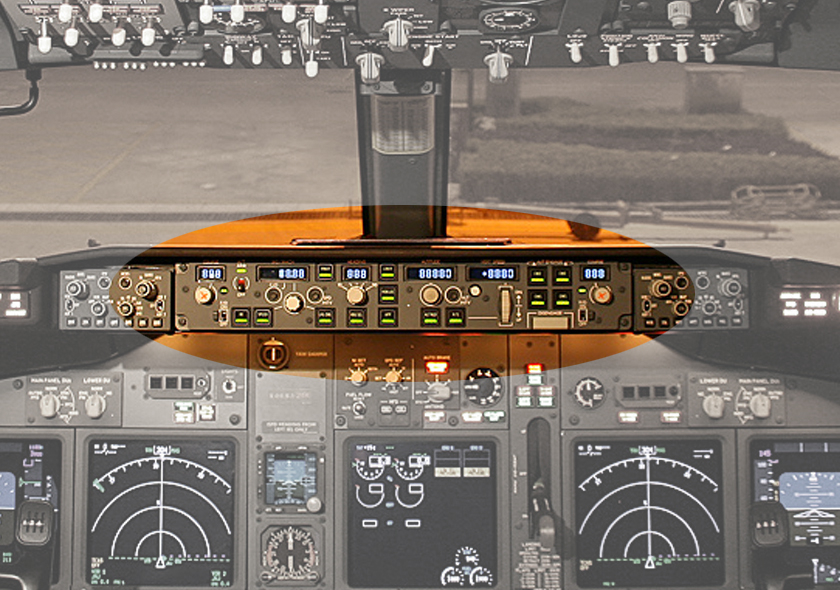
The autopilot control panel of a Boeing 737 (color highlight)

One evening I was sitting in economy class when our jet came in for an unusually smooth landing. “Nice job, autopilot!” yelled some knucklehead behind me. Amusing, maybe, but wrong. It was a fully manual touchdown, as the vast majority of touchdowns are. Yes, it’s true that most jetliners are certified for automatic landings, called “autolands” in pilot-speak. But in practice they are rare. Fewer than 1 percent of landings are performed automatically, and the fine print of setting up and managing one of these landings is something I could talk about all day. If it were as easy as pressing a button, I wouldn’t need to practice them twice a year in the simulator or periodically review those tabbed, highlighted pages in my manuals. In a lot of respects, automatic landings are more work-intensive than those performed by hand. The technology is there if you need it for that foggy arrival in Buenos Aires with the visibility sitting at zero, but it’s anything but simple.

A flight is a very organic thing—complex, fluid, always changing—in which decision-making is constant and critical. For all of its scripted protocols, checklists, and SOP, hundreds if not thousands of subjective inputs are made by the crew, from deviating around a cumulus buildup (how far, how high, how long), to troubleshooting a mechanical issue to handling an onboard medical problem. Emergencies are another thing entirely. I’m talking about the run-of-the-mill situations that arise every single day, on every single flight, often to the point of task saturation. You’d be surprised how busy the cockpit can become.

Another thing we hear again and again is how the sophisticated, automated Boeing or Airbus has made flying “easier” than it was in years past. On the contrary, it’s probably more demanding than it’s ever been. Once you account for all of the operational aspects of modern flying –- not merely the hands-on aspects of driving the plane, but familiarity with everything else that the job entails, from flight-planning to navigating to communicating—the volume of requisite knowledge is far greater than it used to be. The emphasis is on a somewhat different skill set, but it’s wrong to suggest that one skill set is necessarily more important than another.

But, you’re bound to point out, what about the proliferation of remotely piloted military drones and unmanned aerial vehicles (UAVs)? Are they not a harbinger of things to come? It’s tempting to see it that way. These machines are very sophisticated and have proven themselves reliable—to a point. But a drone is not a commercial jet carrying hundreds of people. It has an entirely different mission and operates in a wholly different environment—with far less at stake should something go wrong. You don’t simply take the drone concept, scale it up, build in a few redundancies, and off you go.

I would like to see a drone perform a high-speed takeoff abort after a tire explosion, followed by the evacuation of 250 passengers. I would like to see one troubleshoot a pneumatic problem requiring an emergency diversion over mountainous terrain. I’d like to see it thread through a storm front over the middle of the ocean. Hell, even the simplest things. On any given flight there are innumerable contingencies, large and small, requiring the attention and subjective appraisal of the crew.

And adapting the UAV model to the commercial realm would require, in addition to gigantic technological challenges, a restructuring of the entire commercial aviation infrastructure, from airports to ATC. We’re talking hundreds of billions of dollars, from the planes themselves to the facilities they’d rely on. We still haven’t perfected the idea of remote control cars, trains, or ships; the leap to commercial aircraft would be harder and more expensive by orders of magnitude.

And for what? You’d still need human beings to operate these planes remotely. Thus I’m not sure what the benefit of this would be in terms of cost.

It amuses me that as aviation technology progresses and evolves, so many people see elimination of the pilot as the logical, inevitable endpoint. I’ve never understood this. Are modern medical advances intended to eliminate doctors? Of course not. What exists in the cockpit today is already a fine example of how progress and technology have improved flying—making it faster, far safer, and more reliable than it once was. But it has not made it easy, and it is a long, long way from engineering the pilot out of the picture—something we needn’t be looking for in the first place.

I know how this sounds to some of you. It comes across as jealousy, or I sound like a Luddite pilot trying to defend his profession against the encroachment of technology and an inevitable obsolescence. You can think that all you want. I am not against the advance of technology. I’m against foolish extrapolations of it.

source::::Patrick Smith in” Ask The Pilot..”

natarajan.

Playing Tennis on the Wings Of a Flying Plane !!!

Dare Devil – Ivan Unger and Gladys Roy playing tennis on the wings of a flying airplane in 1927. — with Martim Alves de LimaNuri LomelinKhawar Mehmood,Juanjo Moreno Vélez and Bilal Ahmed…


source::::: input from a friend of mine…

natarajan