Image of the Day… Earth and Moon as Seen From Mercury !!!

MESSENGER spacecraft sees lunar eclipse from Mercury

The MESSENGER spacecraft, now orbiting Mercury, caught the images to make this movie of last Wednesday’s lunar eclipse. See Earth and moon from Mercury!

Earth and Moon from Mercury orbit, with Moon entering eclipse.  Imaged on Wednesday, October 8, 2014 by MESSENGER, a spacecraft in orbit around Mercury.

The MESSENGER spacecraft – which has been orbiting the sun’s innermost planet Mercury since 2011 – made this movie of the the Hunter’s Moon passing into the Earth’s shadow on October 8, 2014. The movie consists of 31 MDIS NAC (Mercury Dual Imaging System Narrow Angle Camera) frames taken two minutes apart from 09:18 UTC to 10:18 UTC on October 8. MESSENGER made the movie from a distance of 107 million kilometers / 66 million miles.

Notice the orientation of bright side of Earth. Earth’s shadow always extends in the direction opposite this bright side – or day side – approximately 1,400,000 kilometers / 1,000,000 miles into space. On October 8, the moon passed into the shadow, causing the eclipse.

The images have been enlarged 2 times and the moon brightened 25 times. The Earth was five pixels wide and the Moon one pixel wide.

The Earth – moon pair appeared in front of the constellation Aries, near the border of the constellation Pisces, as seen from Mercury.

The Earth was very bright magnitude minus 4.38 and the Moon was magnitude minus 0.03.

Read more from Emily Lakdawalla at the Planetary Society

Bottom line: The MESSENGER spacecraft, now orbiting Mercury, caught the images to make this movie of last Wednesday’s lunar eclipse. See Earth and moon from Mercury!

SOURCE:::: earthskynews

Natarajan

உங்களுக்கு இ.க்யூ. இருக்கிறதா….. ?

உங்களுக்கு இ.க்யூ. இருக்கிறதா?

stock-photo-beautiful-yellow-sunflower-petals-closeup-1975445

ஐ.க்யூ.தான் கேள்விப்பட்டு இருக்கிறோம். அது என்ன இ.க்யூ? என யோசிக்கிறீர்களா?

நெருக்கடியான சூழல்கள்

நீங்கள் ஒரு நிறுவனத்தின் மார்க்கெடிங் மேனேஜர். உங்கள் நிறுவனத்தின் தலைவர் சட்ட மீறலாக எதையோ செய்துவிட்டு இப்போது சிறையில் இருக்கிறார். இந்த நிலையில் உங்கள் அலுவல் தொடர்பாக நீங்கள் யாரை சந்தித்தாலும் (என்ன உங்க தலைவர் இப்படிச் செய்துட்டாரே) என்பது போல் கேட்கிறார்கள். மனதுக்குள் அவர்கள் கேலியாக சிரித்துக் கொள்வது தெரிகிறது.

இதோ இன்னொரு சூழல். உங்கள் நிறுவன ஊழியர்களுக்கு அதிக ஊதியம் கொடுக்க வேண்டிய கட்டாயம். எனவே தயாரிப்புப் பொருளின் விலையை உயர்த்துகிறீர்கள். வாடிக்கையாளர்கள் இப்படி ஒரு கேள்வியை முன்வைக்கிறார்கள். ‘’உங்க போட்டியாளர்கள் எல்லாம் விலையை ஏத்தலே. சொல்லப்போனா உங்களுடைய ஒரு போட்டியாளர் சமீபத்தில் தன் தயாரிப்பின் விலையைக் குறைத்திருக்கிறார். ஆனா நீங்க உங்க பொருளின் விலையை அதிகமாக்கி இருக்கீங்க. உங்ககிட்டே தொடர்ந்து வியாபாரம் செய்யனும்ணு எங்களுக்கு என்ன தலையெழுத்தா?’’ எப்படி இருக்கும் உங்களுக்கு?

நீங்கள் இரண்டு வாரங்கள் சிரமம் எடுத்து ராத்திரி பகலாகக் கண்விழித்து ஒரு விரிவான அறிக்கையைத் தயார் செய்திருக்கிறீர்கள். அதைப் படித்துப் பார்த்துவிட்டு உங்கள் மேலதிகாரி “புல்ஷிட்’’ என்றபடி அதை மேஜையின்மீது தூக்கி எறிகிறார். உங்கள் மனநிலை என்னவாக இருக்கும்?

உணர்ச்சி வசப்படல்

மூன்று சூழல்களையும் விவரித்துவிட்டு ‘’எப்படியிருக்கும் உங்களுக்கு?’’ என்ற பொதுவான கேள்வியை கேட்டிருக்கிறேன். வலி, ஆக்ரோஷம், வேதனை இவையெல்லாம் பொங்கும் தருணங்களாக அவை இருக்க வாய்ப்பு உண்டு. ஆனால் நீங்கள் உணர்ச்சிக் களஞ்சியமாக மனதில் பட்டதை வெளிப்படுத்தினால் அது உங்கள் நிறுவனத்துக்கு சாதகமான சூழ்நிலை நிச்சயம் ஏற்படுத்தாது.

அறிவுக் கூர்மையை அறிந்து கொள்ள ஐ.க்யூ (Intelligence Quotient) தேர்வு உண்டு. சமீபகாலமாக அறிமுகமாகியுள்ள இன்னொரு வகைத் தேர்வு இ.க்யூ. – அதாவது Emotional Quotient தேர்வு. உணர்ச்சிகரமான சூழலில் நீங்கள் நடந்து கொள்ளும் விதமும், கூறும் வார்த்தைகளும் உங்கள் நிறுவனத்தைப் பெருமளவில் தூக்கி நிறுத்தும் அல்லது பாதாளத்தில் இறக்கும். மேலே உள்ள உதாரணங்களில் நீங்கள் உங்கள் உணர்வுகளை தவறான (அதாவது சாமர்த்தியமில்லாத) வார்த்தைகளில் வெளிக்காட்டினால் உங்கள் நிறுவனம் தன் வாடிக்கையாளரை இழக்கலாம் அல்லது நீங்கள் உங்கள் வேலையை இழக்கலாம்.

இ.க்யூ கேள்விகள்

எனவேதான் இப்போதெல்லாம் நிறுவனங்கள் தங்களுக்கான ஊழியர்களை (முக்கியமாக அதிகாரிகளை) தேர்வு செய்யும் போது அவர்களுடைய E.Q.-வை அறிந்து கொள்வதற்காக சில கேள்விகளை முன்வைக்கிறார்கள். சில உதாரணங்களைப் பார்ப்போம்.

‘’உங்களுக்குப் பதவி உயர்வு கொடுக்காமல், உங்களைவிட ஜூனியர் ஒருவருக்குப் பதவி உயர்வு அளிக்கப்படுகிறது. நீங்கள் என்ன செய்வீர்கள்? அ) நிறுவனத்தின்மீது நீதிமன்றத்தில் வழக்குத் தொடுப்பேன்.

ஆ) மேலதிகாரிகளிடம் பேசி அவர்கள் முடிவை மறுபரிசீலனை செய்யச் சொல்வேன்.

இ) எனது தவறுகளை அல்லது குறைபாடுகளை யோசித்து சரிசெய்துகொள்வேன்.

ஈ) நிறுவனத்தைப் பற்றியும், ஜூனியரைப் பற்றியும் நண்பர்களிடம் கேவலமான கருத்துகளை உதிர்ப்பேன்.

இவற்றில் எந்த பதில் உங்களுக்கும், உங்கள் நிறுவனத்துக்கும் நல்லது என்பதை யோசித்துப் பார்த்தால் உங்களால் உணர முடியும். அந்த பதிலை அளிப்பவர்களுக்குத்தான் நிறுவனம் முன்னுரிமை தரும்.

இன்னொரு கேள்வி. விமானத்தில் செல்லும்போது கடுமையான பனியின் காரணமாக விமானம் கீழே இறங்காமல் மேலேயே வட்டமடித்துக் கொண்டிருக்கிறது. விமானத்தின் போதிய எரிபொருள் இல்லையென்று ஒரு ஊழியர் கூறுவது உங்கள் காதுகளை எட்டுகிறது. என்ன செய்வீர்கள்?

அ) வடக்கே சூலம்னு தெரிஞ்சே இன்னெக்கி கிளம்பினது என் முட்டாள் தனம் என எண்ணுவீர்கள்.

ஆ) எல்லாம் நல்லபடி நடக்கும். கடவுளை வேண்டிக் கொள்வேன்.

இ) படித்துக் கொண்டிருந்த புத்தகத்தைத் தொடர்ந்து படிப்பேன் அல்லது பார்த்துக் கொண்டிருந்த டி.வி. நிகழ்ச்சியைத் தொடர்ந்து பார்ப்பேன்.

ஈ) அடுத்த வாரம் போகலாமேன்னு பக்கத்து வீட்டுக்காரர் சொன்னார். அவருக்கு சரியான கரி நாக்கு. பாவி.

எந்த வித சங்கடச் சூழலையும் சமாளிக்கும் மன உறுதியும், கோபம் பொங்கும் கணத்திலும் அதை அடக்கிக் கொண்டு சரியான விதத்தில் வெளிப்படுத்துவதும் ஓர் அரிய கலை. அது உங்களுக்கு இருக்கிறதா என்பதைத் தீர்மானிக்கும் வகையில் சைகோமெட்ரிக் தேர்வு களின் கேள்விகள் அமையக் கூடும்.

நீங்கள் சிறப்பானது என்று கருதும் ஒரு ஐடியாவை உங்கள் நண்பர் ‘’இதெல்லாம் வேலைக்கு ஆகாது’’ என்ற ஒதுக்கினால் உங்கள் ரியாக்‌ஷன் எப்படியிருக்கும் என்பதைக்கூட எளிமையாகவும், உண்மையாகவும் யோசித்துப் பாருங்கள். அவரைத் திட்டுவீர்களா? அவர் அப்படிச் சொல்வதற்கான காரணங்களைக் கேட்பீர்களா? அவரது நட்பையே அறுத்துக் கொள்வீர்களா? அல்லது அவர் அப்படிக் கூறியதற்கான காரணங்களை நீங்களே மனதில் யோசிப்பீர்களா? இந்தக் கேள்விகளுக்கான உண்மையான பதிலை நீங்கள் சீர்தூக்கிப் பார்த்தாலேகூட போதும், இ.க்யூ. தேர்வில் நீங்கள் வெற்றி பெறுவீர்களா இல்லையா என்பது புரிந்துவிடும்.

” No One Can Believe We Have Won Rs.7 Crores on KBC …!!! “

“Ever since the news of our win got out, I’ve received six-seven marriage proposals!” Achin Narula exclaims. “I wasn’t thinking about marriage but afterKBC, it will definitely be easier to find a match.”

Here’s what happens when two 20-something Delhi boys become crorepatis overnight.

Image: Achin (far left) and Sarthak Narula (far right) on Kaun Banega Maha Crorepati with Amitabh Bachchan and their parents

“Arey yaar, they edited out my Dil Chahta Hai dialogue there,” Achin Narula, 28, purses his lips in mild disappointment.

The joint winners of the whopping Rs 7 crore prize on Kaun Banega Maha Crorepati — Achin and his younger brother Sarthak Narula, 23, — are glued to the television, reliving their glory as their momentous KBC episode unfolds on the TV screen in their room.

Sitting on their respective beds in Hometel, a comfortable budget hotel in Malad, a western Mumbai suburb, the two brothers — who are working their way through tricky questions on the popular game show — are a study in contrasting personalities.

Achin restlessly paces the room every time he gets a congratulatory phone call and rocks back and forth at crucial points in the episode. His brother, on the other hand, sits calmly with his legs covered with the comforter.

Presumably because they have done quite a few interviews till now, they have learnt to periodically tune out an outsider presence for brief, private victories with each other.

When we politely decline their offer of tea/snacks — I suspect it’d be a mindless interruption for them — Achin quips, “Don’t worry, it’s all on Sony (the channel).

They are obviously in a very good mood.

While the show progresses, it becomes clear that more than witnessing their moment ofKBC glory, the duo is interested in how they have conducted themselves on TV.

They are acutely conscious of how many of their wisecracks and quips were edited out.

“He (Achin) thinks everything he’s said and done should be shown on TV,” Sarthak remarks.

“They must have sold these slots for exorbitant prices and longer duration ads,” concludes Achin, who works in the marketing department in a real estate firm based out of New Delhi.

“They have edited so much, I’m getting calls from my friends saying, “Tu toh kuch bol hi nahi raha (You aren’t saying anything at all),” says Sarthak, sounding concerned.

The brothers bought new spectacles for their appearance on the show.

“I used one pair for many years but when we had to come here, I decided to get another pair just in case the old one broke. The new pair you see on him (Achin) are photochromatic,” Sarthak offers, even as Achin squirms — he is more conscious of how he’s presenting himself than his soft-spoken younger brother.

The Narula brothers’ preparation for the show was (obviously) top notch — Achin had been trying to get on the show for the last 10 years and had made it to the fastest finger first four times before.

The KBC team would say,’Tu phir se aa gaya? When will you quit?’

“I told them I’ll keep trying until they let me through the next level,” Achin says.

So did they have a certain number in their mind that they intended to win?

“We were looking at winning at least Rs 25 lakh. Since there were the two of us, it seemed like an achievable goal,” Sarthak chimes in.

Image: Achin and Sarthak Narula in their hotel room. Photograph: Afsar Dayatar/Rediff.com

When asked about his very unusual sounding name, Achin says, “It means a man without worries — my parents wanted to name me Sachin but, at the same time, didn’t want to break the family naming convention in which all names must begin with an A.”

But then, why was Sarthak named differently?

“My mom wanted me to be different,” pat comes the reply from Sarthak.

The big win hasn’t sunk in yet for the Narula brothers even though it’s been three weeks since they shot for the episode and won. Their friends and family are still ‘shell-shocked’ as well.

“They can’t believe that such a thing has happened. How many people can reach even the 1 crore question, after all?” asks Achin.

Friends and friends of relatives they hadn’t even heard of, or have met briefly, have been calling in to congratulate them.

“The guy I was talking to over the phone is a cousin of a friend who I met once, when I was in the 12th standard. It’s a bit of a hassle to attend each and every call since the phone is on roaming at present,” Achin confides.

But money is surely no matter now?

“Middle class values always remain intact. More importantly, the money hasn’t come in yet,” the brothers burst into peels of laughter.

“We have already spent a lot of money — CCTV cameras have been installed in the house, we have thrown three parties — for friends, work friends and relatives. Paisa aane se pehle hi chala jaa raha hai (money has been spent even before we’ve got it),” they note.


Achin took an indefinite break from work when the first call from KBC came in.

“It was an opportunity of a lifetime and I needed to prepare for it,” Achin says.

“I can show you emails of the number of books I’ve ordered for quizzes over the years. We’ve also watched a lot of quiz shows. There’s one on the Disney Channel that airs at 3 am,” Sarthak, who has done his graduation in Commerce, informs.

“Then we read Derek O’Brian’s Bournvita Quiz contest books, another one by Siddharth Basu, one called Mastermind; we have also been regular subscribers of Competition Success Review (a staple for Government entrance exam aspirants),” he adds.

“Since I was trying for KBC for 10 years, we made notes of what areas of GK were asked from the most and worked at them accordingly,” Achin says.

The Rs 7 crore prize money brings with it a set of new career plans for him.

“I will look at viable business opportunities now. We have the capital now, loans will also be more easily available to us,” he notes.

A string of marriage offers for Achin have also come in.

“Ever since the news of our win got out, I’ve received six-seven proposals,” Achin informs. “I wasn’t thinking about marriage but after the win, it will definitely be easier to find a match.”

Achin and Sarthak’s father is a marketing officer with National Insurance.

“We also had a mattresses business in our mother’s name but we had to shut it down after some regulation changes. It just wasn’t viable for us anymore. We incurred heavy losses and had to sell our house. We now live in our grandfather’s house,” says Sarthak.

Their mother was detected with ovarian cancer in July 2013. The chemotherapy sessions are over, and she’s on the road to recovery.

“She will recover but she will need regular tests for the rest of her life. Chemo has been tough — we’ve all suffered emotionally too, besides her own physical pain,” Sarthak adds.

But they don’t want to dwell on that.

“We wanted to talk about it on the show only because there are now vaccines for certain types of cancers. Many people don’t know it so we just wanted to get that information out there through television,” they explain.

SOURCE:::: rediff.com

Natarajan

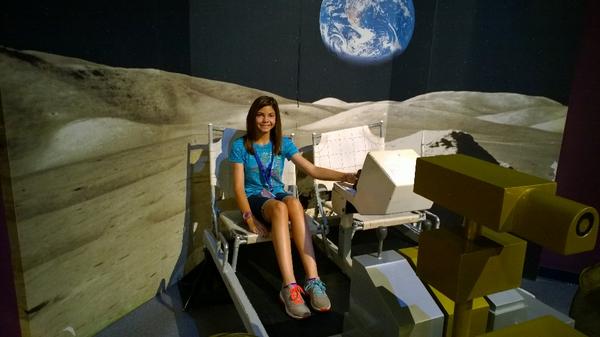
This Teen Wants to be the First Person Landing on MARS !!!

Alyssa Carson, from Louisiana, wants to be the first person on Mars

Determined ... Alyssa Carson wants to be the first person on Mars. Picture: Twitter.

Determined … Alyssa Carson wants to be the first person on Mars. Picture: Twitter. Source: Supplied

THIS 13-year-old girl has been training to be an astronaut for nine years and is determined to become the first person to land on Mars.

Alyssa Carson is the first person to have attended all three of NASA’s world space camps.

The Louisiana teenager speaks Spanish, French and Chinese, and is prolific on social media.

She told the BBC that she wants to inspire other children to achieve their dreams.

“I have thought about possibly being other things but being an astronaut was always first on my list,” she said. “I don’t want one obstacle in the way to stop me from going to Mars … Failure is not an option”.


And NASA is not discounting her ambitions. Her call sign at the US space agency is “Blueberry”.

“She is of the perfect age to one day become an astronaut and eventually travel to Mars,” NASA’s Paul Foremantold the BBC. “She is doing the right thing, she is doing the right training, taking all the right steps to actually become an astronaut.”

View image on Twitter

Bret Carson, Alyssa’s dad, said he has spoken to his daughter about the possibility that she may never return from Mars but he says she isn’t worried about that.

“We have the next 20 years planned out, we know what she’s doing, she’s looking at going on a mission to mars in 2033,” he said. “In 20 years I may not ever see her again, there are options out there where they go to mars and not come back, and we’ve had those discussions, and if that’s the only option she still wants to go.”

Source:::: news.com.au

Natarajan

Image of the Day…Full Moon Rising over Lotus Temple in NewDelhi …


Full moon rising over Lotus Temple in Delhi, India

We saw many photos of the October 8 moon during the total lunar eclipse. Here’s one from India, where the eclipse was less easily visible.

Photo by Abhinav Singhai.  Visit him on Flickr.

Our friend Abhinav Singhai captured this moonrise (Hunters Moon) time lapse over the Lotus Temple in Delhi, India. It was October 8, 2014, the night of the total lunar eclipse. Abhinav wrote:

Penumbral lunar eclipse was visible from Delhi at the time of moonrise, and visible in the first picture as well (slight shadow).

SOURCE:::: EARTHSKYNEWS

Natarajan

India”s Kailash Satyarthi Shares Nobel Prize for Peace with Pakistan’s Malala Yousufzai !!!

All about Kailash Satyarthi, India’s Peace Nobel winner

Indian child rights activist Kailash Satyarthi shared the Nobel Peace Prize with Pakistani

teenager Malala Yousufzai who stood up to the Taliban and survived a near-fatal shooting.


NEW DELHI: Possibly India’s best known face against child labour, Kailash Satyarthi shares this year’s Nobel Peace Prize with Pakistani child rights activist Malala. He and his organisation, Bachpan Bachao Andolan (BBA) – the Save Childhood Movement, have single-handedly brought to centre-stage the debate on child rights in India.

“Child slavery is a crime against humanity. Humanity itself is at stake here. A lot of work still remains but I will see the end of child labor in my lifetime,” Satyarthi told The Associated Press at his office in New Delhi. “If any child is a child slave in any part of the world, it is a blot on humanity. It is a disgrace.”

The Nobel committee said: ‘Satyarthi, 60, has maintained the tradition of Mahatma Gandhi and headed various forms of peaceful protests, “focusing on the grave exploitation of children for financial gain.’

Here’s all that you need to know about Kailash Satyarthi:

#1 A human rights activist, Kailash Satyarthi has been at the forefront of a movement in India to end child slavery and exploitative child labour since 1980. Satyarthi has helped free children from slave-labor conditions and advocated for reforms, as director of the South Asia Coalition on Child Servitude and leader of Bachpan Bachao Andolan. In 1994, he founded a group now known as Goodweave, which certifies child-labor-free rugs and provides assistance to rescued and at-risk children.

#2 Kailash Satyarthi has headed various forms of peaceful protests and demonstrations, focusing on the exploitation of children for financial gain.

#3 In 1980, Kailash Satyarthi gave up his job as an electrical engineer to begin the crusade to end exploitation of children in India. As a grassroots activist, he rescued of over 78,500 children who were employed as child labours and developed a successful model for their education and rehabilitation.

#4 He was instrumental in making the problem of child labour in India as a human rights issue. He has established that child labor is responsible for the perpetuation of poverty, unemployment, illiteracy, population explosion and many other social evils.

#5 Satyarthi has also played an important role in linking the fight against child labor with the efforts for achieving ‘Education for All’.

#6 The Nobel Laureate is a member of a high level group formed by UNESCO on Education for all comprising of select Presidents, Prime Ministers and UN Agency Heads.

#7 Kailash Satyarthi has survived numerous attacks on his life during his crusade to end child labour, the most recent being the attack on him and his colleagues while rescuing child slaves from garment sweatshops in Delhi on 17 March 2011.

#8 In 2004 while rescuing children from a local circus mafia, Kailash Satyarthi and his colleagues were brutally attacked. Despite of these attacks and his office being ransacked a number of times his commitment for the cause has been unwavering.

#9 Satyarthi has been honoured by the Former US President Bill Clinton in Washington for featuring in Kerry Kennedy’s Book ‘Speak Truth to Power’, where his life and work featured among the top 50 human rights defenders in the world.

#10 Wikipedia states that Satyarthi has been the subject of a number of documentaries, television series, talk shows, advocacy and awareness films.

He has also won many international awards, including:

·       2014: Nobel Peace Prize, shared with Malala Yousafzai

·       2009: Defenders of Democracy Award (US)

·       2008: Alfonso Comin International Award (Spain)

·       2007: Medal of the Italian Senate (2007)

·       2007: recognized in the list of “Heroes Acting to End Modern Day Slavery” by the US State Department[3]

·       2006: Freedom Award (US)

·       2002: Wallenberg Medal, awarded by the University of Michigan[4]

·       1999: Friedrich Ebert Stiftung Award (Germany)[5]

·       1995: Robert F. Kennedy Human Rights Award (US)[6]

·       1985: The Trumpeter Award (US)

·       1984: The Aachener International Peace Award (Germany)


In his first reaction after the Nobel prize committee in Oslo announced Satyarthi and Pakistani teenager Malala Yousafzai as the joint winners of this year’s Peace Nobel, the 60-year-old head of the Bachpan Bachao Andolan thanked the committee for recognising the plight of millions of children and said the award will help bring global focus on the issue.

What did Kailash Satyarthi say after winning the Nobel Peace prize?

“I am thankful to the Nobel committee for recognising the plight of millions of children who are suffering in this modern age. It is a huge honour for me,” said Satyarthi, who became the second Indian to win the award after Mother Teresa who won it in 1979.

Satyarthi, who is an avid follower of Gandhian philosophy, however, said he would have been happier if the award had gone to the Father of the Nation.

“I was born after the death of Mahatma Gandhi. If the prize had gone to Mahatma Gandhi before me, I would have been more honoured. I am really honoured. This award is for all the citizens of the country,” he said.

Satyarthi, whose organisation has been in the forefront of rescuing children from forced labour and trafficking, said he was happy that the issue has received global attention.

“This is not about simply poverty and rights of children. It is more than that. The fight has to continue. We are happy that the issue has been recognised globally now. I will continue my work,” he said.

The Bachpan Bachao Andolan, established in 1983, is credited with freeing over 80,000 child labourers across India. “We are very humbly fighting for child rights and the award has put more responsibility on me to work towards welfare of children. This is a major issue in India as well as in many other countries,” he said.

A former electrical engineer, Satyarthi has been involved in various global campaigns against exploitation of children which include Global March Against Child Labour, the International Center on Child Labor and Education and the Global Campaign for Education.

Source::::yahoo india.com and Indiatoday .intoday.in

Why Blue LEDs are Worth a Nobel Prize ….

Blue light-emitting diodes help create the glowing screens of mobile phones, computers and TVs and promises to revolutionise the way the world lights its homes and offices.

Shivanand Kanavi reports on the importance of these little lights that won the Nobel Prize this year.

White and blue light emitting diodes used as Christmas decorations in Tokyo. Photograph: Toru Hanai/Reuters

That bluish-white light glowing from the screens of most new televisions, smartphones, laptops and tablet computers?

It comes from light-emitting diodes, better known as LEDs. Many businesses light their work spaces with LEDs. More and more, LEDs light up outdoor street signs and traffic lights.

Some homeowners have begun turning to this new form of lighting to illuminate their rooms. And most cars and trucks now use these same LEDs in their tail lights.

Three scientists have now won the 2014 Nobel Prize in physics for developing the technology that has made this lighting possible.

On Tuesday, October 7, three Japan-born scientists — Isamu Akasaki, Hiroshi Amano and Shuji Nakamura — won the Nobel Prize in physics for the invention of blue light-emitting diodes — a new energy-efficient and environmentally friendly light source.

According to the Royal Swedish Academy of Sciences, the committee that bestows the honour, which includes a prize money of 8 million kronor (Rs 6.8 crore/Rs 68 million), when Nakamura, Akasaki and Amono ‘produced bright blue light beams from their semiconductors in the early 1990s, they triggered a fundamental transformation of lighting technology.’

Explaining further, the committee said, ‘The LED lamp holds great promise for increasing the quality of life for over 1.5 billion people around the world who lack access to electricity grids.’

The question now that arises is can semiconductor chips, which have revolutionised the way we live, give us light? The answer today is, it can.

Such chips for lighting are not made of silicon, which is used in electronics but more complex semiconductors, made of alloys of gallium, indium, arsenic, nitrogen, aluminum, phosphorous.

It has been known since the turn of the century that some semiconductors emit light when a current is passed through them. However, it has taken almost a hundred years for technology to do it efficiently and inexpensively.

The discovery and perfection of direct conversion of electricity into light has also led to the reverse that is the development of more efficient solar panels to convert light into electricity.

The first bright LEDs to be invented were emitting red, then orange and yellow light. However, attempts at producing green and blue LEDs were not very successful till a Japanese scientist Shuji Nakamura invented a bright blue LED and later white LED in the mid-1990s.

Nakamura’s work brightened up the whole field and intense activity ensued leading to fast growth. He worked hard with very little funding and repeated disillusionment for several years to come up with blue LEDs.

The company he worked for at that time, Nichia is today one of the world leaders in blue and white LEDs and lasers. A few years ago, he moved out of Nichia and today, is a faculty member at the University of California at Santa Barbara.

LEDs for lighting purposes have many advantages. They convert electricity much more efficiently into light than say incandescent bulbs or fluorescent lamps. In fact, 90 per cent of energy in incandescent bulbs is wasted as heat.

LEDs also last much longer — up to 1,00,000 hours — that is more than 12 years of continuous operation. Whereas in the case of incandescent lamps, they last for 1,000 hours while fluorescent lamps last for 10,000 hours.

LEDs also consume less electricity, which is why batteries in a LED flashlight, for example, seem to go on forever. These make LEDs ideal if you are in a remote area on your own, camping or even in times of natural disaster.

However, LEDs do, like with all technology, have some flaws and weaknesses.

One the brightness of LEDs — that is measured in Lumens per Watt of electrical power — is still nowhere near the standard required for high brightness lighting. Secondly, the products are still expensive and lastly, the light is extremely bright in one direction hence, a LED light directed towards your work bench or a flashlight works well but if you try to light up your room with it then you end up using too many LEDs.

Image, Below: Isamu Akasaki, Hiroshi Amano and Shuji Nakamura, this year’s Nobel Prize winners for Physics.

ALSO READ:  Trio win Nobel for invention of blue LEDs

Shivanand Kanavi  in redii.com

Natarajan

NASA Invites Public to send their Names into Space !!!

Over 2.8 lakh people from around the world, including 21,729 Indians, have so far submitted their names to be inscribed on a NASA microchip that will eventually fly to Mars.

NASA is giving people a chance to shoot their names up into space on the first Orion mission, scheduled to for launch on December 4, and then eventually to the Red Planet.

http://mars.nasa.gov/layout/embed/image/485snm/

Currently, 2,80,429 people have submitted their names to fly into space.

The highest number of names submitted to NASA so far from a single country – a total of 1,13,121 – comes from the USA while the third-largest submission of names is from India, with 21,729 space enthusiasts from the nation giving their names.

Other countries with high participation include UK (22,491 names), Philippines (9,869 names) and Canada (7,760 names). Currently, only 1,828 names have been submitted from China and 1,620 from Pakistan.

The collected names will be included on a microchip the size of a dime. The first trip will be on board NASA’s initial test flight for the new Orion spacecraft. It is set for a 4.5-hour mission in orbit around Earth.

“After returning to Earth, the names will fly on future NASA exploration flights and missions to Mars. With each flight, selected individuals will accrue more miles as members of a global space-faring society,” NASA said.

To sign up, users have to go to NASA’s name-collecting site, fill out some basic information, and submit. The site then generates a digital “boarding pass.”

The deadline for getting your name on Orion’s inaugural flight is October 31.

SOURCE::::: THE HINDU.COM

Natarajan

Keywords: NASAOrion

Image of the Day… Crater in Planet Mercury …

One of the sharpest images ever obtained of Mercury

This unnamed crater is only 1.5 kilometers / 0.93 miles wide. It’s made more visible by the deep shadows cast on a Mercury afternoon.

Very closeup look at planet Mercury.  Image obtained on August 3, 2014, via NASA / JHU / APL MESSENGER spacecraft.

Here is one of sharpest images ever obtained of the sun’s innermost planet, Mercury. It’s a small crater within a 3.75-kilometer / 2.33-mile-wide area within the Hokusai Quadrangle in Mercury’s Northern Hemisphere.

What you see here is seen an unnamed crater only 1.5 kilometers / 0.93 miles wide in the hermean [Mercury] afternoon. The surrounding terrain and the crater profiles appear quite smooth, owing to many millions of years of thermal changes between the hermean day and night as well as micrometeoroids, ‘gardening’ the regolith.

The smallest craters and degraded ghost craters seen in this image are only 20 meters / 65 feet wide.

The bright streak within the crater is a cosmic ray strike on the MDIS NAC CCD.

On September 12, 2014. the MESSENGER spacecraft periherm – its closest point to Mercury – was successfully raised from: 24.3 kilometers / 15.1 miles to 94 kilometers / 58.4 miles, extending the mission further.

Periherm will be raised again on October 24, 2014 and once more on January 21, 2015, when the fuel on board MESSENGER is expected to be depleted.

MESSENGER is expected to impact Mercury on the weekend of March 28-29, 2015.

Source::::   in earth sky news

Natarajan