“They are No more Strangers in our Life Now “!!!


 source::::Input from a friend of mine

natarajan

A while ago, my Dad met a stranger who was new to our small town.  From the beginning, Dad was fascinated with this enchanting newcomer and soon invited him to live with our family.  The stranger was quickly accepted and was around from then on.

As I grew up, I never questioned his place in my family.  In my young mind, he had a special niche.  My parents were complementary instructors: Mom taught me good from evil, and Dad taught me to obey.  But the stranger … he was our story teller.  He would keep us spellbound for hours on end with adventures, mysteries and comedies.

If I wanted to know anything about politics, history or science, he always knew the answers about the past, understood the present and even seemed able to predict the future!  He took my family to the first major league ball game.  He made me laugh, and he made me cry.  The stranger never stopped talking, but Dad didn’t seem to mind.

Sometimes, Mom would get up quietly while the rest of us were shushing each other to listen to what he had to say, and she would go to the kitchen for peace and quiet. (I wonder now if she ever prayed for the stranger to leave.)

Dad ruled our household with certain moral convictions, but the stranger never felt obligated to honour them.  Profanity, for example, was not allowed in our home… Not from us, our friends or any visitors.  Our longtime visitor, however, got away with four-letter words that burned my ears and made my dad squirm and my mother blush.  My Dad didn’t permit the liberal use of alcohol.  But the stranger encouraged us to try it on a regular basis.  He made cigarettes look cool, cigars manly and pipes distinguished.  He talked freely (much too freely!) about sex.  His comments were sometimes blatant, sometimes suggestive, and generally embarrassing.

I now know that my early concepts about relationships were influenced strongly by the stranger.  Time after time, he opposed the values of my parents, yet he was seldom rebuked… And NEVER asked to leave.

More than fifty years have passed since the stranger moved in with our family.  He has blended right in and is not nearly as fascinating as he was at first.  Still, if you could walk into my parents’ den today, you would still find him sitting over in his corner, waiting for someone to listen to him talk and watch him draw his pictures. 


His name ?…. .. .   


We just call him ‘TV.’ 


(Note: This should be required reading for every household!)  
 

He has a wife now …. We call her ‘Computer.’
 

Their first child is “Cell Phone”. 


Second child “iPad” !!!   

Image of the Day !!!

Image credit: NASA

A satellite view of Mount Everest   Image credit: NASA

There are 14 mountain peaks on Earth that stand taller than 8,000 meters (26,247 feet). The tallest of these so-called “eight-thousanders” is Mount Everest, on the border between Tibet and Nepal in the Himalayan Mountains. The Nepalese name for the mountain is Sagarmatha, which means “mother of the universe.”

Above is  the satellite view of Everest from NASA’s Earth Observatory. It looks majestic even from high above!

source::::earthskynews

natarajan

What a Man did With a Tree Trunk !!!… Mind Blowing !!!

One tree, four years of work and an indescribable amount of talent: that’s what it took to create this incredible masterpiece. A famous Chinese wood carver chopped down a single tree and tirelessly worked on it for over four years to make this piece. Your jaw will hit the floor when you see what he created.


Source:::: viralnova  ..trending stories on the web

natarajan


Our Planet Earth Thro” the Windows of ISS !!!

Beauty of the night: This image of Earth was captured at night. it was taken on 19 July and shows the cities of Iran and the Arabian Peninsula illuminated by moonlight

Beauty of the night: This image of Earth was captured at night. it was taken on 19 July and shows the cities of Iran and the Arabian Peninsula illuminated by moonlight


Tidal beauty: Hervey Bay (pictured) in Queensland, Australia was captured by astronauts on board the International Space Station on 3 August. The Strait is an estuary that separates the mainland coastline of the state of Queensland, Australia from neighbouring Fraser Island. The mainland side of the Strait includes the city of Hervey Bay, top centre

Tidal beauty: Hervey Bay (pictured) in Queensland, Australia was captured by astronauts on board the International Space Station on 3 August. The Strait is an estuary that separates the mainland coastline of the state of Queensland, Australia from neighbouring Fraser Island. The mainland side of the Strait includes the city of Hervey Bay, top centre


This image captures the smouldering Ambrym volcano, which was seen erupting in the Vanuatu archipelago east of Australia on 2 December. Ambrym is a volcanic island around 31 miles wide and is the fifth largest island in the country. The summit at the centre of the island is covered by a caldera, a cauldron-like volcanic feature that is formed when land collapses following an eruption. With the exception of human settlements, the rest of the island is covered by thick jungle

This image captures the smouldering Ambrym volcano, which was seen erupting in the Vanuatu archipelago east of Australia on 2 December. Ambrym is a volcanic island around 31 miles wide and is the fifth largest island in the country. The summit at the centre of the island is covered by a caldera, a cauldron-like volcanic feature that is formed when land collapses following an eruption. With the exception of human settlements, the rest of the island is covered by thick jungle


The stunning contrast in colours in this image shows O'Higgins Lake and glaciers in Chile. Nasa astronaut Douglas H. Wheelock said: 'When you see the ice fields of Patagonia from space you are changed forever.' The lake is the deepest in the Americas and has a maximum depth of 836 metres. Its milky light-blue colour is created by rock flour suspended in the lake's waters and it is found near the O'Higgins Glacier

The stunning contrast in colours in this image shows O’Higgins Lake and glaciers in Chile. Nasa astronaut Douglas H. Wheelock said: ‘When you see the ice fields of Patagonia from space you are changed forever.’ The lake is the deepest in the Americas and has a maximum depth of 836 metres. Its milky light-blue colour is created by rock flour suspended in the lake’s waters and it is found near the O’Higgins Glacier


Here, tropical cyclone Typhoon Haiyan is pictured as it raged over the Philippines in November. The typhoon battered the country with winds up to 199mph. At times the storm was said to have stretched 372 miles across. According to UN officials, approximately 11million people were affected by the storms and many people in the regions of Visayas, particularly on Samar and Leyte, were left homeless

Here, tropical cyclone Typhoon Haiyan is pictured as it raged over the Philippines in November. The typhoon battered the country with winds up to 199mph. At times the storm was said to have stretched 372 miles across. According to UN officials, approximately 11million people were affected by the storms and many people in the regions of Visayas, particularly on Samar and Leyte, were left homeless


I heart planet Earth: The heart-shape in this stunning image is of the Small Aral Sea in Kazakhstan. The Aral Sea was one of the four largest lakes in the world with an area of 68,000 square kilometres. However, by 2007 it had declined to 10 per cent of its original size, splitting into four lakes including one smaller lake, pictured

I heart planet Earth: The heart-shape in this stunning image is of the Small Aral Sea in Kazakhstan. The Aral Sea was one of the four largest lakes in the world with an area of 68,000 square kilometres. However, by 2007 it had declined to 10 per cent of its original size, splitting into four lakes including one smaller lake, pictured


A world away: here delicate white clouds are captured as they float across Namibia's landscape. The Namib desert runs along the coast and rain in the area is rare. In the winter months the region sees hardly any cloud cover, except for the deep south where winter rains occur only once every couple of years

A world away: here delicate white clouds are captured as they float across Namibia’s landscape. The Namib desert runs along the coast and rain in the area is rare. In the winter months the region sees hardly any cloud cover, except for the deep south where winter rains occur only once every couple of years


This tangle of lines is of the Niger River in Mali, Africa. It is shown winding through the landscape of Mali and the entire river follows a boomerang shape. Its source is just inland from the Atlantic Ocean, but the river runs away from the sea into the Sahara Desert. It then takes a sharp right turn near the ancient city of Timbuktu before heading southeast to the Gulf of Guinea

This tangle of lines is of the Niger River in Mali, Africa. It is shown winding through the landscape of Mali and the entire river follows a boomerang shape. Its source is just inland from the Atlantic Ocean, but the river runs away from the sea into the Sahara Desert. It then takes a sharp right turn near the ancient city of Timbuktu before heading southeast to the Gulf of Guinea


Astronauts even managed to captured the beauty to be found in agriculture. Here, sunlight can be seen reflected off irrigated farmland in Mexico, making the landscape almost look a little like a giant microchip

Astronauts even managed to captured the beauty to be found in agriculture. Here, sunlight can be seen reflected off irrigated farmland in Mexico, making the landscape almost look a little like a giant microchip

source:::::mail online.com UK

natarajan

Image of the Day !!!

Light Pillars Over Ontario… Wesley Liikane in Severn Bridge, Ontario captured these light pillars on December 23, 2013. See more photos by Wesley at Cowboy with a Camera on Facebook.

Sun pillars form when a bright light reflects off the surfaces of millions of falling ice crystals associated with thin, high-level clouds.

Wesley Liikane in Severn Bridge, Ontario captured this beautiful photo of light pillars, which are vertical shafts of light extending from a bright light source. They can be five to 10 degrees tall and sometimes even higher. They might lengthen or brighten as you gaze at them. He wrote:

On the evening of December 23, you could see the ‘sundog,’ caused by ice crystals in the air … I knew the night was going to be great, with even colder weather coming, and hoped the ice crystals would stay long enough to catch some light pillars. This image was captured down the road from my house on Highway 11, showing the lights from the local city making some wonderful light pillars. Just another reason the night can be so fun! Thanks for viewing and hope your holiday season is going wonderfully.

source:::: Earth sky news site

natarajan

An Ancient Underwater Forest in the Gulf of Mexico …


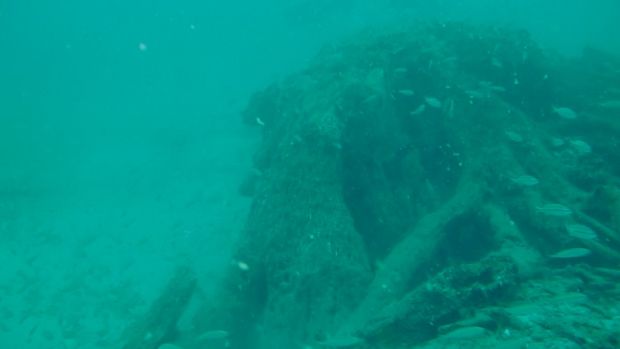
Scientists are exploring a submerged forest of bald cypress trees off the coast of Alabama in the Gulf of Mexico. Hurricane Katrina is thought to have uncovered it. Earlier in 2013, they announced that the forest is much older than originally thought. An early speculation was that the submerged trees were between 8,000 and 12,000 years old. The newer estimate dates the submerged trees from about 50,000 to 80,000 years ago. The submerged forest provides evidence that coastal Alabama has risen between 60 and 120 feet (18 to 36 meters) in the last 50,000 years. Scientists are now hoping to sample the ancient forest to understand what climate conditions were like along the Gulf coast during that time in Earth’s history.

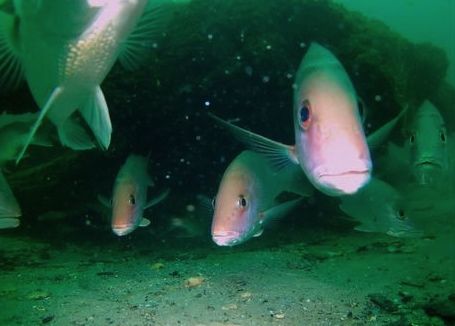
A local fisherman first noticed the unusual spot in the Gulf of Mexico a few years ago. He saw that fish were abundant in the area and speculated that some sort of structure must exist on the sea floor. Fish and other marine life tend to congregate around hard structures beneath the sea, such as coral reefs and sunken ships.

Image via Ben Raines/AL.com

There are large stumps, roots and logs from an ancient bald cypress forest about 60 feet (18 meters) below the surface of the water, near coastal Alabama. Image via Ben Raines/AL.com

Image via Ben Raines/AL.com

Some of logs measure 8 feet (2.4 meters) in diameter. The forest was apparently buried under thick seafloor sediments for thousands of years. It’s thought that Hurricane Katrina’s giant waves uncovered it. Image via Ben Raines/AL.com

Image via Ben Raines/AL.com

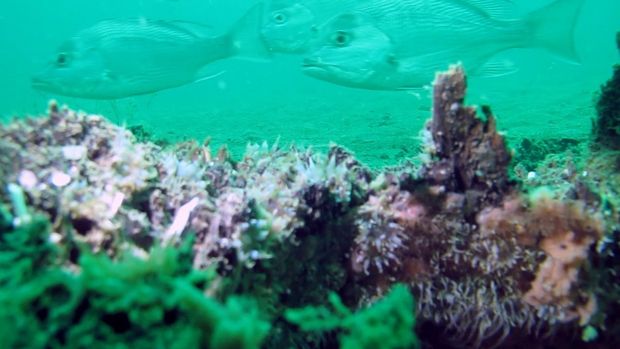
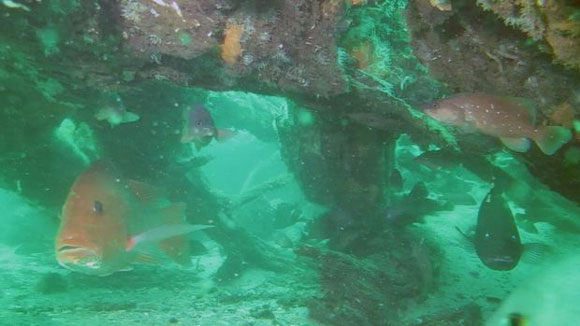
Anemones and crabs cover the ancient trees, and fish swim nearby. Image via Ben Raines/AL.com

Ben Raines, executive director of the Weeks Bay Foundation in Alabama, was one of the first scuba divers to explore the site. He discovered several large stumps and logs from an ancient bald cypress forest about 60 feet (18 meters) below the surface of the water. Some of logs measured 8 feet (2.4 meers) in diameter. He told EarthSky:

As soon as I hit the bottom, I saw the first stump. It had the trademark, irregularly shaped trunk of a cypress tree, with knees spread around it in a circle. Then I saw another, and another and knew instantly I was swimming over the remains of an ancient forest. It’s an enchanting place. You feel like you are in some sort of fairy world, with these huge stumps covered in anemones and crabs, and swarms of fish swimming all around you.

Raines recognized the importance of the find and contacted scientists to help get an estimate of the forest’s age. Preliminary evidence, derived in part from radiocarbon dating, suggests that the submerged forest may be anywhere from 50,000 to 80,000 years old.

bald-cypress-swamp-usfw-380

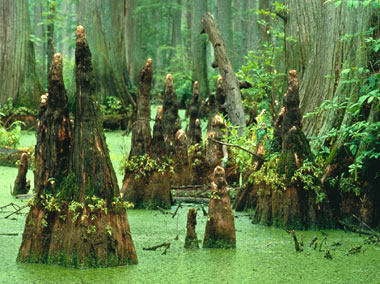
Here’s a bald cypress swamp today. The submerged forest must have looked like this at one time. Image Credit: Ted Trovillion, US Fish and Wildlife Service.

Image via Ben Raines/AL.com

Image via Ben Raines/AL.com

North America had a very different climate 50,000 to 80,000 years ago. During that time, a large portion of North America was covered in glaciers and sea levels were much lower than they are today. Hence, the land off the coast of Alabama was not submerged underwater.

A team of scientists from the Gulf of Mexico region are hoping to study the site to understand what past climate conditions were like along the Gulf coast. Grant Harley, an assistant professor in geography at the University of Southern Mississippi, commented on their plans in a press release. He said:

What we’ll do is compare these samples with other paleoclimate records to give us an idea about climate conditions on the Gulf Coast 50-80,000 years ago, which we can tell by looking at tree growth rings. It would give us an annual record of climate during a time period in the Earth’s history when climate change was happening rapidly. If it was cold or dry, that would result in tiny, narrow growth rings, but warm or wet conditions would result in wider growth rings. To have a record of that would be unique and rare.

underwater-cypress-forest-ben-raines-580

Scientists are hoping to study the site to understand what past climate conditions were like along the Gulf coast. Image via Ben Raines/AL.com.

Kristine DeLong, an assistant professor in the Department of Geography and Anthropology at Louisiana State University, also commented on the upcoming research to Weather Underground. She said:

If we get core samples, we can look at the tree rings and see what was happening with precipitation. We don’t know what was happening with precipitation on the Gulf Coast during the ice ages. We know that the area around the Great Salt Lake, and in Arizona and New Mexico, was very wet. That it rained a lot. And that [it] is desert now. But we don’t know what was happening on the Gulf Coast.

The scientists are hoping to begin the research quickly before the underwater forest decays any further. The forest, which was previously preserved underneath seafloor sediments for thousands of years, was likely uncovered recently by strong winds and waves such as those from Hurricane Katrina. The Weeks Bay Foundation is currently working to secure protections for the site that will allow for fishing, diving, and scientific research, but will prevent salvaging of the ancient wood.

Bottom line: The remains of an ancient bald cypress forest were discovered off the coast of Alabama in the Gulf of Mexico. Scientists estimate that the trees are 50,000 to 80,000 years old. They are hoping to sample the underwater forest to understand what climate conditions were like along the Gulf coast during that time in Earth’s history.

source::::  in
 | EARTH ……Earth Sky News site

natarajan