|
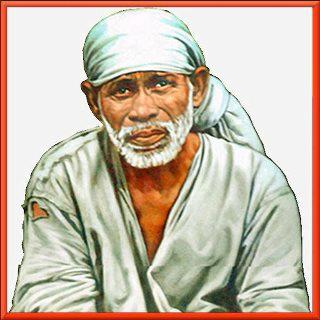
Even in selecting a Guru, use your discrimination. Not all clouds are rain bearing. A true Guru will be able to attract His seekers from afar, merely by His personality. He need not be talked about in glowing terms. His presence will be felt and aspirants will rush towards Him like bees towards a lotus in full bloom. Take up the path of spiritual practice, very enthusiastically. Half-hearted halting steps will not yield fruit. It is like cleaning a slushy area by slowly moving a stream of water. If the currents in the stream flow slowly, the slush cannot be cleared. The stream of water must flow full and fast, driving everything before it, so that the slush is cleared completely–
Divine Discourse Aug 2 1958
|
environment

Incredible Images Of a Little Girl Who Spent First 10 years of her Life in African Bushes !!!!
Tippi Benjamine Okanti Degri was brought up with wild animals in Africa, is now 23 and lives in France
By JILL REILLY in mailonline


Heart-warming pictures of the real life Mowgli, a girl who spent the first ten years of her life growing up in the African bush, have been released for the first time.
The magical images chronicle the life of Tippi Benjamine Okanti Degri, who was brought up with wild animals, just like Rudyard Kipling’s hero did in The Jungle Book.
The images – in the relaunched book – ‘Tippi: My Book of Africa’ – show the young girl making friends with an elephant, who she calls her brother, and a leopard, her best friend.


Living with her French parents, wildlife photographers Sylvie Robert and Alain Degri, the three of them travelled extensively through Africa on a unique and incredible trip.
The adventure started where Tippi was born in Namibia, and ended in her travelling through countries like Botswana, Zimbabwe and South Africa.
‘Her everyday life was making sure monkeys did not steal her bottle,’ said Sylvie.
‘Or she would call me over and point to an elephant eating from a palm tree and say ‘mummy, be quiet, we’re going to frighten him.’
‘She had so much freedom.

Unique start: Tippi, aged one and a half drinking from her bottle among an elephant herd in Okavango Swamps, Botswana
Real life Mowgli: Tippi aged 6 sitting with J&B, a tame adult leopard in Namibia


‘She did not realise she was not the same size as Abu the elephant. She would just speak to him like she would speak to me. They used to call her ‘the little girl who would talk with animals.’
Tippi was able to form strong bonds with some of the most dangerous beasts in the animal kingdom because they were used to humans.
Most of the animals had been orphaned and raised by farmers.
However, despite the apparent ease and comfort with which they interact, Sylvie always put Tippi’s safety first.
‘You can’t just meet any of these animals and act like this with them,’ explains Sylvie.
‘Wild animals will either run away or attack you if they are either frightened, injured or need to protect their young.


‘It was like having the biggest playground. We lived in a tent, completely in the wild, but she always woke up with the sun shining and her parents around her. She was very lucky.’
And the incredible photos – from sitting on the back of an ostrich, lying peacefully with a young caracal, or dancing playfully with an elephant – show an unusual bond and tranquility between man and beast.
‘She was so at ease with animals. She would talk to them with her eyes and her heart,’ said Sylvie.
Using her innocence and imagination, the young ‘Mowgli’ befriended one of the giants of the animal kingdom, Abu the African elephant.
So always had to keep a special eye on her daughter.
‘But she was only ever bitten once on the nose by a Meerkat, only two bites!
‘This is funny because Tippi’s middle name is Okanti, meaning mongoose or meerkat. They were part of her family in Africa, so I wanted her to have something to take home with her.’
‘The second incident was when she met with Cindy the baboon at a water point. Cindy attacked Tippi’s hair and pulled out a handful, out of jealousy.
‘That was terribly painful! Wild animals are unpredictable. We can’t be sure of their reaction as we are not of the same species, we don’t know all of
their behaviour codes.
‘When we last went back to Africa in 2006 we went went to see some of the animals she met in the past, including Cindy the baboon.
‘We found out that Cindy is a grandma now : my friend who has raised her like the baby of the family had twins. Cindy decided that she was in charge of them and, being older, became like a grandma for the kids.
‘They met each other and Cindy went to Tippi and started playing with her hair, grooming her. It was quite beautiful.
And it wasn’t only the animals who were taken with the young Tippi, as Sylvie explains.
‘When we came to a village with African children, within two minutes Tippi was the clown and people found her so cute,’ she says.
‘Africans love other children – especially white children and she was so much fun with her hair and so different.
‘When we filmed the San Bushmen of northern Namibia (one of the most ancient people of Africa who live from hunting and gathering in the Kalahari desert) we would let Tippi spend the day with the group without us until she would fall asleep among. the kids.
‘She was at ease with the children and would dress and play with them – she could never find the same when she came back to Europe.’
When Tippi returned to her parents’ native country – France – at the age of ten, it was hard adjusting to city life in Paris.
‘She missed the animals so much,’ said her mother Sylvie.
‘We didn’t have room for a dog in our flat, so we got a budgie instead.
‘It would go everywhere with her, even on the train, flying right by her side, sitting on her head or falling asleep on her shoulder.
‘She loved that little bird so much. He was the only friend she had.’
Now aged 23 and studying her third year in a degree in cinema, Tippi is facing a different jungle … the concrete one.
But the memories of her time in Africa – recorded in a series of interviews and written up into the book – will forever live on through its pages.
‘She gave her heart and thoughts away in her book,’ said Sylvie.
‘It is like Mowgli’s story, but for Tippi it’s true.’

source:::::mailonline.com
Natarajan

“No” From IIT -JEE … But Big “YES” from Stanford University !!!
Visually impaired Delhi student Kartik Sawhney has repeatedly been denied permission to appear for the IIT-JEE in the past three years because of his disability. However, in March 2013, he was awarded a fully funded scholarship to pursue engineering at Stanford University in the US. This is his story.
On May 27, 2013, when 18-year-old Kartik Sawhney scored 96 per cent in his Class 12 CBSE examination, he became the country’s first ever visually impaired student to have achieved the feat in the science stream.
Appearing from Delhi Public School, RK Puram, he scored 99 in computer science (his favourite subject) and 95 each in English, mathematics, physics and chemistry; his total is 479 out of 500.
Recalling some of the challenges, he says, “Studying with normal students wasn’t easy, and neither was choosing a stream of my choice.”
Determination and perseverance are the key factors to his success — he simply would not take no for an answer.
“A lot of people think that disabilities limits you from doing certain things. But I think success comes to those who believe in their strengths,” he states.
Sawhney, who comes from a middle class family — his father Ravinder Sawhney is a businessman and mother Indu Sawhney a homemaker — confesses that aiming high and making tough decisions at every stage was still easier than executing them.
For three years in a row, he has been denied permission to appear for the IIT-JEE; he was told that there is no provision for blind students to take the competitive exam. But he did not lose hope and applied to universities abroad.
And in March 2013, Sawhney received a fully funded scholarship to pursue a five-year engineering programme at Stanford University. Once armed with this degree, he intends to “improve the condition of visually impaired back in India”.

Karthik Sawhney

Image: Kartik (second from left) displays the certificate announcing his first place victory at the Global IT Challenge for Youth with Disabilities in South Korea in November 2012; seated to his right is mother Indu Sawhney and to his left, Delhi Public School, RK Puram principal Dr D R Saini and vice principal Shobha Mehta
Photographs: Courtesy Delhi Public School, RK Puram
source::::rediff.com
Natarajan
Photos With Perfect Timing !!!


source::::: fropki.com
Natarajan

Action Replay of “The Birds” … Alfred Hitchcock Movie !!!


A scene from Alfred Hitchcock’s The Birds released in 1963. Tourists visiting the Farne Islands have been forced to dive for cover in scenes reminiscent of the film ” The Birds ” during visits to a huge nesting site !!!
Thousands of terns nesting on the isolated Farne Islands are dive-bombing and pecking people’s heads forcing them to take cover during visits to islands off the coast of Northumberland.
Even bird watchers trying to photograph them are watching helplessly as the creatures attack their cameras.
Will Scott, National Trust Ranger, said: ‘The terns are trying to protect their eggs and also to protect their chicks.
‘Obviously they nest quite close to the board walk which gives them a bit of protection from the gulls who come and take their eggs.
‘It’s a bit of a love hate relationship because the humans that are protecting them by chasing away the gulls are also quite close to their eggs which is why they are pecking head and can drop a little present on you as well.’
But the attacks are not putting off tourists visiting the islands.
One visitor said: ‘I think they’re fantastic, it is the first time I have been for years. I’m not scared, what’s the point in being scared, they’re just friendly. I really love them.’
Another said: ‘They are absolutely fantastic, this is the second time I have been and I’d recommend it to anybody.’
When asked about visitors being scared of the birds, she said: ‘They know what they’re coming into, they should be prepared and bring a hat. It’s no good hitting the birds, they are just protecting their nest.’
The Farne Islands are a group of 20 islands and are home to hundreds of seals and one of Britain’s largest sea bird colonies.
Mr Scott said: ‘The Farne Islands are really important for arctic tern. We are one of the largest colonies in England and one of the most successful as well.
‘The presence of people makes the terns a lot more successful, a lot more collective as a colony and produce a lot more chicks because of the lack of
predators who come and steal their chicks while they are raising them.’
source::::::::::::: mailonline.com
Natarajan
“Wash and Reuse” Notebook!!!…An Innovative Technique !!!!
When 21 year old engineering student Indrajeet Ghorpade saw waste paper bins at his college hostel overflowing with used notebooks at the end of every semester, he was horrified. If this was the waste generated by a single institution, he could only imagine the scenario at schools, colleges and universities across the country at the end of every academic cycle. Thousands of tonnes of paper wasted each year just on rough-work and calculations. Considering that India recycles only 26% of its paper,this amounted to shocking misuse of a non-renewable resource. Something needed to be done and fast.
The first step for Indrajeet, was admitting that despite technology providing us with paperless alternatives like laptops, tablets etc, the conventional paper notebook at least in the Indian context was here to stay. Although, access to technology is rapidly increasing, it remains out of reach for the poor student. Besides, writing and learning is still the most popular method of studying in India across the economic spectrum.
The question that kept doing the rounds in his mind was how did one come up with an environment-friendly alternative that was affordable and yet did not disrupt the preferred method of studying? At last it dawned upon him. A reusable notebook that uses washable synthetic sheets instead of paper. So simple.
“These sheets can be washed, dried,re-bound and used again,” says an enthusiastic Indrajeet. “Thus you end up saving electricity and trees that go into the manufacturing of the conventional paper notebooks as well as the money that goes into buying new books”.
“Since stationery can be very expensive,” he says. “This is an attractive alternative for the students. One does not fill all the pages of a book in a day, so you don’t have to wash it everyday. Most likely you’ll only need to do it once a month and its as simple as doing your laundry.”
 The Reusable Notebook: Wash and re-use!When showcased at the Innovation Jockeys contest last year, the reusable notebook became an instant hit. Buoyed by the positive response generated by his product, its proud creator says it’s only a matter of time before the reusable notebook hits the market.
“I have presented my idea to few of the leading stationery manufactures and organizations that support eco-friendly innovations and have received a positive response. With efforts channeled in the right direction along with smart marketing strategies, we should be able to see the product being used in every household, school and college in near future.”
In his final year in engineering at the Vellore Institute of Technology, Indrajeet has already landed a cushy job with a prestigious internet company. However, he dreams of striking it big on his own someday. First on his agenda is creating an “educational Institution where teaching will happen in an unconventional way with a complete emphasis on gaining practical skills, encouraging creativity and innovation.”
Other dream projects include, turning his house and eventually the entire neighbourhood into an eco-friendly zone. A beach-side café also happens to be on the list.
However, the die-hard fan of Vint Cerf and Tim Berners-Lee insists that innovators today have a more difficult challenge ahead of them. Environmental sustainability must be a part of every solution. For him,a true trailblazer is one who can think diversely and “come up with a technique that is efficient, cost effective and supports sustainable development.” Much like the reusable notebook.

Indrajeet Ghorpade
source::::yahoo specials India
Natarajan

