Extreme Closeup of Bugs!!!…. An Excellence in Macro Photography!!!

frog underwater

Sometimes just a change in perspective can make a world of a difference. Take for instance tiny bugs. They are from our standpoint little critters we can literally brush aside,  ignore, or squash dead if we choose to. Now put yourself on equal footing with these tiny creatures, meaning see them scaled the same size as humans, and what you have are utterly hideous looking monsters that would scare the living daylights out of anybody. Photographer Nicolas Reusens’ interest in insects captures extremely detailed images of these diminutive creatures through his interest in macro photography.

ant eating bug


Reusens uses a technique known as focus stacking, which combines several images but taken in differing depths of field.  Using this technique has produced some pretty scary close-ups of these tiny insects that are straight out of a science fiction B-movie. Using focus stacking was necessary to achieve an increase in the depth of field while not stopping down his aperture, which would require longer shutter times. This compromise leads to diffraction and diminished sharpness. He combines anywhere between 2 to 200 exposures with the use of Zerene Stacker.


frog on top of beetle


Reusens’ photos are from different parts of the world. He gets around quite a bit being half Swedish, while residing in Spain. He is well-travelled having been to countries in Latin America, Asia, South Africa, and Mexico to name a few. He also says that this frequent travelling has allowed him to acquire a better world view, understanding the diversity of cultures around the globe.

bug on end of match


Reusens shares his enthusiasm for both travel and nature in his website, saying,

“I’ve always had a sharp eye for nature and been fascinated by insects, so three years ago I bought my first reflex camera with which I started from scratch experimenting and learning the ‘secrets’ of THE macro photography as I imagined it should be when as a kid I collected ants, moths and other insects in matchboxes.I guess you could call me a perfectionist or maybe even a freak, but this is how I’ve always felt things should be done.

One of the greatest satisfactions of photography is traveling around the world and ‘capturing’ the weird and wonderful creatures I’m showing you herewith.”


bug with droplets of water


source:::: Patrica Romos in exposure guide.

Natarajan


Man Invents Machine To Get Oil From Plastic !!!!


This is one of the most amazing email’s and break-through in Technology I have ever seen!!! Why aren’t we doing this now????
I think we should all do what we can to save what we are destroying! Not surprised at this at all, just a case of Japanese ingenuity and perseverance.

What is more important would be the marketing and very low cost to make it mandatory to have one of these in every home.

The sound is all in Japanese. Just read the subtitles and watch.

What a great discovery!

Natarajan

Do You Know ?….Farmers From Bihar Have a Solution to World Food Shortage !!!

India’s rice revolution

In a village in India’s poorest state, Bihar, farmers are growing world record amounts of rice – with no GM, and no herbicide. Is this one solution to world food shortages?

Sumant KumarView larger picture

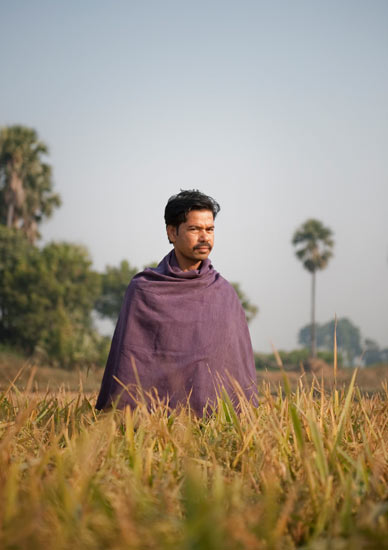
Sumant Kumar photographed in Darveshpura, Bihar, India. Photograph: Chiara Goia for Observer Food Monthly

Sumant Kumar was overjoyed when he harvested his rice last year. There had been good rains in his village of Darveshpura in north-eastIndia and he knew he could improve on the four or five tonnes per hectare that he usually managed. But every stalk he cut on his paddy field near the bank of the Sakri river seemed to weigh heavier than usual, every grain of rice was bigger and when his crop was weighed on the old village scales, even Kumar was shocked.

This was not six or even 10 or 20 tonnes. Kumar, a shy young farmer in Nalanda district of India’s poorest state Bihar, had – using only farmyard manure and without any herbicides – grown an astonishing 22.4 tonnes of rice on one hectare of land. This was a world record and with rice the staple food of more than half the world’s population of seven billion, big news.

Link to video: Rice farming in India: ‘Now I produce enough food for my family’It beat not just the 19.4 tonnes achieved by the “father of rice”, the Chinese agricultural scientist Yuan Longping, but the World Bank-funded scientists at the International Rice Research Institute in the Philippines, and anything achieved by the biggest European and American seed and GM companies. And it was not just Sumant Kumar. Krishna, Nitish, Sanjay and Bijay, his friends and rivals in Darveshpura, all recorded over 17 tonnes, and many others in the villages around claimed to have more than doubled their usual yields.

The villagers, at the mercy of erratic weather and used to going without food in bad years, celebrated. But the Bihar state agricultural universities didn’t believe them at first, while India’s leading rice scientists muttered about freak results. The Nalanda farmers were accused of cheating. Only when the state’s head of agriculture, a rice farmer himself, came to the village with his own men and personally verified Sumant’s crop, was the record confirmed.

A tool used to harvest riceA tool used to harvest rice. Photograph: Chiara GoiaThe rhythm of Nalanda village life was shattered. Here bullocks still pull ploughs as they have always done, their dung is still dried on the walls of houses and used to cook food. Electricity has still not reached most people. Sumant became a local hero, mentioned in the Indian parliament and asked to attend conferences. The state’s chief minister came to Darveshpura to congratulate him, and the village was rewarded with electric power, a bank and a new concrete bridge.

That might have been the end of the story had Sumant’s friend Nitish not smashed the world record for growing potatoes six months later. Shortly after Ravindra Kumar, a small farmer from a nearby Bihari village, broke the Indian record for growing wheat. Darveshpura became known as India’s “miracle village”, Nalanda became famous and teams of scientists, development groups, farmers, civil servants and politicians all descended to discover its secret.

When I meet the young farmers, all in their early 30s, they still seem slightly dazed by their fame. They’ve become unlikely heroes in a state where nearly half the families live below the Indian poverty line and 93% of the 100 million population depend on growing rice and potatoes. Nitish Kumar speaks quietly of his success and says he is determined to improve on the record. “In previous years, farming has not been very profitable,” he says. “Now I realise that it can be. My whole life has changed. I can send my children to school and spend more on health. My income has increased a lot.”

What happened in Darveshpura has divided scientists and is exciting governments and development experts. Tests on the soil show it is particularly rich in silicon but the reason for the “super yields” is entirely down to a method of growing crops called System of Rice (or root) Intensification (SRI). It has dramatically increased yields with wheat, potatoes, sugar cane, yams, tomatoes, garlic, aubergine and many other crops and is being hailed as one of the most significant developments of the past 50 years for the world’s 500 million small-scale farmers and the two billion people who depend on them.

People work on a rice field in BiharPeople work on a rice field in Bihar. Photograph: Chiara GoiaInstead of planting three-week-old rice seedlings in clumps of three or four in waterlogged fields, as rice farmers around the world traditionally do, the Darveshpura farmers carefully nurture only half as many seeds, and then transplant the young plants into fields, one by one, when much younger. Additionally, they space them at 25cm intervals in a grid pattern, keep the soil much drier and carefully weed around the plants to allow air to their roots. The premise that “less is more” was taught by Rajiv Kumar, a young Bihar state government extension worker who had been trained in turn by Anil Verma of a small Indian NGO called Pran (Preservation and
Proliferation of Rural Resources and Nature), which has introduced the SRI method to hundreds of villages in the past three years.

While the “green revolution” that averted Indian famine in the 1970s relied on improved crop varieties, expensive pesticides and chemical fertilisers, SRI appears to offer a long-term, sustainable future for no extra cost. With more than one in seven of the global population going hungry and demand for rice expected to outstrip supply within 20 years, it appears to offer real hope. Even a 30% increase in the yields of the world’s small farmers would go a long way to alleviating poverty.

“Farmers use less seeds, less water and less chemicals but they get more without having to invest more. This is revolutionary,” said Dr Surendra Chaurassa from Bihar’s agriculture ministry. “I did not believe it to start with, but now I think it can potentially change the way everyone farms. I would want every state to promote it. If we get 30-40% increase in yields, that is more than enough to recommend it.”

The results in Bihar have exceeded Chaurassa’s hopes. Sudama Mahto, an agriculture officer in Nalanda, says a small investment in training a few hundred people to teach SRI methods has resulted in a 45% increase in the region’s yields. Veerapandi Arumugam, the former agriculture minister of Tamil Nadu state, hailed the system as “revolutionising” farming.

SRI’s origins go back to the 1980s in Madagascar where Henri de Laulanie, a French Jesuit priest and agronomist, observed how villagers grew rice in the uplands. He developed the method but it was an American, professor Norman Uphoff, director of the International Institute for Food, Agriculture and Development at Cornell University, who was largely responsible for spreading the word about De Laulanie’s work.

Given $15m by an anonymous billionaire to research sustainable development, Uphoff went to Madagascar in 1983 and saw the success of SRI for himself: farmers whose previous yields averaged two tonnes per hectare were harvesting eight tonnes. In 1997 he started to actively promote SRI in Asia, where more than 600 million people are malnourished.

“It is a set of ideas, the absolute opposite to the first green revolution [of the 60s] which said that you had to change the genes and the soil nutrients to improve yields. That came at a tremendous ecological cost,” says Uphoff. “Agriculture in the 21st century must be practised differently. Land and water resources are becoming scarcer, of poorer quality, or less reliable. Climatic conditions are in many places more adverse. SRI offers millions of disadvantaged households far better opportunities. Nobody is benefiting from this except the farmers; there are no patents, royalties or licensing fees.”

Rice seedsRice seeds. Photograph: Chiara GoiaFor 40 years now, says Uphoff, science has been obsessed with improving seeds and using artificial fertilisers: “It’s been genes, genes, genes. There has never been talk of managing crops. Corporations say ‘we will breed you a better plant’ and breeders work hard to get 5-10% increase in yields. We have tried to make agriculture an industrial enterprise and have forgotten its biological roots.”

Not everyone agrees. Some scientists complain there is not enough peer-reviewed evidence around SRI and that it is impossible to get such returns. “SRI is a set of management practices and nothing else, many of which have been known for a long time and are best recommended practice,” says Achim Dobermann, deputy director for research at the International Rice Research Institute. “Scientifically speaking I don’t believe there is any miracle. When people independently have evaluated SRI principles then the result has usually been quite different from what has been reported on farm evaluations conducted by NGOs and others who are promoting it. Most scientists have had difficulty replicating the observations.”

Dominic Glover, a British researcher working with Wageningen University in the Netherlands, has spent years analysing the introduction of GM crops in developing countries. He is now following how SRI is being adopted in India and believes there has been a “turf war”.

“There are experts in their fields defending their knowledge,” he says. “But in many areas, growers have tried SRI methods and abandoned them. People are unwilling to investigate this. SRI is good for small farmers who rely on their own families for labour, but not necessarily for larger operations. Rather than any magical theory, it is good husbandry, skill and attention which results in the super yields. Clearly in certain circumstances, it is an efficient resource for farmers. But it is labour intensive and nobody has come up with the technology to transplant single seedlings yet.”

But some larger farmers in Bihar say it is not labour intensive and can actually reduce time spent in fields. “When a farmer does SRI the first time, yes it is more labour intensive,” says Santosh Kumar, who grows 15 hectares of rice and vegetables in Nalanda. “Then it gets easier and new innovations are taking place now.”

In its early days, SRI was dismissed or vilified by donors and scientists but in the past few years it has gained credibility. Uphoff estimates there are now 4-5 million farmers using SRI worldwide, with governments in China, India, Indonesia, Cambodia, Sri Lanka and Vietnam promoting it.

Sumant, Nitish and as many as 100,000 other SRI farmers in Bihar are now preparing their next rice crop. It’s back-breaking work transplanting the young rice shoots from the nursery beds to the paddy fields but buoyed by recognition and results, their confidence and optimism in the future is sky high.

Last month Nobel prize-winning economist Joseph Stiglitz visited Nalanda district and recognised the potential of this kind of organic farming, telling the villagers they were “better than scientists”. “It was amazing to see their success in organic farming,” said Stiglitz, who called for more research. “Agriculture scientists from across the world should visit and learn and be inspired by them.”

A man winnows rice in Satgharwa villageA man winnows rice in Satgharwa village. Photograph: Chiara GoiaBihar, from being India’s poorest state, is now at the centre of what is being called a “new green grassroots revolution” with farming villages, research groups and NGOs all beginning to experiment with different crops using SRI. The state will invest $50m in SRI next year but western governments and foundations are holding back, preferring to invest in hi-tech research. The agronomist Anil Verma does not understand why: “The farmers know SRI works, but help is needed to train them. We know it works differently in different soils but the principles are solid,” he says. “The biggest problem we have is that people want to do it but we do not have enough trainers.

“If any scientist or a company came up with a technology that almost guaranteed a 50% increase in yields at no extra cost they would get a Nobel prize. But when young Biharian farmers do that they get nothing. I only want to see the poor farmers have enough to eat.”


source:::: John Vidal in The Observer  UK

Natarajan

Strange Inventions of History !!!!

Who needs the internet? The Wireless Newspaper invented in 1938, picture shows children reading the pages of a Missouri paper

Who needs Internet !!!!…The wireless Newspaper invented in 1938 …Picture shows children reading the pages of Missouri Paper.


A wheelie good idea: A wheel motorcycle invented by Italian M. Goventosa de Udine, in 1931

A Wheelie good idea !!!!…One wheel Motorcycle invented by an Italian M.Goventosa de Udine in 1931


A pedestrian catcher: A shovel was fixed onto the front of a car was used to reduce the number of casualties among drunk pedestrians in Paris, 1924

A shovel is fixed on to the front of a car….To reduce the number of casualities among drunk pedistrians in Paris !!!!…in 1924…!!!

Size is not object: An extensible caravan, built by a French engineer in France, 1934

An extensible caravan built by a French Engineer….France,,in 1934..


The amphibious bike: The 'Cyclomer' was capable of using on both land and water. It was created in Paris in 1932

The amphibious bike…”cyclomer” was capable of running in land and water , both…invented in Paris.1932.


Stiff upper lip: A gas resistant pram, pictured in England, Hextable, 1938

A Gas resistant Pram …Pictured in England…1938…

source:::Daily mail reporter

Natarajan

Best Aerial Photos with Professional Perfection !!!!

aerial photos 2012

Tokyo, Japan – Skytree, tallest self supported structure in Asia


aerial photos 2012

Antarctica – calving shown


aerial photos 2012

Koolan Island, Australia – iron ore mine


aerial photos 2012

Sandouping, China – Three Gorges Dam


aerial photos 2012

Italy – Costa Concordi


aerial photos 2012

Greenland – Petermann Glacier, massive icebergs calve


aerial photos 2012

New Mexico – Space Shuttle Endeavour atop a 747


aerial photos 2012
London, UK – Olympic village


aerial photos 2012

Northern England – mine sculpture known as “The Lady of the North”


aerial photos 2012

Saint Peter’s Square, Vatican City –


Today’s satellite photos are becoming more detailed and clear than ever. They used to be these black and white fuzzy photos, where you could maybe identify a country or a continent. These days, you can see all the way down to street level. And this year, they’ve caught some truly beautiful and awesome sights from way up there, ….Some Beautiful  photos are posted above for your viewing….

source::::babamailnet

Natarajan


Are You Ready For Space Travel !!!

The next frontier of travel? If Richard Branson and others like him have their way, the answer is outer space. The Virgin Atlantic CEO marked a major milestone in space tourism last Monday with the first supersonic test flight of Virgin Galactic, a passenger spacecraft aiming to become the world’s first commercial “spaceline” by 2014.
But are travellers really interested in going to space?
According to a 2008 ABC News poll on the topic, although 65% of respondents believed that in the years ahead ordinary people will travel to outer space, the median price that they were willing to pay was just $2,000 – a far cry from the $200,000 ticket Virgin Galactic ticket.
However, in a 2006 survey by Spaceport Associates and Incredible Adventures, two US companies pioneering space tourism, if cost were not an issue nearly two-thirds of respondents would go on a “round-the-moon adventure”. More than 70% surveyed would spend two weeks or less on a suborbital tourism flight and 88% were interested in spacewalking.
“These trips are the beginning of what could be a lucrative 21st-century industry,” wrote Kevin Bonsor on science website howstuffworks.com, noting that several space tourism companies have begun building suborbital vehicles for commercial space travel. “These companies have invested millions, believing that space tourism industry is on the verge of taking off.”
Among them are Xcor Aerospace Inc, which hopes to join Virgin Galactic in the space tourism business. Private company SpaceX is developing its own rocket family, Falcon, capable of sending seven people to any space station. Space Adventures Ltd is working on a circumlunar mission to the moon (price per passenger is currently $100 million). Even commercial airliner Boeing is getting in on the venture, building a spacecraft to transport passengers to the International Space Station, a habitable satellite low in Earth’s orbit where scientists from around the world live, work and research.
As for Virgin Galactic’s commercial space tourism project, some 529 would-be space travellers (including such celebrities as American actor Ashton Kutcher) have already signed up for the two-hour, $200,000-a-seat experience.
But until those flights become financially attainable for more tourists, it’s unlikely that space travel will rival air travel.

space travel astronaut

According to a 2008 ABC News poll, 65% of respondents believed that in the years ahead ordinary people will travel to outer space. (Andrew Rich/Getty)

SOURCE:::bbc.com…passportblog

Natarajan

Breathtaking Images Captured By Canadian Astronaut From ISS !!!

Morning has broken: Breathtaking image of the first light of dawn creeping over the horizon is captured by astronaut
Canadian astronaut Chris Hadfield has wowed Twitter with his pictures taken from the International Space Station
His latest image is of dawn breaking over the south west of the United States last week.

A breathtaking image of the moon rising above the United states as dawn breaks have been posted on Twitter by an astronaut on the International Space Station.

The stunning shot, which bears striking resemblance to the beginning of the opening credits of a Universal film, was posted by Canadian Chris Hadfield who has gained a cult following on Twitter for his images of the Earth from space.

The image was shot over southwestern America and will be one of Hadfield’s last tweets from space after he announced that his return to earth will commence later this month.
One of Canadian astronaut Chris Hadfield's latest pictures from the International Space Station shows a darkened south-eastern United States just before dawn, with the moon rising above
One of Canadian astronaut Chris Hadfield’s latest pictures from the International Space Station shows a darkened south-eastern United States just before dawn, with the moon rising above

Some of the snapshots of Astronaut Chris Hadfield…..

Snapper: The stunning image of the Earth at dawn was the latest picture from space captured by Commander of the International Space Station Chris Hadfield

Beautiful: Chris Hadfield has posted dozens of pictures from space online since he arrived at the ISS in December including this taken over Africa

Seaside shot: Most of Commander Hadfield's pictures of the UK were taken at night, but this one shows the beautiful blue sea surrounding the coast of Bournemouth in Hampshire

Emerald Isle: The silhouettes of Ireland and Wales were captured in this beautiful picture taken from the ISS by Commander Hadfield

Green green grass: It may look tiny, but this expanse of UK land encompasses Exeter and Cornwall all the way to Land's End

Down under from up above: The astronaut tweeted this shot of what he described as the 'endless beaches of Australia', adding 'That's where I'd go for Australia Day!'

 'In the lee of the rock - protecting an island of humanity in a sea of orange sand.' Some of the pictures look as if they are from a different planet

Unmistakable: The Thames can be clearly seen snaking its was through the giant urban sprawl of London in this picture

Unmistakable: The Thames can be clearly seen snaking its way  through the giant urban sprawl of London in this picture


Commander of the International Space Station, Chris has gained an army of followers on Facebook and Twitter with his daily updates from space which feature beautiful pictures and news on the progress of the various missions he and his colleagues carry out.

Hadfield has been taking the Twitterverse by storm from aboard the ISS, which orbits the Earth at 8km a second, since he arrived back on December 21.

The astronaut, who has also posted a variety of amusing videos showing what it is like to shave, vomit and brush your teeth in space, uses a long lens camera to capture the stunning detail of the Earth.

Among his favourite places to photograph is the Sahara in Africa and he explains that he waits until the sun is directly over the desert to get the best shot.

He says: ‘The beauty of space station, though, is if it’s not here this time, tomorrow it might be, or maybe a month from now.

‘There’s not a race to get a picture. You can be patient, like a hunter.’

He says that it’s not Instagram, it’s ‘Space-a-gram’ and that the key steps are: ‘Focus, frame, and fire’.

He added: ‘We orbit 400km above the earth, so if you want to get a good detailed picture of something you need a long lens. I have one velcroed to the wall.’

Chris uses a special setting on his camera to deal with the bright glare of light from the Earth against the pitch black backdrop of space.

He takes pictures in as high a resolution as possible, so his camera’s memory card gets full very quickly.

The first Canadian to walk in space, Commander Hadfield, 53, a former air force fighter pilot, has previously flown two Space Shuttle missions in 1995 and 2001.

Hadfield has amassed 226,000 fans on Facebook and 740,000 followers on Twitter.

He announced that his ‘fiery fall’ to earth will commence on May 13 after the arrival of a new Russian commander.

source::::mailonline

Natarajan

Giant Rubber Duck In Hong Kong !!!!

Ahem, excuse me Captain, but I think we’re being followed. This is the world’s largest rubber ducky, seen here floating around Hong Kong’s Victoria Harbour. Designed by Dutch artist Florentijn Hofman, its aim is to “spread joy around the world.” The duck has also been caught ducking off in Sydney, Australia; Auckland, New Zealand; and Osaka, Japan. Where it’ll be next is anyone’s guess, but Hofman says he just wants to make people smile. “The Rubber Duck knows no frontiers, it doesn’t discriminate people and doesn’t have a political connotation,” he wrote on his website. “The friendly, floating Rubber Duck has healing properties: it can relieve mondial tensions as well as define them. The rubber duck is soft, friendly and suitable for all ages!” [Daily Mail]

Rubber Duck in Hong Kong

Dutch artist Florentijn Hofman says “Rubber Duck” reminds grownups of their childhood.!!!!!


A visit from a giant, inflated “Rubber Duck” turned Hong Kong’s Victoria Harbour into a bathtub on Thursday.

Thousands of Hong Kong citizens looked on as the 54-foot inflatable structure made its long-awaited entrance into the city’s harbor, CNN reports. The highly anticipated arrival came after two weeks of intense hype from local media outlets.

For Florentijn Hofman, the Dutch artist behind the beloved Rubber Duck, Hong Kong’s response to the floating art display was nothing short of overwhelming. The 36-year-old told CNN he was happy to be visiting Hong Kong, though his inflatable friend got there first.

“I’ve wanted to come for years — and my duck made it here before me!” Hofman said.

The yellow duck came to rest beside the harbor’s Ocean Terminal, with a brass band and thousands of camera shutters providing the soundtrack.

“Hong Kong has been changed forever,” Hofman said, as Rubber Duck became a temporary part of the city’s skyline.

The giant bath toy is quite the world traveler. Since beginning its international journey, Rubber Duck has made appearances in Osaka, Sydney, San Paolo and Amsterdam, CNN reports. It will remain in Hong Kong’s harbor until June 9, and then it heads to the United States.

Despite the duck’s youthful evocations, Hofman insists that his art project is for grownups, too.

“I see it as an adult thing. It makes you feel young again. It refers to your childhood when there was no stress or economic pressure, no worry about having to pay the rent,” Hofman told CNN.

While the duck has elicited laughs and delighted responses from onlookers, Hofman acknowledges that his project isn’t for everyone.

“If it makes you smile, then that’s OK, but maybe it makes you cry because of the urban environment. I make work not to give answers but to question things.”

The father of three initially conceived the art display in 2001, but he’s not done thinking about it just yet.

“It’s getting complex because I have so many thoughts about it and so many minutes of talking and thinking about it,” he told CNN.

Hofman urged everyone to formulate their own opinion on the free art display.

“Be amazed, be creative. Look at it with your eyes and absorb the energy of the work in this location,” he said.

When it finishes its stay in Hong Kong, Rubber Duck will be headed to the United States, but Hofman isn’t giving away the exact location.

“In the States, it will stay a secret until the last week.”

 source::::International Business times
Natarajan

Nature”s Wonders Thro ‘ the Eyes of Camera !!!!!!

Nature’s wonder captured at its most breathtaking in annual photography contest
Nature Photographer of the Year 2013 competition, organised by the Society of German Nature Photographers (GDT)
Image of a red fox by 18-year-old Hermann Hirsch won best overall image in all categories.
Story by …. AMANDA WILLIAMS.

An alert young fox stalks his way through long summer grass, bathed in the glow of a balmy evening.
A poppy field in full bloom, reminiscent of Monet’s painting of the same name, and a fluorescent maple leaf, perfectly framed against a foggy woodland backdrop.
All of these stunning images made it through to the final round of the Nature Photographer of the Year 2013 competition, organised by the Society of German Nature Photographers (GDT).
But this image of a red fox by Hermann Hirsch was deemed the quintessential portrait of wildlife, and won best overall image in all categories.

An alert young fox stalks his way through long summer grass, bathed in the glow of a balmy evening, in this image by Hermann Hirsch. It won best image in the Nature Photographer of the Year 2013 competition

An alert young fox stalks his way through long summer grass, bathed in the glow of a balmy evening, in this image by Hermann Hirsch. It won best image in the Nature Photographer of the Year 2013 competition


An adult fox prowls through the misty woodland in Fox in cloudy forest, by Klaus Echle. Dozens of images made it through to the final round of the contest

An adult fox prowls through the misty woodland in Fox in cloudy forest, by Klaus Echle. Dozens of images made it through to the final round of the contest


Pictures were submitted in the mammals, other animals, plants and fungi, landscapes, nature's studio, and this year's special category, animal portraits

This rodent anxiously making its way across a forest floor, pictured in ‘When Night Falls’ by Christoph Kaula, won third place in the mammals category


Landscapes category runner-up: 'Landscapes in Bloom' by Sandra Bartocha. In total 3,577 images were submitted into the competition, which is run exclusively for the Society's members

Landscapes category runner-up: ‘Landscapes in Bloom’ by Sandra Bartocha. In total 3,577 images were submitted into the competition, which is run exclusively for the Society’s members. It is reminiscent of Monet’s Poppy Field

Animals portraits category winner: 'Capercaillie' by Klaus Echle.

Animals portraits category winner: ‘Capercaillie’ by Klaus Echle. An exhibition of the photographs entered in the competition will run from May 23 until September at the Federal Agency for Nature Conservation (BfN) in Bonn


Animals portraits category runner-up: 'Young Lion' by Carsten Ott

Animals portraits category runner-up: ‘Young Lion’ by Carsten Ott


A penguin colony makes its way back across a sea sprayed landscape, in Returning from the hunt, by Michael Lohmann. The image won Birds category runner-up and prize of the jury

A penguin colony makes its way back across a sea sprayed landscape, in Returning from the hunt, by Michael Lohmann. The image won Birds category runner-up and prize of the jury

This icy tableau won Birds category winner: 'A Frosty Resting Place' by Bernd Nill

This icy tableau won Birds category winner: ‘A Frosty Resting Place’ by Bernd Nill

Dozens of images made it through to the final round of the Nature Photographer of the Year 2013 competition

Dozens of images made it through to the final round of the Nature Photographer of the Year 2013 competition


A spider is given an eerie makeover in this image 'Spotlight' by Klaus Tamm. It was named winner in the 'other animals category'

A spider is given an eerie makeover in this image ‘Spotlight’ by Klaus Tamm. It was named winner in the ‘other animals category’


An image of bubbling mud from was named nature's studio category winner: 'Bubbling' by Sigi Zang

An image of bubbling mud from was named nature’s studio category winner: ‘Bubbling’ by Sigi Zang

Plants and fungi category runner-up: 'Maple leaves in Fog Forest' by Joachim Wimmer.

Plants and fungi category runner-up: ‘Maple leaves in Fog Forest’ by Joachim Wimmer.

Read more: http://www.dailymail.co.uk/news/article-2317760/Nature-Photographer-Year-2013-competition-The-best-animal-kingdom.html#ixzz2SLPlnXqI

Natarajan