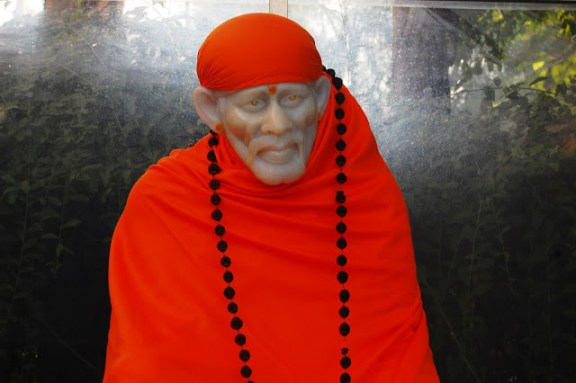
Message For The Day…Strength Derived From the Divine Is Only The True Strength …

It is believed that every man has a free will. This is a mistake. It is also believed that it is through the individual’s ideas and efforts that many things are accomplished. This is based on misconceptions regarding man’s doership and egoism. Strength derived from the Divine alone is true strength. All else is weakness. To realise theAtma, physical prowess is of no avail. It is only by developing the sense of spiritual oneness, that the Atmic Consciousness can be realised. Today the world is plunged in chaos and conflict because this feeling of oneness has been lost. Man engages himself in strenuous efforts to achieve worldly comforts. But he does not make even a minute fraction of such efforts to meditate on God. How much greater happiness would he enjoy if he were to devote even a few moments to thoughts of God!

 Sathya Sai Baba


Idea of Chennai Trio May Pave the Way For a Breakthrough in Aircraft Noise Reduction !!!


CHENNAI: An idea floated by three Chennai students could give birth to the world’s quietest airline in the near future.

Charles Champion, the top engineering man in the world’s leading aircraft manufacturing company Airbus has said that an ambitious plan to create the aircraft of the future with zero propulsion noise by three aerospace engineering students from Chennai “makes sense” and is being looked at by the company “as a key idea to develop”.

The team from SRM University Chennai consisting of Balakrishnan Solaraju Murali, Michael Thomas and Anita Mohil, is among the only five teams that has made it to the final of the “Fly Your Ideas” competition that saw 6,000 students in 618 teams from 82 countries vie for the 30,000 euro top prize.

The Indian team’s top line idea is called “Engine air cooling system for noise reduction”.

The trio have found a way to reduce propulsion noise by modifying the shape of the jet exhaust using intelligent materials (shape memory alloys).

These alloys are powered by harvested electricity generated by advanced thermoelectric materials using engine heat source.

Speaking to TOI from France, Champion who is the executive vice president (engineering) at Airbus said “noise of an airline is a real bother. Historically there has been a 75% noise reduction of airlines in the last 50 years. It has become a serious issue. Noise of aeroplanes now decide whether airlines can fly to European or British airports or not”.

“The idea by the Chennai students to use the heat from the engine of the airline as a source of energy that will generate electricity that will help change the shape of the exhaust thereby reducing noise dramatically is a brilliant idea. But it will now go through several rounds till it reaches the technology readiness level 6. This is when the company will decide to develop the idea as a product. It will take another 4 years before the concept can be implemented,” Champion said.

All airlines are now having to prove minimum environmental impact to be able to land at airports in developed countries.

“External noise is a major component of aircraft design now. Around 20 years ago, we launched the A 737 which was the quietest of its time. Now after we launched A 380 recently, A 737 sounds noisy. Lowering noise will also lower fuel consumption. We are now working on the next generation of aircraft A 320 which is quieter than A 380 with 15% lesser fuel consumption,” Champion said.

According to Champion, India is a great asset for engineering. “This competition is to get new ideas and trends from brilliant young engineers. The Indian team has a high chance to win,” Champion added.

The competition has been floated by Airbus.

The other teams to make it to the final are from Australia, Brazil, Italy and Malaysia.

Ideas floated in the competition included planes powered by body heat, luggage floating on a bed of air or even an aircraft running on liquid methane.

The final hurdle will see students present their ideas to a jury of Airbus and industry experts at Airbus’ headquarters in Toulouse on 12th June 2013. The winning team will receive the 30,000 euro prize with the runners up bagging 15,000 euros.

The winners will be announced at an exclusive ceremony at UNESCO’s headquarters in Paris on 14th June 2013.

Aerospace engineers from across the world had to create the aircraft of the future covering one of six themes identified by Airbus as key 21st century challenges for a greener aviation industry.

These included addressing energy, efficiency, affordable and traffic growth, passenger experience and community friendliness.

source:::::Times of India ,Chennai
Natarajan

Meet Smart Neha Ramu …Age 13…. Smarter Than Stephen Hawking !!!!!

Story From Bianca London in  mailonline.com

Natarajan

  • Neha Ramu has an IQ of 162
  • Identified as one of UK’s smartest people
  • Average British IQ is 100
  • Hopes to study neurology at Harvard University


A teenager from south-west London scored so high in a Mensa IQ test for people under the age of 18 that she has been identified as one of the UK’s brightest people.

Any score of above 140 is considered to be that of a genius and 13-year-old Neha Ramu from Surbiton scored 162, which is the highest mark possible, making her smarter than Stephen Hawking

Whilst Stephen Hawking refuses to reveal his IQ, it is estimated to be 160.
Young genius: Neha Ramu, 13, scored so high in a Mensa IQ test for people under the age of 18, she has been identified as one of the UK's brightest people
Young genius: Neha Ramu, 13, scored so high in a Mensa IQ test for people under the age of 18, she has been identified as one of the UK’s brightest people

The bright youngster moved from Bangalore in India aged seven and while she thinks that the Indian education system gave her a good head start, she loves her school life in the UK.


Her parents only recently discovered the true extent of her intelligence after the schoolgirl was awarded the top marks possible in her entrance exams.

Speaking about her intelligence, Neha told the BBC: ‘When I found out I got such a high score it was so amazing and unexpected.

‘Stephen Hawking, Albert Einstein, they’ve achieved so much. It’s not right to compare me to them just because of my IQ.

‘If I don’t put in my effort and make use of my IQ then there’s no point in having it.’

Whilst she favours activities such as chess and reading, her mother explained that she still makes time for normal activities such as TV, swimming and playtime with her friends.

The youngster now has high hopes of studying neurology at the prestigious Harvard University.


Brains: Professor Stephen Hawking and Microsoft co-founder Paul Allen are amongst the top five most intelligent people in the world

MENSA FACTS AND FIGURES

Mensa cite the average adult IQ score is 100.

The current youngest member of Mensa is Alice Amos, from Guildford, Surrey, UK who was assessed at the age of 2 years and 11 months and accepted at the age of 3 years 2 weeks. She has an IQ of 162.

British Mensa’s oldest ever member was 103.

American Mensa’s general membership is 66 per cent male and 33 per cent female.


World’s most intelligent people currently:

Stephen W. Hawking, 70. Reported IQ of 160, he has carried out groundbreaking research into theoretical physics as well as authorising books explaining the universe.

Kim Ung-Yong, 50. IQ of 210, by the age of two he was fluent in four languages and was invited to study in U.S. by NASA age 8.

Paul Allen, 59. IQ of 170. Co-founder of Microsoft and 48th richest person in the world and top philanthropist.

Rick Rosner, 52. IQ of 192, currently works as a TV writer.

Garry Kasparov, 49. IQ of 190, youngest undisupted chess champion who won the title age 22.


Read more: http://www.dailymail.co.uk/femail/article-2337394/Neha-Ramu-13-Surbiton-IQ-162–smarter-Stephen-Hawking.html#ixzz2VnDoc9V3
Follow us: @MailOnline on Twitter | DailyMail on Facebook


Mesmerizing Self Portraits Made by 14 years Boy !!!!

A 14-year-old photographer has taken the internet by storm with his creative and dreamlike images that make normal-sized people appear tiny.

Zev Hoover, from Natick, Massachusetts, goes by the Flickr username Fiddle Oak, a play on ‘little folk’, which adequately describes the incredible images that make up his ‘miniature world’.

In his fantastical photos in which people are digitally shrunken, acorns make excellent seats, Popsicle sticks are the ideal size for building rafts, and paper airplanes are viable modes of transport.

Zev Hoover


Zev Hoover


Zev told Today.com that while he takes the photos with his own camera, his older sister Nell, 18, was the brains behind the original tiny people concept.

‘She is sort of my partner in crime,’ he said, adding that she is ‘more of a writer’.


While Nell may have come up with the idea, Zev executes the images beautifully, and his unique work has attracted the attention of professional photographers and designers.

The 14-year-old, who also writes a blog, explained the complicated process of how he creates his dreamlike images, many of which feature him as the main subject.
Zev Hoover

Complex: The process involves capturing the background, shrinking photos of people in similar lighting, manipulating the images in Photoshop and editing the color scheme so that it all matches

Zev Hoover

 In one of the photos that plays with size ratio, a miniscule-looking boy sits on the edge of a rock, a violin in his hand


Zev Hoover
Miniscule: In another image, a boy appears small enough to fit inside a tiny paper boat, made from a page in a book


The process involves capturing the background image first, shrinking photos of people in similar lighting, manipulating the images in Photoshop and editing the color scheme so that it all matches.

‘It takes a long time,’ he said of the resulting images, which are so otherworldly that they almost look like drawings.

One image shows a boy constructing a house of playing cards, his body the same size as the cards.

In another image, a ‘miniature’ boy and girl sit upon a raft made of Popsicle sticks, the sail of which is a single leaf.
Zev Hoover

Zev Hoover
Stimulating: Zev gets a lot of support from the Flickr community, where he shares his work. ‘It’s two-way, and it inspires and invigorates me a lot,’ he said of the website. ‘There is so much good energy’

Many of Zev’s images explore nature, including one in which a boy perches inside the shell of an acorn.

Another nature-themed photo, which plays with and distorts size ratio, shows a miniscule-looking boy sitting on the edge of a rock, a violin in his hand.

Photography and design websites have picked up on Zev’s work, lauding him for being so talented and creative at such a young age.

‘Zev has proven to be one photographer to keep an eye on,’ wrote one MyModernMet.com writer.

Zev Hoover

At one with the outdoors: In one photo, a miniature boy perches comfortably inside the shell of an acorn


Zev Hoover

Natural environment: A number of the teen’s images explore humans’ relationship with nature

The blogger goes on to praise Zev’s style, which ‘takes the viewer along on a magical journey of rediscovering the world around us.’


The youngest of four, Zev – who is home-schooled by his sculptural artist mother – grew up in a household that fostered creative pursuits.


He began taking his first photos at the age of eight with a cell phone camera, before acquiring two professional instruments – a regular camera and a video camera – which he lovingly named ‘Betsy’ and ‘Diana’.


Not only is he a talented photographer, but Zev also seems to be wise beyond his years in other fields as well.


Zev Hoover


Zev Hoover

In his spare time, he browses technology blogs, builds and flies model airplanes, and dreams about going to college to study art or graphic design.

But despite all his ambition and success thus far, Zev is markedly down-to-earth.

When asked about all the attention he has been getting recently, he told Today.com: ‘It’s just so lucky and random

SOURCE:::Margot Peppers in Mailonline.com


Message For The Day…Atma and Gnana are one and the Same….

To know the Indweller (Kshetrajna) you have to acquire the Supreme Knowledge (Jnana). This transcends every other kind of knowledge which is related to the physical and the phenomenal. No one can understand the Divine Self (Atma) through worldly knowledge. You need a diamond to cut a diamond. To understand the Divine Soul (Atma), you have to acquire Knowledge of the Spirit (Atmajnana). All the knowledge gathered by the analysis of physical objects or through the senses is only a form of ignorance. It has three elements: What is known, what is to be known and who is the knower. These three are aspects of the mind. Only that is Jnana which is known when the mind is eliminated. Atma and Jnana are one, though called by different names. True Awareness is Jnana.
– Divine Discourse, May 30, 1990.

Sathya Sai Baba


Breast Feed is The Best Feed !!!


  • Babies only fed breast milk have 30% extra growth in key parts of the brain
  • They have better development in areas which control language and emotion
  • Those fed breast milk have more white matter which is used for learning
  • Those only fed formula milk have the least white matter

By EMMA INNES   in Mailonline.com….


Breast milk boosts brain development in babies by up to 30 per cent, according to a new study.

Children exclusively fed breast milk for at least three months have up to 30 per cent extra growth in the key parts of the brain which control language, emotion, and understanding, say scientists.

The study of under-fours showed children who have breast milk as part of their diet have a clear advantage when it comes to brain development.

Children exclusively fed breast milk for at least three months have up to 30 per cent extra growth in the key parts of the brain. Image shows how white matter develops with age


Children exclusively fed breast milk for at least three months have up to 30 per cent extra growth in the key parts of the brain. Image shows how white matter develops with age.


Research carried out at Brown University, in the U.S., found that by the time the babies had reached their second birthday a discernible difference could be seen in their brain structure.

Dr Sean Deoni, an engineering professor and lead author, said: ‘We’re finding the difference [in white matter growth] is in the order of 20 to 30 per cent, comparing the breastfed and the non-breastfed kids.’

Using Magnetic Resonance Imaging (MRI) brain scans were taken of the babies who had been fed a diet of breast milk in the earliest stages of their development, and of those who had been fed formula milk.

The scans showed that babies fed breast milk alone had the fastest growth in myelinated white matter – tissue packed full of long nerve fibres that link different parts of the brain that are used for learning.

The babies who were weaned on a diet of formula were found to have the least white matter.

Dr Deoni’s team carried out the study to see how early the changes in brain development took place.

‘We show that they’re there almost right off the bat,’ he said.

Researchers looked at the brains of 133 babies who were born on time and came from similar families.

By comparing the myelin in older and younger children they were able to calculate how breast milk influenced the development of white matter.

The researchers backed up the results of the scans with a set of basic cognitive tests that showed language performance, visual reception and motor control were all better in the breastfed children.

The team found that the longer the babies were fed with breast milk the more developed their brains were, especially in the areas of the brain associated with movement and coordination.

While the Brown study published in the journal NeuroImage is not the first to link breastfeeding with improved development in the young, Dr Deoni claimed it is the first time MRI scans have been used to compare the brains in breastfed and non-breastfed children.

Dr Deoni said: ‘I think it’s astounding that you could have that much difference so early. I think I would argue that combined with all the other evidence, it seems like breastfeeding is absolutely beneficial.

source:::::mailonline.com
Natarajan


“No” From IIT -JEE … But Big “YES” from Stanford University !!!

Visually impaired Delhi student Kartik Sawhney has repeatedly been denied permission to appear for the IIT-JEE in the past three years because of his disability. However, in March 2013, he was awarded a fully funded scholarship to pursue engineering at Stanford University in the US. This is his story.

On May 27, 2013, when 18-year-old Kartik Sawhney scored 96 per cent in his Class 12 CBSE examination, he became the country’s first ever visually impaired student to have achieved the feat in the science stream.

Appearing from Delhi Public School, RK Puram, he scored 99 in computer science (his favourite subject) and 95 each in English, mathematics, physics and chemistry; his total is 479 out of 500.

Recalling some of the challenges, he says, “Studying with normal students wasn’t easy, and neither was choosing a stream of my choice.”

Determination and perseverance are the key factors to his success — he simply would not take no for an answer.

“A lot of people think that disabilities limits you from doing certain things. But I think success comes to those who believe in their strengths,” he states.

Sawhney, who comes from a middle class family — his father Ravinder Sawhney is a businessman and mother Indu Sawhney a homemaker — confesses that aiming high and making tough decisions at every stage was still easier than executing them.

For three years in a row, he has been denied permission to appear for the IIT-JEE; he was told that there is no provision for blind students to take the competitive exam. But he did not lose hope and applied to universities abroad.

And in March 2013, Sawhney received a fully funded scholarship to pursue a five-year engineering programme at Stanford University. Once armed with this degree, he intends to “improve the condition of visually impaired back in India”.

Kartik Sawhney

Karthik Sawhney


Image: Kartik (second from left) displays the certificate announcing his first place victory at the Global IT Challenge for Youth with Disabilities in South Korea in November 2012; seated to his right is mother Indu Sawhney and to his left, Delhi Public School, RK Puram principal Dr D R Saini and vice principal Shobha Mehta
Photographs: Courtesy Delhi Public School, RK Puram

source::::rediff.com

Natarajan

Solve This Math. Problem!!! And Claim $1 Million from Texas Banker !!!!

Texas banker and self-taught mathematician D. Andrew Beal has increased the cash prize for proving a conjecture he discovered in 1993, the Associated Press reported.

Held by the American Mathematical Society, the $1,000,000 cash prize goes to the first to prove the Beal Conjecture, an offshoot of the legendary Fermat’s Last Theorem proof that was solved by Andrew Wiles in 1994.

Here’s the problem that can make you rich.

beal's conjecture

Fermat’s Last Theorem went unsolved for hundreds of years. It said that no three positive integers a, b and c can satisfy

ax + bx = cx 

when integer x is greater than two. While this may seem somewhat simple, and if you play around with it it becomes self-evident, it’s a complete pain to prove.

Andy Beal had been working on Fermat’s Last Theorem when he stumbled upon a different problem. At the time, he was using computers to look at similar equations with different exponents.

Beal’s Conjecture is related. If a, b, c, x, y, and z are all positive integers and x, y, z are greater than two,

ax + by = cz

is only possible when a, b and c have a common prime factor.

Beal found during his computations that the only solutions to the equation were when a, b and c had a common factor  — like how 8, 6 and 10 all have a common factor of 2 — so he contacted folks in academia to confirm that the problem was new, then set up a prize with the AMS for the person who proves his conjecture.

So, if you find a proof or counterexample to Beal’s Conjecture that gets approved by the AMS-appointed committee and gets into a journal, you get a million bucks.

Click here to see the terms of the prize >

source:::::businessinsider.com

Natarajan

Read more: http://www.businessinsider.com/beale-conjecture-1-million-dollar-prize-2013-6#ixzz2VSDh2GMl

“Wash and Reuse” Notebook!!!…An Innovative Technique !!!!

When 21 year old engineering student Indrajeet Ghorpade saw waste paper bins at his college hostel overflowing with used notebooks at the end of every semester, he was horrified. If this was the waste generated by a single institution, he could only imagine the scenario at schools, colleges and universities across the country at the end of every academic cycle. Thousands of tonnes of paper wasted each year just on rough-work and calculations. Considering that India recycles only 26% of its paper,this amounted to shocking misuse of a non-renewable resource. Something needed to be done and fast.

The first step for Indrajeet, was admitting that despite technology providing us with paperless alternatives like laptops, tablets etc, the conventional paper notebook at least in the Indian context was here to stay. Although, access to technology is rapidly increasing, it remains out of reach for the poor student. Besides, writing and learning is still the most popular method of studying in India across the economic spectrum.

The question that kept doing the rounds in his mind was how did one come up with an environment-friendly alternative that was affordable and yet did not disrupt the preferred method of studying? At last it dawned upon him. A reusable notebook that uses washable synthetic sheets instead of paper. So simple.

“These sheets can be washed, dried,re-bound and used again,” says an enthusiastic Indrajeet. “Thus you end up saving electricity and trees that go into the manufacturing of the conventional paper notebooks as well as the money that goes into buying new books”.

“Since stationery can be very expensive,” he says. “This is an attractive alternative for the students. One does not fill all the pages of a book in a day, so you don’t have to wash it everyday. Most likely you’ll only need to do it once a month and its as simple as doing your laundry.”

The Reusable Notebook: Wash and re-use!When showcased at the Innovation Jockeys contest last year, the reusable notebook became an instant hit. Buoyed by the positive response generated by his product, its proud creator says it’s only a matter of time before the reusable notebook hits the market.

“I have presented my idea to few of the leading stationery manufactures and organizations that support eco-friendly innovations and have received a positive response. With efforts channeled in the right direction along with smart marketing strategies, we should be able to see the product being used in every household, school and college in near future.”

In his final year in engineering at the Vellore Institute of Technology, Indrajeet has already landed a cushy job with a prestigious internet company. However, he dreams of striking it big on his own someday. First on his agenda is creating an “educational Institution where teaching will happen in an unconventional way with a complete emphasis on gaining practical skills, encouraging creativity and innovation.”

Other dream projects include, turning his house and eventually the entire neighbourhood into an eco-friendly zone. A beach-side café also happens to be on the list.

However, the die-hard fan of Vint Cerf and Tim Berners-Lee insists that innovators today have a more difficult challenge ahead of them. Environmental sustainability must be a part of every solution. For him,a true trailblazer is one who can think diversely and “come up with a technique that is efficient, cost effective and supports sustainable development.” Much like the reusable notebook.

Indrajeet Ghorpade

source::::yahoo specials India

Natarajan