
Source::::dinamalar.com
Natarajan
Source::::dinamalar.com
Natarajan

Kasturi amma’s Ganeshas are simple, earthy, eco-friendly and hand-made with love and bhakti. A month before Ganesh Chaturthi, 80-year-old Kasturi observesviratham and starts collecting mud and sand for making the Ganesha idols. “The clay is a mixture of half-a-dozen ingredients such as elephant poop, sieved river sand, karambai mann and sometimes hay. It takes a fortnight to get ready,” says Kasturi. Once the clay gets mixed into a homogenous paste, she sits day and night making the murtis. With her deft hands, Kasturi moulds, rolls and shapes the clay into two-feet-tall little Ganeshas. They all look plump, cute and perfect. “It’s difficult to get the trunk,” says Kasturi while swirling her fingers over a lump of clay to make the trunk. She quietly murmurs a prayer and closes her eyes in VENERATION and the trunk comes out just right. For over 40 years after the death of her potter husband, Kasturi and her son eldest son Srinivasan have kept tradition alive. Tucked inside a narrow lane off the Arapalayam road is their small house stacked with mud pots.
“Earlier we used to sell hundreds of idols. There were over 300 potter families in Arapalayam. The demand used to be so high that most times, we fell short of hands to cater to orders,” recalls Srinivasan. “This year, we have got orders for just 10 idols.” Once, it was the tradition to worship a pacha-mann pillayar which was later immersed into ponds or lakes. As the water bodies have dried up, the takers for the eco-friendly pure-clay idols have come down in the past few years. Potters also feel that the invasion of plaster-of-paris has taken away the charm of clay idols.
Idols made of clay are of two kinds – one in which the idol is baked and the other which is left to dry in the sun. While the baked idols are painted and used as a showcase item, the kaccha murtis are traditionally kept in pujas. In certain techniques, potters also mix hay dust instead of elephant dung and the idols made like that are called Sandu pillayar. “Only if the customer wants, we paint it with watercolours. Else, our idols are mostly in the colour of the earth,” says Kasturi. “The authorities call for eco-friendly idols every year, but sadly people only buy those big chemical-paint ones.”
The making of a two-feet-tall pacha-mann pillayar can take a week. It’s hand-built from the bottom without any mould. Kasturi finishes making the feet and legs first and leaves it for drying for a day or two. Then, she starts making the tummy and the body of the idol and proceeds step-wise. “Idol making is sacred. It involves a number of rituals and strict adherence to purity,” explains Mahalingam, another potter. “Only on the early morning before Chaturthi, the eyes of the idol are made.”
Most of Kasturi’s orders come from the kids in the area, who fondly call her paati. Groups of kids get together, pool in their pocket MONEY to buy a small idol. “They usually ask for discounts and I give idols to them even at half the price,” says Kasturi, who sells the two-feet idols for Rs.200 and bigger ones for Rs.300 or Rs.400. Srinivasan has also made a six-feet idol for this year, which he has priced at Rs.5,000.
Clay-idol makers also rue the lack of mud and sand. Earlier, they used to collect sand from the Vaigai and the karambai mann was easily available in the kanmois surrounding Arapalayam. Half of those kanmois have vanished under encroachments and the others don’t have any mud left in their beds. “Now we buy clay from Thurvariman and Kochadai. The costs have gone up. It’s not a lucrative business. Yet I do it to keep up the tradition. I consider myself gifted to be able to make such beautiful murtis of the Lord,” says Kasturi. “I only pray to Ganesha that we get more rains and our natural resources remain plentiful.”
Keywords: Clay-idol makers, Ganesha idols, Ganesh Chaturthi, eco-friendly idols,
Source:::The Hindu
Natarajan
The festival of the jolliest, most adorable God is finally here! Yes, it’s Ganesh Chaturthi. Personally, it is my favorite festival of all. Areas in the city are mushroomed with pandals, and are decorated beautifully with Ganpati Bappa’s idols in different sizes and poses. There’s so much merriment, happiness, and smell of freshly made modaks in the air!
While the classic modaks are enough to drive anyone crazy, here are a few easy recipes you can try this festive season, just to make Bappa (and all your family members) happier.

This yummy modak is made by mixing roasted peanuts with grated fresh coconut and jaggery. You can find the recipe here.

Made from ricotta cheese, peppermint and chocolate, this is a delicious remake of the traditional modak. Here’s the recipe.

A tasty hack for Modaks with ricotta cheese and heavy cream. Get the recipe here.

Made by grinding cashew nuts and mixing them with jaggery, these modaks are an absolute delight. Find the recipe here.

A delectable mixture of all the dry fruits into yummy modaks. Find the recipe here.

This is made using minced paneer, milk, ghee, and saffron strands. Find the recipe here.

A yummy mixture of coconuts, dry fruits and rose petal preserves. Find the recipe here.

Two awesome things-chocolate and walnut-getting together for Bappa. Find the recipe here.

A mixture of two kinds of flour along with coconut and jaggery, and deep fried. Find the recipe here.

Influenced by the Mediterranean Baklava, this modak has a slight twist. Find the recipe here.
So, what are you waiting for? Bappa’s here, and he’s hungry. 
Ganpati Bappa, Moraya!
Source::::Storypick .com
Natarajan
Source:::: Srivalli in http://www.cooking4allseasons.blogspot.in/ …Site referred to me by My wife Mrs. Bhavani Natarajan
Natarajan
 , when you make it, be sure to increase the chili else it might tend to be bland when compared to Ulundu Kozhukattai.
Step By Step Picture Recipe for Mani Kozhukattai


Ingredients Needed
For the outer Rice flour dough, make as I showed in the Fried Modak.
For the Urad Dal filling.
Urad Dal / Ulundhu – 1 cup
Green Chilies – 2 -3 medium
Red Chili – 2
Curry leaves few
Hing / Asafetida a pinch
Salt to taste
Turmeric powder a pinch
OIL – 1 tsp
Grated Coconut for garnish – 2 tsp
For the Mani Kozhukattai,
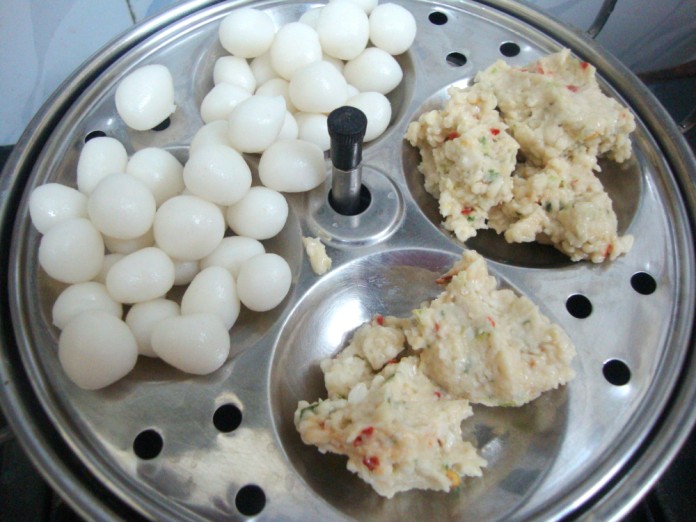
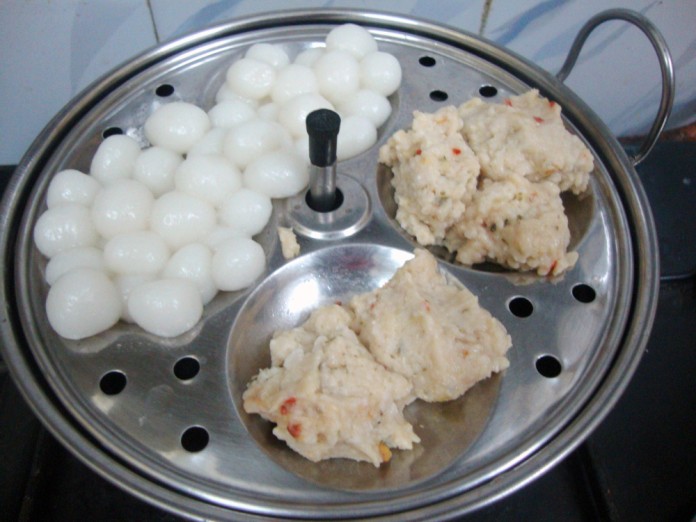
Make the Rice flour dough and pinch out small dough and roll as a ball.
Steam for 10 – 15 mins. Allow to cool. When it’s still hot it will not hold it’s shape, once it’s cooled it will retain it’s ball shape, so don’t handle it before.
How to make Mani (Ammani Kozhukattai):
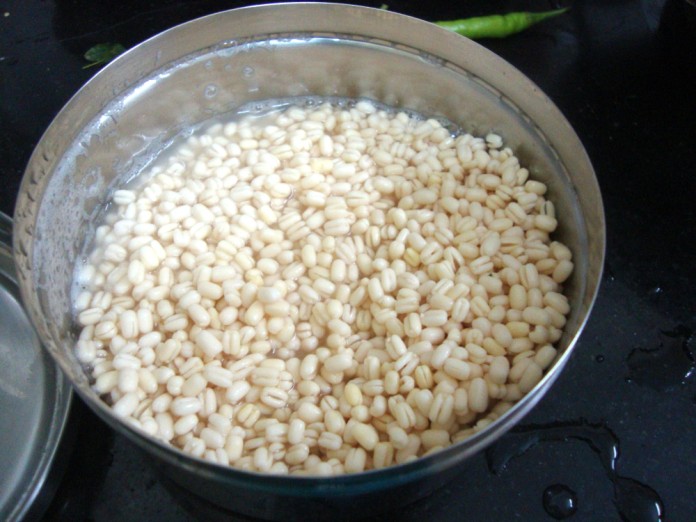
Soak Urad dal for 2 hrs. Drain and grind along with green chilies, red chilies, salt, hing, curry leaves to a coarse mix
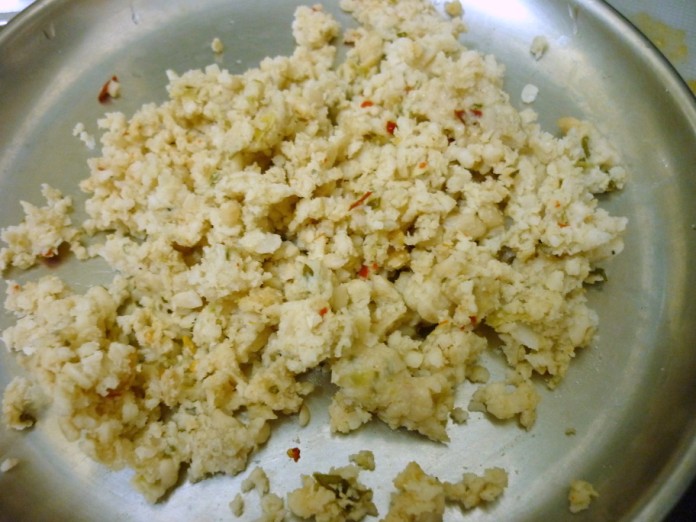
Once ground, make flat discs and steam for 10 mins. Grate to a fine powder.
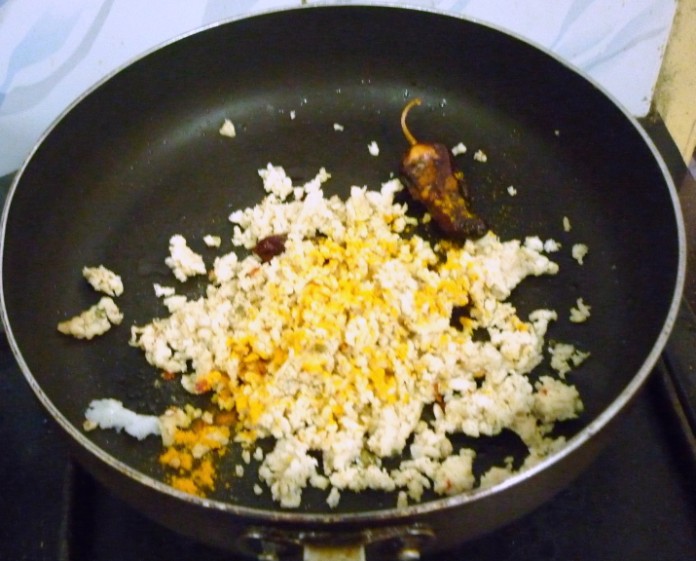
Heat a non stick pan with 1 tsp oil. Add mustard, Urad dal, curry leaves, red chilies and fry,
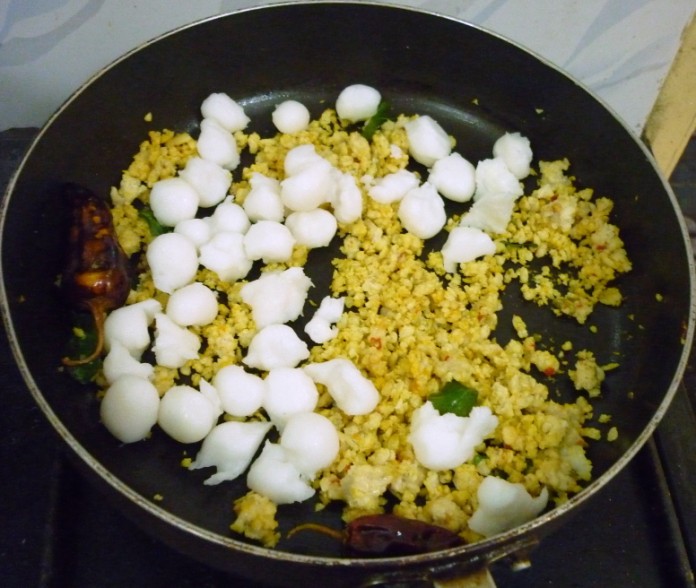
Then add the grated Urad dal filling. add turmeric powder.
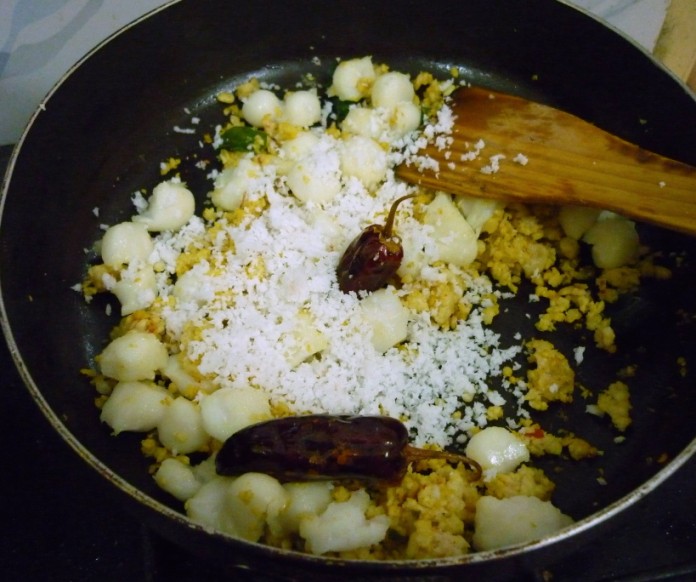
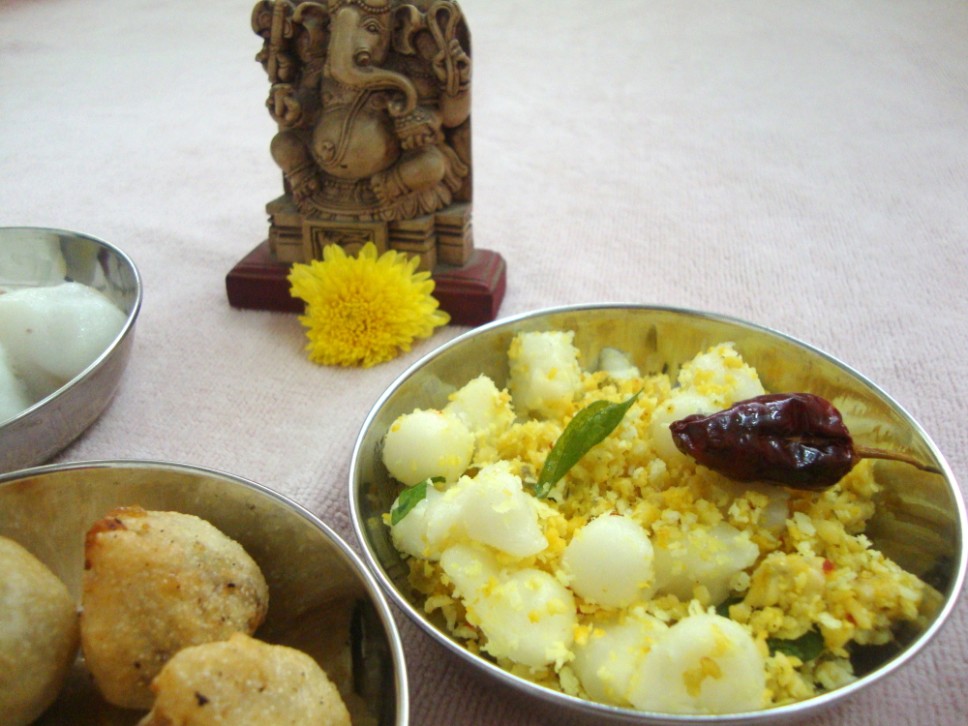
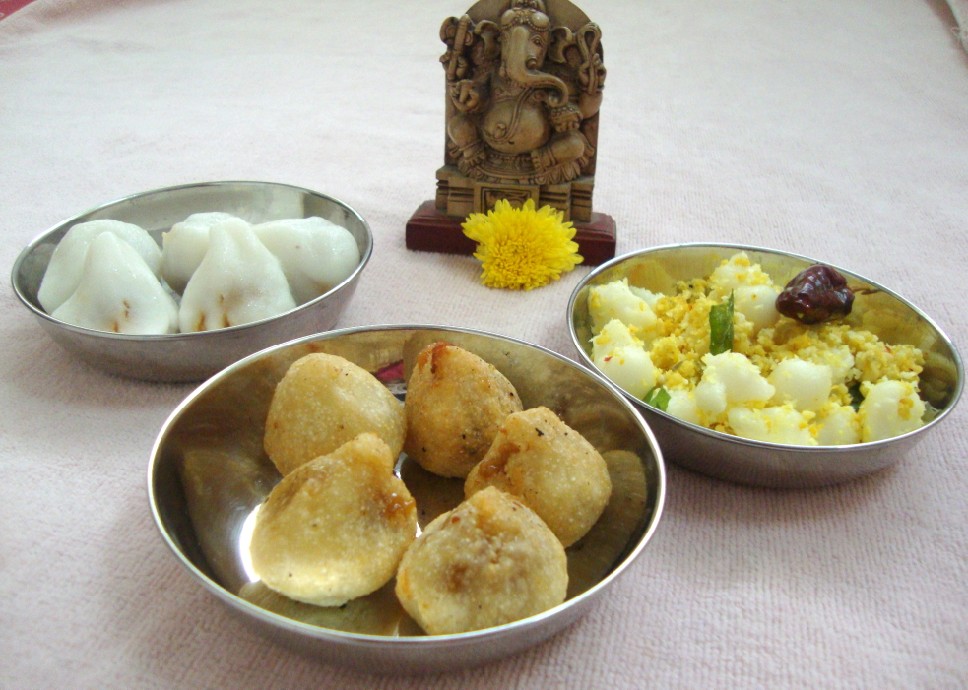
Once done, add the steamed mani kozhukattai, mix well. Finally garnish with grated coconut and OFFER as prasadam.


 Take off with Natarajan