Airglow over Little Grand Canyon, Utah
Pl click the above link and read the story as appeared in http://www.earthsky.org
Natarajan
Source….http://earthsky.org
Airglow over Little Grand Canyon, Utah
Pl click the above link and read the story as appeared in http://www.earthsky.org
Natarajan
Source….http://earthsky.org
Source: http://media.radiosai.org
The Lord will manifest Himself when the pillar is split with the sword of yearning. Hiranyakashipu did it and immediately the Lord appeared from within that pillar. The Lord did not hide in the pillar anticipating the contingency. He is everywhere; and so, He was there too. The lesson Hiranyakashipu learnt was that the deha-tatwa must be split if the dehi-tatwa must reveal itself. That is to say, the ‘I-am-body’ consciousness must go, if the ‘I-am-embodied’ consciousness, must emerge. So long as you are in the dehi (I-am-embodied) consciousness, no pain or grief, pride or egoism can tarnish you. A small quantity of seawater kept separately in a bottle will smell foul in a few days. As long as it is in the sea, nothing affects it. Be in the sea, as part of it; do not individualise and separate yourself. Do not feel that you are the body (deha), separate from the Indweller (dehi).
For many western countries, doorstep milk delivery is a thing of the past, but in Japan, millions of people still rely on the milkman for fresh milk everyday. Many traditional Japanese homes have milk delivery boxes, which are wooden boxes nailed outside the house where the milkman can drop bottles or cartons of milk—just like postmen drop mails in the mailbox. Some of the newer boxes are made of plastic and has Styrofoam insulation on the inside. Some milk shops even include a recyclable coolant pack with each delivery to keep the milk cold.
“Home delivery of dairy products, such as milk and yogurt, is a service that surprisingly is still available even these days thanks to the marketing efforts of the milk companies to combat lack of consumer interest which had been dwindling throughout the 1980s,” states an article on Phantom River Stone.
According to news report from the Japan Times published in 2003, one of the large dairy companies at that time, Meiji Dairies, had succeeded in reversing the trend and managed to double deliveries made over the prior ten-year period. 
Photo credit: presentandcorrect.com
Source….Kaushik in http://www.amusingplanet.com
Natarajan
Source:http://earthsky.org/
Pl click the link below and read the story as appeared in http://www.eartsky.org
Natarajan
Source: http://media.radiosai.org/
There are two qualities in every person. One is the animal nature; the other is humanness. Unfortunately people are forgetting their humanness by falling prey to the six enemies of lust, anger, greed, envy, attachment and pride, and misusing God-given talents. They are thereby degrading themselves to the level of an animal. On the other hand, one should use one’s mind, status, and talents to become virtuous, pursue the path of righteousness and strive to raise oneself from the human to the Divine. All things in the world should be used properly, and not misused. A knife can be used for cutting vegetables or another’s throat. How a knife is used depends on the one using it. The person’s mental state should be in proper condition. A person’s conduct is related to one’s thoughts and feelings. The heart is inherently pure. But one’s thoughts can maintain that purity or pollute it. One can make or mar one’s destiny by one’s thoughts and actions.
|
|
||
|
Source: http://media.radiosai.org
To sit in lotus posture (padmasana) and make the Kundalini shakti(spiritual energy) rise from the Mooladhara (basal plexus) to the Sahasrara (the node in the crown of the head) is not dhyana(meditation). True Meditation consists in recognising the presence of God in all types of work you do in your daily life. God is the indweller of all. To attempt to confine God to one place you choose is not meditation! According to our culture, we first pay obeisance to the work we have to do. Before we undertake any work, we should regard that work as God. That is what the Upanishads teach us, “Tasmai Namaha Karmane – I salute the work I have to do and adore God in that form”. Have you seen a person who plays on the tabla or the harmonium? Before they begin to play on it, they pay obeisance to the instrument. To regard the entire creation as the form of God and to perform your duty in that spirit, is true meditation.
Source: http://media.radiosai.org/
The flower of penance (Tapas pushpam) is very dear to God. Penance does not require you to give up your wife and children, go to a forest, and put your head up and feet down – that is not tapas! To practice real tapas, we should abandon bad thoughts from our minds as soon as they occur! The co-ordination of thought, word and deed is tapas. Whatever thoughts sprout in your mind, to utter them as words and to put them in practice as your work is true tapas. It is in this context that scriptures reveal, “Manas Ekam, Vachas Ekam, Karmanyekam Mahatmanam – the person who can coordinate their thoughts with their words and their words with their deeds is indeed a great soul (Mahatma).” Give up bad thoughts from your mind – that is sacrifice! That sacrifice will become yoga(spiritual path). Remember, giving up one’s property and one’s wife and going to the forest is not yoga!
Parle G — a name that instantly brings back childhood memories of dunking crisp biscuits in a hot cup of milk and quickly having the soggy piece before it crumbled back into the milk. A much-loved chai staple in India, the humble rectangular biscuit is something most Indians have grown up eating.
Even today, many people across the country wake up to a cup of tea and Parle-G every morning. Little wonder that for millions of Indians, it isn’t just any other biscuit: it’s comfort food!
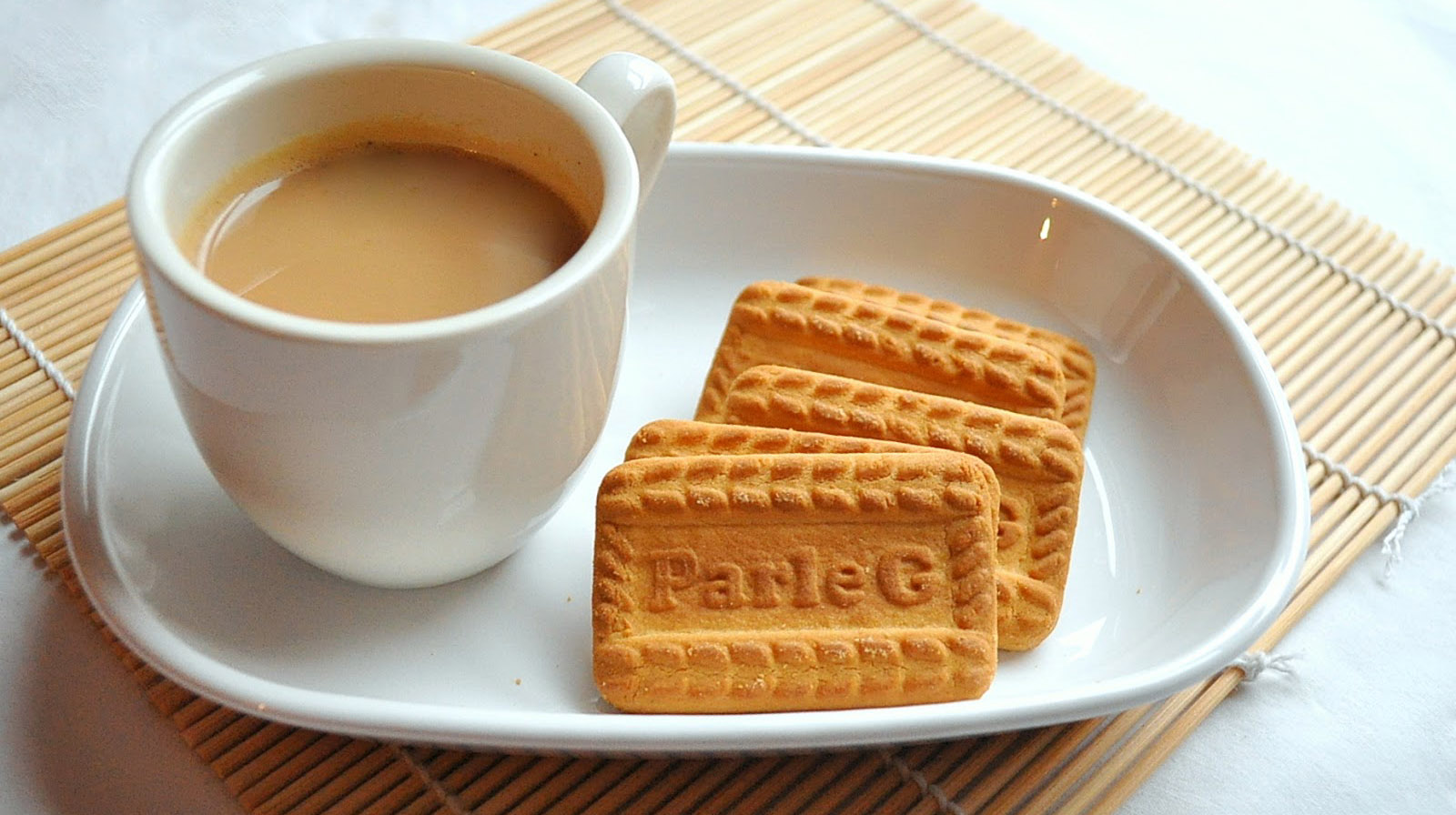
The year was in 1929. Mohanlal Dayal of the Chauhans, a Mumbai-based family of silk traders, had just bought and refurbished a decrepit, old factory to manufacture confectionery (such as boiled sweets).
Deeply influenced by the Swadeshi movement (that promoted the production and use of Indian goods), Chauhan had sailed to Germany a few years ago to learn the art of confectionery-making. He returned in 1929, armed with the required skills as well as the required machinery (imported from Germany for Rs 60,000).
Located between the sleepy villages of Irla and Parla, the small factory set up by the Chauhans employed just 12 men with the family members themselves serving in multiple capacities — as engineers, managers, and confectionery makers.
Interestingly, it is believed that the founders were so busy managing the factory that they forgot to name it.
Parle’s first product was an orange candy that was soon followed by other confectioneries and toffees. However, it was only 10 years later that it began its biscuit making operations. Even as the bugle for World War II was sounded in 1939, the company baked its first biscuit.
Back then, biscuits were mostly imported, expensive and meant for consumption by the elite classes. United Biscuits, Huntly & Palmers, Britannia and Glaxo were the prominent British brands that ruled the market.
It was to counter this trend that Parle Products launched Parle Gluco as an affordable source of nourishment for the common masses. Made in India, meant for Indian palates and accessible to every Indian, the humble biscuit quickly became popular with the public. It was also much-in-demand by the British-Indian army during World War II.
However, in 1947, a severe shortage of wheat (India was left with only 63% of its wheat cultivation area after Partition) immediately after Independence meant that the production of Parle Gluco biscuits had to stop for a while.
In 1960, Parle Products started feeling the pinch when other players in the market began launching their own glucose biscuits. For instance, Britannia launched its first glucose biscuit brand, Glucose D, and had it endorsed by Gabbar Singh (Amjad Khan’s avatar in Sholay). Confused by similar brand names, most people would just ask shopkeepers for glucose biscuits.
To battle the flood of knock-offs, the firm decided to create a packaging that would be unique to Parle Gluco while patenting its own packing machinery. The new packaging was a yellowish wax-paper wrapper with a plump little girl imprinted on it (an illustration by Everest Brand Solutions), along with the brand name and company’s red-coloured logo.
However, while the new packaging clicked with the biscuit’s target audience — kids and their mothers, it still failed to decisively distinguish Parle Gluco from the horde of “me-too” glucose biscuit brands in the market. This prompted the management to rechristen the biscuit and see if it helped it stand out from the crowd.
And so in 1982, Parle Gluco was repackaged as Parle G, with the ‘G’ standing for glucose, of course. To avoid duplication by small biscuit-makers (who sold their low-quality biscuits in a similar yellow wax paper), the packaging material was change to low-cost printed plastic.
This was quickly followed by an innovative TV commercial in which a burly Dadajiand his precocious grandchildren sang in chorus — “Swaad bhare, Shakti bhare, Parle-G”. In 1998, Parle-G found a quirky brand endorser in Shaktiman, the desisuperhero from a telly screen who was immensely popular with Indian kids.
And Parle products have not looked back since. From “G Maane Genius” and “Hindustan ki Taakat” to “Roko Mat, Toko Mat“, Parle- G’s fun yet relatable ads helped it move its image from mono-dimensional to multi-dimensional — from an energy biscuit to a source of strength and creativity.
For instance, its 2013 ad campaign encourages parents to give their kids a free hand in pursuing their dreams. The jingle, for which Gulzar lent his pen and Piyush Mishra lent his voice, celebrates “Kal ke Genius“.
These perfectly-executed campaigns and the biscuits’ reliable quality are among the key reasons for the brand’s success over the years. Today, the company boasts of astounding sales figures of over a billion packets a month. That is around a hundred million packets of Parle G every month, or 14,600 crore biscuits in the entire year, which adds up to 121 biscuits each for 1.21 billion Indians.
In fact, the biscuit is so popular that some restaurants have started using it to make high-end desserts. For example, Farzi Cafe has invented a Parle G cheesecake and Mumbai’s 145 has a Parle G Eatshake!
Nonetheless, despite its swift growth and heavy demand, the brand has remained true to its philosophy. It is consumed by people from every strata of society; from a person sitting in an urban high rise to a person in the smallest of towns. It is also the only brand that is easily available at places like a village of 100 people near the LoC.
Maybe that’s the reason this humble glucose biscuit has retained its special place in the heart of all Indians, despite new biscuits entering the market every other day
Here’s some interesting trivia to end the story of the world’s largest selling biscuit!
Source…SanchariPal in http://www.thebetterindia.com
Natarajan
 We’d bet that the vast majority of people reading this, regardless of gender, race or socioeconomic background, carry the same few basic items with them at all times; a phone, some keys, a few dollars, a debit card, and maybe some I.D are all items you’d reliably expect to find if you asked an average person on the street to turn out their pockets. But what would you find if you asked a millionaire, or even a billionaire, to do the same thing? As it turns out, it would appear you’d find they’d produce more or less the same or less from their pockets as the average Joe.
