When Telegrams Saved Lives …

Telegrams are usually associated with the dreaded death messages. But in Madurai, telegrams had also saved lives.

“I could not recall the year exactly. A death convict was about to be taken to the gallows in the Central prison here. But his death sentence was reduced in the last moment and the verdict was sent through a telegram. We rushed to the prison and handed over the message to prison authorities saving the life of the prisoner,” said S Mayandi, a telegram messenger.

“Not only that. We were the vital link during disasters like cyclones. Alert messages and flood warning were sent through telegrams till telephone was introduced. During the cyclone in 1964 at Dhanushkodi telegrams were the primary tool of communication,” recalled Nammalvar, who retired in 2001 as chief telegraph master.

Nammalvar says that they used to get weather reports from Kodaikanal observatory and send them to Chennai regularly based on which disaster management plans would be devised. “I remember even many journalists sending their reports to their offices through telegram,” he said.

Mayandi said that they used to deliver up to 500 telegrams everyday between 1980 and 1990, the peak period in telegram usage in Madurai. “During wedding season we would even get 1,000 telegrams,” he recalls. Besides death and “keep body” messages informing to postpone cremation till a close relative arrives, messages on child births, transfers, extension of leave were also sent. “We used to cycle for miles in the dark of night to deliver the messages,” says Pandian, a telegraphist. “Money was also transferred through telegrams,” he added.

“The ‘kat kada’ sound of the morse code machine used to reverberate round-the-clock in the telegraph office until teleprinters came. Sending messages using morse code is itself a great skill,” said M Periayasamy. He said that they had to undergo an eight month-long course to learn the code.

Even as the employees reminisce the past, there seems to be a sense of melancholy as the days of telegraph has come to an end. “Telegraph is a service. Government should not look at it as a business venture and shut it down as there is no profit,” sais S Sooryan, district secretary of BSNL Employees Union.

source::::::Times of India

natarajan

R I P….Dear Telegram ….

The 163-year old telegram service in the country — the harbinger of good and bad news for generations of Indians — is dead.

Once the fastest means of communication for millions of people, the humble telegram was on Sunday buried without any requiem but for the promise of preserving the last telegram as a museum piece.

Nudged out by technology — SMS, emails, mobile phones — the iconic service gradually faded into oblivion with less and less people taking recourse to it.

Started in 1850 on an experimental basis between Kolkata and DiamondHarbour, it was opened for use by the British East India Company the following year.

In 1854, the service was made available to the public.

It was such an important mode of communication in those days that revolutionaries fighting for the country’s independence used to cut the telegram lines to stop the British from communicating.

Old timers recall that receiving a telegram would be an event itself and the messages were normally opened with a sense of trepidation as people feared for the welfare of their near and dear ones.

For jawans and armed forces seeking leave or waiting for transfer or joining reports, it was a quick and handy mode of communication.

Lawyers vouched for the telegrams as they were registered under the Indian Evidence Act and known for their credibility when presented in court.


Bollywood was not to be left behind and immortalised the service with many sudden turns in films being announced by the advent of the taar.

Pockets of rural India still use the service but with the advent of technology and newer means of communication , the Telegram found itself edged out.

“The service will start at 8 am and close by 9 pm on Sunday  JULY 14 night,” BSNL CMD R K Upadhyay told PTI.

“The service will not be available from Monday.”   JULY 15

State-run telecom firm BSNL had decided to discontinue telegrams following a huge shortfall in revenue.

The service generated about Rs 75 lakh annually, compared with the cost of over Rs 100 crore to run and manage it.

Telecom and IT Minister Kapil Sibal had said last month that

“We will bid it a very warm farewell and may be the last telegram sent should be a museum piece. That’s the way in which we can bid it a warm farewell.”

There are about 75 telegram centres in the country, with less than 1,000 employees to manage them.

BSNL will absorb these employees and deploy them to manage mobile services, landline telephony and broadband services.

source:::::rediff.com

natarajan


” Uttarakhand Tragedy Casts Shame On India”s Disaster Management “

The Uttarakhand tragedy casts shame on India’s disaster management

It’s headquartered in South Delhi’s plush Safdarjung Enclave. It holds press conferences about human tragedies in luxurious five-star hotels. The Prime Minister is its ex officio chairman, and its vice-chairman equals a Cabinet minister in status. Other members, mostly retired bureaucrats and police officers, rub shoulders with ministers of state. Welcome to the National Disaster Management Authority (NDMA).


With its performance – or more accurately, the abysmal lack of it – in the rain-ravaged Himalayan state exposing its defunct status, the NDMA stands exposed for the great man-made tragedy it is.


Its National Executive Committee has not met at all between 2008 and 2012. Seven years after it came into being, the authority doesn’t even have a working plan.


 Rescue operation: The armed forces have worked tirelessly to help flood victims, but why was the NDMA's role so unsatisfactory?
Rescue operation: The armed forces have worked tirelessly to help flood victims, but why was the NDMA’s role so unsatisfactory?


The Comptroller and Auditor General (CAG) has slammed the NDMA’s functioning in a report tabled in March 2013. Most NDMA projects, conceptualised soon after it was constituted in May 2005, have failed to get started.


The body formally came into existence in September 2006. Projects like earthquakes, flood and landslide risk mitigation have been in cold storage despite being approved way back in 2007. Due to improper planning, projects are abandoned midway or are lying incomplete.

A senior bureaucrat in a state government who closely worked with the NDMA in the last two years explains what plagues this body.

“The absence of strong leadership at the centre of this body is a key problem. Since the prime minister is its ex officio chairman, the onus of leading it on a day-today basis falls on the vice chairman,” he says.

According to the officer, the NDMA, which has several senior retired bureaucrats as members, needs a very strong vice-chairman.

“At present, we’ve felt many times that there is a lack of coordination in the chain of command,” the officer says.

All that translates into a disaster: evaluation of the disaster preparedness at all levels of government has taken a severe hit. The Uttarakhand situation underlines this with blood.

NDMA chief M. Shashidhar Reddy doesn’t agree. He puts the onus for the NDMA’s latest failure on the meteorological department.

“Lives could have been saved if the weather office had issued precise forecasts. The IMD followed a standard format of weather forecast and used certain terminologies like rainfall, heavy rainfall, but how are we supposed to translate it into action? They need to pinpoint where and how much it is going to rain,” he says.

The white elephant

Not even the most terrible statistics can wake the NDMA. For instance, the CAG says that as much as 59 per cent of the nation’s land area is prone to moderate and severe earthquakes; 23,000 lives were lost in six major earthquakes between 1990 and 2006. And it doesn’t take an official report to realise that landslides in the hills and floods in some parts of the country are an annual feature.

Some of the key roles that the NDMA is expected to perform are: lay down policy on disaster management, approve national Disaster Management plan, lay down guidelines to be followed by Central ministries and state authorities, and provide such support to other countries affected by major disasters.


“The performance of NDMA in terms of project implementation had been abysmal. So far, no major project taken by NDMA had seen completion. It was noticed that NDMA selected projects without proper ground work and as a result either the projects were abandoned midway or were incomplete after a considerable period,” the CAG report says.

“In many cases, NDMA realised midway that some other agency was already executing projects with similar objectives. Timelines in most of its projects were absent and where ever they were given, they were not adhered to,” it says.

Reddy’s response? “We are ready to work on it but the government auditor needs to be sensitised about disasters,” says the NDMA chief.

The National Disaster plan (NDP) hasn’t been formulated even after seven years of the enactment of the Disaster Management Act. The NDP was to define the guidelines for prevention of disasters, preparedness and roles and responsibilities of different arms of the government.

One of the key objectives of the NDMA is proactive prevention of loss of life and property in disasters. Even here the NDMA has failed miserably

MAIL TODAY COMMENT

The less-than-satisfactory role played by the NDMA in the relief and rescue operations in Uttarakhand raises serious questions over its relevance.

Created to serve as the nodal agency in times of emergency, the NDMA has instead served to provide sinecures for out-of-work politicos and retired babus.

How seriously it takes its job is evident from the fact that its national executive committee didn’t meet even once between May 2008 and September 2012.

 ABHISHEK BHALLA and BHUVAN BAGGA   in mailonline.com  India

natarajan

” It is Time to Repent For Turning Uttarakhand into Honeymoon spot “…..

Sheela Bhatt  from  New Delhi for rediff.com


In a twist to people’s understanding of Uttarakhand’s monsoon mayhem, Dwarka peeth Shankaracharya Swami Shree Swaroopananda Saraswati has blamed the sex-food-fun oriented consumerism propagated by tour operators in the land otherwise known as “dev bhoomi” for the plight of thousands of pilgrims.

In a telephonic interview from his ashram near Haridwar, the Shankaracharya told rediff.com, “Uttarakhand is the land of gods and goddesses. Here Lord Shiva holds Ganga in his jata (hair). It is the highest tapsaya (penance) possible. Shiva bore the force of the Ganga all alone so that she can flow seamlessly. How can you have honeymoon tourism in Uttarakhand instead of pilgrimage to cleanse the soul and attain nirvana?”

Asserting that these mountains were not for the newly-married to enjoy their honeymoon, the religious leader suggested that the disaster was also brought upon due to the dams that have been built on rivers of Uttarakhand.

Dwarka peeth Shankaracharya Swami Shree Swaroopananda Saraswati

He said, “I want government to find out the sphatik statue of Shankaracharya’s samadhi near Kedarnath temple. It is part of our heritage. I am deeply pained to see so many deaths. I want the government to act now and stop promoting dubious tourism. There should be complete ban on building of dams as well.”

Hailing the Kedarnath temple as a national monument, he said: “The rest of India should help Uttarakhand maintain its environment. The lack of development will create shortage of electricity, but the rest of India should supply electricity in this divinely natural region. We must protect our ancient rivers at all cost. Seventy percent of the water from Bhagirathi and Alaknanda rivers will deplete if we build dams recklessly.”

The Shankaracharya also said that the government should clean the temple complex as soon as possible.

“The government must cleanse the Kedarnath temple with panchamrut (A mixture of milk, curd, clarified butter, honey and sugar). It is time to repent for our wrong deeds.”

Some Images of Nature”s Fury …. For How long Nature will also tolerate our atrocities against Nature ?  one day it will burst like this one …

Natarajan


Road torn up by river during Ganga Fury exactly above the final confluence of the Ganga at Devprayag


A pilgrim is helped by a villager as she tries to cross on a pathway damaged by landslide in Rudraprayag in the Himalayan state of Uttarakhand


source:::::rediff.com

natarajan


Stunning Images Of The Week!!!!….Part 2 !!!

15 STUNNING photos from the week that was!

A sculpture titled ‘Pentateuque’ representing an elephant balancing on the back of a man by French artist Fabien Merelle on May 23, 2013 in Hong Kong.

Austrian tightrope walker Christian Waldner passes the roof of St. Stephens cathedral on a high line in Vienna.

The line was fixed between St. Stephen’s cathedral’s two south towers 60 meters above ground.


Model Hannah Fraser dressed as a mermaid swims in an aquarium to promote the film “Tears of a Mermaid” in Cannes during the 66th Cannes Film Festival May.

Liu Lingchao, 38, carries his makeshift dwelling as he walks along a road in Shapu township of Liuzhou, Guangxi Zhuang autonomous region.

Five years ago, Liu decided to walk back to his hometown Rongan county in Guangxi from Shenzhen, where he once worked as a migrant worker. With bamboo, plastic bags and bed sheets, Liu made himself a 1.5-metre-wide, 2-metre-high, “portable room” weighing about 60 kg, to carry with him as he walks an average of 20 kilometres everyday.

To support himself, Liu collects garbage all the way during the journey and he is now 20 miles away from his hometown, according to local media.

car is seen in the water as a span of highway bridge sits in the Skagit River, 2013 after collapsing near the town of Mt Vernon, Washington late Thursday.

The bridge collapse that sent cars and drivers tumbling into a frigid river in Washington state appears to have been caused when a semi-trailer truck carrying an oversize load struck a bridge support beam, officials said on Friday.

The truck crossed the bridge safely before a portion of the structure collapsed, sending two vehicles and a mass of concrete and steel into the Skagit River.

Three people had to be rescued, officials said.   


A man carries his wife as they wade through a flooded street in Zhuhai, Guangdong province. Heavy rainfall since Saturday has killed two people in south China’s Guangdong Province, bringing the death toll resulting from rainstorms to 36 this year.

A pedestrian carrying an umbrella walks through a Memorial Day display of United States flags on the Boston Common in Boston, Massachusetts.

According to the Massachusetts Military Heroes Fund, the flags are planted on the Common for fallen Massachusetts service members at the Memorial Day holiday, which will be celebrated May 27 in the United States.

The clouds of a thunderstorm roll over neighborhoods heavily damaged in a tornado in Moore, Oklahoma.

A house built on a rock on the river Drina is seen near the western Serbian town of Bajina Basta, about 160km from the capital Belgrade.

The house was built in 1968 by a group of young men who decided that the rock on the river was an ideal place for a tiny shelter, according to the house’s co-owner, who was among those involved in its construction.


A shepherd holds an umbrella as he watches over his flock of goats at the bank of Mahanadi river in Cuttack district, about 45 km from Bhubaneswar.

A man tows a damaged car from a property in Moore, Oklahoma, four days after the Oklahoma City suburb was left devastated by a tornado.

Tornadoes that struck the United States from May 18 to May 20 caused between $2 billion to $5 billion of insured losses, disaster modeling company Eqecat said late Thursday.

Eqecat said most of the losses were attributed to the tornado that devastated Moore, Oklahoma. That storm, with winds that exceeded 320 kph, killed 24 and flattened two elementary schools

15 STUNNING photos from the week that was!

A week-old shire horse foal rest her head on her mother Orla at Cornwall’s Crealy Adventure Park near Wadebridge, England.

Once a common sight in the United Kingdom, shire horses are now classed as “at risk” by the Rare Breed Survival Trust.

The yet-to-be-named filly foal, bred in a breeding programme by the adventure park as part of a endangered species prtotection project, will be one of less than 300 predicted to be born in the country this year.

A man collects water as he bathes in an industrial waste-foam polluted section of the Yamuna River, on the outskirts of New Delhi.

The Yamuna River, holy to Hindus, traverses various urban centers like Delhi, Mathura, and Agra. These large urban centers draw fresh river water for various activities. In return, almost the entire waste water generated by these centers is disposed off into the river.

This is the prime reason for deterioration of Yamuna River water quality, according to the Central Pollution Control Board.

source::::rediff.com

Natarajan

Stunning Images of The Week !!!

Storm surge  A man run away as waves crash over a barrier in Yantai, Shandong Province, China. Strong storms have battered the country’s coast.


Battling the blazeA plane drops fire-dousing chemicals near Santa Barbara, California, during attempts to quell a 170-acre grass fire. Some 2,000 people were evacuated.


Ferry cross the murkyA boat navigates past the Sydney Harbour bridge in Australia amidst thick fog. Flights and ferry services were delayed as a blanket of fog covered the city.


Animatronic apeDesigner Sonny Tilders unveils a six-metre tall, 1.1-tonne gorilla created for the world premiere of the King Kong musical in Melbourne, Australia.


Rising rocketA Soyuz TMA-09M spacecraft is lifted to its launch pad at the Baikonur cosmodrome in Kazakhstan. Three astronauts blasted into space on 29 May.


Breaking the cageTwo bears seen through the bars of a private zoo near a restaurant in Pristina, Kosovo. A campaign has been launched to free bears kept in such conditions.


From sea to airA Japanese US-2 seaplane takes off. Japan has just signed a contract to provide the aircraft to India – the first time Tokyo has exported arms since 1967. (


source::::bbc.com

Natarajan


Indian American “Sri” Srinivasan Creates History as Top US Judge !!!


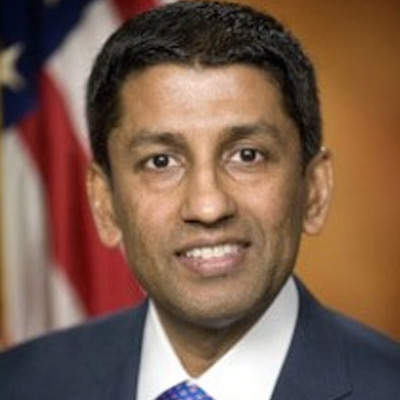
The India-Srinivasan, 46, currently principal deputy solicitor general of the US, was Thursday confirmed by the Senate by a 97 to 0 vote, as a judge on the US Court of Appeals for the District of Columbia Circuit.

Sri Srinavasan.

Sri Srinavasan. – Wikimedia Commons

Chandigarh-born “trailblazer” Indian-American legal luminary Srikanth ‘Sri’ Srinivasan has made history with the US Senate unanimously confirming him as the first South Asian judge on the powerful appeals court for the American capital.

Srinivasan, 46, currently principal deputy solicitor general of the US, was Thursday confirmed by the Senate by a 97 to 0 vote, as a judge on the US Court of Appeals for the District of Columbia Circuit, often called the nation’s second-highest court.

“Pleased” at the unanimous confirmation of his nominee “the first one to this important court in seven years,” President Barack Obama said “Sri is a trailblazer who personifies the best of America.”

“Born in Chandigarh, India, and raised in Lawrence, Kansas, Sri spent nearly two decades as an extraordinary litigator before serving” in his current job, Obama noted predicting, “Now he will serve with distinction on the federal bench.”

“Sri will in fact be the first South Asian American to serve as a circuit court judge in our history,” he said as he pressed the Senate to act quickly to fill the three remaining vacancies on the appeals court “as well as other vacancies across the country”.

The 11-member court has been operating with just seven judges – four Republican and four Democratic nominees – throughout Obama’s tenure.

The influential Washington Post described Srinivasan’s confirmation as significant for Obama “hoping to shift the conservative tilt of the court, which is poised to rule on several key elements of his second-term agenda in the months ahead.”

In fact like many other analysts Post noting that four of the Supreme Court’s current nine justices served on the DC Circuit suggested “With the vote, Srinivasan also becomes a front-runner to be nominated for a Supreme Court vacancy should one arise in the next three years.”

For USA Today “It was just the latest chapter in a stellar legal career that has taken the 46-year-old litigator known as “Sri” to a seat on the nation’s second most powerful court – and given him instant buzz as a potential Supreme Court justice himself.”

Even before his 18-0 approval by Senate Judiciary Committee last month, the New Yorker suggested: “The stakes in this nomination are clear: if Srinivasan passes this test and wins confirmation, he’ll be on the Supreme Court before President Obama’s term.”

Ian Millhiser, a senior constitutional policy analyst at the Centre for American Progress Action Fund agreed that “Srinivasan may indeed emerge as a leading candidate for the Supreme Court.”

“In the mean time,” he suggested there were “ten potential Democratic Supreme Court nominees who aren’t named ‘Sri'”. Among them, he named California’s Indian-African-American Attorney General Kamala Harris, and Indian-American Neal Kumar Katyal, whom Srinivasan succeded.

Srinivasan’s family immigrated to the US when he was four. He grew up in Lawrence, Kansas, where his father was a mathematics professor at the University of Kansas, and his mother taught at the Kansas City Art Institute.

He received his BA with honours and distinction in 1989 from Stanford University and his JD with distinction in 1995 from Stanford Law School, where he was elected to Order of the Coif and served as an editor of the Stanford Law Review.

He received the Attorney General’s Award for Excellence in Furthering US National Security in 2003 and the Office of the Secretary of Defence Award for Excellence in 2005.


source :::: google news …dna

Natarajan

You Can Not Multiply The Wealth by Dividing It !!!

When the reward is great, the effort to succeed is great,

but when government takes all the reward away,

no one will try or want to succeed !!!

An economics professor at a local college made a statement that he had never failed a single student before, but had recently failed an entire class. That class had insisted that socialism worked and that no one would be poor and no one would be rich, a great equalizer.

The professor then said, “OK, we will have an experiment in this class on Socialist’s plan”. All grades will be averaged and everyone will receive the same grade so no one will fail and no one will receive an A…. (substituting grades for dollars – something closer to home and more readily understood by all).

After the first test, the grades were averaged and everyone got a B. The students who studied hard were upset and the students who studied little were happy. As the second test rolled around, the students who studied little had studied even less and the ones who studied hard decided they wanted a free ride too so they studied little.

The second test average was a D! No one was happy.

When the 3rd test rolled around, the average was an F.

As the tests proceeded, the scores never increased as bickering, blame and name-calling all resulted in hard feelings and no one would study for the benefit of anyone else.

To their great surprise, ALL FAILED and the professor told them that socialism would also ultimately fail because when the reward is great, the effort to succeed is great, but when government takes all the reward away, no one will try or want to succeed.

These are possibly the 5 best sentences you’ll ever read and all applicable to this experiment:

1. You cannot legislate the poor into prosperity by legislating the wealthy out of prosperity.

2. What one person receives without working for, another person must work for without receiving.

3. The government cannot give to anybody anything that the government does not first take from somebody else.

4. You cannot multiply wealth by dividing it!

5. When half of the people get the idea that they do not have to work because the other half is going to take care of them, and when the other half gets the idea that it does no good to work because somebody else is going to get what they work for, that is the beginning of the end of any nation.

source:Mr.Rajendra Deshpande& Mr.A.V.Ramanathan


Natarajan

Princie Diamond: Rare Indian Gem Sells for $39m !!!!

The Princie Diamond

 
All four of the world’s top pink diamonds have been found at Golconda…

One of the largest pink diamonds in the world has been sold at auction for more than $39.3m (£25m).

The Princie Diamond was purchased by an anonymous collector bidding by phone, Christie’s in New York said.

The 34.65 carat diamond’s origin can be traced back to the ancient diamond mines of Golconda in southern India.

It once belonged to the royal family of Hyderabad, rulers of one of the wealthiest provinces of Mughal India.

“The Princie Diamond carries a fabulous provenance, which brings together the legendary names of Golconda, [the] Nizam of Hyderabad, and the Maharani Sita Devi of Baroda,” said Christie’s jewellery department head Rahul Kadakia before the sale.

“The most beautiful stones discovered in Golconda were always reserved for kings and rulers as they represented the highest power, which was then magically transferred to the owner.

“It was a widely regarded belief that God’s gift to India became India’s gift to mankind and the Princie is undoubtedly one of the greatest gifts of Golconda.”

The diamond was once owned by the Nizam of Hyderabad, who was proclaimed the richest man in the world by Time magazine in 1937.

It had not seen in public since 1960 when Sotheby’s sold it as the “property of a gentleman”.

All four of the world’s top pink diamonds have been found at Golconda, Christie’s says. The area has the earliest known diamond mines in the world, producing the stones as early as 800BC.

In 2010 a diamond known as the Graff pink was sold in Geneva by Sotheby’s for $44m. At the time it was believed to be the most expensive gemstone bought at auction in history.

The two largest pink diamonds – the Darya-I Nur, weighing 175 to 195 carats, and the Nur ul-Ain, weighing about 60 carats – originally formed part of the Iranian Crown Jewels.

Experts say it has since been determined that they were cut from a single pink diamond weighing 242 carats.

Christie’s say that the Princie Diamond is believed to be the third largest pink diamond in the world and was found 300 years ago in the Golconda mines.

SOURCE:::bbc.com.news

Natarajan