Top 15 Countries With Highest Quality Of Life… Australia is Ranked No 1 !!!!

For a good chance at a happy life, head to Australia, which one again topped the Organization for Economic Cooperation and Development‘s Better Life Index, which looks at the quality of life in member countries.

The (OECD) — an international economic organization — analyzed 34 countries in 11 categories, including income, housing, jobs, community, education, environment, civic engagement, health, life satisfaction, safety, and work-life balance. (You can read the full methodology here.)

We looked at the countries with the highest overall scores, and highlighted a few of the criteria on the following slides.


#15 Ireland

Average household disposable income: $24,104

The Irish have a strong sense of community — 96% of people believe they know someone they could rely on in a time of need (higher than the OECD average of 90%).

They also rate highly in work-life balance, where the average employee works 1,543 hours a year, less than the OECD average of 1,776.

Researchers compared data from 34 countries that are members of the Organization for Economic Cooperation and Development. They based the rankings on 11 factors including income, safety, life satisfaction, and health, and then rated each country on a 10-point scale. Income is net-adjusted and in USD.

#14 Luxembourg

Average household disposable income: $23,047

Luxembourg rates well in both health and environment, with an average life expectancy of 81 years and a low level of atmospheric PM10 — tiny air pollutant particles small enough to enter and cause damage to the lungs.

Citizens also have a high participation rate in the political process, with 91% of the population turning out for recent elections.

Researchers compared data from 34 countries that are members of the Organization for Economic Cooperation and Development. They based the rankings on 11 factors including income, safety, life satisfaction, and health, and then rated each country on a 10-point scaleIncome is net-adjusted and in USD.

#13 Austria

Average household disposable income: $28,852

Austria has a high rate for education. 82% of Austrian adults ages 25-64 have earned the equivalent of a high school degree.

Austrians also have a strong sense of community, with 94% of the population reporting they know someone they could rely on in a time of need.

Researchers compared data from 34 countries that are members of the Organization for Economic Cooperation and Development. They based the rankings on 11 factors including income, safety, life satisfaction, and health, and then rated each country on a 10-point scaleIncome is net-adjusted and in USD.

#12 Finland

Average household disposable income: $25,739

Finland performed extremely well on the OECD’s Programme for International Student Assessment — the average student scored 543 in reading literacy, math, and science, whereas the average OECD score was 497.

They also have a high level of life satisfaction with 82% of the population saying they have more positive experiences than negative ones in an average day.

Researchers compared data from 34 countries that are members of the Organization for Economic Cooperation and Development. They based the rankings on 11 factors including income, safety, life satisfaction, and health, and then rated each country on a 10-point scaleIncome is net-adjusted and in USD.

#11 New Zealand

Average household disposable income: $21,892

New Zealand has one of the best rates of renewable energy of any OECD country with 36.47%.

Students also scored 524 in reading literacy, math, and science on the OECD Programme for International Student Assessment — higher than the average of 497.

And New Zealand girls outperformed boys by 15 points, higher than the average OECD gap of 9 points.

Researchers compared data from 34 countries that are members of the Organization for Economic Cooperation and Development. They based the rankings on 11 factors including income, safety, life satisfaction, and health, and then rated each country on a 10-point scaleIncome is net-adjusted and in USD.

#10 United Kingdom

#10 United Kingdom

AP/RICHARD LEWIS

Average household disposable income: $23,047

85% of the English population say they have more positive experiences in an average day than negative ones.

They also have a high life expectancy of 81 years, and 97% of the people say they are satisfied with the quality of their water.

Researchers compared data from 34 countries that are members of the Organization for Economic Cooperation and Development. They based the rankings on 11 factors including income, safety, life satisfaction, and health, and then rated each country on a 10-point scaleIncome is net-adjusted and in USD.

#9 Iceland

Average household disposable income: $23,047

Iceland has high levels of civic participation — 98% of people believe they know someone they could rely on in a time of need.

97% of the Iceland population are also extremely satisfied with their water quality, and Iceland has less air pollutant particles per cubic meter than the OECD average.

Researchers compared data from 34 countries that are members of the Organization for Economic Cooperation and Development. They based the rankings on 11 factors including income, safety, life satisfaction, and health, and then rated each country on a 10-point scaleIncome is net-adjusted and in USD.

#8 Netherlands

#8 Netherlands

Average household disposable income: $25,493

People in the Netherlands only work 1,379 hours a year, significantly less than the OECD average of 1,776 hours.

They also test extremely high on the OECD’s Programme for International Student Assessment with an average of 519 (the OECD average is 497).

Researchers compared data from 34 countries that are members of the Organization for Economic Cooperation and Development. They based the rankings on 11 factors including income, safety, life satisfaction, and health, and then rated each country on a 10-point scaleIncome is net-adjusted and in USD.

#7 Denmark

#7 Denmark

Chris Jackson/Getty Images

Average household disposable income: $24,682

Denmark has one of the highest life satisfaction rankings, with 89% of the population reporting they have more positive experiences in an average day than negative ones.

The Danish also know how to balance their work life with their personal life — only 2% of employees say they work very long hours, much lower than the OECD average of 9%.

Researchers compared data from 34 countries that are members of the Organization for Economic Cooperation and Development. They based the rankings on 11 factors including income, safety, life satisfaction, and health, and then rated each country on a 10-point scaleIncome is net-adjusted and in USD.

#6 United States

#6 United States

Assouline

Average household disposable income: $38,001

The U.S. has the highest average household disposable income on the list at $38,000 a year — much higher than the OECD average of $23,000.

It also ranks as one of the best countries for housing conditions, with good basic facilities and general feelings of safety and personal space.

Researchers compared data from 34 countries that are members of the Organization for Economic Cooperation and Development. They based the rankings on 11 factors including income, safety, life satisfaction, and health, and then rated each country on a 10-point scaleIncome is net-adjusted and in USD.

#5 Switzerland

Average household disposable income: $30,060

86% of adults in Switzerland have earned the equivalent of a high school degree, and students scored 517 on the OECD Programme for International Student Assessment — higher than the average of 497.

The Swiss also have a high life expectancy at 83 years of age, and 95% of the population say they are satisfied with the quality of their water.

Researchers compared data from 34 countries that are members of the Organization for Economic Cooperation and Development. They based the rankings on 11 factors including income, safety, life satisfaction, and health, and then rated each country on a 10-point scaleIncome is net-adjusted and in USD.

#4 Norway

Average household disposable income: $31,459

There is a strong sense of community and high levels of safety in Norway, where 93% of people believe that they know someone they could rely on in a time of need.

Norwegians also tend to have a good work-life balance, with only 3% of employees working very long hours, compared to the OECD average of 9%.

Researchers compared data from 34 countries that are members of the Organization for Economic Cooperation and Development. They based the rankings on 11 factors including income, safety, life satisfaction, and health, and then rated each country on a 10-point scaleIncome is net-adjusted and in USD.

#3 Canada

Average household disposable income: $28,194

Canadians work only 1,702 hours a year — less than the OECD average — with 72% of the population working at a paid job.

There is little difference in voting levels across society too, suggesting there is broad inclusion in Canada’s democratic institutions: Voter turnout for the top 20% of the population is 63% and for the bottom 20% it is 60%, a much smaller difference than the OECD average gap of 12 percentage points.

Researchers compared data from 34 countries that are members of the Organization for Economic Cooperation and Development. They based the rankings on 11 factors including income, safety, life satisfaction, and health, and then rated each country on a 10-point scaleIncome is net-adjusted and in USD.

#2 Sweden

Average household disposable income: $26,242

Having a good education is extremely important in Sweden, where 87% of adults aged 25-64 have earned the equivalent of a high school degree.

They also ranked highly in all environmental categories. Their level of air pollutant particles is 10 micrograms per cubic meter — considerably lower than the OECD average of 21 micrograms per cubic meter — and 95% of the population is satisfied with their water quality.

Researchers compared data from 34 countries that are members of the Organization for Economic Cooperation and Development. They based the rankings on 11 factors including income, safety, life satisfaction, and health, and then rated each country on a 10-point scaleIncome is net-adjusted and in USD.

#1 Australia

Average household disposable income: $28,884

For the second year in a row, Australia is the number one happiest country in the world. And it’s not hard to see why —they rank extremely well in health, civic engagement, and housing.

The life expectancy at birth in Australia is 82 years, two years higher than the OECD average.

Australia also has exceptional voter turnout at 93% during recent elections, which is far above the OECD average of 72%.

Researchers compared data from 34 countries that are members of the Organization for Economic Cooperation and Development. They based the rankings on 11 factors including income, safety, life satisfaction, and health, and then rated each country on a 10-point scaleIncome is net-adjusted and in USD.

Read more: http://www.businessinsider.com/top-countries-on-oecd-better-life-index-2013-5?op=1#ixzz2Uh2HIE5s

source::::businessinsider.com

Natarajan
Man Invents Machine To Get Oil From Plastic !!!!


This is one of the most amazing email’s and break-through in Technology I have ever seen!!! Why aren’t we doing this now????
I think we should all do what we can to save what we are destroying! Not surprised at this at all, just a case of Japanese ingenuity and perseverance.

What is more important would be the marketing and very low cost to make it mandatory to have one of these in every home.

The sound is all in Japanese. Just read the subtitles and watch.

What a great discovery!

Natarajan

Do You Know ?….Farmers From Bihar Have a Solution to World Food Shortage !!!

India’s rice revolution

In a village in India’s poorest state, Bihar, farmers are growing world record amounts of rice – with no GM, and no herbicide. Is this one solution to world food shortages?

Sumant KumarView larger picture

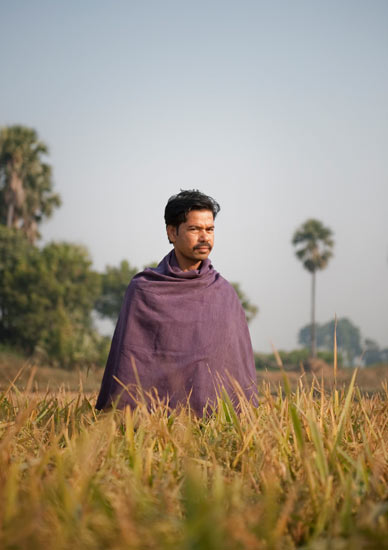
Sumant Kumar photographed in Darveshpura, Bihar, India. Photograph: Chiara Goia for Observer Food Monthly

Sumant Kumar was overjoyed when he harvested his rice last year. There had been good rains in his village of Darveshpura in north-eastIndia and he knew he could improve on the four or five tonnes per hectare that he usually managed. But every stalk he cut on his paddy field near the bank of the Sakri river seemed to weigh heavier than usual, every grain of rice was bigger and when his crop was weighed on the old village scales, even Kumar was shocked.

This was not six or even 10 or 20 tonnes. Kumar, a shy young farmer in Nalanda district of India’s poorest state Bihar, had – using only farmyard manure and without any herbicides – grown an astonishing 22.4 tonnes of rice on one hectare of land. This was a world record and with rice the staple food of more than half the world’s population of seven billion, big news.

Link to video: Rice farming in India: ‘Now I produce enough food for my family’It beat not just the 19.4 tonnes achieved by the “father of rice”, the Chinese agricultural scientist Yuan Longping, but the World Bank-funded scientists at the International Rice Research Institute in the Philippines, and anything achieved by the biggest European and American seed and GM companies. And it was not just Sumant Kumar. Krishna, Nitish, Sanjay and Bijay, his friends and rivals in Darveshpura, all recorded over 17 tonnes, and many others in the villages around claimed to have more than doubled their usual yields.

The villagers, at the mercy of erratic weather and used to going without food in bad years, celebrated. But the Bihar state agricultural universities didn’t believe them at first, while India’s leading rice scientists muttered about freak results. The Nalanda farmers were accused of cheating. Only when the state’s head of agriculture, a rice farmer himself, came to the village with his own men and personally verified Sumant’s crop, was the record confirmed.

A tool used to harvest riceA tool used to harvest rice. Photograph: Chiara GoiaThe rhythm of Nalanda village life was shattered. Here bullocks still pull ploughs as they have always done, their dung is still dried on the walls of houses and used to cook food. Electricity has still not reached most people. Sumant became a local hero, mentioned in the Indian parliament and asked to attend conferences. The state’s chief minister came to Darveshpura to congratulate him, and the village was rewarded with electric power, a bank and a new concrete bridge.

That might have been the end of the story had Sumant’s friend Nitish not smashed the world record for growing potatoes six months later. Shortly after Ravindra Kumar, a small farmer from a nearby Bihari village, broke the Indian record for growing wheat. Darveshpura became known as India’s “miracle village”, Nalanda became famous and teams of scientists, development groups, farmers, civil servants and politicians all descended to discover its secret.

When I meet the young farmers, all in their early 30s, they still seem slightly dazed by their fame. They’ve become unlikely heroes in a state where nearly half the families live below the Indian poverty line and 93% of the 100 million population depend on growing rice and potatoes. Nitish Kumar speaks quietly of his success and says he is determined to improve on the record. “In previous years, farming has not been very profitable,” he says. “Now I realise that it can be. My whole life has changed. I can send my children to school and spend more on health. My income has increased a lot.”

What happened in Darveshpura has divided scientists and is exciting governments and development experts. Tests on the soil show it is particularly rich in silicon but the reason for the “super yields” is entirely down to a method of growing crops called System of Rice (or root) Intensification (SRI). It has dramatically increased yields with wheat, potatoes, sugar cane, yams, tomatoes, garlic, aubergine and many other crops and is being hailed as one of the most significant developments of the past 50 years for the world’s 500 million small-scale farmers and the two billion people who depend on them.

People work on a rice field in BiharPeople work on a rice field in Bihar. Photograph: Chiara GoiaInstead of planting three-week-old rice seedlings in clumps of three or four in waterlogged fields, as rice farmers around the world traditionally do, the Darveshpura farmers carefully nurture only half as many seeds, and then transplant the young plants into fields, one by one, when much younger. Additionally, they space them at 25cm intervals in a grid pattern, keep the soil much drier and carefully weed around the plants to allow air to their roots. The premise that “less is more” was taught by Rajiv Kumar, a young Bihar state government extension worker who had been trained in turn by Anil Verma of a small Indian NGO called Pran (Preservation and
Proliferation of Rural Resources and Nature), which has introduced the SRI method to hundreds of villages in the past three years.

While the “green revolution” that averted Indian famine in the 1970s relied on improved crop varieties, expensive pesticides and chemical fertilisers, SRI appears to offer a long-term, sustainable future for no extra cost. With more than one in seven of the global population going hungry and demand for rice expected to outstrip supply within 20 years, it appears to offer real hope. Even a 30% increase in the yields of the world’s small farmers would go a long way to alleviating poverty.

“Farmers use less seeds, less water and less chemicals but they get more without having to invest more. This is revolutionary,” said Dr Surendra Chaurassa from Bihar’s agriculture ministry. “I did not believe it to start with, but now I think it can potentially change the way everyone farms. I would want every state to promote it. If we get 30-40% increase in yields, that is more than enough to recommend it.”

The results in Bihar have exceeded Chaurassa’s hopes. Sudama Mahto, an agriculture officer in Nalanda, says a small investment in training a few hundred people to teach SRI methods has resulted in a 45% increase in the region’s yields. Veerapandi Arumugam, the former agriculture minister of Tamil Nadu state, hailed the system as “revolutionising” farming.

SRI’s origins go back to the 1980s in Madagascar where Henri de Laulanie, a French Jesuit priest and agronomist, observed how villagers grew rice in the uplands. He developed the method but it was an American, professor Norman Uphoff, director of the International Institute for Food, Agriculture and Development at Cornell University, who was largely responsible for spreading the word about De Laulanie’s work.

Given $15m by an anonymous billionaire to research sustainable development, Uphoff went to Madagascar in 1983 and saw the success of SRI for himself: farmers whose previous yields averaged two tonnes per hectare were harvesting eight tonnes. In 1997 he started to actively promote SRI in Asia, where more than 600 million people are malnourished.

“It is a set of ideas, the absolute opposite to the first green revolution [of the 60s] which said that you had to change the genes and the soil nutrients to improve yields. That came at a tremendous ecological cost,” says Uphoff. “Agriculture in the 21st century must be practised differently. Land and water resources are becoming scarcer, of poorer quality, or less reliable. Climatic conditions are in many places more adverse. SRI offers millions of disadvantaged households far better opportunities. Nobody is benefiting from this except the farmers; there are no patents, royalties or licensing fees.”

Rice seedsRice seeds. Photograph: Chiara GoiaFor 40 years now, says Uphoff, science has been obsessed with improving seeds and using artificial fertilisers: “It’s been genes, genes, genes. There has never been talk of managing crops. Corporations say ‘we will breed you a better plant’ and breeders work hard to get 5-10% increase in yields. We have tried to make agriculture an industrial enterprise and have forgotten its biological roots.”

Not everyone agrees. Some scientists complain there is not enough peer-reviewed evidence around SRI and that it is impossible to get such returns. “SRI is a set of management practices and nothing else, many of which have been known for a long time and are best recommended practice,” says Achim Dobermann, deputy director for research at the International Rice Research Institute. “Scientifically speaking I don’t believe there is any miracle. When people independently have evaluated SRI principles then the result has usually been quite different from what has been reported on farm evaluations conducted by NGOs and others who are promoting it. Most scientists have had difficulty replicating the observations.”

Dominic Glover, a British researcher working with Wageningen University in the Netherlands, has spent years analysing the introduction of GM crops in developing countries. He is now following how SRI is being adopted in India and believes there has been a “turf war”.

“There are experts in their fields defending their knowledge,” he says. “But in many areas, growers have tried SRI methods and abandoned them. People are unwilling to investigate this. SRI is good for small farmers who rely on their own families for labour, but not necessarily for larger operations. Rather than any magical theory, it is good husbandry, skill and attention which results in the super yields. Clearly in certain circumstances, it is an efficient resource for farmers. But it is labour intensive and nobody has come up with the technology to transplant single seedlings yet.”

But some larger farmers in Bihar say it is not labour intensive and can actually reduce time spent in fields. “When a farmer does SRI the first time, yes it is more labour intensive,” says Santosh Kumar, who grows 15 hectares of rice and vegetables in Nalanda. “Then it gets easier and new innovations are taking place now.”

In its early days, SRI was dismissed or vilified by donors and scientists but in the past few years it has gained credibility. Uphoff estimates there are now 4-5 million farmers using SRI worldwide, with governments in China, India, Indonesia, Cambodia, Sri Lanka and Vietnam promoting it.

Sumant, Nitish and as many as 100,000 other SRI farmers in Bihar are now preparing their next rice crop. It’s back-breaking work transplanting the young rice shoots from the nursery beds to the paddy fields but buoyed by recognition and results, their confidence and optimism in the future is sky high.

Last month Nobel prize-winning economist Joseph Stiglitz visited Nalanda district and recognised the potential of this kind of organic farming, telling the villagers they were “better than scientists”. “It was amazing to see their success in organic farming,” said Stiglitz, who called for more research. “Agriculture scientists from across the world should visit and learn and be inspired by them.”

A man winnows rice in Satgharwa villageA man winnows rice in Satgharwa village. Photograph: Chiara GoiaBihar, from being India’s poorest state, is now at the centre of what is being called a “new green grassroots revolution” with farming villages, research groups and NGOs all beginning to experiment with different crops using SRI. The state will invest $50m in SRI next year but western governments and foundations are holding back, preferring to invest in hi-tech research. The agronomist Anil Verma does not understand why: “The farmers know SRI works, but help is needed to train them. We know it works differently in different soils but the principles are solid,” he says. “The biggest problem we have is that people want to do it but we do not have enough trainers.

“If any scientist or a company came up with a technology that almost guaranteed a 50% increase in yields at no extra cost they would get a Nobel prize. But when young Biharian farmers do that they get nothing. I only want to see the poor farmers have enough to eat.”


source:::: John Vidal in The Observer  UK

Natarajan

Message For The Day….Continue to Love , You Will be Loved In Return…

The others are part of yourself. You need not worry about them. Worry about yourself that is enough. When you become all right, they too will be all right, for you will no longer be aware of them as separate from you. Criticising others, finding fault with them, etc. – all this comes out of egoism. Search for your own faults instead. The faults you see in others are but reflection of your own personality traits. Pay no heed to little worries; attach your mind to the Lord. Then, you will be led onto the company of good people and your talents will be transmuted. Consider everyone as the children of the Lord, as your own brothers and sisters, develop the quality of love and seek always the welfare of humanity. Be like the bee, drinking the nectar of every flower, not like the mosquito drinking blood and distributing disease in return. If you continue to love, you will be loved in return.
– Divine Discourse, Jul 25, 1958.

Sathya Sai Baba

Failure is the First Step To Success !!!!

MOST SUCCESSFUL PEOPLE WHO FAILED AT FIRST

The quote, You  are only as good as your last success should actually be rephrased to,  you are only as bad as your last failure.

You can’t possibly be a failure every single time.
You’ll find success if you work hard, plan well, and don’t give up
Like the 10 most successful failures of all time.

10. Michael Jordan

Michael Jordan failed getting into his varsity basketball team during sophomore year because he was clumsy and was only 5 feet 11 inches tall
High school and college sports performances are what NBA recruiters look into when scouting for talent, but Jordan had failed right from the start.
So, he locked himself up in his room to cry.

But he tried out again the next year and got into the junior varsity team.
He practiced the game every day and grew taller by a few more inches until he honed his skills to an unbelievable level. Years later, he became the NBAs most famous MVP and the greatest basketball player of all time.

9. Lucille Ball

Lucille was booted out of New Yorks John Murray Anderson School for the Dramatic Arts for being too scared to perform. After that, she kept going back and forth New York as a fashion model and actress, getting fired from at least two stage productions
She went to Hollywood, got a contract with Metro-Goldwyn-Mayer, but her best efforts got her only in B-movies.

Eventually, she found her way into radio then television, a new entertainment medium back in the 1940s and 1950s
She and her husband Desi Arnaz launched the I Love Lucyshow on CBS, which went on to become one of the longest-running TV shows in history, and making her a famous comedienne.

8. Steven Spielberg

As a dyslexic young man, Spielbergs application to the University of Southern Californias School of Theater, Film, and Television was rejected thrice
He went to California State University in Long Beach instead, but ended up dropping out of it anyway.

His directorial debut was Sugarland Expresspraised by critics, but a box office failure.
Nevertheless, Spielberg forged ahead and was given the chance to film big-budgeted hits such as Jaws,ïClose Encounters of the Third Kind,ïET,ïRaiders of the Lost Ark,ïand Jurassic Park.ï
But the Academy of Motion Picture Arts Sciences snubbed him for years, and avoided giving him the Best Director award until 1993, when he made Schindlers List.ï
From then on, he was recognized as an A-list Hollywood director and a major artistic force in film history.

7. Walt Disney

Walt Disney was once a young artist whose editor fired him because he reportedly lacked imagination or good ideas. Disney wanted to start a company creating animated short films
But his first few tries failed; at one point he even lost some of his employees and the rights to his own animated character (Oswald the Rabbit) to Universal Pictures
But eventually, he built a gigantic entertainment empire that churned out classic characters (Donald Duck and Mickey Mouse) and ground-breaking animated films like Snow White, and Sleeping Beauty.

6.Oprah Winfrey

TVs queen of talk grew up with poverty and child abuse.
She tried her hand at being a television reporter
But she was fired from her TV job because she wasn’t considered fit for TV.
Emotional problems stemming from childhood had made her eat obsessively, creating her weight problem.
She also tried smoking crack cocaine, and had a number of disastrous romantic relationships.

But she reinvented herself as a talk show host, producing and starring in her own Oprah Winfrey Show
She changed the way talk shows were conducted by focusing on geopolitics, health, spirituality, and charity
Her show went on to become the most viewed talk show on the planet, turning Oprah into a billionaire.

5. Winston Churchill

Churchill was a rebellious boy who never did well in school, even failing sixth grade. He had a lisp and a stutter.
He tried his hand at building a military and political career, but he failed at nearly every election he ran in.
In later years, he was politically isolated from even the British Conservative party he worked with, his political reputation so in tatters that he exiled himself temporarily from Parliament and the House of Commons.

But Churchill was among the first to see the dangers of Nazi Germany, and managed to become Britains Prime Minister at age 62 during World War II.

His steadfastness helped inspire British resistance against Hitler, all the way to the defeat of the Nazis, securing him the title of Greatest Briton of All Time.

4. Albert Einstein

People thought Einstein was a slow young man.

He hated the regimented ways of school.

At the age of 16, he failed the entrance exams at the Swiss Federal Polytechnic in Zurich, and had to a smaller school instead.

Though he managed to get a teaching diploma from the Swiss Polytechnic later on, it took him two long years to find any job at all.
And when he did, it was for the Swiss Patent Office as an assistant examiner for patents.
But he tried writing his own scientific papers and thesis from 1901 to 1905 (including one on the theory of special relativity), which were so groundbreaking that by 1909 he became recognized as a leading scientist and one of the most brilliant minds in human history.

3. J. K. Rowling

At one point, the famous author of the Harry Potter books was a broke, unemployed, and depressed divorced mother feeding her children through welfare.

She was cradling a baby even as she wrote her manuscript for Harry Potter and the Sorcerers Stone in a caf, trying to write, eat, and get her child to sleep.
Her book proposal was rejected by no less than twelve publishing houses.

But after the Bloomsbury publishing house agreed to publish the book, it won so much acclaim and sold so many copies that Rowling could afford to write the rest of the Harry Potter seriesbecoming even richer than Britains Queen.

2. Steve Jobs

Jobs redefined the way the world used personal computers, through the company he founded, Apple, Inc.
He created Mac computers and the GUI (Graphical User Interface).
But he rubbed a lot of people the wrong way with his driven personality.
By age of 30, the board of directors of the very company he built fired him, leaving him humiliated and depressed.

But he started another company (NeXT Computer), which developed the next-generation personal computer technology, and bought Lucasfilms computer graphics division and renamed it Pixar.

When a failing Apple, Inc. asked Jobs to return to their helm, he again took over and eventually made Apple, Inc. one of the most innovative and profitable companies on the planet.

1. Abraham Lincoln

The 16th President of the United States who was responsible for ending slavery in his country was the self-educated son of a country frontier family.

He tried starting his own businesses and a political career, but because of the lack of education, powerful connections, or money, he failed at two businesses and in eight elections.

When he got married to Mary Todd, they had four sons, but three of them died early on from illnesstriggering clinical depression in Lincoln.

But by 1860, Lincoln got nominated to be the Democratic candidate to the presidency.
He won the elections, and as President of the United States oversaw the Civil War to its very end, with the emancipation of African-American slaves.

source::::unknown…input from a friend of mine…

Natarajan

” It is None Of My Business ” !!!

Its none of my Business…!!!

“Well, then… Jesus said, give to Caesar what belongs to Caesar and give to God what belongs to God..” (Mark-12:17- Holy Bible)
I like this statement. It has many deep interpretations..

One of it (may be mine..) is that We are not expected to do everything come in our way; even you have expertise or wisdom… Let Caesar do his and let God…

I have two challenges for writing this piece..

One: Last week, we discussed about taking call of others if it is beneficial..this week, I am arguing that we don’t have to do others work..!! I am afraid of your comment.. “Oh come on Rafeeque, your views are contradictory..!!!”

Two: This thought is very subtle. I drafted this story about ten times in mind before typing…am I able to put it across explicitly???

Let me share a couple of incidents which implanted this thought in me..

Incident # 1: 2004 Summer, I was attending a Vigilance Course at the CBI Academy, Ghaziabad, New Delhi. It was part of my employment in AAI..Though I forgot the name of the gentleman who inaugurated the session, I got stumbled upon one of his statement.. “before starting any vigilance investigation, you must confirm whether, it requires a vigilance investigation or is it a case of a disciplinary inquiry to be conducted by HR Department. At the first instance, if you feel so, do not investigate the matter but send to HR in a sealed cover for necessary action..”

Point: It is not that a vigilance officer who is not capable of investigating a disciplinary matter (most of the time..it is overlapped.. ). Because it is not his business; some one else to carry it out…

Incident #2: I was sitting in a prestigious High Court of the country, waiting for my case to board. In Courts, (for my non-lawyer friends..) each Bench would be allocated a specific nature of cases. Eg: Service matters, Labour matters, Criminal matters, Company matters etc., It was a service matter bench presided by the Chief Justice (CJ) Bench.. CJ is well known and popular by his depth in law and pro-activeness. When a counsel started arguing his matter passionately, CJ interfered and asked..

“Counsel, is it a matter involved a labor issue?”

“Yes, Me Lord..a part of it.. may be…” the lawyer admitted.

“Well, then I don’t have to hear this case. Lets transfer this to the Labour Bench..”

Point, It does not mean that the Hon’ble CJ is not acquainted with Labour matters. Rather he is an expert and has delivered land mark judgments in labor cases when he presided over the labour bench.. What he made it clear that he is not supposed to hear that matter at that point of time; it is some one else’s work…

Suddenly, both of these incidents jointly took me to a wonderful wisdom…I enjoyed it as if I cracked a life secret…!!

“Mind your own business”

It is absolutely okay to say openly that “it is none of my business” (be careful about your tone.. you will be tempted to be harsh..!!)

Yes friends, knowingly or not, we undertake many of things which may be done by some one else.. perhaps, they may be sitting quietly and enjoying it.. this happens both in professional and personal life..

the major road block for saying no to others work is the fear that the other person may think that you are a duffer…!!! it may be construed as your weakness, ignorance, excuse etc.,

Let me borrow the well known management principle “Whose Monkeys are in your shoulder ”? please check..

Often, we take other’s monkeys on our shoulder..and complain..Oh God..I am stressed…what a work load..!!

Friends, if a Chief Justice, in open court, can declare that it is not my work, if senior bureaucrats of our country can return files on the ground of not his/her area of work..Why shouldn’t we..?

I tell you, I am practicing this technique for quite a long time. Hardly I was told to take it back..in most of the cases, it works well..because, the other person knows that it is his/her work..

I believe, human being, by design, is meant to do a specific area of work ….not all..otherwise, we wouldn’t have lot of ‘subject matter experts’ around us..

Remember..so far in my experience, no employee has been rewarded by any employer because he/she used to do others work..!!!

Please note: Doing others work as a favor… is an exception to this theory

So, please have a look at your shoulder..and ensure that only your monkeys are sitting there…

Have a great week ahead !!!!!

source:::: Reblogged from the post of my friend  Rafeeque…

Natarajan

Indian American “Sri” Srinivasan Creates History as Top US Judge !!!


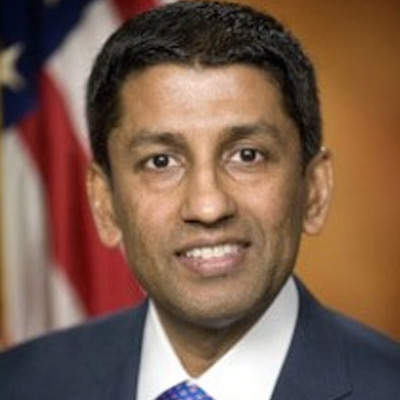
The India-Srinivasan, 46, currently principal deputy solicitor general of the US, was Thursday confirmed by the Senate by a 97 to 0 vote, as a judge on the US Court of Appeals for the District of Columbia Circuit.

Sri Srinavasan.

Sri Srinavasan. – Wikimedia Commons

Chandigarh-born “trailblazer” Indian-American legal luminary Srikanth ‘Sri’ Srinivasan has made history with the US Senate unanimously confirming him as the first South Asian judge on the powerful appeals court for the American capital.

Srinivasan, 46, currently principal deputy solicitor general of the US, was Thursday confirmed by the Senate by a 97 to 0 vote, as a judge on the US Court of Appeals for the District of Columbia Circuit, often called the nation’s second-highest court.

“Pleased” at the unanimous confirmation of his nominee “the first one to this important court in seven years,” President Barack Obama said “Sri is a trailblazer who personifies the best of America.”

“Born in Chandigarh, India, and raised in Lawrence, Kansas, Sri spent nearly two decades as an extraordinary litigator before serving” in his current job, Obama noted predicting, “Now he will serve with distinction on the federal bench.”

“Sri will in fact be the first South Asian American to serve as a circuit court judge in our history,” he said as he pressed the Senate to act quickly to fill the three remaining vacancies on the appeals court “as well as other vacancies across the country”.

The 11-member court has been operating with just seven judges – four Republican and four Democratic nominees – throughout Obama’s tenure.

The influential Washington Post described Srinivasan’s confirmation as significant for Obama “hoping to shift the conservative tilt of the court, which is poised to rule on several key elements of his second-term agenda in the months ahead.”

In fact like many other analysts Post noting that four of the Supreme Court’s current nine justices served on the DC Circuit suggested “With the vote, Srinivasan also becomes a front-runner to be nominated for a Supreme Court vacancy should one arise in the next three years.”

For USA Today “It was just the latest chapter in a stellar legal career that has taken the 46-year-old litigator known as “Sri” to a seat on the nation’s second most powerful court – and given him instant buzz as a potential Supreme Court justice himself.”

Even before his 18-0 approval by Senate Judiciary Committee last month, the New Yorker suggested: “The stakes in this nomination are clear: if Srinivasan passes this test and wins confirmation, he’ll be on the Supreme Court before President Obama’s term.”

Ian Millhiser, a senior constitutional policy analyst at the Centre for American Progress Action Fund agreed that “Srinivasan may indeed emerge as a leading candidate for the Supreme Court.”

“In the mean time,” he suggested there were “ten potential Democratic Supreme Court nominees who aren’t named ‘Sri'”. Among them, he named California’s Indian-African-American Attorney General Kamala Harris, and Indian-American Neal Kumar Katyal, whom Srinivasan succeded.

Srinivasan’s family immigrated to the US when he was four. He grew up in Lawrence, Kansas, where his father was a mathematics professor at the University of Kansas, and his mother taught at the Kansas City Art Institute.

He received his BA with honours and distinction in 1989 from Stanford University and his JD with distinction in 1995 from Stanford Law School, where he was elected to Order of the Coif and served as an editor of the Stanford Law Review.

He received the Attorney General’s Award for Excellence in Furthering US National Security in 2003 and the Office of the Secretary of Defence Award for Excellence in 2005.


source :::: google news …dna

Natarajan

” வயதான அம்மாவை விற்கலாமா ?”…பட்டென கேட்டார் மகாபெரியவர் ….

l
ஒரு நாள், தரிசனத்துக்கு வந்தவர்களிடமெல்லாம் ‘தாயாரை விற்கலாமா? வயதாகிவிட்டால், தாயாரை விற்கலாமா?‘ என்று கேட்டுக்கொண்டே இருந்தார்கள் பெரியவாள்.
தொண்டர்களுக்கு புரியவேயில்லை.
தாயாரை-வயதான தாயாரை-ஏன் விற்கணும்? விற்றாலும் யார் வாங்குவார்கள்? தாயாரை விற்றதாக கேள்விப்பட்டதில்லையே?’தாயாரை விற்க கூடாது‘ என்று எல்லோரும் ஒருமுகமாக கூறினார்கள்.’அப்படி ஓர் அநியாயம் நம்ம தேசத்திலே நடந்துண்டு இருக்கு.எந்த மாநிலத்தில்? ஹிமாச்சல் பிரதேசத்திலா? அருணாச்சல் பிரதேசத்திலா? நம்ம தமிழ் நாட்டில் தான்…தினமும் நூற்றுக்கணக்கில் விற்பனை ஆகிறது. வாங்குகிறவன் எங்கோ கொண்டு போய் விடுகிறான்…’
பெரியவாள் இவ்வளவு வருத்தப்பட்டு பேசியதை, ஆண்டாண்டு காலமாக உடனிருந்து பணி செய்யும் சீடர்கள் கேட்டதில்லை.
‘கோமாதா, கோமாதான்னு பூஜை செய்யறோம். குளிப்பாட்டறோம். குங்குமம் வெக்கறோம். பால் கறந்து காப்பி சாப்பிடறோம் (ஈஸ்வரன் கோவிலுக்கு கொடுக்கறதில்லே), ஆனா, வயசாகி போய் பால் மரத்து போச்சுன்னா, வீட்டில் வெச்சுக்கறதில்லே. கசாப்பு கடைக்காரன் கிட்டே வித்துடறோம்…அநியாயம்…சகல தேவதா ஸ்வரூபமான பசுவை இப்படி கொன்றால், பகவான் எப்படி நம்மை ரட்சிப்பார்? வசதிப்பட்டவர்கள் கோசாலை வைத்து வயதான பசுக்களை சம்ரக்ஷிக்கணும்.’
பசுவிடமிருந்து கிடைக்கும் ஐந்து பொருள்கள் – பஞ்சகவ்யம் ஈஸ்வர பூஜைக்கு தேவையானவை.
பசுக்களிடம் எல்லை இல்லாத பாசம் பெரியவாளுக்கு… அவற்றை கண்டால், கோகுலத்து கண்ணனாகவே மாறி விடுவார்கள்.
நன்றி: ஸ்ரீமடம் ஸ்ரீ பாலு மாமா அவர்கள், கச்சிமூதூர் கருணாமூர்த்தி புத்தகத்தில்…

Natarajan