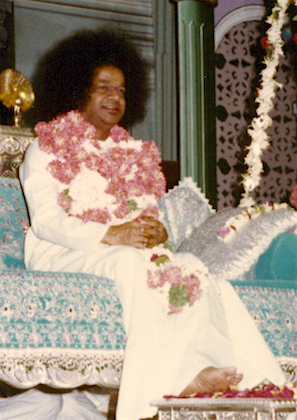
Message for the Day…” Do not waste time in idle gossip. Talk softly and sweetly, and talk as little as possible. Serve all as brothers and sisters adoring the Lord in them. Engage in sadhana; move every step as befits a person striving to realise God.”

The cow transforms grass and gruel into sweet strength-giving milk and gives it away in plenty to its master. Develop that quality, that power to transform the food you consume into sweet thoughts, words and deeds of compassion for all. When your heart is filled with virtues, the Lord will shower His Grace abundantly. Draupadi earned the Lord’s Grace through her devotion and virtues. Without steadfastness and depth of faith, none can receive Grace. Endeavour to earn Grace by observing the discipline that I am keen you should follow. Give up your old worldly ways of earning and spending, saving and accumulating with greed, lust, malice and pride. Do not waste time in idle gossip. Talk softly and sweetly, and talk as little as possible. Serve all as brothers and sisters adoring the Lord in them. Engage in sadhana; move every step as befits a person striving to realise God.

Source….http://media.radiosai.org

Natarajan

Message for the Day…”Earning and spending, laughing and weeping, hurting and healing, and the various acrobatics in daily living are but subsidiary to the adoration of God and the union with God.”

You may have witnessed chariot festivals (Rathotsavam) in pilgrimage centers. Huge temple chariots are gorgeously decorated with flags and festoons, stalwart bands of men draw them along the roads to the music of blowpipes and conches, and dancing groups and chanters precede it, adding to the exhilaration of the occasion. Thousands crowd around the holy chariot. Their attention is naturally drawn towards the entertainment, but they feel happiest only when they fold their palms and bow before the Idol in the chariot. The rest is all subsidiary, even irrelevant. So too in the process of life, body is the chariot, and the Atma is the Idol installed therein. Earning and spending, laughing and weeping, hurting and healing, and the various acrobatics in daily living are but subsidiary to the adoration of God and the union with God.

Source…http://media.radiosai.org

Message for the Day…”Respect one and all. Unless each one is respected, whatever be their status, economic condition, or spiritual development, there can be no peace and happiness in life.”

Life must be spent in accumulating and safeguarding virtue, not riches. Listen and ruminate over the stories of the great moral heroes of the past, so that their ideals may be imprinted on your hearts. Nowadays, virtue is becoming rare in the individual, family, society and community, as well as in all fields, be it economic, political and even ‘spiritual’. So also, there is a decline in discipline, which is the soil on which virtue grows. Respect one and all. Unless each one is respected, whatever be their status, economic condition, or spiritual development, there can be no peace and happiness in life. This respect can be aroused only by the conviction that the same Atma (Self) that is in you is playing the role of the other person. See that Atma in others, feel that they too have hunger, thirst, yearning and desires as you have; develop sympathy and the anxiety to serve and be useful.

Source….http://media.radiosai.org/

The German Hyperinflation of 1923…

There was a time when an average German carried billions of marks in their pockets but could still buy nothing. A loaf of bread cost 200 billion marks. A week’s pension would not buy even a cup of coffee. The mark was freefalling and its value decreasing by the minute. Restaurants stopped printing menus because by the time the food arrived the price had gone up. One guy drank the first cup of coffee at 5,000 marks. The second cup cost him 9,000 marks. The stories from those days were horrifying and amusing at the same time. One boy was sent by his mother to buy two bread buns. He stopped on the way to play football, and by the time he got to the shop, the price had gone up, so he could only afford to buy one. One man set out for Berlin to buy a pair of shoes. But when he got there, all he could afford was a cup of coffee and the bus fare home.

The absurd situation began sometime around the middle of the First World War, when the German government decided that instead of using the taxpayer’s money to fund the war they would simply borrow money from other nations. The Germans were confident that they would be able to pay off the debt once they won the war by seizing the resource-rich industrial territories and imposing reparations on the defeated Allies.

But the plan backfired. Germany lost the war and ended up with massive debts. In addition, the Treaty of Versailles imposed Germany a huge fine of 132 billion marks (or $31.4 billion) as reparations for causing loss and damage to the Allies on account of the war. In order to pay off the debts, the government turned to deceit—they began to print money, and used it to buy foreign currency, which was then used to pay reparations. Soon there was too much money chasing too few goods and inflation spiraled out of control.

At first, inflation crept up slowly—from 4.2 marks per dollar before the war to 48 marks per dollar when the treaty was signed. Then it accelerated rapidly. In the first half of 1922, the mark was at 320 marks per dollar. By the end of the year, it had fallen to 7,400 marks per US dollar. Eventually, the mark touched a mind-boggling 4.2 trillion marks to one US dollar.

Employees brought suitcases and backpacks to work on payday to collect their wages, and then dashed off to the nearest shop before the exchange rate changed. Banknotes of higher and higher denomination started turning up every few weeks. When the 1,000-billion mark note came out, few bothered to collect the change when they spent it. The hyperinflation peaked in October 1923 and banknote denominations rose to 100 trillion mark. The currency had lost meaning.

People stopped dealing in cash and started bartering instead. Many doctors insisted on being paid in sausages, eggs, coal, and the like. People exchanged a pair of shoes for a shirt, and some crockery for coffee. There was widespread economic panic and mistrust. People began to live as if there were no tomorrow. Dancehalls and strip bars opened up in the cities, and cocaine sales skyrocketed.

Strangely enough, goods were not in short supply. There was simply no stable currency to buy them with. The only objects of real value were tangible assets—diamonds, gold, antiques, and art. Soon the country crumbled into petty thievery. People began stealing anything—soaps, hairpins, copper pipes, gasoline.

It was clear than a radical monetary change was needed to halt the permanent depreciation and return to a more ordered state of affairs. In late 1923, the mark was replaced by a new currency—the Rentenmark, which was backed by mortgages on agricultural and industrial land. The value of the Rentenmark was fixed at the old exchange rate of 4.2 Rentenmark for one US dollar.

Germany limped back to normalcy but the country was never the same again. Lost savings were never recovered, “nor were the values of hard work and decency that had accompanied the savings,” wrote George J.W. Goodman, the American author and economist. “There was a different temper in the country, a temper that Hitler would later exploit with diabolical talent.”

Pearl S. Buck, the American writer, who was in Germany in 1923, wrote:

The cities were still there, the houses not yet bombed and in ruins, but the victims were millions of people. They had lost their fortunes, their savings; they were dazed and inflation-shocked and did not understand how it had happened to them and who the foe was who had defeated them. Yet they had lost their self-assurance, their feeling that they themselves could be the masters of their own lives if only they worked hard enough; and lost, too, were the old values of morals, of ethics, of decency.


The 100 trillion mark banknote. Photo credit: National Numismatic Collection, National Museum of American History.  

and, A Berlin banker counts stacks of bundled marks.

Source….Kaushik in http://www.amusingplanet.com

Natarajan


Message for the day…”Cultivate love and devotion, then your activities will be saturated with compassion and charity, and yield the golden harvest of joy and peace. Love must be unselfish and universal. “

There is only one royal road for the spiritual journey – Love, love for all beings as manifestation of the same Divinity that is the very core of oneself. This faith alone ensures the constant presence of God with you, and endows you with all the joy and courage you need to fulfill your life’s pilgrimage to God. When the reservoir is full of water and you turn on the taps, then the buckets will be filled. Cultivate love and devotion, then your activities will be saturated with compassion and charity, and yield the golden harvest of joy and peace. Love must be unselfish and universal. You judge for yourself whether your love is narrow or broad, and whether your devotion is shallow or deep. Are you content with your achievement? Examine it yourself and pronounce the verdict on yourself, using your own discrimination.

Source…http://media.radiosai.org/

Natarajan

வாரம் ஒரு கவிதை…” விடையில்லா விடுகதை “


விடையில்லா  விடுகதை …
——————————
விதையில்லாமல் செடி ஒன்று வளர்ந்தால்
விடையில்லா விடுகதையும் சாத்தியமே !
விடை தெரியாத கேள்விகள் பல உண்டு
நம் வாழ்வில் …அவை எல்லாம் விடை
இல்லா கேள்விகள் இல்லையே !
விடுகதையும் அப்படியே …நம் வாழ்வே
ஒரு விடுகதை ! விடை உண்டு வாழ்வின்
விடுகதைக்கும் !
இந்த விடுகதையின் விடை தேடி ஓடி
இங்கும் அங்கும் அலைந்து விடை ஏதும்
தெரியாமல்  “வாழ்வே ஒரு விடுகதை
அது ஒரு தொடர் கதை “
என்று மட்டும் சொல்லத்  தெரியும் நமக்கு !
விதை இல்லாமல் ஒரு செடி முளைக்காது
என்று தெரிந்தால் விடை இல்லாமல் எந்த
விடுகதையும் இல்லை என்பதும் புரியும் !
Natarajan

பறவைகள் மோதிய விமானம்… ஆற்றில் இறக்கிய பைலட்… விமான வரலாற்றில் ஒரு ‘வாவ்’ சம்பவம்!


2009 ஆண்டு ஜனவரி 15 குளிர்காலத்தின் வியாழக்கிழமை. நியூயார்க் நகரம் எப்போதும் போல இயங்கிக் கொண்டிருக்கிறது. லகுவார்டியா விமானநிலையம் பரபரப்பாக இருக்கிறது. விமானங்கள் வருவதும் போவதுமாக இருக்கிறது. விமானங்களுக்கு ஓடுபாதையில் இறங்க வேண்டிய நேரத்தை சிக்னலாக வழங்கிக் கொண்டிருக்கிறார்கள். லகுவார்டியாவிலிருந்து US ஏர் பஸ் 1549  A320 என்கிற விமானம் நார்த் கர்லோநியாவில் உள்ள சார்லோட்டி விமான நிலையத்திற்குப் புறப்படத் தயாராகிறது. 66 டன் எடை கொண்ட விமானம் இரண்டு என்ஜின்களைக் கொண்டது. இரண்டு என்ஜின்களும் 40000 குதிரைத் திறன் கொண்டவை. பைலட்டின் பெயர் செஷ்லே சுல்லேன்பெர்கர் (Chesley Sullenberger). வயது 57. இவர் அமெரிக்க விமானப்படையில் பைலட்டாக  இருந்தவர். மொத்தம் 19663 மணி நேரம் பறந்தவர். அதில் 4765 மணி நேரம் A320 விமானத்தில் பயணித்தவர்.

ஏர் பஸ் 1549  A320 விமானத்தில் 150 பயணிகளும் ஐந்து விமானச் சிப்பந்திகளும் பயணிக்கிறார்கள். விமானம் கிளம்புவதற்கான ஒப்புதல் நிலைய அதிகாரிகளிடமிருந்து கிடைக்கிறது. விமான நிலையத்தின் நான்காவது ஓடுபாதையிலிருந்து மாலை 3:24:56 நொடிகளுக்கு விமானம் புறப்படுகிறது.

விமானம் 2818 அடி உயரத்தில் 343 கிலோமீட்டர் வேகத்தில் பறந்துக் கொண்டிருக்கிறது. விமான முகப்புப் பகுதியில் விமானத்தின் முன்பாக பறவைகள் வருவதை பைலட் பார்க்கிறார். அவை கனடா கீஸ் வகை பறவைகள். 3:27:11  பறவைகள் விமானத்தின் எஞ்சின் பகுதியில் மோதுகின்றன. பறவைகள் மோதியதில் விமானத்தின் இரண்டு என்ஜின்களும் பழுதாகின்றன. விமானம் பழுதானதை உணர்கிற பைலட் உடனே விமான நிலைய கட்டுப்பாட்டு அறைக்குத் தகவலைத் தெரிவிக்கிறார். 3:27:33 வினாடிகளில் “விமானத்தில் பறவைகள் மோதிவிட்டன.  உடனே விமானத்தை லகுவார்டியாவில் தரை இறக்க வேண்டும் ஓடுபாதையை கிளியர் செய்து கொடுங்கள்” என்கிறார். நிலைமையின் தீவிரத்தை அறியாத விமான நிலைய அதிகாரிகள் விமானத்தை நியூ ஜெர்சியில் இருக்கிற டேடேர்போரோ விமான நிலையத்தில் இறக்குங்கள் எனத் தகவல் சொல்கிறார்கள்.

“விமானத்தை டேடர்போரோவில் இறக்குவதற்குச் சாத்தியமில்லை” என பைலட் பதிலளிக்கிறார். விமானம் ஜார்ஜ் வாஷிங்டன் பாலத்திற்கு மேலாகப் பறந்துக்கொண்டிருக்கிறது. பயணிகளுக்கு எந்தத் தகவலும் வழங்கப்படவில்லை. விமானத்தில் இருக்கிற 150 பயணிகளையும் காப்பாற்றியாக வேண்டிய அசாதாரண சூழ்நிலை. நொடிக்கு 18 அடி கீழ் நோக்கி விமானம் சென்றுகொண்டிருக்கிறது. தீவிரத்தை உணர்கிற பைலட் 3:28:10 நேரத்தில் விமானத்தை அட்சன் பகுதியில் இறக்குவதாக விமான நிலையத்திற்குத் தெரிவிக்கிறார். ஆனால், விமான நிலைய அதிகாரிகள் ”அட்சன் பகுதியிலா வேண்டாம்” என்கிறார்கள். காரணம் அட்சன் என்பது ஓடுதள பகுதி அல்ல என்பதே. நியூயார்க் நகரத்தில் இருக்கிற ஒரு ஆறு. ஜார்ஜ் வாஷிங்டன் பாலம் இருக்கிற நகரின் பரபரப்பான பகுதி. மொத்த விமான நிலையமும் பதற்றத்திற்கு வருகிறது. அட்சன் ஆறு ஐக்கிய அமெரிக்காவின் நியூயார்க்கின் கிழக்குப் பகுதியின் ஊடாகச் செல்லும் ஆறு. வடக்கிலிருந்து தெற்கு நோக்கி ஓடும் ஆற்றின் நீளம் 507 கிலோமீட்டர்கள்.

வேறு வழியின்றி விமானத்தை பைலட் அட்சன் ஆற்றுப் பகுதியில் இறக்க முடிவு செய்கிறார். பயணிகளுக்கு நிலைமை எடுத்துச் சொல்லப்படுகிறது. விமான ஒலிபெருக்கியின் மூலம் விமானிப் பயணிகளுடன் உரையாடுகிறார். பயணிகள் பயத்தில் உறைகிறார்கள். அடுத்து என்ன நடக்கும் என்பதை யூகிக்க முடியாத சூழல். விமான நிலையக் கட்டுப்பட்டு அறையில் இருக்கிற அதிகாரிகள் நியூயார்க் கடற்படைக்குத் தகவல் கொடுக்கிறார்கள். கடற்படையின் படகுகள் கப்பல்கள் குறிப்பிட்ட இடத்திற்குக் கிளம்புகின்றன. பாதுகாப்பு ஹெலிகாப்டர்கள், படகுகள் என அட்சன் ஆறு மிகப்பெரிய விபத்திற்கு தயாராகிறது

3:30  நிமிடத்திற்கு பைலட் விமானத்தை அட்சன் ஆற்றில் இறக்குகிறார். ஆற்றுக்கும் விமானத்திற்குமான இடைவெளி 500 அடியிலிருந்து தீவிரமாகக் கண்காணிக்கப்படுகிறது. 100 அடி, 50 அடி, 20 அடி, 10 அடி எனக் குறைகிறது. 0.  அவ்வளவுதான். அதிபயங்கரச் சத்தத்துடன் விமானம் ஆற்றில் பாய்கிறது. அட்சன் பகுதிக்குப் பக்கத்தில் இருக்கிற மக்கள் பேராபத்தை உணர்கிறார்கள். விமானம் ஆற்றில் பாய்ந்த அடுத்த நிமிடம் ஆற்றில் மிதக்க ஆரம்பிக்கிறது. நல்ல வேளையாக விமானம் தீப்பிடிக்கவில்லை. விமானத்தின் தானியங்கி கதவுகள் மூடிக்கொள்கின்றன. கதவுகள் மனித முயற்சியில் திறக்கப்படுகிறது. அடித்துப் பிடித்துக்கொண்டு பயணிகள் விமானத்திலிருந்து வெளியே வருகிறார்கள். சிலர் பதற்றத்தில் வெளியே குதிக்கிறார்கள். குளிர்காலம் என்பதால் நீர் ஐந்து டிகிரி குளிராக இருக்கிறது. விமானத்திலிருந்து வெளியே வந்தவர்களை குளிர் வாட்டி வதைக்க ஆரம்பிக்கிறது. விமானத்தின் இறக்கைப் பகுதிகளில் ஏறி நின்று  கொண்டு உதவிக்கு அழைக்கிறார்கள். விமானம் ஆற்றில் இறங்கிய நான்கு நிமிடங்களில் கடற்படையின் படகுச் சம்பவ இடத்திற்கு வந்து சேர்கிறது. பயணிகளில் ஒருவர் மாற்றுத் திறனாளி. விமானம் கொஞ்சம் கொஞ்சமாக நீரில் மூழ்க ஆரம்பிக்கிறது. கடற்படை வீரர்கள் பயணிகள் எல்லோரையும் பத்திரமாக மீட்கிறார்கள். படகுகள் மூலம் எல்லோரும் மீட்டு ஆற்றின் கரைக்குக் கொண்டுவரப்படுகிறார்கள். 3:55 நிமிடத்தில் விமானத்தின் கடைசிப் பயணியும் பத்திரமாக மீட்கப்படுகிறார். எல்லோரும் காப்பாற்றபட்டார்கள் என்பதை உறுதி செய்கிற விமான பைலட் கடைசியாக வெளியே வருகிறார். ஐந்து பயணிகள் பெரிய காயங்களுடன் மருத்துவமனையில் சேர்க்கப்படுகிறார்கள். எழுபத்தி எட்டு பயணிகளுக்குச் சிறிய காயங்கள். சிலர் குளிர் காய்ச்சலுக்கு ஆளானார்கள். ஒரு பயணிக்கு விமானத்தின் எரிபொருள் கண்ணில் பட்டதில் பார்வை போனது.

பெரிதாக எந்த அசம்பாவிதமும் அந்த விபத்தில் நிகழவில்லை. பயணிகள் பைலட்டை தூக்கிவைத்து கொண்டாடுகிறார்கள். விபத்து நடந்த இரண்டாம் நாள் விமானம் ஆற்றுப் படுக்கையிலிருந்து மீட்டு நியூ ஜெர்சிக்குக் கொண்டு செல்லப்படுகிறது. விஷயம் நீதி மன்றத்துக்குச் செல்கிறது. விமான நிர்வாகம் விமான பைலட்டை குற்றம் சாட்டுகிறது. விமானத்தை டேடர்போரோ விமான நிலையத்தில் தரை இறக்கி இருக்கலாம்; அதற்கான நேரம் இருந்தது. ஆனால் விமானி அவசரப்பட்டு விமானத்தை ஆற்றில் இறக்கிவிட்டார் என வாதாடுகிறது. விமானி செஷ்லே சுல்லேன்பெர்கர் அந்த நேரத்தில் பயணிகள் உயிர் குறித்து மட்டுமே சிந்தித்ததாகச் சொல்கிறார். அதை ஏற்றுக்கொள்ளாத விமான நிறுவனம் நீதிமன்ற உத்தரவுபடி ஒரு விமானத்தை சோதனை முயற்சியாக விபத்து நடந்த இடத்திலிருந்து டேடர்போரோ விமான நிலையத்தி இறக்கிக் காட்டுகிறது. ஆனால், விபத்துக்குள்ளான விமானத்தின் விமானி ”சோதனை செய்யப்பட்ட விமானிக்கு என்ன நடக்கப்போகிறது எனத் தெரியும். அதனால் அவர் எளிதாக விமானத்தை தரையிறக்கி விட்டார். மேலும் அவர் அதற்காகப் பயிற்சி பெற்றிருக்கிறார். ஆனால் என்னுடைய நிலை வேறு” எனச் சொல்லி வாதிடுகிறார்.

விமான நிர்வாகம் அதை ஏற்றுக் கொள்ளாமல் மீண்டும் ஒரு  சோதனை முயற்சியில் இறங்குகிறது. நடுவானில் விமானத்தின் இரு எஞ்ஜின்களையும் செயலிழக்கச் செய்து டேடர்பெரோ விமான நிலையத்தில் தரை இறக்குகிற முயற்சியில் இறங்கியது. விமானம் பெரிய சுவற்றில் மோதி விபத்துக்குள்ளாகிறது. அனைத்தையும் ஆராய்ந்த நீதிமன்றம் செஷ்லே சுல்லேன்பெர்கர் செய்தது சரி எனச் சொல்லி தீர்ப்பளிக்கிறது. செஷ்லே சுல்லேன்பெர்கர் விமானி பல பதக்கங்களைப் பெறுகிறார். விமான நிறுவனம் பயணிகளுக்கு இழப்பீடை வழங்கியது.

இந்தச் சம்பவத்தை மையமாக வைத்து ‘சல்லி(Sully)’ என்றொரு படம் வெளியானது. டாம் ஹாங்க்ஸ் நடித்திருந்தார்.

Source….George Anthony in http://www.vikatan.com

Natarajan

Message for the Day…”Unless you make some disciplined effort and do some sadhana (spiritual activities), grace cannot descend on you. “

Despite the many Navaratris and Shivaratris (auspicious festivals) you attend at holy places, unless you illumine your heart and make it shine clear and pure, it will be shrouded in darkness, immersed in ratri (night) only. You may say that progress is possible only through My Grace, but though My heart is soft as butter, it melts only when there is some warmth in your prayer. Unless you make some disciplined effort and do some sadhana (spiritual activities), grace cannot descend on you. The yearning and the agony of unfulfilled aim melts My heart. That anguish (aavedana) wins grace. Sadhanamust make you calm, unruffled, poised, and balanced. Your mind must be cool and comforting as moonlight, for Moon is the deity holding sway over mind. Be calm in speech, and in your responses to malice, cavilling and praise.

Source: http://media.radiosai.org