” The OverView Effect” … Our World Looks More Organised !!!


Looking down from the heavens, these photos represent what satellites, hovering above the atmosphere, can see from high up, revealing a whole new world of shapes. The world can look more organized than it seems from down below, and these photos give a whole new meaning to the landscapes we’re used to seeing.

Don’t miss out on the video explaining this amazing phenomenon called: “The Overview Effect”.


Bourtange, Vlagtwedde, Netherlands
satellite photos
Barcelona, Spain
satellite photos
309th Aerospace Maintenance and Regeneration Group Tucson, Arizona, USA
satellite photos
Central Park, New York City, New York, USA
satellite photos
Great Wall of China, Northern China
satellite photos
Desert Shores Community, Las Vegas, Nevada, USA
satellite photos
New Bullards Bar Reservoir, Yuba County, California
satellite photos
Residential Development, Killeen, Texas, USA
satellite photos
Venice, Italy
satellite photos
Vineyards, Huelva, Spain
satellite photos
Plasticulture / Greenhouses, Almeria, Spain
satellite photos
Durrat Al Bahrain, Bahrain
satellite photos
Amazon Rainforest Deforestation, Para, Brazil
satellite photos


Port Newark-Elizabeth Marine Terminal, Newark, New Jersey, USA
satellite photos
Boca Raton, Florida, USA
satellite photos
Venture Out RV Resort, Mesa, Arizona, USA
satellite photos
Port of Los Angeles, Los Angeles, California, USA (containers)
satellite photos
Puente de Vallecas, Madrid, Spain
satellite photos
Agricultural Development, Addis Ababa, Ethiopia
satellite photos
Our Lady of Almudena Cemetery, Madrid, Spain
satellite photos
Palm Island / Hibiscus Island, Miami Beach, Florida, USA
satellite photos
Inman Yard, Atlanta, Georgia, USA
satellite photos
Spaghetti Junction (A-3 and M-50), Madrid, Spain
satellite photos
Agricultural Development, Loxahatchee, Florida, USA
satellite photos
Brøndby Haveby, Brønby Municipality, Denmark
satellite photos
Terraced Rice Paddies, Yuanyang County, Yunnan, China
satellite photos
Clearcutting in the El Dorado National Forest, Georgetown, California, USA
satellite photos
Edson, Kansas, USA
satellite photos
Central Pivot Irrigation Fields. Ha’il, Saudi Arabia
satellite photos

Source: Carlos. P  in ba-ba mail site

Natarajan

” A Dramatic Goal in the last 20 Seconds ” … That is FIFA World Cup !!!

How Switzerland Scored The Most Dramatic Goal Of The World Cup

So Far !!!

CORK GAINES  IN Business Insider Au


In a sudden turn of events in the final seconds of their opening match, Switzerland took advantage of Ecuador’s own missed opportunity and scored the most improbable and dramatic goal of the World Cup so far, giving the Swiss the win with just 20 seconds remaining.

It looked like Switzerland and Ecuador were headed towards the first tie of the World Cup. But in the final minute of stoppage time, Ecuador took advantage of a bad pass by Switzerland and started what looked like a promising counter-attack.

Switzerland World Cup

Ecuador’s Antonio Valencia had a full head of steam and with four defenders back, it looked like he had a direct path to the goal and a chance for an open shot as the defenders were waiting for the cross.

Switzerland World Cup

As a defender closes in on Valencia he plays a perfect cross to an open teammate.

Switzerland World Cup

But instead of taking a one-timer or an immediate shot, the Ecuadorian player hesitated, allowing two Swiss players to converge on the ball and close off any shooting lanes.

Switzerland

A nice sliding tackle by one defender causes Ecuador to turn the ball over without even taking a shot.

Switzerland World Cup

Rather than defend the ball, three of the Ecuadorian players are now standing around and showing their disgust at the missed opportunity. This leaves Switzerland with an advantage on the attack.

Sensing the advantage, one player for Ecuador appeared to intentionally try to draw a foul so his team could reset.

Switzerland World Cup

Instead, the referee allowed the play to continue which allowed the attack to continue and effectively took another Ecuadorian player out of the play.

Switzerland World Cup

Amazingly, Ecuador has left themselves in a position where the Swiss have a 6-on-4 advantage in the final seconds of a tied match. A long cross to the other side sets up the final play.

However, the play almost never happened as a high bounce on the pass nearly sent the ball out of bounds. Instead, Ricardo Rodriguez manages to get a toe of his boot on the ball and keep it in bounds.

Rodriguez manages to control the ball and move towards the box. Meanwhile, Haris Seferovic, who delivered the pass to Rodriguez from the other side, is now sprinting past the defenders in the box.

A perfect pass from Rodriguez around the defender left a wide-open Seferovic with an easy shot into the top of the net.

The referee would blow the whistle 20 seconds later and the match was over and the celebration was on.

Especially for the Swiss Cheeseheads.

Natarajan

Joke of the Day…

A guy walking down a street one afternoon passes an old man sitting on the side of the road with a large sack.
The younger guy says to the old man, “Watcha got in the sack?”
The old man responds, “I got some monkeys in that there sack.”
The younger man asks, “If I guess how many monkeys you got in the sack, can I keep one?”
The old man replies, “Son, if you guess how many monkeys I got in this sack, I’ll give you both of ’em!”

Source ::::: JOKE A DAY .COM

Natarajan

Image of the Day …


Jaipur, India at midnight.

View larger. |  Photo credit: Karan Chaudhary

View larger. | Photo credit: Karan Chaudhary

Jaipur is the capital and largest city of the Indian state of Rajasthan in northern India. Karan Chaudhary took this shot from the top of Nahargarh Fort, an 18th century fort that crowns the hill in the northwest corner of the old city.

Source::: earth sky news site

Natarajan

5 New Technologies You are Going to Watch @ FIFA World Cup !!!


Technology is heavily used in many major and international sports events, for instance 6.6 pounds makes all the difference between a gold and a silver medal in the 100-meter butterfly event back in the 2008 Beijing Olympics. Badly designed uniforms can take out a whole team, like what happened to team USA in the 2014 Sochi Winter Olympics recently. In badminton, line-call technology is now used to assist line judges for when players challenge their ball is “in or out” calls.

Vanishing Spray

The FIFA World Cup is also no stranger to technological innovation. The 1970 World Cup, for instance, was the first one to be broadcast in colour. For the first time, footballs fans get to watch matches live on TV from their living rooms and see their favorite teams’ uniforms in all its glorious colors. This upcoming 2014 will be no different when it comes to debuting new technologies in the world of football and international sports.

Let’s check out some of the highlights to look forward to.

1. Goal Line Technology

Goal line technology may well prove to be the most important, and notable, new technology to make its debut at the World Cup. It’s been used in European club football over the past year, most notably in the English Premier League, as well as in some smaller international competitions, but the World Cup is going to be the biggest footballing event to ever implement goal line technology.

After an extended period of trials and testing, FIFA appointed GoalControl GmbH as the official provider of goal line technology for the 2014 World Cup. Goal line technology aims to assist referees in making calls on whether the ball has crossed the goal line and whether a goal should be awarded.

Goal Line Technology

It does this by using 14 high-speed cameras positioned around the stadium which track the position of the ball in 3D. When the ball crosses either goal line, the referee will be alerted via a wristwatch that’s synced to the GoalControl system.

You only need to look back at Geoff Hurst’s 1966 World Cup Final goal for England against West Germany and Frank Lampard’s controversially disallowed goal in the 2010 World Cup to see how goal line technology will help the sport and referee decisions.

Goal Line Technology Watch

2. 4K Coverage And Broadcast

4K has to be one of the more interesting developments in display technology recently. We’re all used to our HD 1080p displays, but 4K takes things way beyond that, with a display resolution of 3840 x 2160 pixels. And what better way to take advantage of this new high-resolution technology than to watch the World Cup in all its 4K glory?

Well, Sony and FIFA have joined forces to do just that: broadcast certain World Cup 2014 matchesin glorious 4K resolution. However, they’re not going to be broadcasting the whole World Cup in 4K. Instead, Sony’s aim with this partnership is to more towards bringing this technology to the mainstream.

Sony 4K Camera

To this end, 3 World Cup 2014 matches will be shot and broadcasted in 4K: one Round of 16 match, one semi-final and of course, the final match itself. Match footage will also be included in the Official FIFA 2014 World Cup film, which will also be in 4K.

The film will be released after the conclusion of the World Cup. FIFA has also confirmed that World Cup fanzones in Brazil will also be showing some 4K content.

Sony 4K Camera

3. Vanishing Spray

If you’re an ardent football watcher, you’re probably familiar with this situation: when the attacking team is awarded a direct free kick near the opposition penalty area, the defensive wall is nearly always just a bit too close. This gives the defending team a slightly unfair advantage, triggering complaints from the attacking team and a delay as the referee tries to get the defensive wall to move back to the regulatory 10 yards’ distance.

Well, this might be a thing of the past at the 2014 World Cup, since referees will now be using vanishing spray to mark out the 10 yard distance.

Vanishing Spray

When a free kick is awarded, the referee will walk 10 yards from the site of the offense and thenspray a line on the pitch to indicate where the defensive wall should should stand. This line willdisappear within a minute or two, so there’s no risk of the line overstaying its welcome or having any untoward effects on the match itself.

This vanishing spray technology has been used for a while in South American leagues, but this is thefirst time it’s being used in a major international tournament.

Vanishing Spray

4. Brazuca

As always, the ball itself is also quite a technological marvel. In the previous World Cup, footballers complained furiously about the Jabulani ball being hard to control, behaving erratically whilst in the air. This, as you’d expect, is not something FIFA want to happen again at the 2014 World Cup.

Adidas claims that the Brazuca, the official match ball for the 2014 World Cup, will be different; in apress statement, they claim that the ball will meet and exceed all FIFA metrics.

Adidas Brazuca

According to Adidas, the Brazuca has been tested for more than 2.5 years and has gotten theapproval of world-class footballers such as Lionel Messi, Iker Casillas, Bastian Schweinsteiger, Dani Alves and the one and only Zinedine Zidane.

This level of performance apparently has a lot to do with the Brazuca’s construction. The Brazuca is unique in that it’s made out of six interlocking urethane panels with thousands of little dimples – somewhat reminiscent of a basketball ball – that apparently improve the ball’s grip, stability and aerodynamics.

Lionel Messi And The Brazuca

5. Mind-Controlled Robotic Suit

Now, for something a little bit different. This isn’t going to be featured in any of the matches, and it won’t have anything to do with the broadcasts, but the 2014 FIFA World Cup will be the public’s first glimpse of an exciting new robotic exoskeleton that might just be the future replacement for the wheelchair.

On the opening day of the World Cup, a young Brazilian paraplegic will use this robotic suit to walk to the centre of the pitch and kick a ball, marking the opening of the 2014 FIFA World Cup.

Robotic Suit Kicking Off

The mind-controlled robotic exoskeleton, built from lightweight alloys and powered by hydraulics, is the culmination of many years of work by the Walk Again project, an international group of scientists. The exoskeleton also comes with a cap which will pick up the user’s EEG signals, which will then be translated by a computer in the exoskeleton’s backpack into movement commands for the exoskeleton legs.

While it will probably take a while before a robotic exoskeleton actually replaces the wheelchair, it’sdefinitely an exciting development that will be great to see at the opening ceremony of the World Cup.

Mind-Controlled Robotic Suit

Source:::
Azzief Khaliq in  http://www.hongkiat.com/blog/world-cup-2014-technology/   …

Recommended Reading: 12 Things You Probably Don’t Know About World Cup 2014

Natarajan

Joke of the Day…

 
A young man bought an expensive piece of jewelry as a present for his girlfriend. “Don’t you want her name engraved on it?” asked the clerk. The young man thought for a moment, and then, ever the realistic, steadfastly replied, “No, just engrave it: To My One and Only Love. That way, if we break up and she throws it back to me in anger, I can use it again.”  


source::::joke a day.com

Natarajan

Strange But True !!!…” Miss Unsinkable ” !!!


The Woman Who Survived All Three Disasters Aboard the Sister

Ships: the Titanic, Britannic, and Olympic

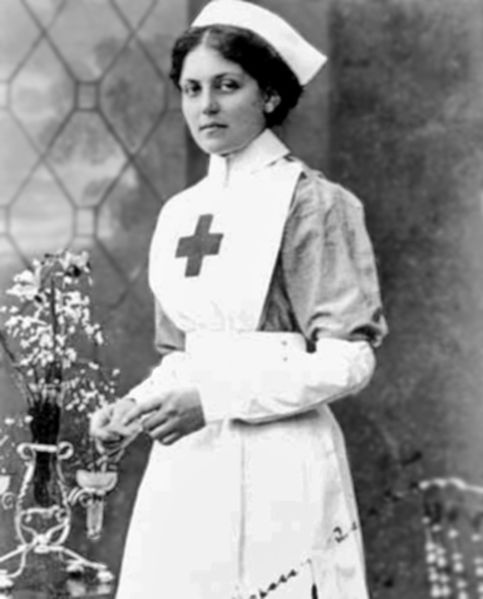
violet-jessopToday I found out about Violet Jessop, “Miss Unsinkable,” the woman who survived the sinking of the sister ships the Titanic and the Britannic, and was also aboard the third of the trio of Olympic class vessels, the Olympic, when it had a major accident. 

Violet Jessop enjoyed incredible “luck” from a young age. Born in 1887 in Argentina to Irish immigrants, she contracted tuberculosis as a young child and was given just a few months to live. Somehow, she managed to fight the disease and went on to live a long, healthy life.

When her father passed away, her mother moved the family to Britain, where she took a job as a stewardess on a ship. While her mother was working, Violet attended a convent school. Unfortunately, her mother became ill, and to provide for her siblings Violet decided to follow in her mother’s footsteps and become a ship stewardess herself.

The first in a long line of struggles for Violet was finding a ship that would take her. She was just 21 years old at the time and most women working as stewardesses in the early 1900s were middle-aged. Employers believed that her youth and good looks would be a disadvantage to her, “causing problems” with the crew and passengers. (Over the course of her career, she did get at least three marriage proposals while working on various ships, one from an incredibly wealthy first-class passenger.)

Eventually, Violet solved the problem by making herself look frumpy with old clothes and no make-up, and experienced more successful interviews after this. After a brief stint aboard the Orinoco, a Royal Mail Line steamer, in 1908, she was hired by the White Star Line.

Violet started out on the line’s Magestic, switching to the Olympic in 1910. Despite the long hours and minimal pay (£2.10 every month or about £200 today), she enjoyed working aboard the massive ship. She had initially had some concerns about the rough weather conditions while traveling across the Atlantic, but she reportedly liked that the Americans treated her more like a person while she served them.

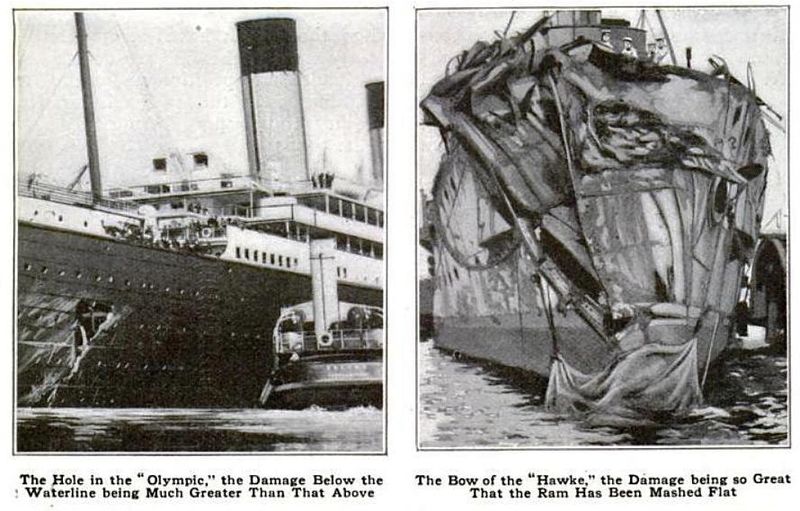
Olympic_collisionIt was just one year later when the trouble started. In 1911, the Olympic collided with theHMS Hawke (a ship designed to sink ships by ramming them). Both ships sustained considerable damage, including the Olympic having its hull breached below the water line, but miraculously didn’t sink. They were able to make it back to port, and Violet disembarked without being harmed.

A couple of years later, the White Star Line was looking for crew to cater to the VIPs aboard the unsinkable ship, the Titanic. It took a while for her friends and family to convince her that it would be a wonderful experience, but Violet eventually decided to take a job on board the ship. As you already know, the Titanic struck an iceberg and sunk, killing more than 1500 people.

Violet was able to escape the disaster on lifeboat 16. In her memoir, she recalls,

I was ordered up on deck. Calmly, passengers strolled about. I stood at the bulkhead with the other stewardesses, watching the women cling to their husbands before being put into the boats with their children. Sometime after, a ship’s officer ordered us into the boat first to show some women it was safe.

As she was jumping into the lifeboat, she was handed a baby to care for. When they were rescued by theCarpathia, the baby’s mother (or at least Jessop thought it must be) found her and whisked the baby away (literally grabbing the baby out of Jessop’s arms and running off).

Once again, Violet lived to sail another day.  Although, she did later state the first thing she missed after the Titanic sank was her toothbrush that she’d left on board.

You’d think she’d stop getting on ships at this point, or at least ships of the Olympic class, but not Violet. In the lead-up to World War I, she decided to serve as a nurse on board the Titanic’s other sister ship,Britannic, which was operating in the Aegean Sea. Given her track record, you can probably guess what happened next. The Britannic ran into a mine that had been planted by a German U-boat. The ship sustained substantial damage and quickly started sinking.

This time, Violet wasn’t lucky enough to jump into a lifeboat as the ship was sinking too fast. Instead, she jumped overboard. In her own words,

I leapt into the water but was sucked under the ship’s keel which struck my head. I escaped, but years later when I went to my doctor because of a lot of headaches, he discovered I had once sustained a fracture of the skull!

She joked that she only survived because of her thick hair, which cushioned the blow.  She also stated this time she remembered to grab her toothbrush before evacuating, unlike with the Titanic.

Even this latest disaster was not enough to deter Violet. After the war, ships were becoming a more and more popular form of transport. Even cruise ships were starting to emerge. Violet left the White Star Line for the Red Star Line and worked on a ship doing world cruises for several years.

Luckily for Violet and everyone traveling on the ships she was aboard later, no such vessel she worked on ever sustained significant damage again. She did take a clerical job for a while after World War II, but went back to working on Royal Mail ships for a few years before she retired at the age of 61. The rest of her life was spent gardening and raising chickens. She died in 1971 of congestive heart failure at the ripe old age of 84.

Source:::  Today i foundout .com

Natarajan


Image of the Day …

View from space: New York City

Astronaut’s view of New York, New York.

View larger. | Image credit: NASA

Check out the way the narrow island of Manhattan, between the Hudson River and the East River, looks from the International Space Station (ISS). The photo was taken on May 5 by the Expedition 39 crew. Central Park looks pretty green – playing fields appear as white dots. The two darker zones are where the tallest buildings of Midtown and the Financial District cast long shadows even in this early afternoon view.

Via NASA Earth Observatory

Source:::: earth sky news site

Natarajan