Top 15 Countries With Highest Quality Of Life… Australia is Ranked No 1 !!!!

For a good chance at a happy life, head to Australia, which one again topped the Organization for Economic Cooperation and Development‘s Better Life Index, which looks at the quality of life in member countries.

The (OECD) — an international economic organization — analyzed 34 countries in 11 categories, including income, housing, jobs, community, education, environment, civic engagement, health, life satisfaction, safety, and work-life balance. (You can read the full methodology here.)

We looked at the countries with the highest overall scores, and highlighted a few of the criteria on the following slides.


#15 Ireland

Average household disposable income: $24,104

The Irish have a strong sense of community — 96% of people believe they know someone they could rely on in a time of need (higher than the OECD average of 90%).

They also rate highly in work-life balance, where the average employee works 1,543 hours a year, less than the OECD average of 1,776.

Researchers compared data from 34 countries that are members of the Organization for Economic Cooperation and Development. They based the rankings on 11 factors including income, safety, life satisfaction, and health, and then rated each country on a 10-point scale. Income is net-adjusted and in USD.

#14 Luxembourg

Average household disposable income: $23,047

Luxembourg rates well in both health and environment, with an average life expectancy of 81 years and a low level of atmospheric PM10 — tiny air pollutant particles small enough to enter and cause damage to the lungs.

Citizens also have a high participation rate in the political process, with 91% of the population turning out for recent elections.

Researchers compared data from 34 countries that are members of the Organization for Economic Cooperation and Development. They based the rankings on 11 factors including income, safety, life satisfaction, and health, and then rated each country on a 10-point scale. Income is net-adjusted and in USD.

#13 Austria

Average household disposable income: $28,852

Austria has a high rate for education. 82% of Austrian adults ages 25-64 have earned the equivalent of a high school degree.

Austrians also have a strong sense of community, with 94% of the population reporting they know someone they could rely on in a time of need.

Researchers compared data from 34 countries that are members of the Organization for Economic Cooperation and Development. They based the rankings on 11 factors including income, safety, life satisfaction, and health, and then rated each country on a 10-point scale. Income is net-adjusted and in USD.

#12 Finland

Average household disposable income: $25,739

Finland performed extremely well on the OECD’s Programme for International Student Assessment — the average student scored 543 in reading literacy, math, and science, whereas the average OECD score was 497.

They also have a high level of life satisfaction with 82% of the population saying they have more positive experiences than negative ones in an average day.

Researchers compared data from 34 countries that are members of the Organization for Economic Cooperation and Development. They based the rankings on 11 factors including income, safety, life satisfaction, and health, and then rated each country on a 10-point scale. Income is net-adjusted and in USD.

#11 New Zealand

Average household disposable income: $21,892

New Zealand has one of the best rates of renewable energy of any OECD country with 36.47%.

Students also scored 524 in reading literacy, math, and science on the OECD Programme for International Student Assessment — higher than the average of 497.

And New Zealand girls outperformed boys by 15 points, higher than the average OECD gap of 9 points.

Researchers compared data from 34 countries that are members of the Organization for Economic Cooperation and Development. They based the rankings on 11 factors including income, safety, life satisfaction, and health, and then rated each country on a 10-point scale. Income is net-adjusted and in USD.

#10 United Kingdom

#10 United Kingdom

AP/RICHARD LEWIS

Average household disposable income: $23,047

85% of the English population say they have more positive experiences in an average day than negative ones.

They also have a high life expectancy of 81 years, and 97% of the people say they are satisfied with the quality of their water.

Researchers compared data from 34 countries that are members of the Organization for Economic Cooperation and Development. They based the rankings on 11 factors including income, safety, life satisfaction, and health, and then rated each country on a 10-point scale. Income is net-adjusted and in USD.

#9 Iceland

Average household disposable income: $23,047

Iceland has high levels of civic participation — 98% of people believe they know someone they could rely on in a time of need.

97% of the Iceland population are also extremely satisfied with their water quality, and Iceland has less air pollutant particles per cubic meter than the OECD average.

Researchers compared data from 34 countries that are members of the Organization for Economic Cooperation and Development. They based the rankings on 11 factors including income, safety, life satisfaction, and health, and then rated each country on a 10-point scale. Income is net-adjusted and in USD.

#8 Netherlands

#8 Netherlands

Average household disposable income: $25,493

People in the Netherlands only work 1,379 hours a year, significantly less than the OECD average of 1,776 hours.

They also test extremely high on the OECD’s Programme for International Student Assessment with an average of 519 (the OECD average is 497).

Researchers compared data from 34 countries that are members of the Organization for Economic Cooperation and Development. They based the rankings on 11 factors including income, safety, life satisfaction, and health, and then rated each country on a 10-point scale. Income is net-adjusted and in USD.

#7 Denmark

#7 Denmark

Chris Jackson/Getty Images

Average household disposable income: $24,682

Denmark has one of the highest life satisfaction rankings, with 89% of the population reporting they have more positive experiences in an average day than negative ones.

The Danish also know how to balance their work life with their personal life — only 2% of employees say they work very long hours, much lower than the OECD average of 9%.

Researchers compared data from 34 countries that are members of the Organization for Economic Cooperation and Development. They based the rankings on 11 factors including income, safety, life satisfaction, and health, and then rated each country on a 10-point scale. Income is net-adjusted and in USD.

#6 United States

#6 United States

Assouline

Average household disposable income: $38,001

The U.S. has the highest average household disposable income on the list at $38,000 a year — much higher than the OECD average of $23,000.

It also ranks as one of the best countries for housing conditions, with good basic facilities and general feelings of safety and personal space.

Researchers compared data from 34 countries that are members of the Organization for Economic Cooperation and Development. They based the rankings on 11 factors including income, safety, life satisfaction, and health, and then rated each country on a 10-point scale. Income is net-adjusted and in USD.

#5 Switzerland

Average household disposable income: $30,060

86% of adults in Switzerland have earned the equivalent of a high school degree, and students scored 517 on the OECD Programme for International Student Assessment — higher than the average of 497.

The Swiss also have a high life expectancy at 83 years of age, and 95% of the population say they are satisfied with the quality of their water.

Researchers compared data from 34 countries that are members of the Organization for Economic Cooperation and Development. They based the rankings on 11 factors including income, safety, life satisfaction, and health, and then rated each country on a 10-point scale. Income is net-adjusted and in USD.

#4 Norway

Average household disposable income: $31,459

There is a strong sense of community and high levels of safety in Norway, where 93% of people believe that they know someone they could rely on in a time of need.

Norwegians also tend to have a good work-life balance, with only 3% of employees working very long hours, compared to the OECD average of 9%.

Researchers compared data from 34 countries that are members of the Organization for Economic Cooperation and Development. They based the rankings on 11 factors including income, safety, life satisfaction, and health, and then rated each country on a 10-point scale. Income is net-adjusted and in USD.

#3 Canada

Average household disposable income: $28,194

Canadians work only 1,702 hours a year — less than the OECD average — with 72% of the population working at a paid job.

There is little difference in voting levels across society too, suggesting there is broad inclusion in Canada’s democratic institutions: Voter turnout for the top 20% of the population is 63% and for the bottom 20% it is 60%, a much smaller difference than the OECD average gap of 12 percentage points.

Researchers compared data from 34 countries that are members of the Organization for Economic Cooperation and Development. They based the rankings on 11 factors including income, safety, life satisfaction, and health, and then rated each country on a 10-point scale. Income is net-adjusted and in USD.

#2 Sweden

Average household disposable income: $26,242

Having a good education is extremely important in Sweden, where 87% of adults aged 25-64 have earned the equivalent of a high school degree.

They also ranked highly in all environmental categories. Their level of air pollutant particles is 10 micrograms per cubic meter — considerably lower than the OECD average of 21 micrograms per cubic meter — and 95% of the population is satisfied with their water quality.

Researchers compared data from 34 countries that are members of the Organization for Economic Cooperation and Development. They based the rankings on 11 factors including income, safety, life satisfaction, and health, and then rated each country on a 10-point scale. Income is net-adjusted and in USD.

#1 Australia

Average household disposable income: $28,884

For the second year in a row, Australia is the number one happiest country in the world. And it’s not hard to see why —they rank extremely well in health, civic engagement, and housing.

The life expectancy at birth in Australia is 82 years, two years higher than the OECD average.

Australia also has exceptional voter turnout at 93% during recent elections, which is far above the OECD average of 72%.

Researchers compared data from 34 countries that are members of the Organization for Economic Cooperation and Development. They based the rankings on 11 factors including income, safety, life satisfaction, and health, and then rated each country on a 10-point scale. Income is net-adjusted and in USD.

Read more: http://www.businessinsider.com/top-countries-on-oecd-better-life-index-2013-5?op=1#ixzz2Uh2HIE5s

source::::businessinsider.com

Natarajan

Duck Crossing The Road along with Her Ducklings!!!!

Quick-step: Drivers were forced to hit the brakes as this family of ducks marched down the middle of busy route in Cheshire

Quick-step: Drivers were forced to hit the brakes as this family of ducks marched down the middle of busy route in Cheshire…


Out for a stroll: The mallard and her brood were en route to a reservoir in Cheshire for a morning swim, onlookers said

Out for a stroll: The mallard and her brood were en route to a reservoir in Cheshire for a morning swim, onlookers said

source::::mailonline.com

Natarajan

This mother duck brought traffic to a halt as she set out for a morning swim with her adorable brood in tow.


Drivers in Macclesfield could only watch and wait as the mallard waddled along Clarke Lane with her flock of 13 fluffy ducklings en route to the nearby Ridgate Reservoir.


Onlookers said the family of ducks had tried to reach the water over a wall, but took a detour along the road when it proved too high for the tiny ducklings to cross.


How Does Baby Giraffe Sleep !!!

With its eyes closed, of course! Take a look at these cute photos of baby giraffes sleeping, using their own bodies as pillows for their heads, courtesy of their loooong necks (except the last one, whose head I think plopped to the ground in the sleep).

Next question: Do they wake up with a giant crick in their necks? (Images: Imgur – via Lost at E Minor)

source::::neatorama website

Natarajan

Top 10 Newly Discovered Species Of 2012 !!!!

Picture of a lesula monkey, discovered in the Democratic Republic of the Congo by researchers in 2007

New Old World Monkey

Photograph courtesy Maurice Emetshu via ASU

Spotted by researchers in the Lomami Basin of the Democratic Republic of the Congo in 2007, the lesula monkey (Cercopithecus lomamiensis) is only the second new species of monkey found in Africa in the past 28 years.

Conservationist John Hart and a team of scientists first spotted a juvenile female at the home of a primary school teacher in the town of Opala (map). The teacher had received the monkey from a family member who had killed the youngster’s mother.

The lesula monkey is one of ten newly described species from the past year that researchers at Arizona State University (ASU) hope will help raise awareness of biodiversity on Earth.

On Thursday, the ASU researchers released their list of what they say are the top 10 newly discovered species from last year, an annual tradition dating to 2007. The group always unveils the list on the anniversary of the birth of botanist Carolus Linnaeus, the man responsible for devising the scientific classification of organisms.

“There are a lot of scientists now that think we could lose 50 percent of the species [on Earth] before the end of the 21st century,” said Arizona State University researcher Quentin Wheeler, who specializes in discovering new species and figuring out how they fit into the evolutionary history of life on Earth.

“I find it ironic that we’re spending so much money on these telescopes to hunt for Earth-like planets while we’re allowing the most Earth-like planet of all to be decimated.”

—Jane J. Lee 


Picture of a new species of glow-in-the-dark cockroach

Night-Light Cockroach

Images courtesy Peter Vrsansky, Slovak Academy of Sciences

Scientists described this glowing cockroach (Lucihormetica luckae) in a paper last September based on one specimen collected 70 years ago. It is possibly already extinct.

Found in Ecuador near the Tungurahua volcano, no more specimens of L. luckae have been found since a major volcanic eruption in 2010, according to news accounts.

It’s a rare example of mimicry using bioluminescence. The roach’s glowing yellow pattern looks similar to the pattern found on another glowing insect—the click beetle. The roach imitates the poisonous beetle in the hopes of fooling predators. (See pictures of other animals that glow.)


Picture of a new species of carnivorous sponge found off the coast of California

Dangerous Beauty

Image courtesy MBARI via ASU

The lyre sponge (Chondrocladia lyra) may look like an underwater candelabra, but make no mistake: It’s a carnivore with indiscriminate tastes. Its vertical stalks maximize the surface area exposed to drifting, microscopic prey.

The new sponge was discovered off the coast of Northern California in 11,100 feet (3,400 meters) of water by researchers with the Monterey Bay Aquarium Research Institute. (Related: “Earliest Animals Were Sea Sponges, Fossils Hint.“)


 Picture of a violet the size of a U.S. penny

Penny-Sized Flower

Image courtesy Harvey Ballard via ASU

Not only is this newly described violet (Viola lilliputana) one of the smallest violets known, it’s also one of the smallest terrestrial flowers in the world. (Learn more about flowering plants.)

Found in the Andes of Peru, scientists first collected specimens in the 1960s. But it wasn’t until December 2012 that researchers formally described this new species in a paper.


Picture of a new species of snake that preys on snails and other soft-bodied creatures

Harmless Mimic

Photograph courtesy Sevastian Lotzkat via ASU

Not only is this newly described snake an example of mimicry—its color pattern imitates the deadly coral snake—it’s also a poster reptile for protest.

Its scientific name, Sibon noalamina, is Spanish for “no to the mine.” This snake lives in the Serrania de Tabasara mountain range (map) of Panama, an area with heavy mining activity that is destroying natural habitat.

The researchers hoped that the snake’s unusual name would draw attention to the deforestation issues in Panama, according to Mongabay.com.


 Picture of a black fungus threatening cave paintings in France

Fungus Among Us

Image courtesy Pedro M. Martin-Sanchez via ASU

This unassuming organism has the power to wipe out the past. It’s a black fungus (Ochroconis anomala) that is staining prehistoric art on the walls of Lascaux Cave in France (map).

The paintings, dated to the Upper Paleolithic period around 40,000 to 10,000 years ago, began to disappear under the black fungus in 2001.

“The [fungus experts] actually think the treatments that got rid of a previous fungus ended up encouraging the growth of this new one,” said Arizona State’s Wheeler.


“I normally don’t think of undescribed species having such a profound threat on cultural treasures,” he said. “Most of the noxious species that we think of are the usual suspects—they’re very common and worldwide. And for a species new to science to become a threat, I just find fascinating.”


 Picture of a frog that's so small, it's the world's tiniest vertebrate

World’s Tiniest Vertebrate

Photograph courtesy Christopher Austin, Louisiana State University

This newly described frog (Paedophryne amauensis) lives among the leaf litter on the floor of New Guinea’s rain forests.

So small that it perches comfortably on the U.S. dime, members of this species are the world‘s smallest vertebrates. Adults grow to about 0.3 inches (7.7 millimeters), barely shorter than the world’s previous record-holder, an Indonesian carp whose females gets as big as 0.31 inches (7.9 millimeters). (Listen to this frog chirp.)


Picture of a new shrub discovered in the forests of eastern Madagascar

Showy Discovery

Photograph courtesy David Rabehevitra via ASU

This six-foot-tall (two-meter-tall) shrub (Eugenia petrikensis) resides in the forests of eastern Madagascar. Its glossy, green foliage is accented with bunches of bright pink flowers. The plant grows in sandy soil. (Read about Madagascar‘s biological bonanza in National Geographic magazine.)


Picture of a fossilized hangingfly found in China's Inner Mongolia

Ancient Camouflage

Photograph courtesy Wang, Labandeira, Shih, and Ren via ASU

Mixed among fossilized ginkgo-like leaves (Yimaia capituliformis) from 165 million years ago, researchers found an ancient hangingfly (Juracimbrophlebia ginkgofolia).

The fly’s wings almost perfectly match the shape of the ginkgo-like leaves, the authors note in an article published last year in the journal Proceedings of the National Academy of Sciences. (Related pictures: “Oldest Flying Insect Imprint Found.“)


Picture of a green lacewing discovered on the photo-sharing site flickr

Social Meets Science

Photograph courtesy Guek Hock Ping via ASU

When Hock Ping Guek uploaded a picture of a green lacewing (Semachrysa jade) to the photo-sharing website flickr, he set in motion a series of events culminating in the recognition that this insect was a new species.

Shaun Winterton, an insect researcher with the California Department of Food and Agriculture, saw the picture on flickr and thought it might be a new species, according to an account in The Guardian. But scientists needed to examine an actual specimen to be sure.

So Guek collected a female S. jade and sent it to Steve Brooks, an insect specialist at the Natural History Museum in London, who confirmed the lacewing was a new species.

Winterton, Brooks, and Guek eventually described their find in a paper published August 2012. The “jade” in the lacewing’s scientific name refers to Winterton’s daughter, Jade.


source:::National geographical daily news

Natarajan


Message For The Day…Differnce Between Quality of Life and Standard of Life …

You do not wail that the pot you are holding is a mud pot, if you know that what is contained in it is nectar, is it not? Having a mud pot with nectar is far better than having a gold pot with poison! There is no value to the land of riches or a mansion if the quality of life is deplorable. Even if the standard of life is poor, it does not matter if the way of life is pure, full of love, humility, fear of sin and reverence towards elders. It is easy to restore this way of life provided the Vedas are studied and fostered and its teachings practised in earnestness. The Mother of Vedas (Vedamatha) will foster in you love and kindness. The teachings for right conduct laid down in the Vedas are the best armour to guard you against sorrow and difficulties.
– Divine Discourse, Aug 15, 1964.

Sathya Sai Baba

Man Invents Machine To Get Oil From Plastic !!!!


This is one of the most amazing email’s and break-through in Technology I have ever seen!!! Why aren’t we doing this now????
I think we should all do what we can to save what we are destroying! Not surprised at this at all, just a case of Japanese ingenuity and perseverance.

What is more important would be the marketing and very low cost to make it mandatory to have one of these in every home.

The sound is all in Japanese. Just read the subtitles and watch.

What a great discovery!

Natarajan

Do You Know ?….Farmers From Bihar Have a Solution to World Food Shortage !!!

India’s rice revolution

In a village in India’s poorest state, Bihar, farmers are growing world record amounts of rice – with no GM, and no herbicide. Is this one solution to world food shortages?

Sumant KumarView larger picture

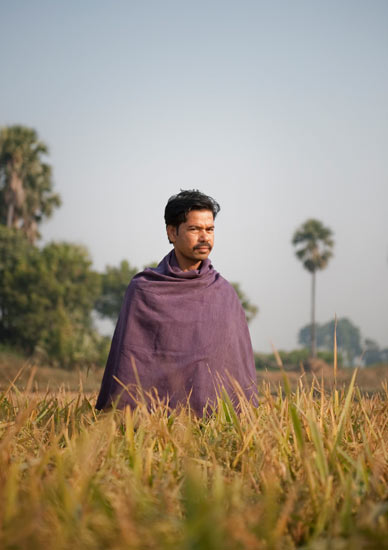
Sumant Kumar photographed in Darveshpura, Bihar, India. Photograph: Chiara Goia for Observer Food Monthly

Sumant Kumar was overjoyed when he harvested his rice last year. There had been good rains in his village of Darveshpura in north-eastIndia and he knew he could improve on the four or five tonnes per hectare that he usually managed. But every stalk he cut on his paddy field near the bank of the Sakri river seemed to weigh heavier than usual, every grain of rice was bigger and when his crop was weighed on the old village scales, even Kumar was shocked.

This was not six or even 10 or 20 tonnes. Kumar, a shy young farmer in Nalanda district of India’s poorest state Bihar, had – using only farmyard manure and without any herbicides – grown an astonishing 22.4 tonnes of rice on one hectare of land. This was a world record and with rice the staple food of more than half the world’s population of seven billion, big news.

Link to video: Rice farming in India: ‘Now I produce enough food for my family’It beat not just the 19.4 tonnes achieved by the “father of rice”, the Chinese agricultural scientist Yuan Longping, but the World Bank-funded scientists at the International Rice Research Institute in the Philippines, and anything achieved by the biggest European and American seed and GM companies. And it was not just Sumant Kumar. Krishna, Nitish, Sanjay and Bijay, his friends and rivals in Darveshpura, all recorded over 17 tonnes, and many others in the villages around claimed to have more than doubled their usual yields.

The villagers, at the mercy of erratic weather and used to going without food in bad years, celebrated. But the Bihar state agricultural universities didn’t believe them at first, while India’s leading rice scientists muttered about freak results. The Nalanda farmers were accused of cheating. Only when the state’s head of agriculture, a rice farmer himself, came to the village with his own men and personally verified Sumant’s crop, was the record confirmed.

A tool used to harvest riceA tool used to harvest rice. Photograph: Chiara GoiaThe rhythm of Nalanda village life was shattered. Here bullocks still pull ploughs as they have always done, their dung is still dried on the walls of houses and used to cook food. Electricity has still not reached most people. Sumant became a local hero, mentioned in the Indian parliament and asked to attend conferences. The state’s chief minister came to Darveshpura to congratulate him, and the village was rewarded with electric power, a bank and a new concrete bridge.

That might have been the end of the story had Sumant’s friend Nitish not smashed the world record for growing potatoes six months later. Shortly after Ravindra Kumar, a small farmer from a nearby Bihari village, broke the Indian record for growing wheat. Darveshpura became known as India’s “miracle village”, Nalanda became famous and teams of scientists, development groups, farmers, civil servants and politicians all descended to discover its secret.

When I meet the young farmers, all in their early 30s, they still seem slightly dazed by their fame. They’ve become unlikely heroes in a state where nearly half the families live below the Indian poverty line and 93% of the 100 million population depend on growing rice and potatoes. Nitish Kumar speaks quietly of his success and says he is determined to improve on the record. “In previous years, farming has not been very profitable,” he says. “Now I realise that it can be. My whole life has changed. I can send my children to school and spend more on health. My income has increased a lot.”

What happened in Darveshpura has divided scientists and is exciting governments and development experts. Tests on the soil show it is particularly rich in silicon but the reason for the “super yields” is entirely down to a method of growing crops called System of Rice (or root) Intensification (SRI). It has dramatically increased yields with wheat, potatoes, sugar cane, yams, tomatoes, garlic, aubergine and many other crops and is being hailed as one of the most significant developments of the past 50 years for the world’s 500 million small-scale farmers and the two billion people who depend on them.

People work on a rice field in BiharPeople work on a rice field in Bihar. Photograph: Chiara GoiaInstead of planting three-week-old rice seedlings in clumps of three or four in waterlogged fields, as rice farmers around the world traditionally do, the Darveshpura farmers carefully nurture only half as many seeds, and then transplant the young plants into fields, one by one, when much younger. Additionally, they space them at 25cm intervals in a grid pattern, keep the soil much drier and carefully weed around the plants to allow air to their roots. The premise that “less is more” was taught by Rajiv Kumar, a young Bihar state government extension worker who had been trained in turn by Anil Verma of a small Indian NGO called Pran (Preservation and
Proliferation of Rural Resources and Nature), which has introduced the SRI method to hundreds of villages in the past three years.

While the “green revolution” that averted Indian famine in the 1970s relied on improved crop varieties, expensive pesticides and chemical fertilisers, SRI appears to offer a long-term, sustainable future for no extra cost. With more than one in seven of the global population going hungry and demand for rice expected to outstrip supply within 20 years, it appears to offer real hope. Even a 30% increase in the yields of the world’s small farmers would go a long way to alleviating poverty.

“Farmers use less seeds, less water and less chemicals but they get more without having to invest more. This is revolutionary,” said Dr Surendra Chaurassa from Bihar’s agriculture ministry. “I did not believe it to start with, but now I think it can potentially change the way everyone farms. I would want every state to promote it. If we get 30-40% increase in yields, that is more than enough to recommend it.”

The results in Bihar have exceeded Chaurassa’s hopes. Sudama Mahto, an agriculture officer in Nalanda, says a small investment in training a few hundred people to teach SRI methods has resulted in a 45% increase in the region’s yields. Veerapandi Arumugam, the former agriculture minister of Tamil Nadu state, hailed the system as “revolutionising” farming.

SRI’s origins go back to the 1980s in Madagascar where Henri de Laulanie, a French Jesuit priest and agronomist, observed how villagers grew rice in the uplands. He developed the method but it was an American, professor Norman Uphoff, director of the International Institute for Food, Agriculture and Development at Cornell University, who was largely responsible for spreading the word about De Laulanie’s work.

Given $15m by an anonymous billionaire to research sustainable development, Uphoff went to Madagascar in 1983 and saw the success of SRI for himself: farmers whose previous yields averaged two tonnes per hectare were harvesting eight tonnes. In 1997 he started to actively promote SRI in Asia, where more than 600 million people are malnourished.

“It is a set of ideas, the absolute opposite to the first green revolution [of the 60s] which said that you had to change the genes and the soil nutrients to improve yields. That came at a tremendous ecological cost,” says Uphoff. “Agriculture in the 21st century must be practised differently. Land and water resources are becoming scarcer, of poorer quality, or less reliable. Climatic conditions are in many places more adverse. SRI offers millions of disadvantaged households far better opportunities. Nobody is benefiting from this except the farmers; there are no patents, royalties or licensing fees.”

Rice seedsRice seeds. Photograph: Chiara GoiaFor 40 years now, says Uphoff, science has been obsessed with improving seeds and using artificial fertilisers: “It’s been genes, genes, genes. There has never been talk of managing crops. Corporations say ‘we will breed you a better plant’ and breeders work hard to get 5-10% increase in yields. We have tried to make agriculture an industrial enterprise and have forgotten its biological roots.”

Not everyone agrees. Some scientists complain there is not enough peer-reviewed evidence around SRI and that it is impossible to get such returns. “SRI is a set of management practices and nothing else, many of which have been known for a long time and are best recommended practice,” says Achim Dobermann, deputy director for research at the International Rice Research Institute. “Scientifically speaking I don’t believe there is any miracle. When people independently have evaluated SRI principles then the result has usually been quite different from what has been reported on farm evaluations conducted by NGOs and others who are promoting it. Most scientists have had difficulty replicating the observations.”

Dominic Glover, a British researcher working with Wageningen University in the Netherlands, has spent years analysing the introduction of GM crops in developing countries. He is now following how SRI is being adopted in India and believes there has been a “turf war”.

“There are experts in their fields defending their knowledge,” he says. “But in many areas, growers have tried SRI methods and abandoned them. People are unwilling to investigate this. SRI is good for small farmers who rely on their own families for labour, but not necessarily for larger operations. Rather than any magical theory, it is good husbandry, skill and attention which results in the super yields. Clearly in certain circumstances, it is an efficient resource for farmers. But it is labour intensive and nobody has come up with the technology to transplant single seedlings yet.”

But some larger farmers in Bihar say it is not labour intensive and can actually reduce time spent in fields. “When a farmer does SRI the first time, yes it is more labour intensive,” says Santosh Kumar, who grows 15 hectares of rice and vegetables in Nalanda. “Then it gets easier and new innovations are taking place now.”

In its early days, SRI was dismissed or vilified by donors and scientists but in the past few years it has gained credibility. Uphoff estimates there are now 4-5 million farmers using SRI worldwide, with governments in China, India, Indonesia, Cambodia, Sri Lanka and Vietnam promoting it.

Sumant, Nitish and as many as 100,000 other SRI farmers in Bihar are now preparing their next rice crop. It’s back-breaking work transplanting the young rice shoots from the nursery beds to the paddy fields but buoyed by recognition and results, their confidence and optimism in the future is sky high.

Last month Nobel prize-winning economist Joseph Stiglitz visited Nalanda district and recognised the potential of this kind of organic farming, telling the villagers they were “better than scientists”. “It was amazing to see their success in organic farming,” said Stiglitz, who called for more research. “Agriculture scientists from across the world should visit and learn and be inspired by them.”

A man winnows rice in Satgharwa villageA man winnows rice in Satgharwa village. Photograph: Chiara GoiaBihar, from being India’s poorest state, is now at the centre of what is being called a “new green grassroots revolution” with farming villages, research groups and NGOs all beginning to experiment with different crops using SRI. The state will invest $50m in SRI next year but western governments and foundations are holding back, preferring to invest in hi-tech research. The agronomist Anil Verma does not understand why: “The farmers know SRI works, but help is needed to train them. We know it works differently in different soils but the principles are solid,” he says. “The biggest problem we have is that people want to do it but we do not have enough trainers.


“If any scientist or a company came up with a technology that almost guaranteed a 50% increase in yields at no extra cost they would get a Nobel prize. But when young Biharian farmers do that they get nothing. I only want to see the poor farmers have enough to eat.”


source:::: John Vidal in The Observer  UK

Natarajan

Message For The Day….Continue to Love , You Will be Loved In Return…

The others are part of yourself. You need not worry about them. Worry about yourself that is enough. When you become all right, they too will be all right, for you will no longer be aware of them as separate from you. Criticising others, finding fault with them, etc. – all this comes out of egoism. Search for your own faults instead. The faults you see in others are but reflection of your own personality traits. Pay no heed to little worries; attach your mind to the Lord. Then, you will be led onto the company of good people and your talents will be transmuted. Consider everyone as the children of the Lord, as your own brothers and sisters, develop the quality of love and seek always the welfare of humanity. Be like the bee, drinking the nectar of every flower, not like the mosquito drinking blood and distributing disease in return. If you continue to love, you will be loved in return.
– Divine Discourse, Jul 25, 1958.

Sathya Sai Baba

Message For The Day…Namasmarana Helps you For Purification Of Heart !!!

The three qualities (gunas) of the mind have to be transcended sequentially. Lethargy (Thamas) should be transformed into passionate activity (Rajas) and Rajas into serenity and poise (Sathwa) and finally into atributelessness. The Gunas bind the person and leave impressions. Thamas is like the worms that creep and crawl in offal. Rajas is like the fly that sits on foul and also good things. Sathwa is like the bee that visits only fragrant flowers. But all the three are drawn towards objects nonetheless. One should be free from all traces of attachment. When your heart is infested with flies and worms, the pesticide of Namasmarana (constant remembrance of the Name of the Lord) has to be used for disinfecting.
– Divine Discourse, Aug 15, 1964.


Sathya Sai Baba