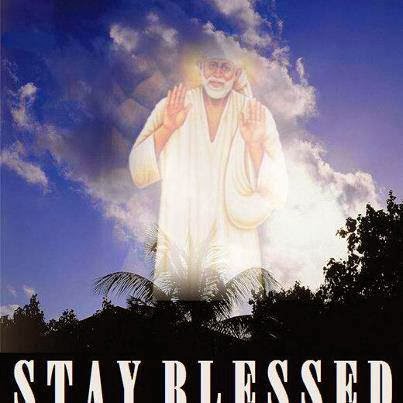
“Ensure You Have not Lost Things That Money Can”t Buy …”

We often find time and reasons to let our loved ones know that we did not like their behaviour , their attitude ,  their thoughts and uselessly point fingers at them. But today, Lets all do something different. Let us remove some time from our busy lives to tell  our friends and our loved ones that we care for them and they hold a very special place in our lives. We appreciate their presence in our lives. Life is short and your time with everyone around you is limited. So make sure that you have not lost anything that money will never be able to buy or perhaps even replace… 
 May the blessings of Sai baba always be with us to make us appreciate the presence of our near and dear ones in our lives..
Quote of BABA:
If one meditates on Me, repeats my name, sing my deeds and thus is transformed into Me, his karma is destroyed. I will stay by his side always. 
source:::::H.Deepa in  http://debu7370.blogspot.com/
natarajan

” எது சுதந்திரம் ” ?

தமிழகத்தைச் சேர்ந்த செல்வந்தர் ஒருவர் சிங்கப்பூர் சென்றிருக்கிறார். அழகான சாலைகள், அம்யூஸ்மெண்ட் பார்க்குகள், விண்ணை முட்டும் கட்டிடங்கள் என்று பல விஷயங்கள் அங்கே இருந்தாலும், சிங்கப்பூர் அவருக்கு பிடிக்கவில்லை. எப்போதடா இந்தியா திரும்புவோம் என்று காத்திருந்தார். அந்த வெறுப்புக்கு காரணம் எச்சில். சிங்கப்பூருக்கு சென்ற நாளில் நம்ம ஊர் வழக்கப்படி எதேச்சையாக இவர் சாலையில் எச்சிலைத் துப்ப, இதைப் பார்த்த போலீஸார் அவருக்கு எக்கச்சக்கமாக அபராதம் விதித்திருந்தனர். அதிலிருந்து மனிதருக்கு சிங்கப்பூர் கசந்தது. “ஒரு மனுஷன் நிம்மதியா துப்பக்கூட கூடாதுன்னா, இந்த ஊரு இருந்தா என்ன? அழிஞ்சாதான் என்ன?” என்று மனசுக்குள் கருவிக்கொண்டு எச்சிலை கட்டுப்படுத்தி நாட்களைத் தள்ளினார். எச்சில் துப்பாத ஒவ்வொரு நாளும் ஒவ்வொரு யுகமாய் நகர்ந்தது அவருக்கு. கடைசியில் இந்தியாவுக்கு வரும் நாள் வர, விட்டால் போதும் என்று பறந்துவந்தார். நம் விமான நிலையத்தில் வந்து இறங்கியதும் முதல் வேலையாய் சாலைக்கு ஓடி வந்தவர் தன் ஒட்டுமொத்த ஆதங்கத்தையும் சேர்த்து வைத்துக்கொண்டு கா…றித்துப்பி தன் சுதந்திர வேட்கையைத் தீர்த்துக்கொண்டார்.

நம்மில் பலருக்கும் சுதந்திரத்தின் அர்த்தம் இதுவாகத்தான் உள்ளது. என் இஷ்டப்படி நான் வாழ்ந்துகொள்ள நம் பெரியவர்கள் போராடி வாங்கிக் கொடுத்ததுதான் சுதந்திரம் என்ற எண்ணத்துடன், அதைத் தவறான வழிகளில் பயன்படுத்திக்கொண்டிருக்கிறார்கள். அதில் முக்கியமான ஒரு விஷயம்தான் இந்த எச்சில். நடுரோட்டில் நின்றுகொண்டு இந்த உலகத்தைப் பற்றி கவலையே படாமல் வெற்றிலை அல்லது பான்பராக்கை நன்றாக மென்று, அதன் சுவையை ரசித்து சாலையிலோ அல்லது சுவரிலோ வண்ணக்கோலம் தீட்டாவிட்டால் பலருக்கு தூக்கமே வராது. இதை யாராவது கேட்கப்போனால் அவ்வளவுதான். தங்கள் சுதந்திரத்துக்கு ஊறுவந்துவிட்டதைப் போல் சண்டைக்கு வந்துவிடுவார்கள். “என்னயா, இது என்ன உங்க அப்பன் வீட்டு ரோடா” என்று கேட்டு நாம்தான் குற்றவாளியோ என்ற எண்ணம் வருகிறார்போல் ஒரு வாங்கு வாங்கிவிடுவார்கள்.

எச்சிலுக்கு அடுத்ததாக நம் மக்கள் அதிக சுதந்திரத்தை உணர்வது, குப்பை கொட்டுவதில்தான். தன் வீட்டை சுத்தமாக வைத்துக்கொள்ள வேண்டும் என்று ஒரு மனிதன் கருதுவது இயற்கை. ஆனால், அந்த வீட்டை சுத்தப்படுத்தியபின் குப்பைகளைப் ப்ப்டுவதிதான் வில்லங்கமே வருகிறது. பொதுவாக ஒவ்வொரு தெருவின் முனைகளிலும் குப்பைகளை போடுவதற்கென்று குப்பைத் தொட்டிகள் இருக்கும். ஆனால், அதன் பக்கத்தில் சென்று குப்பையைப் போட பலரையும் அவர்களின் ஈகோ தடுக்கும். அதனாலோ என்னமோ தங்களை கூடைப்பந்து வீரர்களை போல் பாவித்து தூரத்தில் இருந்துகொண்டே குப்பைத்தொட்டியைப் பார்த்து குப்பைகளை எறிவார்கள். குப்பையும் மிகச் சரியாக தொட்டியில் விழாமல், பக்கத்தில் இருக்கும் சுவரில் பட்டுத் தெறிக்கும். இதற்கென்றே காத்திருக்கும் நாய்கள் அதன் மீது பாய, கொஞ்ச நேரத்தில் ஏரியாவே நாறிவிடும். ஒரு சிலர் தங்கள் வீட்டில் அன்று பிரியாணியென்றோ, கறிக்குழம்பு என்றோ சமூகத்துக்கு பெருமையுடன் உணர்த்திக்கொள்வதற்காகவே குப்பைகளை வாரி இறப்பதும் உண்டு.

இந்தக் குப்பை வீச்சை தடுக்கப் போகிறேன் பேர்வழி என்று சிலர் குப்பைகள் சகஜமாக விழும் இடத்துக்கு பக்கத்தில் கடவுளின் படங்களை வரைந்து வைப்பார்கள். ஆனால், இதைப் பார்த்த பிறகாவது குப்பை கொட்டும் சமாசாரம் நிற்குமா என்றால், ஊஹூம்… உடனே கண்ணப்ப நாயனார்களாக மாறி தங்களிடம் உள்ள குப்பைகளால் சாமிக்கு அபிஷேகம் செய்யாமல் நகர மாட்டார்கள். “என்னப்பா இது, சாமி மீது குப்பை கொட்டுகிறாயே?” என்று கேட்டால், “நான் காலம் காலமா குப்பை கொட்டற இடத்துல நீ ஏன் சாமி படத்தை வரைஞ்சே?” என்று நம் மீது வம்புக்கு வருவார்கள்.

எச்சில், குப்பை ஆகியவற்றுக்கு அடுத்ததாக பலரும் சுதந்திரம் எடுத்துக்கொள்ளும் மற்றொரு விஷயம் ‘சாலை’. எத்தனை கூட்டமாக இருந்தாலும், என்னதான் டிராபிக் இருந்தாலும் நாம் மட்டும் குறிப்பிட்ட நேரத்தில் வீடு போய் சேரவேண்டும் என்பது பலரின் விருப்பம். அதற்கு ஊறு வந்துவிட்டால் தாங்கவே மாட்டார்கள். சாலையின் இரு புறமும் வாகனங்கள் நெருக்கி நின்றாலும் தாங்கள் சென்றாக வேண்டும் என்ற பிடிவாதத்துடன் எங்கெல்லாம் கேப் கிடைக்கிறதோ, அங்கெல்லாம் நுழைந்துவிடுவார்கள். மகாபாரதத்தில் சக்கிரவியூகத்திற்குள் அபிமன்யு எப்படி நுழைந்தான் என்பதை தெரிந்துகொள்ளாதவர்கள் இவர்களைப் பார்த்துத் தெரிந்துகொள்ளலாம். சரசரவென்று சந்துகளில் நுழைந்து முன்னேறும் இவர்கள், மிகச் சரியாக அபிமன்யு சக்கரவியூகத்தில் சிக்கியதைப் போலவே மிக நெருக்கடியான ஓர் இடத்தில் நடுவில் சிக்கிக் கொள்வார்கள். அதிலிருந்து மீள முடியாமல் போவோர் வருவோரிடமிருந்தெல்லாம் அர்ச்சனை வாங்கிக்கொண்டு நிற்பதைப் பார்த்தால் பரிதாபமாக இருக்கும். அனால் அதைப் பற்றியெல்லாம் கவலைப்படாமல், “இந்த ஏரியால ஒரு போலீஸ்காரனைக் கூட போடாம டிராபிக் போலீஸ் என்னய்யா பண்ணுது?” என்று தொண்டை கிழியக் கத்துவார்கள். சாலையில் போவதுதான் இப்படியென்றால் வண்டியை பார்க்கிங் செய்வதில் இன்னும் அதிக சுதந்திரம் எடுத்துக் கொள்வது சிலரது வழக்கம். “தோ… 5 நிமிஷத்துல வந்துடறேன்” என்று சொல்லி வண்டியை நெரிசலான இடத்தில் நிறுத்தி, ஒட்டு மொத்த மக்களையும் டென்ஷனாக்கி தங்கள் சுதந்திரத்தை நிலைநிறுத்திக் கொள்வதில் பலருக்கும் அலாதி சுகம்.

இந்துவோ, முஸ்லிமோ, கிறிஸ்தவமோ, எந்த மதத்தின் கடவுளும் தங்களை சத்தமாக வழிபட வேண்டும் என்று கேட்டுக்கொண்டதில்லை. ஆனால், இப்போது இருக்கும் பக்தர்களுக்கோ சத்தமில்லாமல் கும்பிட்டால் கும்பிட்ட மாதிரியும் இல்லை. நாலு தெருவுக்கு மைக் கட்டி, அதில் உபயம் என்று தங்கள் பெயரைப் போட்டுக் கொண்டால், கடவுள் அருள் புரிவார் என்பது அவர்களது நம்பிக்கை. தேர்வு நேரமாச்சே, பசங்க படிக்கணுமே, நோயாளிகள் இருக்கிறார்களே என்று யாராவது கேட்டால் அவ்வளவுதான். “என் ஊருல என் சாமியைக் கும்பிடக்கூட உரிமை கிடையாதா?” என்று கடித்துக் குதறிவிடுவார்கள். அதைக் கேட்டபின் நமக்கே நாம் கடவுளின் எதிரியோ என்ற சந்தேகம் வந்துவிடும். சாமி விஷயமாவது ஏதோ பரவாயில்லை என்று விட்டுவிடலாம். ஆனால், தங்களுக்குப் பிடித்த பிரபலங்களின் பிறந்தநாளில் சிலர் செய்யும் சாகசங்களை சகிக்கவே முடியாது. அவர்களைக் கொண்டாடுகிறேன் என்ற பெயரில் ஊரையே ரெண்டுபடுத்தி விடுவார்கள்.

வசதியில்லாதவர்கள் சொகுசாகச் சென்றுவருவதற்காகத்தான் அரசாங்கம் பஸ் மற்றும் ரயில் போக்குவரத்தை நடத்தி வருகிறது. ஆனால், அதிலும் சிலர் எடுத்துக்கொள்ளும் சுதந்திரங்கள் இருக்கிறதே… சொல்லி மாளாது. ஜல்லிக்கட்டில் காளையை அடக்கப் பாய்வதுபோல் ஸ்டாண்டுக்குள் பஸ் வரும்போதே ஒரு பெரும் கூட்டம் சீட் பிடிக்கச் சூழ்ந்துகொள்ளும். துண்டோ, செருப்போ, பையோ ஏதவது ஒரு பொருளை சீட்டை நோக்கி வீசி தங்கள் இடத்தை ஸ்தாபிதம் செய்துகொள்வார்கள். ஒரு சிலர் இந்த விபரீத விளையாட்டுக்கு தங்கள் குழந்தைகளைக்கூட ஜன்னல் வழியாய் பஸ்ஸுக்குள் நுழைப்பதுண்டு. இந்த வீரப் போரில் நீங்கள் தேறவில்லையென்றால், எத்தனை தூர பயணமாக இருந்தாலும் நின்றுகொண்டே போக வேண்டியதுதான். ஆனால், இத்தனை ஆக்ரோஷமாக சீட் பிடிக்கும் பஸ்களை கண்ணும் கருத்துமாக பாதுகாப்பார்களா என்றால் அதுதான் இல்லை. தங்களுக்கு ஏதாவது பிரச்சினை என்றாலோ, யாராவது தங்கள் உரிமையில் கைவைத்தாலோ முதலில் உடைப்பதும் பஸ்களைத்தான்.

ஒரு மனிதன் வாழ்வதற்கு தண்ணீர் மிகவும் முக்கியம் என்பதும், அதைக் கொடுக்கவேண்டியது அரசாங்கத்தின் கடமை என்பதும் மிகவும் உண்மை. ஆனால், அதைவிட முக்கியமான விஷயம் அதை சரியாகப் பயன்படுத்த வேண்டும் என்பது. ஆனால், நம்மில் பலரும் அதிகம் வீணாக்குவது தண்ணீரைத்தான். பல் தேய்க்க பிரஷ்ஷை எடுப்பதற்கு முன்பே பலரும் குழாயை திறந்துவிடுகிறார்கள். தங்கள் தேவை முடிந்து முகத்தை துண்டால் துடைத்த பிறகே அதை மூ வேண்டும் என்ற நினைப்பே பலருக்கும் வருகிறது. மின்சாரத்தின் நிலையும் இதுதான். நாளொன்றுக்கு 18 மணி நேரம் மின்வெட்டால் அவதிப்பட்ட நிலையிலும் இன்னும் மின்சாரத்தை இஷ்டப்படி செலவு செய்யும் சமூகம் நம் ஊரில் இருக்கிறது.

டாஸ்மாக்கில் சரக்கடித்து சவுண்ட் விடுவது, சாவு ஊர்வலத்தில் மொத்த டிராஃபிக்கையும் நிறுத்துவது, பொது இடங்களில் சிறுநீர் கழிப்பது, புகைப் பிடிப்பது போன்ற விஷயங்களில்தான் சுதந்திரத்தை அனுபவிப்பது என்ற மனநிலை பலருக்கும் இருப்பது வேதனைக்குரியது.

 
source:::: Sudhir in tamil.thehindu.com
natarajan

காந்தி கணக்கு என்றால் என்ன அர்த்தம் !!!

காந்தி கணக்கு என்றாலே கிட்டதட்ட ‘நாமம்’ என்கிற அர்த்தத்தைதான் நாம் உருவாக்கி வைத்திருக்கிறோம். ஆனால், காந்தி கணக்கு என்றால் என்ன என்பதற்கான உண்மையான அர்த்தம் என்னவென்று பலருக்கும் தெரியாது. அதை இப்போது தெரிந்துகொள்வோம்.

மகாத்மா காந்தி உப்பு சத்தியாகிரகம் மேற்கொண்டிருந்தபோது, அவருக்கு வியாபாரிகள் அத்தனை பேரும் தார்மீக ஆதரவு அளித்தார்கள். அவர்கள் காந்தியிடம் “நேரடியாக எங்களால் இந்தப் போராட்டத்தில் கலந்துகொள்ள முடியாது. ஆனால், எப்படியாவது உங்கள் போராட்டத்திற்கு நாங்கள் ஆதரவு அளிப்போம். இதில் கலந்துகொள்ள வரும் தொண்டர்களை எங்கள் கடைகளில் எது வேண்டுமானாலும் வாங்கிக் கொள்ள சொல்லுங்கள். பணம் தர வேண்டாம். அடையாளம் தெரியாமல் பணம் கேட்க நேரும்போது, ‘காந்தி கணக்கு’ என்று எங்களுக்கு புரியும்படி சொன்னால் போதும். நாங்கள் அவர்களிடம் பணம் கேட்க மாட்டோம்” என்றார்களாம் அந்த வியாபாரிகள்.

அப்படி வந்ததுதான் காந்தி கணக்கு. ஆனால், நாம் இதற்கு அர்த்தம் வைத்திருப்பதோ புரியாத கணக்கு. ஒவ்வொரு சொல்லிலும் அதன் உள் அர்த்தத்தை புரிந்து செயல்பட்டால் அறிவு விசாலமாகும்.

Keywords: காந்தி கணக்கு, காந்தி, ரூபாய், காந்தி


source::::: தி  இந்து …தமிழ்

நடராஜன்

Mahatma Gandhiji”s Meeting with Mahaperiavar ….Way Back in 1927 !!!!

Mahathma Gandhi was touring the South India in the latter half of 1927. He had heard about the Sage of Kamakotipeetam and wished very much to meet him. The sage was camping at palghat [Pallakad] at the time in the course of his vijaya-yatra. The Mahatma Gandhi went there on the 15th October, 1927. The meeting took at place on that day at Nellisseri village, palghat, Kerala.

His, Holiness received the Mahatma in the cattle-shed situated in the backyard of the camp. It was a unique experience for the Mahatma. Here was an authentic successor of Sankara, dressed in a piece of’ ochre cloth made of khadi, and seated on the floor. The Acharya too appreciated the occasion provided for getting to know, at first hand, the leader of the nation who had adopted voluntarily the mode of a simple peasant’s life. At the very first sight, the Mahatma was drawn to the Perfection Incarnate that was seated before him. The atmosphere was surcharged with spiritual silence. After a few moments the Acharya spoke in Samskrit and invited the Mahatma to take his seat. Gandhiji offered his obeisance and sat near the Acharya. He said that, as he was not used to speaking in Samskrit, he would use Hindi if that was permitted, and that he could understand what is spoken in Samskrit. So, the conversation took place without the need for an interpreter-the Acharya spoke in Samskrit, and Gandhiji in Hindi.

This was purely a private interview; there were no reporters; and except for one or two attendants of the math, no one was present. The conversation, which took place in a most cordial atmosphere, lasted for over an hour.

On taking leave of the Acharya, the Mahatma gave expression to the immense benefit he had derived from this unique meeting. How profoundly he was drawn to the Acharya will be evident from an incident that occurred during the interview. It was 5.30 in the evening. Sri C. Rajagopalachari who had accompanied the Mahatma had been waiting outside, went inside the cattle-shed and reminded the Mahatma about his evening meal; for the Mahatma would not take any food after 6 P.M. The Mahatma made this significant observation to Sri. C. Rajagopalachari: “The conversation I am having now with the Acharya is itsclf my evening meal for to day” As the Mahatma was leaving ,after a very fruitful interview, the Acharya gave him a pomelo fruit with his blessings. The Mahatma received it with great reverence, remarking that pomelo is a fruit which he liked best

Later in the evening, Gandhiji addressed a public meeting in Coimbatore. Some people in the audience were eager to know about the interview Gandhiji had had earlier with His holiness. Gandhiji replied saying that they discussed points of mutual interest, that the interview was a private one, that because of this, news paper reporters were not present there and that there was no point in his disclosing the details of the interview. Nothing more was known about this historic meeting.

A request was made to His Holiness in November 1968 for a message of the Seminar on The relevance of Mahatma Gandhi to the world of thought held at the University of Madras. Out of his abundant grace, Jagadguru, the preceptor of the World, sent a message in which he recalled the meeting in 1927 with Gandhiji the Father of the Nation and paid the following tribute:

“We wish to place before this Seminar one of the’ many things which Gandhi and I we discussed when we met at Palghat, Kerala in the last Prashava year. Before Gandhiji arrived at Palghat there came the news of the assassination of Sraddhananda of the Arya Samaj. Referring to this incident Gandhiji remarked as follows:

“I have an apprehension in my mind that assassination of this kind would occur more often than now [in the coming years] Let not there arise in me hatred even in a small measure against the present assassin. There arises a desire in me that I should able to embrace with love even so cruel a man who commits a heinous crime, as this one, an atatayin. But it is extremely difficult to cultivate such heartfelt affection. Yet I shall make an honest attempt in this direction.”

All that we wish to point out is that, in this world it is very rare even to hear about such a feeling expressed”.


[Courtesy Bhavans Journal]

The conversation that took place is now for you to read. 
Excerpts from “A Succinct Biography” 

The details of the conversation between the great men remained a complete secret, since no one else was allowed inside. Even till long after Gandhiji’s demise, the Acharya did not reveal anything about the conversation, in spite of the repeated requests of ardent, interested devotees. But later some details came out. About a year after the return of His Holiness to Kanchi, after the prolonged tour on foot, for six years, a letter was published in the name of a Professor Swaminathan, in an issue of Statesman (Calcutta). The professor was then editing the works of Mahatma Gandhi. The letter contained some details about the conversation between the Acharya and Gandhiji. The letter was perused by His Holiness. Sri Neelam Raju Venkateseshayya, (then editor of Andhra Prabha) had often entreated the Acharya to narrate details of the conversation between the Acharya and Gandhiji in 1927. But the Acharya Swami, once (years ago) told Sri Seshayya, “You have been always asking me about my talk with Gandhiji. None except the two of us knows anything about our talk. Now Gandhiji is no more. Suppose,I reveal the details of our conversation, will it not give rise to a doubt about its truth in the minds of Gandhiji’s followers?”. Sri Seshayya felt that a great secret of dharma had been revealed by the Acharya. In the letter published in the Stateman giving some details regarding the conversation between the two great men , it was stated that Gandhiji had informed SriKishore Lal Masurvala, a resident of Gandhiji’s ashrama and Srimati Ganga Ben Vaidya, about some of the details of his talk with the Kanchi Acharya. In the middle of June1985, Sri Venkataseshayya was summoned to Kanchi. When he reached Kanchi, His Holiness asked him to read the letter published in the Statesman and then said to him, “Now that some parts of the talk that transpired between Gandhiji and me have been published, I shall comply with your repeated requests concerning the same”. (The conversation between His Holiness and Sri Seshayya was in Telugu language and it has been translated into English)


A=Acharya, G=Gandhi

A : “I appreciate your pointing out about a good thing to mankind. Energy isessential for leading a righteous life. Danger only will result by leading a life based onphysical entities bereft of religion.”

G : “Yes, I do understand”.

A : “Our Bharat is one of the very ancient countries of the world. Our country isendowed with old, excellent learning and with an ancient culture. In the past, peoplefollowed the social dictum of Varnashrama Dharma, they were engaged in the activitiesassigned to them, and thereby protected their dharma and enjoyed happiness in the worldand in the next”.

G : “Modern society is different from the society of the past. Will it be possible togo along with the ancient ideals of social life?”
A : “ The quality of cold water is different from the quality of hot water. If both get mixed they will loose their natural characteristics and become useless. Society of course will not be uniform. For instance take a mango tree. It has several branches. In these branches flowers blossom and mangoes emerge at different times. But the tree is only one. Society is, like the tree, only one. Even as the different branches and the trunk combine into tree, all castes together form society. Nowadays, politicians enter the fields of religion and society and try to make in roads into them and to change them. And this had weakened our religion, and altogether changed the smooth running of the world”.

G : “I concur with the opinion of your Holiness”.

A : “What is the necessity for the removal of untouchability?”

G : “Among the people of Bharatadesa, besides Hindus, there are Muslims, Christians, and also some other religionists. Hence it seems to me that untouchability needs to be removed, what does your Holiness think about entry of the untouchables in totemples”?

A : “Temples are sacred places. They are intended for those who believe that God is enshrined in the Sanctum sanctorum of the temple. The Agamas extol the sacred nature of the temples. Those who do not have faith in the Agama Shastras and those who do not accept the principles enunciated by the Agamas in connection with the purity and sanctity of the temple are decidedly unfit for entering our temples”.(Later after a talk between the two for more than twenty minutes over other problems, almost towards the end, the conversation turned on to the murder of Swami Sraddhananda).

A : ‘I suppose, you know about how Swami Sradddhananda has been killed by a Muslim recently”.

G : “Yes. In the present condition of our land how can we attain unity amidst Hindus and Muslims”.

A : “In case a Hindu kills you or me in the future, can we hate the entire Hindu community on that count?”(In the letter of Sri Swaminathan published in the Statesman(1985), he has hinted that Rajaji expressed to his friends, the prophetic remark of His Holiness immediately after the assassination of the Mahatma).


source::::www.periva.proboards.com

natarajan
Read more: http://periva.proboards.com/thread/876/periava-mahatma-gandhi?ixzz2c2p6wowR=undefined#ixzz2c3A8dwrk

Fascinating Fifty Facts about Statue of Liberty !!!!


 Statue of Liberty: 50 fascinating facts

1. The statue’s full name is Liberty Enlightening the World.

2. It was a gift from France, given to America in 1886.

3. The head of the statue was displayed at the World’s Fair in Paris in 1878.

4. The robed female figure represents Libertas, the Roman goddess of freedom.

5. She holds a torch and tablet upon which is inscribed the date of American Declaration of Independence (July 4, 1776).

6. From the ground to the top of the torch the statue measures 93 metres, and weighs 204 metric tonnes.

7. Lady Liberty wears a size 879 shoe.

8. She has a 35-foot waistline

9. Visitors have to climb 354 stairs to reach the statue’s crown.

10. There are 25 windows in the crown.

11. Approximately 4m people visit the statue each year. In comparison, over 6m people visit The Eiffel Tower, and 3.5m visit The London Eye.

12. The seven spikes on the crown represent the seven oceans and the seven continents of the world, indicating the universal concept of liberty.

13. The statue has an iron infrastructure and copper exterior which has turned green due to oxidation. Although it’s a sign of damage, the patina (green coating) also acts as a form of protection from further deterioration.

14. Edouard de Laboulaye provided the idea for the statue, while Frederic-Auguste Bartholdi designed it.

15. Laboulaye proposed that a great monument should be given as a gift from France to the United States as a celebration of both the union’s victory in the American Revolution, and the abolition of slavery.

16. Laboulaye also hoped the gift of the statue would inspire French people to fight for their own democracy in the face of a repressive monarchy under Napolean III.

17. Gustave Eiffel, the man who designed the Eiffel Tower was also behind the design for Liberty’s ‘spine’; four iron columns supporting a metal framework that holds the copper skin which is a mere 3/32ths of an inch thick.

18. 300 different types of hammers were used to create the copper structure.

19. The statue’s face was said to be modelled on the sculptor’s mother, Charlotte.

20. The statue’s original torch was replaced in 1984 by a new copper torch covered in 24k gold leaf.

21. Although you cannot see Lady Liberty’s feet clearly she is in fact standing among a broken shackle and chains, with her right foot raised, depicting her moving forward away from oppression and slavery.

22. Despite the positive meaning of the statue – American independence and the abolition of slavery – it African Americans saw the statue as an ironic image of America; professing to be a country of freedom and justice for everyone regardless of race, despite racism and discrimination continuing to exist.

23. The Statue of Liberty became the symbol of immigration during the second half of the 19th century, as over 9m immigrants came to the United States, with the statue often being the first thing they saw when arriving by boat.

24. The statue’s most famous cinematic appearance was in the 1968 film “Planet of the Apes” where it is seen half buried in sand.

25. It is also destroyed in the films “Independence Day” and “The Day After Tomorrow”.

26. The cost of the statue was funded by contributions from both the French and the Americans. In 1885, a New York newspaper entitled “World” announced that $102,000 had been raised from donors, and that 80 per cent of this total had been received in sums of less than one dollar.

27. Groups in Boston and Philadelphia offered to pay the full cost of the construction of the statue, in return for its relocation.

28. When the statue was first erected in 1886 it was the tallest iron structure ever built.

29. In 1984, the statue was listed as a UNESCO World Heritage Site.

30. In high winds of 50mph Lady Liberty can sway by up to 3 inches, while her torch can move 5 inches.

31. Lady Liberty is thought to have been hit by around 600 bolts of lightning every year since she was built. A photographer captured this for the first time in 2010.

32. Two people have committed suicide by jumping off the statue, one in 1929 and the other in 1932, while many others have jumped and survived.

33. American poet Emma Lazarus wrote about the Statue of Liberty in a sonnet called “The New Colossus” (1883). In 1903 the poem was engraved on a bronze plaque and placed inside the lower level of the pedestal on the statue.

34. The island in which it stands was previously called Bedloe Island, but its name was changed in 1956 to Liberty Island.

35. There are various replicas of the statue, including a smaller version in Paris, and one on the Las Vegas Strip in Nevada.

36. In 1944 the lights in the crown flashed “dot-dot-dot-dash” which in the Morse code means V, for Victory in Europe.

37. Andy Warhol painted “Statue of Liberty” as part of his Pop Art series in the 1960s. It is estimated to be worth in excess of $35m.

38. The statue functioned as a lighthouse for 16 years (1886-1902), lighting a distance of up to 24 miles away.

39. The statue will be celebrating its 127th birthday in October 2013.

40. Miss America, the comic book character, was granted her powers by the statue.

41. After the terrorist attacks of September 11, the statue was closed for security reasons, with the pedestal reopening in 2004, and the statue in 2009, but only a limited number of visitors are able to go up to the crown.

42. The statue was again closed in 2012 due to the effects of Hurricane Sandy, with the island off limits to the public. The statue is reopening to visitors on Independence Day, July 4, 2013.

43. The statue sustained minor damage in 1916 when German saboteurs set off an explosion during World War One. The torch-bearing arm suffered the most damage, with repair works costing $100,000. The stairs in the torch were then closed to the public for safety reasons, and have remained closed ever since.

44. No-one has been able to visit the torch since.

45. Private boats are not allowed to dock at Liberty and Ellis islands. Therefore the only way on is via the ferry system.

46. The statue’s 300 copper pieces were transported to America in 214 crates on the French ship Isere, which almost sank in stormy seas.

47. Liberty Island is federal property within the territory of the State of New York, even though it is closer to New Jersey.

48. In 1982, it was discovered that the head had been installed two feet off centre.

49. Two images of the statue appear on a $10 bill.

50. The cost of building the statue and pedestal amounted to over $500,000, over $10m in today’s money.


source::::The Telegraph UK

natarajan

Statue of Liberty….An Inseparable Part of American identity !!!!

The Story of the Statue of Liberty…
To the few who may not know this, the Statue of Liberty is a colossal neoclassical sculpture on Liberty Island in New York Harbor. The statue, a gift to the United States from the people of France, is of a robed female figure representing Libertas, the Roman goddess of freedom, who bears a torch and a tabula ansata (a tablet evoking the law) upon which is inscribed the date of the American Declaration of Independence, July 4, 1776.

This statue has been an inseparable part of the American identity and a symbol of justice and freedom throughout the world

statue of liberty photo


statue of liberty photo


statue of liberty photo


statue of liberty photo


statue of liberty photo


statue of liberty photo


statue of liberty photo


statue of liberty photo

source::::babamailnet

Natarajan


UNSUNG HEROINES OF INDEPENDENCE….

SOURCE::::: “THE HINDU”….ARTICLE BY BULA DEVI…..
Natarajan
Making history: Women picketers preparing for a protest in Madras in 1930. Photo: The Hindu Archives

Women’s participation in the freedom struggle, barring a few cases, has received little attention in post-1947 male-centric historical records

Though India’s freedom struggle saw a significant participation of women, unfortunately several of them have remained invisible to this day — unknown and unsung. The few women freedom fighters who made it into history books invariably came from elite or middle class backgrounds and their male relatives had often encouraged them to join the movement. In contrast, there were innumerable ordinary women, with no formal education or very little schooling, hailing from poverty-stricken, conservative homes, who got involved in the struggle with undaunted spirit and great commitment.

Raj Kumari Gupta was one of them. Born about a century ago in the little-known Banda zilla of Kanpur, she and her husband worked closely with Mahatma Gandhi and Chandrashekhar Azad. Her crucial contribution to the Kakori dacoity case barely figures in the narratives of freedom. Raj Kumari, who was given the charge of supplying revolvers to those involved in the Kakori operation, apparently hid the firearms in her undergarment and set out in khadi clothes to deliver them, with her three-year-old son in tow. On being arrested, she was disowned by her husband’s family and thrown out of her marital home.

There is also the case of Tara Rani Srivastava. She was born in Saran near Patna and participated actively with her husband Phulendu Babu in the Quit India movement. On Gandhiji’s call, Phulendu assembled a massive crowd of men and women in front of the Siwan police station to hoist the national flag on its roof. The just-married couple stood in front of the crowd and raised slogans. Phulendu soon fell to police bullets but Tara Rani was not deterred. Demonstrating exemplary courage, she bandaged his wounds and marched with the national flag straight towards the police station. By the time she returned, her husband had died.

Whether these women can be considered as revolutionaries or not, there can be no denying that they fought against great personal odds for the freedom of the country. They displayed great resolve despite seeing their children ascend the gallows. It is said that the night before activist Ram Prasad Bismil, a member of the Hindustan Socialist Republic Association, was to be hanged on December 18, 1927, in Gorakhpur jail, his mother came to see him. On seeing her, Bismil’s eyes became moist, but his visitor remained calm. She had never actively participated in politics but she understood the underlying importance of her son’s passionate espousal of revolution. She apparently told Bismil not to shed tears like a kayar(coward). Bismil is then said to have answered saying that he was crying because he would not have a mother like her. Steeled by her son’s death, she is believed to have said in a speech subsequently that she was ready to give another son to the nation. Saying this, she had raised the hand of Bismil’s brother.

Given domestic constraints, many women found it difficult to get directly involved in public action, but contributed in their own ways. Many took to spinning the ‘charkha’ as a mark of support for the Swadeshi movement. Others acted as secret envoys and messengers — passing on proscribed material, helping fugitives from the law shift from one place to another and ensuring that they were fed and looked after.

Ganga Devi from Uttar Pradesh had no formal education and had been married at the age of 13 into a home which had over 60 family members. Her husband, a government employee, enforced strict restrictions on her movement so as to keep her away from the raging political ferment of those times. But that did not stop Ganga from encouraging her children to be sympathetic to the rebels. She saved money from the household expenses and cooked food for men in hiding while her husband was asleep, washing the utensils herself to keep the matter a secret even from family retainers.

The stories of these women do not generally surface in contemporary India save for efforts like those undertaken by the Gandhi Smriti in Delhi recently, when it launched a permanent exhibition on ‘Great Indian Women Freedom Fighters’.

According to Charu Gupta, associate professor, Department of History, Delhi University, history writing in the 60s did not register the role of ordinary women in the freedom movement. She observes, “Implicitly the history of that time projected only a select group and this gave rise to a distorted vision.” She points out how the entire portrayal of the freedom struggle tended to be male-centric, bourgeois and upper caste, with the participation of women being seen as an extension of their domestic roles of serving their families.

The lack of the presence of ordinary women in historical work, according to Ms. Gupta, was due to several factors — the biggest constraint being that history writing was generally based on official records. She, however, believes that this approach has been undergoing a change, with historians now more inclined to base their work on “creative sources” like personal diaries, family histories, newspaper reports, magazine articles and oral narratives.

As Suruchi Thapar-Bjorkert observes in her book Women in the Indian National Movement Unseen Faces and Unheard Voices, 1930-42: “Reinterpreting Indian nationalist history required going beyond archival, official and unofficial sources.” On oral narratives, she says, “As a methodological tool, these narratives revealed the individual subjectivities of participants in the nationalist movement. Documenting these life histories opened a new world before me: a world more real than officials records.”

Women like Abadi Bano Begam, a widow and a freedom fighter from Lucknow, known by her honorific ‘Bi Amman’, need acknowledgement. She observed strictpurdah all her life and when the time came to speak on behalf of her jailed son, she did so from behind her burqa in 1917. This was, perhaps, the first time a Muslim woman in purdah had addressed a political gathering. (Women’s Feature Service)