
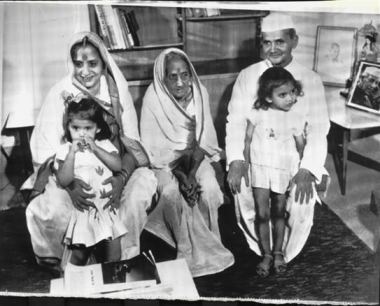
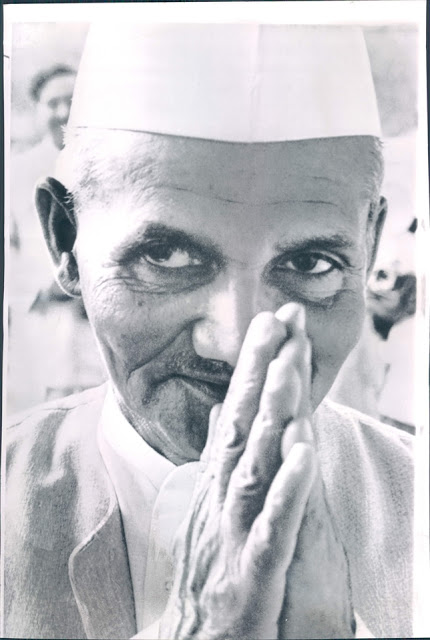
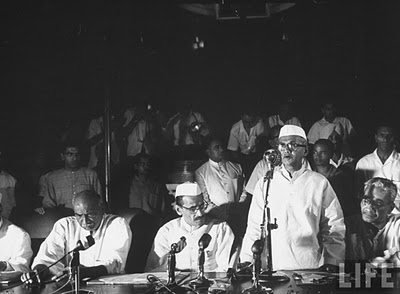
நமக்கெல்லாம் சுதந்திரம் வாங்கி தந்த புண்ணியவான்!
source ::::: dinamani …tamil daily
natarajan
Kindly read my blog dated 15 AUGUST along with this …. “உடைப்போம் தடை கற்களை …படைப்போம் ஒரு புது சரித்திரம் ” .pl click the link below and read …
natarajan
source ::::: dinamani …tamil daily
natarajan
Kindly read my blog dated 15 AUGUST along with this …. “உடைப்போம் தடை கற்களை …படைப்போம் ஒரு புது சரித்திரம் ” .pl click the link below and read …
natarajan

The earliest reference to some aspect of this expression goes all the way back to the Ancient Egyptians. They noted that the heliacal rising of the star Sirius heralded the hottest part of the summer. However, it isn’t exactly known why the ancient Egyptians associated this star with a dog (the star’s hieroglyph is a dog). Sirius would appear in Egypt, after about a 70 day absence, just before the season where the Nile typically floods. So it is thought the star’s hieroglyphic symbol being a dog symbolized a “watchdog”.
On the other hand, it’s very possible it was for the same reason the Ancient Greeks and Ancient Romans would also eventually associate this star with a dog. Namely, that it is the brightest star in what is now known as the Canis Major (Latin for “Greater Dog” or “Big Dog”) constellation. This constellation simply looks a little bit like a dog and Sirius is the brightest star in the constellation, so the star got named the “Dog Star” and it’s heliacal rising marked the start of the hottest part of the year, which then became the “Dog Days”.
The Roman’s expression for Dog Days was diēs caniculārēs (Latin for “Dog Days”). The Greeks also had a similar expression that literally translated to “Dog Days”. They both believed that, when Sirius rose around the same time as the Sun, this contributed to that time of year becoming hotter. As such, they would often make sacrifices to Sirius, including sacrificing dogs, to appease Sirius with the hope that this would result in a mild summer and would protect their crops from scorching.
source::::: todayifoundout.com
natarajan
source :::: images from Google site
natarajan

source::::: glasbergen.com
natarajan
For the Non-US people around the world few may not be aware of what a shutdown of government means and what it does! You are not the only person to have this doubt many has it. A basic stuff here…

In U.S. politics, a government shutdown is a situation in which the government stops providing all but “essential” services. Typically, federal services that continue despite a shutdown include the National Weather Service and its parent agencies, medical services at federal facilities, the postal service, armed forces, air traffic management, and corrections (the penal system). A government shutdown is similar to a lockout in the private sector.
Effects :
A federal government shutdown causes a large number of civilian federal employees to be furloughed. Military personnel and essential employees are not furloughed, but may not be paid as scheduled.
The exact details of which government functions would stop during a shutdown is determined by the Office of Management and Budget. However, some specific aspects have applied to all shutdowns in the past. Among these is the closure of national parks and passport offices. ”Emergency personnel” continue to be employed, including the military, federal law enforcement agents, doctors and nurses working in federal hospitals, and air traffic controllers. Members of Congress continue to be paid, because their pay cannot be altered except by direct law. Mail delivery is not affected as it is self-funded.
Shutdowns in the past have also affected the Washington, D.C., municipal government, putting a stop to schools and to utilities such as garbage collection.
List of similar Shutdowns
| Year | Start date | End date | Total days | Explanation |
|---|---|---|---|---|
| 1976 | September 30 | October 11 | 10 | Citing out of control spending, President Gerald Ford vetoed a funding bill for the United States Department of Labor and the United States Department of Health, Education, and Welfare (HEW), leading to a partial government shutdown. On October 1, the Democratic-controlled Congress overrode Ford’s veto but it took until October 11 for a continuing resolution ending funding gaps for other parts of government to become law. |
| 1977 | September 30 | October 13 | 12 | The Democratic-controlled House continued to uphold the ban on using Medicaid dollars to pay for abortions, except in cases where the life of the mother was at stake. Meanwhile, the Democratic-controlled Senate pressed to loosen the ban to allow abortion funding in the case of rape or incest. A funding gap was created when disagreement over the issue between the houses had become tied to funding for the Departments of Labor and HEW, leading to a partial government shutdown. A temporary agreement was made to restore funding through October 31, 1977, allowing more time for Congress to resolve its dispute. |
| 1977 | October 31 | November 9 | 8 | The earlier temporary funding agreement expired. President Jimmy Carter signed a second funding agreement to allow for more time for negotiation. |
| 1977 | November 30 | December 9 | 8 | The second temporary funding agreement expired. The House held firm against against the Senate in its effort to ban Medicaid paying for the abortions of victims of statutory rape. A deal was eventually struck which allowed Medicaid to pay for abortions in cases resulting from rape, incest, or in which the mother’s health is at risk. |
| 1978 | September 30 | October 18 | 18 | Deeming them wasteful, President Carter vetoed a public works appropriations bill and a defense bill including funding for a nuclear-powered aircraft carrier. Spending for the Department of HEW was also delayed over additional disputes concerning Medicaid funding for abortion. |
| 1979 | September 30 | October 12 | 11 | Against the opposition of the Senate, the House pushed for a 5.5 percent pay increase for congress members and senior civil servants. The House also sought to restrict federal spending on abortion only to cases where the mother’s life is in danger, while the Senate wanted to maintain funding for abortions in cases of rape and incest. |
| 1981 | November 20 | November 23 | 2 | President Ronald Reagan pledged that he would veto any spending bill that failed to include at least half of the $8.4 billion in domestic budget cuts that he proposed. Although the Republican controlled Senate passed a bill that met his specifications, the Democratic House insisted on larger cuts to defense than Reagan wanted and for congressional and civil servant pay raises. A compromise bill fell $2 billion short of the cuts Reagan wanted, so Reagan vetoed the bill and shut down the federal government. A temporary bill restored spending through 15 December and gave Congress the time to work out a more lasting deal. |
| 1982 | September 30 | October 2 | 1 | Congress passed the required spending bills a day late. |
| 1982 | December 17 | December 21 | 3 | The Democratic controlled House and the Republican controlled Senate wished to fund jobs, but President Reagan vowed to veto any such legislation. The House also opposed plans to fund the MX missile. The shutdown ended after Congress abandoned their jobs plan, but Reagan was forced to yield on funding for both the MX and Pershing II missiles. He also accepted funding for the Legal Services Corporation, which he wanted abolished, in exchange for higher foreign aid to Israel. |
| 1983 | November 10 | November 14 | 3 | The Democratic controlled House increased education funding, but cut defense and foreign aid spending, which led to a dispute with President Reagan. Eventually, the House reduced their proposed education funding, and also accepted funding for the MX missile. However, the foreign aid and defense cuts remained, and oil and gas leasing was banned in federal wildlife refuges. Abortion was also prohibited for being paid for with government employee health insurance. |
| 1984 | September 30 | October 3 | 2 | The House wished to link the budget to both a crime-fighting package President Reagan supported and a water projects package he did not. The Senate additionally tied the budget to a civil rights measure designed to overturn Grove City v. Bell. Reagan proposed a compromise where he abandoned his crime package in exchange for Congress dropping theirs. A deal was not struck, and a three-day spending extension was passed instead. |
| 1984 | October 3 | October 5 | 1 | The three-day spending extension expired, forcing a shutdown. Congress dropped their proposed water and civil rights packages, while President Reagan kept his crime package. Funding for aid to the NicaraguanContras was also passed. |
| 1986 | October 16 | October 18 | 1 | A dispute over multiple issues between the Democratic controlled House and President Reagan and the Republican Senate forced a shutdown. The Democratic controlled House dropped many of their demands in exchange for a vote on their welfare package, and a concession of the sale of then-government-ownedConrail. |
| 1987 | December 18 | December 20 | 1 | Democrats, who now controlled both the House and the Senate, opposed funding for the Contras, and wanted the Federal Communications Commission to begin reenforcing the “Fairness Doctrine“. They yielded on the “Fairness Doctrine” in exchange for non-lethal aid to the Contras. |
| 1990 | October 5 | October 9 | 4 | President George H.W. Bush vowed to veto any continuing resolution that was not paired with a deficit reduction package, and did so when one reached his desk. The House failed to override his veto before a shutdown occurred. Congress then passed a continuing resolution with a deficit reduction package that Bush signed to end the shutdown. |
| 1995 | November 13 | November 19 | 5 | In the shutdown of 1995 and 1996 President Bill Clinton vetoed a continuing resolution passed by the Republican-controlled Congress. A deal was reached allowing for 75 percent funding for four weeks, and Clinton agreed to a seven-year timetable for a balanced budget. |
| 1995 | December 16 | January 6, 1996 | 21 | Subsequently the Republicans demanded President Clinton propose a budget with the seven-year timetable using Congressional Budget Office numbers, rather than Clinton’s Office of Management and Budget numbers. However, Clinton refused. Eventually, Congress and Clinton agreed to pass a compromise budget. |
| 2013 | October 1 | Ongoing | Ongoing | Due to disagreement regarding inclusion of language delaying the Affordable Care Act, the Government has not passed a funding bill. Negotiations have come to a stop and government shutdown is in progress. See also United States federal government shutdown of 2013. |
source::::: Reblogged From propelsteps in wordpress.com
natarajan
October 1 this year marks the 85 birthday of acting legend Sivaji Ganesan. There are at least three memorials to him in the city, of which my personal favourite stands inside AVM Studios. I was able to see it a couple of years ago, thanks to a heritage tour organised by actor Mohan V. Raman.
A simple block of elegantly-fashioned black granite, it stands on the spot where Sivaji first faced the camera for his debut film – Parasakthi. The granite slab has a brass medallion on top that bears a close-up of Sivaji uttering his famous opening word – “Success!”. Below it is a rectangular plaque that gives details of the memorial’s inauguration by Kamal Hassan in the presence of Sivaji’s sons Ramkumar and Prabhu, on October 17, 2002, the 50 anniversary of Parasakthi’s release.

The memorial to Sivaji Ganesan, inside AVM studios, was inaugurated on the 50th anniversary of Parasakthi’s release
At the base are two plaques shaped like pages from an open book. These bear the names of all the other people involved in the making of the film – directors, writers, lyricists, music director, singers and technicians.
This last was the idea of Mohan Raman, while the monument itself owes its existence to M. Saravanan and M. Balasubramanian, sons of A.V. Meyyappan, founder of AVM Studios.
I don’t remember now but I am fairly sure that the name of P.A. Perumal, owner of National Pictures, who produced the film, is included in the memorial. What I am not sure of is whether the name of Rajeswari Meyyappan, wife of the studio owner is included.
Legend has it that sometime after work on the film began Meyyappan and the directing duo of Krishnan-Panju began wondering if the gangly youth with prominent eyes and powerful voice really had it in him to carry the film on his shoulders. Perumal and Mrs. Meyyappan were however convinced that he was the right choice and ultimately prevailed over everyone else. The film, when released, ran into immediate controversy, the fiery dialogues of M. Karunanidhi that questioned the hypocrisies of religion and the priestly class being the principal reasons. It was however a runaway success and there was no looking back for Sivaji.
Interestingly, at the time of its inauguration, the monument was located 15 to 20 feet away from where it stands now.
Old studio hands felt that it was somewhat removed from the spot where Sivaji delivered his first shot but nothing could be done about it. Some years later, a road had to be laid in the studio and the memorial had to be shifted a few feet, bringing it to its original intended location!
This is perhaps the most aesthetic memorial in a city which otherwise puts up rather drab statues devoid of any artistic merit. It is also perhaps the only monument commemorating an actor’s debut. Sivaji has two other memorials – a full wall in the Shanthi Theatre complex that lists all the films he acted in with a host of other details, and a statue on the Marina.
source ::::V .Sriram in The Hindu
natarajan


 Take off with Natarajan