Story Behind the Background Photograph of Windows XP !!!


One serene image has been viewed by over one billion eyes, has been seen in videos of the White House and even the Russian government–the default Windows XP computer background.

Even though Microsoft killed off support for Windows XP this week after 13 years, they decided to pay homage to the nostalgic scene.

With many wondering where the image of green grass and blue skies named ‘Bliss’ really came from, the tech company Microsoft released a video in which they interview the photographer Charles O’Rear.

Video Link :

This photo called 'Bliss' was taken by former National Geographic photographer Charles O'Rear on 1996 and was made famous by being Microsoft XP's default desktop photo

This photo called ‘Bliss’ was taken by former National Geographic photographer Charles O’Rear on 1996 and was made famous by being Microsoft XP’s default desktop photo

This is the same scene where O'Rear took his famed desktop background photo in 1996

This is the same scene where O’Rear took his famed desktop background photo in 1996


O'Rear drove from Napa Valley to Sacramento on an extremely busy and dangerous road

O’Rear drove from Napa Valley to Sacramento on an extremely busy and dangerous road

O’Rear, a former National Geographic photographer said he was driving through the Napa Valley on his way to visit his girlfriend in San Francisco when he came across a beautiful landscape with perfect grass and an almost clear sky.

In a video about the photo, O’Rear says that even though the photo appears to be taken in a calm environment, the road there is one of the most dangerous and busy roads he’s driven on.

Despite the dangerous road, the image couldn’t be more placid. He took his old film camera and snapped the famous photo in 1996.

O’Rear says by the time he took the picture there were a few clouds in the sky but when he first saw the photo worthy setting the sky was completely clear.

Several years later, Microsoft commissioned the photo for Windows XP, reports Time. They flew O’Rear out to their offices to personally deliver the photo.

‘I had no idea where it was going to go,’ ‘O’Rear said in the video.

‘Anybody now from age 15 to the rest of their life will remember this photograph.’ he said.

‘I’m thrilled to know that people have had pleasure from looking at that, from looking that a photograph that I made.’

O'Rear stopped to snap the photo as he was driving along this busy road from Napa Valley to Sacramento

O’Rear stopped to snap the photo as he was driving along this busy road from Napa Valley to Sacramento

Charles O'Rear took the photo with an old film camera back in 1996 and never knew that the picture he took on a whim would be seen by over one billion eyes

Charles O’Rear took the photo with an old film camera back in 1996 and never knew that the picture he took on a whim would be seen by over one billion eyes !!!

source:::: ALEXANDRA KLAUSNER  in  mailonline.com UK

Natarajan

” This Cute Kid Will Make Your Day …” !!!


This 3 year old Chinese boy is amazingly bright for only three, and he proudly gets on stage with his ‘baby’ (a mobile speaker) to show the judges his dance. To be honest, even before he started to dance, I was already in love. This is one of the cutest toddlers I’ve ever seen.


source::::You Tube & BA-BA MAIL SITE

Natarajan

Mysterious Light On Mars ….Will Somebody Throw Some ” Light ” on This !!!

A speck of light can be seen flaring upwards from the hillside on Mars. Credit: Nasa/JPL-

A speck of light can be seen flaring upwards from the hillside on Mars. Credit: Nasa/JPL-Caltech Source: Supplied

THERE may not be life on Mars, but PLEASE: let there be light. And there was light. But where is it coming from?

An unexplained shard of light in a photo from NASA’s Curiosity rover has got UFO enthusiasts excited, the Houston Chronicle reports (technically, it doesn’t appear to be flying so it can’t be a UFO, so there’s one theory quashed – Unless, of course, it’s refuelling).

Scott C. Waring, who runs the UFO Sightings Daily site, posted the photo on April 6.


Here’s another shot of it, in case you were wondering. A speck of light can be seen flari

Here’s another shot of it, in case you were wondering. A speck of light can be seen flaring upwards from the hillside on Mars. Credit: Nasa/JPL-  

Caltech Source: Supplied   


Waring said the light shines upward, as if from the ground, and is very flat across the bottom.

“This could indicate there is intelligent life below the ground and uses light as we do,” Waring noted on his website. “This is not a glare from the sun, nor is it an artifact of the photo process.”
The strange light, spotted in a photo taken by the rover’s right-hand navigation in a new study area known as the Kimberley, does not appear in pictures from the left-hand camera, suggesting the “light” is actually a speck of lost data, reports NBC. An imaging expert at NASA’s Jet Propulsion Laboratory says the blip appears to have been caused by a cosmic ray hit.


Although the space agency hasn’t issued any statement about the phenomenon, bloggers and NASA watchers have chimed in on what is seen in the photo, which was sent over millions of kilometres of space before being picked up by the Jet Propulsion Laboratory in Pasadena, California, the Houston Chronicle says.

Four different types of rock come converge at the Kimberley, which is named after a region of Western Australia.

“This is the spot on the map we’ve been headed for, on a little rise that gives us a great view for context imaging of the outcrops at the Kimberley,” the Curiosity mission’s Melissa Rice, of the California Institute of Technology in Pasadena, said.


Follow Andrew Banks on Twitter @newsbanks  


source::::news.com.au

natarajan


The True Origin Of Samsung’s Logo [Humor] !!!

iphoneorigins


Apple and Samsung are headed back to court today for round two of their billion dollar patent lawsuit that will see the two companies pointing fingers and slamming down arguments on who copied whose patents.

We’ve seen enough evidence to have our own opinion on Samsung’s copying ways and now thanks to this Thai cartoon it all becomes perfectly clear why Samsung just can’t help itself.

source:::: Cult of Mac  site

natarajan


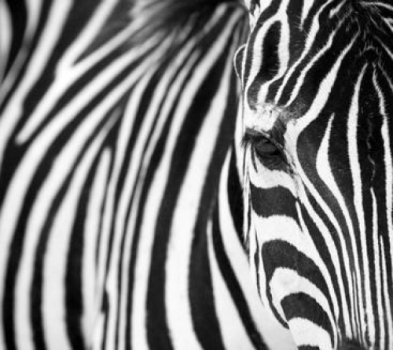
” Why do Zebras Have Stripes ? ” ….An Answer Now …


Researchers say they’ve solved the riddle of why zebras have stripes: The stripes act like insect repellant, keeping away blood-sucking flies, say researchers.

Photo credit: davy liger

Why zebras have black and white stripes is a question that has intrigued scientists and spectators for centuries. A research team led by the University of California, Davis, has now examined this riddle systematically. Their answer is published today, April 1, in the online journal Nature Communications.

The scientists found that biting flies, including horseflies and tsetse flies, are the evolutionary driver for zebra stripes. Experimental work had previously shown that such flies tend to avoid black-and-white striped surfaces, but many hypotheses for zebra stripes have been proposed since Alfred Russel Wallace and Charles Darwin debated the problem 120 years ago. These include:

– A form of camouflage

– Disrupting predatory attack by visually confusing carnivores

– A mechanism of heat management

– Having a social function

– Avoiding ectoparasite attack, such as from biting flies
The team mapped the geographic distributions of the seven different species of zebras, horses and asses, and of their subspecies, noting the thickness, locations, and intensity of their stripes on several parts of their bodies. Their next step was to compare these animals’ geographic ranges with different variables, including woodland areas, ranges of large predators, temperature, and the geographic distribution of glossinid (tsetse flies) and tabanid (horseflies) biting flies. They then examined where the striped animals and these variables overlapped.

After analyzing the five hypotheses, the scientists ruled out all but one: avoiding blood-sucking flies.

“I was amazed by our results,” said lead author Tim Caro, a UC Davis professor of wildlife biology. “Again and again, there was greater striping on areas of the body in those parts of the world where there was more annoyance from biting flies.”

While the distribution of tsetse flies in Africa is well known, the researchers did not have maps of tabanids (horseflies, deer flies). Instead, they mapped locations of the best breeding conditions for tabanids, creating an environmental proxy for their distributions. They found that striping is highly associated with several consecutive months of ideal conditions for tabanid reproduction.

Why would zebras evolve to have stripes whereas other hooved mammals did not? The study found that, unlike other African hooved mammals living in the same areas as zebras, zebra hair is shorter than the mouthpart length of biting flies, so zebras may be particularly susceptible to annoyance by biting flies.

“No one knew why zebras have such striking coloration,” Caro said. “But solving evolutionary conundrums increases our knowledge of the natural world and may spark greater commitment to conserving it.”

Yet in science, one solved riddle begets another: Why do biting flies avoid striped surfaces? Caro said that now that his study has provided ecological validity to the biting fly hypothesis, the evolutionary debate can move from why zebras have stripes to what prevents biting flies from seeing striped surfaces as potential prey, and why zebras are so susceptible to biting fly annoyance.

Via University of California Davis

source:::: earth sky news site

natarajan

” Lion Caught Napping …. ” !!!


They may be known as fast and vicious killers, but it seems even the king of beasts needs a cat nap every now and again.

These pictures show the soft side of one of nature’s deadliest predators as a lion has a nap in a tree.

The shots were taken in the Maasai Mara national reserve in Kenya by designer Mark Bridger.

This lazy lioness is pictured taking a nap in a tree in the Maasai Mara national park in Kenya

This lazy lioness is pictured taking a nap in a tree in the Maasai Mara national park in Kenya


British photographer Mark Bridger captured the sleeping cat while on safari in the country

British photographer Mark Bridger captured the sleeping cat while on safari in the country


Mark, 45, was in Kenya for seven days after winning a photography competition and was amazed to get these shots of a the lazy lion.

Mark, from West Malling, Kent said: ‘I was on safari for seven days and I was waking up at 6am every day and staying out for about ten hours in order to take the perfect shots.


‘We were in a safari jeep with no sides when I spotted the lionness up the tree.

‘Maasai Mara is one of the only places on the planet where lions sleep in trees. It just doesn’t really happen outside of Kenya so it was great to see.’

Mr Bridger says he woke up every morning at 6am and stayed up for ten hours in order to get the perfect shots

Mr Bridger says he woke up every morning at 6am and stayed up for ten hours in order to get the perfect shots


Lions sleeping in trees, while not unheard of, is not common. They prefer to sleep in packs on the ground

Lions sleeping in trees, while not unheard of, is not common. They prefer to sleep in packs on the ground


Mark took his photographs of the lazy lionness from the safety of the Jeep, and the docile big cat didn’t even notice.

Mark said: ‘If I had stepped out of the Jeep I am told she would have jumped out of the tree and killed me for sure.

‘It was amazing to see such a power creature looking so lazy, hiding up in the tree. I’m glad I managed to capture the moment.’

Lions are mostly active around dusk, when they hunt, or at night, and spend most of the day time asleep

Lions are mostly active around dusk, when they hunt, or at night, and spend most of the day time asleep

Mr Bridger took the pictures from a Jeep while in the Maasai Mara, one of the few places lions sleep in trees

Mr Bridger took the pictures from a Jeep while in the Maasai Mara, one of the few places lions sleep in trees


Lions are most active at night, or just after dusk when they hunt in short sharp bursts of activity, and spend up to 70 per cent of the rest of the day asleep.

In order to escape the heat of the savannah where they live, they will often lay down in long grass or shelter under dense shrubs.

Sleeping in trees in unusual behaviour for the species, which prefers to nap in packs on the ground.


source::::     CHRIS PLEASANCE  in mailonline.com UK

NATARAJAN


” What is That … ? ”

A Tale of Father and Son
In a few minutes, this Greek film shows us why, when it is our turn to take care of those that gave us their all, we should have as much patience for them as they did for us.


source:::: youtube

natarajan


” Ravi Ashwin Bowls T20 Ball of the Century “….Adam Gilchrist …


ADAM Gilchrist says Indian spinner Ravi Ashwin last night bowled the “T20 ball of the century” in the World T20 semi-final against South Africa.

Ashwin evoked comparison’s with Shane Warne’s ‘ball of the century’ to Mike Gatting after ripping one of his carrom balls across Hashim Amla.

The ball pitched outside Amla’s legs and turned sharply before clipping the top of his off-stump.

Gilchrist said Ashwin’s delivery might be the best T20 ball we’d ever see.


SOURCE:::: YOU TUBE and news.com au

natarajan

Image of the Day… Mars rover shadow self-portrait !!!


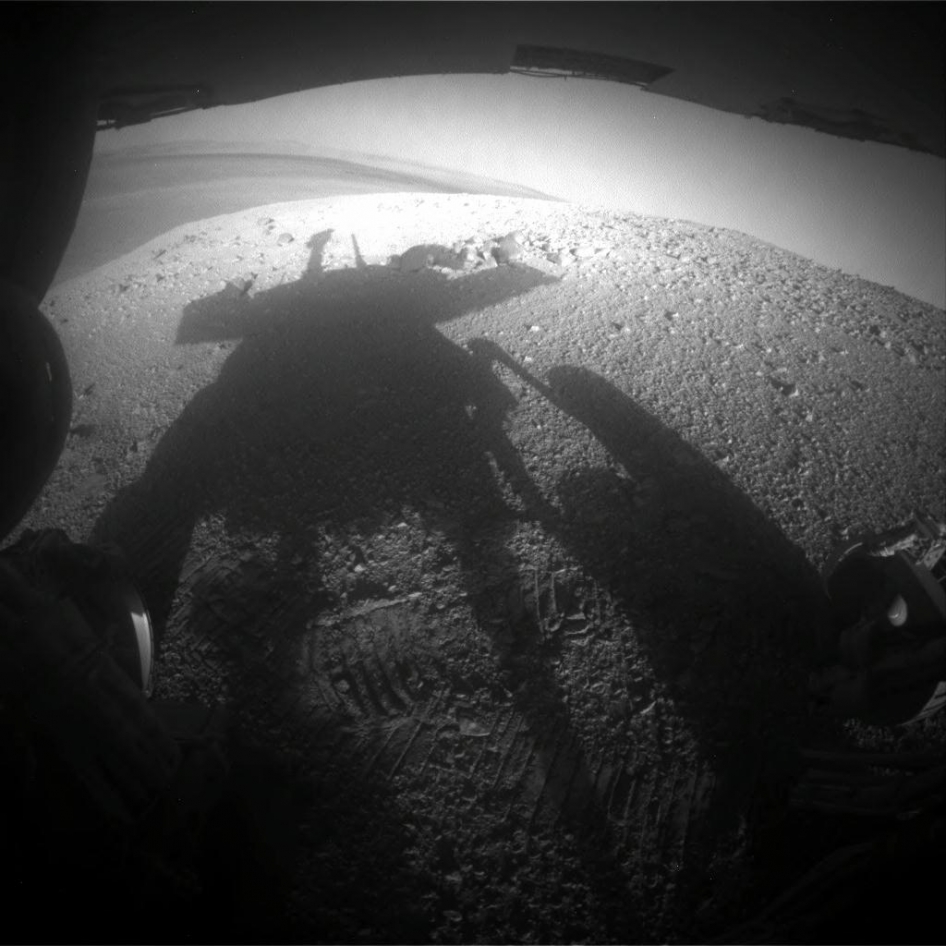
The Mars rover Opportunity caught this image of its own silhouette.

Image credit: NASA

NASA’s Mars Exploration Rover Opportunity took this image of its own shadow, looking eastward shortly before sunset on the 3,609th Martian day, or sol, of Opportunity’s work on Mars (March 20, 2014).

The rover’s shadow falls across a slope called the McClure-Beverlin Escarpment on the western rim of Endeavour Crater, where Opportunity is investigating rock layers for evidence about ancient environments. The scene includes a glimpse into the distance across the 14-mile-wide (22-kilometer-wide) crater.

Brightest Mars in 6 years! April 2014 is the best time to see Mars.

Via NASA

source:::: earth sky news site

natarajan