
source:::: glasbergen.com
natarajan
source:::: glasbergen.com
natarajan

திரைப் பிரபலங்களின் சமூக வலைதள செயல்பாடுகள் அவ்வபோது பரபரப்பை ஏற்படுத்தி வருவது இப்போது வழக்கமாகிவிட்டது. சர்ச்சைக்காக மட்டுமின்றி, சில நல்ல விஷயங்களும் பிரபலமாகி வருகின்றன.
திரைப்பட இயக்குனர் வெங்கட்பிரபு, சமூக வலைதளங்களான ட்விட்டர் மற்றும் ஃபேஸ்புக்கில் தொடர்ந்து தமது கருத்துகளைப் பகிர்ந்து வரும் சினிமா பிரபலங்களில் ஒருவர்.
இந்த நிலையில், அவர் இன்று பதிவேற்றிய ட்வீட் மற்றும் ஸ்டேட்டஸ் ஒன்று, தமிழ் இணையவாசிகள் பலரால் பாரட்டப்பட்டும் பகிரப்பட்டும் வருகிறது. அதன் விவரம்:
“ஒரு வருடத்திற்கு முன்னால், டெல்லியில் ஓடும் பேருந்தில், தன் கண் முன்னால் தன்னுடைய தோழி 6 கயவர்களால் பாலியல் வன்முறைக்கு ஆளாவதைக் கண்டார். இரும்புக் கம்பியால் அடி வாங்கியும் தன்னால் இயன்ற அளவு போராடினார். அந்த இளைஞரின் காலை குற்றவாளிகள் உடைத்தனர். அவரது உடைமைகளைத் திருடினர், ஆடைகளை கிழித்து நிர்வாணமாக்கினர், அவரது தோழியை இரும்பு கம்பியைக் கொண்டு மேலும் சிதைத்தனர். அந்தப் பனி மிகுதியான இரவில் ஓடும் பேருந்திலிருந்து, தனது தோழியுடன் அவரும் வெளியே தூக்கி எறியப்பட்டார்.
உடலில் ஆடைகளின்றி, போராடத் தெம்பின்றி, ரத்தம் கசிய இருவரும் ரோட்டோரத்தில் கிடந்தனர். அப்போதும் அந்த இளைஞர் அவ்வழியே சென்ற கார்களை தடுத்து நிறுத்தி உதவி கோர முயன்றார். தனது தோழியின் உடலை மூட ஒரு சால்வை வேண்டி வழியில் வந்தவர்களிடம் கெஞ்சினார். அவர் கோரியது 40 நிமிட போரட்டத்திற்கு பின்னர்தான் கிடைத்தது.
தொடர்ந்து தன் தோழியை மருத்துவமனைக்கு எடுத்துச் சென்று சேர்த்து, போலீஸுக்கு தகவல் தந்து, தோழியின் பெற்றோர்களை அழைத்து, அந்த நேரத்திற்கு தேவையான எல்லா உதவியையும் ஓர் உண்மையான நண்பராகச் செய்தார். அந்த இளைஞரால் எளிதாக அந்தப் பேருந்திலிருந்து தப்பித்திருக்க முடியும். ஆனால், அவர் அப்படிச் செய்யவில்லை. தோழியை அப்படியே ரோட்டில் தவிக்க விட்டுச் சென்றிருக்க முடியும். செல்லவில்லை. (நிர்பயாவின் தந்தை வெட்கமின்றி உத்தரப் பிரதேச முதல்வரிடமிருந்து 25 லட்ச ரூபாய் நிதியும், தனது மகனுக்கு வேலையும், இன்னும் தன் மகளின் பெயரில் வந்த எத்தனையோ சலுகைகளையும் பெற்றுக் கொண்டார்.)
இந்தச் சம்பவத்தைத் தொடர்ந்து ஊடகங்கள் இதற்குத் தந்த வெளிச்சத்தில் புகழும் பணமும் சம்பாதித்திருக்க முடியும். அதையும் அந்த இளைஞர் செய்யவில்லை. தனது சிகிச்சைக்கு அரசாங்கத்திடமிருந்து நிதி பெறவில்லை. செய்தி ஊடகங்களில் அடிக்கடி பணத்திற்காக தோன்றி பேசியிருக்கலாம். அதையும் தவிர்த்தார். இது நட்பு இல்லையென்றால் வேறு எதை நட்பு என்று சொல்லுவது?
ஒரு தேசமே ஒரு பெண்ணுக்காக வெகுண்டபோது, அந்தப் பெண்ணின் நண்பர் அந்த இரவில் செய்த எதைப் பற்றியும் யாரும் நினைத்துக்கூட பார்க்கவில்லை. அந்த இளைஞர் திரை நட்சத்திரமோ, கிரிக்கெட் வீரரோ அல்ல, அவரது பெயர் அவிந்த்ர பிரதாப் பாண்டே. உத்திரப் பிரதேசம் கோர்க்ஷாபூரைச் சேர்ந்த இவர் தன் தோழியை உண்மையாக நேசித்தார். இப்படி ஒரு நண்பர் இருக்கும்போது ஏன் அமெரிக்கர்களை காப்பியடித்து ஆகஸ்ட் 3-ஆம் தேதி நண்பர்கள் தினத்தை நாம் கொண்டாட வேண்டும்?
அவிந்த்ராவை பெருமைப்படுத்தும் வகையில், உண்மையான நட்பு எது என்று காட்டிய அவரது மன உறுதியை கௌரவப்படுத்தும் வகையில் இந்தியாவில், நண்பர்கள் தினத்தை டிசம்பர் 16-ஆம் தேதி கொண்டாட வேண்டும். இதை அதிகாரப்பூர்வமாக அறிவிக்க வேண்டும். நான் சொல்வது சரியா? ஆம் என்றால் இதைப் பகிருங்கள், உங்களது கருத்துக்களையும் இங்கே தெரிவியுங்கள்” என்று வெங்கட்பிரபு எழுதியுள்ளார்.
வெங்கட்பிரபுவின் பதிவு http://fb.me/1uQ74prdB

Fact:
This message went viral in India on the occasion of Diwali. The message came with a picture showing the satellite image of the Indian map during the day, followed by the same during the night, appearing bright and colorful throughout. However, the message was a hoax. The image in question is put up by National Geophysical Data Center of the National Oceanic and Atmospheric Administration, USA and is actually a composite satellite view of India at night, showing the change in night illumination during the period 1992-2003. Satellite data from the year 1992 is shown in blue color, 1998 green colored, and that in 2003 is colored red. This stunning composite satellite image of India at night was developed by NASA so as to illustrate the increasing population of India over the years.

Fact:
This picture showing a live three headed snake on an Indian road started circulating on many social networking websites. The message that comes with the picture states that it is a beautiful creation of nature. The story however, is a hoax. The three headed snake picture is not real, it is a photoshopped one.

Fact:
This story was very widely circulating through emails, blogs and social networking sites. The message claiming that the Indian national anthem “Jana gana mana..” was selected as the best in the world by UNESCO was never heard of or confirmed by any kind of news or media reports. If the story was factual, it would have definitely received wide attention from the media. If the UNESCO released such a statement, it would be readily available on their official website, which is no where to be seen. India Today wrote to UNESCO to get clarity on these stories and got a confirmation message from UNESCO that these messages were indeed a hoax.

Fact:
The photograph which shows 11 new born babies along with hospital staff was accompanied by a message claiming that an Indian woman gave birth to all of them in a single delivery, and considers it as God’s miracle. 6 out of the 11 babies were reported to be twins. The photograph is genuine, but the story is a hoax. The photograph actually shows 11 kids born to different mothers on 11.11.11 at the 21st Century Hospital & Test Tube Baby Center in Surat, India. The doctors and hospital staff together with the new born babies took photographs and shared it as an interesting achievement on 11.11.11.

Fact:
Many versions of this story were circulating through emails along with these pictures of giant human skeletons. The news related to this story appeared in the media in countries like India, Bangladesh etc. However, all these versions were false. The pictures depicting giant human skeletons are actually a part of image manipulation contest conducted by worth1000.com.

Fact:
This picture claims to show the Hindu God Hanuman’s Gadha (mace), supposedly discovered during an excavation in Sri Lanka. Other versions said it is the world’s largest Gada of Veer Hanuman discovered in Gujarat. The claims are not true. It actually shows a 45 feet Gada replica for installation on a 125-foot-high Hanuman statue on the outskirts of Indore, India on the occasion of Hanuman Jayanti (birthday) on 25 April 2013. (As quoted in Hindustan Times epaper.)

Fact:
This hoax was a rather unfortunate and disrespectful mis-interpretation of Bhagat Singh’s biography. Bhagat Singh was arrested following the 1929 Assembly bomb throwing incident. Fearing civil agitation, the then Viceroy of India Lord Irwin set up a special tribunal called the Privy Council to speed up his trail process. An Indian defence committee in Punjab appealed against the Privy Council, which was again dismissed by the Judge Viscount Dunedin. After the rejection, the then Congress party president Madan Mohan Malviya filed a mercy appeal before Lord Irwin on 14 February 1931, but even that did not work, and Bhagat Singh was hung on 23 March 1931 at 7:30 pm in Lahore jail along with fellow freedom fighters Rajguru and Sukhdev.

Fact:
This story broke on Facebook walls and Whatsapp chats all over India. A supposed warning from the Delhi Police warned consumers that a worker from the “Frooti Company” was HIV positive and had added his blood to the drink mix. It also claimed that the story had been reported by NDTV. As you can guess, the whole thing was a hoax. Both the Delhi Police and NDTV denied the ridiculous story. Besides one can’t even get AIDS through “infected” food.

Fact:
The messages showed pictures of a tree with mysterious wooden carvings of various animals like crocodiles, monkeys, snakes, spiders and others; claiming that it is a ‘Baobab’ tree that has the largest trunk in the world. The message stated that this mysterious tree was found near a hermitage in the dense forests of Nalgonda, Andhra Pradesh, India. The truth? There was no mysterious tree or hermitage. This was in fact an art work in Disney Land.
Sourced from: hoaxorfact.com
natarajan
While discussions about tech bubbles have been heated, few commentators seem to be targeting their invective at the real underlying bubble: the World Wide Web itself is crumbling. Like any outmoded technology, the Web is rapidly losing users as it fails to adapt to disruption from mobile apps and continues to perform poorly – despite incredible optimization efforts – due to a bloated software architecture built of hacks on top of hacks. It had an unbelievable 25-year run, but I think it’s time to admit that the product is reaching its last throes.
Just to be clear what we are discussing, the Web is a collection of protocols (namely, HTTP) and hyperlinked documents (built using HTML) that allow users to easily produce and consume content. Since HTTP is a standardized protocol and HTML is a markup language, the Web is platform-agnostic and usable on any device that can connect to the Internet. A key result of this design is unprecedented openness – through hyperlinks, users can connect their content to any other page without seeking permission.
Beginning in the early 1990s, this system would transform the world for the next 15 years, becoming the key vehicle for information and content dissemination across the globe. But as demands increased for quality, security, and control, the Web started to buckle. Its incredible growth forced it to expand far beyond the designs of its technical specifications into areas like asynchronous server communications and local data storage. As smart devices arrived at the end of the last decade, it became increasingly clear that the Web had found its competitor.
And then it lost.
Here is a startling fact: for all but the most mundane applications, it is easier today to create a rich application using XCode or Eclipse than it is to develop a comparable app on the Web. With the libraries offered by iOS and Android, software engineers have extensive standardized resources to build great experiences for users, and both platforms have reached sufficient maturity that documentation is plentiful and APIs are fairly consistent.
The Web has tried to compete with the “mobile web” concept, but like so many responses to technology disruption, this one seems too little, too late. Building an engaging application with HTML5 on mobile is unbelievably challenging, even with a host of libraries downloaded from GitHub to simplify the process. Mozilla’s expansion into the space through FirefoxOS and Open Web Apps is a decent start, but with Americans already spending more time on their smartphones than on the Web through a PC, such efforts are becoming moot.
Even if you get a mobile web application running, its performance will pale in comparison to natively run, compiled code. As Drew Crawford wrote last year about running JavaScript on mobile devices, mobile web apps have little hope of ever competing since mobile hardware is fundamentally resource-constrained, and JavaScript’s interpretive nature can never be optimized to match native performance. From the user’s perspective, compiled apps are easier to discover, seem more natural, and perform better.
4812651290_11c0e7e175_o
It’s truly a sad moment, given that we are sacrificing so much of the Web’s best qualities for proprietary native apps. There is no way to construct URLs to apps, nor any method to hyperlink to specific content within an app container, a concept called “deep linking.” New libraries are harder to build given the closed nature of the iOS platform, and Android’s openness has slowly faded as well. That means source code for apps isn’t visible for modification or improvement, deeply cutting down on the speed on which new techniques are propagated across the development community. In short, independent developers are being harmed in the race to ensure that the largest enterprises can control their brand’s online experience.
Openness could have been the key competitive angle for the Web. Yet the stories over the past two years about the NSA’s Internet surveillance program have completely undermined that argument for consumers. Now, with the potential of the FCC gutting its net neutrality policy, even the ability to equally access information online is at risk. To a degree, we only have ourselves to blame. When websites started blocking links connecting to their content and companies began walling off more of their data to non-members, the development community became instrumental in making openness an empty phrase.
While the Web may be dying, its core objectives live on. I remember when my family bought our first modem. It was 28.8kbps if I recall, and the Internet back then was deeply confusing. We bought a book which listed all the major websites, since search engines were still embryonic. It was a simpler time. Table HTML tags were the only means for laying out webpages, as CSS level 1 wouldn’t be devised until late in 1996. Given the speed of the modems back then, the Internet was mostly textual, with a design aesthetic that was creatively chaotic if not the most usable. It was inviting and open.
We need to return to this kind of world again, and the only way we are going to get there is to rebuild our stack from the bottom. In short, we need a literal “Web 2.0,” a new edition that brings back some of the critical features that have been removed in our race to build better Internet applications.
What would a new Web look like? For one, it would make very different assumptions about users and their habits. It would assume multiple devices and a cloud-based infrastructure, and so it would handle synchronization services fundamentally as part of its protocols. It would assume two-way communications between the client and the server and thus could natively handle push communications. It would simultaneously have better facilities for handling identity online, while also providing better anonymity.
Like the expansion of the United States to the West, the Web started as a world with an open mindset and local, flexible rules. Over time, fences appeared, property was divvied up, and society became more process-driven to protect the property people already had rather than to ensure the best possible development of the future. For the internet to evolve, we need to move away from the technologies that are slowly degrading and infantilizing our experience, and strike a new path toward a world where the Internet once again is open and free.
source::::: Posted by Danny Crichton (@DannyCrichton) in TECHCRUNCH
Natarajan
This little hummingbird got injured by an attack and was rescued by this young man, who also took care of her and nursed her back to health for months, even catching insects for it to eat every day.
He tells: “When she thought she was ready to leave (and she was) she flew off to her favorite patch of the back yard, and her instincts instantly kicked in, and now she’s just like all the other hummingbirds. for those that are concerned that she has imprinted on humans and wouldn’t survive in the wild, don’t worry, she is thriving. she has even successfully migrated and returned back to my yard.“
We must applaud his patience and kindness, and get inspired ourselves, to save and help any creature we can.
source:::::: ba-ba mail site & You Tube
natarajan

Welcome to Meru. Your billing has started,” announces a mechanised voice as one enters a Meru taxi. Photo: Ram Keshav
Driver Nickson is on his way from Nungambakkam in a Ford Endeavour. He is 21 minutes away. No, 19. The car-shaped icon moves like an ant on the smartphone’s screen as time ticks by. It tells us exactly where the taxi is at which point in time. He glides to a stop as one watches him on the screen. The taxi is here — the entire process happened at the touch of an app on the smartphone. Call taxis, these days, don’t require a ‘call’ for you to avail their service. All you have to do is download an app. Companies such as Uber, Ola, and Meru put you in touch with their drivers through a well-coordinated system that involves the GPS.
The Uber app for instance, can be downloaded onto Android phones and iPhones (it is not available for Windows phones). The taxi can be booked by just tapping on the icon; the nearest Uber driver is informed of your location and so are you. Before you know it, your taxi is booked — the app lets you monitor the driver’s location on Google maps, displays his name, and the car’s registration number.
“Uber’s specialty is on-the-spot booking,” says Nickson. “You can book your cab while you’re on the move.” And there is no cash involved — once you register with Uber, the bill amount is debited from your credit card. The best thing regarding Uber is their cars — Honda Civic, Accord, Toyota Camry, Mercedes-Benz and Jaguar. Launched in the city in January this year, Uber is the next big thing in taxis.
“Welcome to Meru. Your billing has started,” announces a mechanised voice as one enters a Meru taxi. “It’s the Tab,” points out driver Samuel David. “All of our cabs come fitted with Tabs. We use them to monitor the meter.” The Tab displays the start time, customer’s name, and drop location. “We have 60 cars running in the city; we launched a month ago,” explains Samuel. The Meru app works in a similar way; it is available on Google Play, App Store, and Windows Store.
Ola Cabs, yet another new line of taxis, are also available at a single touch — the app is available on App Store and Google Play. “There is no confusion regarding the client’s location. Once they book a cab, I get to know their location through GPS,” says driver K.N. Gopinath.
Despite it all, these taxis are priced nominally. Which is why, “these days, even people who own cars take taxis to be dropped off and picked up from the airport,” according to Gopinath. They are also widely used by women who go pubbing late night. “On Fridays and weekends, our customers are mostly couples and party-goers who prefer us for our luxury cabs,” says Nickson.
“We also have the option of card payment,” adds Samuel. Meru has strict rules for its drivers. Displayed on the dashboard is an oath that has lines such as ‘I will not drink and drive’, ‘I will charge the customer as per the meter’, and ‘I will be alert at all times’. “There is just one word I don’t understand,” says Samuel as the car zooms through Anna Salai. “What does ‘groom’ mean? We are repeatedly told to be well-groomed.” Just then, the taxi pulls up at our destination and the mechanised voice calls out: “Thank you for using Meru.”
Keywords: call taxis, Meru, Ola, Uber, Chennai cabs
source:::: Akila Kannadasan in The Hindu… metroplus
natarajan
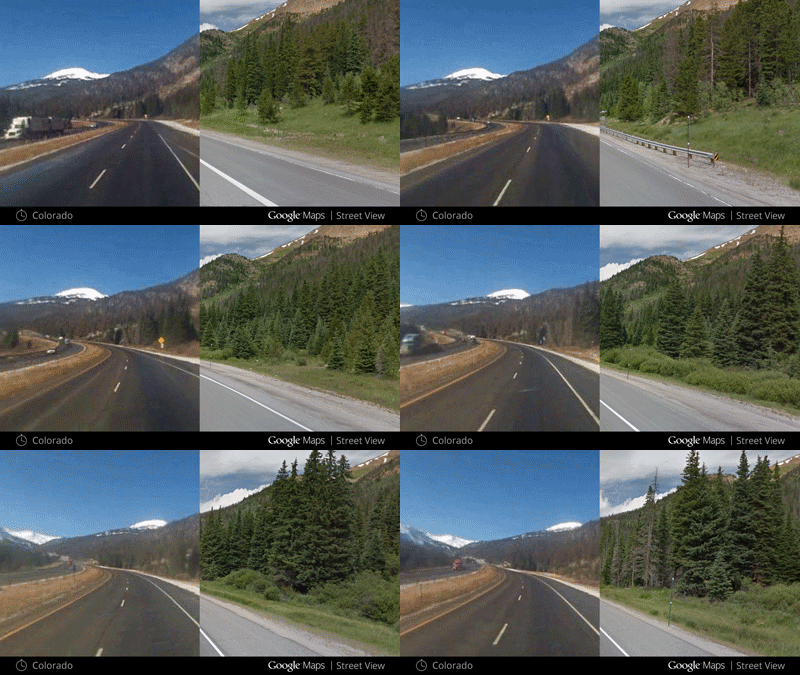
Every day, Google’s Street View cars capture massive amounts of data and the company then publishes them on Google Maps at regular intervals. Until now, the only images you could see on Google Maps were the latest images. Starting today, however, you will also be able to go back in time and see older images.
When you’re in the Street View interface, you will now see a small clock icon on the page. Once you click that, a preview image with a timeline underneath it will appear and allow you to see the older images.
It looks like Google’s Street View cars pass by most locations about twice per year. There is a bit of variation here, however, and some urban areas especially have more historical images available while some rural areas may have fewer. In many regions of the world, Google only started collecting this imagery in the last few years (it launched in the U.S. in 2007), so that may also limit the availability of historical images.
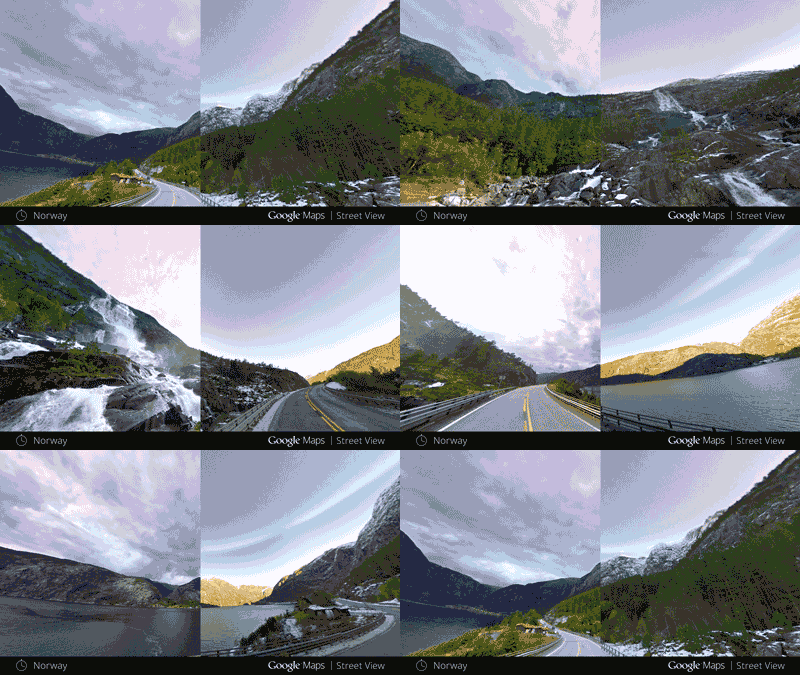 Google tells me this update is meant to be part of the company’s effort to “create a digital mirror and true record of the world.”
The update is going live globally today. For now, it will only be available in the desktop version of Google Maps and it is unclear if Google plans to bring this feature to other versions of Maps later.
Here is an example of what these images look like:

One serene image has been viewed by over one billion eyes, has been seen in videos of the White House and even the Russian government–the default Windows XP computer background.
Even though Microsoft killed off support for Windows XP this week after 13 years, they decided to pay homage to the nostalgic scene.
With many wondering where the image of green grass and blue skies named ‘Bliss’ really came from, the tech company Microsoft released a video in which they interview the photographer Charles O’Rear.
Video Link :

This photo called ‘Bliss’ was taken by former National Geographic photographer Charles O’Rear on 1996 and was made famous by being Microsoft XP’s default desktop photo

This is the same scene where O’Rear took his famed desktop background photo in 1996

O’Rear drove from Napa Valley to Sacramento on an extremely busy and dangerous road
O’Rear, a former National Geographic photographer said he was driving through the Napa Valley on his way to visit his girlfriend in San Francisco when he came across a beautiful landscape with perfect grass and an almost clear sky.
In a video about the photo, O’Rear says that even though the photo appears to be taken in a calm environment, the road there is one of the most dangerous and busy roads he’s driven on.
Despite the dangerous road, the image couldn’t be more placid. He took his old film camera and snapped the famous photo in 1996.
O’Rear says by the time he took the picture there were a few clouds in the sky but when he first saw the photo worthy setting the sky was completely clear.
Several years later, Microsoft commissioned the photo for Windows XP, reports Time. They flew O’Rear out to their offices to personally deliver the photo.
‘I had no idea where it was going to go,’ ‘O’Rear said in the video.
‘Anybody now from age 15 to the rest of their life will remember this photograph.’ he said.
‘I’m thrilled to know that people have had pleasure from looking at that, from looking that a photograph that I made.’

O’Rear stopped to snap the photo as he was driving along this busy road from Napa Valley to Sacramento

Charles O’Rear took the photo with an old film camera back in 1996 and never knew that the picture he took on a whim would be seen by over one billion eyes !!!
source:::: ALEXANDRA KLAUSNER in mailonline.com UK
Natarajan


