
Art
Cartoon of The Day !!!

source::::glasbergen.com
natarajan
படித்ததில் பிடித்தது …” பரிமளம் , மகனா ? மகளா ? ” !!!
1968-ஆம் ஆண்டு. முதலமைச்சராக அவையில் வீற்றிருக்கிறார் அறிஞர் அண்ணா. அப்போது நான் பொதுப்பணித்துறை அமைச்சர். மொழிப் பிரச்னை பற்றி வாக்குவாதம் நடக்கிறது. அவை உறுப்பினர் ம.பொ.சி. மீது எதிர்க்கட்சித் தலைவர் கருத்திருமன் ஒரு குற்றச்சாட்டு கூறினார். அதைத் தொடர்ந்து நடந்த விவாதத்தையும் அதை அண்ணா எவ்வாறு முடித்து வைத்தார்
என்பதையும் குறிப்பிட விரும்புகிறேன்.
கருத்திருமன்: “”தமிழ்தான் என் உயிர். தமிழை ஆட்சி மொழி ஆக்கியதற்காக இந்த ஆட்சியைப் பாராட்டுகிறேன்” என்று ம.பொ.சி. சொன்னார். ஆனால் விவேகானந்தா கல்லூரியில் தன் மகனுக்கு ஆங்கிலப் படிப்பு வேண்டும் என்று கேட்டவர் அவர்.
ம.பொ.சி: எதிர்க்கட்சித் தலைவர், நேர்மையைக் கடைப்பிடிக்க வேண்டும். என் பிள்ளை, உயர்நிலைப் பள்ளிப் படிப்புகூட முடித்ததில்லை. குற்றச்சாட்டை வாபஸ் பெற வேண்டும்.
கருத்திருமன்: எனக்கு வந்த தகவலைத்தான் சொன்னேன்.
அண்ணாதுரை: யார் மகனைப் பற்றி குறிப்பிடுகிறீர்களோ, அந்த தந்தையே தகவல் தவறு என்று கூறிவிட்ட பிறகு, தாங்கள் ஏற்றுக்கொள்ள என்ன தயக்கம்?
கருத்திருமன்: அவர் சிபாரிசு செய்த பிள்ளை என்றுதான் சொல்கிறேன். சொன்னது தவறென்றால் வருத்தம் தெரிவித்துக் கொள்கிறேன்.
பொதுப்பணித்துறை அமைச்சர் (நான்): எதிர்க்கட்சித் தலைவர் முதலில் ம.பொ.சி.யின் மகன் என்று குறிப்பிட்டார். இப்போது மகனில்லை; அவர் சிபாரிசு செய்த பிள்ளை என்கிறார்.
அண்ணாதுரை: தவறான தகவலை நம்பினால் என்ன ஆகும் என்பதற்கு ஒரு சம்பவம் சொல்கிறேன். என் மகன் பெயர் பரிமளம். நமது நண்பர் விநாயகம் ஒரு கூட்டத்தில் பேசும்போது, “அண்ணாதுரைக்கு பரிமளம் என்று ஒரு பெண் இருக்கிறாள்’ என்று குறிப்பிட்டு, அது பத்திரிகையிலும் வந்துவிட்டது. பிறகு ஒருநாள், விநாயகம் என் வீட்டுக்கு போன் செய்த போது, பரிமளம் பேசினான். “நீ யார்?’ என்று விநாயகம் கேட்க, “அண்ணாவின் மகன்’ என்று அவன் கூறினான். “அடடே! நீ ஆண் பிள்ளையா? பரிமளம் என்ற பெயரைப் பார்த்து பெண் என்று நினைத்துவிட்டேன்’ என்றார்.
முதலமைச்சர் அண்ணா இந்த நிகழ்ச்சியை விவரித்ததும் கருத்திருமன் எழுந்திருந்து, ம.பொ.சி. பற்றி தவறான தகவல் சொன்னதற்காக வருத்தம் தெரிவித்துக் கொண்டார். அண்ணா எடுத்துரைத்த சம்பவம், அவையை சிரிப்பில் ஆழ்த்தியதுடன் சூடாகத் தொடங்கிய வாக்கு வாதத்தை சுவையாகவும் மாற்றியது.
– “மலரும் நினைவுகள்’ புத்தகத்தில் கலைஞர் கருணாநிதி .
source:::: Dinamani .Tamil Daily
natarajan

“One Small Step For Man or One Small Step For A man “…What did Neil Armstrong really say? …
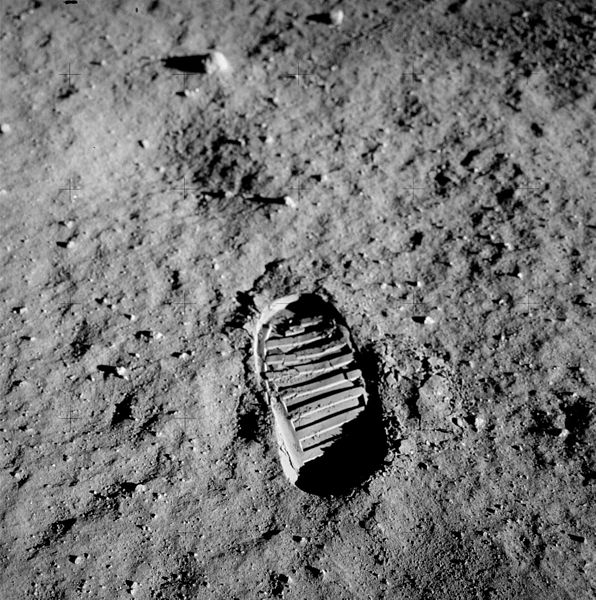 When Neil Armstrong set his left boot on the surface of the moon on July 21, 1969, becoming the first person to ever walk on the moon. He then spoke some of the most famous words in the history of mankind, ”That’s one small step for man, one giant leap for mankind.”
So true, so brilliant, so inspirational yet…so contradicting? The word “man” and “mankind” are used synonymously, meaning that the oh-so-famous quote quite simply put was, “That’s one small step for man, one giant leap for man.” Huh?
A one-lettered indefinite article is all it would take to turn this quote into the inspirational words our brains all process when we hear them. That article is “a”- “One small step for “a” man, one giant leap for mankind.” That is how most people interpret his words and, according to Neil Armstrong, those are the words he intended to speak.
NASA’s official transcript of the quote still shows the “a” in parentheses, “That’s one small step for [a] man, one giant leap for mankind.” This is because the “a” is not audible in the broadcast. For years, both NASA and Armstrong insisted that static had obscured the “a”. Armstrong himself stated that he would never make such a mistake (omitting such an important part) but after listening to recordings of his quote, finally conceded that it’s possible that he may not have said the “a”. When he admitted this, he stated, “I would hope that history would grant me leeway for dropping the syllable and understand that it was certainly intended, even if it was not said—although it might actually have been”.
An Australia-based computer programmer named Pater Shann Ford conducted a digital audio analysis to support Armstrong’s claim that he did say “a” and concluded that he did, in fact, say “a man”, but the “a” was inaudible due to technological limitations of the time. However, linguists David Beaver and Mark Liberman wrote their own digital audio analysis of the infamous quote on Language Log blog and concluded that, “The acoustic evidence seems to be against Ford’s theory.”
But that’s not the end of the story. Support for Armstrong has been found in a team of researchers from Michigan State University and Ohio State University who have concluded that Armstrong did indeed speak the words he claims to have spoken but static or technological limitations are not to blame for its apparent omission. According to them, Armstrong’s Ohion accent is to blame y’all.
According to a Michigan State University specialist in communicative sciences, assistant professor Laura Diller, because of the dialect of his hometown, if Neil Armstrong did voice the word “a”, it was short and fully acoustically blended with the preceding word “for”.
The Acoustical Society of America’s article on this topic states that,
Dilley and her colleagues, who include MSU linguist Melissa Baese-Berk and OSU psychologist Mark Pitt, thought they might be able to figure out what Armstrong said with a statistical analysis of the duration of the ‘r’ sound as spoken by native central Ohioans saying ‘for’ and ‘for a’ in natural conversation. They used a collection of recordings of conversational speech from 40 people raised in Columbus, Ohio, near Armstrong’s native town of Wapakoneta. Within this body of recordings, they found 191 cases of ‘for a’. They matched each of these to an instance of ‘for’ as said by the same speaker and compared the relative duration. They also examined the duration of Armstrong’s ‘for (a’) from the lunar transmission.
The researchers found a large overlap between the relative duration of the ‘r’ sound in ‘for’ and ‘for a’ using the Ohio speech data. The duration of the ‘frrr(uh)’ in Armstrong’s recording was 0.127 seconds, which falls into the middle of this overlap, though it is a slightly better match for an ‘a’-less ‘for’. In other words, the researchers conclude, the lunar landing quote is highly compatible with either possible interpretation, though it is probably slightly more likely to be perceived as ‘for’ regardless of what Armstrong actually said. Dilley says there may have been a ‘perfect storm of conditions’ for the word ‘a’ to have been spoken but not heard.
source:::::today i foundout.com
natarajan
“Just a Slip … Not a Fall”….:” No Question of Giving Up”….
Climbing a ladder of success is definitely not an easy task. There is a saying that goes, “Rome was not built in a day,” similarly there is no successful person who has got the name and fame overnight. It’s not like successful personalities have never failed but they dared to stand against all odds, which can only attain through hard work and sheer determination. Let us take a look at these personalities who have never accepted defeat to achieve their goals, as compiled by listdose.com
 1. Lionel Messi:
Argentinian striker, Lionel Messi is widely regarded as one of the greatest players of the modern generation. He plays for FC Barcelona and the Argentina national team. He has been described as Diego Maradona’s successor because of his prolific goal scoring record and ability to dribble past opponents. Widely recognised as the best player in the world and rated by some commentators, coaches and players as the greatest footballer of all time, he is the first football player in history to win FIFA world player of the year four times. Despite his successful career today, Messi as a child was diagnosed with a growth hormone disorder, or GHD. It is often called idiopathic short stature, but there are problems that go beyond being shorter than average. The treatments were expensive, a $900 monthly expense that his modest family could not afford. So his parents decided to move to Barcelona, Spain for the treatment.
 2.Sudha Chandran:
Sudha Chandran is a well known Bharatanatyam dancer from Chennai, India. She completed her Masters in Mumbai, and while travelling from Mumbai to Chennai, she met with an accident. The wound on her right leg got affected by gangrene, which resulted in the amputation. But despite her injury, Sudha went on to become one of the most highly acclaimed dancers. She is recognized in many countries and has been honored with numerous awards and still receives invitations to perform dance in all over the world.
 3 Ludwig van Beethoven:
Ludwig van Beethoven, a German composer and pianist is one of the most famous and influential composers of all times. Some of his best known compositions include 9 symphonies, 5 concertos for piano, 32 piano sonatas, and 16 string quartets. Miraculously, this great composer went deaf during his course of life as a musician. Then on, he was unable to hear his own compose music. In spite of his physical shortcoming, music made him carry on and gave the world some of the best music ever.
 4. Thomas Alva Edison:
Thomas Alva Edison was an American inventor and businessman who developed many devices that greatly influenced life around the world, including the phonograph, the motion picture camera, and a practical electric light bulb. He was also called ‘The Wizard of Menlo Park’. This extraordinary inventor, failed over ten thousand times on his attempt to invent the light bulb. For this Edison states, “I have not failed. I’ve just found ten thousand ways that won’t work.”
 5. Abraham Lincoln:
Abraham Lincoln, The 16th president of the United States, was a self educated person. He faced many obstacles and fought it with determination to come up as a well known and successful leader respected all around the world. His success as president was particularly interesting because of the amount of personal and professional failure he had in his entire life. Lincoln had two business ventures fail, lost 8 different elections and had a complete nervous breakdown before becoming president in 1860. His story is indeed a great inspirational story which shows how one should keep moving towards one dream to eventually achieve it.
 6. Helen Keller:
Helen is an American author, political activist, and lecturer and was the first deaf-blind person to earn a Bachelor of Arts degree. Her teacher Anne Sullivan played a very important role in Helen’s life by teaching her how to communicate. Hellen Keller has also campaigned for women’s suffrage, workers’ rights, and socialism, as well as various other progressive causes. Keller has met almost every President during her life and was friends with Keller famous personalities such as Alexander Graham Bell, Charlie Chaplin, and Mark Twain.
 7. Nick Vujicic:
Nick Vujicic is an Australian Christian evangelist and motivational speaker who was born with no arms and legs. He was suffering from tetra-amelia syndrome, a rare disorder characterized by the absence of all four limbs. But this doesn’t stop him from taking his life ahead. The early days were quite difficult for him. Throughout his childhood, Nick not only dealt with the typical challenges in school, but he also struggled with depression and loneliness. But eventually, he came in terms with his disability and, at the age of seventeen, Nick started his own non-profit organization, ‘Life Without Limbs’. Today, he gives motivational speeches all across the world about life with a disability, on hope, and on finding meaning in life. He also talks about his belief that God can use any willing heart to do his work and that God is big enough to overcome any disability. It is his small foot on his left hip that helps him balance and enables him to use his one foot to type, write with a pen and pick things up between his toes.
 8. Glenn Verniss Cunningham:
Glenn Cunningham was one of the United States’ fastest runners who shines against the greatest odds. At the age of 8, Glenn met with a horrible accident at school that left him with complete loss of skin around his knees and shins. So, doctors urged his parents to amputate his legs, but his parents refused it. The doctors told his parents that he would never walk normally again. However, Glenn and his family refused to accept such claims and with much determination and unwavering faith, he not only walked but also ran faster. In 1932 Summer Olympics, Glenn stood at fourth place in the Men’s 1500m and in 1936 Summer Olympics, he bagged silver in the same 1500 m. Then in 1934, he set the world record by finishing a mile in 4:06.8. Glenn received the James E. Sullivan Award for top amateur athlete in the United States in 1933. Such kinds of achievements would never happen without extreme will power and faith.
source::::: siliconindia .com
natarajan
” Sambhar or Kuzhambu Means ‘ Confusion ‘ ” !!!…Read Further ….
INDIAN FOOD SYSTEM
(More precisely South Indian, but more or less applicable to all Indian meal systems)The following are rough translations of the words of Kanchi Paramacharya extracted from the Tamil publication titled Sollin Selvar (The Expert of Words), Sri Kanchi Munivar by Sri Ra. Ganapathy. The different Indian delicacies are explained as follows.
SAMBHAR:
Sambar is also known as kuzhambu in Tamil, a term that literally translates to ‘get confused’. Paramacharya explains how these three courses are related to the three gunas of spirituality: the confusion of sambar is tamo guna, the clarified and rarified flow of rasam is rajo guna and the all-white buttermilk is satva guna. Our meal reminds us of our spiritual path from confused inaction to a clear flow of action and finally to the realized bliss of unity.
SAADAM:
Cooked rice, the main dish of a South Indian meal is
called sAdam. That which has sat is sAdam, in the same way we call those who are full of sat, sadhus. We can give another explanation for the term: that which is born out of prasannam is prasAdam. What we offer to Swami (God) as nivedanam is given back to us as parasAdam. Since we should not add the root ‘pra’ to the rice we cook for ourselves, we call it sAdam.
RASAM:
Rasam means juice, which is also the name of filtered ruchi. We say ‘it was full of rasa’ when a speech or song was tasteful. If something is an extraction of juice, then would it not be clear, diluted and free of sediments? Such is the nature of our rasam, which is clear and dilute. The other one, served earlier to rasam in a meal, is the kuzhambu. Kuzhambu contains dissolved tamarind and cut vegetable pieces, so it looks unclear, its ingredients not easily seen.
BUTTERMILK:
A western meal normally ends with a dessert. In a South Indian meal, desserts such as pAyasam are served after the rasam sAdam. Any sweets that were served at the beginning are also taken at this time. After that we take buttermilk rice as our final course. Paramacharya
explains that since sweets are harmful to teeth, our
sour and salty buttermilk actually strengthens our teeth, and this has been observed and praised by an American dietician. We gargle warm salt water when we get toothache. The buttermilk is the reason for our having strong teeth until the end of our life, unlike the westerners who resort to dentures quite early in their life.UPPUMA:
If the term uppuma is derived from the fact that we add uppu or salt, then we also add salt to iddly, dosa and pongal! Actually, it is not uppuma but ubbuma! The rava used for this dish expands in size to the full vessel where heated up with water and salt. The action of rava getting expanded is the reason for the term ubbuma.
LADDU:
Ladanam (in Sanskrit) means to play, to throw. ladakam is the sports goods used to play with. Since the ball games are the most popular, ladakam came to mean a ball. The dish laddu is like a ball, and this term is a shortened form of laddukam, which derived from ladakam.
Laddu is also known as kunjaa laadu. This should actually be gunjaa laadu, because the Sanskrit term gunjA refers to the gunjA-berry, used as a measure of weight, specially for gold. Since a laddu is a packed ball of gunjA like berries cooked out of flour and sugar, it got this name.
The singer of mUka panca sati on Ambal Kamakshi describes her as Matangi and in that description praises her as ‘gunjA bhUsha’, that is, wearing chains and bangles made of gunjA-berries of gold.
PAYASAM:
payas (in Sanskrit) means milk. So pAyasam literally means ‘a delicacy made of milk’. This term does not refer to the rice and jaggery used to make pAyasam.
They go with the term without saying. Actually pAyasam is to be made by boiling rice in milk (not water) and adding jaggery. These days we have dhal pAyasam, ravA pAyasam, sEmia pAyasam and so on, using other things in the place of rice.
Vaishanavas have a beautiful Tamil term akkaara adisil for pAyasam. The ‘akkaar’ in this term is a corruption of the Sanskrit sharkara. The English term ‘sugar’ is from the Arabian ‘sukkar’, which in turn is from this Sanskrit term. The same term also took the forms ‘saccharine’ and ‘jaggery’. And the name of the dish jangiri is from the term jaggery.
TAMBULAM:
It is customary to have tAmbUlam at the end of a South Indian dinner. In the North, tAambUlam is popularly known as paan, which is usually a wrap of betel nut and other allied items in a calcium-laced pair of betel leaves. In the South, tAmbUlam is usually an elaborate and leisurely after-dinner activity. People sit around a plate of tAmbUlam items, drop a few cut or sliced betel nut pieces in their month, take the betel leaves one by one leisurely, draw a daub of pasty calcium on their back and then stuff them in their mouth, chatting happily all the while.
The betel leaf is known by the name vetrilai in Tamil, literally an empty leaf.
Paramacharya once asked the people sitting around him the reason for calling it an empty leaf. When none could give the answer, he said that the usually edible plants don’t just stop with leaf; they proceed to blossom, and bear fruits or vegetables.
Even in the case of spinach or lettuce, we have to cook them before we can take them. Only in the case of the betel leaf, we take it raw, and this plant just stops with its leaves, hence the name vetrilai or empty leaf.
source:::::input from a friend of mine
natarajan

Doctors are Not Bound by Hippocratic Oath !!!
Myth: Doctors are bound by the Hippocratic Oath.
 A binding agreement, as much a social contract as Social Security or Medicare, the traditional Hippocratic Oath holds those who swear to it to a strict code of professional and personal conduct. Contrary to popular belief, though, most doctors never take this oath, and, actually, most of us are probably glad they never do.
Original Hippocratic Oath
Although scholars disagree about when it was written, or even who wrote it, the general consensus is that the Hippocratic Oath was penned about 2500 years ago. Most commonly attributed to Hippocrates, the father of modern medicine, the ancient vow demands a lot from doctors, including a certain level of chastity, charity and swearing to pagan gods. It provides in pertinent part:
I swear by Apollo the physician, and Asclepius, and Hygieia and Panacea and all the gods and goddesses as my witnesses that, according to my ability and judgment, I will keep this Oath and this covenant . . . to teach them this art . . . without fee or covenant.
I will use those dietary regimens which will benefit my patients . . . and I will do no harm or injustice to them.
I will neither give a deadly drug to anybody who asked for it, nor will I make a suggestion to this effect. Similarly I will not give a woman an abortive remedy.
I will not use the knife. . .
Whatever houses I may visit, I will . . . remain free of sexual relations with both female and male persons . . .
What I may see or hear in the course of treatment . . . I will keep to myself.
If I fulfill this oath and do not violate it, may it be granted to me to enjoy life and art, begin honored . . . . if I transgress is and swear falsely, may the opposite of all this be my lot.
Although ancient, swearing the oath was not used as a rite of passage at medical schools until 1508, when the University of Wittenberg first administered it. By 1804, it had been incorporated into the graduation ceremony of the medical school in Montpellier, France. However, it was still not commonly administered, and by the early 20th century, not even 20% of U.S. medical schools included the oath as part of their commencement ceremonies.
Outmoded Requirements and Prohibitions
The restrictive, ancient vow poses several problems for the modern practitioner. First, the oath forbids physician use of a knife, a key instrument involved in nearly every medical practice. Second, its prohibition against abortion violates U.S. law, and would alienate over 40% of the population. Third, its restraint on euthanasia runs counter to the modern trend toward physician-assisted suicide.
Fourth, who swears to Apollo anymore, let alone the much lesser known Asclepius, Hygieia and Panacea?
Fifth, many doctors treat, or at least give medical advice to, those close to them, including spouses and sexual partners, which is prohibited by the oath.
Sixth, the oath is potentially a binding contract, which, in our litigation-heavy society, could provide a dissatisfied patient with yet another avenue to sue her doctor. [Typically, when a patient sues a doctor, it is for malpractice – a claim that often must be brought within 1-3 years. Contrarily, when someone sues for a breach of contract, they often have a longer time period in which to sue.]
Modern Oaths
Although most do not swear to the original Hippocratic Oath, the majority of doctors do take an oath – often when they graduate from medical school. Despite early disinterest, physician oaths began to come into vogue after World War II.
During the Holocaust, doctors in Nazi concentration camps committed previously inconceivable atrocities against prisoners. Experimenting with extreme temperatures, radiation, untested drugs and vaccines, unnecessary and sometimes bizarre surgeries and infecting captives with deadly diseases, the exploits of concentration camp physicians shocked and horrified the world. Sane doctors realized stricter rules, and a code of ethics, were needed.
In 1948, the 2nd General Assembly of the World Medical Association adopted theDeclaration of Geneva, appearing below as amended:
“AT THE TIME OF BEING ADMITTED AS A MEMBER OF THE MEDICAL PROFESSION:
I solemnly pledge to consecrate my life to the service of humanity . . .
I will practice my profession with conscience and dignity;
The health of my patient will be my first consideration;
I will respect the secrets that are confided in me . . .
I will not permit considerations of age, disease or disability, creed, ethnic origin, gender, nationality, political affiliation, race, sexual orientation, social standing or any other factor to intervene between my duty and my patient;
I will maintain the utmost respect for human life;
I will not use my medical knowledge to violate human rights and civil liberties, even under threat . . . .”
Similarly, in 1964 a modern version of the Hippocratic Oath was penned by Professor Lasagna of the School of Medicine at Tufts University. Although the modern oath retains many of the themes of the original, it omits the troublesome parts about surgery, euthanasia, abortion and sexual relations.
A number of other, similar oaths have also been written, and today, nearly every medical school requires some sort of oath of its graduates, although most are seen as “ceremonial and nonobligatory . . . compared to that taken by a judge, president, or other politician when he or she is sworn into office.”
Future of Medical Oaths
Seen as essentially providing only general moral and ethical guidance, many physicians today find physicians’ oaths lacking. Some point to the number and diversity of specialties in modern medicine and note that one, generalized oath is inadequate. Others identify that the oaths often conflict with necessary medical experiments, or simply do not address them.
Still others find the oaths lacking when it comes to managing infectious, fatal diseases. Strict adherence to an oath would demand that physicians treat patients infected with lethal, highly contagious diseases, like the Ebola virus, regardless of circumstance or preparedness. Likewise, an oath may prohibit a doctor from sharing patient information that would help epidemiologists and others during an epidemic.
Despite their shortcomings, doctors’ oaths are likely here to stay. As Dr. Howard Markel recently noted:
“It is unlikely to become superannuated. It serves as a powerful reminder and declaration that we are all a part of something infinitely larger, older, and more important than a particular specialty or institution . . . . The need for physicians to make a formal warrant of diligent, moral, and ethical conduct in the service of their patients may be stronger than ever.“
source:::: today i foundout.com
natarajan

