3 Indians among 100 Shortlisted For Oneway Trip to MARS…

The Red Planet's surface. File photo.
Reuters

The Red Planet’s surface. File photo.

Three Indians, two women and one man, have made it to the list of 100 applicants who will move on to the next round of an ambitious private mission that aims to send four people on a one-way trip to Mars in 2024.

From the initial 202,586 applicants, only 100 hopefuls have been selected to proceed to the next round of the Mars One Astronaut Selection Process, The Netherlands-based non-profit organisation Mars One has announced.

The project aims to set up a human colony on Mars and eventually around 40 people will be sent to the red planet on a permanent basis. The finalists will train for seven years and Mars One will begin sending out four at a time from 2024.

The Mars 100 Round Three candidates include 50 men and 50 women with 39 from the Americas, 31 from Europe, 16 from Asia, 7 from Africa, and 7 from Oceania.

The Indian candidates include 29-year-old Taranjeet Singh Bhatia, who is studying Doctorate in Computer Science at the University of Central Florida.

The other two are Ritika Singh, 29, who lives in Dubai, and Shradha Prasad, 19, from Kerala.

The second round of the application process last year had shortlisted 44 Indians, of whom 27 were men and 17 were women.

The third round has selected 100 candidates from a pool of 660 after they participated in personal online interviews with Norbert Kraft, Chief Medical Officer.

During the interviews the candidates had a chance to show their understanding of the risks involved, team spirit and their motivation to be part of the life changing expedition.

“We were impressed with how many strong candidates participated in the interview round, which made it a very difficult selection,” said Norbert Kraft.

The next selection rounds will focus on composing teams that can endure all the hardships of a permanent settlement on Mars.

The candidates will receive their first shot at training in the copy of the Mars Outpost on Earth and will demonstrate their suitability to perform well in a team.

Keywords: Mars OneSpace Mission

SOURCE:::: http://www.the hindu.com

Natarajan

Image of the Day… Wind Sculpted Frozen Sand…!!!

Wind sculpted this frozen sand in Michigan

It was cold in the upper U.S this weekend, when Joshua Nowicki noticed and captured these cool frozen sand formations.

View larger. | Photo by Joshua Nowicki.

It was fiercely cold in the U.S. state of Michigan this past weekend, when Joshua Nowicki posted this cool photo at EarthSky Facebook. He said these interesting formations were created by the wind eroding the frozen sand at Silver Beach County Park in Saint Joseph, Michigan on February 14, 2015. The largest one, he wrote, was about 12 inches (30 cm) tall.

Thank you, Joshua!

How cold was it in Michigan? Dangerously cold. Mlive.com/weather wrote that – at 7 a.m. Sunday morning, February 15, 2015 – every reporting site except Port Hope and Munising was below zero Fahrenheit.

SOURCE:::: http://www.earthskynews.org

Natarajan

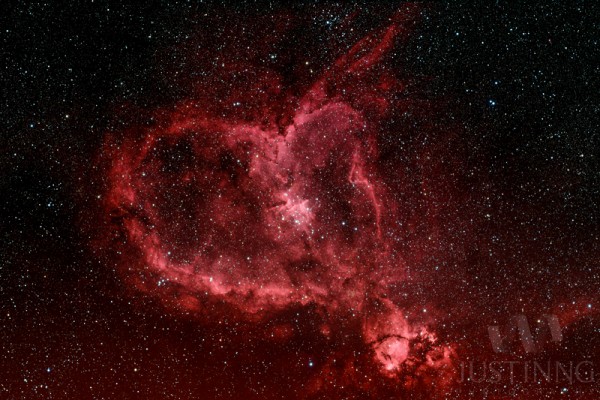
Image of the Day… Heart Nebula For Valentine’s Day… !!!

Heart Nebula

It’s 7,500 light years away, in the Perseus Arm of our Milky Way galaxy, in the direction to the constellation Cassiopeia the Queen.

IC1805 aka the Heart Nebula via Justin Ng.  See it larger at his website.

Our friend Justin Ng sent in this photo of IC 1805 – otherwise known as the Heart Nebula – on this Valentine’s Day 2015. It’s an emission nebula with glowing gas and darker dust lanes, located some 7,500 light years away, in the Perseus Arm of our Milky Way galaxy, in the direction to the constellation Cassiopeia the Queen.

Thank you, Justin Ng!

To all who celebrate it, happy Valentine’s Day 2015!

SOURCE:::: http://www.earthskynews.org

Natarajan

Kashmir Willow Bat … An Important Player in Cricket World cup !!!

A look at Kashmiri willow bat factory, as sales boom during this World Cup season.

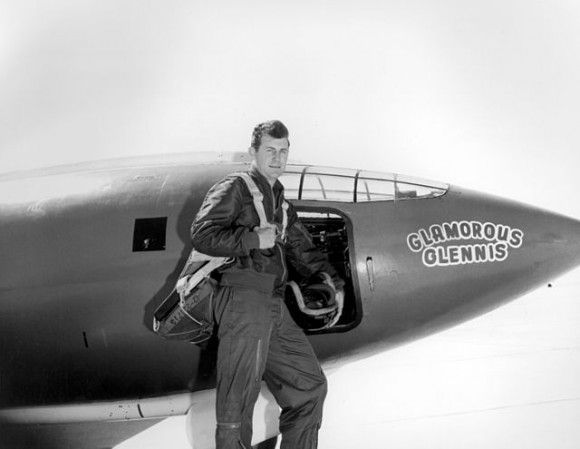
This Date …Feb 13…. .. BirthDay of Chuck Yeager… The 1st Pilot to Break the Sound Barrier…

February 13, 1923. Chuck Yeager, the first pilot to break the sound barrier, was born in Myra, West Virginia on this date in 1923.

Yaeger enlisted in the Army Air Corps in September 1941, at the age of 18. He fought in World War II before being assigned to fly high-performance aircraft at Edwards Air Force Base in 1947.

On October 14, 1947, Yeager piloted a plane called Glamorous Glennis to Mach 1.06, just over the speed of sound.

Dubbed the fastest man alive, he also won the prestigious Collier Trophy in aviation even as he continued setting speed records.

The plane in which he broke the sound barrier is on display at the Smithsonian National Air and Space Museum in Washington, D.C.

Yeager’s adventures were popularized in a 1980s satirical book and movie, both called The Right Stuff.

He currently lives California.

Yeager in front of the Bell X-1, which, as with all of the aircraft assigned to him, he named Glamorous Glennis after his wife.  Image via Wikimedia Commons.

Bottom line: On February 13, 1923, Chuck Yeager, the first pilot to break the sound barrier, was born in Myra, West Virginia.

SOURCE:::: http://www.esrthskynews.org

Natarajan

2000 Year Old Rice Terrace of Philippines…

Philippine Rice Terraces Why Reflection

Photo credit: Jon Rawlinson

For at least two millennia, the Ifugao people have sculpted the sides of mountains into useable farmland. Located in the heart of the Cordillera mountain range in the northern Philippines, these rice terraces rise like wide, monumental staircases. The United Nations Educational, Scientific and Cultural Organization (UNESCO) added these feats of ancient engineering to its list of World Heritage Sites in 1995. According to UNESCO, the Philippine rice terraces “create a landscape of great beauty that expresses the harmony between humankind and the environment.”

The terraces, however, also epitomize the story of how modern tensions are putting a strain on that “harmony” worldwide. Yes, natural disasters and the perennial typhoons that lash the Philippines threaten the preservation of the Cordillera rice terraces. But the biggest pressure they face is a shift in human society. As the UNESCO advisory body has written, “the terraced landscape is highly vulnerable because the social equilibrium that existed in the rice terraces for the past two millennia has become profoundly threatened by technological and evolutionary changes.”

Young Ifugao are migrating to the cities where they can find higher paying, less backbreaking work. At the same, the once remote region is becoming more interconnected through large investments in infrastructure. In the next two years, the Philippine government plans to spend around $25 million in road construction and improvement in the Cordillera region.

Philippine Rice Terraces Incline

Photo credit: Jon Rawlinson

One goal for the road project is to attract more tourists to the area and thereby bring more money to the regional economy. In 2013, according to Philippine government statistics, 1.1 million people visited the rice terraces. In the future, the government hopes to attract 10 million tourists annually. It is unclear whether this aspiration is misguided, since the arrival of foreign tourists can dramatically change the nature of a place. But Philippine officials are hoping tourism will also provide livelihoods to those Ifugao who otherwise might leave the boondocks for the cities.

Filipinos call the Cordillera rice terraces the Eighth Wonder of the World. UNESCO calls them “the priceless contribution of Philippine ancestors to humanity.” As shown in the expansive gallery below, this region of the Philippines has some of the most beautiful vistas on earth. This piece of humanity’s common heritage deserves to be preserved for generations to come.

Rice Terraces Mud Walls

Some of the terraces use mud walls, as pictured here; others use stone. (Photo credit: Flickr user Momo)
SOURCE:::: http://www.all that is interesting .com
Natarajan


This Date in Science….Feb 11 2010……When a Spacecraft Destroyed a Sundog…

February 11, 2010. On this date – the coolest space launch ever for us sky fans! I ran into this image and video yesterday via a post on Google+. I was interested when I saw a quote from the person who runs the world’s absolute best website for sky optics, Les Cowley of the website Atmospheric Optics. It turns out this story has been around a few years, but I liked it and thought you might, too. It began with the launch five years ago of NASA’s Solar Dynamics Observatory (SDO), one of several observatories that keep an eye on our sun. It seems that when SDO lifted off from Cape Canaveral on February 11, 2010, on its mission to observe the sun, it first destroyed a sundog in Earth’s atmosphere – in the process bringing to light the new form of ice halo – and teaching those who love and study sky optics new things about how shock waves interact with clouds.

The video above shows SDO’s 2010 launch via an Atlas V rocket. Watch it now, and turn up the volume to hear people cheer when the spacecraft’s passage through the atmosphere destroyed the sundog – which is a bright spot in the sky, formed by refraction of sunlight through plate-shaped ice crystals, which drift down from the sky like leaves fluttering from trees. If you have to, watch it twice to see the luminous column of white light that appears next to the Atlas V.

Les Cowley explained in this 2011 post at Science@NASA:

When the rocket penetrated the cirrus, shock waves rippled through the cloud and destroyed the alignment of the ice crystals. This extinguished the sundog.

The sundog’s destruction was understood. The events that followed were not. Cowley said:

A luminous column of white light appeared next to the Atlas V and followed the rocket up into the sky. We’d never seen anything like it.

Cowley and colleague Robert Greenler at first couldn’t explain this column of light. Then they realized that the plate-shaped ice crystals were organized by the shock wave from the Atlas V. Cowley explained:

The crystals are tilted between 8 and 12 degrees. Then they gyrate so that the main crystal axis describes a conical motion. Toy tops and gyroscopes do it. The earth does it once every 26000 years. The motion is ordered and precise.

Love it!

View larger. | Optics experts in the U.K. have discovered a new form of ice halo.  Image Credit: NASA/Goddard/Anne Koslosky View larger. | When the Solar Dynamic Observatory (bright streak in lower right quadrant of photo) lifted off from Cape Canaveral on February 11, 2010, its launch enabled optics experts to discover a new form of ice halo. Image via NASA/Goddard/Anne Koslosky

Bottom line: When NASA’s Solar Dynamics Observatory (SD0) lifted off from Cape Canaveral on February 11, 2010, on its mission to observe the sun, it first destroyed a sundog in Earth’s atmosphere – in the process bringing to light the new form of ice halo – and teaching those who love and study sky optics new things about how shock waves interact with clouds.

Via Science@NASA website

SOURCE:::: http://www.earthskynews.org

Natarajan

The Incredible Live Bridges of Meghalaya, India…!!!

Meghalaya, North India, where villagers have come up with a unique construction technique that harnesses nature in its purest form – they grow their own living bridges! Using the roots of the rubber fig tree, the natives have created an amazingly elaborate network living bridges, some of which, both researchers and natives believe, are over 500 years old! These extraordinary examples of living architecture are also lessons in patience, since they take about 15 years to grow, and are often continued by the sons and daughters of the original builders. With age, though, the living root bridges grow stronger and can often support the weight of 50 or more people at a time!

SOURCE:::: http://www.ba-bamail.com

Natarajan


Who is McDonald in McDonald’s Restaurant ?….

McDonaldsMcDonald’s is, without question, the most successful, popular, and influential fast-food restaurant chain in recorded history. The name most commonly associated with McDonald’s is Ray Kroc.  Kroc was the entrepreneur who founded the McDonald’s corporation.  So how did it come to be named “McDonald’s”? You see, contrary to what you’ll often read, to suggest Kroc created McDonald’s is, well, a crock.

As is sometimes the case with amazingly successful businesses, the early part of the McDonald’s story includes the people who came up with the ideas and created the thing, and the person who figured out how to sell the idea to the rest of the world. Ray Kroc was most definitely in the latter camp, essentially, theSteve Jobs of fast food, coming up with exceptionally few ideas himself and getting most of the credit, but ultimately one heck of a salesman.

In the early 1950s, Kroc was employed selling milkshake machines. One of his clients was a chain of restaurants in Southern California run by a pair of brothers, Richard and Maurice McDonald.

Born in New Hampshire, the McDonald brothers moved to California in the 1920s where they found work, among other places, as set movers for various movie studios. They switched to the restaurant industry in the late 1930s thanks to their dad, Patrick McDonald, who started “The Airdome” food-stand in 1937, which principally sold hamburgers and hot dogs.

In 1940, the brothers branched out opening McDonald’s barbeque drive-in restaurant in nearby San Bernardino. It did well, but more importantly it taught the pair some important lessons about the fast-food service industry, particularly that hamburgers are among the most profitable food item to sell and that the carhop employees bringing food to customers were completely unnecessary. (They had about 20 such employed at the time). They also came up with a bunch of ideas on how to speed up the process from raw patty to putting the burger in the customer’s hands, including a complete re-design of the kitchen and the creation of an assembly line process of cooking. With these lessons learned, the McDonald brothers shut down the barbeque restaurant for three months in 1948 to re-tool it. With a slimmed-down menu and an emphasis on serving the chow as quickly and as cheaply as possible, the highly-mechanized drive-in began churning out 15-cent hamburgers (about $1.30 today) with unprecedented speed.

By 1954, the McDonald brothers were operating nine outlets and had sold 21 franchises, initially simply franchising their process, rather than the brand name.

It was then that a 52 year old Ray Kroc came calling. At this point in his life, Kroc had served in the army in the same regiment as Walt Disney (with Kroc lying about his age to get in- he was 15 at the time) and, later, he worked as a jazz musician, paper cup salesmen, radio DJ, restaurant employee, and ultimately a salesman of milkshake machines, which unfortunately were at this point getting harder and harder to sell. You see, the brand he was selling (Prince Castle) was significantly more expensive than the increasingly popular Hamilton Beach milkshake machine. Needless to say, despite being at the age when many are loath to start a new career (52), he was on the lookout for a new venture.

Having some experience in his past working at restaurants and having observed many restaurants across the nation while peddling his wares, he knew a good restaurant system when he saw one.  Around this time, the McDonald’s brothers had just lost their franchising agent, Bill Tansey, due to poor health. Thus, Kroc was able to convince the McDonald brothers to hire him as their new agent. However, unlike the brothers, he had much bigger goals than a local fast-food chain, wanting to take the company nationwide.

With a deal in hand, Kroc founded the McDonald’s corporation and opened his first franchise in Des Plaines, Illinois, on April 15, 1955, with the brothers slated to receive half a percent of gross sales. Within five years, McDonald’s had opened 100 franchises.

So how did the McDonald’s brothers get phased out of the operation and popular consciousness, with Ray Kroc being the only one most have heard of? In 1961, the brothers were perfectly happy with their chain of restaurants and had little interest in the much more rapid expansion that Kroc heavily advocated. Kroc then went about gathering investors and bought the business from the McDonald brothers for $2.7 million dollars (about $21 million today), which was enough to give them each about $1 million after taxes. At the ages of 52 and 59, the pair were set for semi-retirement. However, they were also supposed to receive continual royalties from the deal, but had kept that part out of the paperwork on Kroc’s insistence, as he felt it wouldn’t go over well with the investors.  Of course, as it wasn’t in writing, he didn’t honor that part of the deal. (Yep, the Steve Jobs of fast food; see Bonus Facts here)

From here, Kroc was finally able to implement his rapid expansion plan. Fast-forward a little over 50 years and the company is presently boasting about 35,000 different locations in 118 countries across the globe, employing about 1.7 million individuals who serve about 68 million people every day, all the while profiting over $5 billion annually.


Bonus Facts:

  • An average beef cow (200 kg of usable meat) produces enough meat to make about 4,500 hamburgers at McDonald’s.
  • About 3 billion pounds of potatoes are used to make McDonald’s fries every year, this is about 8% of all potatoes grown in the United States or a half a percent of all potatoes grown in the world per year. (If you’re curious: A Brief History of French Fries)
  • When the McDonald brothers sold the business to Kroc, they withheld the original restaurant, giving it instead, free of charge, to their original employees who worked there. Kroc later managed to force this restaurant out of business by opening a McDonald’s extremely close by.

SOURCE::::: http://www.today i foundout.com

Natarajan

Image of the Day….A Fantastic View From ISS.. ” !!!

European Space Agency astronaut Samantha Cristoforetti took this photograph from the International Space Station and posted it to social media on Jan. 30, 2015. Cristoforetti wrote, “A spectacular flyover of the Gulf of Aden and the Horn of Africa. #HelloEarth”

Image Credit: NASA/ESA/Samantha Cristoforetti 

SOURCE:::: www. nasa.gov.

Natarajan