Curiosity’s 10 best images of Mars in 2015….

As of December, 2015, Curiosity has acquired over 292,000 images from Mars’ surface. Here are our picks for the top 10 images by the rover in 2015.

Strata rocks and dark sand in an area that has been named

Strata rocks and dark sand in an area that has been named ‘Kimberley.’ The strata in the foreground dip towards the base of Mount Sharp, indicating flow of water toward a basin that existed before the larger bulk of the mountain formed. The images obtained by NASA’s Curiosity rover in October, 2015, led scientists conclude there were ancient lakes on this area. Credits: NASA/JPL-Caltech/MSSS

Since its August 5-6, 2012 landing on Mars – an event known to space scientists as seven minutes of terror – NASA’s Curiosity rover has been studying the surface of Mars. Its job now is to determine whether the Gale Crater area, the area in which it landed, ever had the right conditions to support microbial life. As of December, 2015 – using its 17 cameras – Curiosity has acquired over 292,000 images from the surface of Mars. The images on this page are our picks of some of the best images captured by the rover in 2015.

Curiosity has seen a lot of layered rocks on the surface of Mars, like these amazing rocks captured on July, 2015. Credits: NASA/JPL-Caltech/MSSS

Curiosity has seen a lot of layered rocks on the surface of Mars, like these amazing rocks captured in July, 2015.Read more about this image. Credits: NASA/JPL-Caltech/MSSS

The rover mission’s official name is the Mars Science Laboratory. The rover itself is 9 feet (about 3 meters) long and 7 feet (about 2.7 meters) wide, and weighs about 2,000 pounds (900 kg).

 It is not Arizona or Utah...this is planet Mars as seen by Curiosity on September, 2015.  This image shows regions that include a long ridge teeming with hematite, an iron oxide. Just beyond is an undulating plain rich in clay minerals. And just beyond that are a multitude of rounded buttes, all high in sulfate minerals. The changing mineralogy in these layers of Mount Sharp suggests a changing environment in early Mars, though all involve exposure to water billions of years ago. Image via NASA/JPL-Caltech/MSSS

It’s not Arizona or Utah … this is planet Mars as seen by Curiosity on September, 2015. This image shows regions that include a long ridge teeming with hematite, an iron oxide. Just beyond is an undulating plain rich in clay minerals. And just beyond that are a multitude of rounded buttes, all high in sulfate minerals. The changing mineralogy in these layers of Mount Sharp suggests a changing environment in early Mars, though all involve exposure to water billions of years ago. Image via NASA/JPL-Caltech/MSSS

Sunset in Mars' Gale Crater. NASA's Curiosity Mars rover captured the sun setting on April 15, 2015 from the rover's location in Gale Crater. The color has been calibrated and white-balanced to remove camera artifacts. Mastcam sees color very similarly to what human eyes see, although it is actually a little less sensitive to blue than people are. Dust in the Martian atmosphere has fine particles that permit blue light to penetrate the atmosphere more efficiently than longer-wavelength colors. That causes the blue colors in the mixed light coming from the sun to stay closer to sun's part of the sky, compared to the wider scattering of yellow and red colors. Image via NASA/JPL-Caltech/MSSS

Sunset on Mars. The Curiosity rover captured the sun setting on April 15, 2015 from the Gale Crater. The color has been calibrated and white-balanced to remove camera artifacts. The rover’s ‘Mastcam’ sees color very similarly to what human eyes see, although it is actually a little less sensitive to blue than people are. Dust in the Martian atmosphere has fine particles that permit blue light to penetrate the atmosphere more efficiently than longer-wavelength colors. That causes the blue colors in the mixed light coming from the sun to stay closer to sun’s part of the sky, compared to the wider scattering of yellow and red colors. Image via NASA/JPL-Caltech/MSSS

Two orbiters that were already studying Mars when Curiosity arrived. They are the Mars Reconnaissance Orbiter, and Mars Odyssey. These two act as satellites, relaying pictures and data from the rover back to Earth.]

Diverse composition of mineral veins at the

Diverse composition of mineral veins at the ‘Garden City’ site investigated by Curiosity suggests multiple episodes of groundwater activity. The prominent mineral veins vary in thickness and brightness, and include: 1) thin, dark-toned fracture filling material; 2) thick, dark-toned vein material in large fractures; 3) light-toned vein material, which was deposited last. Researchers used the Mastcam and other instruments on Curiosity in March and April 2015 to study the structure and composition of mineral veins at Garden City, for information about fluids that deposited minerals in fractured rock there. Image via NASA/JPL-Caltech/MSSS

Because color images use much more data or bandwidth to be transmitted to our planet, a lot of black and white images are sent to the orbiting spacecraft that occasionally passes over t

he rover’s location for a short time. However, some color images are eventually sent.

This is an area lining the northwestern edge of Mount Sharp. The scene combines multiple images taken with the Mast Camera on NASA’s Curiosity Mars rover on Sept. 25, 2015. Dunes are larger than wind-blown ripples of sand or dust that Curiosity and other rovers have visited previously. You can see the dark dunes by clicking again after opening this panorama. Image via NASA/JPL-Caltech/MSSS

Giant antennas at California (USA), Australia and Spain compose the Deep Space Network that receives pictures and data from the Mars spacecraft as well as from other interplanetary spacecraft.

A Selfie on Mars. Curiosity extended its robotic arm and used the camera on the arm's end to capture this self portrait on October 6,2015. The image was taken at the

A selfie on Mars. Curiosity extended its robotic arm and used the camera on the arm’s end to capture this self portrait on October 6, 2015. The image was taken at the ‘Big Sky’ site, where its drill collected the mission’s fifth taste of Mount Sharp. Image via NASA/JPL-Caltech/MSSS

Dark rocks on route to Mountains. Diverse terrain is visible on this image taken on Mount Sharp on April 10, 2015. The color has been approximately white-balanced to resemble how the scene would appear under daytime lighting conditions on Earth. Image via NASA/JPL-Caltech/MSSS]

Dark rocks on route to mountains. Diverse terrain is visible on this image taken on Mount Sharp on April 10, 2015. The color has been approximately white-balanced to resemble how the scene would appear under daytime lighting conditions on Earth. Image via NASA/JPL-Caltech/MSSS

Damage on the aluminum wheels is evident after 7 miles (11.3 km) on the odometer of the Curiosity rover. Mars' terrain and diverse rocks led to more wheel damage than was expected. However scientists think the 20 inches (51 cm) wheels may permit the rover to continue its mission. Image via NASA/JPL-Caltech/MSSS

Damage on the aluminum wheels is evident after 7 miles (11.3 km) on the odometer of the Curiosity rover. Mars’ terrain and diverse rocks led to more wheel damage than was expected. However scientists think the 20 inches (51 cm) wheels may permit the rover to continue its mission. Image via NASA/JPL-Caltech/MSSS

A Solar Eclipse from Mars. Curiosity captured Phobos, one of the two small martian moons passing in front of the Sun in July, 2015. Although Phobos is only about 14 miles (22.5 km) in diameter, it orbits Mars at just 6,000 km ( 3,728 miles) which is relatively close. Image via NASA/JPL-Caltech/MSSS

A Solar Eclipse from Mars. Curiosity captured Phobos, one of the two small martian moons passing in front of the Sun in July, 2015. Although Phobos is only about 14 miles (22.5 km) in diameter, it orbits Mars at just 6,000 km ( 3,728 miles) which is relatively close. Image via NASA/JPL-Caltech/MSSS

Where is Curiosity right now? The rover is located in an area of Mount Sharp that has been named Namib dune. The rover is analyzing the composition and grain size of a ripple.

Source….www.earthsky.org

Natarajan

” I Turn Scrap Metal Into Animals… ” !!!

My name is JK Brown. I live in rural West Wales. This peaceful part of the country is known for being a precious habitat for its native wildlife, which is of constant inspiration to me.

For as long as I can remember I have loved to watch animals (especially in the wild) and for as long as I can remember I have been drawing, making and creating as a way of celebrating the beauty of nature. Often when I’m out walking I pick up fragments of metal that have been thrown away. Sometimes fly-tipped or washed up on beaches, I patiently reassemble these pieces into monuments to the natural world around me: a habitat that is becoming increasingly fragmented.

I find that my own process of reversing this fragmentation is, for me, a calming antidote to the madness of endless consumption.

More info: Facebook | Etsy

Kingfisher

Two holly blue butterflies

Magpie

Graze

Grasshoppers

Pheasant

Frogs

Native butterflies

Crow

Praying mantis

Source….www.boredpanda.com

Natarajan


Touching Stories Behind these Pictures…. 2015

They say a photograph tells a thousand words.

And yet, in many cases it still unable to convey the entire story.

In 2015, there were some heartbreaking moments — from desperate refugees drinking rainwater to hippos out on the street, to children running from death in Syria.

Reuters photographers tell the story behind some of the most iconic pictures of the year.

‘It takes only a few seconds for life to turn to ashes and blood’

Ghazal, 4, (left) and Judy, 7, carrying 8-month-old Suhair, run away after the shelling of a Red Crescent convoy in Damascus, Syria on May 6.

The story: I was covering the Syrian Arab Red Crescent convoy’s visit to the Douma neighborhood of Damascus, which was carrying medical aid and supplies used to give psychological support to children affected by war. Every time the aid convoy arrived, children would gather around it, happy that they were going to be supplied with food and medicine.

Before the shell landed on the convoy I was sitting on the pavement relaxing; the children gathered around me so I could photograph them. While I was taking these photos, the shell exploded. It killed a female volunteer and wounded many people and volunteers nearby.

The children were terrified and began to scream and cry, especially when they saw a female volunteer covered with blood from a head injury. The challenge to portray this image was just like the challenges we face daily in time of war. I knew that there might be another shell falling within a matter of seconds; then one did exactly that a little further away. Do you want to protect yourself, like everyone else, by walking into a shop or home? Help carry the injured or be satisfied to take photos while others transfer them to ambulances? Do you want to calm screaming children? Or do you just want to cry because of what’s happened?

All these questions need answers in a matter of seconds before you can capture such an image. In this particular photograph, it was the first time I had seen how children’s innocent laughter could turn into screams, fear and tears. It was a very sad moment when I put my eye to the viewfinder to take pictures of laughing children; then when I looked back after taking the picture, I saw the same children crying, distraught. It takes only a few seconds for life to turn to ashes and blood.

Photograph: Bassam Khabieh/Reuters

Crossing over for a better life

Syrian migrants cross under a fence into Hungary at the border with Serbia, near Roszke in August.

Crossing over for a better life

The story: Rail tracks, unguarded, line the border with Serbia. Most refugees used the tracks, a few miles long, as a highway into Hungary. I arrived at the border every day at 6.00 am. The crossing was the only spot still not blocked. A triple coil of razor wire was up everywhere else as Hungary prepared to fence off the border. The rail crossing was easy enough but many migrants chose to jump the fence to avoid the police waiting a few hundred metres inside. The razors were not too sharp to handle with heavy gloves.

Dozens of other photographers and I paced the fence, some way from the rail tracks. Among the shrubs we could make out the contours of migrants waiting for the right moment. Everyone watched everyone else. We watched the refugees, who watched the police, who watched us. It was like an elaborate board game. It was more than just waiting. The people on the other side of the fence filled the atmosphere with strange, unspeakable tension.

This family decided they had waited enough. They started for the fence. Aware of the stakes, they lifted the razor wire, looked around, then went for it. Once across they vanished in the woods. I never saw them again. Photographing the migrants was the ultimate test of staying out of the story: observe keenly, wait, shoot. Don’t cut the wire, don’t invite the refugees in, don’t alert the police. There was little human contact with the thousands of refugees scaling the fence. You learnt nothing about them. They came and went. But those who walked along the tracks stopped and talked. They accepted water or the odd chocolate bar. They even shared stories – stories that will haunt me forever.

There is no way to shake the emotional impact. Once I put the camera down and had time to reflect it all came back. You have to let the story wash through you to remain human.

Photograph: Bernardett Szabo/Reuters

A bloody evening in Paris

A bloody evening in Paris

An injured man is carried out of the Bataclan following fatal shootings in Paris, France, in November.

The story: The weekend appeared calm. I had the evening off. Just before 10, the phone rang: in a grave voice my editor told me that a shooting had occurred at a cafe in eastern Paris and I should get there as quickly as possible.

Around the same time, colleagues who were covering the France v Germany match heard explosions at the Stade de France. They turned their lenses away from the match and scanned the crowd to try and catch something. I took the bulletproof vest from my car — it had been there since the Charlie Hebdo attacks in January — and got on my scooter. I stopped by the bureau to pick up a 400mm lens, certain that the security perimeter would be wide.

En route I heard about another shooting incident. When I arrived at the Bataclan, police warned journalists that we could be considered targets. They ordered us to take cover. The streets were silent. Security forces evacuated some victims, who were taken to safety. Special Forces units started arriving on the scene in huge numbers.

With two colleagues we decided to seek shelter. A young man let us into his apartment and we took up position at the windows. Just before midnight explosions were heard at the music hall. We could not see what was happening; no angle gave us a direct view to the entrance to the Bataclan.

Once the Special Forces operation finished, people covered in blood and wrapped in blankets came flooding out of the theatre. We descended from our window perches to photograph the victims. We tried to record the emotion that these instants provided. Some people, covered in blood, spoke to us. Their stories were chilling. The moments they lived will remain with them forever. They also mark the life of a photojournalist.

Photograph: Christian Hartmann/Reuters

Hope floats

Hope floats

This image from September captures a Syrian refugee holding a baby swims towards the Greek island of Lesbos.

The story: Another inflatable boat packed with dozens of migrants and refugees heading towards the shore. That’s what I noticed in the distance. The sea was calm and they were cheering on the dinghy. Suddenly, some 200 metres away, the rear of the boat deflated for no obvious reason, and people started falling into the sea.

Screams replaced cheers as they frantically tried to stay afloat on life tubes, or by clinging on to the boat. Those who could swim tried to help those who couldn’t. As this dramatic scene unfolded and people drifted away from each other, the biggest challenge was to capture as many of the different scenes as I could.

There were people falling overboard; two men trying to keep their friend afloat; a man still on the boat lifting his child in the air; another man, nearing collapse from exhaustion, swimming towards the shore; volunteers rushing towards the boat. In this hectic moment, one man, tense and yelling really loudly, caught my eye so I shot some frames.

Later, as he tried to catch his breath on the beach, I asked him where he was from. “Syria,” he told me before heading towards a volunteer holding a baby. The distance of the shot hadn’t allowed me to see the details of the picture clearly. It was only when I began editing that I could make out the tiny head of a baby in a life tube, and the screaming man trying to keep himself and the baby above water.

Everything I cover, from riots to politics and sports, trains me to be on the alert and try to get the best from what I am shooting. I learned from this experience that disaster can occur even in what appears to be the calmest of situations.
Looking back, the most memorable moment was when I opened the picture and saw the baby, who looked fast asleep as if in a cradle – dreaming or listening to a lullaby.

Photograph: Alkis Konstantinidis/Reuters

Lookout, there’s a hippo on the street!

In June, Tbilisi was lashed with heavy rains, causing many animals, including this hippopotamus to flee the zoo and roam the flooded streets.

Lookout, there’s a hippo on the street!

The story: The flood killed at least 12 people and partly destroyed Tbilisi Zoo, killing dozens of animals, while 30 more — including tigers, lions and bears managed to escape from their cages. On that night the capital of Georgia was as I’d never seen it.

Among the escapees roaming the streets were a rare breed of white lion cub and six wolves, which roamed through the grounds of a children’s hospital. The zoo is right in the centre of the city, between the state broadcaster and Tbilisi State University.

Heavy rains had turned the Vere river that flows near the zoo and through Tbilisi into a torrent that washed away buildings, roads and cars. The enormous amount of mud and debris under my feet meant that making even a small movement was very difficult while shooting photos. I was there from 11:30 pm. This photo was shot at 6:00 am the next morning; my memory card was almost full so I had only a couple of shots left.

This situation was totally different from any I’d experienced before as a photographer. In the past, all my reporting experience had been negotiating with people; this was the first time I worked with animals. I was smiling as I took this photo of Begi, as I discovered it was called. I had bought a watch for my 14-year-old daughter in that shop just two days before the flood. And here was a hippo in front of it. There was only one complicated escape route available to me in case Begi decided to attack.

There were very few people around, as police had shut down the area. The distance between the hippo and me was about 25 metres but I realised that even for an animal as powerful as this one it was also quite difficult to move forward in such mud. I was also reassured that armed police would protect me in case of attack.

Today, Begi is arguably the world’s most famous hippo.

Photograph: Beso Gulashvili/Reuters
Source…..www.rediff.com
Natarajan


” If the world looks at me and says, you can do nothing,’ I look back at the world and say ‘I can do anything’.”

Srikanth Bolla (pictured below) is standing tall living by his conviction that if the “world looks at me and says, ‘Srikanth, you can do nothing,’ I look back at the world and say ‘I can do anything’.”


Srikanth Bolla

When he was born, neighbours in the village suggested that his parents smother him.

It was better than the pain they would have to go through their lifetime, some said.

He is a “useless” baby without eyes… being born blind is a sin, others added.

Twenty-three years later, Srikanth Bolla is standing tall living by his conviction that if the “world looks at me and says, ‘Srikanth, you can do nothing,’ I look back at the world and say ‘I can do anything’.”

Srikanth is the CEO of Hyderabad-based Bollant Industries, an organisation that employs uneducated disabled employees to manufacture eco-friendly, disposable consumer packaging solutions, which is worth Rs 50 crores.

He considers himself the luckiest man alive, not because he is now a millionaire, but because his uneducated parents, who earned Rs 20,000 a year, did not heed any of the ‘advice’ they received and raised him with love and affection.

“They are the richest people I know,” says Srikanth.

Underdog success story

What is it about stories like Srikanth’s that so inspire and fill one with hope?

Could it be the multiple zeroes after a dollar sign or the belief that you and I can achieve similar success if we set our minds and hearts to it?

Underdog success stories touch a raw nerve. After all, everyone faces adversity, they dream, and they work hard.

It is another matter that only a few cross the threshold of limits set by society.

In Srikanth’s case, it is his sheer tenacity that shines through the dark clouds of his misfortune.

Being born blind was just one part of the story. He was also born poor. And you know what that means in a society like ours.

In school, he was pushed to the back bench and not allowed to play.

The little village school had no way of knowing what inclusion meant.

When he wanted to take up science after his class X, he was denied the option because of his disability.

All of 18, Srikanth not only fought the system but went on to become the first international blind student to be admitted to the prestigious Massachusetts Institute of Technology (MIT) in the US.

As author Paulo Coelho says, “We warriors of light must be prepared to have patience in difficult times and to know the Universe is conspiring in our favour, even though we may not understand how.”

Today, Srikanth has four production plants, one each in Hubli (Karnataka) and Nizamabad (Telangana), and two in Hyderabad (Telangana). Another plant, which will be one hundred percent solar

operated, is coming up in Sri City, an integrated business city in Andhra Pradesh, 55 kms from Chennai.

Angel investor Ravi Mantha, who met Srikanth about two years ago, was so impressed with his business acumen and vision for his company that he not only decided to mentor him but also invested in Srikanth’s company.

It was a small, tin-roof shack in an industrial area near Hyderabad. There were eight employees and three machines under the shed. I expected him to talk about how he wanted to make a social impact, but was surprised by the business clarity and technical knowhow in someone so young,” Ravi says.

They are raising $2-million (around Rs 13 crores) in funding and have already raised Rs 9 crores.

According to Ravi, his personal goal is to “take the company to IPO.”

A vision to build a sustainable company with a workforce comprising 70 percent people with disability is no mean task.

“Srikanth’s vision is inbuilt in the company. It is not just a lip service to CSR,” adds Ravi.

Isolation a big curse

“The isolation of differently-abled people starts at birth,” Srikanth said in his first public speech on the INKTalks stage in Mumbai last month. According to him, “Compassion is a way of showing someone to live; to give someone an opportunity to thrive and make them rich. Richness does not come from money, it comes from happiness.”

When Srikanth was growing up, his father, a farmer, would take him to the fields but the little boy couldn’t be of any help.

His father then decided that he might as well study.

“In my parent’s entrepreneurship model, I was a failure. In entrepreneurship, we have a lean business model where we evaluate an enterprise and say how quickly it fails.”

Since the nearest school in his village was five kilometres away, he had to make his way there mostly on foot. He did this for two years.

“No one acknowledged my presence. I was put in the last bench. I could not participate in the PT class.

That was the time in my life I thought I was the poorest child in the world. It was not because of lack of money but because of loneliness.”

When his father realised that the child was not learning anything, he admitted Srikanth to a special needs school in Hyderabad.

The boy thrived in the compassion he was shown there. He not only learnt to play chess and cricket but excelled in them. He topped his class, even embracing an opportunity to work with late President Dr APJ Abdul Kalam in the Lead India project.

But none of this mattered much because Srikanth was denied admission to the science stream in class XI.

He cleared the Andhra Pradesh class X state board exams with over 90 percent marks, but the board said he could only take Arts subjects after that.

“Was it because I was born blind? No. I was made blind by the perceptions of the people.”

Having been denied the opportunity, Srikanth decided to fight for it.

“I sued the government and fought for six months. In the end, I got a government order that said I could take the science subjects but at my ‘own risk’. ”

Thus not ‘risking’ anything to chance, Srikanth did whatever he could to prove them wrong.

He got all the textbooks converted to audio books, worked day and night to complete the course and managed to secure 98 percent in the XII board exams.

Fortune favours the brave

Sometimes, life mimics a steeplechase. Especially when it comes to those it has big plans for.

It did not give Srikanth enough time to bask in his victory when it threw another spanner in the works. He applied for IIT, BITSPilani, and other top engineering colleges, but did not get a hall ticket.

Instead, “I got a letter saying ‘you are blind, hence you are not allowed to apply for competitive exams.’ If IIT did not want me, I did not want IIT either. How long can you fight?”

He chose his battles carefully and did his homework searching the Internet to find the best engineering programme for someone like himself. He applied to schools in the US and got into the top four — MIT, Stanford, Berkeley, and Carnegie Mellon.

He went to MIT (with a scholarship) as the first international blind student in the school’s history.

It wasn’t easy adjusting to life there, but by and by he started to do well.

Towards the end of his bachelor’s course when the ‘what next’ question came up, it brought him back to where he had started.

“Many questions bothered me. Why should a disabled child be pushed to the back row in the class? Why should the 10 percent of the disabled population of India be left out of the Indian economy?

Why can’t they make a living like everyone else with dignity?”

He decided to give up the ‘golden’ opportunity in corporate America and came back to India in search of answers to his questions. He set up a support service platform to rehabilitate, nurture and integrate differently-abled people in society.

“We helped about 3000 students in acquiring an education and vocational rehabilitation. But then I thought what about their employment? So I built this company and now employ 150 differently-abled people.”

Good always rebounds

Entrepreneur bravehearts like the warriors of Paulo Coelho always find one unflinching support, an anchor to keep them afloat. In Srikanth’s case, it is his co-founder Swarnalatha.

“She was his special needs teacher in school. She has been his mentor and guide through all these years. She trains all the employees with disabilities at Bollant thereby creating a strong community where they feel valued,” says Ravi, adding, “Srikanth is a true source of my inspiration. He is not only my young friend and protégé but is also my mentor who teaches me daily that anything is possible if you set your mind to it.”

The boy who was born blind is today showing many the path to real happiness.

He says his three most important life lessons are: “Show compassion and make people rich. Include people in your life and remove loneliness, and lastly, do something good; it will come back to you.”

Lead image: Kind courtesy INKTalks

source….Dipti Nair in http://www.rediff.com

Natarajan”

” Pouring Hot Tea At -40C Near The Arctic Circle During Sunset…” !!!

Science tells us that hot water turns into a cloud of ice crystals when tossed at subzero temperatures, but Ontario based photographer Michael Davies managed capture this phenomenon on camera. This past Sunday, just 20km south of the Arctic Circle, Davies took these incredible photos of his friend Markus hurling hot tea in -40°C weather.

“Prepared with multiple thermoses filled with tea, we began tossing the water and shooting,” Davies told Huff Post. “Nothing of this shot was to chance, I followed the temperature, watched for calm wind, and planned the shot and set it up. Even the sun in the middle of the spray was something I was hoping for, even though it’s impossible to control.”

More info: michaelhdavies.com | Flickr (h/t: huffpost, colossal)

“Prepared with multiple thermoses filled with tea, we began tossing the water and shooting”

tossed-tea-arctic-photo-michael-davies-2

“Nothing of this shot was to chance, I followed the temperature, watched for calm wind, and planned the shot and set it up.”

tossed-tea-arctic-photo-michael-davies-9

“Even the sun in the middle of the spray was something I was hoping for, even though it’s impossible to control”

tossed-tea-arctic-photo-michael-davies-1

Source….www.boredpanda.com

Natarajan

Message for the Day…” Learn to live in love and harmony with all the members of your society. “

Sathya Sai Baba

Embodiments of Divine Love! Wherever you may be, never give room for any differences. Everyone must get rid of all selfishness, self-interest and self-centeredness. Mutual regard (Mamatha), equipoise (Samatha) and forbearance (kshamatha) are basic qualities necessary for every human being. Hence develop love, forbearance and compassion. Realise that love is present in everyone. Get rid of all differences and adhere to your faith and traditions. Learn to live in love and harmony with all the members of your society. When differences of all kinds are given up, love will grow in you and you can have a direct vision of God. Without love, verbal prayers are of no avail. Divine love is the only unifier, motivator and harbinger of joy to everyone. God is love and God can be realised only through love. All saints and religions have emphasized the greatness of love, truth, sacrifice and unity. Therefore cultivate love.


Image of the Day….” Noon Time Sun and the Shadow of People around…”

Long midday shadows, near solstice, in Greece

Noontime sun near the December solstice, over the Acropolis in Athens, Greece. Notice how long everyone’s shadow is.

View larger. | Midday sun on December 18, 2015 as captured by Nikolaos Pantazis in Athens, Greece.

View larger. | Midday sun on December 18, 2015 as captured by Nikolaos Pantazis in Athens, Greece.

Nikolaos Pantazis posted this photo to EarthSky Facbook. He wrote:

Midday (almost) winter solstice sun, over the Acropolis of Athens, Greece.

This photo illustrates a cool fact of nature, which is that – for us in the Northern Hemisphere – yourlongest noontime shadow comes around the time of the December solstice. That’s because, for us in this hemisphere, the sun is making its lowest arc across the sky around now.

In the Southern Hemisphere? Then look for your noontime shadow, anyway. It’s your shortest noon shadow of the year.

Source…..www.earthsky.org

Natarajan

The Museum of Tomorrow, Rio de Janeiro….

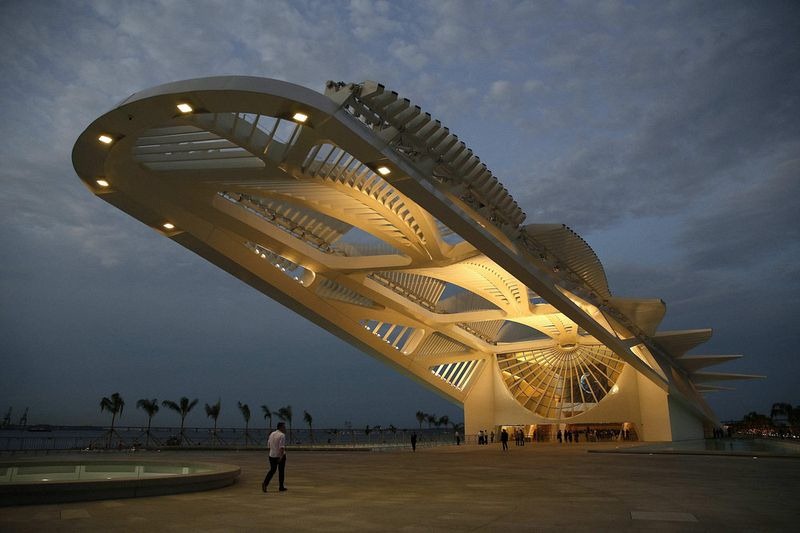
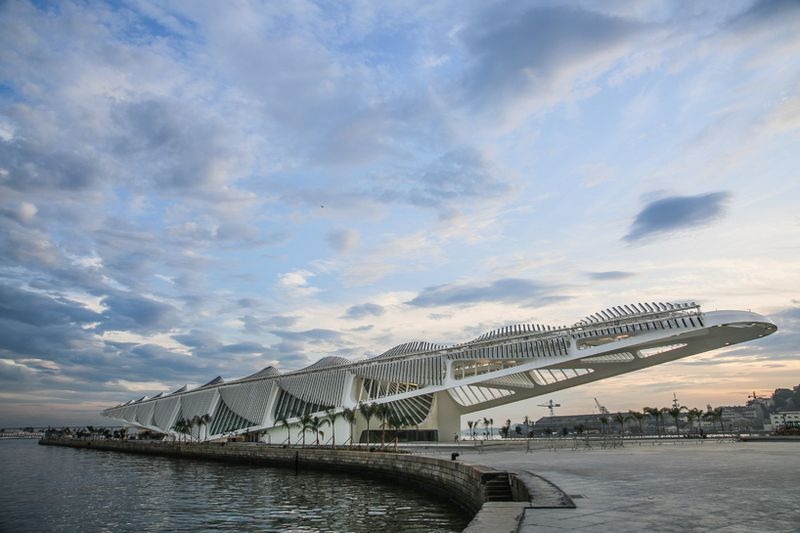
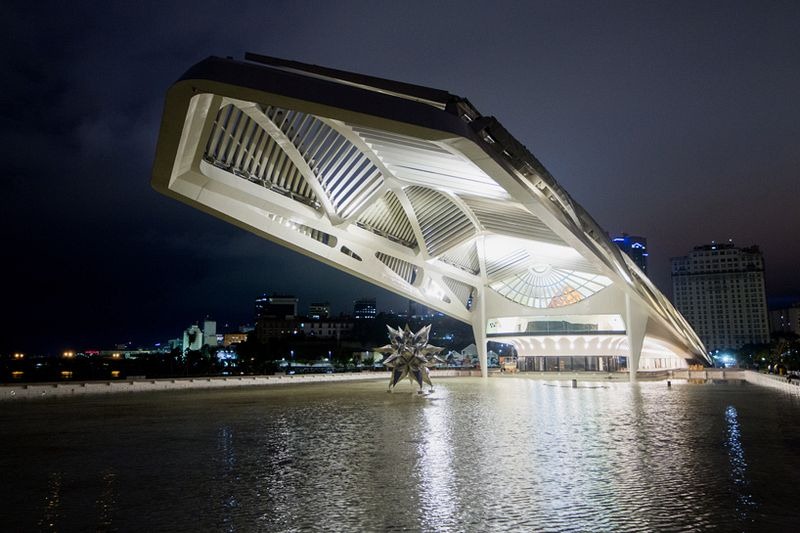
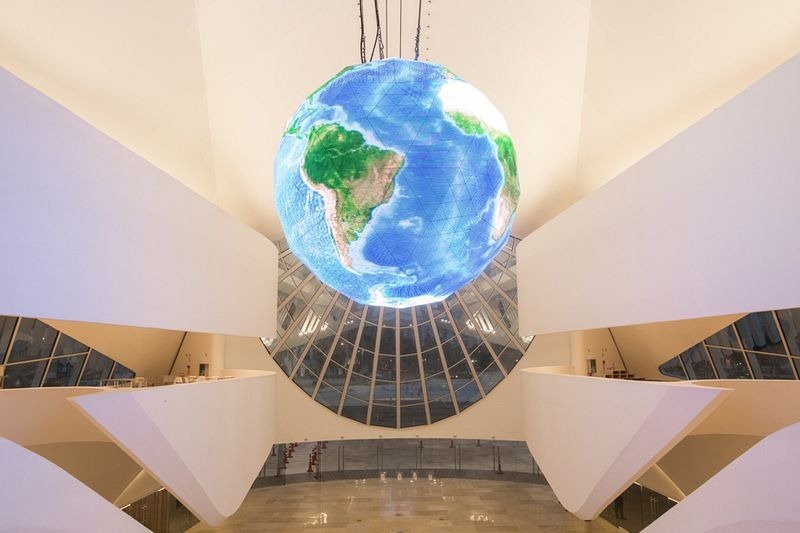
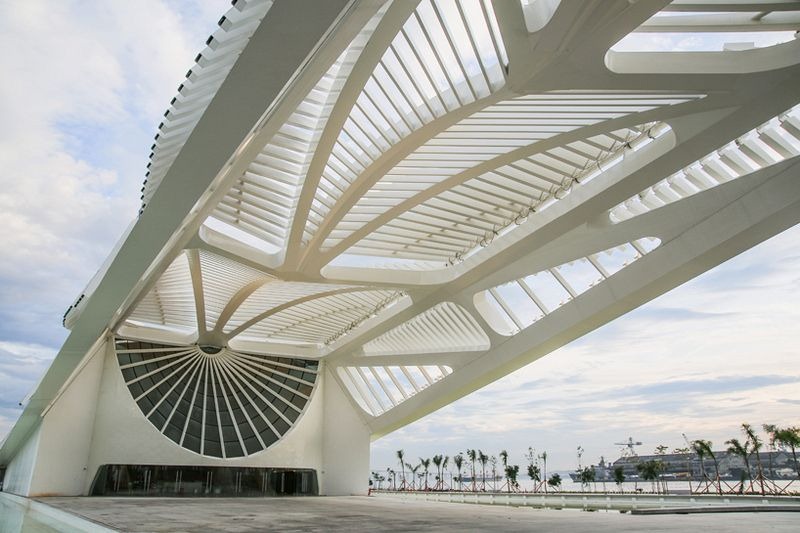
The city of Rio de Janeiro has opened a new “experimental museum” called the Museum of Tomorrow devoted to exploring the possibilities of a sustainable future through interactive artifacts that bring science, art, technology and culture together, housed in a magnificent spaceship-like building that is set to become the center-piece of a larger regeneration project of the Porto Maravilha neighborhood. The building’s most eye-catching element is the large cantilevered roof that juts diagonally into the sky from the old port near which the building sits.

Designed by Spanish architect Santiago Calatrava, who has created iconic buildings across the world, including the Athens 2004 Olympic Stadium, Museum of Tomorrow includes sustainable design initiatives, incorporating natural energy and light sources, such as using solar panels to supply power to the building, and water from the bay to regulate its internal

museum-of-tomorrow-1

Photo credit: Marcelo Sayao/EPA

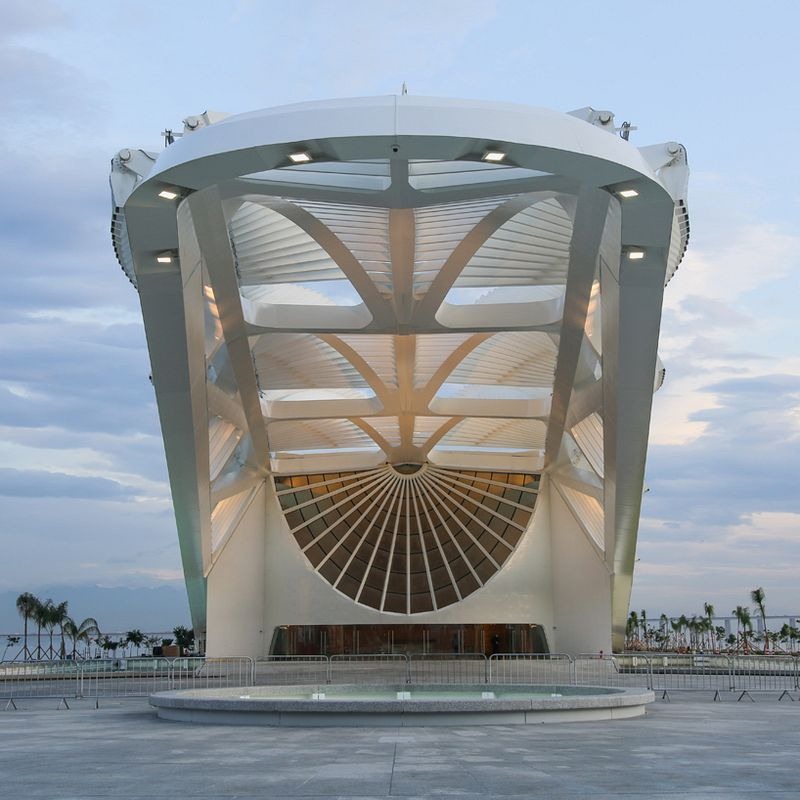
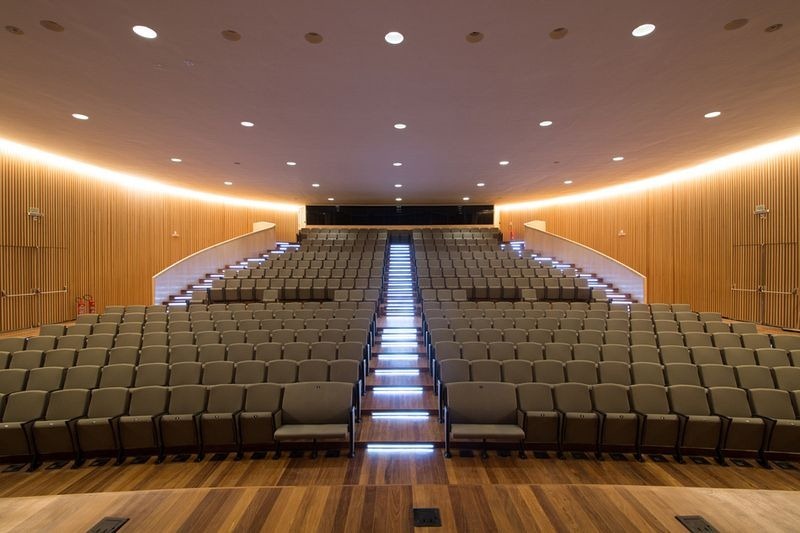
The institution encompasses 5,000 square meters of temporary and permanent exhibition space, including a 400-seat auditorium, as well as a 7,600 square meter plaza that wraps around the structure and extends along the dock. The overhanging roof is 75 meters in length and 10 meters high, and is capped with solar panels that move to follow the position of the sun. The roof is supported by curving white ribs. A half circle-shaped window tops the entrance.

The museum’s exhibits will address issues including: population growth and increased life expectancy, consumption patterns, climate change, genetic engineering and bioethics, the distribution of wealth, technological advances, and changes in biodiversity.

museum-of-tomorrow-6

Photo credit: Bernard Miranda Lessa

museum-of-tomorrow-7

Photo credit: Bernard Miranda Lessa


museum-of-tomorrow-9

Photo credit: Bernard Miranda Lessa

museum-of-tomorrow-12

Photo credit: Thales Leite


museum-of-tomorrow-3

Photo credit: Thales Leite

museum-of-tomorrow-4

Photo credit: Thales Leite

via Design Boom

Source…..www.amusingplanet.com

Natarajan
5 of theWorld’s Most Festive Airports

Being in an airport during the busy holiday travel season can be stressful, but some of the biggest and best airports around the world embrace transform themselves to bring joy to your journeys.

With twinkling lights, pine-scented air, and the sound of sleigh bells, these terminals stand out with their impressive holiday cheer.

From London to Singapore, these airports outdo themselves every year with awe-inspiring displays.

No matter where you’re going this season, a trip through one of these airports is certain to put you in the holiday mood.

Los Angeles airport.JPG

5 terminals that stand out with their impressive holiday cheer.

O’Hare International Airport

O'Hare International Airport

Where: Chicago, Illinois

Expect dazzling lights and terminals filled with boughs of holly at O’Hare International Airport this season, as the airport continues its annual tradition of celebrating the holidays in style. The nation’s third-busiest airport transforms into a winter wonderland, first visible on the road leading to the terminals, where bright, LED-wrapped trees and giant stars and spheres dot the perimeter of the grounds, forming a wintry landscape. Bright wreaths are adorned on many of the overhead signs throughout the airport roads, while oversize ornaments and lights are placed throughout the arrival and departure terminals. Be sure not to miss Terminal 3, where O’Hare’s signature globe is brought to life with the help of hundreds of LED lights, garland accents, and bright doves that float overhead. Aside from the decorations, O’Hare will host school choirs, jazz and blues bands, barbershop quartets and strolling carolers on select days throughout December.

Changi Airport

Changi Airport

Where: Singapore

In addition to its normal holiday decorations, the force is strong at Changi Airport this holiday season thanks to a partnership with Disney in anticipation of Star Wars: The Force Awakens. Testing the limits of intergalactic travel, Terminal 3 welcomes a life-size X-wing Fighter, offering visitors the chance to don costumes and hop inside the iconic aircraft for a photo opportunity in the cockpit. Plan your trip accordingly: Imperial Stormtroopers and X-wing Fighter pilots make appearance at the jet Saturdays at 4 pm throughout December. Look for dozens of other fun surprises throughout the terminals, including Star Wars’ humanoid protocol droid C-3PO which teaches Star Wars phrases in ten languages, a life-sized TIE fighter, and an obstacle course for the BB-8 droid.

Heathrow Airport

Heathrow Airport]

via Fodors

Where: London, England

With an extensive roster of musicians and festive décor, Heathrow Airport welcomes visitors this holiday season with daily events that are guaranteed to spread joy. Carolers, a string quartet, and a brass band are just some of the rotating acts set to entertain travelers this season throughout the airport’s four terminals. Heathrow offers travelers the great benefit of free gift wrapping, available in all terminals. And most helpful of all, Heathrow’s friendly “gift helpers” are on hand in all terminals, expert in finding the perfect gifts for your friends and loved ones.

Zurich Airport

Zurich Airport

Where: Zürich, Switzerland

A Swiss holiday haven, Zürich Airport glistens with the glow of 510,860 LED lights and 31 Christmas trees throughout the airport this season. During the holiday season, guests are treated to a deluxe offering of events and activities in the airport which include scheduled tours of the enormous double-decker Airbus A380 operated by Singapore Airlines, an elaborate and exclusive Christmas dinner, and cookie-baking classes for kids. Pop-up stores throughout the terminals include a festive Nespresso coffee spot and fine chocolates and sweets at the Läderach pop-up.

Munich Airport

Where: Munich, Germany

Celebrating the season with the warmth and livelihood of a traditional German holiday market, the 17th Annual Winter Market returns to Munich Airport this year. Plan to spend the better part of an afternoon exploring the market’s 46 stands under the roof of the Munich Airport Center, where the sweet smell of mulled wine and roasted almonds fills the air. Arrive hungry and enjoy artisanal wurst and plenty of German beer on tap. With 450 real Christmas trees set amidst the market, the Winter Market is an ideal place to spend the most wonderful time of the year.

Source….www.businessinsider.com

Natarajan