An 80 Year Old Teacher Goes from Park to Park Conducting Classes for Deprived Kids ….

Vimla started teaching underprivileged kids after retirement. It’s been 20 years now and 80-year-old Vimla still faces her students with the same enthusiasm. Know all about her journey.

Twenty years ago, sitting at home and not doing anything after retirement was never an option for Vimla Kaul and her husband. A visit to a village called Madanpur Khadar in Delhi was enough to give her the motivation to do something to improve the lives of the people living there.

She started with teaching kids who could not attend school and, since then, the couple has never looked back.

For 20 years, Vimla has been spending her time, energy and money to provide quality education to these underprivileged kids.

Vimla started teaching the kids after retirement.

Vimla started teaching the kids after retirement.

Photo: Youtube

“When I first went to the village, I saw kids roaming around and wasting their time. So I gathered five students who were interested in learning and started my first class in 1995 at a chaupal in the village,” she recalls.

Vimla hired a local teacher to make sure the children’s studies did not get affected when she wasn’t in the village. But when the teacher left the village, Vimla decided to bring the students to nearby Sarita Vihar in the city of Delhi, where she moved from one park to another to conduct classes.

“We could not afford a school building so we would sit in the open and learn. We kept moving from one park to another because we would not be allowed to teach in many of them. Finally, we moved to MGD park where we taught for 15 years,” she says.

Starting with just 5 kids, Vimla reaches out to 110 students now with the help of four teachers.

Today, Vimla reaches out to 110 students with the help of 4 teachers.

Today, Vimla reaches out to 110 students with the help of 4 teachers. –

Photo: youtube

At one point, when Vimla’s classes were in danger of being shut down again because they were held in the park, the Malviya Trust contacted her and offered to help.

Thanks to their support, Vimla’s school now has a building with four rooms where she teaches students up to Class 2.

All the services provided to the students are free of cost and Vimla, along with her husband, has managed to sustain the school with help from donations from friends and family.

“It was so difficult. We were a retired couple. We had no money. But we didn’t want to stop doing what we were doing just because of lack of finances. We kept managing somehow and, thankfully, we now have an organization supporting us,” she says.

Thanks to Vimla’s intervention, there has been a remarkable change in the attitude of the kids. They are more active and confident now. They also participate in summer camps and extra curricular activities like dance.

For children who had never even seen a school and had no hope of getting an education, Vimla’s efforts are no less than a blessing.

In the future, Vimla wants to reach out to more students and construct a school building to cater to the needs of students of higher classes as well.

“These children are very talented. They just need support and guidance. If they are given the same opportunities and facilities like mainstream kids, they too can do wonders,” she says.

Vimla is 80 now and her determination to make a difference in her environment is still as strong as it was 20 years ago. If you want to support her cause, you can either help financially or volunteer at her school.

To know more, contact her at – hari.vimla.kaul@gmail.com

Source…….Shreya Pareek…www.the betterindia.com

Natarajan

Why a Government School in Rural Chhattisgarh Can Change the Way Schools Are Run All over India…

Anusuya Jain, the highly dedicated 51-year old headmistress of Government Primary School in Motwada, Chhattisgarh has introduced some great ideas to ensure higher participation and lower lower drop out rates in the school. Here’s more on the success story.

As far as schools go, the Government Primary School in Motwada village in Kanker district, Chhattisgarh, is innovative, unusual, progressive, and inclusive. That’s a whole lot of adjectives to describe a learning institution located in the otherwise violence-affected and poverty-ridden North Bastar region but then the amazing work being done here by Headmistress Anusuya Jain, 51, and two other committed women teachers simply cannot go unnoticed.

From the impeccable, landscaped grounds to the neat and clean building to the cheerful classrooms, the school has indeed created a reputation for being a model institution.

The Government Primary School in Motwada village in Kanker district, Chhattisgarh, brings a wave of fresh change as women teachers and a committed headmistress make learning fun for students here. (Credit: Purusottam Singh Thakur\WFS)

The Government Primary School in Motwada village in Kanker district, Chhattisgarh, brings a wave of fresh change as women teachers and a committed headmistress make learning fun for students here. (Credit: Purusottam Singh Thakur\WFS) –

“And not just the facilities, but the informal environment and interactive lessons encourage local children to come to school regularly, which is a definite change from the usual absenteeism and high drop out rates among government run institutions,” points out Jain proudly.

At the Government Primary School in Motwada, classroom learning certainly takes on a whole new meaning. Instead of the customary chairs and tables, students and teachers sit together on the floor, interact with each other as equals and there is a concerted effort towards making lessons fun and informative for the young ones.

Besides the classes, the modest campus, too, is lively and filled with creative artwork, alphabets, numbers and stories painted on the walls.

“We apply the Multi Grade Multi Level (MGML) teaching method here, which enables children to enjoy their class work and also develop confidence in their abilities. These are small children from the village and to engage directly with them and make them comfortable we sit with them on the floor like their parents do at home,” she explains.

It was in 2007-08 that MGML was introduced on a pilot basis in select government schools in the district with an idea to improve the quality of education and the learning abilities of the children.

Instead of the customary chairs and tables, students and teachers at the Government Primary School in Motwada, sit together on the floor, interact with each other as equals and there is a concerted effort towards making lessons fun and informative for the young ones. (Credit: Purusottam Singh Thakur\WFS)

Instead of the customary chairs and tables, students and teachers at the Government Primary School in Motwada, sit together on the floor, interact with each other as equals and there is a concerted effort towards making lessons fun and informative for the young ones. (Credit: Purusottam Singh Thakur\WFS) –

Under the MGML method, student groups are created as per their existing knowledge and learning capacities and then they are promoted once they master a level.

Although, unfortunately, due to the lack of teaching materials and proper training, this programme has now been discontinued, the school in Motwada, which was one of the first ones to be chosen for the experiment, has been able to continue the good work.

When Jain, a mother of two grown-up sons, had come to Motwada five years back, things were being done quite differently. “Whereas children were coming to school, it was not the inviting and stimulating place it should be. Moreover, there was no involvement of the parents in either the running of the school or what was being taught to their children. A School Management Committee (SMC) was in place but it was inactive,” she recalls.

For starters, Jain decided to do a small survey of the village to gather data, like the number of families, what they did for a living, the educational qualification of the parents, and so on. With the assistance of her colleagues and a few members of the SMC she embarked upon this mission to better understand the mindset of the parents as well as their living conditions.

Her findings were definitely enlightening – no one in the village had studied beyond Class 10 and most of the teenagers and elders were employed as daily wage farm labourers.

But while their day-to-day life was tough, most harboured dreams of a better life for their children. “That attitude and hope is what has brought about the transformation. Right at the onset, I called a meeting of the parents and told them: ‘Do you want your children to become labourers? If not, then you have to pay attention to what your children are doing and play a part in the working of the village school’. The revival of the SMC has given a great boost to our work,” shares Jain.

Truly, the 16-member SMC, of which 14 are women, is functioning in tandem with the school authorities. It’s not uncommon for Committee President Godavari Yadav and her deputy, Sabita Yadav, to drop by the campus to discuss the progress of the children, get an honest feedback from the teachers and even talk about any pertinent administrative issues that may need to be addressed.

Elaborates Godavari, “We have learnt a lot by interacting with Anusuya didi. We have understood the value of good quality education and also know that as parents we need to be involved in the functioning of the school. After all, our cooperation can facilitate the teachers to give our children a better learning experience.”

Apart from that, these days, most mothers, including Godavari and Sabita, are keen on sitting with their children as they do their home assignments.

 Headmistress Anusuya Jain has generously shared her time and tapped into years of experience to ensure that the school delivers on the promise of quality learning and also make Motwada a better place to live. (Credit: Purusottam Singh Thakur\WFS)

Headmistress Anusuya Jain has generously shared her time and tapped into years of experience to ensure that the school delivers on the promise of quality learning and also make Motwada a better place to live. (Credit: Purusottam Singh Thakur\WFS) –

On their part, villagers like Ramkumar Kuldeep are quick to acknowledge her contribution, “Madam has transformed the school and has even enthused our children to work hard and do well. Her dedicated approach is appreciated by everyone in the village.”

“Anusuya didi has motivated us to sit with our kids while they are reading and doing their studies. Even if we don’t really understand what they are saying or writing, our attention eggs them to perform better and we, in turn, learn something new,” says Godavari.

Of course, the synergy between the school and the villagers has gone beyond dealing with matters of education. The SMC and the panchayat members seek Jain’s opinion and advice on tackling other issues as well.

Ramkumar Kuldeep, who is a member of the SMC, reveals, “Everyone is of the unanimous view that Anusuya madam and the other teachers are our well wishers and can provide sound guidance on a variety of issues. Just recently, when there was a proposal before the panchayat to merge Motwada into the Kanker Municipality, we were not sure what this would mean for our the village, whether it was a beneficial move. After we came together and consulted with her we decided to reject the proposal and went confidently to the District Collector. Anusuya madam is always ready to talk to us and share her personal point of view. We can take our personal problems to her, too.”

Be it information on maintaining good health and hygiene or how to support children in their education or learning the right social etiquette, Jain is at hand to show them the way. She vividly recalls how she patiently taught her students the value of cleanliness and the merits of keeping the school grounds neat – something that has had a ripple effect in the entire village.

Today, our campus is green and we have planted a variety of colourful flowers and plants. No one plucks flowers or litters in the garden. Earlier, this was not the case. Parents used to ask their children to pick flowers to offer in the temple. So I decided to tell students to take saplings and plant them at home. Once they had their own flowers they stopped plucking. One has to think of easy, workable solutions instead of dwelling on the problems,” smiles Jain.

The first one to come everyday and the last one to leave, Jain has generously shared her time and tapped into years of experience to ensure that the school delivers on the promise of quality learning and also make Motwada a better place to live.

On their part, villagers like Ramkumar Kuldeep are quick to acknowledge her contribution, “Madam has transformed the school and has even enthused our children to work hard and do well. Her dedicated approach is appreciated by everyone in the village.”

It was a decade ago that the National Council of Educational Research and Training (NCERT) had created a revised National Curriculum Framework (NCF) with the express idea of building a schooling system that would reduce children’s burden and, at the same time, facilitate learning. The Government Primary School in Motwada is among the few schools that have been able to realise this goal.

Written by Purusottam Singh Thakur for Women’s Feature Service (WFS) and republished here in arrangement with WFS

Source….www.thebetterindia.com

Natarajan

Combining Two Giants: Indian Railways & ISRO Come Together to Make Our Train Journeys Safer …

Indian Railways and Indian Space Research Organization (ISRO) are coming together to utilise technology in a way that our train journeys can be made a lot safer and easier in terms of navigation.

With the vision of making our railway journeys safer and more efficient, Indian Railways will tie up with Indian Space Research Organization (ISRO) to get satellite images of all the track routes, and to help in navigation.

With the use of geospatial technology, it will be possible to map the complete rail routes including buildings, land, workshops etc. on the way.

The technology involves GPS (global positioning systems), GIS (geographical information systems), and RS (remote sensing) features.

trin isro

Photo Credit: Feng Zhong/Flickr

This service will be provided by GPS Aided Geo Augmented Navigation (GAGAN) system of ISRO. GAGAN is an indigenous navigation system which was jointly developed by ISRO and Airports Authority of India (AAI) to assist aircrafts in accurate landing. It can now be used to assist trains as well, and Indian Railways will be able to receive online satellite images which will help in mapping the train routes in detail.

“We will sign an MoU with ISRO shortly to avail the online satellite images to create a GIS platform,” informed a senior Railway Ministry official to PTI.

This is how the GAGAN system can help Indian Railways:

  • It will be very helpful at the time of train accidents when it is difficult to find out the exact location of trains.
  • With the help of remote sensing facility, it will also help in devising solutions for safety at unmanned railway crossings.
  • Drivers on the road can be warned about an approaching train by activating hooters at the crossings.
  • With the use of GAGAN software system, trains would know the location of any unmanned level crossing and a warning signal can be given for their reference.
  • The images will also be used for geo-fencing, which will be utilised for the recently launched paperless ticketing system app. Geo-fencing is a feature which makes use of GPS and radio frequency identification (RFID) to define geographical boundaries.
  • It will also be easier to track trains with the technology on a real time basis. As of now, the train movements are tracked manually.

“There is specific information provided for aligning the railway tracks, particularly in mountainous regions, and also identifying tracks which are most stable when you are going through tunnels. In all these things, space technology is useful,” ISRO Chairman, A.S. Kiran Kumar was quoted saying earlier this year.

Source….. Tanaya Singh ….www.the betterindia.com

Natarajan


This 12-Year-Old Indian Origin Girl Scored More than Einstein and Hawking in IQ Test …..

Lydia Sebastian is just 12, but she has already achieved something that hardly one percent of the people in the world can get. She has scored the highest possible points in the famous Mensa IQ test and has beaten the scores of geniuses like Einstein and Hawking.

When it comes to IQ and intelligence, we cannot skip talking about Stephen Hawking and Albert Einstein. But would you believe if we told you that a 12-year-old girl has beaten their IQ test scores?

Meet Lydia Sebastian, a 12-year-old Indian-origin girl from Langham, United Kingdom. She has attained a score of 162 points in the renowned mental agility test conducted by Mensa, the largest and oldest society for people with high IQs.

This is the highest score possible in the test. With this achievement, Lydia has beaten geniuses like Einstein and Hawking who had scored 160 points.

Screen Shot 2015-09-05 at 8.20.37 am

Photo: Twitter

Hailing from Kerala in India, Lydia had an interest in reading since a very young age and has always been a quick learner. When she was just a few years old, she started reading books that were meant for children several years older than her. She also started talking when she was just six months old. Not only this, she started playing violin since a tender age of four.

A student of Colchester County High School, Lydia took a year to prepare for the test and called it “easy”.

Her incredible score has put her in the top one percent of people with such high IQs. She is now applying for the membership of Mensa which is restricted to only those people whose IQ test scores are within the top two percent of all the tests.

Source……Shreya Pareek…….www.thebetterindia.com

Natarajan

This Daughter of a Daily Wage Labourer in Odisha Is an IES Exam Rank Holder ……

The daughter of a daily wage labourer from Odisha, has secured the 13th rank in UPSC’s IES examination. Successful after fighting many financial constraints, Aparajita Priyadarshini Behera dedicates her success to her father. This is her story.

24-year-old Aparajita Priyadarshini Behera has set a perfect example to show that financial difficulties, daily hardships and a person’s background can never come in the way of achieving whatever we want to achieve in life.

The daughter of a daily wage labourer from Odisha, Aparajita has secured an all India rank of 13 in the reputed Indian Economic Service (IES) examination conducted by UPSC (Union Public Service Commission).

IES_f

Background image credit: Flickr

A resident of Mahanangala village in Kendrapara district, Aparajita completed her schooling from Mohanangala Primary and Kapileswar High School in the village. She then moved on to Marshaghai college near Kendrapara for plus two, and degree courses. With an urge for learning more and to progress towards her dream, she completed her Post Graduation in Economics from Utkal University. As of now, she is pursuing a PHD from Jawaharlal Nehru University.

Aparajita gives the credit for her success to her father, who has been her inspiration and guide. “He sweated it out to financially support me in my studies. He never made me feel the pangs of poverty. Whatever I achieved today is only because of my father. I dedicate my all India job to him,” she was reported saying to PTI.

Her father, Amulya Kumar Behera is a 50-year-old labourer at a fertiliser plant of Indian Farmers Fertiliser Cooperative (IFFCO). He works on a daily pay roll basis with an assignment which is completely contractual in nature. His monthly remuneration comes to less than Rs. 10,000. But in spite of financial difficulties, he never neglected the education of his children – a son and two daughters.

Aparajita, who believes that there are no shortcuts to success, read all the required material extensively as her preparation for UPSC’s IES examination. It is her motto to serve for the country with honesty. She was nervous about the final interview, but says that the panel was very supportive and gave her the confidence to reply to all their questions.

Her family, along with the entire village including her school teachers and friends, are overjoyed with the news of her success. “We all are on cloud nine,” said her mother Jemamani to The Indian Express.

Source…….Tanaya Singh…..www.thebetterindia.com

Natarajan

India’s Successful Missile Testing Site, Wheeler Island Will Now Become Abdul Kalam Island …

Wheeler Island, which is considered the most advanced missile testing site in India, will be renamed after Late Dr. APJ Abdul Kalam. For the man who was fondly called the “Missile Man”, this seems like a fitting tribute.

It has been over a month since we lost our beloved Missile Man, Dr. APJ Abdul Kalam. And every now and then, we keep finding different ways to pay tribute to him and to keep him alive in our memories.

This time it is the Odisha government which has paid an extra ordinary tribute to Dr. Kalam, by naming the Wheeler Island after him.

Photo: www.abdulkalam.com

Odisha Chief Minister Naveen Patnaik made an announcement about the decision on Monday. He said that the move will inspire youngsters to work passionately and dedicatedly in the field of science. The 2km long and 390 acres big island will now be known as Abdul Kalam Island. The island is located off the coast of Odisha and is approximately 150km from Bhubaneswar.

This is a fitting tribute to the great man since the island is considered to be the country’s most advanced missile testing site.

Wheeler Island was named after an English commandant, Lieutenant Wheeler and has been used to test many successful missiles of India including Akash Missiles, Agni Missiles, Astra Missile, BrahMos, Nirbhay, Prahaar Missile, Prithvi Missiles, Shaurya Missile, Advanced Air Defence (AAD), and Prithvi Air Defence.

Here are a few of them:

Akash Missile Launch from Integrated Test Range (ITR), Wheeler Island

island1

Advanced Air Defence Launch

island2

Shaurya Missile Launch

DRDO successfully test fired canister-launched surface-to-surface missile 'Shourya' from ITR Balasore, Orissa on November 12, 2008.

All pics: Wikipedia

Source….Shreya Pareek…..www.thebetterindia.com

Natarajan


Most Unique Teachers … Hats off to Them …

This Teachers’ Day, we are honouring some of the most unique teachers from all over the country. They inspire, amaze, enlighten and motivate. In these pictures, have a look at them doing their brilliant jobs.

“The dream begins with a teacher who believes in you, who tugs and pushes and leads you to the next plateau, sometimes poking you with a sharp stick called ‘truth’.”

– Plato

It’s September again, and bringing back this famous quote by Plato is kind of necessary for an added dose of inspiration. Because it’s that time of the year when we celebrate some of the most important people of our lives. The day on which we remember all our teachers; those wonderful people who shape our lives and help us be all the things we want to be.

So here’s wishing a very happy teachers’ day to every person who has ever been a guiding light in someone’s life.

While Facebook walls and Twitter feeds have been flooding with messages of remembrance and gratefulness since midnight, here is another shout out for some of the most inspiring teachers from all over the country. These are people who have conquered extremely difficult odds, have innovated unique teaching methods and have unfailingly amazed the nation with their selflessness.

Babar Ali – because one can begin teaching whenever one wants to

teacher1

21-year-old Babar Ali has been teaching since he was 9. At 15, he became the headmaster of his makeshift school which teaches about 300 students today and has 6 full time teachers.

“I believe that if you are passionate about something then you can achieve anything. Age, finances, other hurdles, they just don’t matter and eventually everything works out.”

– Babar Ali

Read more about him here.

Aditya Kumar – taking education to places where schools can’t reach –

teacher2

teacher3

Source: Facebook

Aditya Kumar, better known as ‘Cycle guruji’, rides about 60 to 65 km on a bicycle every day, and provides free education to children living in the slums of Lucknow, Uttar Pradesh. This inspiring man has been doing this since 1995.

“Where ever I got students, I would sit and teach — by the roadside, in parks, near slums. I had a board on the cycle, and students would just read it and stop me. I was one of them, I understood what it meant to be poor and without support.”

– Aditya Kumar

Arvind Gupta – when learning is all about having fun

teacher4

Source: www.ted.com

Arvind Gupta is famous for creating toys from trash. What’s special is that he explains many different concepts of science in the process of making these toys. He also generously uploads videos of his techniques on YouTube, explaining the scientific stuff behind each one of them for students all across the world to learn.

“I work with children. Whatever I see that children can do, whatever I see that brings a gleam into the child’s eye, that’s the work I do.”

Arvind Gupta.

Read more about him here.

Rajesh Kumar Sharma – because education does not require a building

teacher5

teacher6

Source: Facebook

Rajesh Kumar Sharma runs a school under a Delhi metro bridge, where he teaches students from the nearby slums. He calls it ‘Under the Bridge School’ and about 200 students attend it every day. Started in 2005, the school also hosts some exemplary personalities from different walks of life, who come in on various occasions as volunteer teachers.

“Knowledge increases when it is shared.”

– Rajesh Kumar Sharma.

Abdul Mallik – crossing all hurdles to be with his students on time

teacher7

Source: YouTube

A primary school teacher in Malappuram district of Kerala, Abdul Mallik swims to work every day. Why? Because that is the shortest route to reach his school.

“If I go by bus, it takes me three hours to cover the 12-kilometer (7.5 miles) distance. But swimming through the river is easier, faster and I reach school on time.” 

– Abdul Mallik.

Anand Kumar – training dreamers, teaching dreams

teacher8

Source: Facebook

Well known for his Super 30 programme, Anand Kumar of Patna has been coaching students for IIT-JEE entrance exams since the last 14 years. By 2014, 308 of his 360 students had made it to the IITs.

“To crack the target, one should have thirst for achieving it, next come positive thoughts and passion.”

– Anand Kumar.

Roshni Mukherjee – unleashing the power of the internet to reach many

teacher9

Roshni Mukherjee has an online education platform called ExamFear.com where she teaches students with the help of videos which she uploads on YouTube.

“I receive messages from so many people. Recently, a student messaged me that he has been following my videos for three years now, and they have helped him score well in his exams without having to join tuition classes. He has now got admission in NIT. Such examples keep me motivated.”

– Roshni Mukherjee

Read more about her here.

Professor Sandeep Desai – begging for an outstanding cause

teacher10

Source: Facebook

Professor Desai boards local trains in Mumbai every single day asking people to donate money for his charitable organisation Shloka which develops and runs schools in rural Rajasthan and Maharashtra.

“Good Afternoon to everybody, donating for education is the ultimate form of charity.”

– Sandeep Desai is heard saying every day on the trains.

Vimla Kaul – because age is just a number

vimla

This 80-year-old teacher has been teaching children of a village called Madanpur Khadar in Delhi, since the past 20 years. Because of the lack of teachers in the village, she brought the students to the nearby area of Sarita Vihar. And since there was no proper building to teach, she used to move from one park to another to conduct classes for them in the city. She finally has a building where she teaches students up till class two now.

“These children are very talented. They just need support and guidance. If they are given the same opportunities and facilities like mainstream kids, they too can do wonders.”

– Vimla Kaul

Kamlesh Zapadiya – because education is the biggest gift

teacher11

Source: Facebook

Kamlesh Zapadiya travels 20km each day from his village to a nearby cybercafé with the aim of making education a lot more interesting for students. He has developed a website called Edusafar, where he uploads the entire school syllabus from class 1 to 10, in the form of a quiz.

“It is like Kaun banega Crorepati.”

– Kamlesh Zapadiya

Read more about him here.

And this one? Well, is there anything better than learning from friends?

teacher

Picture Credit: ILO / Mondal Nitai (Flickr)

Source…….Tanaya Singh….www.the betterindia.com

Natarajan


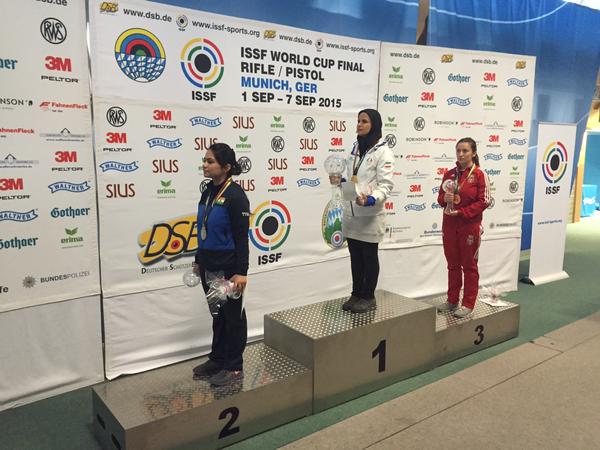
Indian Shooter Apurvi Chandela Wins Silver In ISSF World Cup At Munich. Makes Us Proud….

Indian shooters have performed exceptionally well at the last 3 Olympics. Rajyavardhan Singh Rathore won a silver medal at 2004 Athens Olympics, Abhinav Bindra won an individual gold at the 2008 Beijing Olympics. Vinay Kumar and Gagan Narang won a silver and bronze at the 2012 London Summer Games.

With exactly a year left for the Rio Olympics, a lot of Indian shooters have already occupied the slots.

Apurvi Chandela has already qualified for next year’s Olympic Games after her podium finish at the 2015 Changwon World Cup.

2

The reigning Commonwealth Games gold medallist impressed yet again as she clinched the silver medal in women’s 10m air rifle event of the ISSF Rifle and Pistol World Cup Finals that is currently being played in Munich.

1


The 22-year-old Jaipur girl tallied 206.9 and finished second, just 0.6 behind Ahmadi Elaheh of Iran, who won the gold medal with a tally of 207.5.

Embedded image permalink

India can certainly expect a podium finish from her at the Summer Games next year.


Source…Shuvro Ghoshal….www.storypick.com

Natarajan
No One Can Recycle Old, Broken Toys like This 11-Year Old. His Latest Innovation Is Outstanding! -….

Vedant is no ordinary kid. While other children throw away broken toys and buy new ones, he collects the scrap from his discarded ones to make new and ingenious gadgets.

Vedant Dhiren Thaker is a student of Class 6 in Shantinagar High School, Mira Road, Maharashtra. Like many other kids his age, broken toys are a regular feature of his growing years. But, not all his toys break accidently. Some of them are disassembled carefully and all the electronic parts obtained from inside saved.

Vedant is interested in using these broken parts – the remote controls, magnets, batteries, etc. — to build new things, things that are completely different from the original toys.

So, when one of his remote control cars broke down recently, he decided to use it to make a device which would help him solve a daily household problem for his mother.

door1

“During my summer vacation, I keep going outside the house many times. Many of my friends also come over frequently. The doorbell is constantly ringing and every time it goes off my mother has to leave whatever she is doing to open the door. I realised that this was a troublesome task and my mother used to get irritated at times,” says Vedant.

Vedant decided to do something to help his mother. He put his gadget-loving brain to use and made a remote control door operating device with the following spare parts obtained from a broken remote-controlled toy car:

· Remote control
· The motor drive mechanism circuit
· Rechargeable batteries
· The remote control (RC) circuit used inside the car

Vedant connected these to make a prototype device that opens the lock of the main door in his house with a remote control, and has enough range to be easily operated from any part of the house.

His mother can now open the door from anywhere, without having to leave the work she is doing.

For those who want to know how exactly the device works, here’s more: 
(Geek Alert: Read at your own risk)

An RC car has a transmitter in the form of a remote control, and a receiver in the form of an antenna and a circuit board placed inside the car. There is a motor drive mechanism which turns the wheels and operates the steering of the vehicle. Finally, there is a power source in the form of rechargeable batteries.

For functioning, the transmitter sends Radio waves as the control signal which drives the motor, leading to the specified action (like rotation of wheels or steering), which then causes motion in the car.

Vedant utilised this entire process for the working of his device.

Remote Unlock

He attached the RC circuit, along with the motor drive mechanism of the car, to the door. The RC circuit also includes the antenna. From the remote control of the car, he sends radio waves to the antenna, which then gets transmitted to the motor drive mechanism through the battery. This rotates the shaft of the gear box. Vedant has connected the shaft to the latch of the lock with a simple nylon thread. As the shaft rotates, the thread winds itself, thus pulling the latch, and the door opens. When the remote switch is released, the latch goes back to its original position.

“He never keeps any of his toys in their original form. Always makes something new out of them,” says Vedant’s father Dhiren. With his wonderful and inspiring curiosity, Vedant has built numerous things like electronic boats, a power source, and crackers made from scrap. Read more about the solar power source that he has developed from a discarded laptop battery here.

Kudos to the young genius and his love for electronics!

You can contact Vedant’s father here: dhiren.thaker@gmail.com

Source………..Tanaya  Singh….www.the betterindia.com and http://www.you tube.com

Natarajan

Indian Railways is Changing for the Better….

Indian Railways is taking several innovative steps to be in line with the ‘Digital India’ campaign and to make the experience for passengers as comfortable as possible. Here are the three latest IT initiatives that have been launched by the ministry.

Taking one step further towards consumer satisfaction, the information technology (IT) arm of the Railway Ministry, Centre for Railway Information Systems (CRIS), has developed three new initiatives. These are the initiatives which were launched by Railway Minister Suresh Prabhu, this Tuesday.

Paperless Unreserved Ticketing through Mobile Phone between New Delhi – Palwal Section

railwayapp1

As the name implies, unreserved tickets authorise a journey but do not offer any reserved seats. They are also not specific to any particular train service and the tickets are often useful for short distance travels. The paperless unreserved ticketing system through a mobile app has been developed with the view of saving time for the passengers. The system was launched for Chennai and Mumbai suburban sections in April and July this year. According to the minister, it will soon be expanded to other sections as well.

In the Delhi-Palwal section, the system covers 11 stations over a distance of 57 km. The app, ‘utsonmobile’, can be downloaded both on Android and Windows-based platforms. Payments can be done with the help of the ‘railway wallet’ feature of the app. Other than the unreserved tickets, passengers in Mumbai, Delhi, Kolkata and Chennai will also be able to book Monthly Season Tickets (MST) and platform tickets with the help of a mobile application very soon. The app can be downloaded here.

Currency Coin cum Card operated Automatic Ticket Vending Machines (CoTVM) at New Delhi Railway Station

station

Photo Credit: Srinivasan G/Flickr

The automatic ticket vending machines are unmanned self-operating kiosks. This initiative is a part of the ministry’s ‘Operation five minutes’, and will help the passengers buy unreserved tickets themselves, without having to stand in long queues. Tickets can be purchased with coins, currency notes and smart cards. As per the ministry’s plan, the machines will be available at all major stations in the next 3 months. As of now, 450 machines are being installed by CRIS. With useful graphic interface for transaction, the kiosks will be very easy for everyone to operate. The machines will issue non-concessional second class journey tickets for non-suburban section, second/first class journey/return tickets for suburban section and platform tickets. They can also be used for the renewal of non-concessional season tickets and recharge of smart cards.

-Parichaalan – Mobile Application for Freight Operations –

goods train

Photo Credit: Ashwin John/Flickr

This app has been developed by CRIS to facilitate easy decision making on freight operations, with improved management operation system. The information available on the app will be current and dynamic, unlike the reports generated by the Freight Operations Information System (FOIS). Also, with the help of pictorial and graphical display of data, the information will be easy to understand. The app will help senior decision makers of the department to plan freight operations on real time basis. It will be provided to other operating officers on the field after the initial experiment.

The app provides mapped movement of freight trains and also offers brilliant search tools to look for specific trains and their services. There is also a planning tool which helps in planning the movement and loading, and gives live updates about the trains.

“The new initiatives are directed towards improving passenger and customer services on Indian Railways. The IT applications which have been inaugurated today are an indication that Indian Railways is constantly moving towards e-Governance,” said Suresh Prabhu during the launch.

-Source….Tanaya Singh…www.thebetterindia.com

Natarajan