Image of the Day… “Old Faithful geyser, and moon eclipse”…..

“Over a year of planning paid off!” said Jeff Berkes Photography.

View larger. | Photo taken September 27, 2015 - the night of the total eclipse of the moon - by Jeff Berkes Photography.

View larger. | Photo by Jeff Berkes. Visit Jeff Berkes Photography on Facebook

Here’s one of our favorite photos from an EarthSky community member, so far this year. Jeff Berkes captured it during the recent total eclipse of the moon – September 27, 2015 – and the photo shows the eclipsed moon next to an eruption of Old Faithful geyser in Yellowstone National Park in Wyoming. Jeff wrote:

Over a year of planning paid off!

Old Faithful, the super Blood Moon fully eclipsed, a meteor, the Andromeda galaxy and the Milky Way… There is a lot going on in this shot!

See the Andromeda galaxy? It’s at about 10 o’clock, above the geyser. The meteor is directly above the geyser.

Old Faithful geyser at Yellowstone National Park erupts during Blood Moon maximum eclipse!

Old Faithful geyser at Yellowstone National Park erupts during September 27, 2015 lunar eclipse.

Posted by yrd in http://www.earthsky.org

Natarajan

10 Strange Things That You Probably Didn’t Know About The Moon….

There are few things more satisfying than looking up into the sky on a clear night and seeing the moon. Whether it’s bright and full or partially hidden in shadow, there’s something cool about watching the moon pass through its many phases. We start learning about our moon and how it works at an early age, so we must know it all by now, right?

Well, maybe not. Here are a few facts about the moon that you probably weren’t taught in school.

1. It might be Earth’s twin.

It might be Earth's twin.

Some people consider our moon to be the Earth’s twin! Due to it’s large size and strange orbit, there are a few people out there who actually think of our moon as its own planet.

2. It’s been used as a burial ground.

It's been used as a burial ground.

While this person technically isn’t buried on the moon, the ashes of former NASA scientist Eugene Shoemaker were scattered across the moon’s surface. It was his dying wish.

3. It might have been inhabited once.

It might have been inhabited once.

Some photos of the moon’s surface show things that NASA can’t explain. Some believe that these phenomena are evidence of previous inhabitation. Since the photos are so grainy and obscured, however, it’s hard to tell exactly what the images are showing. Did an advanced race live on the moon long before humans started poking around up there? We may never know.

4. Shadows are darker on the moon.

Shadows are darker on the moon.

When astronauts first started visiting the moon, they noticed that their shadows were much darker than usual. This causes numerous problems for researchers to this day, since these dark shadows sometimes make it hard for astronauts to see what they’re doing up there. It’s hard to avoid stepping into a crater when your shadow is too dark and dense to see through.

5. Moon dust can cause breathing problems.

Moon dust can cause breathing problems.

The moon’s chalky debris is so fine that it has been known to move right through astronauts’ helmets and into their noses and mouths.

6. Playing in the moon’s low level of gravity isn’t as fun as it seems.

Playing in the moon's low level of gravity isn't as fun as it seems.

It may seem like fun to jump around in low gravity, but it has actually caused a ton of problems for astronauts, especially back in the early days of space exploration. Back then, their suits were so heavy that they were forced to move painfully slowly using kangaroo-like leaps.

7. We have earthquakes down here, and the moon has moonquakes up there.

We have earthquakes down here, and the moon has moonquakes up there.

If you thought that the Earth was the only planet to experience tremors, you’re wrong. The moon, which isn’t even a planet, has moonquakes that can reach a magnitude of 5.5 on the Richter scale.

8. People litter on the moon, too.

People litter on the moon, too.

On the moon, there is an alarmingly large amount of trash left over from experiments. Some astronauts have even left their poo bags up there.

9. Some people believe that the moon’s phases affect sleep patterns.

Some people believe that the moon's phases affect sleep patterns.

It is believed that the moon actually affects how humans sleep. Different phases of the moon’s cycle cause us to rest better or worse than others.

10. Researchers still don’t really know how the moon came to be.

Researchers still don't really know how the moon came to be.

Scientists actually don’t have any solid ideas about where the moon came from. There are a few guesses, but its origins remain a mystery.

(via Listverse)

That’s fascinating, isn’t it? All of these cool facts kind of make me want to become an astronaut. Okay, that won’t happen, but if any of you end up going to the moon, look into these mysteries!

Source…..joe welkie …www.viralnova.com

Natarajan

” I Knew Crows Were Clever…But I Had No Idea That They Were This Smart…” !!!

Most people don’t know this, but crows are actually some of the most intelligent animals on Earth. And there are scientific studies to back up that claim. Take this experiment, for example. One study based on Archimedes’ principle determined that crows actually have a better understanding of how water displacement works than children do.

As you’ll see in the incredible video below, a clever crow figured out that it could use rocks to raise the water level enough to grab a nice drink.

This is just further proof that you should never underestimate our furry and feathered friends. Honestly, this crow has better problem-solving skills than most people in their twenties.

Source…. Binny Gudjonsson in http://www.viralnova.com  and http://www.you tube.com

Natarajan

The world’s most polluted city is a ‘toxic pollutant punchbowl with myriad ingredients’….Delhi…

Delhi is the world’s most polluted city because it is a “toxic pollutant punchbowl” with a wide variety of factors giving it its notorious title, a study has found.

By assessing the megacity’s landscape, weather, growing population and energy consumption, scientists were able to work out how and why Delhi is so polluted.

The team, from the University of Surrey, found a combination of factors combined to cause elevated levels of air pollutants – leading to the death of thousands of people every year.

New delhi

A man carries goods in New Delhi, India.

Study author Prashant Kumar said: “Whilst it might be easy to blame this on increased use of vehicles, industrial production or a growing population, the truth is that Delhi is a toxic pollutant punchbowl with myriad ingredients, all which need addressing in the round.”

“Air pollution has been placed in the top ten health risks faced by human beings globally. Delhi has the dubious accolade of being regularly cited as the most polluted city in the world, with air pollution causing thousands of excess deaths in a year in this growing megacity.”

In the study, which has been accepted for publication in the journal Atmospheric Environment, the researchers note that Delhi has a population of around 25.8 million – a figure that is continuing to grow. Energy consumption in the city rose by 57% between 2001 and 2011.

Vendors selling drinks stand beside vehicles near the India Gate war memorial on a smoggy day in New Delhi February 1, 2013. REUTERS/Adnan Abidi

Vendors selling drinks stand beside vehicles near the India Gate war memorial on a smoggy day in New Delhi


The growing population is expected to bring with it an increase in road vehicles – experts are predicting it will rise from 4.7 million seen in 2010 to 26 million in the next 15 years.

But it is not just cars that is causing the rise. Chennai has 10-times more cars, but pollution rates are 10-times lower. Other factors at play cause the extreme pollution, the authors say.

Because the city is landlocked, there are few ways to get rid of polluted air. For example, coastal cities like Mumbai are refreshed by sea breezes. But Delhi’s surrounding industrial regions are often more polluted by the city itself.

Its densely packed architecture, varying building heights and weather conditions also affect its ability to get fresh air – decreasing temperatures draws outside polluted air into the city, while hot windy and dusty summer conditions worsen the problem. Add to this the use of low-quality fuels like raw wood, diesel generators and cow dung, air pollution becomes inevitable.

“The picture of Delhi’s pollution problem is complicated and is aggravated by some factors that are out of human control,” Kumar said. “However, in this growing city it is important that the population is protected in whatever ways they can be from health-endangering pollutants.”

He said putting artificial or natural grass on unpaved roadsides might help to limit the course of dust particles during windy seasons, while investment in wetlands and trees would also go some way to limiting pollution.

Indian prime minister Narendra Modi has made a number of commitments to tackle air pollution in the country. In April he launched the country’s first air quality index and environment minister Prakash Javadekar said the move “may prove to be a major impetus to improving air quality in urban areas, as it will improve public awareness in cities to take steps for air pollution mitigation”.

Kumar said the cultural context is vital to reduce air pollution: “Even the best science and technology will not succeed in reducing emissions and improving air quality if it is not considered in a broader framework of economic development of the country, rising awareness of public health risks and a change in attitudes and regulation towards poor quality fuels.

It is a complicated, pick-and-mix of problems that will prove difficult to combat without innovative, encompassing and quick action.”

Read the original article on IB Times UK. Copyright 2015. Follow IB Times UK on Twitter.

Source…..

Message for the Day…Woman ‘Lakshmi of the Home ‘ often Lead Men on the Godward Path and the Practice of Holy Virtues …”

Sathya Sai Baba

Heaping respect and honour upon a person who does not followAtmic dharma (righteousness driven by the Self) is like heaping decorations on a body that has no life in it. The soul that left the body cannot enjoy the respect shown to the corpse. So too is the case with the person who is unaware of the Reality and the purpose of life but is crowned with fame and glory. A modest woman will not care for such meaningless trash and tinsel. This characteristic is what confers on her the title ‘The Lakshmi of the home’. The woman is the prop of the home as well as of the practice of religion. She plants and fosters religious faith. Women have natural aptitude for faith and spiritual endeavour. Women with devotion, faith, and humility often lead men on the Godward path and the practice of holy virtues.

Know this Word….. ” principle ” ….

What is ‘ principle ‘ ….?

Elementary assumption, concept, doctrine, maxim, or proposition generally held to be fundamental or true for a body of knowledge, conduct, procedure, or system of reasoning, and used as a basis for prediction and action. See also principles.

Use principle in a sentence

  • The unalienable rights of life, liberty, and the pursuit of happiness enshrined in the Declaration of Independence rest on the important principle that all people are created equal.
  • Use principle in a sentence

    • The unalienable rights of life, liberty, and the pursuit of happiness enshrined in the Declaration of Independence rest on the important principle that all people are created equal.
    • The store I usually shop at cheated me out of 25 cents, and although that’s not a lot of money, I must have it corrected over principle alone
    • .Many philosophers have created imaginary, hypothetical societies based on what those philosophers consider to be the ideal principles necessary for a good society.

      Source…www.businessdictionary.com

    • Natarajan


Image of the Day… ” Dooms Day Vault…”


View larger. | Svalbard Global Seed Vault.

Researchers have been adding seeds to the Svalbard Global Seed Vault – or Doomsday Vault – since 2008. Now, for the first time, they’ve taken seeds out.

Earlier this month (October 19, 2015), seeds deposited in 2012 from war-torn Syria became the Svalbard Global Seed Vault’s first-ever withdrawal. The seed vault – located in Norway, sometimes called the Doomsday Vault – was built in 2008. Since then, researchers there have been storing containers of seeds from all parts of the globe in the vault, and this is the first time they’ve removed seeds.

According to the seed vault’s website, all seed samples in the vault remain the property of the gene banks that deposit them. A nonprofit organization in Syria had originally stored the seeds in the Arctic vault. The International Center for Agricultural Research in the Dry Areas – which promotes agriculture in developing countries – ran a major seed bank near Aleppo, Syria until 2012, when rebel forces took over that area.

Before the nonprofit shut down its Aleppo operation, researchers there were able to transfer thousands of seed samples from Syria. Some were stored in the Svalbard Global Seed Vault.

Now, researchers have taken 38,000 seeds back out of the vault. On October 19, the seeds were delivered to Lebanon and Morocco, where the nonprofit will continue the research started in Syria.

This was the first of what they say will be “several shipments” over the next few years.

PBSNewsHour reported on October 19, 2015:

The 138 black boxes stacked on trolley carts and transported out of the vault contained a precious resource — seeds, that researchers hope will restore some of the genetic diversity lost during the Syrian conflict.

Visit the website of the Svalbard Global Seed Vault.

By the way, earlier this year, a new documentary film about the Svalbard Global Seed Vault opened in theaters. It tracks the history and mission of the vault and its founder Cary Fowler. It’s available on iTunes and Netflix

Bottom line: The Svalbard Global Seed Vault – sometimes called the Doomsday Vault – opened in 2008 for the purpose of storing seeds. Researchers have been adding seeds to the vault since then, but this month – October, 2015 – for the first time, they withdrew seeds from Syria that had been placed there in 2012.

Visit the documentary’s website to learn more. …….http://www.seedsoftimemovie.com/

Source….www.earthsky.org

Natarajan


A Manipur farmer grows black rice that cures cancer….

Potshangbam Devakanta from Manipur shows the way in conserving the biodiversity of the state, farming around 100 traditional varieties of paddy and rare medicinal plants, finds Manu A B/Rediff.com.

Image: Devakanta has succeeded in persevering 100 traditional varieties of paddy. Photographs, courtesy: Devakanta

When farmers across India are grappling with weather woes and poor yields, Devakanta from Manipur has succeeded in adopting smart and eco-friendly methods of farming to ensure the harvest is satisfactory year after year.

Like thousands of farmers in India, 60-year-old Devakanta too toils in the paddy fields in Imphal for long hours.

What makes him different from other farmers is his passion to conserve a wide variety of rice in his organic farm, including cancer-curing black rice, called ‘chakhao poireiton’ and drought resistant varieties.

Image: Devakanta’s organic farm is an insiration for many farmers.

He has so far succeeded in persevering 100 traditional varieties of paddy and is cultivating 25 varieties of rice in his lush green farm.

Despite India being one of world’s biggest producers of rice, little is known about the rich variety of rice that is grown across the country.

Manipur has a treasure trove of rice varieties, which can be grown in other states, which too face vagaries of nature.

Image: Devakanta won the PPVFRA conservation award.

Devakanta, who won the PPVFRA conservation award (Protection of Plant Varieties And Farmers Rights Act) in 2012, also cultivates 5 varieties of the rare and highly nutritious variety of black rice, called ‘chakhao poireiton’.

He has travelled all over Manipur, collecting different types of rice – from drought-resistant white rice (crop which needs less water), brown rice and black rice. Manipur is famous for black rice, which has several medical properties as well.

“In Manipur, farmers grow about 20 varieties of black rice and chakhao protein is the best variety.

Image: ‘Black rice, ayurvedic medicines and organic food can lead to a complete cancer cure.’

It has a relatively high mineral content, including iron and amino acids. There are several cases where even cancer patients got cured by having this black rice,” says Devakanta.

Devakanta is currently working with about 200 farmers to increase the cultivation of chakhao poireiton in their farms as well. He inspires other Manipuri farmers to grow this rare rice.

“I am recommending chakhao poireiton to cancer patients who seek my advice. Considering the high prices of allopathic drugs which also have terrible side effects, it is advisable to have black rice. Black rice, ayurvedic medicines and organic food can lead to a complete cancer cure,” explains Dr Anjali Pathak, naturopath and organic consultant.

Image: Devakanta sells organically grown black rice from his farm for just Rs 150.

The rice is also good to fight dieases like viral fever, dengue, chikungunya or influenza.

While some e-commerce sites sell black rice for Rs 300-350 a kg, Devakanta sells organically grown black rice from his farm for just Rs 150.

“I have adopted organic methods of farming. I have also succeeded in convincing many farmers to switch to organic farming. It’s high time we stopped using harmful insecticides and fertilisers. The soil here is very fertile and it is our duty to maintain by using only natural manures and bio-agents to protect the crop,” explains Devakanta.

Image: The produce is high on nutritional value and ensures people who consume it are healthy and have a longer life span.

Many people know that he has an organic farm. So they come to him to buy different varieties of rice. However, if he gets the organic certification, he can package the rice better and sell it for a higher price.

“I don’t have the money to get an organic certification done. I don’t look at the profit aspect. I am more focused on how I farm. Now people who know me buy from my farm. Manipur is one of the few states in India where there is great awareness among people to curb the use of chemicals and fertilizers,” says Devakanta.

There are groups formed by local people who charge a penalty if anyone is found using chemical fertilisers in some districts.

“Traditional methods of farming do not give much yield. From a hectare, I get just 2-3 tonnes of rice every year. However, the produce is high on nutritional value and ensures people who consume it are healthy and have a longer life span, explains Devakanta.

Manipur is a hilly area and farming is done at different altitudes. Most villages are not connected by motorable roads.

Most of the time, Devakanta and his assistants walk for 2-3 days to reach the villages to collect plants and seeds of indigenous crops.

Image: An e-commerce site to sell his products would have helped farmers like Devankanta get good exposure.

Besides the infrastructural issues, there is threat from militant groups who can field workers. “I was once caught by militants. They demanded money. Luckily they let me go after I convinced them that I am a farmer,” says Devankanta.

Farmers like Devakanta need a proper godown to store the rice, machinery to clean and sort the rice, packaging machine machine,  computers to keep stock of the inventory, cameras to document the rice varieties and medicinal plants for the benefit of researchers, funds to train the farmers in better methods of organic farming and plant protection.

An e-commerce site to sell his products would have helped farmers like him get good exposure.

Several farmers will stop growing their unique rice varieties unless they have an incentive to grow it on a large scale. Therefore, Devakanta has turned into a small scale entrepreneur to encourage these small farmers to continue growing their indigenous rice varieties. He buys the harvested rice from the small farmers and is willing to supply it in bulk to buyers in any part of India,” says Anjali pathak.

Devakanta and many farmers like him are looking for support to sustain agriculture.

“The government is not doing enough to promote agriculture. Farmers who do organic farming should be given more incentives. Scientists too must work towards growing better varieties of paddy and other crops so that weather will not spread havoc on crop yield,” says Devakanta.

Devakanta also cultivates one of the hottest varieties of chilli called ‘Bhut jolokia’. It is grown in Assam and Nagaland as well but the Manipuri chilli is considered to be better.

Image: ‘Our nature is blessed with plants that can save us from several ailments.’

Though there is a good demand for this chilli, Devakanta needs funds to buy a sturdy drier to dry the ‘bhut jolokia’ chilis during the peak season.

Devakanta is also conserving medicinal plants of Manipur. He runs an NGO called All Manipur Medicinal and Aromatic Plant Growers’ Consortium.

“We have several high medicinal value plants, some of which are good to cure cancer. Several aromatic plants can be used as inset repellents also. It is difficult to grow and maintain medicinal plants. Our nature is blessed with plants that can save us from several ailments. It is important to protest our naturally available medicinal plans before many varieties get extinct,” says Devakanta.

“Devakanta’s major challenge is to find a place to store harvested rice and spices, dry them, clean and grade it according to the quality. With proper infrastructure in place, Devakanta can provide employment to a few locals and also bring Manipur on the organic map of India,” says Anjali Pathak.

If you want to know more about Devakanta’s initiatives, you can reach him at 09862565030 / 09774269517.

Source…….Manu A B  in http://www.rediff.com

Natarajan

Fat Face Off: Extra Virgin Olive Oil vs. Virgin Coconut Oil….Which one is Good For Our Health ?

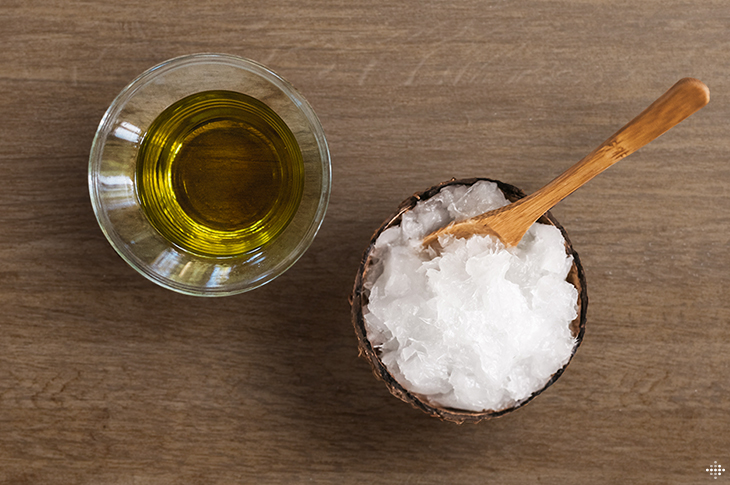
101515_OliveCoconutOil_Blog_730x485

Did you jump for joy when you heard coconut oil was no longer on the “bad foods” list? If you’re one of the many doing cartwheels down supermarket aisles and piling your cart high with every coconut item on the shelf, you may want to read on to find out if your jubilation is truly justified.

When comparing coconut oil to other fats, it does have some redeeming qualities. However, it’s not exactly the healthiest oil out there. It just doesn’t measure up when you pit virgin coconut oil(VCO), which is mechanically extracted from the coconut meat or milk, against extra virgin olive oil (EVOO), the juice squeezed or cold pressed directly from the olive fruit. (Neither oil extraction process involves the use of potentially harmful chemicals.) Take a look at how they fare against each other in five categories: fats, vitamins, antioxidants, health benefits, and cooking.

Extra Virgin Olive Oil

Virgin Coconut Oil

Nutrition Facts:
Serving Size: 1 tablespoonAmount Per ServingCalories 120Total Fat 14 g

  • Saturated Fat 15%*
  • Monounsaturated Fat 74%*
  • Polyunsaturated Fat 11%*
  • Trans Fat 0%*

Cholesterol 0%*

Vitamin E about 2mg

Vitamin K about 8µg

Polyphenol Antioxidants at least 36

*percent of total fat value

Nutrition Facts:
Serving Size: 1 tablespoonAmount Per ServingCalories 120Total Fat 14 g

  • Saturated Fat 88%*
  • Monounsaturated 7%*
  • Polyunsaturated Fat 2%*
  • Trans Fat 0%*

Cholesterol 0%*

Vitamin E about 0.01mg

Vitamin K 0.1µg

Polyphenol Antioxidants about 6

*percent of total fat value


Winner in the Fats Category: EVOO

The great news is both oils are very low in the worst type of fat—trans fat. But that’s where the similarity ends. EVOO is predominantly heart-healthy monounsaturated fat, while VCO is almost 90% saturated fat (that’s almost double the amount found in butter!). Some research shows coconut oil, which contains lauric acid, a medium chain triglyceride (or MCT) that is easier to burn as energy and less likely to be stored as fat, has the potential to increase good HDL cholesterol levels. Unfortunately, less than half of the saturated fat is lauric acid—the other half is still harmful saturated fat. And even through saturated fats aren’t all bad for us, they haven’t been proven healthy either. It’s still a good idea to limit total saturated fat, including from tropical oils like coconut, as the evidence backing the health benefits of diets low in saturated fat is just too strong to ignore.

Winner in the Vitamins Category: EVOO

The only notable micronutrients the oils contain are vitamin E, an antioxidant shown in studies to have properties that may protect against heart disease and certain cancers, and vitamin K, which is essential for blood clotting and healthy bones. And in this case, the olive is mightier than the coconut, as EVOO contains 160 times more vitamin E and 120 times more vitamin K than VCO.

Winner in the Antioxidants Category: EVOO

The main antioxidants you’ll find in both oils are polyphenols. EVOO contains significantly higher levels (40 times more!) with at least 36 different polyphenols—that’s a lot of highly bioavailable, disease-fighting antioxidants. VCO only contains about six different polyphenols.

Winner in the Health Benefits Category: EVOO

There is an enormous body of evidence supporting the health benefits of EVOO. The high levels of monounsaturated fats and antioxidants in EVOO, have been shown to improve heart health, aid weight control, decrease the body’s inflammatory response, and reduce the risk of certain cancers.

Until more research is conducted, the same cannot be said about VCO. Although it has been linked to many conditions, including weight loss, cholesterol, diabetes, chronic fatigue, Crohn’s disease, irritable bowel syndrome, and thyroid issues, there is insufficient scientific evidence to rate the effectiveness of coconut oil.

Winner in the Cooking Category: EVOO

Unrefined oils like EVOO and VCO have lower smoke points (the temperature at which oils begin to smoke and become less healthy) than refined versions. According to the International Olive Council, EVOO has a smoke point roughly around 410°F, making it great for sautéing, frying, and baking (below 410°F). VCO has a lower smoke point (up to 350°F) and is best used when sautéing over medium heat, or as a replacement for butter or shortening for medium-heat baking.

Overall Champion: Extra Virgin Olive Oil!

EVOO is the stand out winner when it comes to levels of heart-healthy, monounsaturated fats, vitamins, antioxidants, health benefits, and cooking. Virgin coconut oil can be used occasionally when a recipe calls for a solid fat, such as butter or shortening, or when cooking Asian cuisine—but adding oodles of the stuff to your morning smoothie isn’t going to do you any good. For undisputed health-boosting benefits, make extra virgin olive oil your go-to.

source….Tracy Morris in http://www.blog.fitbit.com

Natarajan

Tracy Morris holds a master’s degree in nutrition and dietetics. She has owned a nutrition consultancy and worked in private practice in Sydney, Australia and Cape Town, South Africa. Over the past 15 years, Tracy has lived in five different countries and has inspired people around the globe to be healthy. Currently, she is happily settled in Northern California where she writes, practices Pilates, runs after her three kids, and sips pinot noir with her husband.


Sweden Getting Close to Become the First Country to turn as “all electronic” Cashless Society!!! …

Sweden is shaping up to be the first country to plunge its citizens into a fascinating — and terrifying — economic experiment: negative interest rates in a cashless society.

The Swedish central bank held its benchmark interest rate at
-0.35% today, the level it has been at since July.

Although retail banks have yet to pass on that negative to rate to Swedish consumers, the longer it’s held there the more financial pressure there is for banks to pass the costs onto their customers. That’s a problem because Sweden is the closest country on the planet to becoming an all-electronic cashless society.

Remember, Sweden is the place where, if you use too much cash, banks call the police because they think you might be a terrorist or a criminal. Swedish banks have started removing cash ATM machines from rural areas, annoying old people and farmers.
Credit Suisse says the rule of thumb in Scandinavia is: “If you have to pay in cash, something is wrong.”

Sweden cash

Quartz

If banks charge customers negative rates of interest in a cashless society, those customers are not able to withdraw their money as cash to shield it, under their putative mattresses. Consumers’ only choice in such a scenario is to spend it or let the bank take it. (The theory is that by forcing people to spend cash rather than save it, you can spur economic growth.)

Rather than going further into negative territory — a move that carries political risks the more negative it becomes — the Riksbank chose instead to do another round of quantitative easing (a forced bond buying program that flushes more central bank cash into the economy).

But the pressure for negative interest rates to drive cash out of bank deposits and into the economy is building. Switzerland, for instance, has negative central policy rates that cost its banks $US1 billion a year. Those costs haven’t yet been passed down to consumers. But how much longer will banks eat that before adding fees and charges to Swiss accounts to defray the cost?

We reported at the weekend how central bankers and investment bank analysts are increasingly discussing when this might happen. And yesterday, Italy sold a two-year bond at an interest rate of -0.023%, which means investors have to pay to lend Italy money rather than receive interest on their loans. (Why would you buy such a bond? Well, if you believe that you’ll get even worse terms in the future from other creditors — hello, Sweden! — then suddenly -0.023% starts to look pretty good.)

So two trends are converging on Sweden at the same time:

  • Sweden is using less and less cash.
  • Sweden is a negative interest rate environment.

And that means many Swedes have no way to “hide” their money.

So Sweden may become the first country where its citizens may have to accept negative interest rates (probably in the form of higher bank charges or fees) or be forced to spend their money in order to “save” it from those rates.

A resistance is forming, and some people are protesting the impending extinction of cash. Björn Eriksson, former head of Sweden’s national police and now head of Säkerhetsbranschen, a lobbying group for the security industry, told The Local, “I’ve heard of people keeping cash in their microwaves because banks won’t accept it.”

Source….JIM EDWARDS…. http://www.businessinsider.com.au

Natarajan