
A rare phenomena … on the Sky… This fascinating treat on the sky of Brisbane Australia
was clicked by me thro my Mobile Camera in May 2019 .A treat for eyes
K.Natarajan
A rare phenomena … on the Sky… This fascinating treat on the sky of Brisbane Australia
was clicked by me thro my Mobile Camera in May 2019 .A treat for eyes
K.Natarajan

Photo Clicked on 18th May thro my Mobile Camera while Transiting Thro Changi Terminal 3
Natarajan K
The second day at the 23rd Asian Athletics Championships ended on a high note for India. Months of hard work, grit, determination and practice finally paid off for unheralded half miler Gomathi Marimuthu and shot putter Tejinderpal Singh Toor. Both of them clinched a gold medal each. By the end of Monday, India’s medal tally stood at 2 gold, 3 silver and 5 bronze.
For the 30-year-old athlete, this was her first major win at an international stage. She ran her way, all the way from the back of the pack, just to stun the crowd by winning the 800m race. Gomathi clocked a personal best time of 2 minutes 02.70 seconds in the half-mile event to win a gold for India. Recently, her previous best (2:03.21) was the golden run at the Federation Cup at Patiala.
For Gomathi, it has been ten long years of intense struggle. As a farmer’s daughter, she had only started professionally running when she was 20. “I did not realise until I crossed the finish line that I won a gold medal. The last 150m was a very tight race,” she said. This was only the third international event for Gomathi. While she has always been interested in sports, it was her friend Shruthi from Holy Cross College in Trichy, who inspired her to take it up seriously.
“When I was growing up, there was no one to tell me that I can make a living out of sports. I never understood the significance until I joined college. I just wanted to get a job and support my family,” she told The New Indian Express.
The only one to go to college among two other siblings, Gomathi landed a job with the Income Tax department in Bengaluru and started training regularly. Her intense hard work got recognised as she got selected for the Asian Championships in Pune in 2013. That year, she had finished seventh in the 800m final and two years later, at the same event in China, she finished fourth.
While Gomathi dreamed of clinching the gold next time around, tragedy struck her family. In September of 2016, her father passed away due to colon cancer and in December, Gomathi suffered groin injury. With a few months time, her coach, Gandhi died of a heart attack. “I had no one to train me. I had to provide for the family as well,” she lamented. An injury is the worst that can happen to an athlete who started as late as Gomathi. She had to wait for almost two years before she could train again, however, she was unstoppable.
Since the beginning of 2019, Gomathi started participating in various state and national level championships, At the Federation Cup in March, an event that served as a selection trial for Doha, she finished first. While her timing was good enough to fetch a gold at the 2017 Asian Championship in Bhubaneswar, due to her long absence from the field, Athletics Federation of India asked her to appear in another round of trials in Patiala a few days ago, where she was given a green signal to represent India at the Championship in Doha.
Gomathi’s story is truly inspirational, just like her performance at the 800m run. While she has scripted history, it is her never-say-die attitude which helped Gomathi through tougher times. The Logical Indianapplauds her determination and her achievement at such a prestigious world forum.
Source……..www.thelogicalindian.com
Natarajan

This story was first published on December 23rd, 2010
Message with a series of attached pictures claims that the pictures were created on a typewriter by the artist Paul Smith.
The claims in the message are true. As stated in the email, American artist Paul Smith created all of his artwork using a typewriter. He passed away in June 2007.
Subject: Amazing Typewriter/WOW!
He lived at Rose Haven Nursing Home, Roseburg, OR, for years.
This is incredible–especially when you finally get to the bottom and read the biography of the man who painstakingly accomplished these works!
These pictures are unbelievable and amazing. Hope you enjoy them as much as I did.
Typewriter Art Can you believe that this art was created using a typewriter?
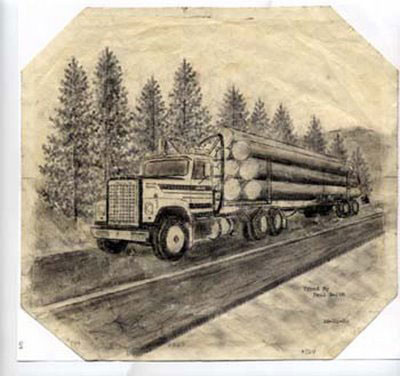

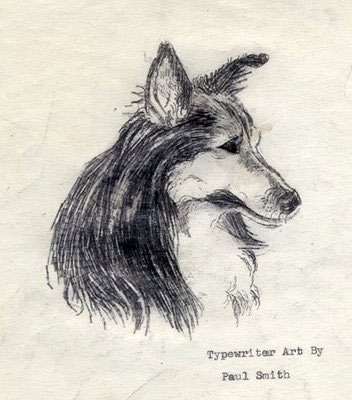

Paul Smith, the man with extraordinary talent was born in Philadelphia on September 21, 1921 with severe cerebral palsy. Not only had Paul beaten the odds of a life with spastic cerebral palsy, a disability that impeded his speech & mobility but also taught himself to become a master artist as well as a terrific chess player even after being devoid of a formal education as a child.
When typing, Paul used his left hand to steady his right one.. Since he couldn’t press two keys at the same time, he almost always locked the shift key down and made his pictures using the symbols at the top of the number keys. In other words, his pictures were based on these characters ….. @ # $ % ^ & * ( ) _ .
Across seven decades, Paul created hundreds of pictures. He often gave the originals away. Sometimes, but not always, he kept or received a copy for his own records.
As his mastery of the typewriter grew, he developed techniques to create shadings, colors, and textures that made his work resemble pencil or charcoal drawings.” This great man passed away on June 25, 2007, but left behind a collection of his amazing artwork that will be an inspiration for many.
Editor’s note: The message generally circulates with many other examples of Paul Smith’s work, which have been omitted from this example. You can view these pictures and more via the artist’s website
This email forward, which features the work of artist Paul Smith, explains that all of the pictures were created using just a typewriter.
The claims in the email are true. The extraordinary art of Paul Smith was indeed created on a typewriter and is now known all around the world. This inspirational man, who did not allow cerebral palsy to stop him from living a remarkable life, was an accomplished chess player as well as an artist.
Paul was born in Philadelphia on September 21, 1921. He died on June 25, 2007 while a resident of the Rose Haven Nursing Center in Roseburg, Oregon.
More details about the artist, along with galleries of his work, are available on the Paul Smith Foundation website. The website, now archived via the Internet Archive’s Wayback Machine, notes:
Across seven decades, Paul created hundreds of pictures. He often gave the originals away. Sometimes, but not always, he kept or received a copy for his own records. Be sure to visit the gallery at this site to see images of his pictures in detail.
As his mastery of the typewriter grew, he developed techniques to create shadings, colors, and textures that made his work resemble pencil or charcoal drawings.
It’s interesting to see how he gradually refined his use of perspective and coloring, and how his subject matter reflected the events and personalities of the times.
An article on the Chessville website also provides an interesting insight into the artist’s life.
in https://www.hoax-slayer.net/
Natarajan

This story was first published on May 9, 2013
An image circulating via social media supposedly depicts a strange half cat creature with only two legs and no ears caught in action by Google Street View cameras.
Half cat is no mystery. The strange looking puss is the result of some digital tomfoolery. And the image was not captured via Google Street View. The source image used in the manipulation was snapped in 2003 – well before Google Street View was launched – and depicts “Thumbelina”, a perfectly normal cat, strolling along a street in Ottawa (See original image below).
Spotted On Google Street View: Half A Cat A new species, perhaps?

This picture of what appears to be a bizarre two-legged, no-eared cat has been circulating via social media since 2013. Descriptions of the strange creature claim that it was captured via Google Street View images.
The image has generated a lot of tongue-in-cheek speculation with commentators suggesting that it could depict a new species, an alien visitor or a mutant puss.
But, the truth is little more down to earth. Half Cat is the result of digital manipulation. As the following image shows, Half Cat was created by photoshopping a picture of the beautiful Thumbelina, most probably without her permission or knowledge:

The The source picture was reportedly taken back in 2003 and was posted to picture sharing website imgur. The image is said to show Thumbelina walking near Parliament Hill, Ottawa.
And, given that Google Street View was not launched until 2007, it is clear that Thumbelina’s picture was not snapped by Street View cameras as suggested in the circulating messages.
Thumbelina’s thoughts on the unauthorized use of her picture have so far gone unrecorded.
Source…https://www.hoax-slayer.net/
Natarajan
Founded in 1943 by Swede Ingvar Kamprad and headquartered in the Netherlands, furniture giant IKEA makes revenue worth €38.3 billion with 411 outlets in 49 countries.

And while the numerous conversations CEO of IKEA India Juvencio Maeztu had with Indian biggies may be credited for the 2012 plan to finally take shape, there is a backstory many aren’t aware of. It’s how the 48-year-old bossman who relocated from London to Delhi’s NCR Region found a home away from home. All over a cup of masala chai.
It was 2012. Juvencio Maeztu had only arrived in India as the CEO of IKEA India. The switch from London to the bustling city of the National Capital Region was anything but easy.
Speaking to the Economic Times, the 48-year-old recalls, “I had many concerns. I am too small, and India is too big. Could I understand India, its size, its complexity and diversity? Will my European roots constrain me?”
His mind was clouded with doubts, but he had far more important matters to attend. For instance, his morning appointment at the FRRO (Foreigners Regional Registration Office) in Delhi. And he needed a passport-size photograph.
And so, his driver drove through the lanes of NCR, before making a halt at one of the many hole-in-the-wall photography studios. The one they stopped at was run by an old gentleman.
He just had to take a photograph and be on his way. How much time could it possibly take? He couldn’t be late for his appointment.
And so, the CEO entered the shop and asked the man, “Can you take my photo?”
“Yes,” came the reply.
“How long will it take?” Maeztu asked hesitantly
“Five minutes,” the man said.
The photo was clicked. But the wait for the 5 min – ‘N’ copies of the photograph dragged on for over 15 minutes. The printer was old and dusty, takes time to warm up, the man told him.
But he was quick to offer him – “Masala chai?” he asked.
“No” came the curt reply. Even as the man struggled with the printer, he kept persuading Maeztu to drink a cup of chai. An exasperated Maeztu gave him a brusque, “No”.
It was at this time that the photographer asked, “Sir, what’s the point of life if you cannot enjoy a masala chai for five minutes?”
“Something clicked,” Maetzu told the publication. He moved to take a seat, drank the cup of masala chai. The appointment was forgotten, and the two men chatted for over an hour that day.
He may have missed his FRRO appointment, but Maetzu says, “That was the moment I connected with India. It was a turning point.”
He had finally found a home away from home.
While land has been acquired in Gurugram, Bengaluru and Mumbai, the retail stores will only come up in the next few years. With a staff strength of 535 and an investment of Rs 10,500 crore, the furniture giant is here to make it big reported the publication. The current number of employees though is estimated to be around 950 people directly, about 1500 at its store in Hyderabad and aims to hire another 15,000 employees as it expands its operations.
“We are here for the long term. We think of 100 years when we think of our strategy. I have taken no shortcuts. More importantly, I have had no pressure (from the headquarters) to take shortcuts. In the next 100 years, the sheer size of India makes it important. There are other super big reasons. India is challenging us to find better ways to do business. This is a market you need to learn and not come into with an attitude that you know everything,” he said.
The vision is to also have over 25 stores and 20,000 employees in India by 2030.
The report adds how India is the first market where IKEA is rolling out a multi-channel retail online and offline strategy from day one. It is also planning to explore the use of eco-friendly raw materials like bamboo, coconut waste, water hyacinth and recycled PET.
Apart from working with over 80,000 farmers to boost cotton production, it is also helping skill 1,200 women artisans with the UNDP under its programme ‘Disha’ and boost employment from underprivileged communities.
Seems like a journey that began with one cup of masala chai came a long way after all!
Photographer John Moore, who took the picture that has come to symbolise the horror of the new family-separation policy in the United States, reveals what happened that night.

A two-year-old girl in a bright pink shirt is crying. It’s the middle of the night, and she’s only visible thanks to bright lights, likely from cars and cameras. She’s sobbing, her head tilted back in fear as she looks up at a strange man touching her mother. But nobody can soothe her.
This image of a Honduran girl crying as United States Border Patrol agents search her mother has come to represent the heartbreak being experienced by illegal immigrants separated from their children.
Pulitzer prize-winning photographer John Moore has been documenting the immigrant experience for a decade, riding along with both Border Patrol agents and immigrant trains in order to get the story.
Speaking of the image, he speaks about the June 12 ride-along that resulted in the emblematic picture — not to mention the other heartbreaking photos he captured of this mother and child.
That fateful night
On June 12, after seeking access, he accompanied Border Patrol agents to the banks of the Rio GrandeRiver on the outskirts of McAllen, Texas.
Waiting with the guards for hours, he finally heard rafts coming across the river. They waited a little longer and then suddenly moved in to see nearly dozen of them – mostly women and children.
Describing that moment itself, Moore says, “Most of these families were scared, to various degrees. “I doubt any of them had ever done anything like this before — flee their home countries with their children, travelling thousands of miles through dangerous conditions to seek political asylum in the United States, many arriving in the dead of night.”
While the agents were trying to get the families into buses, he finally spoke to one woman who identified herself as a Honduran. She was travelling with her two-year-old. “The mother told me they had been travelling for a full month and were exhausted,” says Moore, who speaks Spanish. “They were taken into custody with a group of about 20 immigrants, mostly women and children, at about 11 pm,” he was quoted as saying to Getty Images FOTO.
Describing what happened next, Moore says, “Before transporting them to a processing center, transportation officers body searched everyone and the mother was one of the last. She was told to set the child down, while she was searched. The little girl immediately started crying. While it’s not uncommon for toddlers to feel separation anxiety, this would have been stressful for any child. I took only a few photographs and was almost overcome with emotion myself. Then very quickly, they were in the van, and I stopped to take a few deep breaths.”
Moore says he doesn’t know what became of the 2-year-old Honduran girl, adding that the asylum seekers he photographed likely had no idea of the new “zero tolerance” policy that has led to families being separated from their children, since they had been travelling for a month under harsh circumstances.
Source….www.rediffmail.com
Natarajan





 Take off with Natarajan