Image of the Day…Comet Siding Spring Near MARS !!!

Cool composite of Comet Siding Spring near Mars

Hubble image of close passage of Comet Siding Spring near Mars. The comet passed Mars at about a third the distance between Earth and the moon on October 19.

This composite NASA Hubble Space Telescope image captures the positions of comet Siding Spring and Mars in a never-before-seen close passage of a comet by the Red Planet, which happened at 2:28 p.m. EDT October 19, 2014. Image credit: NASA, ESA, PSI, JHU/APL, STScI/AURA

This NASA Hubble Space Telescope composite image captures the positions of Comet Siding Spring and Mars in a never-before-seen close passage of a comet by the Red Planet. The close encounter took place at 2:28 p.m. EDT October 19, 2014. The comet passed by Mars at approximately 87,000 miles, or about one-third of the distance between Earth and the moon! At that time, the comet and Mars were approximately 149 million miles from Earth.

The comet image shown here is a composite of Hubble exposures taken between Oct. 18, 8:06 a.m. EDT to Oct. 19, 11:17 p.m. EDT. Hubble took a separate photograph of Mars at 10:37 p.m. EDT on Oct. 18. It’s a composite image because a single exposure of the stellar background, comet Siding Spring, and Mars would be problematic. Mars is actually 10,000 times brighter than the comet, and so could not be properly exposed to show detail in the Red Planet. The comet and Mars were also moving with respect to each other and so couldn’t be imaged simultaneously in one exposure without one of the objects being motion blurred. Hubble had to be programmed to track on the comet and Mars separately in two different observations.

The Mars and comet images have been added together to create a single picture to illustrate the distance between the comet and Mars at closest approach. The separation is approximately 1.5 arc minutes, or one-twentieth of the angular diameter of the full moon. The solid icy comet nucleus is too small to be resolved in the Hubble picture. The comet’s bright coma, a diffuse cloud of dust enshrouding the nucleus, and a dusty tail, are clearly visible.

Read more from NASA

SOURCE:::: earthskynews

Natarajan

” Would You Dare Cross This Highway In France ?…” !!!

When driving to and from work, most people wonder “will there be bad traffic?” If you happen to be one of the lucky commuters who has to drive on the Passage du Grois that runs between the Gulf of Burn and the island of Noirmoutier in France, you’d wonder “will there be a road?” This roadway is infamous for being the victim of the changing tides. At low tide, which only happens for a short period every day, the water is just low enough for people to safely pass on the road.

I don’t know about you, but if my road back home is under water for the majority of the day, I’d invest in a boat (or perhaps submersible vehicle).

A few cyclists cross the Passage du Grois. The sun is shining and the road (for now) is above water.

Imagine driving along and running into this. Time to put the car in reverse.

At least there are some handy signs to warn you in case you miss the road disappearing right in front of you.

Some people never learn: Exhibit A.

Some people never learn: Exhibit B.

If there’s one place in the world where you definitely don’t want to be in a traffic jam….

“Excuse me, sir, you can’t park here.”

If all else fails, you can always cross the Passage du Grois the old-fashioned way.

(via: acidcow.com)

One thing’s for sure, life as a commuter on the Passage du Grois is never boring. !!!!

SOURCE:::: Viral nova trending site

Natarajan


October 24 1946…. This Date in Science…First Ever Photo of Earth From Space !!!

This date in science: First-ever photo of Earth from space

White Sands Missile Range/Applied Physics Laboratory
On October 24, 1946, a movie camera on board the V-2 rocket captured the first photo of Earth from outer space.

October 24, 1946. Were you alive at a time when we’d never seen Earth from space? Not many of us were, and it’s hard to imagine. But if you can imagine it, think how you’d have felt seeing this first-ever photograph of Earth from outer space, taken on today’s date in 1946. On this date, a group of soldiers and scientists in the New Mexico desert launched a V-2 rocket – fitted with a 35-millimeter motion picture camera – to a suborbital altitude of 105 kilometers (65 mi). The camera was destroyed after being dropped back to Earth, but the film survived.

Photo credit: White Sands Missile Range/Applied Physics Laboratory

First photo of Earth from space, October 24, 1946  via White Sands Missile Range/Applied Physics Laboratory
Air & Space magazine tells the story of this major event in space history:

Snapping a new frame every second and a half, the rocket-borne camera climbed straight up, then fell back to Earth minutes later, slamming into the ground at 500 feet per second. The camera itself was smashed, but the film, protected in a steel cassette, was unharmed.

Fred Rulli was a 19-year-old enlisted man assigned to the recovery team that drove into the desert to retrieve film from those early V-2 shots. When the scientists found the cassette in good shape, he recalls, “They were ecstatic, they were jumping up and down like kids.” Later, back at the launch site, “when they first projected [the photos] onto the screen, the scientists just went nuts.”

Before 1946, the highest pictures ever taken of the Earth’s surface were from the Explorer II balloon, which had ascended 13.7 miles in 1935, high enough to discern the curvature of the Earth. The V-2 cameras reached more than five times that altitude, where they clearly showed the planet set against the blackness of space. When the movie frames were stitched together, Clyde Holliday, the engineer who developed the camera, wrote in National Geographic in 1950, the V-2 photos showed for the first time “how our Earth would look to visitors from another planet coming in on a space ship.”

.

V-2 #21, launched on March 7, 1947, took this picture from 101 miles up. The dark area at the upper left is the Gulf of California. White Sands Missile Range/Naval Research Laboratory.

V-2 #21, launched on March 7, 1947, took this picture from 101 miles up. The dark area at the upper left is the Gulf of California. White Sands Missile Range/Naval Research Laboratory.
Scientists quickly got better at taking Earth’s picture. Here’s one from about six months later, taken from V-2 #21, launched on March 7, 1947. This picture is also from 101 miles up. The dark area at the upper left is the Gulf of California. Image via White Sands Missile Range/Naval Research Laboratory.
Bottom line: On October 24, 1946, a movie camera on board the V-2 rocket captured the first photo of Earth from outer space.


SOURCE::::::EARTH SKY NEWS SITE

Natarajan

Incredible Images ….. Spectacular Earth !!!

Dave Kan in Noosa, Queensland, Australia: ‘I was finishing up a photo shoot when a wild kangaroo appeared out of nowhere and bounded onto the lake, as if walking on water. This, along with the picturesque sunset combined to create an absolute visual treat!’

Dave Kan in Noosa, Queensland, Australia: 'I was finishing up a photo shoot when a wild kangaroo appeared out of nowhere and bounded onto the lake, as if walking on water. This, along with the picturesque sunset combined to create an absolute visual treat!'

Rick Loesche on Sanibel Island, Florida: An island bird gulps down a tiny crab for a meal

Rick Loesche on Sanibel Island, Florida: An island bird gulps down a tiny crab for a meal 

Hendy MP in Sambas, West Kalimantan, Indonesia: A lemur species gets ready to fly in this photo captured in the early afternoon

Hendy MP in Sambas, West Kalimantan, Indonesia: A lemur species gets ready to fly in this photo captured in the early afternoon

Source::::::ASHLEY COLLMAN FOR MAILONLINE   www.dailymail.co.uk   & National Geographic

Natarajan


” வாழ்வில் ஒருமுறை காசி யாத்திரை அவசியம் …”

காஞ்சிப்பெரியவர் 1932ல் ராமேஸ்வரம் வந்தார். கடலில் ஸ்நானம் செய்த அவர் சிறிதளவு மணலைச் சேகரித்துக் கொண்டார். அதை அலகாபாத்திலுள்ள பிரயாகை திரிவேணி சங்கமத்தில் சேர்ப்பிக்க வேண்டும் என்பது அவரது எண்ணம். அது மட்டுமல்ல! தீபாவளி கொண்டாடப்படும் அக்டோபர் மாதத்தில் காசிக்கு சென்று கங்கா ஸ்நானம் செய்யவும் அவர் முடிவெடுத்திருந்தார். இதற்காக, அவர் வாகனங்கள் எதுவும் ஏற்பாடு செய்யவில்லை. நடந்தே செல்ல திட்டமிட்டார். அப்போது பெரியவருக்கு வயது 39 தான்.

இந்த திட்டத்தை செயல்படுத்தும் பொறுப்பு, தென்காசியைச் சேர்ந்த அனந்த கிருஷ்ண சர்மாவிடம் ஒப்படைக்கப்பட்டது. அவர் முன்னதாகவே காசிக்கு நடந்தே புறப்பட்டார். எந்தெந்த ஊர்களில் பெரியவர் தங்கிச் செல்ல வேண்டும் என்பதை செல்லும் வழியில் குறித்துக் கொண்டார். அவ்வாறு அவர் நடந்து செல்ல ஆறு மாதங்கள் பிடித்தன.

அவர் திரும்பி வந்து பயணத்திட்டத்தை பெரியவரிடம் அளித்தார். பெரியவரும் சிஷ்யர்களும் 1933 செப்டம்பர் இரண்டாவது வாரத்தில் தஞ்சாவூரிலிருந்து பயணத்தைத் துவக்கினர். செல்லும் வழியில் இந்தியாவின் முக்கிய நகரங்களில் பெரியவர் தங்கினார். அங்கெல்லாம் ஏராளமான பக்தர்கள் வந்து ஆசி பெற்றனர். அனந்தசர்மா வேகமாகச் சென்று திரும்பியதால் ஆறுமாதங்கள் தான் பிடித்தன. ஆனால், மகாபெரியவர் பல ஊர்களில் தங்கியதால், பிரயாகையை அடைய 1934 ஜூலை 23ம் தேதி ஆகி விட்டது. அங்கு தான் கொண்டு சென்ற ராமேஸ்வரம் மணலை, திரிவேணி சங்கமத்தில் சேர்ப்பித்தார். அங்கேயே செப்டம்பர் மாதம் வரை தங்கி விட்டார். செப்டம்பர் இறுதியில் காசி கிளம்பினார்.

அவரிடம் பக்தர்கள்,””இப்போதே நீங்கள் வெகு தூரம் நடந்து வந்து விட்டீர்கள். இனியும் நடக்க வேண்டாம். சாலை வசதி நன்றாக இருக்கிறது. வாகனத்தில் வாருங்கள்,” என கோரிக்கை வைத்தனர். மகாபெரியவர் அதை ஏற்கவில்லை. தொடர்ந்து நடந்தே காசியாத்திரையைத் தொடர்ந்தார். பிரயாகையில் இருந்த பக்தர்கள் பலரும் அவருடன் சென்றனர். அக்டோபர் 3ம் தேதி காசி எல்லையை அடைந்த சுவாமிகளை காசி மகாராஜா உள்ளிட்டோர் பூர்ண கும்ப மரியாதையுடன் வரவேற்றனர்.

வரவேற்பு விழாவில் 25 ஆயிரத்துக்கும் மேற்பட்டோர் பங்கேற்றனர். அக்டோபர் 7ல் மகாபெரியவர் கங்கையிலுள்ள மணிகர்ணிகை உள்ளிட்ட தீர்த்தக்கட்டங்களில் தீர்த்தமாடினார். பண்டித மதன்மோகன் மாளவியாவின் அழைப்பை ஏற்று காசி இந்து சர்வகலாசாலையில் (பல்கலைக்கழகம்) உரையாற்றினார்.

ஒவ்வொரு இந்துவும் வாழ்வில் ஒரு முறையேனும் காசி யாத்திரை செய்ய வேண்டும் என வலியுறுத்தினார்.

நாமும் மகாபெரியவர் ஆசியுடன், அடுத்த தீபாவளிக்குள் ஒருமுறை காசி யாத்திரை சென்று திரும்புவோம்.

Rea d more: http://periva.proboards.com/thread/8187/#ixzz3H3oLJzUS


Source::::www.periva.proboards.com

Natarajan

” Satellite Image of India During Diwali” …Real and Fake !!!

The Hindu festival of Diwali celebrates the victory of Good over the Evil and Light over Darkness. It also marks the beginning of the Hindu New Year. This year, Diwali falls on October 23. Lighting lamps, candles, and fireworks are a big part of Diwali. It’s a celebration of light! But can you see those celebratory lights from space? The answer is no. NASA saysthe extra light produced during Diwali is so subtle that space images don’t show it. This post is about a real satellite image of India during Diwali, versus a false one that’s been circulating on the Internet for a few years, especially around the time of the Diwali festival.

First, a real image:

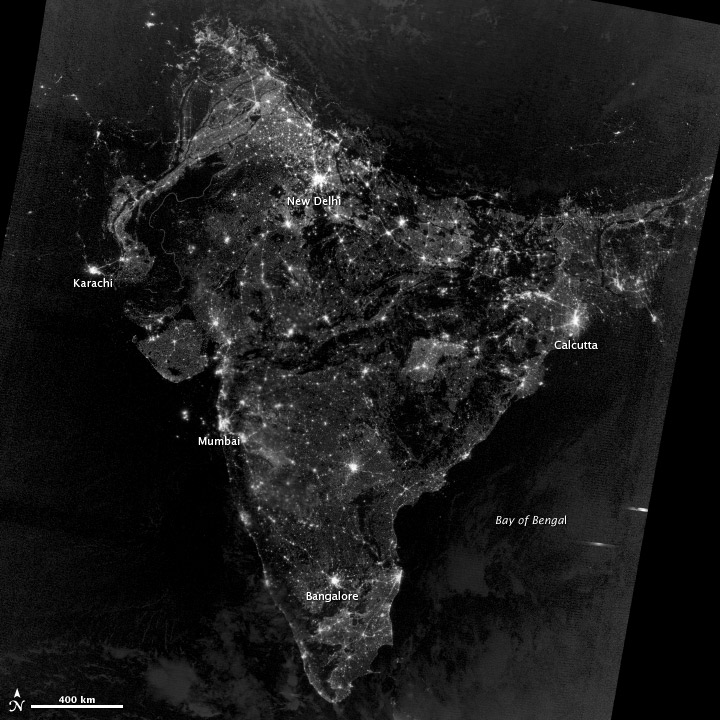
The image above – which has been artificially brightened – shows what India looked like from space on the night during Diwali in November, 2012. It’s what India looks like from space onany night, according to NASA.

This image is from a NASA satellite known as Suomi NPP, for National Polar-orbiting Partnership. An instrument carried on this satellite – which detects light in a range of wavelengths from green to near-infrared – acquired this image in a single night. The image has been brightened to make the city lights easier to distinguish.

Most of the bright areas are cities and towns in India, which is home to more than 1.2 billion people and has at least 30 cities with populations over 1 million. Cities in Bangladesh, Nepal, and Pakistan are also visible near the edges of the image.

Now, the fake one:

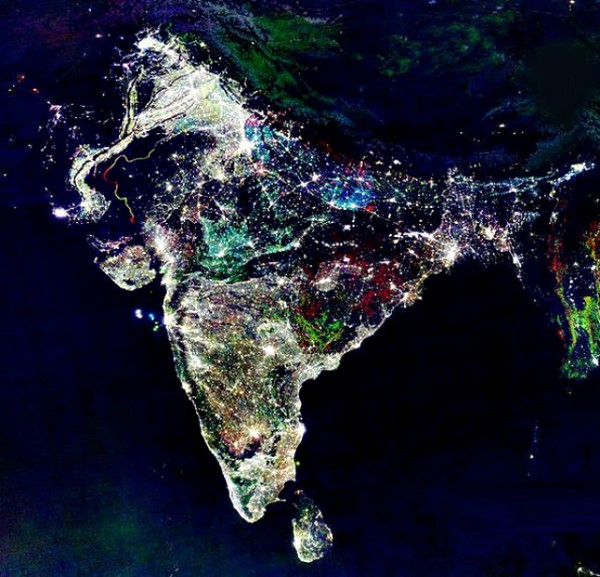
In contrast, here is the false Diwali image, which has been circulating via the Internet for some years. It doesn’t show what it claims to show; that is, it doesn’t show India on a single night during the Diwali festival.

This image comes from satellite data, too, but not a single satellite on a single night. It’s based on data from U.S. Defense Meteorological Satellite Program (DMSP) satellites, and it’s a color-composite created in 2003 by NOAA scientist Chris Elvidge to highlight population growth over time. In this image, white areas show city lights that were visible prior to 1992, while blue, green, and red shades indicate city lights that became visible in 1992, 1998, and 2003 respectively.

Bottom line: This post contains a real space image of India, taken during the 2012 Diwali festival. The image is shown in contrast to another space image – a composite, put together with data taken over many years – which has circulated in recent years. The composite image does not show India during Diwali. NASA says the extra light so many enjoy during Diwali would not be visible from space.

SOURCE::::earthskynews

Natarajan

Picture of the Day…. View From Eiffel Tower Thro the Eyes of an Eagle !!!

Still from a video filmed from the back of an eagle as it soars over Paris after taking off from the Eiffel tower. In a world's first, a white-tailed eagle soared from the top of the Eiffel Tower in Paris and flew over the Seine down into the Trocadero Gardens with a camera mounted on its back.

Still from a video filmed from the back of an eagle as it soars over Paris after taking off from the Eiffel tower. In a world’s first, a white-tailed eagle soared from the top of the Eiffel Tower in Paris and flew over the Seine down into the Trocadero Gardens with a camera mounted on its back.Picture: Sony/SWNS 

SOURCE:::The Telegraph UK

Natarajan

The Wettest Place on Earth…Village Mawsynram in Meghalaya, India …

Winchester Lyngkhoi carries fresh meat up to his butcher's stall on market day in Mawsynr

Winchester Lyngkhoi carries fresh meat up to his butcher’s stall on market day in Mawsynram. Picture: Amos Chappele/Rex/australscope Source: Supplied

YOU might need a bigger umbrella — in fact, you might need a stash of them.

And forget sunglasses because you’ll be lucky to see many rays in the wettest place on Earth. Perched atop a ridge in the Khasi Hills of India’s north east, the village of Mawsynram is subject to the highest average rainfall on the planet.

Rainwater surges through Mawsynram Village during a heavy downpour. Picture: Amos Chappel

Rainwater surges through Mawsynram Village during a heavy downpour. Picture: Amos Chappele/Rex/australscopeSource: Supplied

In the two peak monsoon months of June and July Mawsynram is hit with an average 275 inch

In the two peak monsoon months of June and July Mawsynram is hit with an average 275 inches of rain. Picture: Amos Chappele/Rex/australscope Source: Supplied

Mawsynram is a village in the East Khasi Hills district of Meghalaya state in north-eastern India, a region renowned for being constantly wet.

The village receives a whopping 467 inches of rain per year thanks to summer air currents sweeping over the floodplains of Bangladesh and gathering moisture as they move north.

Perched atop a ridge in the Khasi Hills of India's north east, the village of Mawsynram i

Perched atop a ridge in the Khasi Hills of India’s north east, the village of Mawsynram is subject to the highest average rainfall on the planet. Picture: Amos Chappele/Rex/australscope Source: Supplied

Mawsynram receives constant rain. Picture: Amos Chappele/Rex/australscope

Mawsynram receives constant rain. Picture: Amos Chappele/Rex/australscope Source: Supplied

When the resulting clouds hit the steep hills of Meghalaya they are “squeezed” through the narrowed gap in the atmosphere and are compressed to the point where they can no longer hold their moisture.

The end result is the near-constant rain the village is famous for.

Labourers wearing traditional 'knup' umbrellas walk into Mawsynram. Picture: Amos Chappel

Labourers wearing traditional ‘knup’ umbrellas walk into Mawsynram. Picture: Amos Chappele/Rex/australscopeSource: Supplied

A farmer wearing a traditional 'knup' umbrella doesn't let the rain get in the way as he

A farmer wearing a traditional ‘knup’ umbrella doesn’t let the rain get in the way as he works near Mawsynram. Picture: Amos Chappele/Rex/australscope Source: Supplied

Further afield, deep in the rainforests of the state of Meghalaya lie some of the most extraordinary pieces of civil engineering in the world.

Here, in the depths of the forest, bridges aren’t built — they’re grown.

A fisherman walks under an ancient tree root bridge at Mawlynnong village. Picture: Amos

A fisherman walks under an ancient tree root bridge at Mawlynnong village. Picture: Amos Chappele/Rex/australscopeSource: Supplied

Examples of the thin aerial rubber tree roots used by locals to creates bridges and ladde

Examples of the thin aerial rubber tree roots used by locals to creates bridges and ladders in and around Mawsynram, which is the wettest place in the world. Picture: Amos Chappele/Rex/australscope Source: Supplied

Trailing vines and mosses, the living trees bridges of Cherrapunji are breathtaking in their majesty.

Ancient tree vines and roots stretch across rivers and streams, creating a solid latticework structure that appears too fantastical to be real.

A local man on the “double decker” tree root bridge in Nongriat Village, deep in the rain

A local man on the “double decker” tree root bridge in Nongriat Village, deep in the rainforests of the Indian state of Meghalaya. Picture: Amos Chappele/Rex/australscopeSource: Supplied

Local woman Mary Synrem holds a young Ficus Elastica rubber tree root, the material used

Local woman Mary Synrem holds a young Ficus Elastica rubber tree root, the material used to construct the tree root bridges in Cherrapunji, Meghalaya, India. Picture: Amos Chappele/Rex/australscope Source: Supplied

The Cherrapunji region is considered to be one of the wettest places on the planet and this is the reason behind the unusual bridges.

With Cherrapunji receiving around 15 metres of rain per year, a normal wooden bridge would quickly rot.

A living tree root bridge deep in jungle near Nongriat Village, near Meghalaya, India. Pi

A living tree root bridge deep in jungle near Nongriat Village, near Meghalaya, India. Picture: Amos Chappele/Rex/australscope Source: Supplied

Deep in the rainforests of the Indian state of Meghalaya lie some of the most extraordina

Deep in the rainforests of the Indian state of Meghalaya lie some of the most extraordinary pieces of civil engineering in the world. Picture: Amos Chappele/Rex/australscope Source: Supplied

This is why, 500 years ago, locals began to guide roots and vines from the native Ficus Elastica rubber tree across rivers using hollow bamboo until they became rooted on the opposite side, eventually creating a bridge.

Tourists visiting Mawsynram will definitely need one of these, in fact maybe a few. Pictu

Tourists visiting Mawsynram will definitely need one of these, in fact maybe a few. Picture: Amos Chappele/Rex/australscope Source: Supplied

But locals don’t let the rain get in the way of a good celebration or some hard work.

Farmers especially have developed ways to keep the rain at bay.

The sign on the weather station on the outskirts of Mawsynram, India, says it all. Pictur

The sign on the weather station on the outskirts of Mawsynram, India, says it all. Picture: Amos Chappele/Rex/australscope Source: Supplied

Made from bamboo and banana leaf, they wear knups, which are favoured for enabling both hands to be kept free for work and for being able to stand up to the high winds which come with the rainstorms in Mawsynram.

Goats shelter in a bus stop during nother drizzly afternoon in Mawsynram. Picture: Amos C

Goats shelter in a bus stop during nother drizzly afternoon in Mawsynram. Picture: Amos Chappele/Rex/australscopeSource: Supplied 

Source::::news.com.au

Natarajan

” For Many Years , It Upset Me That I was a Businessman…” Says Dilip Kapur

I wondered what mistakes I made in my life to be a businessman. Deep down, I still have doubts about it.’

Shobha Warrier meets the amazing Dilip Kapur who built a Rs 160 crore business with just Rs 25,000.

Image: Dilip Kapur whose Hidesign has grown from its artisan roots to an international brand. Photograph: Sreeram Selvaraj

Business was not Dilip Kapur’s first love. He actually wanted to “change the world.” But as fate would have it, what started as a hobby, is today a business worth over Rs 160 crore (Rs 1.6 billion) with 76 exclusive showrooms and a distribution network in 23 countries.

Founded in 1978 as a two man workshop, Dilip Kapur’s Hidesign has grown into a global brand recognised for quality, ecological values and personalised service.

“For many years, it upset me that I was a businessman. I wondered what mistakes I made in my life to be one. Deep down, I still have doubts about it. Business is not something I wanted to do,” says Kapur, the founder-president of Hidesign, the leather goods manufacturer based in Pondicherry/Puducherry, adding that even today he has many questions about doing business.

Kapur’s father, a rich businessman in Delhi, relinquished all his wealth and moved to Pondicherry in 1954 when Kapur was just five, and joined the Aurobindo Ashram.

After studying in the Ashram school as a free spirited boy, Kapoor studied at the Phillips Academy, Andover, Massachusetts, and later at Princeton University, graduating in liberal arts. He did his PhD in international affairs at Princeton.

When he was at university, the Vietnam War broke and along with that, the hippie and ant-Vietnam movements. “I was a hippie with long hair!’ he remembers. “We all thought we would be able to change the world.”

Image: Hidesign’s leather collection includes handbags, clutches, briefcases, laptop cases, wallets, belts and garments. Photograph: Sreeram Selvaraj

As the war ended, he got a job and that was the first time he was introduced to leather. “I loved the look of it. Unlike cloth, it was very tactile; you can touch it and feel it. There is a three dimension feel to leather; you can see through leather. It is more living unlike cloth.”

As part of his training, he made bills once a week and that was when he noticed that all the rare leather imported from England was called E I Leather. He found out that E I Leather, described as the finest vegetable tanned leather in the world, actually stood for East India Leather.

Considered to be the best for hand colouring, highly expensive shoes and bags in Italy, and the UK were made from this brand of leather. A huge surprise awaited him when he was told that E I Leather was imported from Madras (now Chennai)!

“They were importing from my homeland and I didn’t know. It was one of our heritages which we have lost. India used to be a big centre for vegetable tanned leather, the other two were Italy and Brazil. But when chemical tanning came to India, vegetable tanning slowly vanished.”

With every passing day Kapur realised he disliked the US more. “I really believed Vietnam was American imperialism. Maybe because I was an Indian, I felt connected to Vietnam. The arrogance of America upset me a lot; they thought they could do anything to any country. I admired Vietnam for the way they fought America. The Vietnam War was only one of the reasons why I decided to come back; I always knew one day I was going to come back,” he says.

“I had this pride that I was an Indian and wanted to live in India. No Indian who went to America at that time came back.”

Image: Hidesign has three design teams based in Milan, London and Pondicherry. Photograph: Sreeram Selvaraj

Back in Pondicherry in 1978, there was nothing much for him to do except plant trees and plan the affairs of Auroville. As he helped build Auroville, he indulged in his hobby of designing leather bags, and went searching for the source of E I Leather.

To his disappointment, tanner after tanner that he visited told him that they had stopped using the E I process and shifted to the more modern chrome tanning process.

“The disastrous results were apparent all around the tanneries. Where tannery waste water had once nurtured surrounding fields, now these areas were poisoned deserts with high incidence of cancer and skin diseases. Farmers, tanners, tanneries and environment, once bound together in a symbiotic and mutually beneficial relationship, were now enemies.”

Thus began his search to find the last remaining skilled tanners of E I Leather to dedicate himself “to research more innovative methods of tanning, based firmly on a heritage that had once created the greatest leather in the world!”

What he did next was visit the cobbler’s colony looking for the best cobbler there. All fingers pointed towards Murugan, a cobbler who could make his own patterns.

Murugan became Kapur’s first employee and continues to be part of Hidesign’s 35-year long journey.

Image: Hidesign sees great value in natural beauty. Photograph: Sreeram Selvaraj

Kapur was pleasantly surprised when a friend of his bought the very first handmade bag he designed for Rs 300.

“I just couldn’t believe that somebody would actually buy a bag I made. This friend knew I was making a bag and when I finished it, she found it so beautiful that she bought it. It was very unexpected.”

Kapur was now making one bag a day and gifting them to family members. It caught the attention of a German friend in Auroville. He modelled with the bags for the catalogue of the World Hunger Organisation and placed an order for 1,400 bags.

“Imagine, I had just started my business and had only one cobbler working for me. The realisation that people would place an order for what you did as a hobby, was amazing. After six months, I supplied 200 bags to him. That was all I could make.”

When such a big order landed his way, Kapur knew it was time to expand. With Rs 25,000 as capital, he expanded his hobby into a business. Most of the money was spent on buying leather, other accessories and a sewing machine.

“If I knew it would grow into a business, I would have closed it down at that time itself. I am not a Socialist or a Communist. I am not even a capitalist; I am a liberalist!” exclaims Kapur.

Image: Hidesign’s leathers are full grain and have not been corrected with paint and pigment to hide natural defects. Photograph: Sreeram Selvaraj

The bags were packed off with the name Hide (leather) and Design with ‘de’ in shadows, but a London company made it one word, Hidesign saying two ‘de’s would not read good. That was how Hidesign was born.

Soon, another order was placed by a friend who used to stay in Auroville but had gone back to Australia.

The next big step in Kapur’s journey was the British store chain John Lewis stocked Hidesign bags.

“We only had rebels as our customers in the first few years. It took us ten years to conquer the mainstream market. By then, the whole culture of the world had changed and people became less conservative and more casual. The biggest break was John Lewis buying our products.”

Image: Hidesign’s products are individually handcrafted using the finest leather. Photograph: Sreeram Selvaraj

Having left India at the age of 15, Kapur felt like a foreigner having no knowledge of the country. So, when he started designing bags, he was doing that for himself and people like him who liked anything that looked natural and rustic. He felt awkward when they moved from the ‘rebel camp’ to the ‘mainstream camp.’

“It was like a progression even though they (John Lewis) forced us to go mainstream. Our leather used to be handmade, but they wanted us to make it a little more even. Till then, we were catering only to the ‘alternate culture’. At John Lewis, our customers were the normal Europeans who were till then buying Italian bags. Yes, it was exciting to replace high-end Italian bags.”

Kapur felt this was the “end of innocence.”

In 1992 Hidesign’s Boxy Bag won the Accessory of the Year award from Accessory Magazine. Kapur had designed a little suitcase like a box with a long strap. The distributor collected the award from Princess Diana. She gave the award and took the bag home.

Stephen Spielberg picked a Hidesign bag and used it in a movie. Bob Hawke, Australia’s former prime minister, carried a Hidesign bag all the time.

The biggest surprise for Kapur was when India became a big market. By now, the number of people working for him had increased and the small unit became a big factory. Today, 3,000 people work for Hidesign, which has 2,000 stores.

“When we started selling in India in 2000, we sold only 6 per cent of our products here. We couldn’t even find a distributor in India who understood our products. So we opened our own stores, first in Delhi and then in Bangalore. Now, India is our biggest market, 65 per cent of our sales are in India. Our customers are from the 25 to 35 age group.”

“After liberalisation the world came to India and Indians went to the world. Suddenly you see many Indians having the same lifestyle as a person in San Fransisco and London.”

Image: The natural and ecological tanning process enhances the intrinsic characteristics and individuality of Hidesign’s leather. Photograph: Sreeram Selvaraj

Until 2005, most of Hidesign’s Indian customers were men, but post-2005, women became big fans of Hidesign. Internationally, 70 per cent of its customers are still men.

A businessman who was never ambitious, Kapur now wants Hidesign to grow and become a leader in India.

“I want to see it as an important brand internationally, but I don’t think in terms of numbers and rupees. We want to stay natural and ecological. That is very important to us. Hidesign is part of a movement that makes people conscious of the environment and never exploit any human being. We should have a reason to be there and a story to tell.”

Shobha Warrier/Rediff.com in Pondicherry

SOURCE:::::Rediff.com
Natarajan