” It is Better Late than Never….” For Financial Planning too.. !!!

Let us take a look at some of the steps that are involved in getting your finances in order.

It is better late than never! This holds true for financial planning as well. You can start at anytime. Of course, it is always better to get your finances in order early, so that you can reap in the benefit for longer period.

Nevertheless, here’s how to go about it.

The first and foremost thing you need to do is prepare a budget.

This is a very simple process that involves noting down all your expenses (and proposed expenses) on one side of a sheet of paper and your income on the other side. The income should always be more than the sum of all the expenses; if this is not the case, then it is time to tighten your purse strings and reduce costs.

Next, start tracking your income and expenses for a couple of months to ensure that you are sticking to your budget. This budget needs to be realistic taking into account your lifestyle and spending patterns.

Following a strict budget will assist you in achieving your financial goals.

You should then decide the time period for the financial goals (e.g. education of a child, retirement, etc.) and whether these are short term, medium term or long term goals. A good financial plan lists down the long term and short term goals of a person, and this differentiation helps one to understand and predict future expenditures better.

For each time frame has different instruments and asset classes that must be invested in. Apart from the time horizon, one should also understand one’s own risk appetite and invest accordingly, that is, the lower the risk taking appetite, the more gilt or debt instruments should be used and vice versa.

It is highly advisable to start saving as early as possible as it will give you the advantage of additional years of investing and you can benefit from the magic of compounding.

For example, if a 25 year old saves Rs 5,000 per month at 10 per cent interest, your corpus will be around Rs 1 crore when you are in your mid-fifties. On the other hand, if you start savings Rs 5,000 a month at 30 years (with the same 10 per cent interest), the corpus after 30 years will be only Rs 60 lakh.

One should also make investments via the ECS route thereby making the whole process automatic, and ensuring that no surplus expenditure gets in the way of your investments and savings. It is advisable to invest in mutual funds through systematic investment plans (SIP). A SIP route ensures that one doesn’t need to time the market; the investment in SIP takes place each month irrespective of the market condition. Thus individuals can benefits from both an up market as well as a down market.

Life and medical cover are two very important investments that one has to make.

Ideally, one should ensure that there is adequate cover to take care of any debts, and provide for their spouse and children, apart from other dependents such as one’s parents.

It is advisable to go in for this cover early on in life, as the premiums will be lower, giving the maximum cover for the minimum premium.

An important aspect of building wealth is tax planning. One should consult with a tax expert to see the best investment and savings avenues through which one can save on taxes. One should also always ensure that the financial plan does not remain stagnant and is up to date.

Summary:

  • Make a budget and stick to it
  • Financial plans must be broken up into goals: short, medium and long term goals
  • Tax planning is important
  • Invest from as early as possible, and via ECS and SIP route

Illustration: Uttam Ghosh/Rediff.com


Anil Rego is the founder and CEO of Right Horizons, an investment advisory and wealth management firm that focuses on providing financial solutions that are specific to customer needs.

Anil Rego in http://www.rediff.com

Natarajan


Message for the Day…” Make Your Conscience Your Guide and Preceptor…”

You come to Puttaparthi to strengthen your relationship with the Divine. Hold on to it firmly. Put into practice at least one thing you learn from here. It is not enough to chant the names of God. God must be installed in the heart. Make your conscience your guide and preceptor. That will promote true devotion. All external paraphernalia will not help you. There are four mottos which all devotees should follow: (1) Avoid bad company (2) Welcome association with good persons (3) Remember always the transient and the permanent, and (4) Ceaselessly engage yourself in meritorious acts. It is through the above that you become good. Remember, the essence of all scriptures is: ‘Help ever; hurt never.’ If the above basic rules are followed, all countries will be happy and peaceful. Like India, every country is a part of the mansion of planet earth. When we have this broad vision, humanity will be one in spirit.

Sathya Sai Baba

Sri Mantra Raja Padam Sanskrit Text English Meaning

Ramanis blog's avatarRamanisblog

Many readers have requested for the Sanskrit Text Of Sri Mantraraja padam by Sri Rudra on Lord Narasimha.

This rare Mantra , apart from helping solve financial difficulties,speedy disposal of court cases, is effective for mental illnesses.
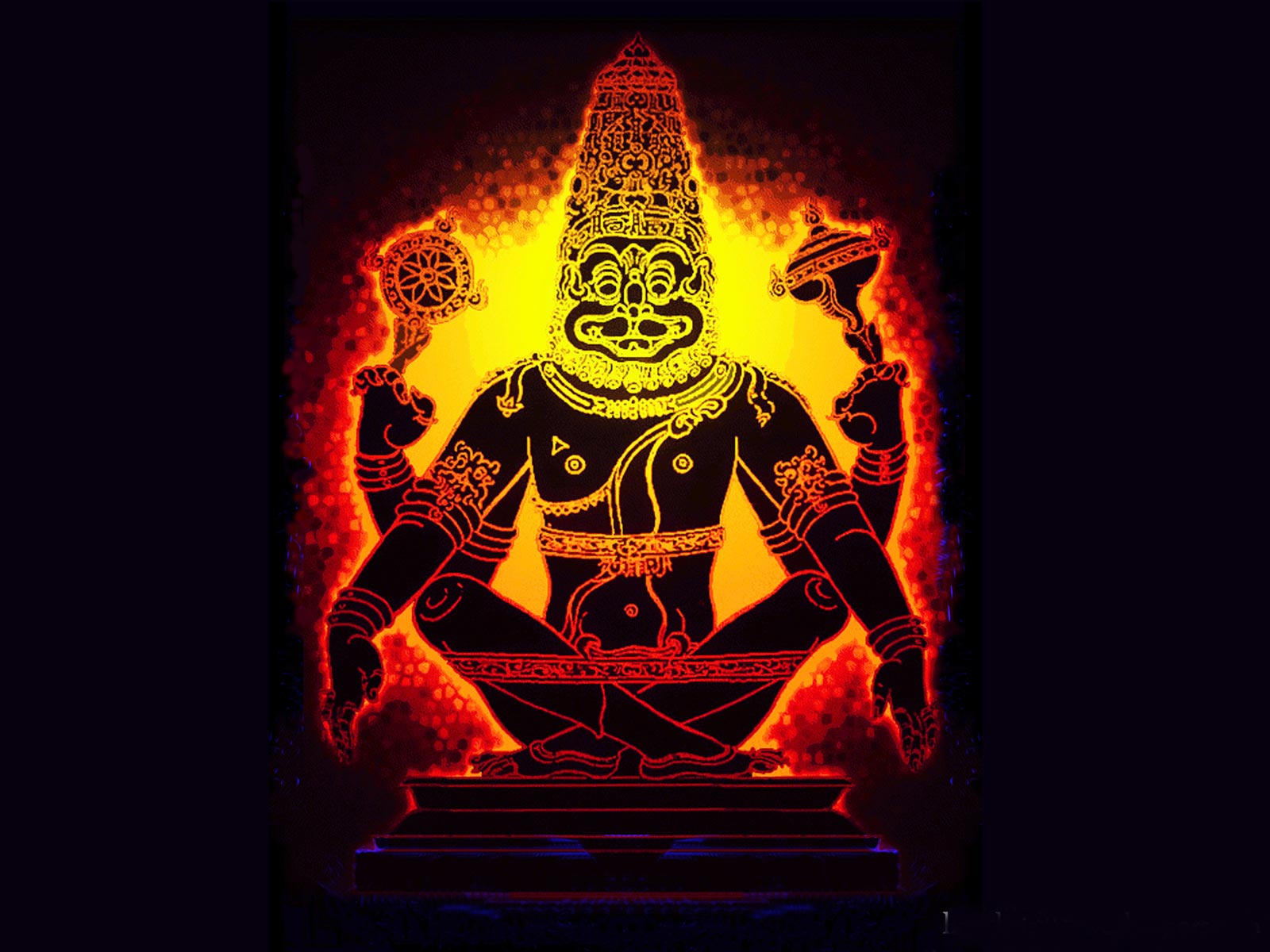
Narasimha.An Avatar of Vishnu.jpg Narasimha.

Here is the Sanskrit Text with meaning in English.

Tamil Text and Meaning posted;link provided at the end of the Post.

ॐ उग्रं वीरं महाविष्णुं ज्वलन्तं सर्वतोमुखं   I

नरसिम्हम भीषणं भद्रं मृत्योऱ मृत्युं नमाम्यहम्   II १ II

** This stanza may be recited 11 times daily, in the morning and evenings for relief, that is if one does not find time to recite full stotra.

(Om ugram veeram maha vishnum jwalantam sarvatomukham, narasimham bheeshanam bhadram mrityor mrityum namamyahum.)

Ferocious, Brave – great Vishnu,  whose face shines like fire in all directions,
Lord Narasimha who frightens and who takes care of, I salute to the God who is death to death itself…

वृत्तोत्फुल्ल विशालाक्षं  विपक्षक्षय दीक्षितम्…

View original post 614 more words

Natural Ways and Means for Countering Day to day Health Hiccups ….

14 Health Hacks for Your Body

Our bodies are amazing and complex systems. It’s alarming at times how little control it feels like you have over it. If you understand some of the processes in your body, you can sometimes get it to do what you want. These tricks can help you be more in control and no tools are required. I was also really also happy to learn that many aches and pains can be solved without having to resort to pills or visiting the doctor.

headache

Source: Flickr
1. Quickly relieve headaches and migraines

Why not try a natural way to relieve pain without having to resort to a painkiller? Acupressure is an effective way to to do so in 5 minutes.

There is a Shiatsu point in your hand that is good at relieving pain in the frontal lobe. This spot is located in the webbing between your index finger and thumb, on the highest muscle point very close to where the bones meet. Using your thumb and index finger, press hard on the muscle from both sides, placing the thumb on the back of your hand and the forefinger underneath.

This technique can also be used with shoulder pain, toothaches and labor pain.

2. Ensure you remember something

If you want to make sure to remember something, timing is key. Encoding information before you go to sleep is one of the best ways to help your memory. This is because memory consolidation happens when you’re sleeping – that’s when all the short-term memories are transferred to the long-term memory. If you want to do well on a test or work presentation, it’s best to review before you head to bed.

3. Slow your heart rate down

If you’re nervous or have to run to get somewhere, your heart pounds. One way to slow your speedy heart rate down is by breathing. Your vagus nerve governs your heart beat and to lower it back to a normal rate, you need to stimulate it. Pinch your nose and try to breathe out while keeping your mouth closed. You’ll increase the pressure in your chest, which will stimulate the vagus nerve.

4. Stop a nosebleed

Most nose bleeds originate from the front of your septum, the cartilage wall that divides the nose in two. If you want to stop any bleeding the trick is to press hard against your upper gums. Find the spot behind the tiny dent below your nose. I recommend placing a swab of cotton wool or gauze behind your upper lip.

5. Control dizziness from alcohol

This won’t stop you from being tipsy or drunk, but it can stop you from falling flat on your face. Balance is controlled by the sensory organs in your inner ear, which has fluid with the same density as blood. When you drink alcohol your blood is diluted and the fluid that the sensory organs floats in is raised, confusing the brain and your sense of balance. You can provide your brain with a different stimulus for improved perception. Put your hand on something stable. Your hand’s sensitive nerves give the brain a tactile input so that it can re-assess the situation and offer you a clear view while enjoying a drink.

6. Your sleeping position can fight acid reflux

The way you sleep can affect your acid reflux because of the position of your internal organs. Your stomach and esophagus connect at an angle. The position you sleep in determines which body part is higher. If you sleep on your right side, your stomach is positioned higher, allowing stomach acid to enter your esophagus easily. By sleeping on your left side, you make it difficult for the acid to reach the upper parts of your digestive system, as it would have to go against gravity.

7. Clear a stuffed nose

Use this osteopathic trick to clear a blocked nose. You can loosen congestion by getting the vomer bone, one of your facial bones, to rock back and forth. First you need to thrust your tongue against the roof of your mouth, and then you need to press one finger between your eyebrows. Alternate between these two movements and you should begin to feel relief after 20 seconds.

8. Give blood without pain

If you fear needle pricks, coughing might be the solution for you. Coughing can diminish the pain. When you cough, you increase pressure in the chest and spinal canal, inhibiting pain signals from going up the spinal cord. It’s important to let the person taking your blood know that you would like to try this technique.

9. Relieve a tickling throat

A tickling throat can drive anyone mad. All you want to do is try give it a scratch. Here’s a trick to do this indirectly. Just scratch your ear. When you stimulate your ear nerves, you cause a reflex in the throat, which can make your muscles spasm. This muscle contraction soothes the itch and in turn, your throat too.

10. Cool your nerves with water

If you’re feeling a bit anxious, splash cold water on your face. This is a terrific way to calm yourself down. If you hold your breath at the same time, it can be even more effective. This triggers an old mammalian reflex: Your body thinks you’re diving into cold water. Your body will then want to economize on oxygen as it senses there will be a shortage. This encourages you to take deeper breaths and relaxes the nervous system.

11.  Distract yourself from needing to go

If you suddenly find yourself needing to urinate and you’re far from a bathroom, here’s a clever distraction to holding it in longer. Redirect your thoughts to something more consuming. Experts at Baylor College of Medicine recommend thinking of something that turns you on or fantasizing. This will distract your brain from your bladder until you can find a toilet, without any unfortunate accidents.

12. Unstitch your side when running

It’s common to feel a burning pain on the right side of your stomach when you run or overexert yourself. This pain stems from your liver, which is located below your ribcage. This comes from a movement pattern many people follow while running. If you exhale when your right foot hits the ground, you apply downward pressure on your liver, creating a stitch when it jerks your diaphragm, one of the biggest breathing muscles. Prevent getting a stitch by paying attention to the movement of your feet. Make an effort to exhale when your left foot hits the ground.

13. Swallow tablets effortlessly

Many people struggle with downing pills and, to add injury to insult, many medications come in large capsules, causing much stress and discomfort. A lot of people will put their heads back to swallow pills. This doesn’t help. For better success take a sip of water, tilt your head forward and then swallow the tablet. The pill goes down easier when floating in water.

14. Breathe longer underwater

This trick to breathing underwater is to deceive your brain into thinking there is more oxygen in your system than you actually have. The urge to breathe comes from a buildup of carbon dioxide in the blood, and not a lack of oxygen. You can do this by hyperventilating. If you take a few short, quick breaths before you dive in, you can enjoy being underwater for at least 10 seconds longer.

Source…www.ba-bamail.com

natarajan

” Confessions of a confused Indian engineer… !!!

A guy who loved English literature but settled for electrical engineering and later, an MBA, pours his heart out…

When I started writing this article, I felt that such a topic might sound enormously blasphemous. I mean, it almost seems like a deliberate attempt to malign the second favourite national profession in our country (the first one is being a doctor). So, before you ask for my address, so that you can come over to beat me up, let me assure you it’s only mypersonal story. No coincidences whatsoever!

The first time I actually felt that it was high time to decide what to do with my life, I was in Class 8. Belonging to the ICSE board, we had to state our choices of stream in Class 9 itself. ‘Good people study commerce, great people study science, losers study humanities,’ everyone around said.

Except my father… he is a chartered accountant. J

I can still remember the heartbroken look on my father’s face, when I showed him the form with ‘Science’ written against ‘Stream of Choice’. Obviously, he would have loved his son to be in the same field as he was. But to think of it, had my father followed the footsteps of my grandfather, we would all be farmers today! Literally, ploughing in the ‘field’!

The first confusion started here.

I took up science because I loved physics and maths. But I equally loved English literature and history. This did raise some eyebrows. How could a sane person possibly love Science and Humanities at the same time?

Years passed and school was over. I went along with the herd mentality, sitting for every single engineering entrance exam I could find.  Medical was never an option (I could never see blood, so no confusion here!). I managed a decent rank and now it was time to decide a branch. This was relatively easy: I hated IT or computer science, the hot-selling electronics was houseful, and so I settled with electrical engineering.

But, it was fun. There were some amazing subjects like maths, mechanical engineering, power systems; and some horrible subjects too, whose names I don’t even remember. Being the President of the Tech Club at my college, I got lot of opportunities to conduct events, arrange activities and hone my technical and leadership skills. People looked up to me. Life was good, and it looked settled.

And one day it happened. It was third year and companies flooded in for placements. It was time to decide what to do next. M Tech? Nah! IT job? Never! Core Company? Err. May be!

And then I asked myself: ‘Dude, are you ready to spend the next 40 years of your life with motors, generators, transformers, transmission lines, substations and power systems?’

My inner voice replied: ‘No’.

I was stuck. What was I going to do with my career? What would happen to the electrical engineering learnt (rather digested) in four years? More importantly, what else could I get into, that I would love doing?

The immediate crazy answer was — Bollywood. But then the reality set in and my mind showed me three beautiful letters — M B A. To cut a long story short, I took a shot at CAT, made it to a premier B-School in Mumbai, and switched to marketing!

Now, when I sit back and retrospect, I feel that instead of engineering, I could have done an Honours course in economics or maybe a BBA, rather than looking like one of the ‘Gadhas’ Aamir Khan spoke about in 3 Idiots. But then I realise that I need to look ahead and forget.

Forget the injustice done to the learning of those four years. Forget the hurdles faced during job searches while switching from one field to another. Because after 40 years, no one in this world will be even bothered about why you did, what you did.

At that stage, you will be answerable to only one person.

And that person will be YOU.

And that person will ask you whether you gave in to peer pressure or did what you loved.

Please follow your heart, it’s never too late. Cheers!

Illustration: Dominic Xavier/Rediff.com

A sufficiently confused corporate professional, Pramit has been working as a Sales & Marketing Professional in the Software Product Industry for the last three years. A trained singer, Toastmaster, and theatre actor at Bengaluru, he seizes every opportunity to gain cheap publicity and limelight, whenever he is not working, eating and sleeping.

Source….www.rediff.com

Natarajan

Message for the Day…” Difference between Ordinary Person and the Spiritual Aspirant…”

The spiritual aspirant should note the distinction between the conduct of the ordinary (sahaja) person and the spiritual aspirant. Rice in its natural state and boiled rice —can these two be the same? The hardness of natural rice is absent in the boiled one. The boiled grain is soft, harmless, and sweet. The unboiled grain is hard, conceited, and full of delusion. Similarly both types of individuals are souls (jivis) and humans, no doubt, but those immersed in external or multiplicity based illusions (avidya-maya)are ‘people’, while those immersed in internal or knowledge based illusions (vidya-maya) are ‘spiritual aspirants’. Though the Lord is situated in every heart, spiritual practice is necessary so that they may discover it for themselves, right? It isn’t possible for us to see our own face! We need a mirror! So too, a basic path, a spiritual practice, is necessary.

Sathya Sai Baba