படித்ததில் பிடித்தது …” பரிமளம் , மகனா ? மகளா ? ” !!!

1968-ஆம் ஆண்டு. முதலமைச்சராக அவையில் வீற்றிருக்கிறார் அறிஞர் அண்ணா. அப்போது நான் பொதுப்பணித்துறை அமைச்சர். மொழிப் பிரச்னை பற்றி வாக்குவாதம் நடக்கிறது. அவை உறுப்பினர் ம.பொ.சி. மீது எதிர்க்கட்சித் தலைவர் கருத்திருமன் ஒரு குற்றச்சாட்டு கூறினார். அதைத் தொடர்ந்து நடந்த விவாதத்தையும் அதை அண்ணா எவ்வாறு முடித்து வைத்தார்
என்பதையும் குறிப்பிட விரும்புகிறேன்.
கருத்திருமன்: “”தமிழ்தான் என் உயிர். தமிழை ஆட்சி மொழி ஆக்கியதற்காக இந்த ஆட்சியைப் பாராட்டுகிறேன்” என்று ம.பொ.சி. சொன்னார். ஆனால் விவேகானந்தா கல்லூரியில் தன் மகனுக்கு ஆங்கிலப் படிப்பு வேண்டும் என்று கேட்டவர் அவர்.
ம.பொ.சி: எதிர்க்கட்சித் தலைவர், நேர்மையைக் கடைப்பிடிக்க வேண்டும். என் பிள்ளை, உயர்நிலைப் பள்ளிப் படிப்புகூட முடித்ததில்லை. குற்றச்சாட்டை வாபஸ் பெற வேண்டும்.
கருத்திருமன்: எனக்கு வந்த தகவலைத்தான் சொன்னேன்.
அண்ணாதுரை: யார் மகனைப் பற்றி குறிப்பிடுகிறீர்களோ, அந்த தந்தையே தகவல் தவறு என்று கூறிவிட்ட பிறகு, தாங்கள் ஏற்றுக்கொள்ள என்ன தயக்கம்?
கருத்திருமன்: அவர் சிபாரிசு செய்த பிள்ளை என்றுதான் சொல்கிறேன். சொன்னது தவறென்றால் வருத்தம் தெரிவித்துக் கொள்கிறேன்.
பொதுப்பணித்துறை அமைச்சர் (நான்): எதிர்க்கட்சித் தலைவர் முதலில் ம.பொ.சி.யின் மகன் என்று குறிப்பிட்டார். இப்போது மகனில்லை; அவர் சிபாரிசு செய்த பிள்ளை என்கிறார்.
அண்ணாதுரை: தவறான தகவலை நம்பினால் என்ன ஆகும் என்பதற்கு ஒரு சம்பவம் சொல்கிறேன். என் மகன் பெயர் பரிமளம். நமது நண்பர் விநாயகம் ஒரு கூட்டத்தில் பேசும்போது, “அண்ணாதுரைக்கு பரிமளம் என்று ஒரு பெண் இருக்கிறாள்’ என்று குறிப்பிட்டு, அது பத்திரிகையிலும் வந்துவிட்டது. பிறகு ஒருநாள், விநாயகம் என் வீட்டுக்கு போன் செய்த போது, பரிமளம் பேசினான். “நீ யார்?’ என்று விநாயகம் கேட்க, “அண்ணாவின் மகன்’ என்று அவன் கூறினான். “அடடே! நீ ஆண் பிள்ளையா? பரிமளம் என்ற பெயரைப் பார்த்து பெண் என்று நினைத்துவிட்டேன்’ என்றார்.
முதலமைச்சர் அண்ணா இந்த நிகழ்ச்சியை விவரித்ததும் கருத்திருமன் எழுந்திருந்து, ம.பொ.சி. பற்றி தவறான தகவல் சொன்னதற்காக வருத்தம் தெரிவித்துக் கொண்டார். அண்ணா எடுத்துரைத்த சம்பவம், அவையை சிரிப்பில் ஆழ்த்தியதுடன் சூடாகத் தொடங்கிய வாக்கு வாதத்தை சுவையாகவும் மாற்றியது.
– “மலரும் நினைவுகள்’ புத்தகத்தில்  கலைஞர் கருணாநிதி .

source:::: Dinamani .Tamil Daily

natarajan

Message For The Day…” Are the Good Book Teachings put into Practice “?


There is no dearth of good books, telling you how to live happily and be free from grief, and many thousand copies of them are being purchased. Yet there is nothing to indicate that the content in the books have been read and assimilated. The habits, conduct, and character of the readers of these books have not undergone any change for good. Egoism and greed are still rampant; hatred has not abated and envy eats into the vitals of the society. Henceforth, do not treat My words lightly. Decide to implement in your life, atleast one advice for your spiritual growth. Every one of you must examine your mental make-up and see whether you have used your discrimination and scientific temper (Viveka and Vijnana) to clothe yourself with detachment (Vairagya), so that you do not suffer from the attachment to the worldly objects.    

Sathya Sai Baba


“One Small Step For Man or One Small Step For A man “…What did Neil Armstrong really say? …


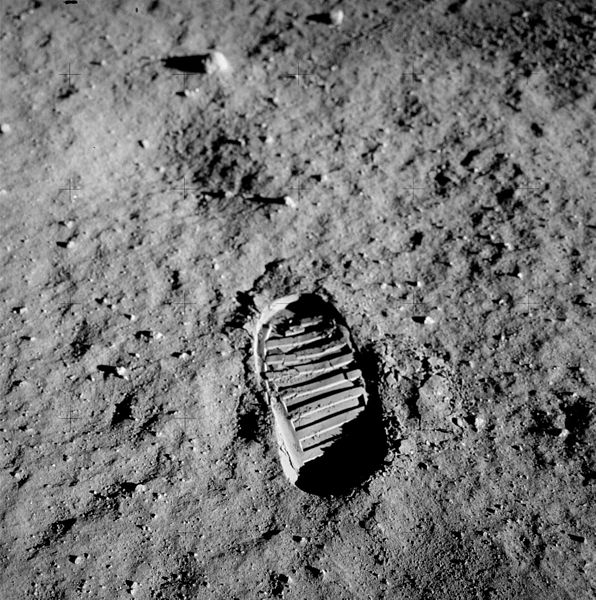
moonprintWhen Neil Armstrong set his left boot on the surface of the moon on July 21, 1969, becoming the first person to ever walk on the moon. He then spoke some of the most famous words in the history of mankind, ”That’s one small step for man, one giant leap for mankind.”

So true, so brilliant, so inspirational yet…so contradicting? The word “man” and “mankind” are used synonymously, meaning that the oh-so-famous quote quite simply put was, “That’s one small step for man, one giant leap for man.” Huh?

A one-lettered indefinite article is all it would take to turn this quote into the inspirational words our brains all process when we hear them. That article is “a”- “One small step for “a” man, one giant leap for mankind.” That is how most people interpret his words and, according to Neil Armstrong, those are the words he intended to speak.

NASA’s official transcript of the quote still shows the “a” in parentheses, “That’s one small step for [a] man, one giant leap for mankind.” This is because the “a” is not audible in the broadcast. For years, both NASA and Armstrong insisted that static had obscured the “a”. Armstrong himself stated that he would never make such a mistake (omitting such an important part) but after listening to recordings of his quote, finally conceded that it’s possible that he may not have said the “a”. When he admitted this, he stated, “I would hope that history would grant me leeway for dropping the syllable and understand that it was certainly intended, even if it was not said—although it might actually have been”.

An Australia-based computer programmer named Pater Shann Ford conducted a digital audio analysis to support Armstrong’s claim that he did say “a” and concluded that he did, in fact, say “a man”, but the “a” was inaudible due to technological limitations of the time. However, linguists David Beaver and Mark Liberman wrote their own digital audio analysis of the infamous quote on Language Log blog and concluded that, “The acoustic evidence seems to be against Ford’s theory.”

But that’s not the end of the story. Support for Armstrong  has been found in a team of researchers from Michigan State University and Ohio State University who have concluded that Armstrong did indeed speak the words he claims to have spoken but static or technological limitations are not to blame for its apparent omission.  According to them, Armstrong’s Ohion accent is to blame y’all.

According to a Michigan State University specialist in communicative sciences, assistant professor Laura Diller, because of the dialect of his hometown, if Neil Armstrong did voice the word “a”, it was short and fully acoustically blended with the preceding word “for”.


The Acoustical Society of America’s article on this topic states that,

Dilley and her colleagues, who include MSU linguist Melissa Baese-Berk and OSU psychologist Mark Pitt, thought they might be able to figure out what Armstrong said with a statistical analysis of the duration of the ‘r’ sound as spoken by native central Ohioans saying ‘for’ and ‘for a’ in natural conversation. They used a collection of recordings of conversational speech from 40 people raised in Columbus, Ohio, near Armstrong’s native town of Wapakoneta. Within this body of recordings, they found 191 cases of ‘for a’. They matched each of these to an instance of ‘for’ as said by the same speaker and compared the relative duration. They also examined the duration of Armstrong’s ‘for (a’) from the lunar transmission.

The researchers found a large overlap between the relative duration of the ‘r’ sound in ‘for’ and ‘for a’ using the Ohio speech data. The duration of the ‘frrr(uh)’ in Armstrong’s recording was 0.127 seconds, which falls into the middle of this overlap, though it is a slightly better match for an ‘a’-less ‘for’. In other words, the researchers conclude, the lunar landing quote is highly compatible with either possible interpretation, though it is probably slightly more likely to be perceived as ‘for’ regardless of what Armstrong actually said. Dilley says there may have been a ‘perfect storm of conditions’ for the word ‘a’ to have been spoken but not heard.

source:::::today i foundout.com

natarajan

” The Biggest Gift You can give Your Loved ones is Your Time “….

Often , most of us forget to count our blessings which are none other than the people who love us and care about us. Their happiness depends on our happiness . Their encouragement is the reason for our success. Their well wishes and prayers are the reason why bad luck and lightning never struck us. But in our ego we forget about their importance in our lives and just to satisfy our own selfish motives – either to earn more name , fame , success , power or money-we take our loved ones for granted. We end up hurting the people who love us the most. We make our loved ones cry by letting them know that they do not deserve to be a part of our lives and their importance in our lives just does not exist anymore .We do everything to make them leave our lives thinking that we will be a happier person after they depart from our lives .
But, I guess by the time we realize that we ran and won the race of achieving all our ambitions and dreams– it was too late.. There was nobody around us to be happy for us and celebrate our success with us. There was no one to cheer us or be proud of our success. And no one to say I truly love You and you mean the world to them. There was no one who was truly happy for you..
I really hope that such a time never comes in anyone’s life where you will be the biggest looser even after winning the whole world.. 
But after reading this mail if you think that you have indeed somehow managed to throw your loved ones out of your life  — Now is the time–Its never too late to correct your mistake. One Sorry – One Smile- One Phone call- One Sms — One step towards your loved ones will take care of all the misunderstandings .. Appreciate the presence of your loved ones in your life before its too late .Your vision might have been a little blurred all this time but if you start counting Baba’s blessings and Grace on you– You will be in the company of people who Love you and Live for you. You will have less enemies , less negativity , more peace and true happiness around you. Think about it..
The biggest gift you can give your loved one is your time, your appreciation, your love, your understanding, your support , your faith and above all your self surrender..
If you can not love, trust or understand your loved ones who you can see and hear- what makes you think that you will be able to love or trust your Sadguru who you can not see or hear with your worldly eyes.
May Sai help you to realize your mistake and give you the courage to accept your foolishness of betraying your loved ones, without whom everything about you is incomplete.
 
We take everything for GRANTED…..
 A constantly worried Mom
 A strict Dad
 An annoying Brother
 A rude Sister
 A chipku Friend
 A demanding Wife
 A complaining Husband
BUT when we Lose them- then we miss them as:
     My Caring Mom
 My Concerned Dad
 My Best Brother
 My Loving Sister
 My Real Friend
 My Wife, My Life
 My Hubby, My World…
Don’t take them for granted. Life never gives a second chance. So just value your relations  before Losing them!!!!! Its Time to Wake Up…..
Quote of BABA:
I did not expect anything from devotees but grateful remembrance, unchanging faith and devotion. 
source:::H.Deepa in
natarajan

” Sambhar or Kuzhambu Means ‘ Confusion ‘ ” !!!…Read Further ….

INDIAN FOOD SYSTEM
(More precisely South Indian, but more or less applicable to all Indian meal systems)

The following are rough translations of the words of Kanchi Paramacharya extracted from the Tamil publication titled Sollin Selvar (The Expert of Words), Sri Kanchi Munivar by Sri Ra. Ganapathy. The different Indian delicacies are explained as follows.

Inline image 1SAMBHAR:
Sambar is also known as kuzhambu in Tamil, a term that literally translates to ‘get confused’. Paramacharya explains how these three courses are related to the three gunas of spirituality: the confusion of sambar is tamo guna, the clarified and rarified flow of rasam is rajo guna and the all-white buttermilk is satva guna. Our meal reminds us of our spiritual path from confused inaction to a clear flow of action and finally to the realized bliss of unity.

SAADAM:
Cooked rice, the main dish of a South Indian meal is
called sAdam. That which has sat is sAdam, in the same way we call those who are full of sat, sadhus. We can give another explanation for the term: that which is born out of prasannam is prasAdam. What we offer to Swami (God) as nivedanam is given back to us as parasAdam. Since we should not add the root ‘pra’ to the rice we cook for ourselves, we call it sAdam.

Inline image 2RASAM:
Rasam means juice, which is also the name of filtered ruchi. We say ‘it was full of rasa’ when a speech or song was tasteful. If something is an extraction of juice, then would it not be clear, diluted and free of sediments? Such is the nature of our rasam, which is clear and dilute. The other one, served earlier to rasam in a meal, is the kuzhambu. Kuzhambu contains dissolved tamarind and cut vegetable pieces, so it looks unclear, its ingredients not easily seen.

Inline image 3BUTTERMILK:
A western meal normally ends with a dessert. In a South Indian meal, desserts such as pAyasam are served after the rasam sAdam. Any sweets that were served at the beginning are also taken at this time. After that we take buttermilk rice as our final course. Paramacharya
explains that since sweets are harmful to teeth, our
sour and salty buttermilk actually strengthens our teeth, and this has been observed and praised by an American dietician. We gargle warm salt water when we get toothache. The buttermilk is the reason for our having strong teeth until the end of our life, unlike the westerners who resort to dentures quite early in their 
life.

UPPUMA:
If the term uppuma is derived from the fact that we add uppu or salt, then we also add salt to iddly, dosa and pongal! Actually, it is not uppuma but ubbuma! The rava used for this dish expands in size to the full vessel where heated up with water and salt. The action of rava getting expanded is the reason for the term ubbuma.

Inline image 4LADDU:
Ladanam (in Sanskrit) means to play, to throw. ladakam is the sports goods used to play with. Since the ball games are the most popular, ladakam came to mean a ball. The dish laddu is like a ball, and this term is a shortened form of laddukam, which derived from ladakam.
Laddu is also known as kunjaa laadu. This should actually be gunjaa laadu, because the Sanskrit term gunjA refers to the gunjA-berry, used as a measure of weight, specially for gold. Since a laddu is a packed ball of gunjA like berries cooked out of flour and sugar, it got this name.
The singer of mUka panca sati on Ambal Kamakshi describes her as Matangi and in that description praises her as ‘gunjA bhUsha’, that is, wearing chains and bangles made of gunjA-berries of gold.

Inline image 5PAYASAM:
payas (in Sanskrit) means milk. So pAyasam literally means ‘a delicacy made of milk’. This term does not refer to the rice and jaggery used to make pAyasam.
They go with the term without saying. Actually pAyasam is to be made by boiling rice in milk (not water) and adding jaggery. These days we have dhal pAyasam, ravA pAyasam, sEmia pAyasam and so on, using other things in the place of rice.
Vaishanavas have a beautiful Tamil term akkaara adisil for pAyasam. The ‘akkaar’ in this term is a corruption of the Sanskrit sharkara. The English term ‘sugar’ is from the Arabian ‘sukkar’, which in turn is from this Sanskrit term. The same term also took the forms ‘saccharine’ and ‘jaggery’. And the name of the dish jangiri is from the term jaggery. 

TAMBULAM:
It is customary to have tAmbUlam at the end of a South Indian dinner. In the North, tAambUlam is popularly known as paan, which is usually a wrap of betel nut and other allied items in a calcium-laced pair of betel leaves. In the South, tAmbUlam is usually an elaborate and leisurely after-dinner activity. People sit around a plate of tAmbUlam items, drop a few cut or sliced betel nut pieces in their month, take the betel leaves one by one leisurely, draw a daub of pasty calcium on their back and then stuff them in their mouth, chatting happily all the while.
The betel leaf is known by the name vetrilai in Tamil, literally an empty leaf.
Paramacharya once asked the people sitting around him the reason for calling it an empty leaf. When none could give the answer, he said that the usually edible plants don’t just stop with leaf; they proceed to blossom, and bear fruits or vegetables.
Even in the case of spinach or lettuce, we have to cook them before we can take them. Only in the case of the betel leaf, we take it raw, and this plant just stops with its leaves, hence the name vetrilai or empty leaf.
source:::::input from a friend of mine
 
natarajan

Message For The Day…”Your Real Nature is Purity, Peace and Joy…”

You may sometimes feel you are a sinner, and are essentially wicked. But if someone were to think like you and calls you “Hello sinner!”, you will resent it! Why? Because, your real nature is purity, peace and joy. You are divine. You are a manifestation of God! Your mind, intellect, memory, egoism and the senses (Manas, Buddhi, Chitha, Ahamkara, Indhriyas) are like the bricks, iron rods, cement and wood that go up to make a house for your soul to live in. They are not you; the real you is the Divine Soul (Atma). You will truly appreciate this only by constant meditation, moving in good company, listening to the talks of the realised ones, and by following certain prescribed course of discipline. That is why I lay so much emphasis on discipline

Sathya Sai Baba

Doctors are Not Bound by Hippocratic Oath !!!

Myth: Doctors are bound by the Hippocratic Oath.

stethescopeA binding agreement, as much a social contract as Social Security or Medicare, the traditional Hippocratic Oath holds those who swear to it to a strict code of professional and personal conduct. Contrary to popular belief, though, most doctors never take this oath, and, actually, most of us are probably glad they never do.

Original Hippocratic Oath

Although scholars disagree about when it was written, or even who wrote it, the general consensus is that the Hippocratic Oath was penned about 2500 years ago. Most commonly attributed to Hippocrates, the father of modern medicine, the ancient vow demands a lot from doctors, including a certain level of chastity, charity and swearing to pagan gods. It provides in pertinent part:

I swear by Apollo the physician, and Asclepius, and Hygieia and Panacea and all the gods and goddesses as my witnesses that, according to my ability and judgment, I will keep this Oath and this covenant . . . to teach them this art . . . without fee or covenant.

I will use those dietary regimens which will benefit my patients . . . and I will do no harm or injustice to them.

I will neither give a deadly drug to anybody who asked for it, nor will I make a suggestion to this effect. Similarly I will not give a woman an abortive remedy.

I will not use the knife. . .

Whatever houses I may visit, I will . . . remain free of sexual relations with both female and male persons . . .

What I may see or hear in the course of treatment . . . I will keep to myself.

If I fulfill this oath and do not violate it, may it be granted to me to enjoy life and art, begin honored . . . . if I transgress is and swear falsely, may the opposite of all this be my lot.

Although ancient, swearing the oath was not used as a rite of passage at medical schools until 1508, when the University of Wittenberg first administered it. By 1804, it had been incorporated into the graduation ceremony of the medical school in Montpellier, France. However, it was still not commonly administered, and by the early 20th century, not even 20% of U.S. medical schools included the oath as part of their commencement ceremonies.

Outmoded Requirements and Prohibitions

The restrictive, ancient vow poses several problems for the modern practitioner. First, the oath forbids physician use of a knife, a key instrument involved in nearly every medical practice. Second, its prohibition against abortion violates U.S. law, and would alienate over 40% of the population. Third, its restraint on euthanasia runs counter to the modern trend toward physician-assisted suicide.

Fourth, who swears to Apollo anymore, let alone the much lesser known Asclepius, Hygieia and Panacea?

Fifth, many doctors treat, or at least give medical advice to, those close to them, including spouses and sexual partners, which is prohibited by the oath.

Sixth, the oath is potentially a binding contract, which, in our litigation-heavy society, could provide a dissatisfied patient with yet another avenue to sue her doctor.  [Typically, when a patient sues a doctor, it is for malpractice – a claim that often must be brought within 1-3 years. Contrarily, when someone sues for a breach of contract, they often have a longer time period in which to sue.]

Modern Oaths

Although most do not swear to the original Hippocratic Oath, the majority of doctors do take an oath – often when they graduate from medical school. Despite early disinterest, physician oaths began to come into vogue after World War II.

During the Holocaust, doctors in Nazi concentration camps committed previously inconceivable atrocities against prisoners. Experimenting with extreme temperatures, radiation, untested drugs and vaccines, unnecessary and sometimes bizarre surgeries and infecting captives with deadly diseases, the exploits of concentration camp physicians shocked and horrified the world. Sane doctors realized stricter rules, and a code of ethics, were needed.

In 1948, the 2nd General Assembly of the World Medical Association adopted theDeclaration of Geneva, appearing below as amended:

“AT THE TIME OF BEING ADMITTED AS A MEMBER OF THE MEDICAL PROFESSION:

I solemnly pledge to consecrate my life to the service of humanity . . . 

I will practice my profession with conscience and dignity;

The health of my patient will be my first consideration;

I will respect the secrets that are confided in me . . .

I will not permit considerations of age, disease or disability, creed, ethnic origin, gender, nationality, political affiliation, race, sexual orientation, social standing or any other factor to intervene between my duty and my patient;

I will maintain the utmost respect for human life;

I will not use my medical knowledge to violate human rights and civil liberties, even under threat . . . .”

Similarly, in 1964 a modern version of the Hippocratic Oath was penned by Professor Lasagna of the School of Medicine at Tufts University. Although the modern oath retains many of the themes of the original, it omits the troublesome parts about surgery, euthanasia, abortion and sexual relations.

A number of other, similar oaths have also been written, and today, nearly every medical school requires some sort of oath of its graduates, although most are seen as “ceremonial and nonobligatory . . . compared to that taken by a judge, president, or other politician when he or she is sworn into office.”

Future of Medical Oaths

Seen as essentially providing only general moral and ethical guidance, many physicians today find physicians’ oaths lacking. Some point to the number and diversity of specialties in modern medicine and note that one, generalized oath is inadequate. Others identify that the oaths often conflict with necessary medical experiments, or simply do not address them.

Still others find the oaths lacking when it comes to managing infectious, fatal diseases. Strict adherence to an oath would demand that physicians treat patients infected with lethal, highly contagious diseases, like the Ebola virus, regardless of circumstance or preparedness. Likewise, an oath may prohibit a doctor from sharing patient information that would help epidemiologists and others during an epidemic.

Despite their shortcomings, doctors’ oaths are likely here to stay. As Dr. Howard Markel recently noted:

“It is unlikely to become superannuated. It serves as a powerful reminder and declaration that we are all a part of something infinitely larger, older, and more important than a particular specialty or institution . . . . The need for physicians to make a formal warrant of diligent, moral, and ethical conduct in the service of their patients may be stronger than ever.

source:::: today i foundout.com

natarajan

What About the Right to Pre- School Education ?

Under the Right To Education Act, it is not mandatory for the state to provide for the care of the children until the age of 6 years when most social, emotional and cognitive skills are formed by this age.  

A cursory glance at the streets of urban Indian cities and towns will show you the increasing number of infants and toddlers in the country. While most of them are perched on their mother’s hips, thereby being used as an indirect source of income for the family, the elder ones can be found playing on the pavement. One fine day, I had the opportunity to observe such a group of children. Until my auto came to an halt at a signal, they were playing among themselves. It was more of a role play, I could see from far. I could not really make out what roles they were assuming but I could vividly see their eyes full of glee and myriad expressions. Once the vehicles halted, they immediately came begging with the same glee stuck to their face. Many of the onlookers would have even wondered – are they really hungry? Why are they here? Sometimes I think it’s not just food. Theater and role play techniques are being taught in teacher training courses in order for those to be used as effective teaching tools for the preschool children. Who taught these kids on the streets ?

Once again, the words of Maria Montessori flashed in front of my eyes. “Education is a natural process carried out by the human individual and is acquired not by listening to words but by experiences in the environment”. But have we provided the right environment for these children – an environment which will help them realize their potential to the fullest?

The Right to Education Act of 2009 was implemented recently in the country. I have, myself, been a part of many discussions about the act and how effective it has been to reduce the dropout rates. But a part of me was always skeptical. This was because I was interested in children of the age group 2-6 years. All articles and reports wrote about free education from the age of 6 to 14 years as a fundamental right. What I feared turned out to be true. Article 45 of the constitution has been amended to say “Provision for early childhood care and education to children below the age of six years — The State shall endeavour to provide early childhood care and education for all children until they complete the age of six years.” One more endeavour added to the list of the state. It is not mandatory for the state to provide for the care of the children until the age of 6 years. I personally thought this was a major setback. Why? Because everyday we are striving to eradicate crimes like thefts, gang rapes, murders and so on. A closer look at why these happen will reveal to us a disturbed childhood.

When I say childhood, I am referring to their early childhood here. Scientific studies have revealed that most social, emotional and cognitive skills are formed until the age of 6 years. Early childhood development has emerged as one of the prime research areas in most nations in order to build a stable society for the future. Sure, it does make sense. If we can invest in our children of today, we expect to reap the benefit of a truly civilized society tomorrow. The earlier we invest, the more economical it is. Also, fostering a nourishing environment for the toddlers and the preschoolers will instill in them an interest to continue their schooling, which in turn will make the job of the state easier by actually reducing the dropout rates.

I also stumbled upon the history of preschool education in India. I was awestruck. Social and educational reformer Tarabai Modak was fondly referred to as “India’s Montessori”. She started the Balwadis, which are now operational in many states across India. She applied Montessori principles to suit the local conditions. The concept of neighbourhood schooling coupled with the non-formal nature of the education provides for the social, physical and mental health of the children. Her co-worker Anutai Wagh is also well known for her work to educate the tribal population. Gandhi’s framework of pre-basic education is highly relevant in today’s conditions. He envisaged an inexpensive preschool system in the neighbourhood community of children, where they are free to develop themselves by engaging in multitude of creative activities. Such an interaction with the environment is also expected to strengthen their moral as well as cultural values. Isn’t this what education is all about?

Well, it’s about time we recognized that they are not just preschoolers but the building blocks of tomorrow’s nation!

source:::: a thought provoking article by Aarthi Nandakumar in  “The Alternative ”  ….
Aarthi is a preschool educator at Jakarta. She is trained in the Montessori method of education and is passionate about working with children in the age group between 2 and 6 years. She believes that children are bestowed with endless potential and loves to explore them in her journey. As Maria Montessori says “The child is both a hope and a promise for mankind.”

natarajan