” When We are Old , Who Do We Depend on … ” ?

The Way We Were – Young vs. Old

The ageing process is not something we usually pick up on our daily lives. Loved ones that we see every day seem to never age, while those we haven’t seen in a long time seem to have done so over night. However, when you see early photos of your parents, the difference is very clear. 


WHEN WE ARE OLD, WHO DO WE DEPEND ON ? 

Have your own abode.
No matter what, do not lose it.
If you have an old companion, keep each other good company.
Watch your health while it is still good Maintain a positive outlook and you will be happy.
Now, when our health is still good, Our mind still clear.
But on who can we depend on in our old age ?
We will have to analyse
Accept
this in various stages.

1st Stage :

Just after retirement, between 60 to 70 yrs old,
Our health will still be comparatively good
So too our financial means.
Eat moderately while we have the means
At times, wear what we fancy
Those who like it, have some fun.
Do not be hard on ourself
Our days are numbered, so grasp every opportunity

Have enough savings ! Keep the house !
Make arrangements for the days ahead or retreat to a peaceful and quiet place.
If the kids are well off, it is their business ….
If the kids are loving, they have good traits ….
We need not decline financial help from our kids
Nor decline their respect.
But we should remain independent Live our own life well.

2nd Stage :

If no mishap and illness strikes after we are 70,
We will still be able to take care of ourselves.
Not a major problem.
However, we must realise we are really getting old
Gradually, our mind and body will give away
Our reflexes will slow down with time …
We will have to eat slowly, to avoid choking.
We will have to walk slowly, to avoid falls.
We can no longer rely on someone, we have to look after ourselves!

Do not meddle any more or try to control the kids!
Some even interfere and try to control the kids lives!
Some even interfere with the third generation !!!
We have devoted our entire life, It is time for us to be a little selfish …..
And take hold of ourselves. Life comes in a full circle.

Keep ourselves busy in whatever we love to do ….
Try to maintain good health for as long as possible.
Give ourselves more opportunities to take control of our own life …..
We lead an easier life when we do not have to solicit help from others …..

3rd Stage:

Our health begins to fail ….
We have to request help from others ….
We have to be mentally prepared for it.
The majority of us cannot escape this hurdle.
We have to prepare ourselves, emotionally, to accept that :-
In life, living and ageing, sickness and death are milestones
we have to encounter.

This is the final stage in life ….. Nothing to fear !
Be prepared for it in advance and you will not be too depressed.
Either check into a private nursing home … Or an old folks home ….
Depending on affordability, of course.
There must be a way out ….
The idea is not to add to the kids’ burden, emotionally,
Increase their chores their financial commitments.
Try your best to overcome –
What hardship our generation have not endured ?
What disasters we have not experienced ?
Trust ourselves to take life’s last lap in our stride.

4th Stage:

Our mind is still clear,
But when our quality of life has deteriorated drastically ..
We must be courageous enough to face death!


WHEN WE ARE OLD, WHO DO WE DEPEND ON ?

Ourselves, Ourselves, Only Ourselves !

SOURCE….. input from a friend of mine

Natarajan

Message For the Day… ” He Who Realises Divine Verily Becomes Divine …”

The Divine is the base, and also the superstructure. The beads are many, but the interconnecting, integrating string of the rosary is one. So also for the entire world of living beings; God, the permanent, omnipresent Parabrahman, is the base. The scriptures proclaim, “He who realises Divine verily becomes Divine (Brahmavid Brahmaiva Bhavathi)”. The bubble born of water floats in it and bursts to become one with it. All the visible objective worlds are like bubbles emanating from the vast ocean of Divinity, Brahman. They are on the water and are sustained by water. How else can they arise and exist? Finally, they merge and disappear in water itself. For their origination, subsistence, and mergence, they depend only on water. Water is the basis; bubbles are delusive forms of the same imposed on it.

Sathya Sai Baba

Message For the Day…” Feeding of Stomach is also a part of Worship…”

In order that one might do selfless service (seva), a little eating(bhoga) has to be gone through. Such eating is a part of sacrifice(yajna). To make this body-machine function, the fuel of food(anna) has to be used. Food is not sacrifice, but it makes sacrifice possible. Therefore, eating food is not to be laughed at as catering to greed, as feeding of the stomach. It is part of worship. Worship(puja) is not merely plucking a flower and placing it on top of the image; the gardener who toiled to nurse the plant that gave the flower is also a worshipper. Even the means for a sacrifice is an offering. Eating doesn’t mean placing food on the tongue; it is worthwhile only when chewed, swallowed, digested, assimilated into the bloodstream, and transformed into muscle and bone, into strength and vigour. So too, spiritual understanding must permeate and invigorate all moments of life. It must be expressed through all the organs and senses.

Sathya Sai Baba

8 ways to Make Your Most of the Day…

Multi-tasking can sometimes lead to poor results due to lack of focus

Plan how you’re going to spend the day and stick to it.

Avoid checking e-mails first.

Use the first one hour of your day to review your pending tasks and finish them….

Productive time management is the new age tool for planning your success ahead of time.

Here are some tricks to help you increase your productivity

Tune off Whatsapp for the first half

Is your phone humming for attention?

Avoid using WhatsApp to delegate work if you are stuck in a traffic jam.

Use it to share information, read a light note and share updates.

You may use your commute time to connect with your family and friends.

While you’re at work, prioritise and tune away from groups and chats.

Avoid checking e-mails first thing

Plan how you’re going to spend the day and stick to it. Avoid checking e-mails first.

Use the first one hour of your day to review your pending tasks and finish them.

“Mornings are fresh and I usually come to work with a positive attitude and spend the first two hours speaking and connecting to the customers,” shares Pooja Arora, HR at Bisleri India, Mumbai.

Tony Robins, American life coach and author of Unlimited Power, Unleash the Power Within and Awaken the Giant Within, suggest setting up an “hour of power”, “30 minutes to thrive” or “15 minutes to fulfilment”.

Review your calendar, call list and respond to customer feedback.

If something else needs your urgent attention, you will receive a call anyway.

You are not a juggler

Most organisations assume multitasking as a skill required.

In the long run it will lead to little or lack of focus on one task.

Multitasking is like regulating attention, it is addictive and feels like a superhuman that is incredibly efficient but eventually leads to a burnout.

Break the habit and your brain will thank you.

I am a compulsive multi-tasker yet there are activities I do not prefer to multi task like reading, studying and contemplating, says Rajesh Kamath, partner MTHR Global, an HR consulting firm in Pune.

Too much multitasking can add to your anxiousness and hypertension to meet the finish line, the idea is not get trapped into it.

Select the tasks that are in line like a chef who multi tasks to cook well.

Get the monkey off your back.

“I know — I have to finish this; it’s important. But where do I begin?” says, Delhi-based creative writer Rashmi.

“I often find myself struggling with multiple tasks that should have been finished yesterday. I just keep procrastinating because it’s tough.”

Keep your tough tasks on a high priority and complete them the first thing.

Mornings are a great time for creativity; use it to leapfrog to the rest of your day.

Procrastinating what you least enjoy will only keep you trapped.

Accomplishing the hard tasks will not only give you time to enjoy other task but will also keep you motivated.

As the popular writer, Stephen Covey says “Eat the ugliest frog first”.

Finish the two-minute tasks

How often do you say “Hey just give me two minutes to finish this”.

To raise your productivity ensure that you immediately finish the two-minute tasks, like responding to an e-mail, making a phone call, setting reminders etc.

If not addressed, these tasks get piled on to become stress later.

Most of these tasks require urgent attention which is why they pop up the last minute.

Meet over coffee 

Share the morning coffee to discuss ideas, plans and your schedule.

Keep away from unwanted discussions around politics, cricket and office gossip.

Reserve these discussions for lunch.

One of the biggest issues in Indian workplaces is unscheduled, unplanned meetings and discussions.

Respect other people’s time says Sushma Sonty, a Mumbai-based freelance HR professional.

Spend some time interacting directly with your colleagues and peers for healthy relationships.

Use technology for good

Are you a super social buddy who likes to show off a bit, great?

Keep a few tools handy to stay on top of all that you flaunt.

It’s great to be a buddy, but it can get tricky for you may get addicted to it.

Consider HootSuite, which offers central dashboard for managing all your social media accounts.

Save your good reads, articles and interesting features with Pocket, Feedly and Evernote.

Cloud On allows you to use Microsoft word, Excel and PowerPoint to create documents on the go using a hand-held device.

Take a break

Short breaks when timed well in between bursts of high intensity work rejuvenates you like nothing else. The thumb rule is 75:10.

Take a 10-minute breather for every 75 minutes worth of high pressure work.

A quick walk down the stairs, soaking in the sun, getting some fresh air are all great ingredients that act as a catalyst to the short break.

The bottom line is, when breaks are timed well, there can be nothing as effective as them.

Now, go and take a well deserved break!!

The author of this piece works with a leading travel and leisure company and can be reached at deeksha.nagi@gmail.com.

Photograph: Ryan Ritchie/Creative Commons.

SOURCE:::: http://www.rediff.com

Natarajan

Message For the Day….” Significance of Mantra ‘ Om Tat Sat ‘…”

When you perform an activity (kriya) as an offering to the Lord, your own good, what is good for others, and the highest good(swartha, parartha, and paramaartha) all merge! First, you and I become we. Next we and He becomes One. The individual soul, the ‘I’ (jiva) should accomplish identity first with the creation (prakriti) and then with the Supreme Divine (Paramatma). This indeed is the significance of the mantra Om Tat Sat (which connects the identity of the individual with the UniversalBrahman). ‘He’ and ‘I’ are always there; the spiritual practice(sadhana) is always there too. Just as the sun is inseparable and is never apart from its rays, under no circumstances should any aspirant part with one’s sadhana. It is only then they can be said to be one with Om.

Sathya Sai Baba

Message For the Day…” The Sense of ‘Mine’ is the bond of Deluding Attachment…’

A bird in flight in the sky needs two wings; a person walking needs two legs; an aspirant eager to attain liberation needs two qualities: renunciation and wisdom — renunciation of worldly desires and wisdom to become aware of the Atma. When a bird has only one wing, it can’t rise up into the sky, can it? In the same manner, if one has only renunciation or only wisdom, one cannot attain the Divine. The sense of ‘mine’ is the bond of deluding attachment. How long can one cling to what one fondles as mine? Someday you must give up everything and leave, alone and empty handed. This is the inescapable destiny. Hence give up as quickly as possible assumed relationships and artificial attachments through rigorous analysis of their nature. Attachment breeds fear and egotism. The wise will never bow to the fancies of objective desire. Constantly stick to the everlasting truth and adhere to the immortal virtues that the Atma represents.

Sathya Sai Baba

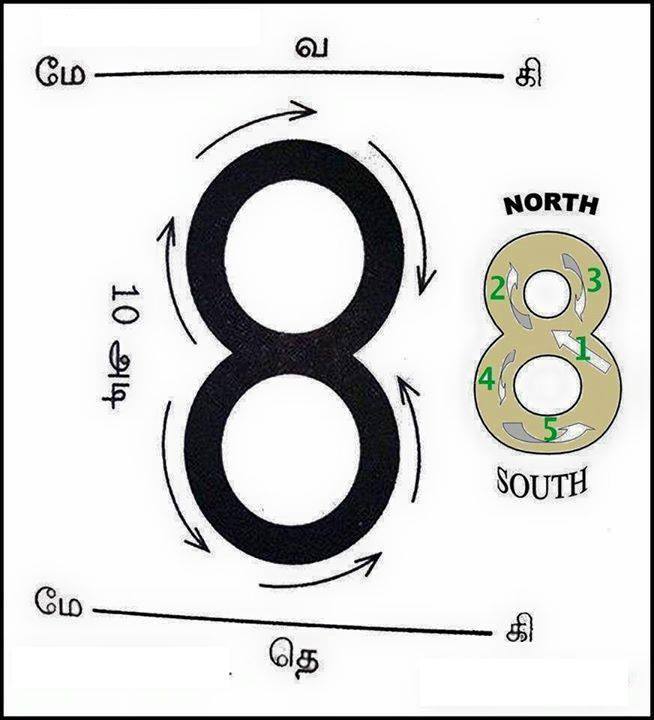
” Famous Eight or F8 Walk Technique Tips …. “

The Famous 8 (Also called as “F8″) Walk Technique

Highlights :

  • This does not need any special preparation or exercise equipment
  • It is highly beneficial when done on an empty stomach early in the morning before breakfast.
  • This is an ancient yogic fitness regime which was secretly guarded for centuries by Rishis (Saints / Sages)

Benefits :

  • It helps us avoid and treat several chronic diseases like Obesity, Diabetes, Heart attack, Kidney related disorders and diseases, High Blood Pressure, High Cholesterol and many more
  • It is recommended to do the practice everyday for at least 21 days to get the said benefits

Duration Timing of practice :

  • It is beneficial if the F8 exercise is done for 15 minutes daily before breakfast on an empty stomach
  • It is recommended to do this for about 15 minutes between 5am – 6am ( or ) 5pm – 6pm everyday for at least 21 days continuously for achieving the desired benefits

Who can do it:

  • Any adult person between the ages of 18 and 75

How to do:

  • Mark an Eight (“8″) shaped pattern on the floor with 6 feet width and 8-12 feet in length North to South [See image below]
  • Start at the position marked as “1″ in the below picture and follow the “8″ pattern
  • Proceed from start position (“1″) and continue in the sequence 2, 3, 4, 5 and return to 1
  • One complete round is generally counted when you come back to the start position (“1″)
  • When you walk, observe your breath and go with the flow – Don’t walk too fast or too sloppy

SOURCE:::: input from a friend of mine

Natarajan

Arunima Sinha ….On the Top of the World…. Hats off To This Brave Lady …

http://inktalks.com

You Might Have watched a plenty of Motivational and Inspirational Videos and Talks …

But this Talk by Arunima Sinha  on her goal and experience is totally on a different platform.

My request to you  is to watch this video  and Listen to her talk … Also share this Video Talk with your Kids and friends …You need not listen to any Gurus …both Religious and Management… after listening to her.

HATS OF TO THIS COURAGEOUS LADY …

Natarajan

 
In April 2011, Arunima Sinha, a national level volleyball player, was thrown out of a running train by robbers who were after her gold chain. Her left leg crushed by the passing trains had to be amputated. This did not stop her from dreaming the impossible, on May 21st, 2013, Arunima summited Mount Everest. Watch as she takes us along on her journey in this passionate talk.

Please Note: This talk is available with English subtitles. Please enable YouTube Captions if the subtitles are not appearing.

ABOUT INK: INKtalks are personal narratives that get straight to the heart of issues in 18 minutes or less. We are committed to capturing and sharing breakthrough ideas, inspiring stories and surprising perspectives–for free!

Watch an INKtalk and meet the people who are designing the future–now.

Connect with us:
http://inktalks.com
http://facebook.com/inktalks
http://twitter.com/inktalks

ABOUT ARUNIMA SINHA:
Arunima is a former national level volleyball player who was thrown off a moving train in 2011. In order to save her life, the doctors had to amputate part of her left leg. In light of this event, Arunima became inspired by Yuvarj Singh, an international cricket player who successfully won his battle with cancer. As such, she was determined to climb Mount Everest. In 2013, Arunima became the first female amputee (and the first Indian amputee) to make the climb.

Arunima then went on to be the first female amputee to climb Mt. Kilamanjaro in Africa and Mt. Elbrus in Europe. She has been honoured with numerous awards and recognitions. Currently she is busy planning to open a sports academy for underprivileged and physically disabled children.

SOURCE::::: http://www.You Tube.com and ink talks.com

Natarajan

Message For the Day…” God is Always Waiting Outside Your Closed Door …”

A time may come when you become tired and weak. Then you should pray thus: “Lord, things are beyond my capacity. I am finding it difficult to do any effort. Please give me strength!” At first, God stands at a distance, watching your efforts, like the invigilator teacher watching students write answers during examination. Then when you shed attachment to sensual pleasures (bhoga) and take to good deeds and selfless service, God comes nearer to you. Like the Sun, He waits outside your closed door. Like a servant who knows their master’s rights and their own limitations, God doesn’t bang the door but simply waits outside. When one opens the door just a little, like the Sun, God rushes in and promptly drives darkness out from within. So all you need is the discrimination (viveka) to pray and the spiritual wisdom (jnana) to remember Him.

Sathya Sai Baba