Neft Dasları: A City Built On Oil Platforms…!!!

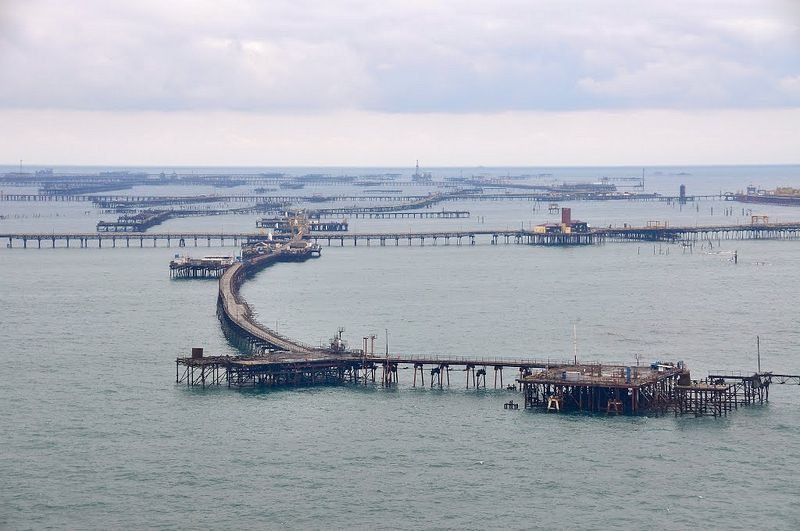
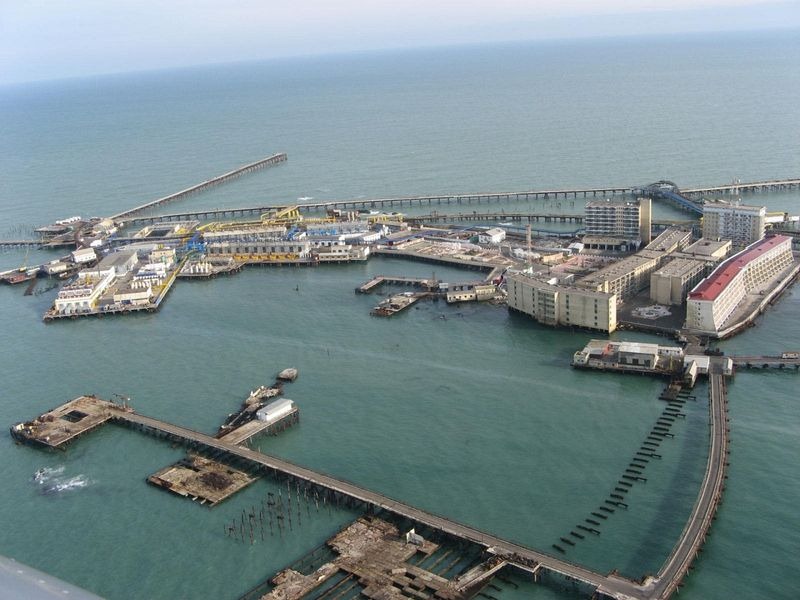
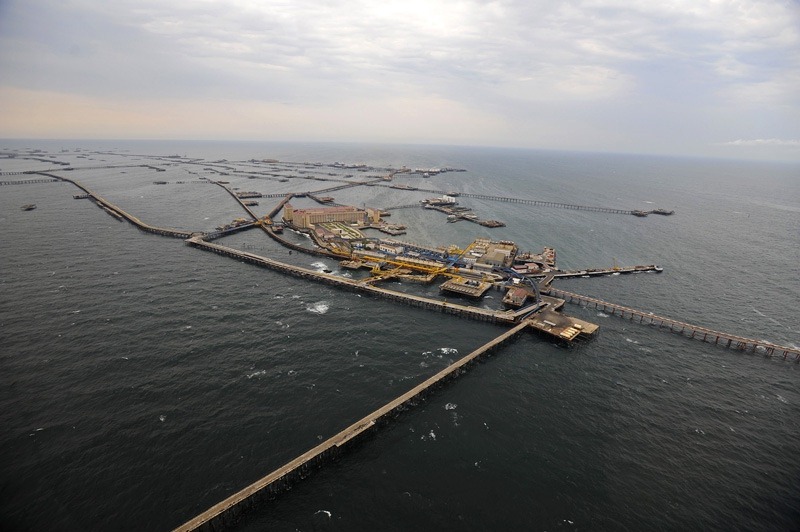
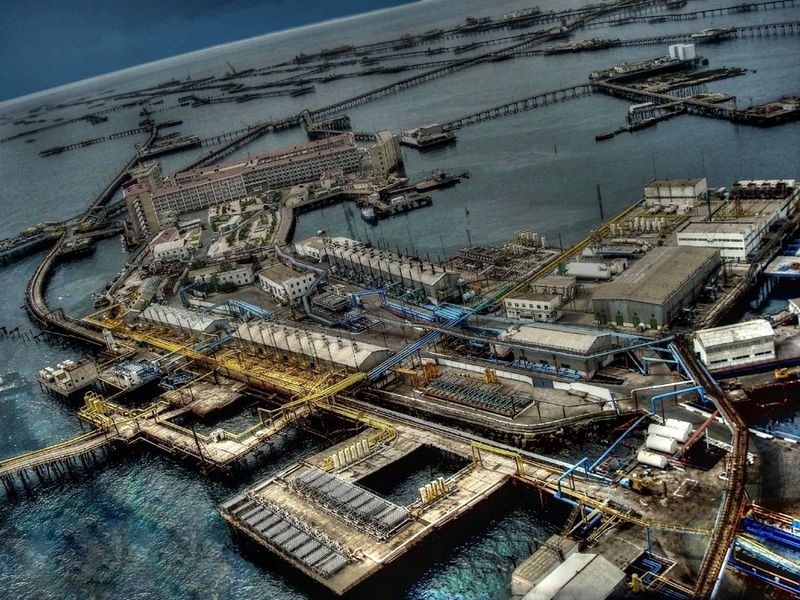
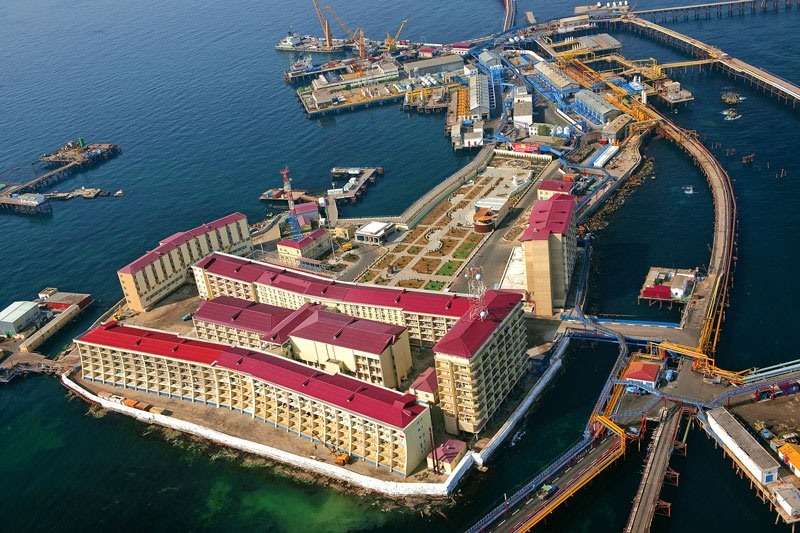
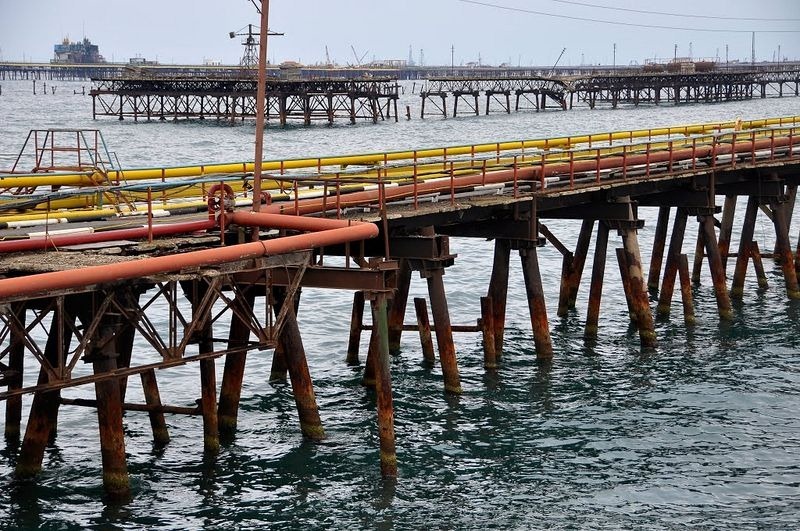
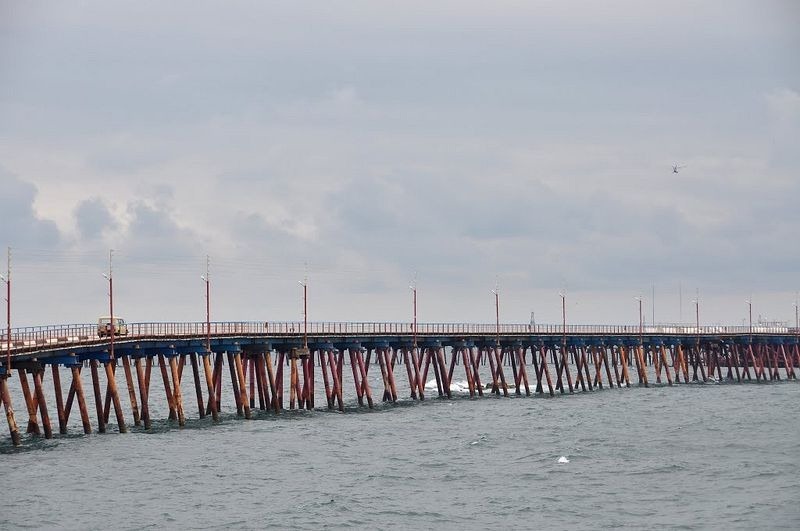
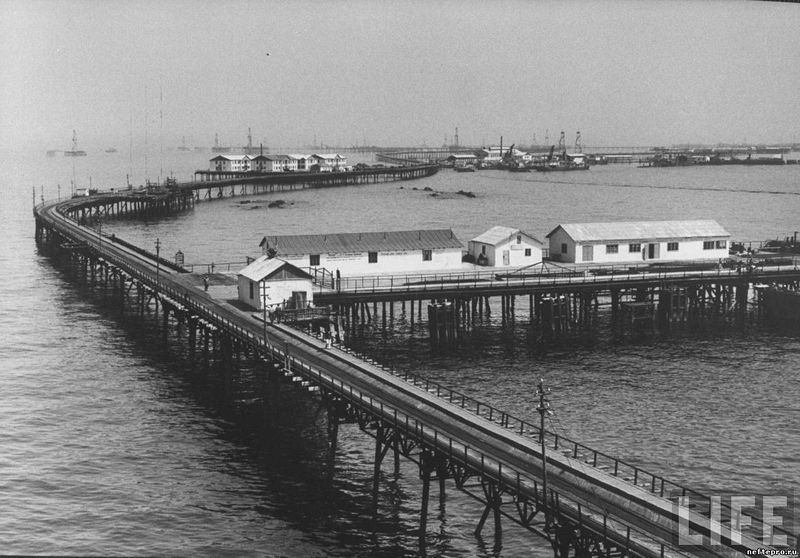
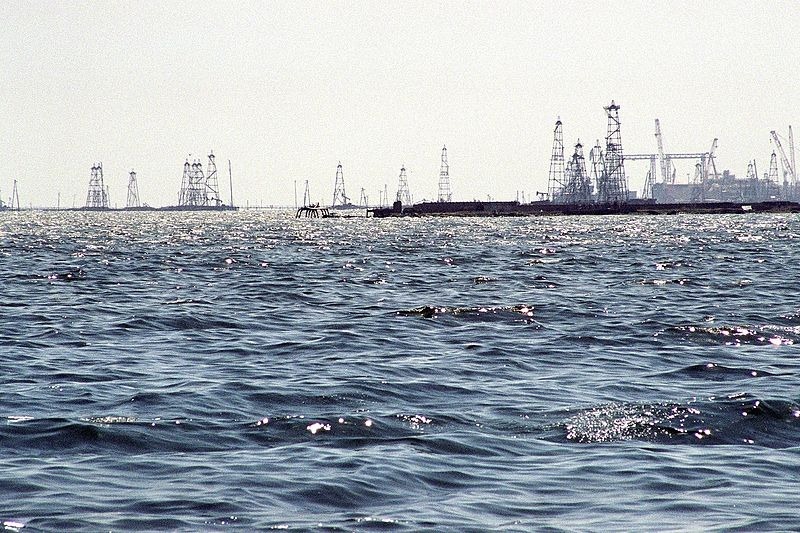
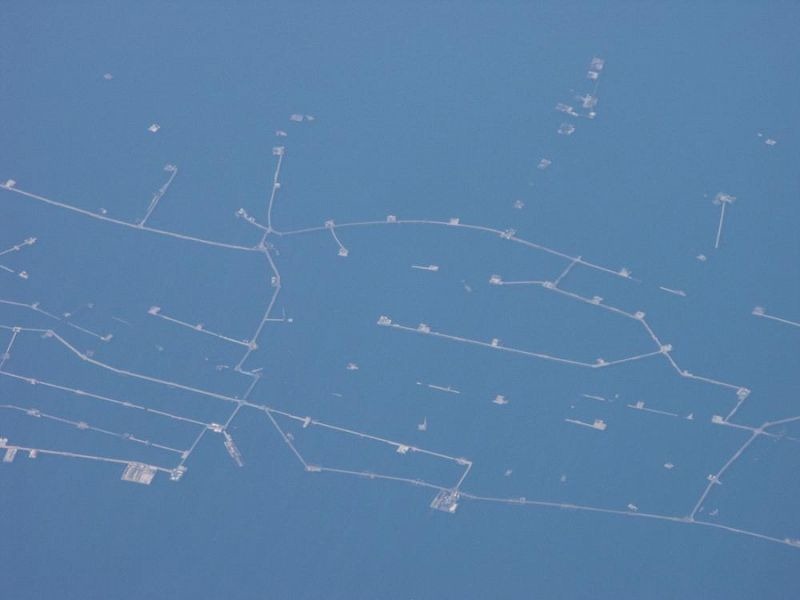
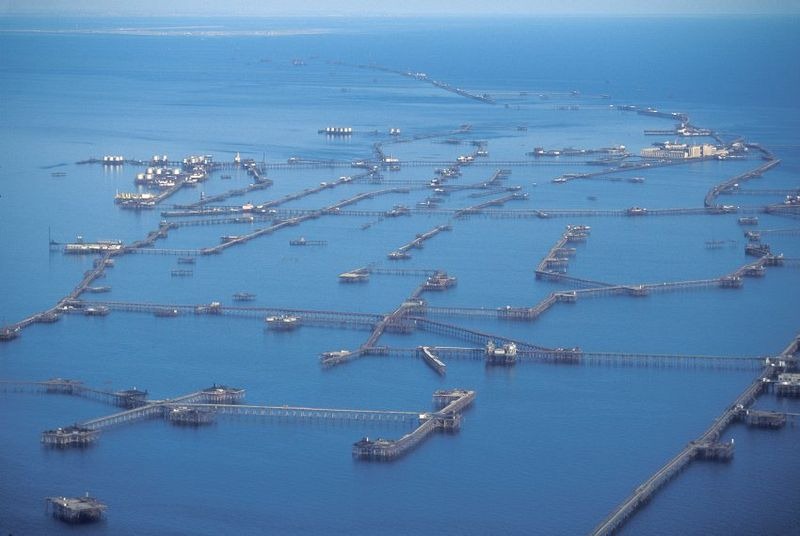
Far out into the Caspian Sea, a hundred kilometers away from the Azerbaijani capital Baku, lies one of the most incredible settlements in the world. A fully functional city of 3,000 living in a network of oil platforms and artificial islands connected by 300 km of trestle bridges. This is Neft Daslari, also known as Oil Rocks, and it lies fully within the world’s largest lake at an incredible distance of 55 km from the lake’s shore.

Azerbaijan has been famed for its rich oil resources since ancient times. There is evidence of oil drilling and actual trade in petroleum as early as the 3rd and 4th centuries. Historical accounts of the area’s oil and natural gas seepage can be found in old Arabic and Persian manuscripts, as well as in the writings of famous travellers such as Marco Polo. The Persians called the area the “Land of Fire”.
neft-dasları-18

Photo credit: geozet.ru


Modern drilling began in 1870 after Russia conquered the territory. By the start of the First World War, Azerbaijan’s oil wells were already supplying 175 million barrels of crude oil a year, or 75 percent of the country’s entire oil production. After the war, while exploring for oil in the Caspian Sea, Soviet engineers struck top-quality oil at a depth of 1,100 meters below the seabed. Shortly thereafter, the world’s first offshore oil platform was built at the spot, and Neft Daslari was born.

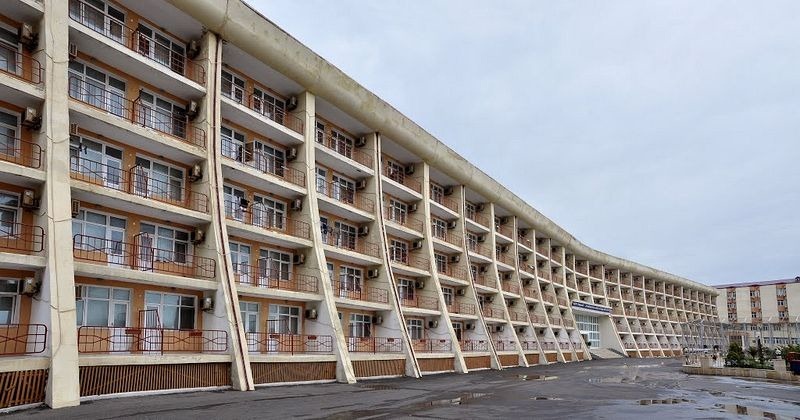
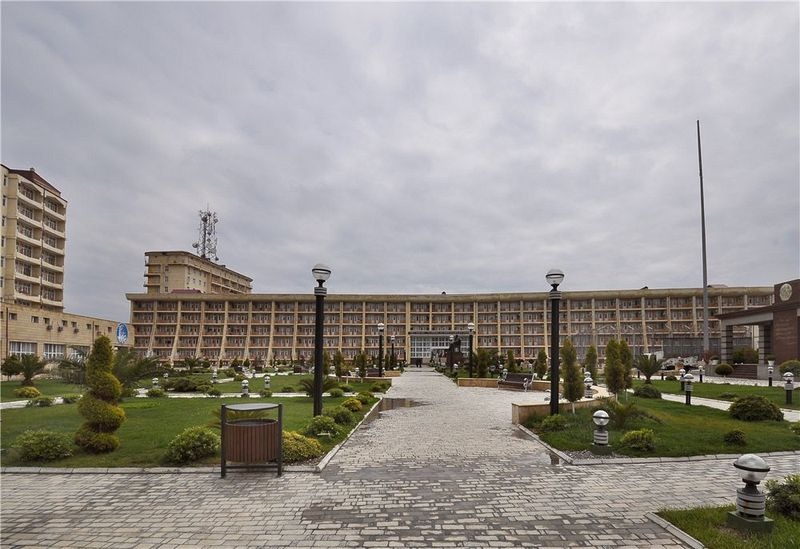
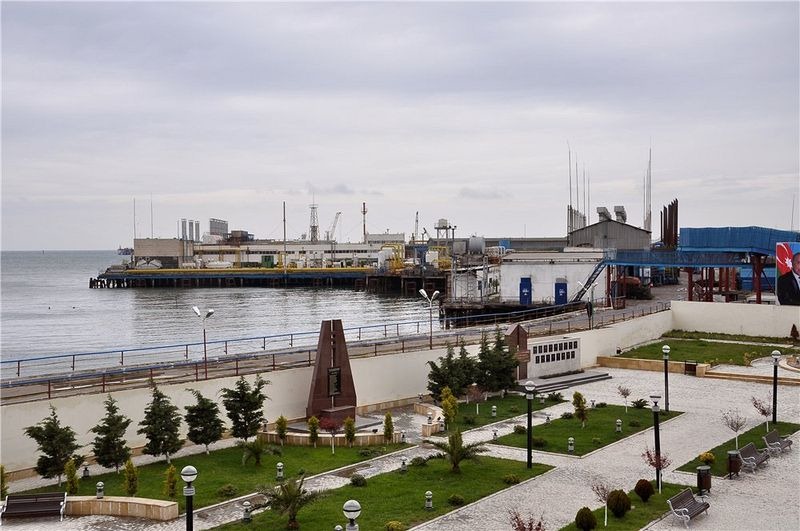
The original foundation of Neft Daslari consisted of seven sunken ships including the world’s first oil tanker. Over the decades this grew to some 2,000 drilling platforms spread in a 30-kilometer circle, joined by a network of bridge viaducts spanning 300 kilometers. Over these platforms, workers built eight-story apartment blocks, a beverage factory, soccer pitch, library, bakery, laundry, 300-seat cinema, bathhouse, vegetable garden and even a tree-lined park for which the soil was brought from the mainland. During its heydays, some 5,000 workers lived here.

Neft Daslari’s decline began with the collapse of the Soviet Union and the discovery of new oilfields elsewhere. The workforce was reduced and many oil rigs were abandoned. Neglect and lack of maintenance caused many of them to collapse into the sea. Others are in the process of crumbling. Out of the 300 kilometers of roads, only 45 kilometers remain usable, and even they have fallen into disrepair. To the government, however, the place is still the proud, closely-guarded secret it was in Soviet times. It is still very hard for foreigners to gain access to the city. You can’t even zoom into it on Google Maps.
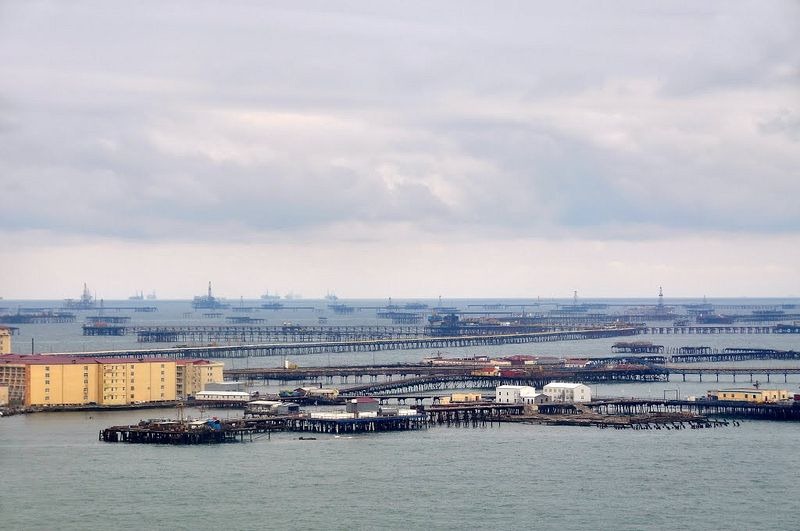
neft-dasları-5

Photo credit: IPAAT/Panoramio

neft-dasları-6

neft-dasları-17

Photo credit: infoglaz.ru

neft-dasları-21

neft-dasları-1

Photo credit: infoglaz.ru

neft-dasları-19

Photo credit: infoglaz.ru

neft-dasları-7

Photo credit: IPAAT/Panoramio

neft-dasları-13

neft-dasları-15

neft-dasları-8

neft-dasları-11

neft-dasları-12

neft-dasları-20\

neft-dasları-3

Photo credit: geozet.ru

Sources: Spiegel / Wikipedia

Source……www.amusingplanet.com

Natarajan

Image of the Day….” Star Trails…”

Star trails over Forbidden City, Beijing

Below, the Forbidden City in Beijing, China, former home of the Chinese emperor and a center of Chinese government. Above, the Forbidden City’s sky counterpart.

View larger. | Star trails over the Forbidden City, Beijing, China. Photo taken January 23, 2015 by Jeff Dai.

View larger. | Star trails over the Forbidden City, Beijing, China. Photo taken January 13, 2016 by Jeff Dai. Visit Jeff on Facebook.

Jeff Dai captured these star trails around the north celestial pole and North Star – Polaris – in a time-exposure image capturing the passage of the time above the Forbidden City in Beijing, China.

What we in the West know as the Forbidden City is a translation of the Chinese name Zijin Cheng, literally Purple Forbidden City. Jeff writes:

The Purple Forbidden City, a world heritage site today, served as the home of Chinese emperors and their households, as well as the ceremonial and political center of Chinese government, for almost 500 years.

The Purple Forbidden City is a name with significance in ancient Chinese astronomy. Purple refers to the North Star (pictured in the center of the startrails). In ancient China, it was called the Ziwei Star, and in traditional Chinese astrology was the heavenly abode of the Celestial Emperor. The surrounding celestial region, the Purple Forbidden Enclosure (pictured below) was considered the realm of the Celestial Emperor and his family.

The Forbidden City, as the residence of the terrestrial emperor, was its earthly counterpart.

Traditional Chinese astronomy has a system of dividing the celestial sphere into asterisms or constellations, known as

View larger. | In traditional Chinese astronomy, a large area in the northern sky was known as the Purple Forbidden Enclosure. It was considered the realm of the Celestial Emperor and his family.

Bottom line: A photo shows star trails above the Forbidden City – former residence of the Chinese emperor – in Beijing, China. It’s accompanied by an image showing the Purple Forbidden Enclosure, the celestial counterpart of the Forbidden City.

 Source……..www.earthsky.org
natarajan

Image of the Day….” Selfie with a Drone …” !!!

Selfie with a drone

What do you call a selfie acquired with a drone? A “dronie,” says Manish Mamtani Photography.

View larger. | Photo by Manish Mamtani Photography.  Visit Manish on Facebook.

View larger. | Photo by Manish Mamtani Photography. Visit Manish on Facebook.

Our friend Manish Mamtani acquired this image this month and posted it to EarthSky Facebook. He called it a drone … a selfie taken with a drone. He wrote:

Enjoying the snow in New Hampshire.

Shot with DJI Phantom 3 Pro.

Source…….www.earthsky.org

Natarajan

Image of the Day….” View from space…”

View from space: Mississippi River flooding

Two satellite images show the contrast between the flooded Mississippi River this month and the same area last year. Check out the difference!

View larger. | January 11, 2016. Image credit: NASA

View larger. | January 11, 2016. Image credit: NASA

In early January 2016, communities along the southern reaches of the Mississippi River faced severe flooding from rains that fell weeks earlier and well to the north. These two NASA satellite images show the Mississippi River as it runs through southern Mississippi and Louisiana. The above image was acquired on January 11, 2016. The image below shows the river at a normal level last January (January 24, 2015.)

View larger. | January 24, 2015. Image credit: NASa

View larger. | January 24, 2015. Image credit: NASa

Heavy rains in December 2015 drenched parts of Missouri and Illinois, and the pulse of fresh water has finally reached Louisiana and Mississippi. On January 11, the U.S. Army Corps of Engineers opened the Bonnet Carré Spillway near New Orleans in preparation for the southward-moving pulse of flood water.

Substantial flooding is unusual on the Mississippi River in winter. As reported by Weather Underground, this event was only the second time that a winter flood has made the top-40 list of flood crests at St. Louis in more than 200 years of records. (The other flood occurred in December 1982 during a major El Niño.)

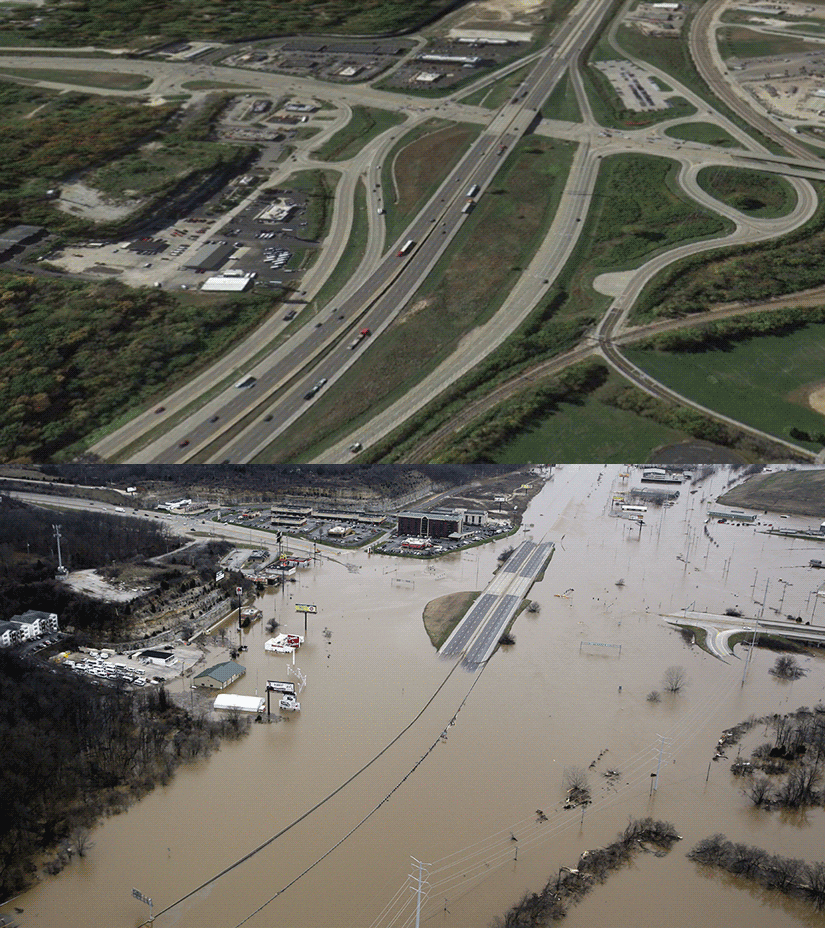
Before/after images of Interstate 44 flooded in Valley Park, Missouri.  Credit: AP Photo/Jeff Roberson and Google Earth

According to John Kimball, a hydrology, ecology, and remote sensing expert at the University of Montana, the soil within the upper Missouri basin remained largely frozen. There was no rapid thaw or snowmelt that helped raise the river’s level. But elsewhere in the Mississippi Basin, precipitation that might typically fall as snow in December and January instead fell as rain. Kimball said:

There has been much higher than normal rainfall over the southern and central portion of the Mississippi basin this winter, attributed to the strong El Niño. This led to soil saturation and more rapid and abundant runoff than in a normal winter.

The saturated ground set the stage for the central and southern Mississippi basin to feel the effects of the approaching flood water.

Over the course of a few weeks, the excess water (with contributions from the Ohio and Missouri rivers) made its way south. When the top image was acquired on January 11, river gauge observations and forecasts for the Mississippi River in Natchez, Mississippi, showed that the river stood at about 16.5 meters (54 feet)—about 2 meters above flood stage—and still rising.

Farther south in Louisiana, the Bonnet Carré Spillway was opened for the 11th time in its history to reduce pressure on levees in southeast Louisiana. The spillway was erected in 1931 to control flooding in the Lower Mississippi Valley by diverting water to Lake Pontchartrain. According to Richard Kesel of Louisiana State University, the Morganza Spillway to the north had not been opened—indicative that flooding was not anticipated to be a huge problem.

Bottom line: Two satellite images show the contrast between the flooded Mississippi River in January, 2016 and the same area last year, when the river was at a normal level.

Source…….www.earthsky.org

Natarajan

Image of the Day….”Flower Blooms in Space “….!

Flower blooms in space

Here it is! A flower grown on the International Space station blooms.

First flower grown in space

On Saturday (January 16, 2016), International Space Station (ISS) astronaut Scott Kelly tweeted out an image of what he described as the first flower grown in space.

The orange zinnia – a plant related to the sunflower – is from a small garden on the ISS in theVEG-01 module – known as “Veggie” – an experiment focused on growing plants in space. The plant in the picture is the first of the zinnia’s to successfully flower.

On November 16, 2015 NASA astronauts activated the Veggie plant growth system and its rooting “pillows” containing zinnia seeds on the space station in the first-ever flowering crop experiment on the orbiting laboratory. In the days since, LED lights were on for 10 hours and off for 14 hours in order to stimulate the plants to flower.

In late December, Kelly tweeted that the plants weren’t looking too good, and told the ground team:

You know, I think if we’re going to Mars, and we were growing stuff, we would be responsible for deciding when the stuff needed water. Kind of like in my backyard, I look at it and say ‘Oh, maybe I should water the grass today.’ I think this is how this should be handled.

The Veggie team on Earth created what was dubbed The Zinnia Care Guide for the On-Orbit Gardener, and gave basic guidelines for care while putting judgment capabilities into the hands of the astronaut who had the plants right in front of him. Rather than pages and pages of detailed procedures that most science operations follow, the care guide was a one-page, streamlined resource to support Kelly as an autonomous gardener. By the first week in January, the flowers were on the rebound.

The Veggie plant growth facility was installed on the ISS in early May of 2014, and the first crop – red romaine lettuce – was activated for growth. The first growth cycle faced some issues, but the crew was able to harvest and eat lettuce from the second crop in August, 2015.

Although Kelly has made the claim that these are the first flowers grown in space, The Verge reports that this might not be true. Astronaut Don Pettit grew a sunflower on the ISS in in 2012 that looked like this.

NASA is maturing Veggie technology aboard the space station to provide future pioneers with a sustainable food supplement – a critical part of NASA’s Journey to Mars.

Enjoying EarthSky? Sign up for our free daily newsletter today!

Bottom line: On January 16, 2016, astronaut Scott Kelly tweeted out an image of an orange zinnia – the first flower grown aboard International Space Station (ISS).

Read more from NASA

Source………www.earthsky.org

Natarajan

Never-Before-Seen Images Reveal How The Fukushima Exclusion Zone Was Swallowed By Nature…

Polish photographer Arkadiusz Podniesinski travelled to the site of the Fukushima nuclear disaster of March 2011  to see the location with his own eyes. When he obtained permits to enter the roughly 20km (12.5 mile) Exclusion Zone, he was confronted with a scene similar to one from a post apocalyptic film. Podniesinski previously photographed the area around the 1986 Chernobyl nuclear disaster.

“It is not earthquakes or tsunami that are to blame for the disaster at the Fukushima Daiichi nuclear power station, but humans,” writes Podniesinski on his website. He undertook the project so that he could draw his “own conclusions without being influenced by any media sensation, government propaganda, or nuclear lobbyists who are trying to play down the effects of the disaster, and pass on the information obtained to as wider a public as possible.”

More info: podniesinski.pl (h/t: designyoutrust)

Abandoned vehicles are slowly swallowed up by nature on a stretch of road near the power plant

photos-fukushima-exclusion-zone-podniesinski-45

Some of the cars have entirely disappeared in the wild grass

photos-fukushima-exclusion-zone-podniesinski-46

Podniesinski shows a radiation reading of 6.7 uSv/h

photos-fukushima-exclusion-zone-podniesinski-47

A chained-up motorcycle is slowly absorbed into the field

photos-fukushima-exclusion-zone-podniesinski-48

These contaminated televisions were collected and piled up as part of the cleaning efforts

photos-fukushima-exclusion-zone-podniesinski-49

Cobwebs hang above the scattered products in this abandoned supermarket

photos-fukushima-exclusion-zone-podniesinski-50

Another photo from within a supermarket feels eerily similar to those from post-apocalyptic movies

photos-fukushima-exclusion-zone-podniesinski-51

This abandoned computer lab covered in animal droppings is from a village near the plant

photos-fukushima-exclusion-zone-podniesinski-52

A dining table with portable cookers ready to prepare food looks like it was left in haste

photos-fukushima-exclusion-zone-podniesinski-53

These go-karts have had their last race in an entertainment park located within the 12.5mile exclusion zone

photos-fukushima-exclusion-zone-podniesinski-54

The earthquake which started the tsunami damaged buildings as well

photos-fukushima-exclusion-zone-podniesinski-56

These bicycles were left behind when residents fledphotos-fukushima-exclusion-zone-podniesinski-57

This aerial photo taken by a drone shows one of the dump sites that contain thousands of bags of contaminated soil

photos-fukushima-exclusion-zone-podniesinski-60

Bags of radioactive soil are stacked one on top of the other to save space

photos-fukushima-exclusion-zone-podniesinski-61

Landowners have been told that these contaminated bags will be disposed of, but many people remain skeptical

photos-fukushima-exclusion-zone-podniesinski-62

Cows started to get white spots on their skin soon after the accident. One farmer believes this is due to the cows eating contaminated grass

photos-fukushima-exclusion-zone-podniesinski-63

“Nuclear energy is the energy of a bright future” reads the sign

photos-fukushima-exclusion-zone-podniesinski-64

Source….www.bored panda.com

Natarajan


Photos Showing Some Amazing Stories…..!

As the world keeps spinning, more and more exciting occurrences can be found. It never ceases to amaze me how many incredible discoveries and sights the world offers us on a daily basis. Here are few photos that lend support to the fact that Earth, with its inhabitants, can be a fascinating place!
Blue ice, the stunning result of snow falling on a glacier and becoming compressed.

Amazing aspects of the world

That’s not a branch: a mammoth tusk is unearthed from the ground.

Amazing aspects of the world

Source
Not Legoland: a housing complex in San Buenaventura, Mexico.

Amazing aspects of the world

Source
This looks like a piece of art, but it’s a honeycomb.

Amazing aspects of the world

Source
An infrared photo of a garden. This is how a bee sees.

Amazing aspects of the world

Source
This giant cactus , Pachycereus weberi, is native to Mexico and southern Arizona.

Amazing aspects of the world

Source
The Iraqi Marshes: an aquatic landscape in a desert climate. 

Amazing aspects of the world


Source
A 27,000 year-old hand print, discovered on the rocks of an Indonesian island

Amazing aspects of the world

Bangladeshis get creative: a floating bridge made out of dinghies. 

Amazing aspects of the world

Source
What a difference a century makes: the daily commute, then and now.

Amazing aspects of the world

Source
Like ebony and ivory, lavender and wheat fields grow side by side in perfect harmony.

Amazing aspects of the world

Source
This is the barely-seen ili pika, a shy mountain animal from China, who was recently spotted for the first time in 20 years.

A rare sight: a sunset and eclipse at the same time.

Amazing aspects of the world

Source
A cloud formation above the sea, in Holland State Park, Michigan.

Amazing aspects of the world

Source
A bird’s eye view of Dubai.

Amazing aspects of the world

Source…www.ba-bamail.com

natarajan


Image of the Day….Meteor Crater , Arizona …

Meteor Crater, Arizona, from the air

An aerial view of Meteor Crater, Arizona, the result of an impact 50,000 years ago.

View larger. | Photo by Manish Mamtani Photography.  Visit him on Facebook.

View larger. | Meteor crater, via EarthSky community member Manish Mamtani Photography. Visit him on Facebook.

Manish Mamatani posted this photo to EarthSky Facebook. It’s wonderful Meteor Crater near Winslow, Arizona, sometimes said to be the best preserved meteorite impact site in the world. It is an impressive thing to see … worth taking the kids!

The mile-wide crater is the result of a collision between Earth and an asteroid, believed to have occurred only about 50,000 years ago.

Source……Posted by

in http://www.earthsky .org

Natarajan

Tarr Steps: An Ancient ‘Clapper Bridge’ in Somerset…

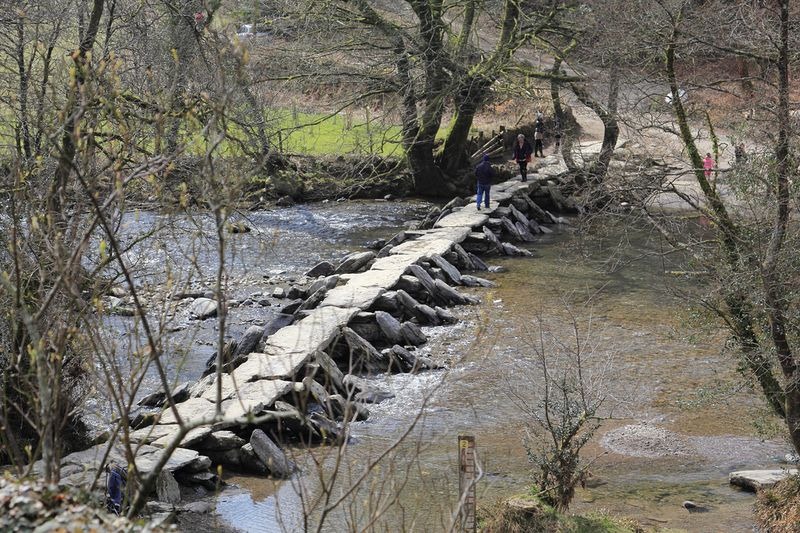
In the lonely moors of Devon and in other upland areas of the United Kingdom, the ancient people had built stone bridges by placing large flat slabs of stones over piles of stones, without mortar or cement, to cross narrow streams. These bridges are called clapper bridges. The name is derived from the Anglo-Saxon word “cleaca” which means “bridging the stepping stones”, suggesting that the first clapper bridges might have been stone slabs laid across the top of existing stepping stones. Most clapper bridges were built during the medieval times, although some of them age much much more.

tarr-steps-3

Photo credit: j.e.mcgowan/Flickr


One of the most famous clapper bridge is Tarr Steps, located in the Exmoor National Park, in Somerset, across the River Barle. It is also the longest clapper bridge in Britain with 17 spans and measuring 55 meters in length.The bridge lies very low in the water, less than a meter over the river’s normal water level. Over the last century, the river has silted so much that during flood it often flows over the stones. Several times in recent years, the slabs of stones, which weigh up to two tons each, have been washed up to 50 meters downstream. The bridge was repaired each time.

The age of Tarr Steps is unknown with several theories claiming that it dates from the Bronze Age, but others put them around 1400 AD. According to local legend, the Devil himself built it so that he could sunbath on. A more elaborate story says that the Devil never fully completed building the bridge, because his apron strings broke and he dropped the stones he was carrying. The Devil then denounced destruction on the first creature to venture across, so the villagers sent a cat across. The poor creature was torn to pieces. The parson then crossed the bridge without harm, and traded insults with the Devil.

The Tar Steps has been a tourist attraction for at least two hundred years.

tarr-steps-1

Photo credit: James Morley/Flickr

tarr-steps-2

Photo credit: Matt Neale/Flickr

tarr-steps-4

Photo credit: Exmoor NP/Flickr

tarr-steps-8

Photo credit: lee roberts/Flickr

Sources: Wikipedia / Theaa.com / www.everythingexmoor.org.uk

Source……www.amusingplanet.com
Natarajan

Image of the Day….Double rainbow !!!

Double rainbow, Brooklyn Bridge, NYC

EarthSky community member Jennifer Khordi caught this spectacular double rainbow on Sunday, after storms passed over Manhattan.

View larger. | Photo taken January 10, 2016 by Jennifer Khordi of Matawan, New Jersey. Visit Jennifer’s Facebook page.

Source….www.earthsky.org

Natarajan