Image of the Day….Lenticular Clouds Look Like UFOs….

View larger. | Lenticular clouds over Sangre de Cristos mountains, New Mexico, by EarthSky Facebook friend Geraint Smith.

View larger. | Lenticular clouds over Sangre de Cristos mountains, New Mexico – in January, 2015 – byEarthSky Facebook friend Geraint Smith.

Lenticular clouds look like UFOs

These lens-shaped clouds are often mistaken for UFOs. Here’s how they form,

Enjoy these photos  of beautiful lenticular clouds taken in places around the world, and shared with us by EarthSky friends on Facebook and Google+.

These lens-shaped clouds typically form where stable moist air flows over a mountain or a range of mountains. When this happens, a series of large-scale standing waves may form on the mountain’s downwind side. If the temperature at the crest of the wave drops to the dew point, moisture in the air may condense to form lenticular clouds. As the moist air moves back down into the trough of the wave, the cloud may evaporate back into vapor. So lenticular can appear and disappear relatively quickly. Plus they’re not familiar to people who live in low-lying or flat terrain. And, just to confound things, lenticular clouds have also been known to form in non-mountainous places, as the result of shear winds created by a front. For all of these reasons, lenticular clouds are often mistaken for UFOs (or “visual cover” for UFOs). Enjoy the photos! Thank you to all who posted.

Lenticular clouds by Richard T. Hasbrouck.  Visit Richard's website.

Lenticular clouds by Richard T. Hasbrouck in Truchas, New Mexico, January, 2014.

David Marshall captured this lenticular cloud above the Alps in northern Italy.

David Marshall captured this lenticular cloud above the Alps in northern Italy.

John Lloyd Griffith in north Wales captured this lenticular cloud on December 22, 2013.

John Lloyd Griffith in north Wales captured this lenticular cloud on December, 2013.

Radek Zek Photography caught this lenticular cloud in September 2013.

Radek Zek Photography caught this lenticular cloud in September, 2013.

Beautiful shot of lenticular cloud at sunset by Chris Walker in Dayton, Nevada.  Taken in spring 2008.

Beautiful shot of lenticular cloud at sunset by Chris Walker in Dayton, Nevada. Taken in spring 2008.

Bottom line: Photos of lenticular clouds in various parts of the world, from EarthSky’s community on Facebook and G+.

SOURCE:::: http://www.earthskynews.org

Natarajan

This Date in Science…. Feb 20…1962…. John Glenn First American To orbit Earth !!!

This date in science: John Glenn first American to orbit Earth
John Glenn and Friendship 7
On February 20, 1962, John Glenn became the first American to orbit the Earth. He made three turns around the planet before returning safely.

February 20, 1962. John Glenn became the first American to orbit the Earth on this date. He made three turns around the planet before returning safely in his space capsule, which was called Friendship 7. He followed two Russian cosmonauts in making this early orbit of our planet: Yuri Gagarin ( April 1961) and Gherman Titov (August 1961).

While Glenn was in orbit, NASA controllers received an indication that the heat shield on his craft had come loose. They instructed Glenn not to jettison the rockets underneath the heat shield during re-entry, because the rockets might be able to hold the shield in place. Fortunately, the indication turned out to be a false alarm.

Glenn returned to space at age 77 aboard the space shuttle Discovery in 1995, making him the oldest person to fly in space. His mission’s primary scientific aim at that time was to study the effects of spaceflight on seniors.


John Glenn climbs into the Friendship 7 spacecraft just before making his first trip into space on February 20, 1962. Photo via NASA

John Glenn and Friendship 7

Here's What John Glenn saw on February 20, 1962.  Just 5 minutes and 44 seconds after launch, Glenn offered his first words about the view from his porthole: “This is Friendship 7. Can see clear back; a big cloud pattern way back across towards the Cape. Beautiful sight.” Three hours later, at the beginning of his third orbit, Glenn photographed this panoramic view of Florida from the Georgia border (right, under clouds) to just north of Cape Canaveral. His American homeland was 162 miles (260 kilometers) below. “I have the Cape in sight down there,” he noted to mission controllers. “It looks real fine from up here. I can see the whole state of Florida just laid out like on a map. Beautiful.”  Image via NASA
Here’s What John Glenn saw on February 20, 1962. Just 5 minutes and 44 seconds after launch, Glenn offered his first words about the view from his porthole: “This is Friendship 7. Can see clear back; a big cloud pattern way back across towards the Cape. Beautiful sight.” Three hours later, at the beginning of his third orbit, Glenn photographed this panoramic view of Florida from the Georgia border (right, under clouds) to just north of Cape Canaveral. His American homeland was 162 miles (260 kilometers) below. “I have the Cape in sight down there,” he noted to mission controllers. “It looks real fine from up here. I can see the whole state of Florida just laid out like on a map. Beautiful.” Image via NASA
Here’s what John Glenn saw on February 20, 1962. Just 5 minutes and 44 seconds after launch, Glenn offered his first words about the view from his porthole: “This is Friendship 7. Can see clear back; a big cloud pattern way back across towards the Cape. Beautiful sight.” Three hours later, at the beginning of his third orbit, Glenn photographed this panoramic view of Florida from the Georgia border (right, under clouds) to just north of Cape Canaveral. His American homeland was 162 miles (260 kilometers) below. “I have the Cape in sight down there,” he noted to mission controllers. “It looks real fine from up here. I can see the whole state of Florida just laid out like on a map. Beautiful.” Image via NASA
Bottom line: John Glenn became the first American to orbit Earth on February 20, 1962. His space capsule was called Friendship 7.

Bottom line: John Glenn became the first American to orbit Earth on February 20, 1962. His space capsule was called Friendship 7.

SOURCE:::: www. earthskynews.org

Natarajan

How an 11 Year old Girl got to Name the Planet Pluto … !!!

An 11-year-old British girl is responsible naming the planet Pluto, the once ninth planet of our solar system, after her grandfather read about the dwarf planet’s discovery at the family breakfast table.

pluto

The girl, Venetia Burney, recalled the event in an interview with NASA in 2006,

Venetia_Burney

“I think it was on March the 14th, 1930 and I was having breakfast with my mother and my grandfather. And my grandfather read out at breakfast the great news and said he wondered what it would be called. And for some reason, I after a short pause, said, “Why not call it Pluto?” I did know, I was fairly familiar with Greek and Roman legends from various children’s books that I had read, and of course I did know about the solar system and the names the other planets have. And so I suppose I just thought that this was a name that hadn’t’t been used. And there it was. The rest was entirely my grandfather’s work.”

Burney’s grandfather, Falconer Madan, the ex-head librarian at the Bodleian at Oxford, was so pleased by his granddaughter’s proposed name that he suggested it to Herbert Hall Turner, a retired astronomer who held the title of Astronomer Royal.

Turner immediately wired the idea to American astronomers at Lowell Observatory. The planet was officially named a in May 1930.


Despite many rumors that Burney named the planet Pluto after the Greek god of the underworld or that the first two letter “PL” are in honor of Percival Lowell, the founder of Lowell Observatory, Burney seems to have named the planet Pluto because it sounded good to her. “I just thought it was a name that hadn’t been used so far, and might be an obvious one to have,” Burney told NASA.

There was also a rumor that the planet was named after Pluto the dog because both, the cartoon and the planet, came out in 1930. However, Pluto the dog was originally named Rover in 1930. It wasn’t until 1931 that the beloved cartoon dog took the name Pluto, meaning that the dog took the name of the planet.
This article originally appeared at Modern Notion. Copyright 2015. Follow Modern Notion on Twitter
Read more: http://modernnotion.com/little-girl-named-pluto/#ixzz3SELJkgOQ

SOURCE::::

http://www.businessinsider.com

Natarajan

Have you Heard about these Aircraft Designs … ?

The 20th century saw an amazing array of new vehicles – from cars to ships to submarines and airplanes. Some of these designs are still used today, their basic premise being so dead on. However, some designs were less than ideal, and what follows are the aircraft designs that just weren’t as good as the rest, but are still fascinating to see. Enjoy this collection of strangely designed planes.

weird planes

weird planes

weird planes

weird planes

weird planes

weird planes

weird planes

weird planes

weird planes

weird planes

weird planes

weird planes

weird planes

weird planes

weird planes

weird planes

weird planes

weird planes

weird planes

weird planes

weird planes

weird planes

weird planes

weird planes

weird planes

weird planes

weird planes

weird planes

SOURCE:::: http://www.ba-bamail.com

Natarajan

Image of the Day…. ” Selfie with Venus and Mars…” !!!

Selfie with Venus and Mars

The planets Venus and Mars are about to be amazing in the western sky after sunset. Watch for them. Cool selfie from Jean-Baptiste Feldmann in France!

Selfie by EarthSky Facebook friend Jean-Baptiste Feldmann in France.  Thank you, Jean-Baptiste!

Isn’t this a cool image of the planets Venus (brighter) and Mars (above) in the western twilight sky? French photographer Jean-Baptiste Feldmann posted it at EarthSky Facebookover this past weekend (February 14-15, 2015).

It’s a beauty in and of itself and also because Venus and Mars are about to be amazing in the western sky after sunset. By this coming weekend, these two worlds will be at their closest since 2008. They won’t be this close again until 2017. What’s more, the moon is now coming back to the evening sky, and Venus and Mars and the waxing crescent moon will create some amazing sky scenes in the west after sunset, especially on February 20. Watch for them!

SOURCE:::: http://www.earhskynews.org

Natarajan

3 Indians among 100 Shortlisted For Oneway Trip to MARS…

The Red Planet's surface. File photo.
Reuters

The Red Planet’s surface. File photo.

Three Indians, two women and one man, have made it to the list of 100 applicants who will move on to the next round of an ambitious private mission that aims to send four people on a one-way trip to Mars in 2024.

From the initial 202,586 applicants, only 100 hopefuls have been selected to proceed to the next round of the Mars One Astronaut Selection Process, The Netherlands-based non-profit organisation Mars One has announced.

The project aims to set up a human colony on Mars and eventually around 40 people will be sent to the red planet on a permanent basis. The finalists will train for seven years and Mars One will begin sending out four at a time from 2024.

The Mars 100 Round Three candidates include 50 men and 50 women with 39 from the Americas, 31 from Europe, 16 from Asia, 7 from Africa, and 7 from Oceania.

The Indian candidates include 29-year-old Taranjeet Singh Bhatia, who is studying Doctorate in Computer Science at the University of Central Florida.

The other two are Ritika Singh, 29, who lives in Dubai, and Shradha Prasad, 19, from Kerala.

The second round of the application process last year had shortlisted 44 Indians, of whom 27 were men and 17 were women.

The third round has selected 100 candidates from a pool of 660 after they participated in personal online interviews with Norbert Kraft, Chief Medical Officer.

During the interviews the candidates had a chance to show their understanding of the risks involved, team spirit and their motivation to be part of the life changing expedition.

“We were impressed with how many strong candidates participated in the interview round, which made it a very difficult selection,” said Norbert Kraft.

The next selection rounds will focus on composing teams that can endure all the hardships of a permanent settlement on Mars.

The candidates will receive their first shot at training in the copy of the Mars Outpost on Earth and will demonstrate their suitability to perform well in a team.

Keywords: Mars OneSpace Mission

SOURCE:::: http://www.the hindu.com

Natarajan

Image of the Day… Wind Sculpted Frozen Sand…!!!

Wind sculpted this frozen sand in Michigan

It was cold in the upper U.S this weekend, when Joshua Nowicki noticed and captured these cool frozen sand formations.

View larger. | Photo by Joshua Nowicki.

It was fiercely cold in the U.S. state of Michigan this past weekend, when Joshua Nowicki posted this cool photo at EarthSky Facebook. He said these interesting formations were created by the wind eroding the frozen sand at Silver Beach County Park in Saint Joseph, Michigan on February 14, 2015. The largest one, he wrote, was about 12 inches (30 cm) tall.

Thank you, Joshua!

How cold was it in Michigan? Dangerously cold. Mlive.com/weather wrote that – at 7 a.m. Sunday morning, February 15, 2015 – every reporting site except Port Hope and Munising was below zero Fahrenheit.

SOURCE:::: http://www.earthskynews.org

Natarajan

This Date …Feb 13…. .. BirthDay of Chuck Yeager… The 1st Pilot to Break the Sound Barrier…

February 13, 1923. Chuck Yeager, the first pilot to break the sound barrier, was born in Myra, West Virginia on this date in 1923.

Yaeger enlisted in the Army Air Corps in September 1941, at the age of 18. He fought in World War II before being assigned to fly high-performance aircraft at Edwards Air Force Base in 1947.

On October 14, 1947, Yeager piloted a plane called Glamorous Glennis to Mach 1.06, just over the speed of sound.

Dubbed the fastest man alive, he also won the prestigious Collier Trophy in aviation even as he continued setting speed records.

The plane in which he broke the sound barrier is on display at the Smithsonian National Air and Space Museum in Washington, D.C.

Yeager’s adventures were popularized in a 1980s satirical book and movie, both called The Right Stuff.

He currently lives California.

Yeager in front of the Bell X-1, which, as with all of the aircraft assigned to him, he named Glamorous Glennis after his wife.  Image via Wikimedia Commons.

Bottom line: On February 13, 1923, Chuck Yeager, the first pilot to break the sound barrier, was born in Myra, West Virginia.

SOURCE:::: http://www.esrthskynews.org

Natarajan

This Date in Science….Feb 11 2010……When a Spacecraft Destroyed a Sundog…

February 11, 2010. On this date – the coolest space launch ever for us sky fans! I ran into this image and video yesterday via a post on Google+. I was interested when I saw a quote from the person who runs the world’s absolute best website for sky optics, Les Cowley of the website Atmospheric Optics. It turns out this story has been around a few years, but I liked it and thought you might, too. It began with the launch five years ago of NASA’s Solar Dynamics Observatory (SDO), one of several observatories that keep an eye on our sun. It seems that when SDO lifted off from Cape Canaveral on February 11, 2010, on its mission to observe the sun, it first destroyed a sundog in Earth’s atmosphere – in the process bringing to light the new form of ice halo – and teaching those who love and study sky optics new things about how shock waves interact with clouds.

The video above shows SDO’s 2010 launch via an Atlas V rocket. Watch it now, and turn up the volume to hear people cheer when the spacecraft’s passage through the atmosphere destroyed the sundog – which is a bright spot in the sky, formed by refraction of sunlight through plate-shaped ice crystals, which drift down from the sky like leaves fluttering from trees. If you have to, watch it twice to see the luminous column of white light that appears next to the Atlas V.

Les Cowley explained in this 2011 post at Science@NASA:

When the rocket penetrated the cirrus, shock waves rippled through the cloud and destroyed the alignment of the ice crystals. This extinguished the sundog.

The sundog’s destruction was understood. The events that followed were not. Cowley said:

A luminous column of white light appeared next to the Atlas V and followed the rocket up into the sky. We’d never seen anything like it.

Cowley and colleague Robert Greenler at first couldn’t explain this column of light. Then they realized that the plate-shaped ice crystals were organized by the shock wave from the Atlas V. Cowley explained:

The crystals are tilted between 8 and 12 degrees. Then they gyrate so that the main crystal axis describes a conical motion. Toy tops and gyroscopes do it. The earth does it once every 26000 years. The motion is ordered and precise.

Love it!

View larger. | Optics experts in the U.K. have discovered a new form of ice halo.  Image Credit: NASA/Goddard/Anne Koslosky View larger. | When the Solar Dynamic Observatory (bright streak in lower right quadrant of photo) lifted off from Cape Canaveral on February 11, 2010, its launch enabled optics experts to discover a new form of ice halo. Image via NASA/Goddard/Anne Koslosky

Bottom line: When NASA’s Solar Dynamics Observatory (SD0) lifted off from Cape Canaveral on February 11, 2010, on its mission to observe the sun, it first destroyed a sundog in Earth’s atmosphere – in the process bringing to light the new form of ice halo – and teaching those who love and study sky optics new things about how shock waves interact with clouds.

Via Science@NASA website

SOURCE:::: http://www.earthskynews.org

Natarajan

Image of the Day….A Fantastic View From ISS.. ” !!!

European Space Agency astronaut Samantha Cristoforetti took this photograph from the International Space Station and posted it to social media on Jan. 30, 2015. Cristoforetti wrote, “A spectacular flyover of the Gulf of Aden and the Horn of Africa. #HelloEarth”
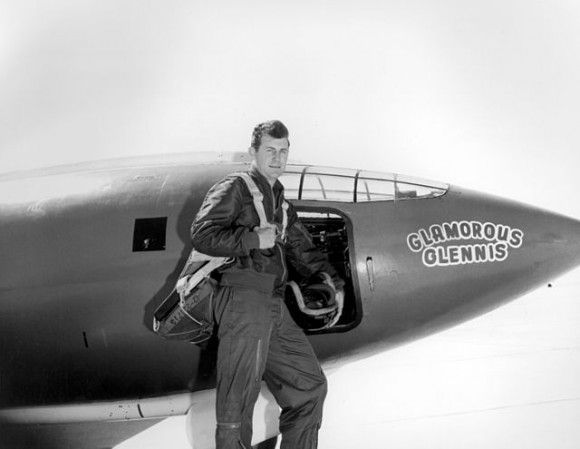
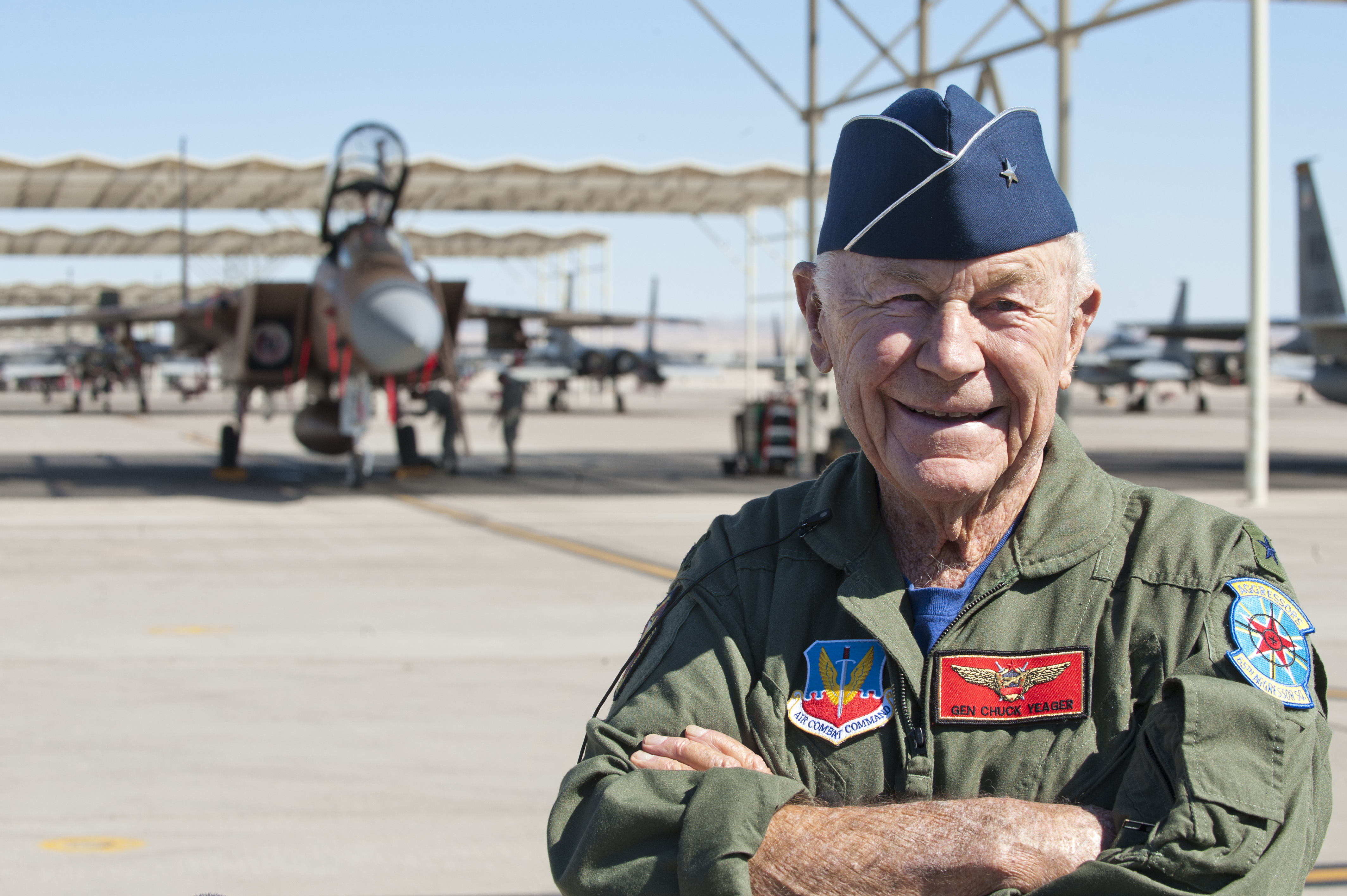
Image Credit: NASA/ESA/Samantha Cristoforetti 

SOURCE:::: www. nasa.gov.

Natarajan