” This All Women Team Took a Road Trip To INSPIRE other Women …” Also Spreading the Message of Women Empowerment…

A group of seven women embarked on a road trip in January 2015

In January 2015, a group of women travelled 5000 kilometres in India over eight cities in 28 days to spread the message of women’s empowerment and safety while on the road.

This is the first hand experience of the journey from Vidula who led the initiative. Read on!    I had always wanted to drive a car along the coast of the Indian Peninsula.

The maps were the first thing I worked on. Mahindra agreed to sponsor the Scorpio Adventure 4×4 vehicle.

Eventually, we had a real team of seven women raring to go.

The budget was Rs 1500 per head per day for food, fuel and accommodation.

We attended a first aid workshop with Anish Menon from Pune while Mahindra conducted a car maintenance workshop for us where we learned how to change the stepney.

The event was flagged off on the January 4, 2015.

On days one and two, we witnessed the beautiful Konkan coast, blue skies, lovely people and delectable food.

As the roads were badly maintained we ended up driving nine hours on these two days.

We decided then to stick to the national highways.

That sort of eased the pressure and we were able to stop by and see some places.

Malvan was the next stop where we swam in the sea at night.

Day three was Agonda in Goa!

Food was the highlight — delicious pancakes and chicken cafereal, a famous Goan dish.

We interviewed Belinda Mueller, who is a psychiatrist by profession and a long distance cyclist.

One of the girls got a haircut at a local barber shop and she let go of all her long lovely curls.

The Karnataka stretch was pretty, lined with rivers, bridges, seas, coconut trees, tiny villages and fields.

We stopped for some gajras (flower necklaces) that we wore on our hands and necks.

We stopped at a local shack.

There was an amma who was really keen to speak to us but didn’t know our language and we didn’t know hers.

Very affectionately she served us everything.

She smiled and laughed at everything we said.

We then went to Mirjan Fort which is a 16th century fort, built during the reign of Adil Shah.

Enroute, we stopped at Murudeshwar where the big Shiva statue was the highlight.

Back in the car, we read out loud some poetry by Pablo Neruda, and had some good laughs recording the poetry session.

In Udupi, we tried every local dish that we could get our hands on.

In Kerala, whenever we called the hotels for directions, all we would get was, “Please give the phone to the driver.”

They assumed that the driver would always be the stereotypical male.

After telling them that we women were driving ourselves, they meekly gave us directions.

In Kozhikode, for breakfast, the lady of the homestay made us some local puttu that we had with bananas.

Kochi biennale was going on and we got to see some art at a café.

The following day we stayed at the Kovalam beach.

It was much quieter after sunset, and spent the evening talking at a restaurant.

It was time for a rest day when one of the girls decided to go bald and felt liberated.

Kanyakumari was at the tip of the peninsula. The roads were far better on the east coast than the west.

The following day, on our way to Rameshwaram, we saw some beautiful sunflower fields.

Another day gone by and we saw ourselves make our way to Velankanni, which turned out to be a pretty little, clean town.

Next, we left for Puducherry. Enroute was Tranqeubar.

We stopped for a snack at the ‘Bungalow on the beach’.

There is an old Dutch fortress from the 1600s that stands on the shore.

We partied in Puducherry.

Two of the girls had emergencies back home and had to leave the trip midway.

It was down to two of us for the next couple of days.

We decided to continue nevertheless as we were going to pick up the last participant of the drive.

Close to Sullurupeta is the Pulicat lake and bird sanctuary which is the second largest brackish water lake in India.

We saw in the distance pink flamingoes, the exotic side of nature.

We drove from Nellore to Vijayawada to pick up our final companion and interview Mythri.

We reached Kakinada and then Vishakapatnam where the submarine museum was shut for renovation because a cyclone called HudHud had devastated it.

In Odisha, the first halt was at Gopalpur, a small village we had never heard of.

We then made our way to Puri.

We interviewed Claire Prest, the Co-founder of Grass Route Journeys.

We saw the Jagannath Puri temple where non-Hindus were not allowed, the women ululated, the men threw their hands up in the air with cries of joy and the deity was colourful and beautiful.

We hired a boat on Chilika Lake and saw some exotic birds. We visited the Konark Temple which is magnificent.

We also went to Raghurajpur where everyone from different families worked towards a common cause — art.

Chandipur beach which was our last stop in Odisha is also called the vanishing beach because twice in a day water recedes for 3 kms as this is an elevated beach. It was beautiful and there weren’t too many people on the beach.

We handed over the car to Mahindra in Kolkata and the road trip had come to an end.

We spent three days here, walking around and clicking random street pictures.

We visited the 100-year-old, India Coffee House and saw the Rabindranath Tagore museum in old Kolkata.

We interviewed musician Anushree Gupta in Kolkata.

The whole drive was about women’s empowerment.

It is about putting thoughts into action.

We were more careful and cautious on the east coast than the west.

Each one of us had a bottle of pepper spray.

Women are not expected to drive.

Belinda Mueller, the first Goan woman, whom we interviewed said, “Don’t let fear restrict you. But don’t do anything silly and stupid.”

The whole drive was about staying safe and common sense is what it took us to stay safe.

Men have to be more accepting of women. We wanted to be the seeds of change.

We had done that!

Source:::::  Vidula in http://www.rediff.com

Natarajan


” Famous Eight or F8 Walk Technique Tips …. “

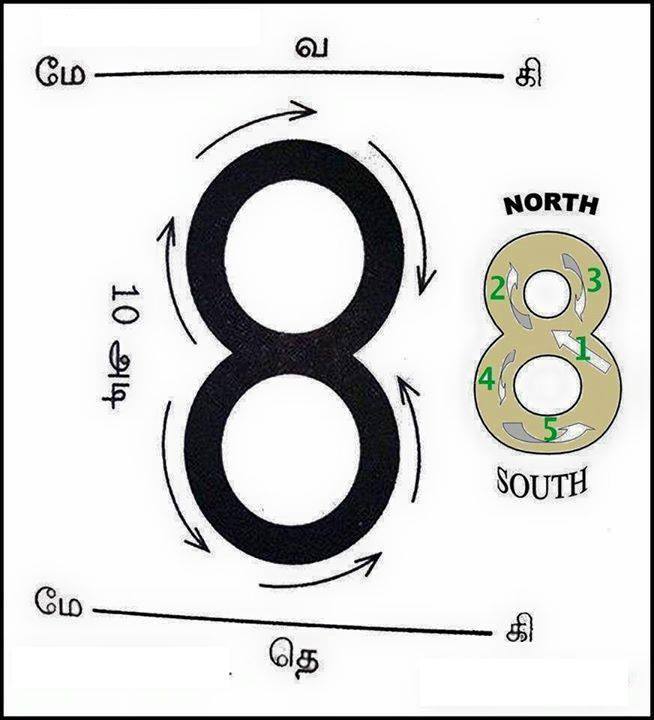
The Famous 8 (Also called as “F8″) Walk Technique

Highlights :

  • This does not need any special preparation or exercise equipment
  • It is highly beneficial when done on an empty stomach early in the morning before breakfast.
  • This is an ancient yogic fitness regime which was secretly guarded for centuries by Rishis (Saints / Sages)

Benefits :

  • It helps us avoid and treat several chronic diseases like Obesity, Diabetes, Heart attack, Kidney related disorders and diseases, High Blood Pressure, High Cholesterol and many more
  • It is recommended to do the practice everyday for at least 21 days to get the said benefits

Duration Timing of practice :

  • It is beneficial if the F8 exercise is done for 15 minutes daily before breakfast on an empty stomach
  • It is recommended to do this for about 15 minutes between 5am – 6am ( or ) 5pm – 6pm everyday for at least 21 days continuously for achieving the desired benefits

Who can do it:

  • Any adult person between the ages of 18 and 75

How to do:

  • Mark an Eight (“8″) shaped pattern on the floor with 6 feet width and 8-12 feet in length North to South [See image below]
  • Start at the position marked as “1″ in the below picture and follow the “8″ pattern
  • Proceed from start position (“1″) and continue in the sequence 2, 3, 4, 5 and return to 1
  • One complete round is generally counted when you come back to the start position (“1″)
  • When you walk, observe your breath and go with the flow – Don’t walk too fast or too sloppy

SOURCE:::: input from a friend of mine

Natarajan

Arunima Sinha ….On the Top of the World…. Hats off To This Brave Lady …

http://inktalks.com

You Might Have watched a plenty of Motivational and Inspirational Videos and Talks …

But this Talk by Arunima Sinha  on her goal and experience is totally on a different platform.

My request to you  is to watch this video  and Listen to her talk … Also share this Video Talk with your Kids and friends …You need not listen to any Gurus …both Religious and Management… after listening to her.

HATS OF TO THIS COURAGEOUS LADY …

Natarajan

 
In April 2011, Arunima Sinha, a national level volleyball player, was thrown out of a running train by robbers who were after her gold chain. Her left leg crushed by the passing trains had to be amputated. This did not stop her from dreaming the impossible, on May 21st, 2013, Arunima summited Mount Everest. Watch as she takes us along on her journey in this passionate talk.

Please Note: This talk is available with English subtitles. Please enable YouTube Captions if the subtitles are not appearing.

ABOUT INK: INKtalks are personal narratives that get straight to the heart of issues in 18 minutes or less. We are committed to capturing and sharing breakthrough ideas, inspiring stories and surprising perspectives–for free!

Watch an INKtalk and meet the people who are designing the future–now.

Connect with us:
http://inktalks.com
http://facebook.com/inktalks
http://twitter.com/inktalks

ABOUT ARUNIMA SINHA:
Arunima is a former national level volleyball player who was thrown off a moving train in 2011. In order to save her life, the doctors had to amputate part of her left leg. In light of this event, Arunima became inspired by Yuvarj Singh, an international cricket player who successfully won his battle with cancer. As such, she was determined to climb Mount Everest. In 2013, Arunima became the first female amputee (and the first Indian amputee) to make the climb.

Arunima then went on to be the first female amputee to climb Mt. Kilamanjaro in Africa and Mt. Elbrus in Europe. She has been honoured with numerous awards and recognitions. Currently she is busy planning to open a sports academy for underprivileged and physically disabled children.

SOURCE::::: http://www.You Tube.com and ink talks.com

Natarajan

Image of the Day…. Smallest Full Moon On March 5 2015…

Curtis Beaird in south Georgia captured this shot.

EarthSky Facebook friend Curtis Beaird in south Georgia captured the shot above.

Tonight’s full moon is the smallest full moon of the year. We’ve heard it called the micro-moon or mini-moon. This March 5, 2015 full moon lies about 50,000 kilometers (30,000 miles) farther away from Earth than will the year’s closest full moon – the full supermoon and Northern Hemisphere’s Harvest Moon – on September 28. The March 5 moon is the year’s farthest full moon because full moon and lunar apogee – the moon’s farthest point in its monthly orbit – both fall on the same date.

Every year has a closest full moon, of course. The mini-moon returns about one month and 18 days later with each passing year, meaning that, in 2016, the year’s smallest full moon will come on April 22. In 2017, it’ll come June 9. In 2018, the year’s smallest full moon will come on July 27. And so on, no doubt until our earthly calendars are long forgotten.

By the way, as an aside, mark your calendar for that September 28, 2015 full moon – the Harvest moon – and closest full moon of this year. It’ll also stage a total eclipse of the moon, which some will call a Blood Moon eclipse. It concludes a series of four straight total lunar eclipses that started on April 15, 2014.

The crest of the moon’s full phase comes on March 5, 2015 at precisely 18:05 Universal Time.

Although the full moon occurs at the same instant all around the world, our clocks read differently in different time zones. In the United States, the moon turns exactly full onThursday, March 5, at 1:05 p.m. EST, 12:05 p.m. CST, 11:05 a.m. MST or 10:05 a.m. PST. So the Americas won’t see the moon at the instant it turns full because it happens during the daytime hours, when the moon is below the horizon and under our feet.

The moon looks full for several days around full moon.  William Vann caught this rising almost-full moon on March 4, 2015.

The moon looks full for several days around full moon. William Vann submitted this shot. It’s the rising almost-full moon on March 4, 2015.

No matter where you live worldwide, look for the full moon tonight, lighting up the nighttime from Thursday nightfall until dawn Friday. As with any moon at the vicinity of full moon, tonight’s moon rises in the east at early evening, climbs highest in the sky around midnight and sets in the west in the vicinity of sunrise.

In North America, we often call the March full moon by the names of Sap Moon, Crow Moon, Worm Moon or Lenten Moon. But in recent years, we’ve also heard the term mini-moon to describe the year’s smallest full moon. It’s not a name (like Sap Moon). It’s not bound to a particular month or season. It’s just a term to describe the year’s smallest moon.

What is a mini-moon or micro-moon? Like most astronomers, we at EarthSky have always referred to the year’s smallest full moon as an apogee full moon. The terms mini-moon andmicro-moon stem from popular culture. They roll off the tongue more easily than apogee full moon. As some indication of the appellation’s growing popularity, we’ve found that theNASA Astronomy Photo of the Day and timeanddate.org sites both like to call the smallest full moon a micro-moon.

Billie C. Barb caught this shot of the rising moon on March 4, 2015 from the state of Washington, saying it was

Billie C. Barb submitted this photo of the rising moon on March 4, 2015 from the state of Washington, saying it was “. . . a love affair between the moon and the evergreens.”

Bottom line: The micro-moon or mini-moon – smallest full moon of 2015 – comes on March 5, 2015 It lies about 50,000 kilometers (30,000 miles) farther away from Earth than will the full moon supermoon of September 28, 2015.

SOURCE:::: http://www.earhskynews.org

Natarajan

HolikaDahan and The Stories Related to the Festival….” Victory of Good Over Evil “

The festival of Holi is associated with different mythological and spiritual stories. Out of the many tales, the most prominent is that of a devotee – Prahlad, his father Hiranyakashyap and Hiranyakashyap’s sister Holika. This story behind holika dahan is a testament to the power of bhakti (devotion).

King Hiranyakashyap worshiped Lord Brahma for years and, with penance he was able to impress him. Lord Brahma granted wishes of the king which were:

– King Hiranyakashyap cannot be killed by human being or an animal

– He will not die either in his home or outside the home

– He will not die in the day or at night

– He will not die either by astra or shastra (weapons)

– King Hiranyakashyap will not die either on land or in the sea or in the air

With such blessings the king had become invincible and wanted people in his kingdom to preach him as God. Everyone did except King Hiranyakashyap’s son Prahlad who preached Lord Vishnu. Offended by his son’s disobedience, King Hiranyakashyap decided to kill Prahlad and made several attempts too. All his attempts went in vain as Prahlad was saved by Lord Vishnu each time. King Hiranyakashyap then asked Holika, his sister, to kill Prahlad. Holika had a gift – she could not be harmed or burned by fire. Holika’s blessing was in the form of a shawl, which would protect her. As asked by her brother, Holika get herself seated in the flames with Prahlad on her lap to kill him. All the while Prahlad kept chanting Lord Vishnu’s name. As soon as the fire soared, the blessed shawl of Holika fluttered away to cover Prahlad. In this way, Prahlad lived and Holika burnt and died. This is how Holi gets its name from Holika and is celebrated as a festival that marks the victory and power of bhakti (devotion).

In some parts of the country, story of Pootana or Putana is also prevalent as the reason to celebrate Holi. The demon king Kansa (uncle of Krishna) feared getting killed one day by Lord Krishna. Kansa sent Putana to kill Krishna through her poisonous breast milk. She came to baby Krishna and started feeding of her poisonous milk. Lord Krishna, knowing her demonic intentions, sucked out Putana’s life-force while she fed him her milk and she turned into her original giant and scary form. Lord Krishna sucked all her blood until Putana was killed. It is said that it was the night of Holi when Putana was killed and Lord Krishna proved his greatness. Some who view the origin of festivals from seasonal cycles believe that Putana represents winter and her death the cessation and end of winter.

We can follow whichever story behind celebrating Holi but all the stories have the same crux – Victory of good over evil. In 2015, Holika Dahan is being celebrated on 5th March.

HOLI  GREETINGS TO ALL

source::::www.in.lifestyle.yahoo.com

Natarajan


Joke of the Day… ” Well…There You go…’ !!!

An angry wife was complaining about her husband spending all his free time in a bar, so one night he took her along with him.

“What’ll you have?” he asked.

“Oh, I don’t know. The same as you I suppose,” she replied.

So, the husband ordered a couple of Jack Daniel’s and threw his down in one shot. His wife watched him, then took a sip from her glass and immediately spat it out.

“Yuck, that’s TERRIBLE!” she spluttered. “I don’t know how you can drink this stuff!”

“Well, there you go,” cried the husband. “And you think I’m out enjoying myself every night!”
SOURCE:::: http://www.joke a day.com

Natarajan

With Home Remedies , Feel at Home … And Relax…

Effective Home Remedies for an Aching Throat

The throat itches, is swollen and burning, and even the simple act of swallowing becomes a scary prospect? You’re not alone! Throat aches are some of the most common phenomenon as we move into the winter season.

Here are 10 ways you can calm that aching throat down without having to go see a doctor:

1. Keep your nasal passageways open
 
Doctors agree that two of the most common causes of throat pain are the buildup of snot and dryness, that occur mostly from breathing too much through the mouth when the nasal passageways are closed.
There are materials that fight nose congestion, especially those containing Pseudofrin (no need to doctor’s note) which will help open the nasal passageways.
Using nose sprays (with a salt water solution) may also help keep those passageways open and breathing easier.
2.  Home remedies to gargle with:
 
Salt Water: This is the old favorite, and you can create it by mixing 1/4 teaspoon of salt in 1 cup of warm water (the warmer the better, within your tolerance levels, don’t let it get cold or loses effectiveness). If you have it at home, this is a good time to add 1 tablespoon of Listerine for its germ killing benefits. This you gargle several times a day, and will help you to rinse and neutralize acids in your throat. You will notice that the burning sensation is going down and the area will usually start to heal. Don’t let up on the gargling.
Raspberry Tea: Pour a glass of boiling water on 2 tea spoons of raspberry dried leaves, soak for 10 minutes and then filter. You can add 1 tea spoon of apple vinegar and/or honey, and then gargle 4 times a day.
Sage Leaves: Mix 1 spoon of sage leaves with 1 cup of boiling water, soak for 10 minutes and then filter.  You can add 1 tea spoon of apple vinegar and/or honey, and then gargle 4 times a day.
Turmeric: For a burning sensation in your throat, mix 1 cup of boiling water with 1/2 a spoon of turmeric (anti inflammation) and 1/2 a spoon of salt. Gargle twice a day. If you hate gargling, you can also mix 1/2 a spoon of turmeric with 1 glass of hot milk, and slowly sip it.
Hot sauce and water: Hot peppers containt a material called capsicum which alleviates pain and reduce inflammation. You can prepare this by grinding a cayenne pepper and adding 5 shakes of the ground material to a cup of hot water. Warning: it WILL burn, buy try to gargle this every 15-30 minutes and see if it does the trick.

When the body is aching and weak, logic dictates that you rest. Same goes for throat ache. It’s very important to save up your energy, to allow the body to fight the infection. If the throat pain doesn’t require medical attention, resting will help cut down the healing time.

3. Horseradish Cocktail
 

A traditional Russian remedy: Mix 1 cup of hot water with 1 table spoon of pure horseradish (or a horseradish root) with 1 table spoon of honey and 1 table spoon of cloves. Sip slowly over the course of an hour.
4. Vinegar

A useful home remedy based on apple vinegar: Take 1 cup of hot water and mix 1 table spoon of honey and 1 table spoon of apple vinegar.  Sip slowly without letting the liquid cool down. Drink as often as possible.
For gargling: Mix 1 spoon of salt, 1/2 a cup of vinegar and 1 cup of hot water. Drink every 15 minutes as needed.
* Be sure to melt the salt in the vinegar before adding the water.
5.  Rest
 
What does resting have to do with a sore throat? A lot. While you rest, your body has more energy to fight the infection in your throat. If you’ve taken some of our home remedies, be sure to rest between to give your body a fighting chance.
6. Citrus Fruits
 
Lemon Juice: Mix 1 cup of hot water with 1 table spoon of honey and 1
table spoon of squeezed lemon juice. Sip slowly.
Lime Juice: Mix 1 table spoon of lime juice with 1 table spoon of honey in hot water, and drink as needed.
7. Steam 
 
An old remedy for an aching throat is a steam tent. Sit with your face over a steaming bowl of hot water and cover your head with a towel to keep the steam in. Add 1-2 drops of Eucalyptus extract for a much greater help.
8. Lozenges
 
Some doctors say that sugar can help reduce throat ache and accompanying cough, but even Lozenges without sugar can calm down an aching throat by keeping your mouth and throat moist, which will make you feel less pain.

9. Popsicles

An ice popsicle can calm down a burning throat. Make sure you aren’t sucking on the popsicle, but cutting small pieces and letting them melt in your mouth.
10. Drink plenty of liquids
This may go without saying, but when you suffer from an aching throat, you should drink at least 8-10 cups of water a day (preferably not cold water). This will keep your throat well oiled, will prevent the dry feeling you get and even aid the fight against inflammation.

SOURCE:::: http://www.ba-bamail.com

Natarajan

How to Enhance Positive Energy in Our House …

HOW TO INCREASE POSITIVE ENERGY IN OUR HOUSE

Very Useful suggestions/Guidelines from the Wise/Experts

1)  Open all windows in the house and allow fresh air and sunshine to enter the house. Free flowing air and sun are excellent negativity removers.  Keeping the windows closed prevents positive energy from coming inside your house and negative energy from going out.

2)  Throw out all the clutter out of the house. Clean your house. Dispose of all the old unwanted things lying in the house. Clutter is a negativity magnet. It attracts and accumulates negative energy in the house.

3).  Walking barefoot in the house helps all your negative energy to be absorbed by the earth.
Grounding is important to keep the energy balance in our body.
Walking barefoot on grass is also an excellent way to ground yourself.

4)  Always leave your footwear at the entrance of the house. Our footwear collects  negative energy.
Hence in the olden days, these were kept out of the house. People used to enter the house only after washing feet with water. This action ensures that all the negativity remains outside or are grounded by earth and does not enter the house.  

       Now it has become difficult to keep the footwear outside. So preferably remove them near the entrance door.

5)  Go out in the open air. Take walks in the garden or open ground. Being amongst nature re-energizes or charges you fully.

6)  Sweeping the floor also ensures that the negative energies are shaken and moved out with the dirt.

7)  Rock salt is another negativity remover. Wash or mop your floor with a fistful rock salt in a bucket of water. This ensures that every nook and corner of the house is rid of negative energy.

8)  Potted plants or trees around your house or society also ensures more positive energy in the house and area.

9)  Bathing or Soaking your legs and hands in rock salt water once in a while removes the negativity attached to your body.

11)  Repetition of Prayers,  increases the positive vibrations in the house.

12)  Keep your thoughts, action and speech Positive. Negative thoughts will bring in negative vibes. So avoid all negative thoughts, speech and actions.

12)  Keep your house well lit and illuminated. Light removes negativity.

13)  Keep faith in God and in yourself.

You are the Creator of your own destiny by the Choices you make.

                                                                            STAY HAPPY

                                                                          STAY BLESSED 
SOURCE:::: iNPUT FROM A FRIEND OF MINE
Natarajan

” Tippi Degre “…A Little Girl…A Modern Version of Mowgli of ‘ Jungle Book ‘ !!!

Tippi Degre: A Child of the Wilderness

With a best friend that weighs 5 tons, a group of cheetahs to hang around with and a giant bullfrog as a Teddy bear, Tippi Degre is hardly your average little girl. Perhaps a modern version of Mowgli, the boy from the famous ‘Jungle Book’ novel, she was born in Namibia to French wildlife photographer parents, who raised her in Africa.
Today, her parents published a book with her story and remarkable photos from when she was growing up, the first 10 years of her life spent almost entirely in the wild.
wild child animals
Tippi has spent all of her childhood running and playing with animals you don’t meet every day – Lion cubs, snakes, mongoose, cheetahs, a zebra, giraffes and even crocodiles. The adorable girl sees nothing wrong with her childhood, she had no friends and so the animals became the only friends she had other than her parents.
wild child animals
wild child animals
wild child animals
wild child animals
wild child animals
wild child animals
wild child animals
wild child animals
wild child animals
wild child animals
wild child animals
wild child animals
wild child animals
wild child animals
wild child animals
wild child animals
wild child animals
SOURCE::::: www. ba-bamail.com
Natarajan