The Christmas Tree Worm ….!!!

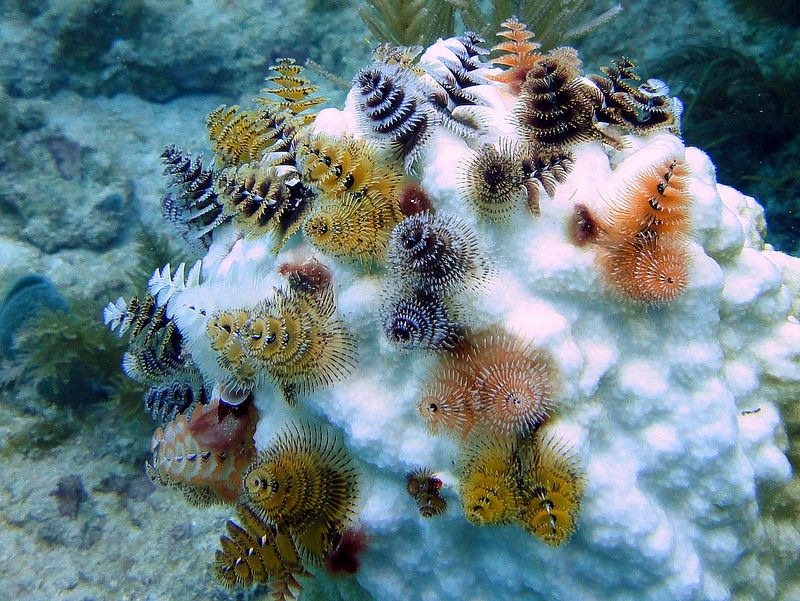
Scientifically that are called spirobranchus giganteus, but they are better known by their colloquial name — Christmas tree worm. The worm is so called not because they feed on fig trees but because they look like them.

The spirobranchus giganteus live in the ocean and sports two magnificent spirals of plumes that protrude from its tube-like body and which look like tiny Christmas trees. These plumes are composed of hair-like appendages called radioles that radiate from the worm’s central spine, and help the animal to grab food, which typically consists of microscopic plants, or phytoplankton, floating in the water. The plumes are also used for respiration. Measuring less than 4 cm in height, they come in many colors including orange, yellow, blue, and white and, are easily spotted due to their shape, beauty, and color.

christmas-tree-worm-9

Photo credit: Matt Kieffer/Flickr


The Christmas tree worm doesn’t like to move about much. Once they find a good place on a live calcareous coral, they burrow a hole and live their for the rest of their lives, occasionally emerging from their home to catch passing plankton with their fully extended plumes. They are very sensitive to disturbances and will rapidly retract into their burrows at the slightest touch or passing shadow.

christmas-tree-worm-10

christmas-tree-worm-1

christmas-tree-worm-3

christmas-tree-worm-6

christmas-tree-worm-7

christmas-tree-worm-8

Photo credit: Doug Finney/Flickr

Sources: NOAA / Marine Bio via My Modern Met

Source….www.amusingplanet.com

Natarajan


Touching Stories Behind these Pictures…. 2015

They say a photograph tells a thousand words.

And yet, in many cases it still unable to convey the entire story.

In 2015, there were some heartbreaking moments — from desperate refugees drinking rainwater to hippos out on the street, to children running from death in Syria.

Reuters photographers tell the story behind some of the most iconic pictures of the year.

‘It takes only a few seconds for life to turn to ashes and blood’

Ghazal, 4, (left) and Judy, 7, carrying 8-month-old Suhair, run away after the shelling of a Red Crescent convoy in Damascus, Syria on May 6.

The story: I was covering the Syrian Arab Red Crescent convoy’s visit to the Douma neighborhood of Damascus, which was carrying medical aid and supplies used to give psychological support to children affected by war. Every time the aid convoy arrived, children would gather around it, happy that they were going to be supplied with food and medicine.

Before the shell landed on the convoy I was sitting on the pavement relaxing; the children gathered around me so I could photograph them. While I was taking these photos, the shell exploded. It killed a female volunteer and wounded many people and volunteers nearby.

The children were terrified and began to scream and cry, especially when they saw a female volunteer covered with blood from a head injury. The challenge to portray this image was just like the challenges we face daily in time of war. I knew that there might be another shell falling within a matter of seconds; then one did exactly that a little further away. Do you want to protect yourself, like everyone else, by walking into a shop or home? Help carry the injured or be satisfied to take photos while others transfer them to ambulances? Do you want to calm screaming children? Or do you just want to cry because of what’s happened?

All these questions need answers in a matter of seconds before you can capture such an image. In this particular photograph, it was the first time I had seen how children’s innocent laughter could turn into screams, fear and tears. It was a very sad moment when I put my eye to the viewfinder to take pictures of laughing children; then when I looked back after taking the picture, I saw the same children crying, distraught. It takes only a few seconds for life to turn to ashes and blood.

Photograph: Bassam Khabieh/Reuters

Crossing over for a better life

Syrian migrants cross under a fence into Hungary at the border with Serbia, near Roszke in August.

Crossing over for a better life

The story: Rail tracks, unguarded, line the border with Serbia. Most refugees used the tracks, a few miles long, as a highway into Hungary. I arrived at the border every day at 6.00 am. The crossing was the only spot still not blocked. A triple coil of razor wire was up everywhere else as Hungary prepared to fence off the border. The rail crossing was easy enough but many migrants chose to jump the fence to avoid the police waiting a few hundred metres inside. The razors were not too sharp to handle with heavy gloves.

Dozens of other photographers and I paced the fence, some way from the rail tracks. Among the shrubs we could make out the contours of migrants waiting for the right moment. Everyone watched everyone else. We watched the refugees, who watched the police, who watched us. It was like an elaborate board game. It was more than just waiting. The people on the other side of the fence filled the atmosphere with strange, unspeakable tension.

This family decided they had waited enough. They started for the fence. Aware of the stakes, they lifted the razor wire, looked around, then went for it. Once across they vanished in the woods. I never saw them again. Photographing the migrants was the ultimate test of staying out of the story: observe keenly, wait, shoot. Don’t cut the wire, don’t invite the refugees in, don’t alert the police. There was little human contact with the thousands of refugees scaling the fence. You learnt nothing about them. They came and went. But those who walked along the tracks stopped and talked. They accepted water or the odd chocolate bar. They even shared stories – stories that will haunt me forever.

There is no way to shake the emotional impact. Once I put the camera down and had time to reflect it all came back. You have to let the story wash through you to remain human.

Photograph: Bernardett Szabo/Reuters

A bloody evening in Paris

A bloody evening in Paris

An injured man is carried out of the Bataclan following fatal shootings in Paris, France, in November.

The story: The weekend appeared calm. I had the evening off. Just before 10, the phone rang: in a grave voice my editor told me that a shooting had occurred at a cafe in eastern Paris and I should get there as quickly as possible.

Around the same time, colleagues who were covering the France v Germany match heard explosions at the Stade de France. They turned their lenses away from the match and scanned the crowd to try and catch something. I took the bulletproof vest from my car — it had been there since the Charlie Hebdo attacks in January — and got on my scooter. I stopped by the bureau to pick up a 400mm lens, certain that the security perimeter would be wide.

En route I heard about another shooting incident. When I arrived at the Bataclan, police warned journalists that we could be considered targets. They ordered us to take cover. The streets were silent. Security forces evacuated some victims, who were taken to safety. Special Forces units started arriving on the scene in huge numbers.

With two colleagues we decided to seek shelter. A young man let us into his apartment and we took up position at the windows. Just before midnight explosions were heard at the music hall. We could not see what was happening; no angle gave us a direct view to the entrance to the Bataclan.

Once the Special Forces operation finished, people covered in blood and wrapped in blankets came flooding out of the theatre. We descended from our window perches to photograph the victims. We tried to record the emotion that these instants provided. Some people, covered in blood, spoke to us. Their stories were chilling. The moments they lived will remain with them forever. They also mark the life of a photojournalist.

Photograph: Christian Hartmann/Reuters

Hope floats

Hope floats

This image from September captures a Syrian refugee holding a baby swims towards the Greek island of Lesbos.

The story: Another inflatable boat packed with dozens of migrants and refugees heading towards the shore. That’s what I noticed in the distance. The sea was calm and they were cheering on the dinghy. Suddenly, some 200 metres away, the rear of the boat deflated for no obvious reason, and people started falling into the sea.

Screams replaced cheers as they frantically tried to stay afloat on life tubes, or by clinging on to the boat. Those who could swim tried to help those who couldn’t. As this dramatic scene unfolded and people drifted away from each other, the biggest challenge was to capture as many of the different scenes as I could.

There were people falling overboard; two men trying to keep their friend afloat; a man still on the boat lifting his child in the air; another man, nearing collapse from exhaustion, swimming towards the shore; volunteers rushing towards the boat. In this hectic moment, one man, tense and yelling really loudly, caught my eye so I shot some frames.

Later, as he tried to catch his breath on the beach, I asked him where he was from. “Syria,” he told me before heading towards a volunteer holding a baby. The distance of the shot hadn’t allowed me to see the details of the picture clearly. It was only when I began editing that I could make out the tiny head of a baby in a life tube, and the screaming man trying to keep himself and the baby above water.

Everything I cover, from riots to politics and sports, trains me to be on the alert and try to get the best from what I am shooting. I learned from this experience that disaster can occur even in what appears to be the calmest of situations.
Looking back, the most memorable moment was when I opened the picture and saw the baby, who looked fast asleep as if in a cradle – dreaming or listening to a lullaby.

Photograph: Alkis Konstantinidis/Reuters

Lookout, there’s a hippo on the street!

In June, Tbilisi was lashed with heavy rains, causing many animals, including this hippopotamus to flee the zoo and roam the flooded streets.

Lookout, there’s a hippo on the street!

The story: The flood killed at least 12 people and partly destroyed Tbilisi Zoo, killing dozens of animals, while 30 more — including tigers, lions and bears managed to escape from their cages. On that night the capital of Georgia was as I’d never seen it.

Among the escapees roaming the streets were a rare breed of white lion cub and six wolves, which roamed through the grounds of a children’s hospital. The zoo is right in the centre of the city, between the state broadcaster and Tbilisi State University.

Heavy rains had turned the Vere river that flows near the zoo and through Tbilisi into a torrent that washed away buildings, roads and cars. The enormous amount of mud and debris under my feet meant that making even a small movement was very difficult while shooting photos. I was there from 11:30 pm. This photo was shot at 6:00 am the next morning; my memory card was almost full so I had only a couple of shots left.

This situation was totally different from any I’d experienced before as a photographer. In the past, all my reporting experience had been negotiating with people; this was the first time I worked with animals. I was smiling as I took this photo of Begi, as I discovered it was called. I had bought a watch for my 14-year-old daughter in that shop just two days before the flood. And here was a hippo in front of it. There was only one complicated escape route available to me in case Begi decided to attack.

There were very few people around, as police had shut down the area. The distance between the hippo and me was about 25 metres but I realised that even for an animal as powerful as this one it was also quite difficult to move forward in such mud. I was also reassured that armed police would protect me in case of attack.

Today, Begi is arguably the world’s most famous hippo.

Photograph: Beso Gulashvili/Reuters
Source…..www.rediff.com
Natarajan
 

” Pouring Hot Tea At -40C Near The Arctic Circle During Sunset…” !!!

Science tells us that hot water turns into a cloud of ice crystals when tossed at subzero temperatures, but Ontario based photographer Michael Davies managed capture this phenomenon on camera. This past Sunday, just 20km south of the Arctic Circle, Davies took these incredible photos of his friend Markus hurling hot tea in -40°C weather.

“Prepared with multiple thermoses filled with tea, we began tossing the water and shooting,” Davies told Huff Post. “Nothing of this shot was to chance, I followed the temperature, watched for calm wind, and planned the shot and set it up. Even the sun in the middle of the spray was something I was hoping for, even though it’s impossible to control.”

More info: michaelhdavies.com | Flickr (h/t: huffpost, colossal)

“Prepared with multiple thermoses filled with tea, we began tossing the water and shooting”

tossed-tea-arctic-photo-michael-davies-2

“Nothing of this shot was to chance, I followed the temperature, watched for calm wind, and planned the shot and set it up.”

tossed-tea-arctic-photo-michael-davies-9

“Even the sun in the middle of the spray was something I was hoping for, even though it’s impossible to control”

tossed-tea-arctic-photo-michael-davies-1

Source….www.boredpanda.com

Natarajan
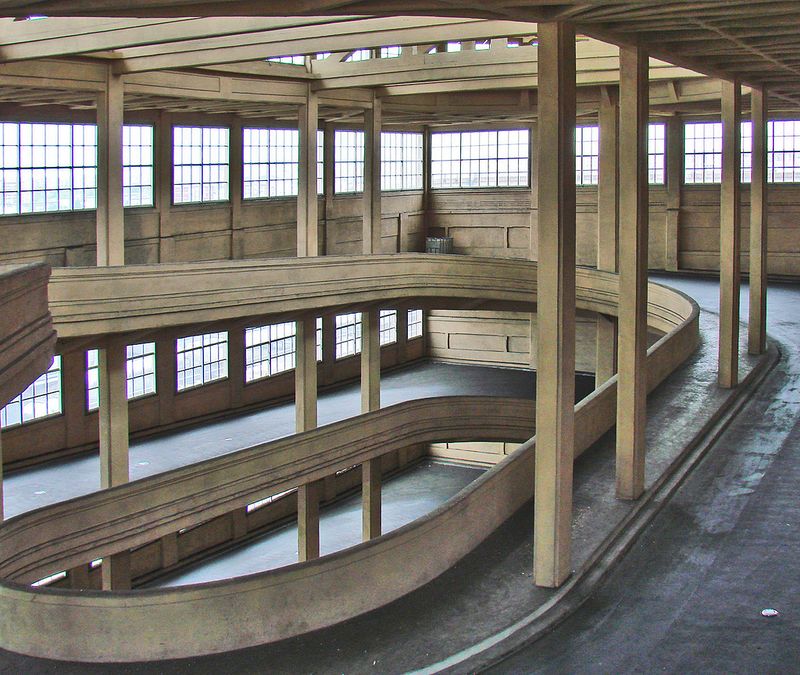
Image of the Day….” Noon Time Sun and the Shadow of People around…”

Long midday shadows, near solstice, in Greece

Noontime sun near the December solstice, over the Acropolis in Athens, Greece. Notice how long everyone’s shadow is.

View larger. | Midday sun on December 18, 2015 as captured by Nikolaos Pantazis in Athens, Greece.

View larger. | Midday sun on December 18, 2015 as captured by Nikolaos Pantazis in Athens, Greece.

Nikolaos Pantazis posted this photo to EarthSky Facbook. He wrote:

Midday (almost) winter solstice sun, over the Acropolis of Athens, Greece.

This photo illustrates a cool fact of nature, which is that – for us in the Northern Hemisphere – yourlongest noontime shadow comes around the time of the December solstice. That’s because, for us in this hemisphere, the sun is making its lowest arc across the sky around now.

In the Southern Hemisphere? Then look for your noontime shadow, anyway. It’s your shortest noon shadow of the year.

Source…..www.earthsky.org

Natarajan

The Museum of Tomorrow, Rio de Janeiro….

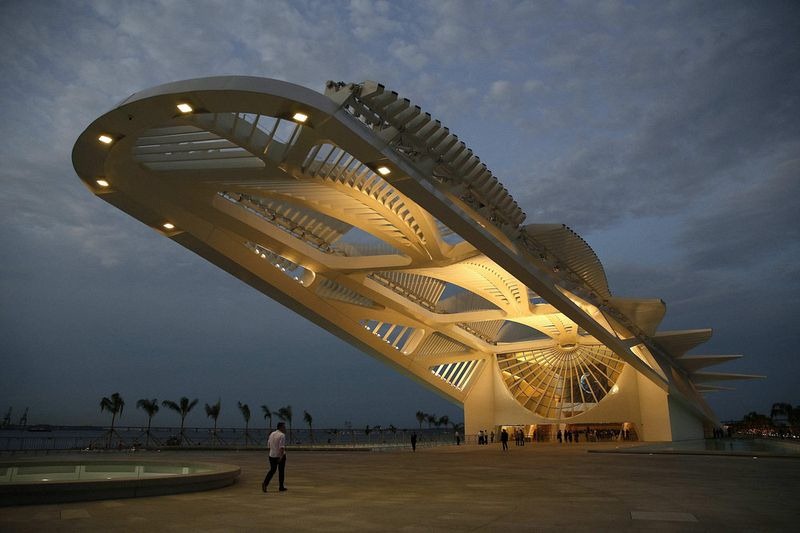
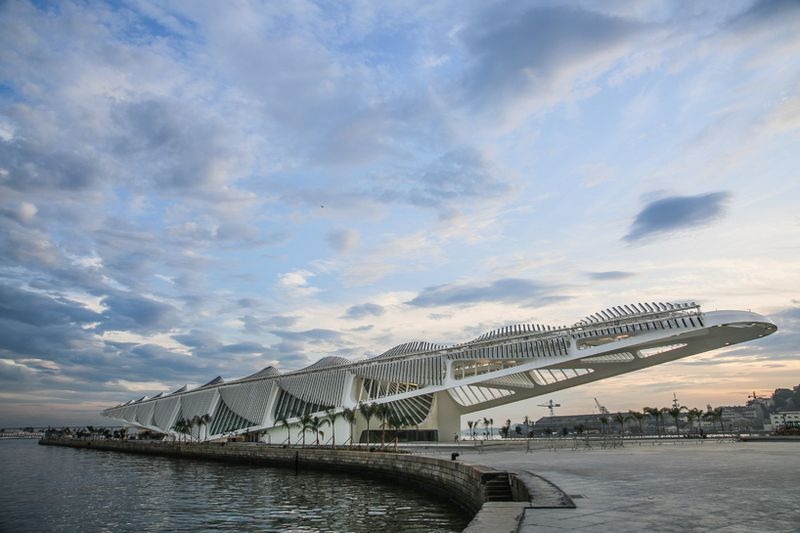
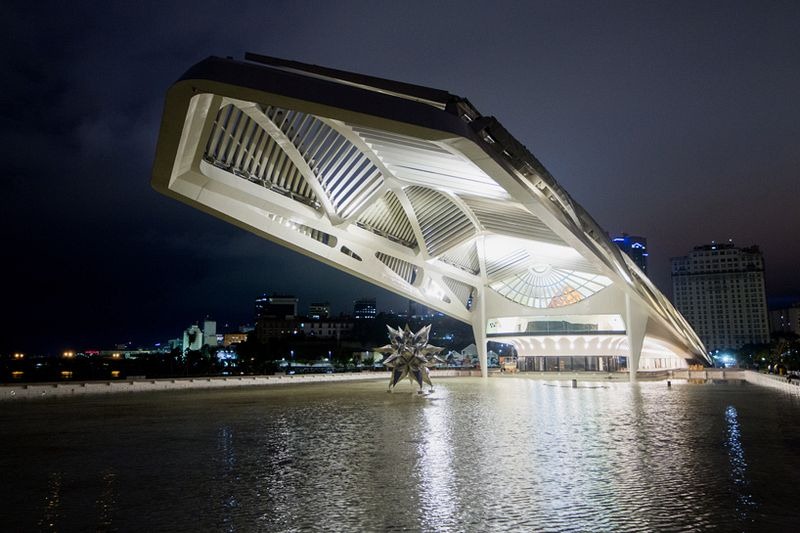
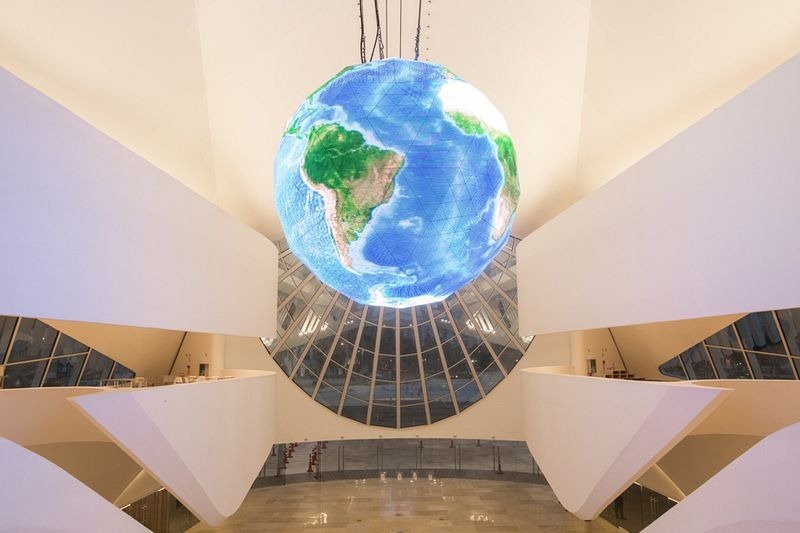
The city of Rio de Janeiro has opened a new “experimental museum” called the Museum of Tomorrow devoted to exploring the possibilities of a sustainable future through interactive artifacts that bring science, art, technology and culture together, housed in a magnificent spaceship-like building that is set to become the center-piece of a larger regeneration project of the Porto Maravilha neighborhood. The building’s most eye-catching element is the large cantilevered roof that juts diagonally into the sky from the old port near which the building sits.

Designed by Spanish architect Santiago Calatrava, who has created iconic buildings across the world, including the Athens 2004 Olympic Stadium, Museum of Tomorrow includes sustainable design initiatives, incorporating natural energy and light sources, such as using solar panels to supply power to the building, and water from the bay to regulate its internal

museum-of-tomorrow-1

Photo credit: Marcelo Sayao/EPA

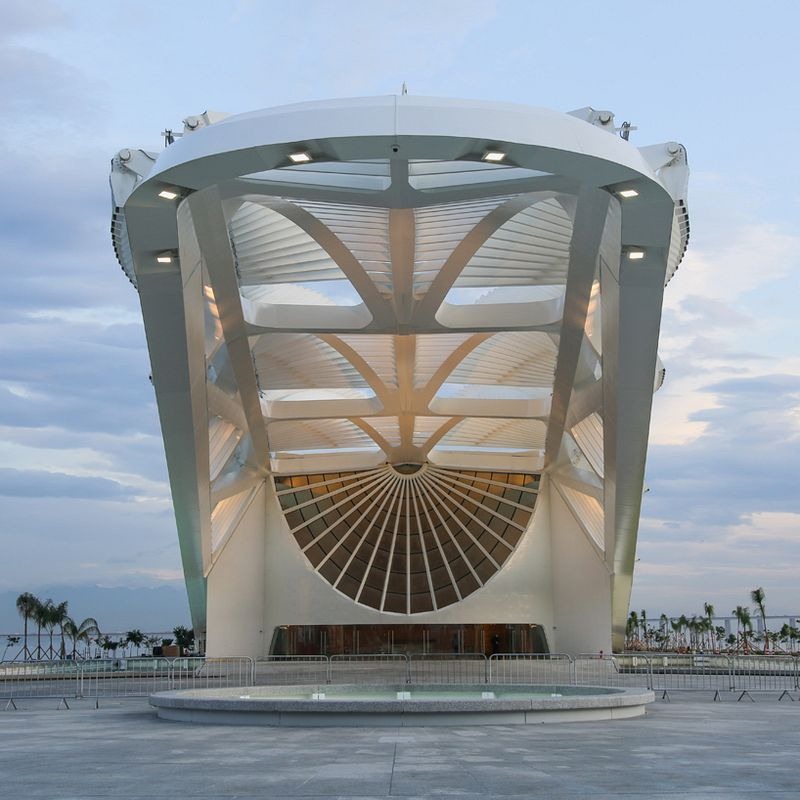
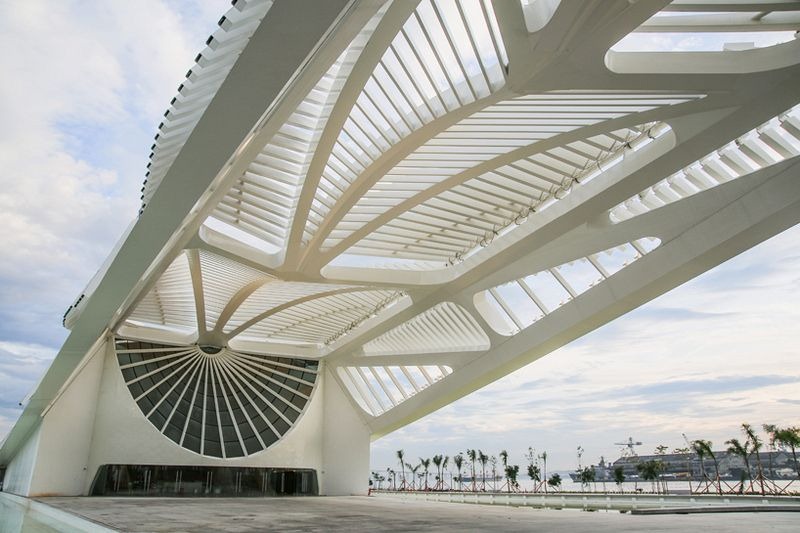
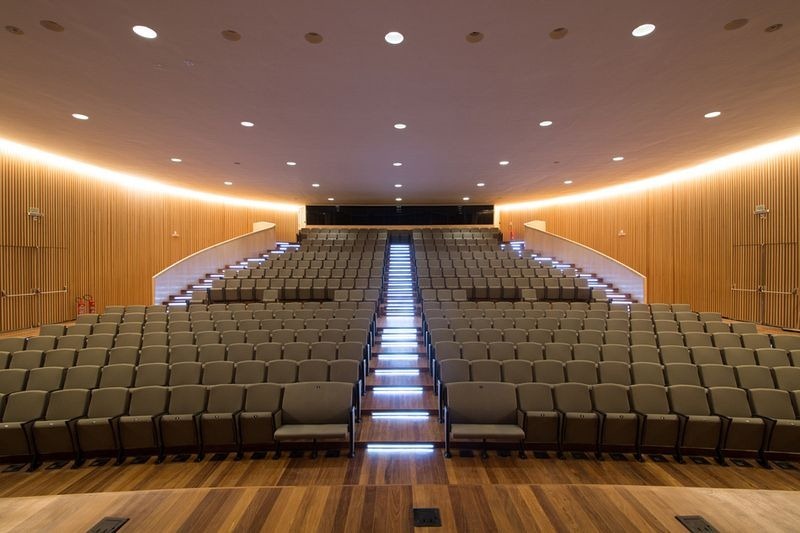
The institution encompasses 5,000 square meters of temporary and permanent exhibition space, including a 400-seat auditorium, as well as a 7,600 square meter plaza that wraps around the structure and extends along the dock. The overhanging roof is 75 meters in length and 10 meters high, and is capped with solar panels that move to follow the position of the sun. The roof is supported by curving white ribs. A half circle-shaped window tops the entrance.

The museum’s exhibits will address issues including: population growth and increased life expectancy, consumption patterns, climate change, genetic engineering and bioethics, the distribution of wealth, technological advances, and changes in biodiversity.

museum-of-tomorrow-6

Photo credit: Bernard Miranda Lessa

museum-of-tomorrow-7

Photo credit: Bernard Miranda Lessa


museum-of-tomorrow-9

Photo credit: Bernard Miranda Lessa

museum-of-tomorrow-12

Photo credit: Thales Leite


museum-of-tomorrow-3

Photo credit: Thales Leite

museum-of-tomorrow-4

Photo credit: Thales Leite

via Design Boom

Source…..www.amusingplanet.com

Natarajan
The Rooftop Racetrack ….

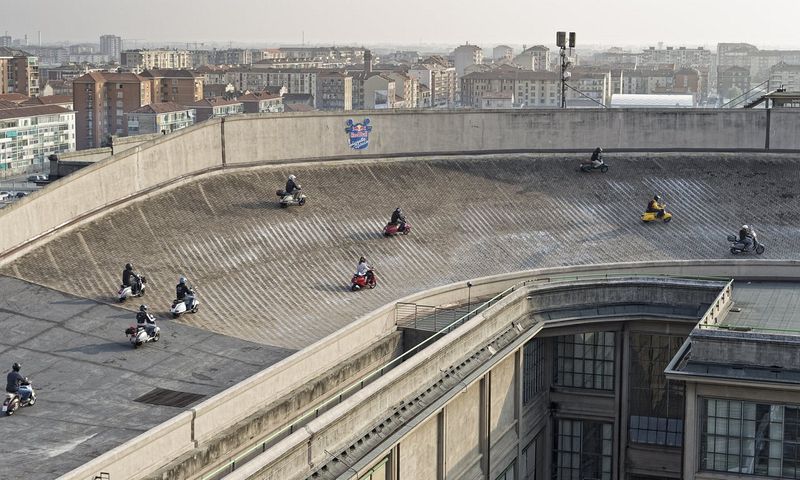
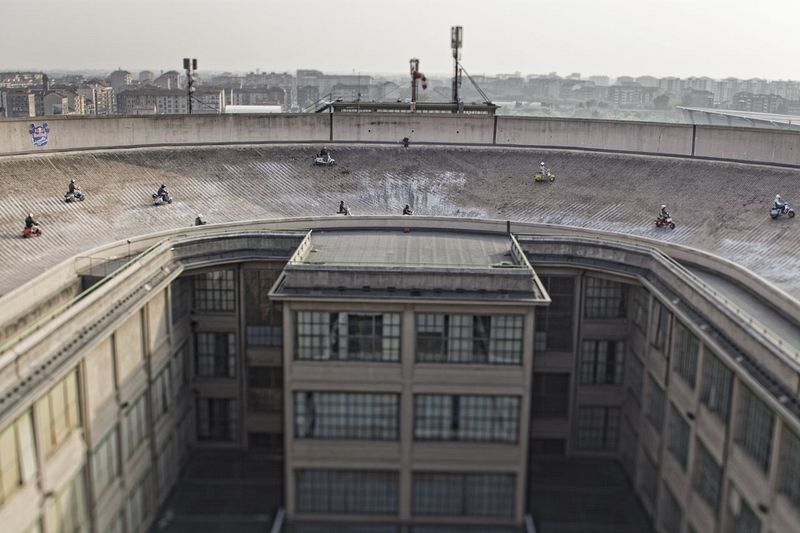
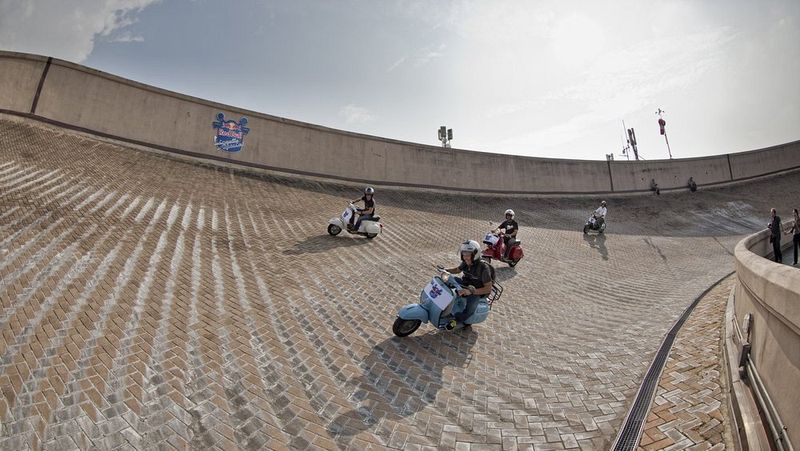
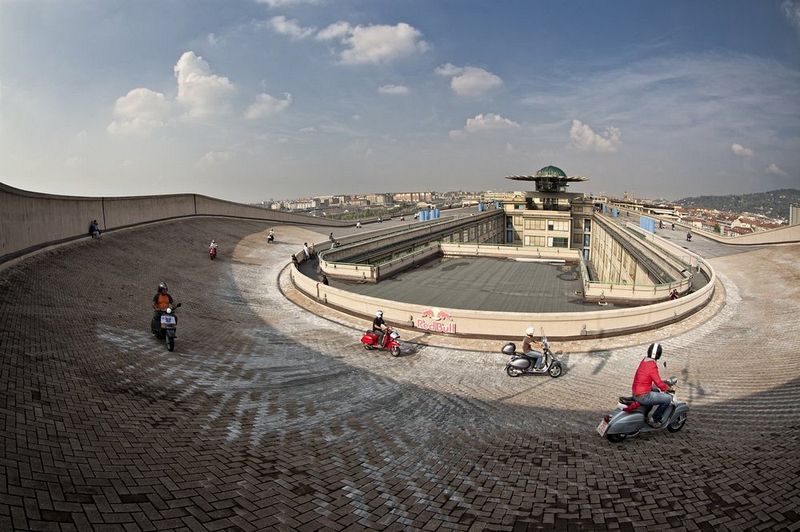
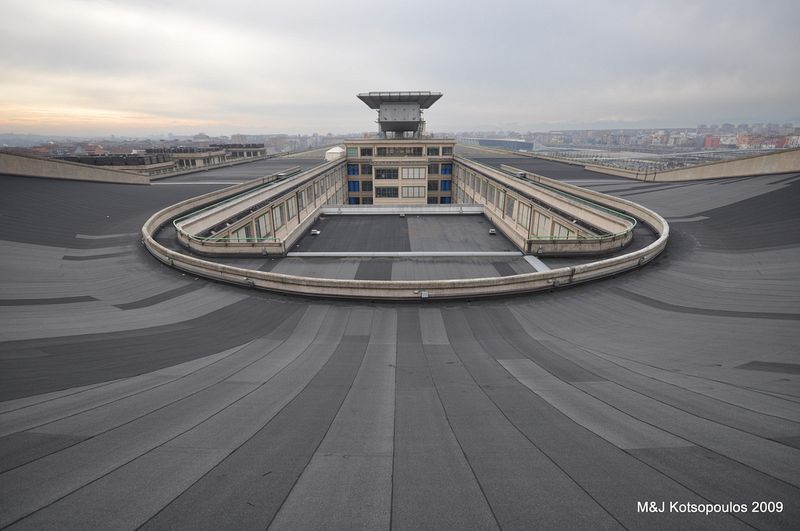
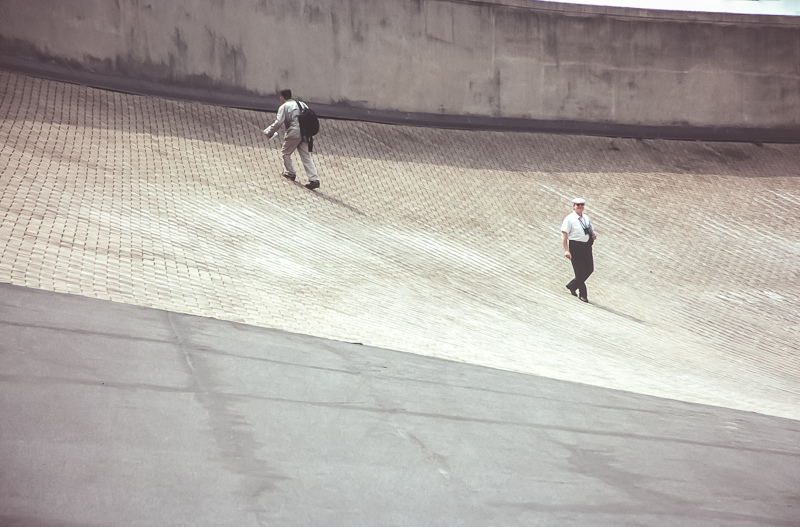
The Lingotto building in Turin, Italy, is a massive half-kilometer long reinforced concrete structure, five stories tall, that once housed the largest and most modern car manufacturing plant in Europe. Located in the heart of the city, its original owners —Fiat—made clever use of the available real estate by building a high-speed test track on the building’s unusual banked rooftop, where thousands of Fiats underwent testing once they came out at the end of the assembly line.

fiat-lingotto-factory-14

A Vespa racing event on the roof of Lingotto’s Fiat Factory, organized by Red Bull in 2011. Photo credit: www.motoblog.it

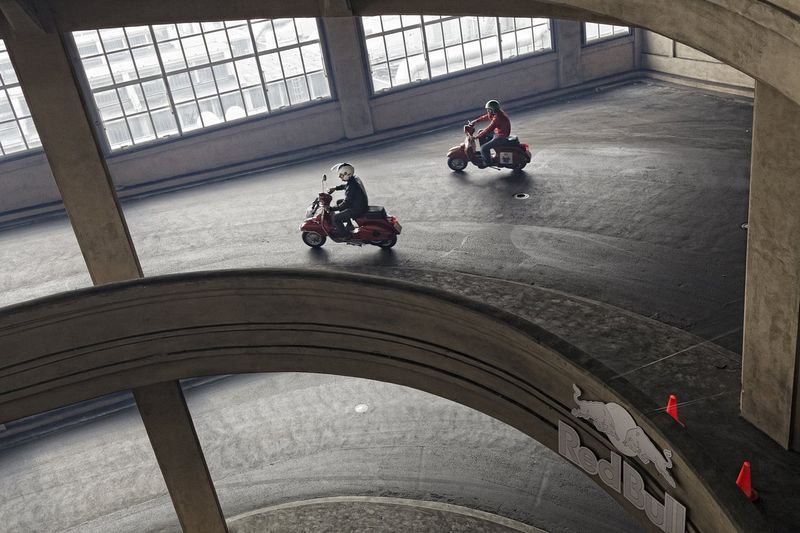
Built between 1916 and 1923, the building was the brainchild of Italian engineer Giacomo Mattè-Trucco, and was one of the first buildings of its size to rely heavily on reinforced concrete. Space constraints imposed by the railway lines nearby and the shape of the terrain, forced Giacomo Mattè-Trucco to develop a building that went vertically up and ended in a simple yet ingenious looped rooftop test track with two banked turns. The track is reached by spiral ramps at either end of the building that thread their way up through floor after floor. These ramps are braced by reinforced concrete ribs that radiate from the columns around the central well like the ribs on the underside of water-lily leaves.

The manufacturing plant’s assembly line itself was unusual, and the test track was an integral part of it. Production started at the ground floor and continued sequentially up through the upper floors. As each floor passed, the cars approached their final shape until they emerged as a finished product at the rooftop where they were ready for testing. While the banked sections are impossibly tight making high-speed testing unfeasible, rumors persist that concepts and racing engines were also tested here, including the one-off 1954 Turbina, with its projected 160mph top speed.

The Lingotto Factory produced 80 different models of car putting out an average of 200 daily from it’s opening until the 1970s, when it was eclipsed by the modern Mirafiori plant. The last Lancia Delta rolled out of the factory in 1979. Three years later, the factory was officially closed.

The Lingotto building was eventually converted into a modern complex with concert halls, theatre, a convention center, shopping arcades and a hotel. The rooftop track was retained and can still be visited today on the top floor.

fiat-lingotto-factory-15

fiat-lingotto-factory-1

A Vespa racing event on the roof of Lingotto’s Fiat Factory, organized by Red Bull in 2011. Photo credit:www.motoblog.it

fiat-lingotto-factory-2

fiat-lingotto-factory-2

A Vespa racing event on the roof of Lingotto’s Fiat Factory, organized by Red Bull in 2011. Photo credit:www.motoblog.it

fiat-lingotto-factory-21

A Vespa racing event on the roof of Lingotto’s Fiat Factory, organized by Red Bull in 2011. Photo credit:www.motoblog.it


fiat-lingotto-factory-10

Photo credit: John and Melanie/Flickr

fiat-lingotto-factory-9


fiat-lingotto-factory-19

Photo credit: Jacqueline Poggi/Flickr

fiat-lingotto-factory-12

Photo credit: Marcus Winter/Flickr

Sources: Jalopnik / BBC / Wikipedia


Source….www.amusingplanet.com

Natarajan
Image of the Day…” Blue Marble Earth Image …”

New Earthrise Image from LRO spacecraft

NASA’s Lunar Reconnaissance Orbiter (LRO) recently captured a unique view of Earth from the spacecraft’s vantage point in orbit around the moon.

“The image is simply stunning,” said Noah Petro, Deputy Project Scientist for LRO at NASA’s Goddard Space Flight Center in Greenbelt, Maryland. “The image of the Earth evokes the famous ‘Blue Marble’ image taken by Astronaut Harrison Schmitt during Apollo 17, 43 years ago, which also showed Africa prominently in the picture.”

In this composite image we see Earth appear to rise over the lunar horizon from the viewpoint of the spacecraft, with the center of the Earth just off the coast of Liberia (at 4.04 degrees North, 12.44 degrees West). The large tan area in the upper right is the Sahara Desert, and just beyond is Saudi Arabia. The Atlantic and Pacific coasts of South America are visible to the left. On the moon, we get a glimpse of the crater Compton, which is located just beyond the eastern limb of the moon, on the lunar farside.

LRO was launched on June 18, 2009, and has collected a treasure trove of data with its seven powerful instruments, making an invaluable contribution to our knowledge about the moon. LRO experiences 12 earthrises every day; however the spacecraft is almost always busy imaging the lunar surface so only rarely does an opportunity arise such that its camera instrument can capture a view of Earth. Occasionally LRO points off into space to acquire observations of the extremely thin lunar atmosphere and perform instrument calibration measurements. During these movements sometimes Earth (and other planets) pass through the camera’s field of view and dramatic images such as the one shown here are acquired.

This image was composed from a series of images taken Oct. 12, when LRO was about 83 miles (134 kilometers) above the moon’s farside crater Compton. Capturing an image of the Earth and moon with LRO’s Lunar Reconnaissance Orbiter Camera (LROC) instrument is a complicated task. First the spacecraft must be rolled to the side (in this case 67 degrees), then the spacecraft slews with the direction of travel to maximize the width of the lunar horizon in LROC’s Narrow Angle Camera image. All this takes place while LRO is traveling faster than 3,580 miles per hour (over 1,600 meters per second) relative to the lunar surface below the spacecraft!

The high-resolution Narrow Angle Camera (NAC) on LRO takes black-and-white images, while the lower resolution Wide Angle Camera (WAC) takes color images, so you might wonder how we got a high-resolution picture of the Earth in color. Since the spacecraft, Earth, and moon are all in motion, we had to do some special processing to create an image that represents the view of the Earth and moon at one particular time. The final Earth image contains both WAC and NAC information. WAC provides the color, and the NAC provides high-resolution detail.

“From the Earth, the daily moonrise and moonset are always inspiring moments,” said Mark Robinson of Arizona State University in Tempe, principal investigator for LROC. “However, lunar astronauts will see something very different: viewed from the lunar surface, the Earth never rises or sets. Since the moon is tidally locked, Earth is always in the same spot above the horizon, varying only a small amount with the slight wobble of the moon. The Earth may not move across the ‘sky’, but the view is not static. Future astronauts will see the continents rotate in and out of view and the ever-changing pattern of clouds will always catch one’s eye, at least on the nearside. The Earth is never visible from the farside; imagine a sky with no Earth or moon – what will farside explorers think with no Earth overhead?”

NASA’s first Earthrise image was taken with the Lunar Orbiter 1 spacecraft in 1966. Perhaps NASA’s most iconic Earthrise photo was taken by the crew of the Apollo 8 mission as the spacecraft entered lunar orbit on Christmas Eve Dec. 24, 1968. That evening, the astronauts — Commander Frank Borman, Command Module Pilot Jim Lovell, and Lunar Module Pilot William Anders — held a live broadcast from lunar orbit, in which they showed pictures of the Earth and moon as seen from their spacecraft. Said Lovell, “The vast loneliness is awe-inspiring and it makes you realize just what you have back there on Earth.”

Source…….www.nasa.gov

Natarajan

Message For the Day….” Follow Sabari’s Example , who always thought of Rama and His happiness…”

Follow at least one of the nine modes of devotion (Sravanam, kirtanam, etc.). It doesn’t matter how wealthy or learned you are; God is concerned only with the sincerity and purity of your mind and heart and the wholeheartedness and genuine nature of your love. Valmiki was a hunter. Nandanar was of a low caste. Kuchela was a poor man. Dhruva and Prahlada were five-year-old lads. Sabari was a tribal woman, illiterate and uncivilized. But all of them won God’s Grace in abundance, because of their wholehearted devotion, love and surrender. Follow Sabari’s example, who always thought of Sri Rama and His happiness, and dedicated all her thoughts, words, and deeds to Him alone, such that her every action was transformed and sublimated into the highest penance (tapas).Meditation does not mean sitting idle in a particular posture, like posing for a photograph.  Like Sabari’s life, your life must become a continuous meditation wherever you are, and whatever you do.


Sathya Sai Baba

This Man Left His Job, Sold His Car and Took a Loan – Just to Make India Clean !

This cleanliness warrior resigned from his job to take the battle against garbage to cars, autorickshaws, buses, and other vehicles. His car trash bins will give income to slum dwellers while helping keep our roads clean.

India is developing fast — roads are jammed with cars, cellphones are ubiquitous, and there is talk of smart cities emerging all over the country.

But are we behaviourally developed as a nation? We still lack civic sense and spit on walls, we don’t show up for our appointments on time, we deface our historical landmarks, we rarely stick to queues when waiting, and we litter our streets indiscriminately.

Abhishek Marwaha was one of us until three years ago when he read somewhere: ‘”A person who throws his trash actually throws his humanity.”


abhishek marwaha1

Abhishek Marwaha

He then started making a conscious effort to keep his surroundings clean. His friends made fun of him when he kept dumping used tissues in his pockets or in car back pockets while travelling, instead of throwing them outside the window.

“I used to work in a travel technology firm and travelling to different countries used to be part of my job profile. I realized that we are more conscious of our habits when abroad (like littering, spitting, honking, etc.) but we tend to be careless when we are here in India. So all we need to do is one simple thing to bring a wave of change. Let’s behave in our own country the way we behave in any other foreign country,” says Abhishek.

One day, while having lunch, he found that his lunch bag was worn and could be used as a trash bin in his car. The idea stayed with him and he began to design a trash bin that is easily accessible in a car or any vehicle, even while driving. Once the design was ready, he started making cheap trash bins in bulk and contacting vendors.

spit pouches

This mission to keep India clean has today resulted in the launch of Abhishek’s online store, ujosho.com, which sells the first ever car trash bins in India.

The word UJosho is derived from the Japanese word ‘josho,’ which means ever victorious. Abhishek added a ‘U’ to indicate that we can all be victorious in the battle against littering if we do our bit to keep the nation clean.

swach bin

Swachh bin for cars

“There are an estimated 25 million cars in any Tier 1 city in India. The problem of garbage will continue to haunt us as the trash thrown from cars chokes the roadside drains and contributes to water logging and floods during rains. There is an immediate need to educate and encourage people to use this simple trash bin in their cars so that many of these issues can be resolved without intervention of civic authorities and with proper and positive participation from each one of us,” adds Abhishek

The car trash bins that Abhishek sells are not machine made. He aims to provide earnings to slum dwellers by getting them to make these trash bins by hand in bulk.

He has also experimented with giving away these bins to beggars for free and was delighted to see them selling these to car owners at traffic signals.

beggar

“You don’t have to hold a gun at the border and save the country to be truly patriotic. You can bring about change by changing yourself, your habits and your surroundings. Even if 10% of our population shares this view, it can make a difference. Maybe what I am doing is minuscule, but it will hit the root cause of the trash problem,” Abhishek says with great zeal.

According to Abhishek, installing and using the trash bin in vehicles will be good because:

1) It will help bring about a behavioral change among adults and children with respect to cleanliness, littering and spitting.

2) It will support civic authorities in ensuring optimum use of manpower in cleaning roads.

3) Trash chokes the roadside drains and contributes to water logging and floods during rains. Car trash bins will help prevent that.

Though the car trash bin is a first-of-its-kind product, Abhishek does not want to patent the idea as he wants it to spread widely. He wants other people to replicate it and make it more cost effective if possible.

happy customers\

Happy Customers!

“We also encourage people to share their ideas about cleanliness on the ‘Idea’ section of our website. If we are able to make a product from that idea, we will then give royalty on every sale of that product,” says Abhishek

To know more about Abhishek and his products, you can visit www.ujosho.com

Source….Manabhi Katoch in http://www.the betterindia .com

Natarajan

” Do Walking Palm Trees Really Walk…” ?

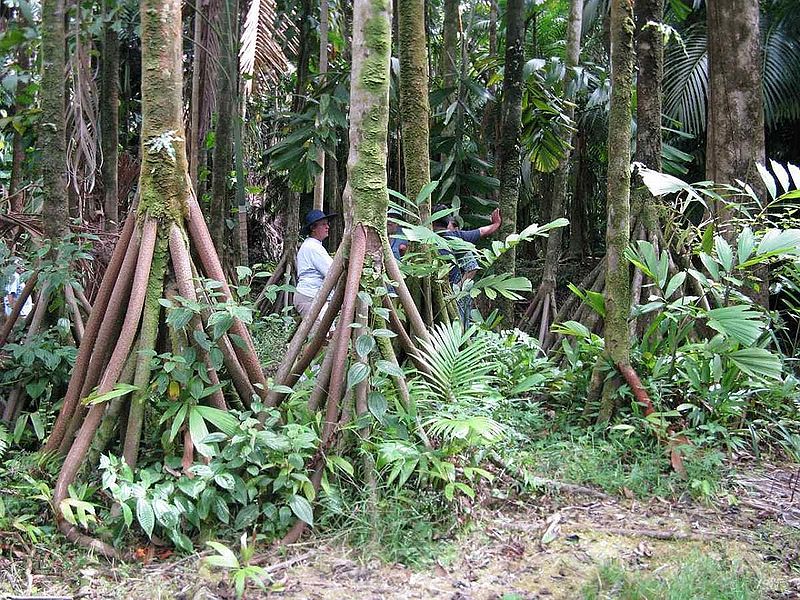
A recently published article on BBC’s website mentions a certain palm tree that has allegedly developed a rather unique ability unbecoming of a plant —the ability to walk. The palm in question is Socratea exorrhiza, also nicknamed the “Walking Palm”. The bizarre idea stems from the fact that scientists are unable to explain the tree’s strange stilt-like roots. Found in tropical rainforests of Central and South America, the Socratea exorrhiza develops long and sturdy roots that grow outwards from the base of the tree, several feet off the ground, and take root in the soil around, giving it the appearance of multiple legs. It wasn’t long before people started to believe that these roots actually act like legs enabling the palm tree to literally walk in the forest.

socratea-exorrhiza-walking-palms-6

Photo credit: www.palmpedia.net


The amazing story of the walking palm tree has been told by rainforest guides to tourists for years, and appears in many sources both in print and on the web. It is said that the tree “walks” from shade to sunlight by growing roots in the direction it wants to travel, and then allowing the old roots to slowly lift into the air and die. This allows the tree to slowly move towards the side where the new roots are growing. The process is said to take a couple of years, while one palaeobiologist suggesting the tree moves two or three centimeters per day.

It’s such a fascinating story that many tend to believe it, like our palaeobiologist from the Earth Science Institute in Bratislava. Unfortunately, the walking tree is a myth.

The idea of the walking tree was first suggested by John H. Bodley in 1980 who thought that such an ability allows the palm to “walk away” from the point of germination if another tree falls on the seedling and knocks it over. This way, the tree can move away from obstacles that are major hazards for immature palms.

Biologist Gerardo Avalos, director of the Center for Sustainable Development Studies in Atenas, Costa Rica, and —according to LiveScience.com— one of the world’s top experts on the Socratea exorrhiza, published a detailed study of the palm and its root in 2005 where he observed that the walking tree can’t walk because its roots don’t move. A few roots on one side or another may die off, but the trunk itself remains rooted to the spot.

Some people want to see the Socratea exorrhiza walking. Alas, no such time lapse movie exist.

“My paper proves that the belief of the walking palm is just a myth,” Avalos told Life’s Little Mysteries.”Thinking that a palm tree could actually track canopy light changes by moving slowly over the forest floor … is a myth that tourist guides find amusing to tell visitors to the rainforest.”

The myth was also debunked in the December 2009 issue of Skeptical Inquirer. “As interesting as it would be to think that when no one is around trees walk the rainforest floor, it is a mere myth,” it read. The article also cited two detailed studies that came to this conclusion.

Researchers are still unsure what role these unique stilt roots play. Some suggest that the multiple roots allow the tree to be more stable in swampy areas, or when there is too much debris in the ground as they can avoid it by moving their roots. It has been suggested that stilt roots allow the palm to grow taller to reach light without having to increase the diameter of the stem, thus investing in less biomass in underground roots than other palms. Of course, none of these theories have ever been confirmed. More importantly, nobody has seen these palm trees walk.

socratea-exorrhiza-walking-palms-2

Photo credit: Sandor Weisz/Flickr

socratea-exorrhiza-walking-palms-3

socratea-exorrhiza-walking-palms-5

Photo credit: www.palmpedia.net

Source……www.amusingplanet.com
Natarajan