” சத்தும் சுவையும் நிறைந்த எள்..” ஒரு பொக்கிஷம் …!!!


அலிபாபாவும் நாற்பது திருடர்களும் படத்தில் புதையல் இருக்கும் இடத்தின் கதவைத் திறக்க அலிபாபா சொல்லும் வசனம் ‘திறந்திடு சீசேம்’ (Open Sesame). சீசேம் என்பது எள்ளுக்கான ஆங்கிலப் பெயர்.

உண்மையிலேயே எள்ளில் பொதிந்திருக்கும் ஊட்டச்சத்துகள் கணக்கற்றவை. அதை ஒரு பொக்கிஷ விதை என்றே சொல்லலாம்.

எள்ளில் மூன்று வகை உண்டு. கறுப்பு எள், எண்ணெய்ச்சத்து நிறைந்தது. சிவப்பு எள், இரும்புச் சத்து மிகுந்தது. தங்க அல்லது தந்த நிறம் கொண்ட எள், சமையலுக்கு உகந்தது.

அளவில் சிறிதாக இருந்தாலும், இந்த விதைகள் ஊட்டச்சத்து நிரம்பியவை. இதில் புரதச்சத்து, வைட்டமின் ஏ, பி, சி, அத்துடன் தாமிரம், இரும்பு, துத்தநாகம், மாலிப்டினம், செலினியம், பாஸ்பரஸ் போன்ற கனிமச் சத்துகளும் நிரம்பியுள்ளன.

ரத்த நாளங்கள், எலும்பு மூட்டு இணைப்புகள், எலும்பு போன்றவற்றை வலுப்படுத்தவும், அவை இழுவைத்தன்மையுடன் இருக்கவும் தாமிரம் உதவும். எலும்பு மூட்டு இணைப்புகள், எலும்புகளுக்குத் துத்தநாகமும் நல்லது. “எள்ளில் மெதியோனைன் (methionine), டிரைடோபன் (tryptophan) என்ற இரண்டு அமினோ அமிலங்கள் உள்ளன. மற்றச் சைவப் புரத உணவு வகைகள் எதிலும் இந்த இரண்டும் இல்லை” என்பதைச் சுட்டிக்காட்டுகிறார் உணவு நிபுணரான ரெபேக்கா உட்ஸ்.

எள்ளில் எண்ணெய்ச் சத்து அதிகம். அதிக விளைச்சலையும் தரக்கூடியது. அரசர்களுக்கு மசாஜ் செய்வதற்கான எண்ணெயாக நல்லெண்ணெய் பயன்பட்டிருக்கிறது. அது மன அழுத்தத்தைக் குறைத்து, நரம்பு மண்டலத்தையும் மேம்படுத்துகிறது.

ஆரோக்கிய ரீதியில் பார்த்தால், கல்லீரலுக்கும், சிறுநீரகத்துக்கும் எள் நல்லது. பொதுவான உடல் பலவீனத்தைக் குறைத்து, உடலை மேம்படுத்தும். சில ஆராய்ச்சிகளின்படி, குறிப்பிட்ட சில நீரிழிவு நோய்களுக்கான சிகிச்சையை எள் மேம்படுத்துகிறது. இது குறைந்த கிளைசிமிக் உணவும்கூட.

சுவை ரீதியில் பார்த்தால் வறுக்கப்பட்ட எள்ளை சாலட், சாஸ் போன்றவற்றில் தூவினால் அவற்றின் இனிப்புச் சுவை கூடும். இந்திய உணவு வகைகளில் மிகவும் பிரபலமான உருளைக்கிழங்கு கறியிலும் இட்லியிலும் இதைப் பயன்படுத்தலாம். கொங்கணி மக்கள், எள்ளை வைத்துச் சுவையான சட்னியைச் செய்வது ரொம்ப பிரபலம்.

ஒரேயொரு பிரச்சினை, அதிக அளவு எண்ணெய்ச் சத்து இருப்பதால், எள்ளைச் சரியாக மூடி வைக்கவில்லை என்றால் சீக்கிரம் கெட்டுப் போய்விடும். அதனால் காற்று புகாத கலனில் இதை அடைத்து வைக்க வேண்டும். குளிர்ச்சியான, ஒளி புகாத இடத்தில் சேமித்து வைத்தால், மூன்று மாதங்கள் வரை நன்றாக இருக்கும். சுமார் 6 மாதங்களுக்கு இதைச் சேமிக்க வேண்டுமென நினைத்தால், குளிர்பதனப் பெட்டியில் வைத்துவிடுங்கள்.

தி இந்து (ஆங்கிலம்)

சுருக்கமான மொழிபெயர்ப்பு: வள்ளி

Source::::The Hindu….  Tamil
Natarajan

Miracle Fruit…Pomegranate !!!


Pomegranates

Pomegranates have been revered through history

Pomegranates are being hailed as a super-food which can protect the heart.

Scientists in Israel have shown that drinking a daily glass of the fruit’s juice can reduce the risk of cardiovascular disease.

“Pomegranate juice contains the highest antioxidant capacity compared to other juices, red wine and green tea,” said Professor Michael Aviram, who led the team.

This is good news, for antioxidants are the naturally occurring substances in plants that protect the body from free radicals – ‘bad’ chemicals in the blood.

Free radicals alter cholesterol in a process known as oxidation, which is thought to speed up the hardening of the arteries.

In studies at the Rambam Medical Center in Haifa, the juice of the fruit was found to slow down cholesterol oxidation by almost half, and reduce the retention of LDL.

That is the ‘bad’ cholesterol which forms atherosclerotic lesions, the fatty deposits which narrow the arteries and lead to heart disease.

“Antioxidants can protect us against the oxidative stress in our industrialised world, such as pollution, chemicals, viruses and bacteria, and consequently cardiovascular diseases and cancer,” said Professor Aviram.

The theme is being taken up by a team at London’s Hammersmith Hospital, who are launching a study to see if they can replicate the Haifa findings.

Their work will focus on people whose arteries are currently healthy.

Researcher Dr Richard Bogle said the fruit contained polyphenolics, tannins and anthocyanins – all compounds that could have a beneficial effect.

Dr Bogle said: “This study will test the idea that drinking a glass of pomegranate juice every day improves the function of blood vessels, reduces hardening of the arteries and improves heart health.”

“Preliminary studies suggest that pomegranate juice may contain almost three times the total antioxidant ability compared to the same quantity of green tea or red wine.”

Pomegranate


Many vitamins

The round, leathery fruit is full of edible seeds nestled in tiny juice sacs.

It features richly in mythology, as a symbol of birth, eternal life, and death, owing to its abundance of seeds and ability to ‘bleed’.Thought to be native to Persia, the fruit is now grown everywhere from Spain to California.

The deep red skin of the pomegranate was thought to link it to the blood of the earth, a taboo colour. Hence the fruit’s association with forbidden desire.

“Iranians believe that Eve was tempted with a pomegranate in the Garden of Eden,” said Margaret Shaida, culinary historian and author of The Legendary Cuisine of Persia.

“King Cyrus, who created the Persian Empire, was reputed to have wished for a number of good generals equal to the seeds of a pomegranate.

“Later again, the Prophet Mohammed is said to have urged his followers to eat the fruit in the belief that it purges the system of envy and hatred.”

Ancient Egypt

The ancient Egyptians were buried with pomegranates in the hope of re-birth, while in Greek mythology, Persephone, the daughter of Demeter, the goddess of agriculture, was offered a seed of the fruit by Hades.


These days, Greeks traditionally break a pomegranate at weddings, as a symbol of fertility.Tempted by its jewel-like appearance, she took it, thereby condemning herself to spending a portion of every year with Hades in the underworld.

In China, a sugared version of the seed is eaten on the day to bless the newlyweds.

The fruit has long been used in folk medicine in the Middle East, Iran and India. Healers have used the bark, leaves, skin and rind as well as the edible bits of the fruit to cure everything from conjunctivitis to haemorrhoids.

A boiled infusion of the rinds is said to soothe a sore throat, and a paste of the leaves, massaged into the scalp, can, apparently, reverse baldness.

“When I lived in Iran, I used to be given a bowl of pomegranates to recover from a bout of ‘Tehran Tummy’,” said Ms Shaida.

“Over there, pomegranate juice is recommended for pregnant mothers as it is rich in iron. It’s also cooling and good for cleansing the system.”

Asian cookery

Central Asian and Middle Eastern cooks always have a supply of the fruit on hand.

In Azerbaijan, a pomegranate sauce called Narsharab is served with sturgeon fillet, while Georgians use the seeds as a salad garnish or to flavour meat dishes.

In Iran, a dish known as Fesenjan is prepared with pomegranate concentrate.

“No Iranian kitchen will be without a bottle,” said Ms Shaida.

“Fesenjan consists of ground walnuts, fried until brown, which are added to fried onions and duck, or chicken along with the pomegranate sauce. It has a wondrous flavour, but very rich.”

In the West, the fruit is still regarded as a novelty, but food writers like Rosemary Stark are keen to change this.

She said: “I find it has one of the finest sweet/sour balances of any fruit.


Source:::: Jini Reddy  in bbc.com  ….. http://news.bbc.co.uk

Natarajan


Message For the Day…” Why Not Few Minutes Everyday to Contemplation of God … “

There is no harm in pursuing one’s worldly duties while having Self-realisation as the goal of life. Life is not meant for just living, it is a means to realize one’s true nature. Treating life as a righteous journey, you should devote at least a few minutes every day to thoughts on the true aims of life. Many hours in a day are wasted on selfish pursuits, but not even a few minutes are devoted to contemplation of God. Alas! What misfortune is this! In the Bhagavad Gita, Krishna called upon Arjuna to regard himself as an instrument of the Divine. All of you are instruments of the Divine. Discharge your duties leaving the result to God. Your role is to do your duty sincerely. Victory and defeat are in God’s hands. Do not even feel that you are the doer. You must think the Lord is giving me this opportunity and making me play this role in life


Sathya Sai Baba

Tallest Tower Ever …. @ China …An Eco Friendly Construction Concept…


While the architectures of yesteryear are often blamed for urban decay, today’s buildings could be responsible for its renewal.

Jutting from the ground like two giant stalagmites, the latest design from UK architecture firm Chetwoods is going to blow the world’s tallest building, the Burj Khalifa, out of the water—and save the world while it’s at it. Standing a full kilometer (3,281 ft) tall, the structure might be the key to solving China’s catastrophic pollution problem on every level. Bestowing upon the project the hopeful moniker, ‘The Phoenix Towers,’ Chetwoods hopes to resurrect the Chinese city of Wutan from its ashes.

By using a complex mechanical system to simultaneously filter Wuhan’s air and water, collect solar, wind, and hydrogen power, provide produce from a massive vertical garden, harvest rainwater, house restaurants and businesses, boil biomass, and generally aim to solve every major ecological crisis faced by central China’s “Fourth Pole,” the Phoenix Towers just might live up to their name. “It doesn’t just stand there and become an iconic symbol of Wuhan, it has to do a job,” founder Laurie Chetwood said in an interview with Dezeen. “We’ve applied as many environmental ideas as we possibly could to justify the shape and the size of them.”


Aside from their super-sustainable abilities, one of the coolest things about the Phoenix Towers is that Chetwoods designed them to resonate with local religion and philosophy. The towers link Western technology and architecture to the Chinese myths of the phoenix; two towers represent the dual gender the legendary bird has in Chinese iconography, and the spirit of rebirth is spread throughout all eight hectares of the the half-mile high towers. With these spiritual considerations in mind, the firm makes a peace offering to the the somewhat rocky history of Western insensitivity when it comes to development in China. The towers also aim to attract eco-tourism, with profit margins further extending that olive branch.


While the architectures of yesteryear are often blamed for urban decay, today’s buildings could be responsible for its renewal.

Jutting from the ground like two giant stalagmites, the latest design from UK architecture firm Chetwoods is going to blow the world’s tallest building, the Burj Khalifa, out of the water—and save the world while it’s at it. Standing a full kilometer (3,281 ft) tall, the structure might be the key to solving China’s catastrophic pollution problem on every level. Bestowing upon the project the hopeful moniker, ‘The Phoenix Towers,’ Chetwoods hopes to resurrect the Chinese city of Wutan from its ashes.

By using a complex mechanical system to simultaneously filter Wuhan’s air and water, collect solar, wind, and hydrogen power, provide produce from a massive vertical garden, harvest rainwater, house restaurants and businesses, boil biomass, and generally aim to solve every major ecological crisis faced by central China’s “Fourth Pole,” the Phoenix Towers just might live up to their name. “It doesn’t just stand there and become an iconic symbol of Wuhan, it has to do a job,” founder Laurie Chetwood said in an interview with Dezeen. “We’ve applied as many environmental ideas as we possibly could to justify the shape and the size of them.”


Aside from their super-sustainable abilities, one of the coolest things about the Phoenix Towers is that Chetwoods designed them to resonate with local religion and philosophy. The towers link Western technology and architecture to the Chinese myths of the phoenix; two towers represent the dual gender the legendary bird has in Chinese iconography, and the spirit of rebirth is spread throughout all eight hectares of the the half-mile high towers. With these spiritual considerations in mind, the firm makes a peace offering to the the somewhat rocky history of Western insensitivity when it comes to development in China. The towers also aim to attract eco-tourism, with profit margins further extending that olive branch.


While the architectures of yesteryear are often blamed for urban decay, today’s buildings could be responsible for its renewal.

Jutting from the ground like two giant stalagmites, the latest design from UK architecture firm Chetwoods is going to blow the world’s tallest building, the Burj Khalifa, out of the water—and save the world while it’s at it. Standing a full kilometer (3,281 ft) tall, the structure might be the key to solving China’s catastrophic pollution problem on every level. Bestowing upon the project the hopeful moniker, ‘The Phoenix Towers,’ Chetwoods hopes to resurrect the Chinese city of Wutan from its ashes.

By using a complex mechanical system to simultaneously filter Wuhan’s air and water, collect solar, wind, and hydrogen power, provide produce from a massive vertical garden, harvest rainwater, house restaurants and businesses, boil biomass, and generally aim to solve every major ecological crisis faced by central China’s “Fourth Pole,” the Phoenix Towers just might live up to their name. “It doesn’t just stand there and become an iconic symbol of Wuhan, it has to do a job,” founder Laurie Chetwood said in an interview with Dezeen. “We’ve applied as many environmental ideas as we possibly could to justify the shape and the size of them.”


Aside from their super-sustainable abilities, one of the coolest things about the Phoenix Towers is that Chetwoods designed them to resonate with local religion and philosophy. The towers link Western technology and architecture to the Chinese myths of the phoenix; two towers represent the dual gender the legendary bird has in Chinese iconography, and the spirit of rebirth is spread throughout all eight hectares of the the half-mile high towers. With these spiritual considerations in mind, the firm makes a peace offering to the the somewhat rocky history of Western insensitivity when it comes to development in China. The towers also aim to attract eco-tourism, with profit margins further extending that olive branch.


Over the next three years, the Phoenix Towers will move from concept into construction, at which point the city of Wuhan will be ready to retake flight


source::::businessinsider select.au

Natarajan..


Message For the Day… ” Help Ever …Hurt Never… “

Wherefrom does humanness come? It comes from your heart. Here, the heart referred to is not the physical heart but the spiritual heart which is free from all blemishes. Like fragrant air, your purity should spread everywhere. You should share with others the pure thoughts and the pure feelings that emanate from you. Whatever you do, it should be helpful to others. Help Ever, Hurt Never – If you imbibe these two qualities, everything will become good for you. Today educated people are proud of their Ph.D. degrees. What does the true Ph.D. mean? The letter ‘P’ stands for Person, ‘h’ for Help and ‘D’ for Divinity. Hence, one with Ph.D. degree is the person who helps others and attains Divinity. On the contrary, if one does not help others, then the letter ‘p’ will denote that he is a papi (sinner). You will attain everything if you protect your humanness.

Sathya Sai Baba

Image of the Day…


Yangtze River valley, China.
stargazing

The beautiful Yangtze River valley, with its monumental Three Gorges Dam project, offers both stunning daytime scenery and magical night spectacles. Unlike most of China, this area isn’t very industrialized and has relatively little light making the nights sky more visible.

Source::::ba-ba mail site

Natarajan


Strange But True !!!…” Miss Unsinkable ” !!!


The Woman Who Survived All Three Disasters Aboard the Sister

Ships: the Titanic, Britannic, and Olympic

violet-jessopToday I found out about Violet Jessop, “Miss Unsinkable,” the woman who survived the sinking of the sister ships the Titanic and the Britannic, and was also aboard the third of the trio of Olympic class vessels, the Olympic, when it had a major accident. 

Violet Jessop enjoyed incredible “luck” from a young age. Born in 1887 in Argentina to Irish immigrants, she contracted tuberculosis as a young child and was given just a few months to live. Somehow, she managed to fight the disease and went on to live a long, healthy life.

When her father passed away, her mother moved the family to Britain, where she took a job as a stewardess on a ship. While her mother was working, Violet attended a convent school. Unfortunately, her mother became ill, and to provide for her siblings Violet decided to follow in her mother’s footsteps and become a ship stewardess herself.

The first in a long line of struggles for Violet was finding a ship that would take her. She was just 21 years old at the time and most women working as stewardesses in the early 1900s were middle-aged. Employers believed that her youth and good looks would be a disadvantage to her, “causing problems” with the crew and passengers. (Over the course of her career, she did get at least three marriage proposals while working on various ships, one from an incredibly wealthy first-class passenger.)

Eventually, Violet solved the problem by making herself look frumpy with old clothes and no make-up, and experienced more successful interviews after this. After a brief stint aboard the Orinoco, a Royal Mail Line steamer, in 1908, she was hired by the White Star Line.

Violet started out on the line’s Magestic, switching to the Olympic in 1910. Despite the long hours and minimal pay (£2.10 every month or about £200 today), she enjoyed working aboard the massive ship. She had initially had some concerns about the rough weather conditions while traveling across the Atlantic, but she reportedly liked that the Americans treated her more like a person while she served them.

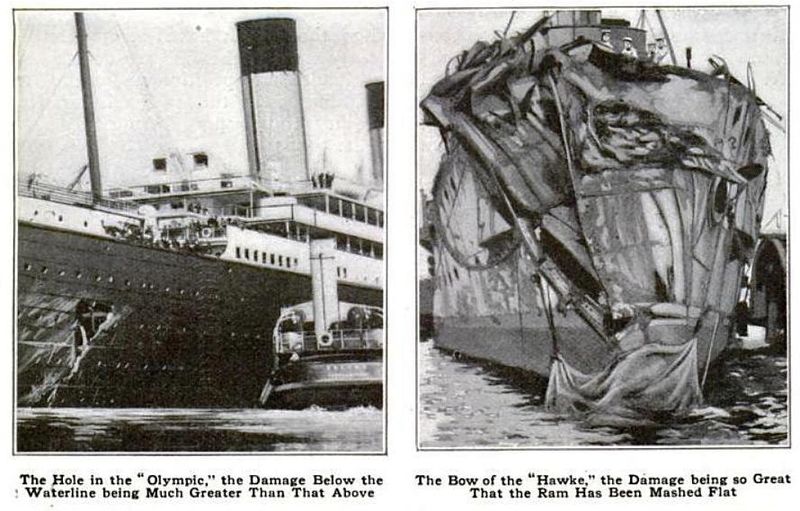
Olympic_collisionIt was just one year later when the trouble started. In 1911, the Olympic collided with theHMS Hawke (a ship designed to sink ships by ramming them). Both ships sustained considerable damage, including the Olympic having its hull breached below the water line, but miraculously didn’t sink. They were able to make it back to port, and Violet disembarked without being harmed.

A couple of years later, the White Star Line was looking for crew to cater to the VIPs aboard the unsinkable ship, the Titanic. It took a while for her friends and family to convince her that it would be a wonderful experience, but Violet eventually decided to take a job on board the ship. As you already know, the Titanic struck an iceberg and sunk, killing more than 1500 people.

Violet was able to escape the disaster on lifeboat 16. In her memoir, she recalls,

I was ordered up on deck. Calmly, passengers strolled about. I stood at the bulkhead with the other stewardesses, watching the women cling to their husbands before being put into the boats with their children. Sometime after, a ship’s officer ordered us into the boat first to show some women it was safe.

As she was jumping into the lifeboat, she was handed a baby to care for. When they were rescued by theCarpathia, the baby’s mother (or at least Jessop thought it must be) found her and whisked the baby away (literally grabbing the baby out of Jessop’s arms and running off).

Once again, Violet lived to sail another day.  Although, she did later state the first thing she missed after the Titanic sank was her toothbrush that she’d left on board.

You’d think she’d stop getting on ships at this point, or at least ships of the Olympic class, but not Violet. In the lead-up to World War I, she decided to serve as a nurse on board the Titanic’s other sister ship,Britannic, which was operating in the Aegean Sea. Given her track record, you can probably guess what happened next. The Britannic ran into a mine that had been planted by a German U-boat. The ship sustained substantial damage and quickly started sinking.

This time, Violet wasn’t lucky enough to jump into a lifeboat as the ship was sinking too fast. Instead, she jumped overboard. In her own words,

I leapt into the water but was sucked under the ship’s keel which struck my head. I escaped, but years later when I went to my doctor because of a lot of headaches, he discovered I had once sustained a fracture of the skull!

She joked that she only survived because of her thick hair, which cushioned the blow.  She also stated this time she remembered to grab her toothbrush before evacuating, unlike with the Titanic.

Even this latest disaster was not enough to deter Violet. After the war, ships were becoming a more and more popular form of transport. Even cruise ships were starting to emerge. Violet left the White Star Line for the Red Star Line and worked on a ship doing world cruises for several years.

Luckily for Violet and everyone traveling on the ships she was aboard later, no such vessel she worked on ever sustained significant damage again. She did take a clerical job for a while after World War II, but went back to working on Royal Mail ships for a few years before she retired at the age of 61. The rest of her life was spent gardening and raising chickens. She died in 1971 of congestive heart failure at the ripe old age of 84.

Source:::  Today i foundout .com

Natarajan


Message For the Day…” In any Situation, Come what may, Never Take the path of Untruth… “

Cultivate the five values of Truth, Righteousness, Peace, Love and Nonviolence (Sathya, Dharma, Shanti, Prema and Ahimsa). When you have Sathya and Dharma, you will automatically get peace (Shanti). When you are peaceful, you will not hurt or hate anybody (Ahimsa). This peaceful attitude blossoms into love and brings about equality in every being. When such a loving environment prevails, there will be no quarrels in the world. Therefore, truth and righteousness are essential to attain and grow in love. In any situation, come what may, never take the path of untruth. If you speak untruth, there is no love. Speak the truth at all times, attain love and feel it everywhere around you. This is the essence of the scriptures, taught by many sages and saints in various methods. God is Love.


Sathya Sai Baba

Message For the Day…” In Every Step , Every Thing You See, God is Present… “

God is beyond all qualities. He is blemishless, steady and selfless (Nirmalam, Nischalam and Niswartham). He is beyond time and space. Don’t try to confine God to just one form. Install the principle that God is the Divine Soul (Atma) present within you and contemplate on Him. In every step, everything you see, God is present. God is the current that makes fans work; God is the mike that absorbs the sound, and the speakers that help others listen. If you put off the main switch, all the lights will go out. When you forget Divinity, you forget everything. Love God deeply, from within. Love God and you will be able to conquer the demons of bad qualities and also develop the society. Only a person with character can bring development in society. Only the one with love for God can lead a life of morality. Morality is truly a life principle. Without morality there is no community.


Sathya Sai Baba

“அய்யர் பொட்டலக் கடை…”


உத்திரமேரூரில் அய்யர் பொட்டலக் கடை என்ற பெயரில் இனிப்பு, கார பட்சணங்கள் விற்பனை செய்யும் சின்னஞ்சிறு கடைக்கு, கடல் கடந்தும் ரசிகர்கள் இருக்கிறார்கள் என்றால் நம்ப முடிகிறதா?

காலத்தின் புழுதி படிந்து காட்சியளிக்கிறது கடை.

கடையில் காலையிலேயே கூட்டம் களைகட்டி விடுகிறது. காலை 11 மணிக்குள் மிக்சர், பூண்டு சேவு முதலிய அயிட்டங்கள் விற்றுத் தீர்ந்துவிடுகின்றன. மாலை 4.30 மணிக்குள் மொத்த சரக்கும் காலியாகி கடை பூட்டப்பட்டுவிடுகிறது.

“இன்னிக்கு இவ்வளவுதான்னு பகவான் படியளந்திருக்கான். இது போதும் எனக்கு” என்று கூறும் கடை உரிமையாளர் தன் பெயரைச் சொல்ல மறுக்கிறார்.

“என் பேரு எதுக்கு? பெயரில்லை ஸ்வாமி எனக்கு. பொட்டலக் கடை அய்யர்தான் என் பேரு, இந்த வட்டாரத்துல யாரக் கேட்டாலும் சொல்லுவாங்களே. என் அப்பா பேரும் இதுதான், தாத்தா பேரும் இதுதான். 60 வருஷமா அய்யர் பொட்டலக் கடை என்கிற பேர்ல கடை நடத்திக்கிட்டுவர்றோம்.”

சுவையும் தரமும் தனித்தன்மையும் மிகுந்த இவர் கடையின் இனிப்பு, கார வகைகளுக்கு கலெக்டர், நீதிபதிகள், டாக்டர்கள், தொழிலதிபர்கள், பெரிய பெரிய சங்கீத வித்வான்கள், கலைஞர்கள் எல்லாம் வாடிக்கையாளராக இருப்பது இது வெறும் கடை மட்டுமல்ல, கிராமியக் கலாச்சாரத்தின் ஓர் அங்கம் என்பதையே உணர்த்துகிறது.

“எங்க கடையில பட்சணம் வாங்கிச் சாப்பிடுற குழந்தைக்கு எந்த விதமான வயிற்றுக் கோளாறும் வரக் கூடாது. கலப்படம் கிடையாது, தரம்தான் எங்க கடையின் ‘தாரக மந்திரம்’. ஆனாலும், அந்தக் காலத்து பட்சணத்தின் தினுசே வேற சார். இப்போ இருக்க விலைவாசியில தரத்தைக் காப்பாத்த படாதபாடு படவேண்டியிருக்கு” எனும் பொட்டலக் கடை அய்யருக்கு தற்போது 80 வயதாகிறது. தாடியும் மீசையுமாக ஒரு யோகிபோலக் காட்சிதருகிறார்.

“அந்தக் காலத்தில் பட்சணம் செஞ்சபோது ஒரு மூட்டை கடலைப் பருப்பு (அதாவது 64 படி) விலை ரூபாய் 56, ஒரு டின் கடலை எண்ணெய் (16 கிலோ) ரூபாய் 18, ஒரு வீசை பட்டாணி 13 அணா, ஒரு வீசை மந்தாரை இலை பத்தணா, ஒரு வீசை சக்கரை (1,400 கிராம்) 13 அணா” பழைய விலைவாசியை நினைவிலிருந்து சொல்லிக்கொண்டே போகிறார்.

பட்சணக் கடையின் உட்புறமுள்ள வீட்டுக்குள் அழைத்துக் காண்பித்தார். நீண்ட முற்றத்தின் ஒரு பகுதியைத் தடுத்து, அதிலே நட்டுவைத்திருக்கும் ருத்திராட்ச மரங்களைக் காண்பித்தார். 150 அடி வரை வளரக்கூடிய இம்மரங்களைத் தரிசிப்பது 100 கோயில்களை தரிசிப்பதற்கு இணையாகும் என்று சொல்லிப் பெருமைப்படுகிறார்.

வீடெங்கும் பட்சணத் தயாரிப்பின் நறுமணத்தோடு பக்தி மணமும் கமழ்கிறது. கூடம் ஏறக்குறைய ஒரு தியான மண்டபம்போல் இருக்கிறது. நூற்றுக் கணக்கான சாமி படங்கள், சிலைகள். எல்லாவற்றுக்கும் மாலைகள்.

பேச்சின் நடுவே டபரா டம்ளர்களில் காப்பி வந்தது. பிரமாதமான காப்பி. “எங்களுக்குப் பேராசை கிடையாது, ஸ்வாமி இவ்வளவு குடுத்திருக்கார் பேரப்பிள்ளைகளோடு சந்தோஷமாக, திருப்தியாக இருக்கோம், இது போதும்”

-தூணில் சாய்ந்துகொண்டு மூக்குத்தி மினுங்க மாமி சொன்னார்.

அந்தத் திருப்தியையும் சந்தோஷத்தையும்தான் அந்தத் தம்பதியர் தங்கள் வாடிக்கையாளர்களுக்குப் பொட்டலமாகக் கட்டிக் கொடுக்கிறார்கள் என்பதில் சந்தேகமேயில்லை.

தஞ்சாவூர் கவிராயர், எழுத்தாளர்,
தொடர்புக்கு: thanjavurkavirayar@gmail.com