Image of the Day…. Niagara Falls of India !!!

Niagara Falls of India | Chitrakoot Falls, Chhattisgarh

Chitrakoot Falls are located 48kms west of Jagdalpur in the state of Chhattisgarh, India. This waterfall is considered the Niagara Falls of India and is the broadest waterfall in the nation. Chitrakoot falls are located in the middle of Vindhya ranges. The waterfall is formed by the Indravati River in Chattisgarh region which is a tributary of Narmada. Chitrakoot waterfall is the largest waterfall in India. The height of the falls is 100 feet.The breadth of the waterfall varies as the water level in the river changes drastically. During monsoon the waterfall turns wild and violent. Chitrakoot waterfall is best seen during and after the monsoon, between July and October.

Niagara Falls of India | Chitrakot Falls, Chhattisgarh

The water color changes from season to season. In monsoon because of silt it turns a little brown in shade whereas in summer it’s white and clear. The shape of the waterfall is like a horse-shoe. Tourists can stay here at the government owned resorts or at the camps near the banks of river. There are also various resorts and lodges available on the Jagdalpur-Chitrakoot Road which are nice and comfortable for the visitors to stay. The chitrakoot is also a religious Hindu Pilgrimage center. Thousands of pilgrims come here for Hari darshan and pay their homage to the God Hari. Who ever comes to Chitrakoot makes sure to visit Chitrakoot Waterfall at least once. [Text source — Chitrakoot.info]


Niagara Falls of India | Chitrakot Falls, Chhattisgarh

Source::::http://www.ritebook.in/

Image credit Roopesh Kohad


When Bharathi Came Third in a Poetry Contest … !!!

Bharathi and his wife Chellammal. Photo: N. Sridharan

Bharathi and his wife Chellammal. Photo: N. Sridharan…THE HINDU

When the poem, Senthmizh Naadenum Pothiniley Inbathen Vanthu Payuthu Kaathinile, was submitted for a competition in the early 1900s, it secured only the third place.

Senthmizh Naadenum Pothiniley Inbathen Vanthu Payuthu Kaathinile, is among the most famous songs of Tamil nationalist poet Subramania Bharathi. Few in Tamil Nadu will fail to recognise the song, or not be carried away by its tune. Yet, can you believe that when the poem was submitted for a competition organised by a city-based association in the early 1900s, it secured only the third place?

“The prize money was Rs. 100. V.V.S. Iyer was upset with the decision of the association. But, Bharathi did not take it seriously. He consoled us by saying that the association might have decided the winner in advance,” reminisced Yathugiri Ammal, the daughter of Mandayam Srinivasachariyar, who ran the India weekly.

Bharathi was the magazine’s editor and the families of the poet, Srinivasachariyar and V.V.S. Iyer, had moved to Puducherry to escape persecution by the British government in Madras. At that time, the young poet was in dire straits and had agreed to participate in the competition after being persuaded by Yathugiri Ammal and others.

Her book Bharathi Ninaivugal, covering the period between 1912 and 1918, gives rare insights into the poetic mind of Bharathi, his ability to compose poems set to Carnatic tunes that flew spontaneously from his mind and his extraordinary concern for fellow human beings.

Noted Bharathi scholar late R.A. Padmanabhan, in the preface to the memoir, which was first published in 1954, regretted that the book could not see the light of the day when the author was alive.

The families of Bharathi and Yadhugiri Ammal returned to Chennai after a few years in French-ruled Puducherry. While Bharathi’s family lived in Thulasinga Perumal Street in Triplicane, Yathugiri Ammal’s family moved to a house at Peyazhwar Street.

While in Puducherry, Yathugiri Ammal, a child, used to accompany Bharathi and his daughters to the beach and on one occasion, he shocked everyone with his gesture towards a snake-charmer who was clad in only a loincloth. Without a second thought, Bharathi removed his dhoti and gave it to the poor man after covering his body with the shawl on his shoulder. The poet had also chided Yadhugiri Ammal for dropping a coin in the sea as a ritual, instead of giving it to the snake-charmer.

Source:::::The Hindu

Natarajan

Message For the Day…” Education Without Right Conduct is of No Value …”

All of you are sparks of the Divine. Just as a spark of the fire from the furnace, after a while, turns into ash, you too forget your divine origin. When you pursue your education, you must also pursue spiritual discipline, which will lead you to Divinity. Those that study in Institutions that have a spiritual discipline, must consider themselves extremely fortunate. If you choose to adhere to the ideals learnt and practice even a small fraction of the Lord’s teachings, you will realize the true purpose of education and the true objective of human life. Education without right conduct is of no value. You must make use of what you have learnt, not just for earning a living but also for service to the society. Only then your degrees will have any meaning. Whatever job you take up, wherever you work, you must continue the practice of spiritual discipline and aim for Self realisation.

Sathya Sai Baba

Message For the Day…” Teach your Tongue Not to criticize anybody…”

You eat food daily, take in thousands of grains! Have you ever calculated how many rice grains you have consumed? However the moment one minute stone comes in the rice you eat, you are very unhappy that day and complain that your food has stones. Similarly your life is three fourths happiness and one fourth sorrow. But you become a victim to sorrow. You choose to give more importance to sorrow than happiness. This is an animal quality (Pashu Lakshanam). Teach your tongue not to lose its reputation by following the wrong path. Your tongue is capable of raising you to Divine or droop to that of an animal. If someone is good to you, the tongue praises them as God Himself. If someone harms you, the tongue then equates them to an animal. Teach your tongue to ever chant the Name of the Lord and never to criticize anybody!

Sathya Sai Baba

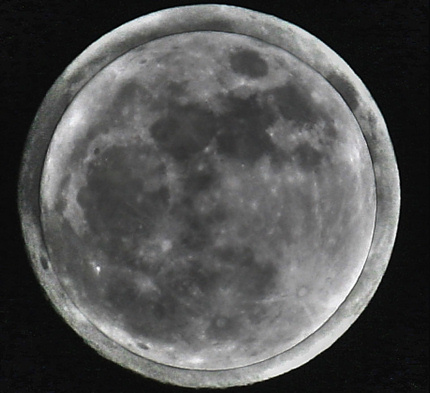
Image of the Day… “Most ‘ Super’ Super Moon of 2014 on 10 August…


Most "super" supermoon of 2014 on August 10 Read more

Above image contrasting largest and smallest full moons: Stefanao Sciarpetti

Full moon falls on August 10, 2014 at 18:09 UTC (1:09 p.m. CDT in the U.S.). This full moon is not only the closest and largest full moon of the year. It also presents the moon’s closest encounter with Earth for all of 2014. The moon will not be so close again until the full moon of September 28, 2015. In other words, it’s not just a supermoon. It’s the closest supermoon of 2014.

At United States’ time zones, the moon will turn full on August 10 at 2:09 p.m. EDT, 1:09 p.m. CDT, 12:09 p.m. MDT and 11:09 a.m. PDT.

We astronomers call this sort of close full moon a perigee full moon. The word perigeedescribes the moon’s closest point to Earth for a given month. Three years ago, when the closest and largest full moon fell on March 19, 2011, many used the term supermoon, which we’d never heard before. In the following years, we heard this term again to describe the year’s closest full moon on May 6, 2012, and again on June 23, 2013. Now the term supermoon is being used a lot. Last month’s full moon – on June 13, 2014 – was also a supermoon. But the August full moon is even more super! In other words, the time of full moon falls even closer to the time of perigee, the moon’s closest point to Earth. The crest of the moon’s full phase in August 10, and perigee, fall within the same hour.

What does supermoon mean exactly? And how special is the August 10, 2014 supermoon? Follow the links below to find out.

What is a supermoon?

How super is this supermoon?

How often is moon both full and closest to Earth?

Will the tides be higher than usual?

Your best photos: May 2013 supermoon

Does a supermoon have a super effect on us?


Source::: Earth sky news

Natarajan


Joke of the Day… ” Ready to Go … ” !!!

A woman in her eighties made the evening news because she was getting married for the fourth time. The following day she was being interviewed by a local TV station, and the commentator asked about what it felt to be married again at that age and would she share part of her previous experiences, since it seem quite unique the fact that her new husband was a ‘funeral director.’ After a short time to think, a smile came to her face and she proudly explained that she had first married a banker when she was in her twenties, in her forties she married a circus ring master, and in her sixties she married a pastor and now in her eighties, a funeral director. The amazed commentator asked her why she had married men with such diverse carriers. With a smile on her face she explained, ‘I married one for the money, two for the show, three to get ready, and four to go.’


Source:::: Joke a day .com

Natarajan

The Bitter Marvels of Fenugreek…. ” venthiyam ” !!!

Given its very distinctive and slightly bitter taste, fenugreek may not be a popular spice in world cuisines but therapeutically, its properties are unquestioned. Photo: Meeta Ahlawat

Given its very distinctive and slightly bitter taste, fenugreek may not be a popular spice in world cuisines but therapeutically, its properties are unquestioned; both the seed as well as its green leaves are highly valued pharmaceutically as it is a rich source of phytonutrients such as thiamin, folic acid, riboflavin, niacin, vitamins A, B6 and C, with the leaves boasting of Vitamin K; it also contains various minerals such as copper, potassium, calcium, iron, selenium, zinc and manganese.

A common house remedy for reducing and controlling the sugar levels of non-insulin dependent diabetics consists of soaking about 1/2 tsp of methi seeds in a little water overnight and gulping the water and seeds first thing in the morning. It has been found that fenugreek is so far the only plant containing an unusual amino acid, known as 4 hydro isoleucine (4 HO-ILE), an element which could help enhance insulin secretion under hyperglycemic conditions, thus increasing insulin sensitivity. An ICMR report also reveals that consuming 25-100 gm of fenugreek seeds a day diminishes hyperglycemia, while significantly reducing levels of glucose serum cholesterol and triglycerides.

Since the seeds are mucilaginous, they are also effective in soothing heartburns and gastro-intestinal inflammation as they coat the stomach and intestinal lining. This property is significantly helpful in case of ulcers.

The steroidal saponins, which fenugreek contains, help reduce absorption of cholesterol from fatty foods. The diogenin present in it is actually used to make a semi-synthetic form of estrogen. In fact, methi seems to be a very woman-friendly ingredient: at the onset of puberty, to prevent anaemia in young girls, they are fed with the cooked leaves. The seeds are said to increase milk flow and they help post-partum mothers tone up their reproductive system after delivery. For this reason, in some communities, the seeds are fried in ghee, finely powdered and mixed with wheat flour and sugar to prepare a halwa for new mothers.

Cosmetically too, both methi leaves and seeds work wonders for the hair and the skin. A paste of fresh leaves, applied to the scalp regularly, helps lengthen hair and prevent premature greying. At night, applied to the face and washed with warm water, it helps clear the skin and prevent early appearance of wrinkles. A paste made from the seeds that have been soaked overnight, when applied to the scalp, helps reduce dandruff and other minor fungal or bacterial infections.

Fenugreek also promotes well being: it is a powerful detoxifier, increasing colonic health and overall body cleansing, eliminating bad breath and body odour. For best results, it is advised to have a tea made from fenugreek seeds. To prepare it, just soak one teaspoon of seeds in one cup of boiling water for some time; you may add a teaspoon of honey to the brew. This tea also soothes inflamed stomach and intestines while cleansing the stomach, bowels, kidneys and respiratory tract of excess mucus.

On the culinary front, when using seeds, lightly toast them to reduce bitterness and enhance aroma and flavour. Methi seeds are used for pickling and are a component of the Bengali spice blend called panchphoron. They are also used in various curries. As for the leaves, they can be used fresh or dried; a tastypulao can be made using peas and fresh methi leaves; you can also add the chopped up leaves to vada orpakoda batter. For an unusual and highly palatable “bitter-sweet” experience, try gajjar methi sabzi, packed with the goodness of beta-carotene and various micronutrients. It is also fairly easy to make; all you need to do is heat up some oil, preferably cold pressed mustard or coconut, season it with cumin seeds, a pinch of asafoetida, coriander powder, red chili powder, turmeric powder and then add diced carrots; when carrots are slightly soft, add cut up fenugreek leaves. Regarding the dried leaves, kasoorimethi, coming from the region of Kasoor in Pakistan, which gives it its name, is the most flavourful; but similar varieties, also called kasoori methi are available on this side of the frontier too. A spoonful of it can take any gravy or bake to another level. You can also use them to enhance the taste of breads and rotis.

Taste, health and beauty, this super food is a super performer on all these three fronts. So why not swallow this “bitter pill” eagerly for some bitter experiences seem to be well worth it.

World-renowned seed activist Vandana Shiva and Navdanya Director Maya Goburdhun believe in the power of local superfoods. Navdanya is actively involved in the rejuvenation of indigenous knowledge, culture and forgotten foods.
Keywords: Desi superfoodsfenugreek benefitsbenefits of methi


Source::::

    VANDANA SHIVA


    MAYA GOBURDHAN

in The Hindu

Natarajan

A Lovely Message on ‘Value’ …..

My Favorite Links and Inspirations
A lovely message on ‘Value’ –

I had known a friend of mine who used to say that he misplaces and loses his pen very often.
He will use only very cheap pens so that he need not worry about losing them. He was worried about carelessness habit.
I suggested him to buy the costliest pen he could afford and see what happens.
He did that and purchased a 22 carat Cross pen. After nearly six months I met him and asked him, if he continues to misplace his pen.
He said that he is very careful about his costly pen and he is surprised how he has changed!
I explained to him that the value of the pen made the difference and there was nothing wrong with him as a person!
This is what happens in our life.
We are careful with things which we value most.
* If we value our health, we will be careful about what and how we eat;
* if we value our friends, we will treat them with respect;
* if we value money, we will be careful while spending;
* if we value our time, we will not waste it.
*if we value relationship we will not break it.
Carefulness is a basic trait all of us have, we know when to be careful!
Carelessness only shows what we don’t value……    
Source::::debu7370.blogspot.in
Natarajan

Joke of the Day……..” Neither Do I … ” !!!

Job Application:

Two young engineers applied for a single position at a computer company. They both had the same qualifications. In order to determine which individual to hire, the applicants were asked to take a test by the department manager.

Upon completion of the test, both men had each missed only one of the questions. The manager went to the first applicant and said, ‘‘thank you for your interest, but we’ve decided to give the job to the other applicant.”

“And why would you be doing that? We both got nine questions correct,” asked the rejected applicant.

“We have based our decision not on the correct answers, but on the question you missed,” said the department manager.

“And just how would one incorrect answer be better than the other?” the rejected applicants inquired.

”Simple,” said the department manager, ”Your fellow applicant put down on question..5, ‘I don’t know.’ You put down, ‘Neither do I.”’

Source:::: Joke a day.com

Natarajan