Top 15 Countries With Highest Quality Of Life… Australia is Ranked No 1 !!!!

For a good chance at a happy life, head to Australia, which one again topped the Organization for Economic Cooperation and Development‘s Better Life Index, which looks at the quality of life in member countries.

The (OECD) — an international economic organization — analyzed 34 countries in 11 categories, including income, housing, jobs, community, education, environment, civic engagement, health, life satisfaction, safety, and work-life balance. (You can read the full methodology here.)

We looked at the countries with the highest overall scores, and highlighted a few of the criteria on the following slides.


#15 Ireland

Average household disposable income: $24,104

The Irish have a strong sense of community — 96% of people believe they know someone they could rely on in a time of need (higher than the OECD average of 90%).

They also rate highly in work-life balance, where the average employee works 1,543 hours a year, less than the OECD average of 1,776.

Researchers compared data from 34 countries that are members of the Organization for Economic Cooperation and Development. They based the rankings on 11 factors including income, safety, life satisfaction, and health, and then rated each country on a 10-point scale. Income is net-adjusted and in USD.

#14 Luxembourg

Average household disposable income: $23,047

Luxembourg rates well in both health and environment, with an average life expectancy of 81 years and a low level of atmospheric PM10 — tiny air pollutant particles small enough to enter and cause damage to the lungs.

Citizens also have a high participation rate in the political process, with 91% of the population turning out for recent elections.

Researchers compared data from 34 countries that are members of the Organization for Economic Cooperation and Development. They based the rankings on 11 factors including income, safety, life satisfaction, and health, and then rated each country on a 10-point scaleIncome is net-adjusted and in USD.

#13 Austria

Average household disposable income: $28,852

Austria has a high rate for education. 82% of Austrian adults ages 25-64 have earned the equivalent of a high school degree.

Austrians also have a strong sense of community, with 94% of the population reporting they know someone they could rely on in a time of need.

Researchers compared data from 34 countries that are members of the Organization for Economic Cooperation and Development. They based the rankings on 11 factors including income, safety, life satisfaction, and health, and then rated each country on a 10-point scaleIncome is net-adjusted and in USD.

#12 Finland

Average household disposable income: $25,739

Finland performed extremely well on the OECD’s Programme for International Student Assessment — the average student scored 543 in reading literacy, math, and science, whereas the average OECD score was 497.

They also have a high level of life satisfaction with 82% of the population saying they have more positive experiences than negative ones in an average day.

Researchers compared data from 34 countries that are members of the Organization for Economic Cooperation and Development. They based the rankings on 11 factors including income, safety, life satisfaction, and health, and then rated each country on a 10-point scaleIncome is net-adjusted and in USD.

#11 New Zealand

Average household disposable income: $21,892

New Zealand has one of the best rates of renewable energy of any OECD country with 36.47%.

Students also scored 524 in reading literacy, math, and science on the OECD Programme for International Student Assessment — higher than the average of 497.

And New Zealand girls outperformed boys by 15 points, higher than the average OECD gap of 9 points.

Researchers compared data from 34 countries that are members of the Organization for Economic Cooperation and Development. They based the rankings on 11 factors including income, safety, life satisfaction, and health, and then rated each country on a 10-point scaleIncome is net-adjusted and in USD.

#10 United Kingdom

#10 United Kingdom

AP/RICHARD LEWIS

Average household disposable income: $23,047

85% of the English population say they have more positive experiences in an average day than negative ones.

They also have a high life expectancy of 81 years, and 97% of the people say they are satisfied with the quality of their water.

Researchers compared data from 34 countries that are members of the Organization for Economic Cooperation and Development. They based the rankings on 11 factors including income, safety, life satisfaction, and health, and then rated each country on a 10-point scaleIncome is net-adjusted and in USD.

#9 Iceland

Average household disposable income: $23,047

Iceland has high levels of civic participation — 98% of people believe they know someone they could rely on in a time of need.

97% of the Iceland population are also extremely satisfied with their water quality, and Iceland has less air pollutant particles per cubic meter than the OECD average.

Researchers compared data from 34 countries that are members of the Organization for Economic Cooperation and Development. They based the rankings on 11 factors including income, safety, life satisfaction, and health, and then rated each country on a 10-point scaleIncome is net-adjusted and in USD.

#8 Netherlands

#8 Netherlands

Average household disposable income: $25,493

People in the Netherlands only work 1,379 hours a year, significantly less than the OECD average of 1,776 hours.

They also test extremely high on the OECD’s Programme for International Student Assessment with an average of 519 (the OECD average is 497).

Researchers compared data from 34 countries that are members of the Organization for Economic Cooperation and Development. They based the rankings on 11 factors including income, safety, life satisfaction, and health, and then rated each country on a 10-point scaleIncome is net-adjusted and in USD.

#7 Denmark

#7 Denmark

Chris Jackson/Getty Images

Average household disposable income: $24,682

Denmark has one of the highest life satisfaction rankings, with 89% of the population reporting they have more positive experiences in an average day than negative ones.

The Danish also know how to balance their work life with their personal life — only 2% of employees say they work very long hours, much lower than the OECD average of 9%.

Researchers compared data from 34 countries that are members of the Organization for Economic Cooperation and Development. They based the rankings on 11 factors including income, safety, life satisfaction, and health, and then rated each country on a 10-point scaleIncome is net-adjusted and in USD.

#6 United States

#6 United States

Assouline

Average household disposable income: $38,001

The U.S. has the highest average household disposable income on the list at $38,000 a year — much higher than the OECD average of $23,000.

It also ranks as one of the best countries for housing conditions, with good basic facilities and general feelings of safety and personal space.

Researchers compared data from 34 countries that are members of the Organization for Economic Cooperation and Development. They based the rankings on 11 factors including income, safety, life satisfaction, and health, and then rated each country on a 10-point scaleIncome is net-adjusted and in USD.

#5 Switzerland

Average household disposable income: $30,060

86% of adults in Switzerland have earned the equivalent of a high school degree, and students scored 517 on the OECD Programme for International Student Assessment — higher than the average of 497.

The Swiss also have a high life expectancy at 83 years of age, and 95% of the population say they are satisfied with the quality of their water.

Researchers compared data from 34 countries that are members of the Organization for Economic Cooperation and Development. They based the rankings on 11 factors including income, safety, life satisfaction, and health, and then rated each country on a 10-point scaleIncome is net-adjusted and in USD.

#4 Norway

Average household disposable income: $31,459

There is a strong sense of community and high levels of safety in Norway, where 93% of people believe that they know someone they could rely on in a time of need.

Norwegians also tend to have a good work-life balance, with only 3% of employees working very long hours, compared to the OECD average of 9%.

Researchers compared data from 34 countries that are members of the Organization for Economic Cooperation and Development. They based the rankings on 11 factors including income, safety, life satisfaction, and health, and then rated each country on a 10-point scaleIncome is net-adjusted and in USD.

#3 Canada

Average household disposable income: $28,194

Canadians work only 1,702 hours a year — less than the OECD average — with 72% of the population working at a paid job.

There is little difference in voting levels across society too, suggesting there is broad inclusion in Canada’s democratic institutions: Voter turnout for the top 20% of the population is 63% and for the bottom 20% it is 60%, a much smaller difference than the OECD average gap of 12 percentage points.

Researchers compared data from 34 countries that are members of the Organization for Economic Cooperation and Development. They based the rankings on 11 factors including income, safety, life satisfaction, and health, and then rated each country on a 10-point scaleIncome is net-adjusted and in USD.

#2 Sweden

Average household disposable income: $26,242

Having a good education is extremely important in Sweden, where 87% of adults aged 25-64 have earned the equivalent of a high school degree.

They also ranked highly in all environmental categories. Their level of air pollutant particles is 10 micrograms per cubic meter — considerably lower than the OECD average of 21 micrograms per cubic meter — and 95% of the population is satisfied with their water quality.

Researchers compared data from 34 countries that are members of the Organization for Economic Cooperation and Development. They based the rankings on 11 factors including income, safety, life satisfaction, and health, and then rated each country on a 10-point scaleIncome is net-adjusted and in USD.

#1 Australia

Average household disposable income: $28,884

For the second year in a row, Australia is the number one happiest country in the world. And it’s not hard to see why —they rank extremely well in health, civic engagement, and housing.

The life expectancy at birth in Australia is 82 years, two years higher than the OECD average.

Australia also has exceptional voter turnout at 93% during recent elections, which is far above the OECD average of 72%.

Researchers compared data from 34 countries that are members of the Organization for Economic Cooperation and Development. They based the rankings on 11 factors including income, safety, life satisfaction, and health, and then rated each country on a 10-point scaleIncome is net-adjusted and in USD.

Read more: http://www.businessinsider.com/top-countries-on-oecd-better-life-index-2013-5?op=1#ixzz2Uh2HIE5s

source::::businessinsider.com

Natarajan
Do You Know ?….Farmers From Bihar Have a Solution to World Food Shortage !!!

India’s rice revolution

In a village in India’s poorest state, Bihar, farmers are growing world record amounts of rice – with no GM, and no herbicide. Is this one solution to world food shortages?

Sumant KumarView larger picture

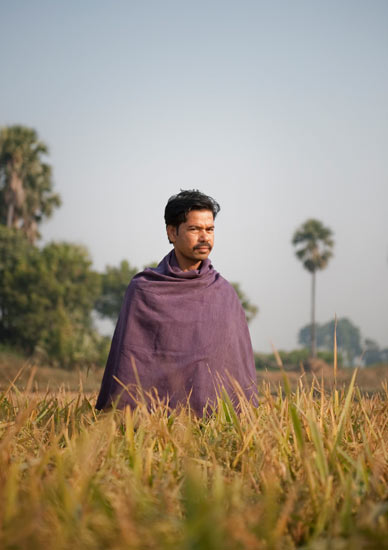
Sumant Kumar photographed in Darveshpura, Bihar, India. Photograph: Chiara Goia for Observer Food Monthly

Sumant Kumar was overjoyed when he harvested his rice last year. There had been good rains in his village of Darveshpura in north-eastIndia and he knew he could improve on the four or five tonnes per hectare that he usually managed. But every stalk he cut on his paddy field near the bank of the Sakri river seemed to weigh heavier than usual, every grain of rice was bigger and when his crop was weighed on the old village scales, even Kumar was shocked.

This was not six or even 10 or 20 tonnes. Kumar, a shy young farmer in Nalanda district of India’s poorest state Bihar, had – using only farmyard manure and without any herbicides – grown an astonishing 22.4 tonnes of rice on one hectare of land. This was a world record and with rice the staple food of more than half the world’s population of seven billion, big news.

Link to video: Rice farming in India: ‘Now I produce enough food for my family’It beat not just the 19.4 tonnes achieved by the “father of rice”, the Chinese agricultural scientist Yuan Longping, but the World Bank-funded scientists at the International Rice Research Institute in the Philippines, and anything achieved by the biggest European and American seed and GM companies. And it was not just Sumant Kumar. Krishna, Nitish, Sanjay and Bijay, his friends and rivals in Darveshpura, all recorded over 17 tonnes, and many others in the villages around claimed to have more than doubled their usual yields.

The villagers, at the mercy of erratic weather and used to going without food in bad years, celebrated. But the Bihar state agricultural universities didn’t believe them at first, while India’s leading rice scientists muttered about freak results. The Nalanda farmers were accused of cheating. Only when the state’s head of agriculture, a rice farmer himself, came to the village with his own men and personally verified Sumant’s crop, was the record confirmed.

A tool used to harvest riceA tool used to harvest rice. Photograph: Chiara GoiaThe rhythm of Nalanda village life was shattered. Here bullocks still pull ploughs as they have always done, their dung is still dried on the walls of houses and used to cook food. Electricity has still not reached most people. Sumant became a local hero, mentioned in the Indian parliament and asked to attend conferences. The state’s chief minister came to Darveshpura to congratulate him, and the village was rewarded with electric power, a bank and a new concrete bridge.

That might have been the end of the story had Sumant’s friend Nitish not smashed the world record for growing potatoes six months later. Shortly after Ravindra Kumar, a small farmer from a nearby Bihari village, broke the Indian record for growing wheat. Darveshpura became known as India’s “miracle village”, Nalanda became famous and teams of scientists, development groups, farmers, civil servants and politicians all descended to discover its secret.

When I meet the young farmers, all in their early 30s, they still seem slightly dazed by their fame. They’ve become unlikely heroes in a state where nearly half the families live below the Indian poverty line and 93% of the 100 million population depend on growing rice and potatoes. Nitish Kumar speaks quietly of his success and says he is determined to improve on the record. “In previous years, farming has not been very profitable,” he says. “Now I realise that it can be. My whole life has changed. I can send my children to school and spend more on health. My income has increased a lot.”

What happened in Darveshpura has divided scientists and is exciting governments and development experts. Tests on the soil show it is particularly rich in silicon but the reason for the “super yields” is entirely down to a method of growing crops called System of Rice (or root) Intensification (SRI). It has dramatically increased yields with wheat, potatoes, sugar cane, yams, tomatoes, garlic, aubergine and many other crops and is being hailed as one of the most significant developments of the past 50 years for the world’s 500 million small-scale farmers and the two billion people who depend on them.

People work on a rice field in BiharPeople work on a rice field in Bihar. Photograph: Chiara GoiaInstead of planting three-week-old rice seedlings in clumps of three or four in waterlogged fields, as rice farmers around the world traditionally do, the Darveshpura farmers carefully nurture only half as many seeds, and then transplant the young plants into fields, one by one, when much younger. Additionally, they space them at 25cm intervals in a grid pattern, keep the soil much drier and carefully weed around the plants to allow air to their roots. The premise that “less is more” was taught by Rajiv Kumar, a young Bihar state government extension worker who had been trained in turn by Anil Verma of a small Indian NGO called Pran (Preservation and
Proliferation of Rural Resources and Nature), which has introduced the SRI method to hundreds of villages in the past three years.

While the “green revolution” that averted Indian famine in the 1970s relied on improved crop varieties, expensive pesticides and chemical fertilisers, SRI appears to offer a long-term, sustainable future for no extra cost. With more than one in seven of the global population going hungry and demand for rice expected to outstrip supply within 20 years, it appears to offer real hope. Even a 30% increase in the yields of the world’s small farmers would go a long way to alleviating poverty.

“Farmers use less seeds, less water and less chemicals but they get more without having to invest more. This is revolutionary,” said Dr Surendra Chaurassa from Bihar’s agriculture ministry. “I did not believe it to start with, but now I think it can potentially change the way everyone farms. I would want every state to promote it. If we get 30-40% increase in yields, that is more than enough to recommend it.”

The results in Bihar have exceeded Chaurassa’s hopes. Sudama Mahto, an agriculture officer in Nalanda, says a small investment in training a few hundred people to teach SRI methods has resulted in a 45% increase in the region’s yields. Veerapandi Arumugam, the former agriculture minister of Tamil Nadu state, hailed the system as “revolutionising” farming.

SRI’s origins go back to the 1980s in Madagascar where Henri de Laulanie, a French Jesuit priest and agronomist, observed how villagers grew rice in the uplands. He developed the method but it was an American, professor Norman Uphoff, director of the International Institute for Food, Agriculture and Development at Cornell University, who was largely responsible for spreading the word about De Laulanie’s work.

Given $15m by an anonymous billionaire to research sustainable development, Uphoff went to Madagascar in 1983 and saw the success of SRI for himself: farmers whose previous yields averaged two tonnes per hectare were harvesting eight tonnes. In 1997 he started to actively promote SRI in Asia, where more than 600 million people are malnourished.

“It is a set of ideas, the absolute opposite to the first green revolution [of the 60s] which said that you had to change the genes and the soil nutrients to improve yields. That came at a tremendous ecological cost,” says Uphoff. “Agriculture in the 21st century must be practised differently. Land and water resources are becoming scarcer, of poorer quality, or less reliable. Climatic conditions are in many places more adverse. SRI offers millions of disadvantaged households far better opportunities. Nobody is benefiting from this except the farmers; there are no patents, royalties or licensing fees.”

Rice seedsRice seeds. Photograph: Chiara GoiaFor 40 years now, says Uphoff, science has been obsessed with improving seeds and using artificial fertilisers: “It’s been genes, genes, genes. There has never been talk of managing crops. Corporations say ‘we will breed you a better plant’ and breeders work hard to get 5-10% increase in yields. We have tried to make agriculture an industrial enterprise and have forgotten its biological roots.”

Not everyone agrees. Some scientists complain there is not enough peer-reviewed evidence around SRI and that it is impossible to get such returns. “SRI is a set of management practices and nothing else, many of which have been known for a long time and are best recommended practice,” says Achim Dobermann, deputy director for research at the International Rice Research Institute. “Scientifically speaking I don’t believe there is any miracle. When people independently have evaluated SRI principles then the result has usually been quite different from what has been reported on farm evaluations conducted by NGOs and others who are promoting it. Most scientists have had difficulty replicating the observations.”

Dominic Glover, a British researcher working with Wageningen University in the Netherlands, has spent years analysing the introduction of GM crops in developing countries. He is now following how SRI is being adopted in India and believes there has been a “turf war”.

“There are experts in their fields defending their knowledge,” he says. “But in many areas, growers have tried SRI methods and abandoned them. People are unwilling to investigate this. SRI is good for small farmers who rely on their own families for labour, but not necessarily for larger operations. Rather than any magical theory, it is good husbandry, skill and attention which results in the super yields. Clearly in certain circumstances, it is an efficient resource for farmers. But it is labour intensive and nobody has come up with the technology to transplant single seedlings yet.”

But some larger farmers in Bihar say it is not labour intensive and can actually reduce time spent in fields. “When a farmer does SRI the first time, yes it is more labour intensive,” says Santosh Kumar, who grows 15 hectares of rice and vegetables in Nalanda. “Then it gets easier and new innovations are taking place now.”

In its early days, SRI was dismissed or vilified by donors and scientists but in the past few years it has gained credibility. Uphoff estimates there are now 4-5 million farmers using SRI worldwide, with governments in China, India, Indonesia, Cambodia, Sri Lanka and Vietnam promoting it.

Sumant, Nitish and as many as 100,000 other SRI farmers in Bihar are now preparing their next rice crop. It’s back-breaking work transplanting the young rice shoots from the nursery beds to the paddy fields but buoyed by recognition and results, their confidence and optimism in the future is sky high.

Last month Nobel prize-winning economist Joseph Stiglitz visited Nalanda district and recognised the potential of this kind of organic farming, telling the villagers they were “better than scientists”. “It was amazing to see their success in organic farming,” said Stiglitz, who called for more research. “Agriculture scientists from across the world should visit and learn and be inspired by them.”

A man winnows rice in Satgharwa villageA man winnows rice in Satgharwa village. Photograph: Chiara GoiaBihar, from being India’s poorest state, is now at the centre of what is being called a “new green grassroots revolution” with farming villages, research groups and NGOs all beginning to experiment with different crops using SRI. The state will invest $50m in SRI next year but western governments and foundations are holding back, preferring to invest in hi-tech research. The agronomist Anil Verma does not understand why: “The farmers know SRI works, but help is needed to train them. We know it works differently in different soils but the principles are solid,” he says. “The biggest problem we have is that people want to do it but we do not have enough trainers.

“If any scientist or a company came up with a technology that almost guaranteed a 50% increase in yields at no extra cost they would get a Nobel prize. But when young Biharian farmers do that they get nothing. I only want to see the poor farmers have enough to eat.”


source:::: John Vidal in The Observer  UK

Natarajan

” Cheque” out His Honesty !!!….Strange But True !!!!


Autorickshaw driver Raju Bharwad  returned a cheque of Rs 1.9 crore, saying his monthly income of Rs 6,000 was enough to sustain his family!!!

Autorickshaw driver Raju Bharwad (above) returned a cheque of Rs 1.9 crore, saying his monthly income of Rs 6,000 was enough to sustain his family

He could have been a billionaire overnight, but autorickshaw driver Raju Bharwad chose honesty over a cheque of Rs 1.9 crore sent in his name by Gujarat Industrial Development Corporation.

Bharwad was surprised to receive the cheque, which also had the name of his mother as the co-recipient.

The accompanying letter said the money was being given to them in lieu of 10 bigha land that they owned at Sanand near the Tata Nano plant.

At a time when complaints of violence, land-grabbing and forgery are on the rise in Sanand after the relocation of Tata Nano plant from West Bengal, Bharwad, who stays in Ahmedabad, rushed to the authorities to return the cheque.

“We did have 10 bigha land in that area but my father sold that plot for Rs 9 lakh 25 years ago. Today, several families are staying there,” he said, adding that the ownership of the land was not transferred officially and had remained with Raju and his mother.

“If I had accepted the money, the authorities would have bulldozed the houses on that plot,” Raju said.

He is now trying to ensure that the ownership of the land is transferred to the right owners.

“I earn about Rs 6,000 a month by driving an autorickshaw and have four bigha land,” Raju said, adding that the money was sufficient.

Raju’s honesty has surprised government officials, too, who said they have seen many disputes over land ownership but someone returning a cheque of such a big amount is unheard of.

source:::::mailonline.com

Natarajan


Thought For The Weekend…5 Cs Needed For Success !!!!


There is a story about a man who sold hot dogs by the roadside. He was illiterate, so he never read newspapers . He was hard of hearing, so he never listened to the radio. His eyes were weak, so he never watched television. But enthusiastically, he sold lots of hot dogs. His sales and profit went up. He ordered more meat and got himself a bigger and a better stove. As his business was growing, the son, who had recently graduated from college, joined his father. Then something strange happened. The son asked, “Dad, aren’t you aware of the great recession that is coming our way?” The father replied, “No, but tell me about it.” The son said, “The international situation is terrible. The domestic is even worse. We should be prepared for the coming bad time.” The man thought that since his son had been to college, read the papers, and listened to the radio, he ought to know and his advice should not be taken lightly. So the next day, the father cut down his order for the meat and buns, took down the sign and was no longer enthusiastic. Very soon, fewer and fewer people bothered to stop at his hot dog stand. And his sales started coming down rapidly. The father said to his son, “Son, you were right. We are in the middle of a recession. I am glad you warned me ahead of time.”What is the moral of the story?
1. Many times we confuse intelligence with good judgment.
2. A person may have high intelligence but poor judgment.
3. Choose your advisers carefully and use your judgment.
4.A person can and will be successful with or without formal education if they have the 5 Cs:
Character Commitment
Conviction
Courtesy
Courage
5. The tragedy is that there are many walking encyclopedias who are living failures….
source::::Shirdi Sai Speaks ….article by Deepa .H.
Natarajan

Message For The Day…Helping Hand From Siddhivinayak Temple , Mumbai , India.

MUMBAI, April 27 2013 (DNA India): The Siddhivinayak Temple trust has decided to set up a state-of-the-art dialysis centre close to the Prabhadevi temple, where patients can have a dialysis done at just US$4.61 per cycle (compared to an average cost in the United States of $500/treatment). At present, patients have to shell out $22 to $28 for each cycle of dialysis. The temple has tied up with an NGO, Shri Veera Desai Jain Sangh, which runs a similar dialysis centre in Andheri, to get its 22-bed centre put together.The NGO, which has a budget of $553,000, will also appoint the health experts needed to run the centre. “We will charge patients the minimum fee. The rest of the expenses will be borne by the temple and us,” explains Chetan Vora, trustee of the NGO. The Sangh and the temple administration have signed a memorandum of understanding to have the centre up and running by July. Mangesh Shinde, CEO of the temple administration, says the decision was spurred by the realization to have a sub-centre within Mumbai for conducting dialysis procedures.


source::::Siddhivinayak Smiles On Dialysis Patients…Hindusim Today

Natarajan

Think Before You Spend !!!!

AKBARS GOLD COINS

The wisdom of Birbal was unparalleled during the reign of Emperor Akbar. But Akbars brother in law was extremely jealous of him. He asked the Emperor to dispense with Birbals services and appoint him in his place. He gave ample assurance that he would prove to be more efficient and capable than Birbal. Before Akbar could take a decision on this matter, this news reached Birbal.

Birbal resigned and left. Akbars brother in law was made the minister in place of Birbal. Akbar decided to test the new minister. He gave three hundred gold coins to him and said, Spend these gold coins such that, I get a hundred gold coins here in this life; a hundred gold coins in the other world and another hundred gold coins neither here nor there.

The minister found the entire situation to be a maze of confusion and hopelessness. He spent sleepless nights worrying over how he would get himself out of this mess. Thinking in circles was making him go crazy. Eventually, on the advice of his wife he sought Birbals help. Birbal said, Just give me the gold cons. I shall handle the rest.

Birbal walked the streets of the city holding the bag of gold coins in his hand. He noticed a rich merchant celebrating his sons wedding. Birbal gave a hundred gold coins to him and bowed courteously saying, The Emperor Akbar sends you his good wishes and blessings for the wedding of your son. Please accept the gift he has sent. The merchant felt honoured that the king had sent a special messenger with such a precious gift. He honoured Birbal and gave him a large number of expensive gifts and a bag of gold coins as a return gift for the king.

Next, Birbal went to the area of the city were the poor people lived. There he bought food and clothing in exchange for a hundred gold coins and distributed them in the name of the Emperor.

When he came back to town he organized a concert of music and dance. He spent a hundred gold coins on it.

The next day Birbal entered Akbars darbar and announced that he had done all that the king had asked his brother-in-law to do. The Emperor waited to know how he had done it. Birbal repeated the sequences of all the events and then said, The money I gave to the merchant for the wedding of his son �you have got back while on this earth. The money I spent on buying food and clothing for the poor �you will get it in the other world. The money I spent on the musical concert �you will get neither here nor there.

This is true even today.

The money you spend on friends is returned or reciprocated in some form or the other.

Money spent on charity gets converted into blessings from God which becomes your eternal property.

Money spent on pleasures is just frittered away!

So when you spend money, think a little, if not a lot!


source::::input from a friend of mine..

Natarajan

“Men May Come and Men May Go”..But Credit Card Billing Goes on Forever!!!

Cancel your credit card before you die……… (hilarious! ).. Because ,you can not rule out the possibility of such response from today”s  Customer service call centers of  Banks !!!!!

Be sure and cancel your credit cards before you die.

This is so priceless, and so, so easy to see happening, customer service being what it is today.

A lady died this past January, and  the Bank billed her for February and March for their annual service charges on her credit card, and added late fees and interest on the monthly charge. The balance had been Rs.0.00 when she died, but now somewhere around Rs.6000.00. A family member placed a call to  Bank.

Here is the exchange :

Family Member: ‘I am calling to tell you she died back in January.’

Bank: ‘The account was never closed and the late fees and charges still apply.’

Family Member: ‘Maybe, you should turn it over to collections. ‘

Bank: ‘Since it is two months past due, it already has been.’

Family Member: So, what will they do when they find out she is dead?’

Bank: ‘Either report her account to frauds division or report her to the credit bureau, maybe both!’

Family Member: ‘Do you think God will be mad at her?

Bank:   Excuse Me …

Family Member: ‘Did you just get what I was telling you – the part about her being dead?’

Bank: ‘Sir, you’ll have to speak to my supervisor.’

Supervisor gets on the phone:

Family Member: ‘I’m calling to tell you, she died back in January with a Rs.0 balance.’

Bank: ‘The account was never closed and late fees and charges still apply.’

Family Member: ‘You mean you want to collect from her estate?’

Bank: (Stammer) ‘Are you her lawyer?’

Family Member: ‘No, I’m her great nephew.’ (Lawyer info was given)

Bank: ‘Could you fax us a certificate of death?’

Family Member: ‘Sure.’ (Fax number was given )

After they got the fax :

Bank: ‘Our system just isn’t setup for death. I don’t know what more I can do to help.’

Family Member: ‘Well, if you figure it out, great! If not, you could just keep billing her. She won’t care.’  Bank: ‘Well, the late fees and charges will still apply.’

(What is wrong with these people?!?)

Family Member: ‘Would you like her new billing address?’

Bank: ‘That might help…’

Family Member: Odessa Memorial Cemetery , Avinashi, Coimbatore

Bank: ‘Sir, that’s a cemetery!’
Family Member: ‘And what do you do with dead people on your planet???’

!!!!!!!!!!!!!!!!!     !!!!!!!!!!!!!!!!!!!!         !!!!!!!!!!!!!!!!!!!!!!!!

source: unknown… input from a friend of mine

Natarajan

“No Frills ” Hospitals In India !!!!….A Mix Of Wal-Mart and Low Cost Airline !!!!

What if hospitals were run like a mix of Wal-Mart and a low-cost airline? The result might be something like the chain of “no-frills” Narayana Hrudayalaya clinics in southern India.

Budget Hospital India

In this picture taken on February 7, 2013 hospital staff work at one of the post-operative pediatrics observation and care units of the Narayana Hrudayalaya cardiac-care hospital in Bangalore. A group of Indian doctors believe they can cut the cost of heart surgery to an astonishing 800 USD at their “no thrills” low-cost hospital.

Using pre-fabricated buildings, stripping out air-conditioning and even training visitors to help with post-operative care, the group believess it can cut the cost of heart surgery to an astonishing 800 dollars.

“Today healthcare has got phenomenal services to offer. Almost every disease can be cured and if you can’t cure patients, you can give them meaningful life,” says company founder Devi Shetty, one of the world’s most famous heart surgeons.

“But what percentage of the people of this planet can afford it? A hundred years after the first heart surgery, less than 10 percent of the world’s population can,” he told AFP from his office in hi-tech hub Bangalore.

Already famous for his “heart factory” in Bangalore, which does the highest number of cardiac operations in the world, the latest Narayana Hrudayalaya (“Temple of the Heart”) projects are ultra low-cost facilities.

The first is a single-storey hospital in Mysore, two hours drive from Bangalore, which was built for about 400 million rupees (7.4 million dollars) in only 10 months and recently opened its doors.

Set amid palm trees and with five operating theatres for cardiac, brain and kidney procedures, Shetty boasts how it was built at a fraction of the cost of equivalents in the rich world.

“Near Stanford (in the US), they are building a 200-300 bed hospital. They are likely to spend over 600 million dollars,” he said.

“There is a hospital coming up in London. They are likely to spend over a billion pounds,” added the father of four, who has a large print of mother Teresa on his wall — one of his most famous patients.

“Our target is to build and equip a hospital for six million dollars and build it in six months.”

The Mysore facility represents his vision for the future of healthcare in India — and a model likely to burnish India’s reputation as a centre for low-cost innovation in the developing world.

Air-conditioning is restricted to operating theatres and intensive care units. Ventilation comes from large windows on the wards.


Budget Hospital India

A group of Indian doctors believe they can cut the cost of heart surgery to an astonishing 800 USD at their “no thrills” low-cost hospital.

Relatives or friends visiting in-patients undergo a four-hour nursing course and are expected to change bandages and do other simple tasks.


In its architecture, Shetty rejected the generic multi-storey model, which requires costly foundations and steel reinforcements as well as lifts and complex fire safety equipment.

Much of the building was pre-fabricated off site and then quickly assembled.

The Mysore facility will be followed by others in the cities of Bhubaneswar and Siliguri.

Each will owe its existence to Shetty’s original success story, his pioneering cardiac hospital in Bangalore which opened in 2001.

About 30 heart surgeries are performed there daily, the highest in the world, at a break-even cost of 1,800 dollars. Most patients are charged more than this, but some of the poorest are treated for free.

Its success has made Shetty a wealthy man and earned him international renown. Al-Jazeera recently broadcast a six-part series on the hospital whose wards are packed with low-income farmers and labourers.

In the crammed waiting room, families from across South Asia wait for appointments with the boss who juggles them between stints in theatre.

“We saw him on TV recently and we could see his commitment to poor people and middle class people like us,” said Ranjan Bhattacharya, a civil servant, who had brought his ill wife 2,000 kilometres (1,200 miles) by train from northeast India.

In its dealings with suppliers, the hospital group works like a large supermarket, buying expensive items such as heart valves in bulk.

By running the operating theatres from early morning to late at night, six days a week, it is inspired by low-cost airlines which keep their planes in the air as much as possible.

The British-trained surgeon sniffs at the output of Western counterparts who might do a handful of operations a week. Each of his surgeons does up to four a day on a fraction of the wages of those in the West.

“Essentially we realised that as you do more numbers, your results get better and your cost goes down,” he said.

Public spending on health in India amounts to just four percent of GDP, less than Afghanistan, according to the World Health Organization.

A lack of private insurance and a public system that has “collapsed” according to the country’s rural development minister means an estimated 70 percent of healthcare spending is borne by Indians out of their own pockets.

So is Shetty a sharp-witted businessman who has spotted a gap in the market or a philanthropist?

“We believe that charity is not scalable. If you give anything free of cost, it is a matter of time before you run out of money, and people are not asking for anything free,” he said.

His first foreign venture is a hospital on the Cayman Islands, targeting locals who would normally travel to the US for expensive treatment, and he says he would love to expand into Africa.

From 6,000 beds now in 17 clinics, he aims to expand privately-run Narayana Hrudayalaya Hospitals to a group with 30,000 beds in the next five years.

“The current regulatory structures, the current policies and business strategies (for healthcare) that we have are wrong. If they were right, we should have reached 90 percent of the world’s population,” he said.

source::::businessinsider.com

Natarajan

Read more: http://www.businessinsider.com/inside-indias-no-frills-hospitals-where-heart-surgery-costs-just-800-2013-4#ixzz2RAscwJhp

Melbourne Airport…New Domestic Terminal ….Ready for Take Off By 2015 !!!!

Melbourne Airport

Artist’s impression: Melbourne Airport’s new terminal extension.

A NEW domestic terminal at Melbourne Airport will ease congestion and help drive economic growth, the federal government says.

The terminal, capable of handling up to 10 million passengers a year, is part of the $400 million first stage development of the airport’s long-term southern precinct project.

The project, due to open in mid-2015, will include 17 new aircraft parking bays, extra car parking, ground transport facilities and road upgrades.

Approving the development on Tuesday, federal Infrastructure and Transport Minister Anthony Albanese said expanding airports is necessary to connect Australia to the world and drive economic growth.

He said increasing capacity will help the airport deal with an expected doubling of its annual number of passengers to 64 million by 2033.

“What that means is jobs and economic growth and positioning Australia in the Asian century,” he told reporters in Melbourne.

Melbourne Airport chief executive Chris Woodruff said the development will create jobs and provide a boost to the Victorian economy.

He said the expansion was driven by strong domestic passenger demand and will provide for further growth.

The works will focus on the area south of terminal 3 and around terminal 4.

source::: news .com.au

Natarajan
Read more: http://www.news.com.au/travel/news/new-melbourne-airport-terminal-approved/story-e6frfq80-1226622194511#ixzz2QhAfHtaT

Princie Diamond: Rare Indian Gem Sells for $39m !!!!

The Princie Diamond

 
All four of the world’s top pink diamonds have been found at Golconda…

One of the largest pink diamonds in the world has been sold at auction for more than $39.3m (£25m).

The Princie Diamond was purchased by an anonymous collector bidding by phone, Christie’s in New York said.

The 34.65 carat diamond’s origin can be traced back to the ancient diamond mines of Golconda in southern India.

It once belonged to the royal family of Hyderabad, rulers of one of the wealthiest provinces of Mughal India.

“The Princie Diamond carries a fabulous provenance, which brings together the legendary names of Golconda, [the] Nizam of Hyderabad, and the Maharani Sita Devi of Baroda,” said Christie’s jewellery department head Rahul Kadakia before the sale.

“The most beautiful stones discovered in Golconda were always reserved for kings and rulers as they represented the highest power, which was then magically transferred to the owner.

“It was a widely regarded belief that God’s gift to India became India’s gift to mankind and the Princie is undoubtedly one of the greatest gifts of Golconda.”

The diamond was once owned by the Nizam of Hyderabad, who was proclaimed the richest man in the world by Time magazine in 1937.

It had not seen in public since 1960 when Sotheby’s sold it as the “property of a gentleman”.

All four of the world’s top pink diamonds have been found at Golconda, Christie’s says. The area has the earliest known diamond mines in the world, producing the stones as early as 800BC.

In 2010 a diamond known as the Graff pink was sold in Geneva by Sotheby’s for $44m. At the time it was believed to be the most expensive gemstone bought at auction in history.

The two largest pink diamonds – the Darya-I Nur, weighing 175 to 195 carats, and the Nur ul-Ain, weighing about 60 carats – originally formed part of the Iranian Crown Jewels.

Experts say it has since been determined that they were cut from a single pink diamond weighing 242 carats.

Christie’s say that the Princie Diamond is believed to be the third largest pink diamond in the world and was found 300 years ago in the Golconda mines.

SOURCE:::bbc.com.news

Natarajan