The Gold Mines of Serra Pelada…….!!!

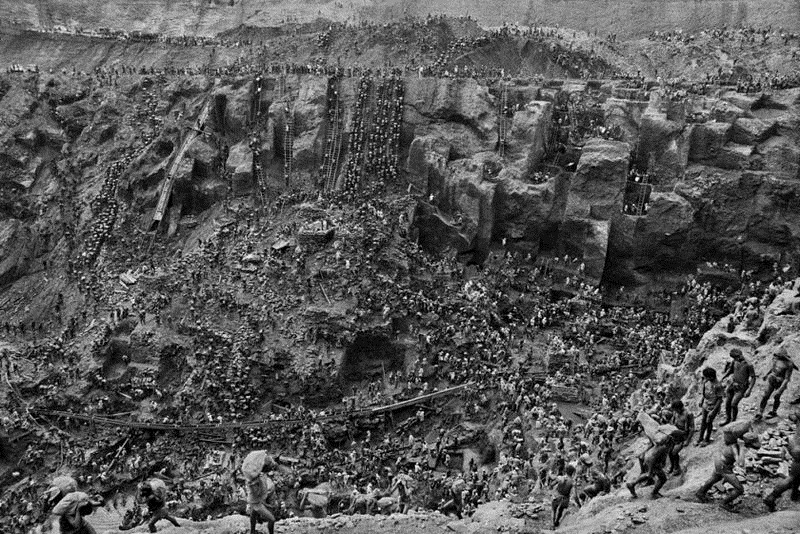
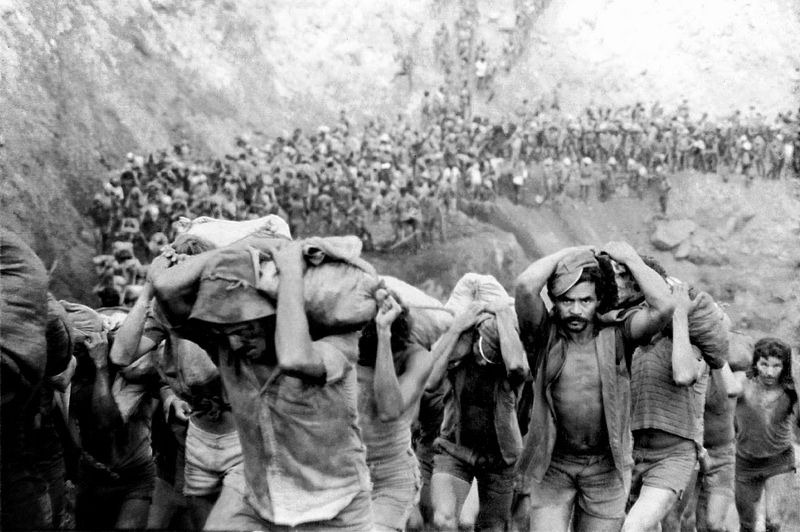
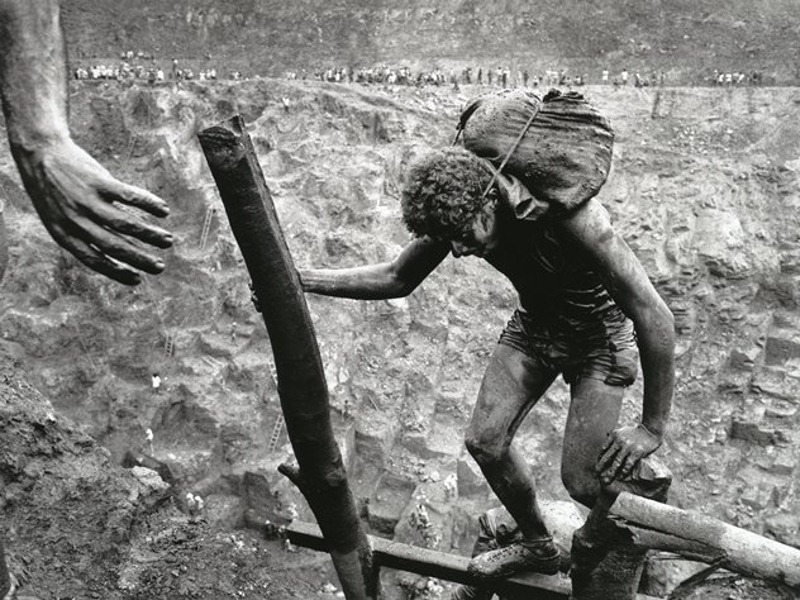
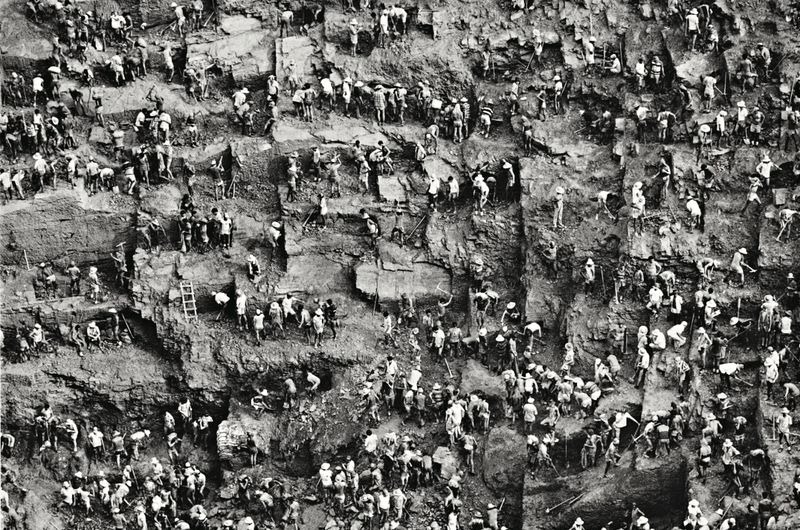
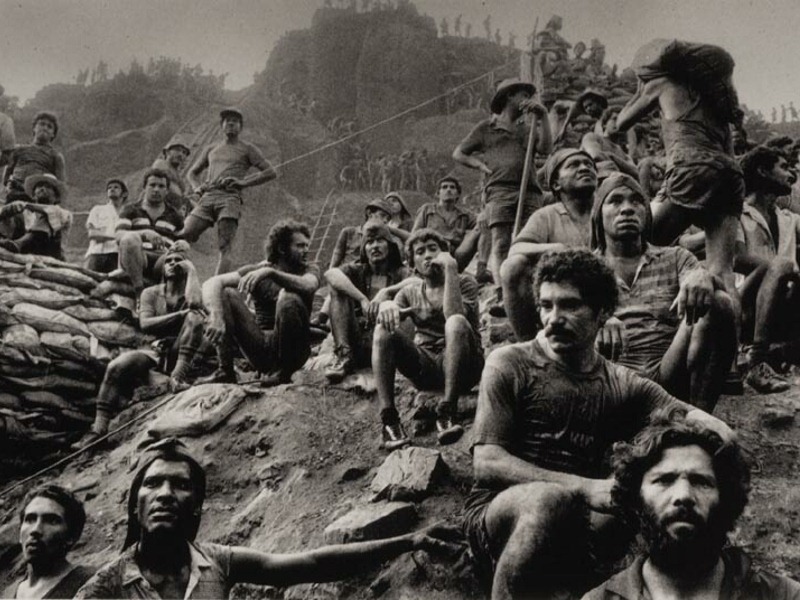
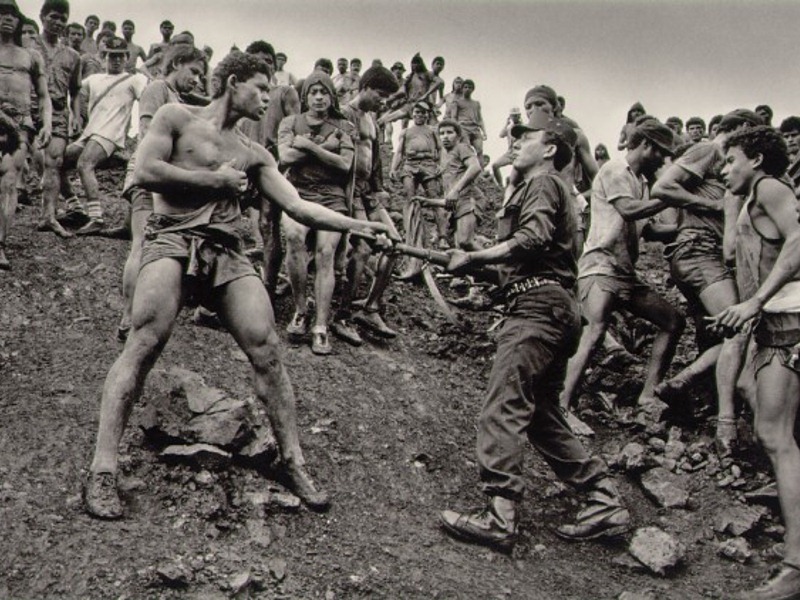
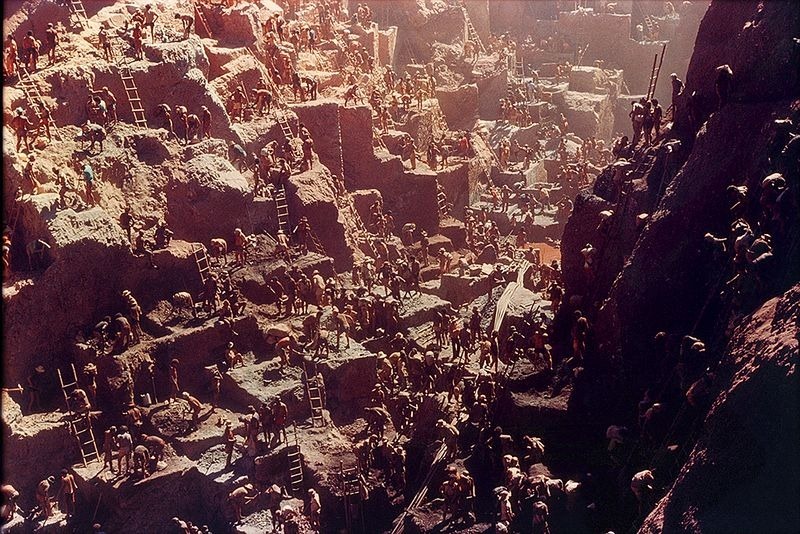
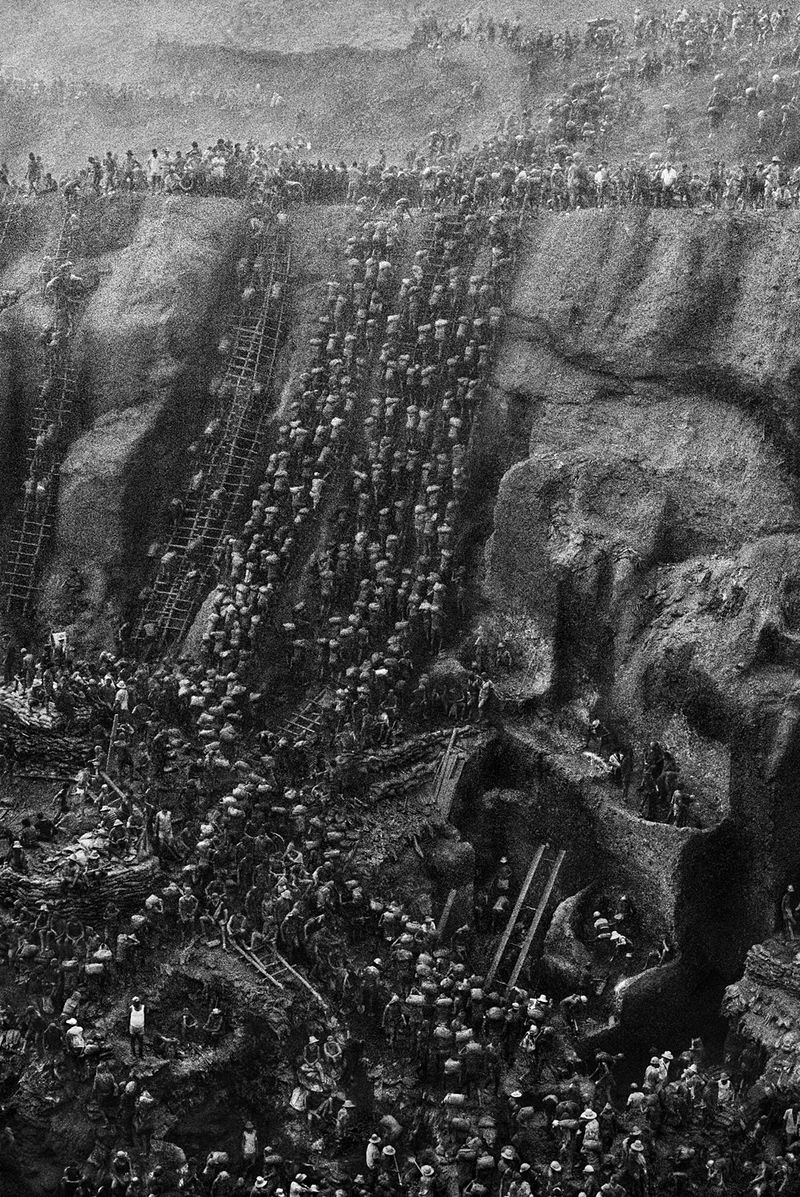
In the early 1980s, Brazilian photographer Sebastião Salgado travelled to the mines of Serra Pelada, some 430 kilometers south of the mouth of the Amazon River, where a notorious gold rush was in progress. A few years earlier, a child had found a 6-grams nugget of gold in the banks of a local river, triggering one of the biggest race for gold in modern history. Motivated by the dream of getting rich quickly, tens of thousands of miners descended into the site swarming like ants in the vast open-air pit they had carved into the landscape. Salgado took some of the most haunting pictures of the workers there, highlighting the hazardous conditions in which they worked and the sheer madness and chaos of the operation.

serra-pelada-1

Photo credit: Sebastião Salgado

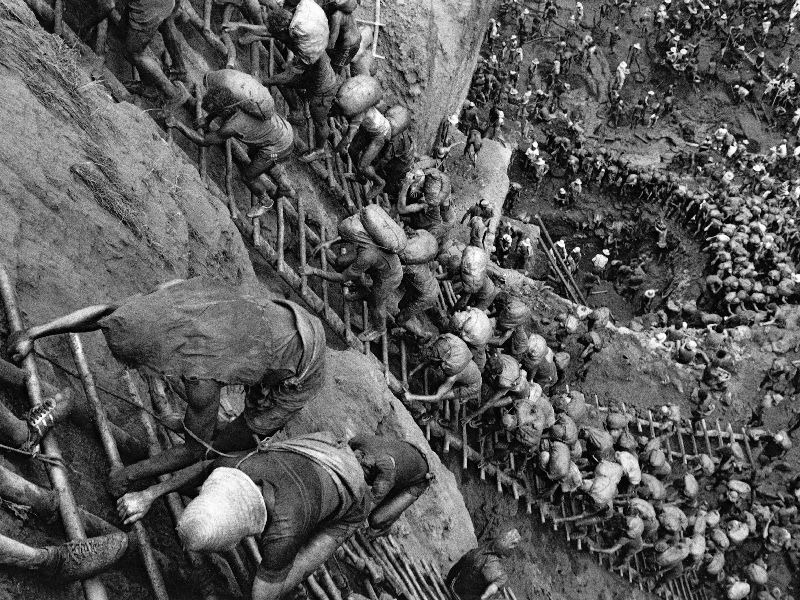
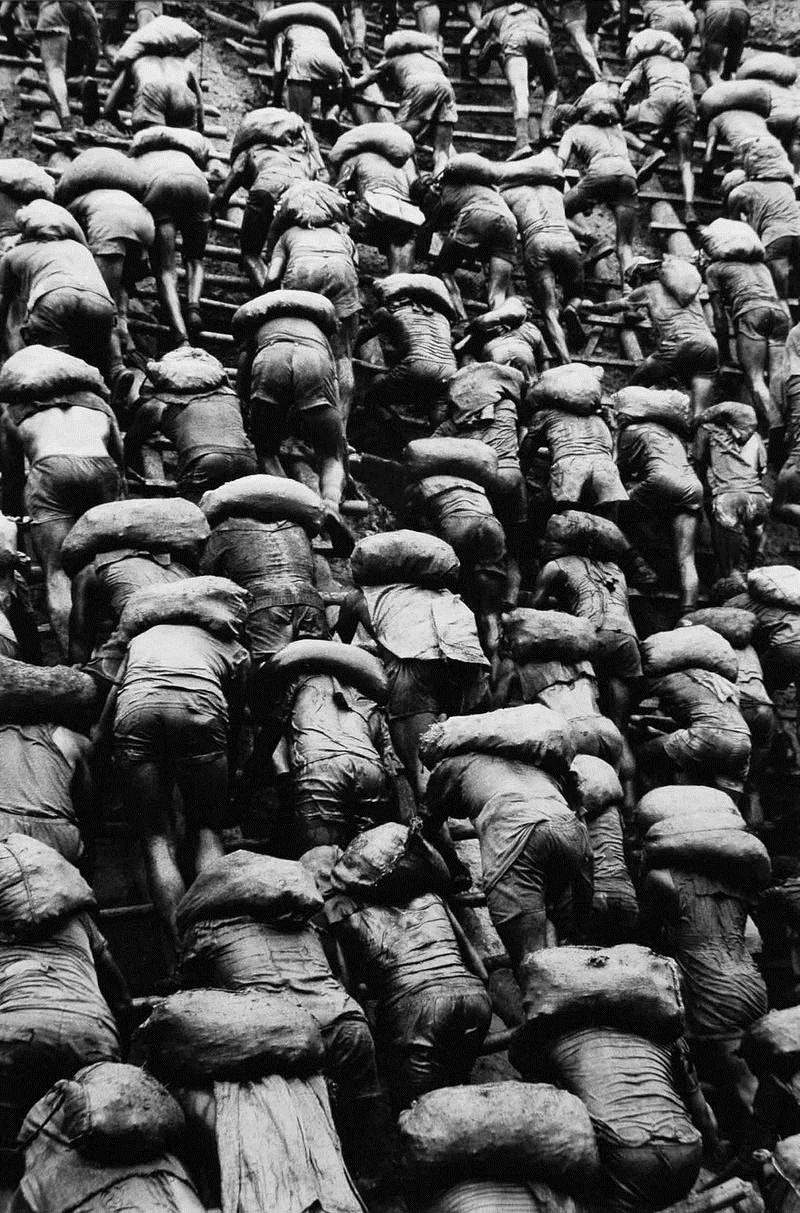
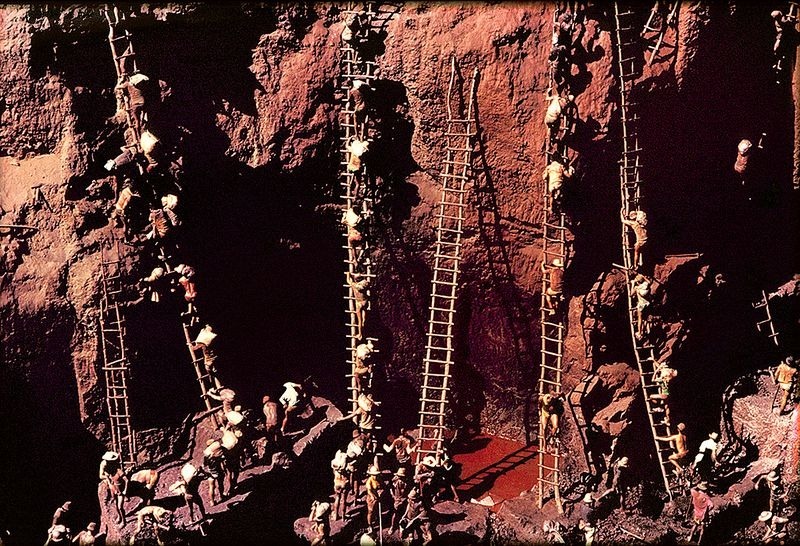
One of the most vertigo-inducing photograph of the series showed hundreds of workers swarming up tall ladders, scaling the cliff-like sides of a hellish hole. Later, when talking about the captivating images, Sebastião Salgado had said: “Every hair on my body stood on edge. The Pyramids, the history of mankind unfolded. I had travelled to the dawn of time.”

During its peak, the Serra Pelada mine employed some 100,000 diggers or garimpeiros in appalling conditions, where violence, death and prostitution was rampant. The diggers scratched through the soil at the bottom of the open pit, filled it into sacks each weighing between 30 to 60 kilograms, and then carried the heavy sacks up some 400 meters of wood and rope ladders to the top of the mine, where it is sifted for gold. On average, workers were paid 20 cents for digging and carrying each sack, with a bonus if gold was discovered. Thousands of underage girls sold their bodies for a few gold flakes while around 60–80 unsolved murders occurred in the nearby town, where the workers lived, every month.

Three months after the gold’s discovery, the Brazilian military took over operations to prevent exploitation of the workers and conflict between miners and owners. The government agreed to buy all the gold the garimpeiros found for 75 percent of the London Metal Exchange price. Officially just under 45 tons of gold was identified, but it is estimated that as much as 90 percent of all the gold found at Serra Pelada was smuggled away.

Mining had to be abandoned when the pit became flooded preventing further exploration. Geological surveys estimate that there could still be 20 to 50 tons of gold buried under the muddy lake, which the pit has now become.

In 2012, after remaining largely untouched for the last 20 years, a Brazilian cooperative company was granted an exploration license for the property in a bid to develop Serra Pelada.

serra-pelada-11

Photo credit: Sebastião Salgado

serra-pelada-12

Photo credit: Sebastião Salgado

sebastiao-salgado-serra-pelada-6

Photo credit: Sebastião Salgado

sebastiao-salgado-serra-pelada-8

Photo credit: Sebastião Salgado

serra-pelada-14

Photo credit: Sebastião Salgado

sebastiao-salgado-serra-pelada-4

Photo credit: Sebastião Salgado

sebastiao-salgado-serra-pelada-5

Photo credit: Sebastião Salgado

serra-pelada-9

Photo credit: Sebastião Salgado

serra-pelada-2

Photo credit: Rudi Böhm

serra-pelada-3

Photo credit: Rudi Böhm

Sources: Aljazeera / www.beetlesandhuxley.com / Buried in Mud, Digging for Gold / Wikipedia

Source………www.amusingplanet.com

Natarajan

How a school dropout built a Rs 60 crore business…? …An Inspiring Story !!!

From extreme poverty to building a company worth Rs 60 crore, Raja Nayak’s incredible rags-to-riches story is an inspiration.

Raja Nayak

At 17, Raja Nayak ran away from home.

Like millions before him, he wanted to escape the punishing life that poverty inflicts on its victims.

“I knew I had to earn money. I wanted to earn big money. That was my only focus then,” Raja Nayak, 54, tells me as we settle down in his plush new office in Bengaluru for the interview.

“I had realised as a young boy that it was very hard for my parents to send me and my four siblings to school. My father did not have a steady income and my mother had little to make ends meet often pawning whatever little valuables she had,” he says.

The penny dropped when Raja was loitering with his neighbourhood friends and was persuaded to watch a Hindi movie.

It was the 1978 film, ‘Trishul’, where a penniless Amitabh Bachchan eventually goes on to become a real estate baron.

Those three hours in the dark theatre ignited Raja’s mind and future path as it were.

“I was really taken up by the story. It felt so real to me. Suddenly, I believed that it was possible to make my dreams come true. I wanted to be a real estate baron too,” Raja says with a smile, quickly brushing off the source of his inspiration.

Riding on this belief, he escaped to Mumbai (Bombay then).

But it wasn’t going to be that easy, was it?

He returned home heartbroken, but his mind was constantly engaged in finding the right break.

Today, Raja has a total turnover of Rs 60 crore from his various enterprises that include MCS Logistics, a company he established in 1998 in international shipping and logistics, Akshay Enterprises that’s into corrugated packaging, Jala Beverages that manufactures packaged drinking water, Purple Haze that is in the wellness space with three beauty salon-and-spa centres in Bengaluru.

Nutri Planet (with three other directors and partners) that is working with Central Food Technological Research Institute (CFTRI) to bring products like energy bars and oil made out of Chia rice.

Besides these, he also runs schools and a college under the banner of Kalaniketan Educational Society for the underprivileged and disadvantaged sections of society.

Raja is also the President of the Karnataka chapter of Dalit Indian Chamber of Commerce and Industries (DICCI), where he says, they are inspiring the disadvantaged sections of society to dream big.

“We are making them aware of the opportunities available to make their dreams come true,” he says.

The first take: Small but sure

Son of Dalit migrants from a village in Karnataka, Raja was born in Bengaluru (Bangalore then) and spent the first 17 years of his life in the city without much exposure to the life outside.

Back then in the late 70s and 80s, Bangalore was a sleepy town. But I had this Punjabi friend, Deepak (who is no more), who had seen many more places than I because his father had a transferable government job. We lived in the same locality and I would end up spending most of my time with him.”

Raja gave up studies while he was in first pre-university course (PUC), and with Deepak as his partner, decided to sell shirts on the footpath.

“I had seen people selling wares on the footpath and some traders had even offered us money to sell it for them. We realized if they could make a good business out of this, why not us?” recalls Raja, who was quick to grasp this as an exciting opportunity.

Between them, the two friends collected Rs 10,000 and set out for Tiruppur in Tamil Nadu, a major garment and textile hub.

“My mother would sometimes hide some money in kitchen containers, and because I was her favourite she gave it to me.”

In Tiruppur, they bought export reject surplus shirts for Rs 50 each. They bundled them in a state road transport bus and came back to Bangalore, setting up ‘shop’ on the footpath outside the Bosch office.

“We had seen hawkers outside their gate before and thought it would be a good place to start, more so because it was near our neighbourhood,” says Raja.

It was a perfect plan. Most of the shirts that they had bought were either shades of blue or white.

The male employees of Bosch have a blue shirt as their uniform.

During the hour-long lunch break, Raja and his friend had sold all the shirts at Rs 100 each, making a tidy profit of Rs 5000.

“I had never seen so much money in my life. I was ecstatic,” Raja tells me, reliving that fantastic moment from his past.

Intoxicated by this early success, the two friends reinvested the amount and included more items to sell, going from one place to another to procure them.

“It was like we had wheels on our feet. This was just the beginning. We were not resting till we had made lots of money,” he says smiling.

They would buy cotton hosiery items and inner wear in kilos and set up stalls at large exhibitions employing a few boys to manage them. Whatever was left over, they would hawk them on footpaths.

In three years, they had set up a well-oiled business.

The two friends diversified into Kolhapuri chappals and footwear.

“Till now, no one had asked me which caste I belonged to. Most often people associate cobblers with the Dalit community, and it was here that I would be asked about my caste,” says Raja, replying to my earlier question if his caste ever came in the way of his business.

The bold scene: Take risks

According to Raja, “In all our businesses, we never lost any money.”

However, his friend had to move out of Bangalore, leaving Raja to continue the business on his own.

Around 1991, in the post liberalisation era, Raja started a corrugated packaging business, Akshay Enterprises, with another partner who had the knowhow of this market.

He says, “Wherever there was an opportunity, I encashed it.”

Real estate was also booming around this time, and Raja invested in property, making and reinvesting neat sums along the way.

So you see the pattern? He wanted to make money like everyone else, but what separated him from others was that instead of just wishing or whining, he kept his ear to the ground for any opportunity and never shied away from hard work.

“Like many people, I have also faced hurdles, but fortunately, the risks I took in business paid off,” says Raja.

It is in his personal associations and interactions that, he says, he was cheated by many people but refuses to elaborate.

“I often say this to people and students when I am invited to address them. Do not take my life as an example. It was all luck.”

But seriously, was it just luck?

If so, may be then fortune favours the brave. Because as Raja believes, taking risks is important if you want your dreams to come true.

“My neighbours and friends who I grew up with are still where they were — either employed in some company as clerks or as labour. Sometimes they come to me asking for money which I give. But those days, their condition was better than mine. Their father had a job, they went to school. I could not. But today, I share the dais with the VIPs of India. It is not only because of money. It is because of all the hard work and status I have built over the past 35 years,” he says, emphasising how the risks he took paid off.

The silent, angry young man Raja claims that he never faced discrimination based on his caste. Perhaps, he is being politically correct.

But sometimes silence speaks more than words.

Consider this — In the same lane where Raja and his family lived in Bengaluru in a house smaller than his new office where we are meeting (it is the latest Purple Haze outlet which was inaugurated earlier in the morning), Raja went on to build a four-storey building that houses his office on the top floor and his school below.

The school was started because not only was he unable to complete his education, but his sister was also denied admission.

“When I had some money, I rented a small house, hired a few teachers and started a nursery school for underprivileged children,” he informs me.

Clearly, the soft-spoken, suave entrepreneur I am talking to was an angry young man once.

There’s also this prejudice in society about not eating or drinking water from a low caste person.

So Raja decided to venture into the food business.

Though the eatery he started has shut down, the bottled drinking water venture, Jala Beverages, is doing well in the market.

The romantic interlude

The other driving force behind Raja’s multiple business ventures was his life partner, his wife Anita. “I kept diversifying because I knew there was someone to look after these businesses,” he says.

Anita came to Raja’s school looking for a job when she was around 16.

She is also a school dropout from a poor Dalit home. Her father was an autorickshaw driver.

Anita started helping around the school and later learned the administrative ropes.

“We actually eloped and got married in a temple. The only witness was one of the school staff,” reveals Raja, adding, that till today they do not have a formal marriage certificate.

A happy end

A lot has been written and debated about the suicide of a promising Dalit student in Hyderabad University recently, but stories like Raja’s give hope to the millions who feel oppressed because of a discriminating society like ours.

“I did not climb up using any reservation provisions. Nor have my children studied under any reservation quota (he has three sons). I put them in my school because I believe you do not need a fancy building to learn better. For me, a good school was where good English was taught.”

Raja says that it is not concessions, but connections that he seeks as a Dalit.


“Unfortunately, people from my community are only after government jobs. They do not look at self-employment favourably. At DICCI, we are trying to make them aware of the opportunities available to them. We want to have job creators rather than job seekers,” he says.

Though it took Raja a lot more than three hours to turn his life into a miracle that he witnessed on the silver screen as a teenager, he still has one big dream. “I want to be in the Rs 100-crore club. There are some companies there. Toh unse bhi milenge (I shall rub shoulders with them too).”

Yeah, that’s a great leveler.

For as Raja says, when it comes to business only money talks.

Source……….Dipti Nair Mumbai  in www. rediff.com

Natarajan
The Mystery of the Margate Shell Grotto….!!!

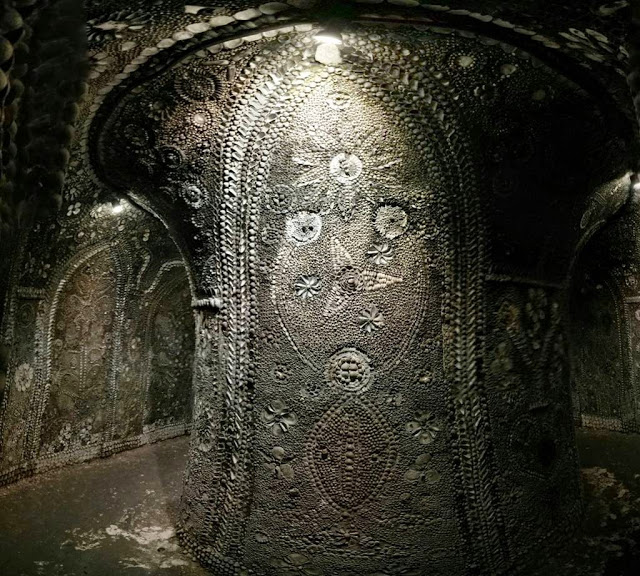
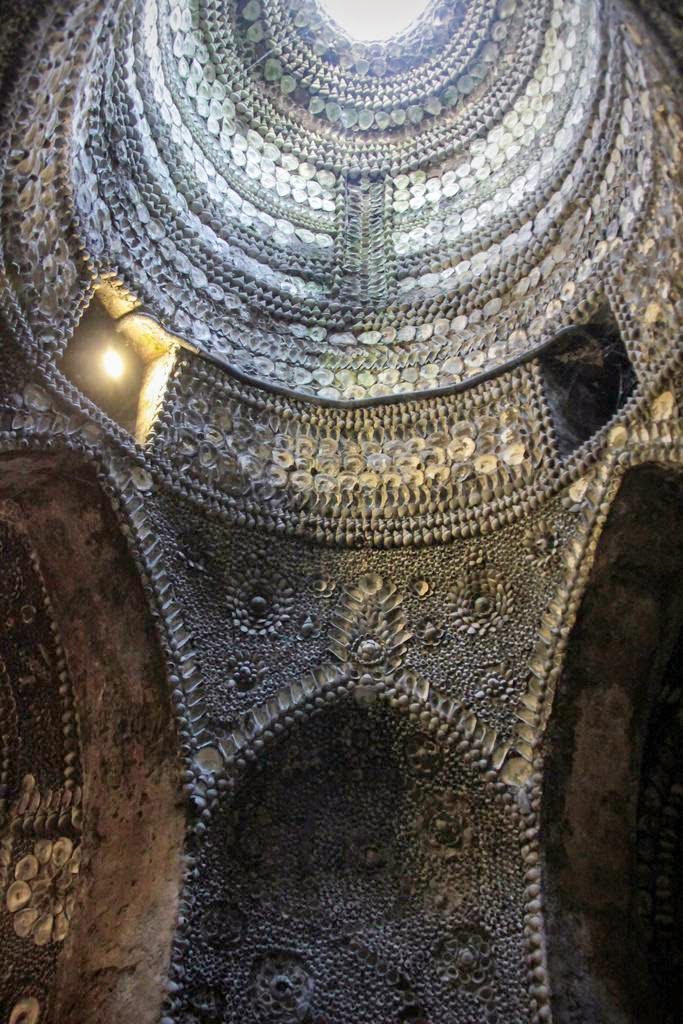
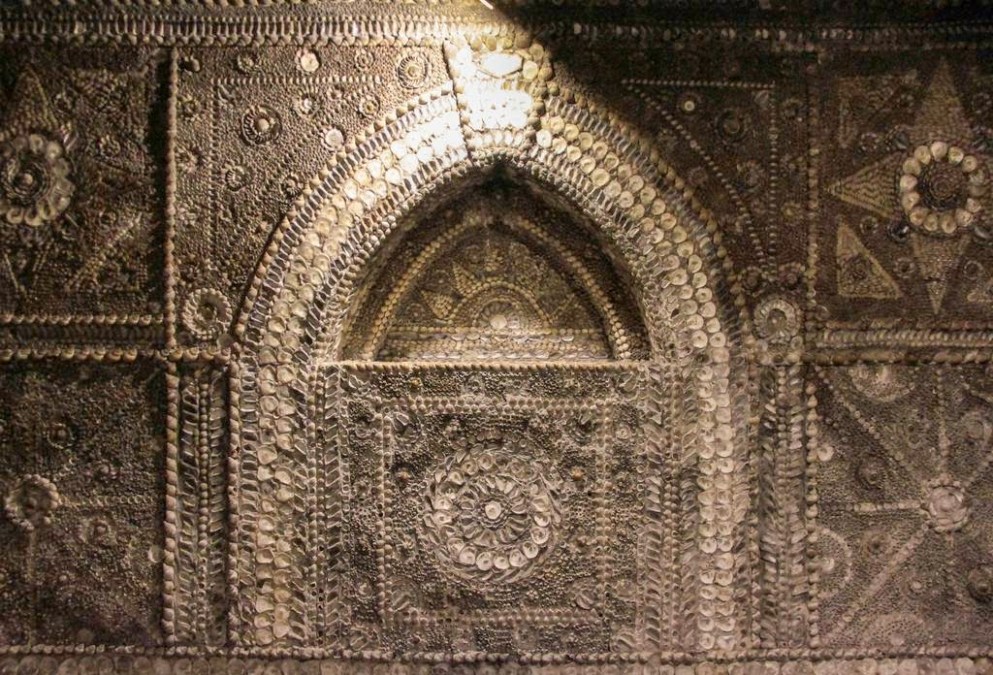
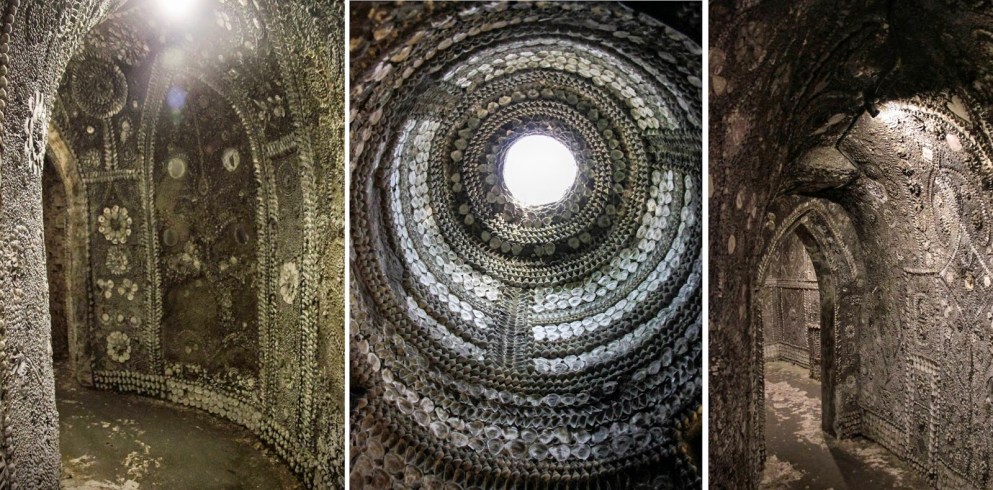
In 1835 a labourer was digging a field just outside the English seaside town of Margate.  His work was interrupted when he thrust his spade in to the soil and it simply vanished in to the ground.  The master of the nearby Dane House School, James Newlove, was made aware of this strange disappearance.  He volunteered his young son, Joshua, for the task of being lowered, candle in hand, in to the void via a length of rope

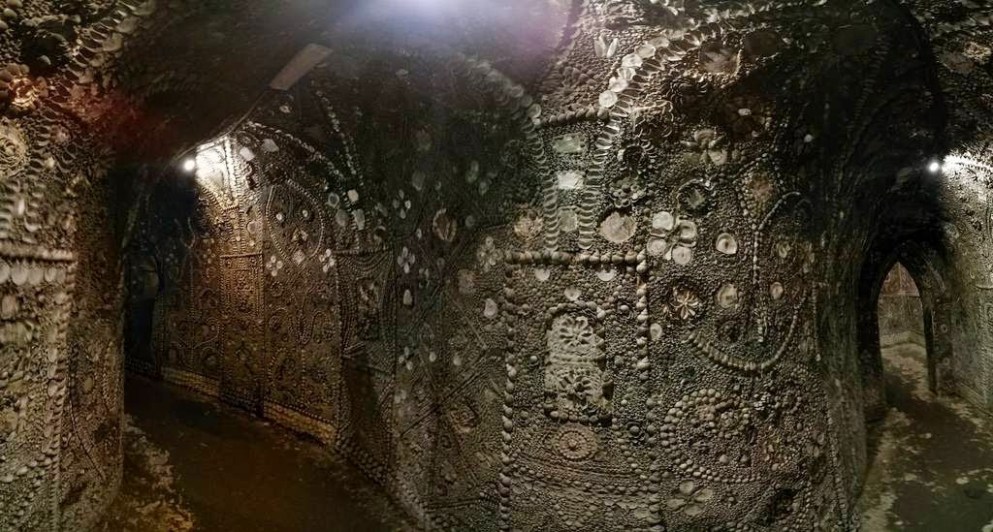
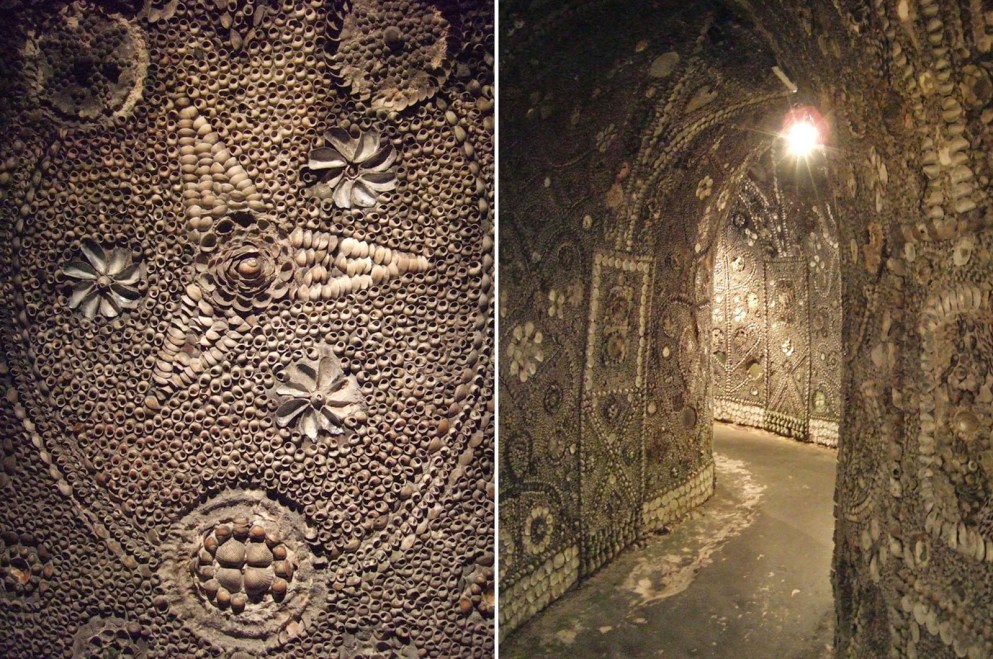
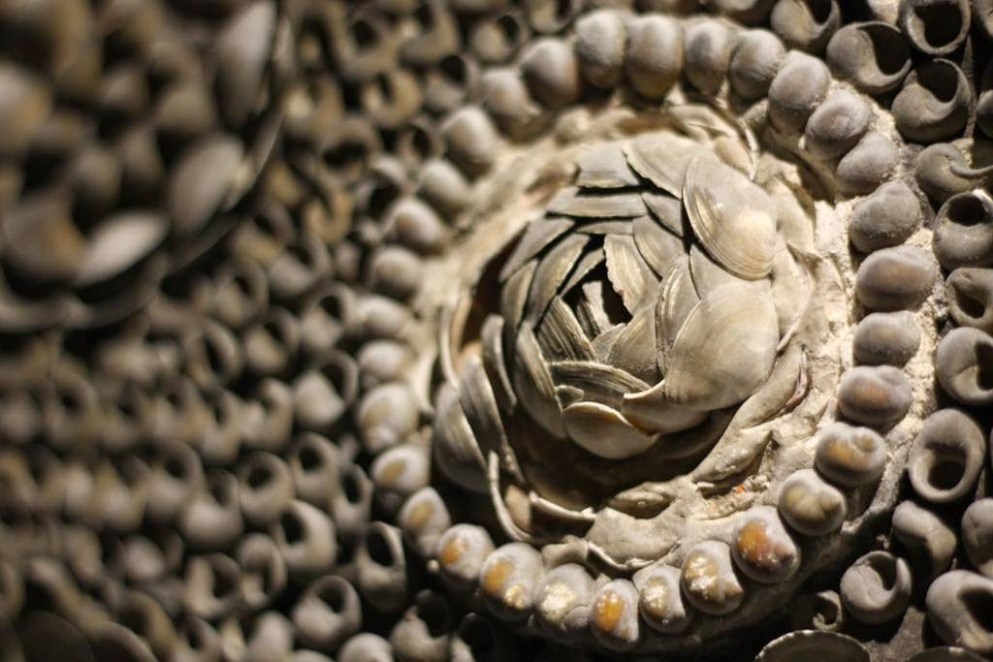
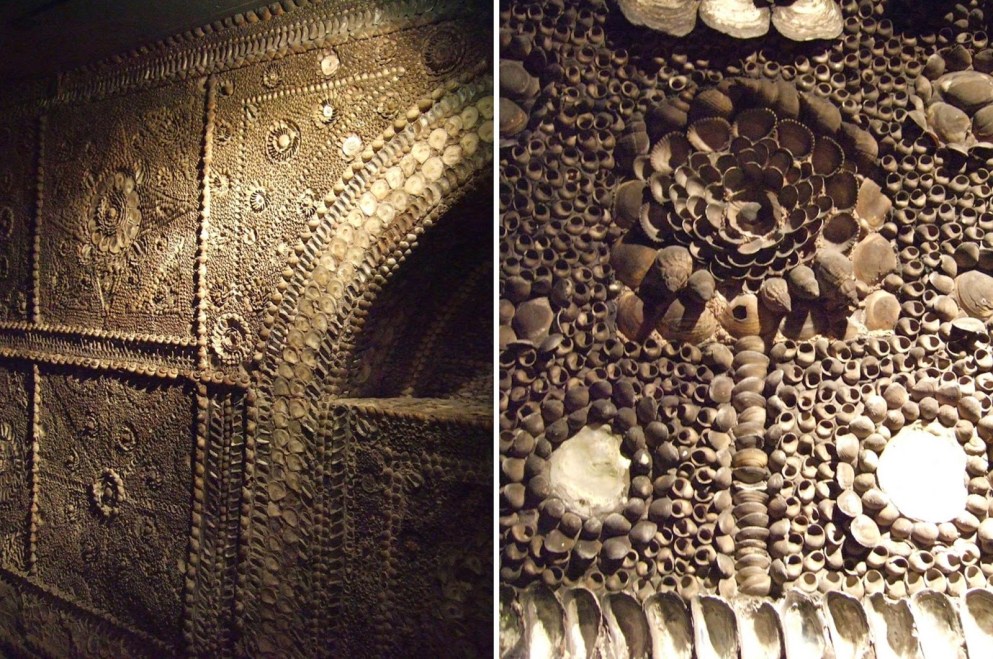
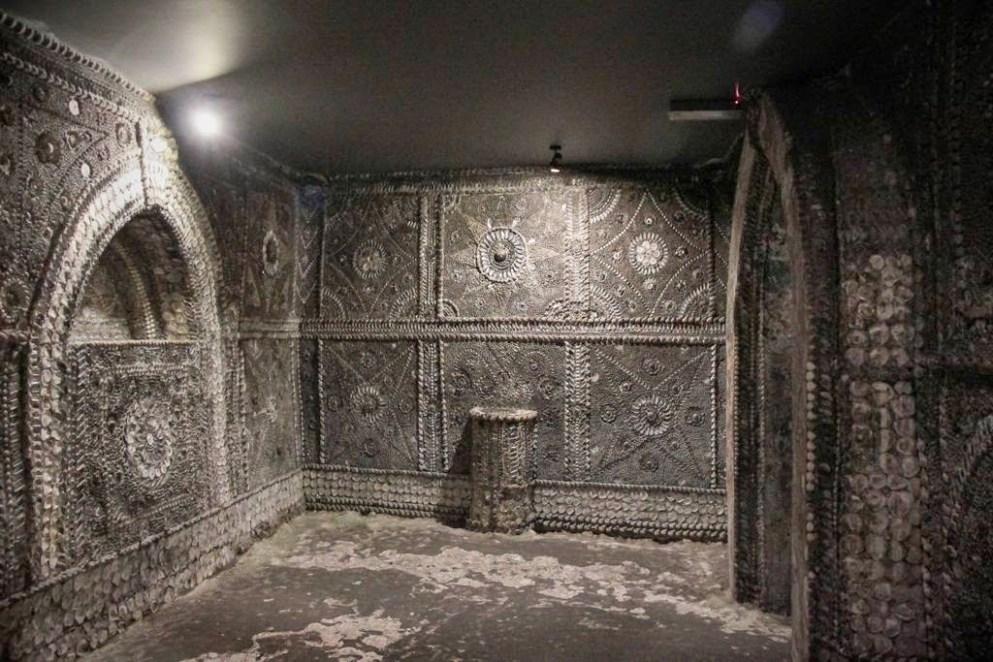
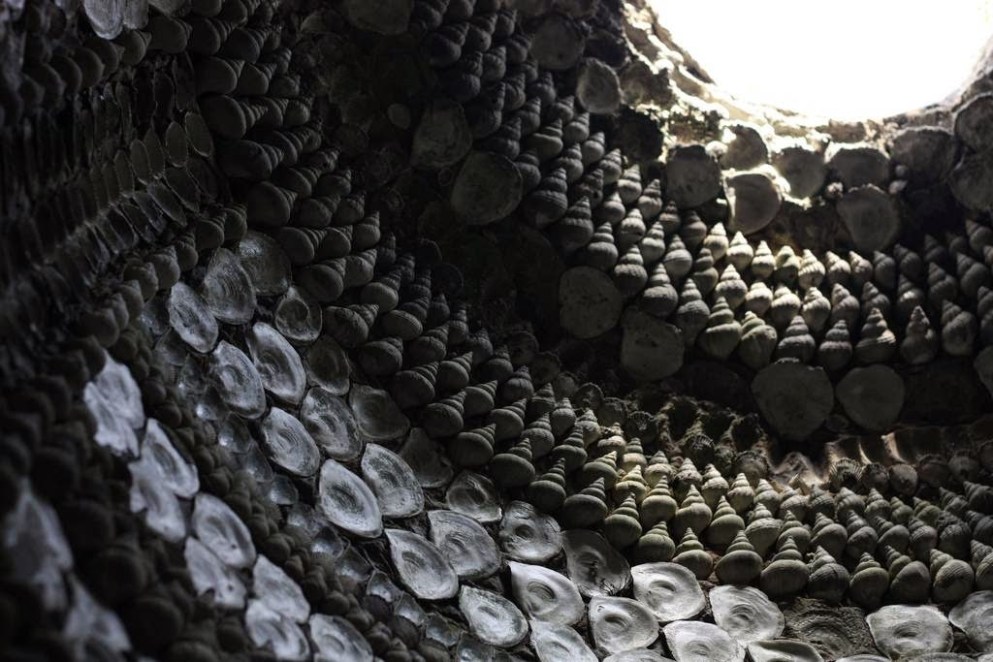
Regardless of our modern sensibilities about the health and safety of children, when Joshua was pulled back to the surface his wide-eyed tale astonished everyone. He told of a magical temple adorned in shells, hundreds, thousands… millions of them.  All told, 4.6 million.

Image Credit DeadManJones

Image Credit Krondol
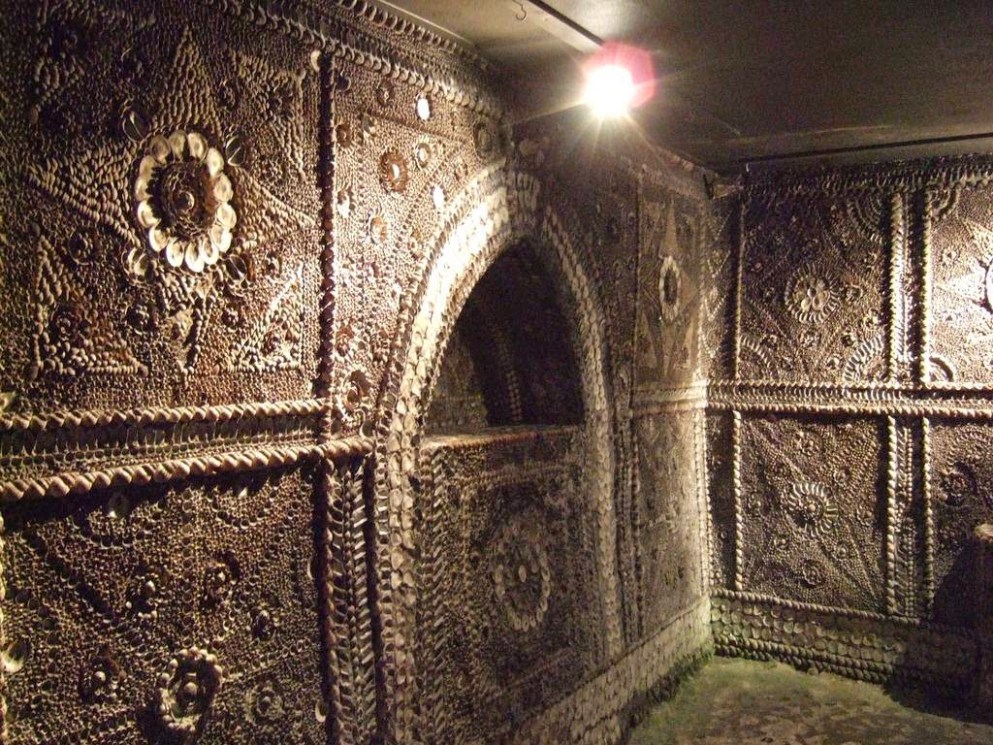
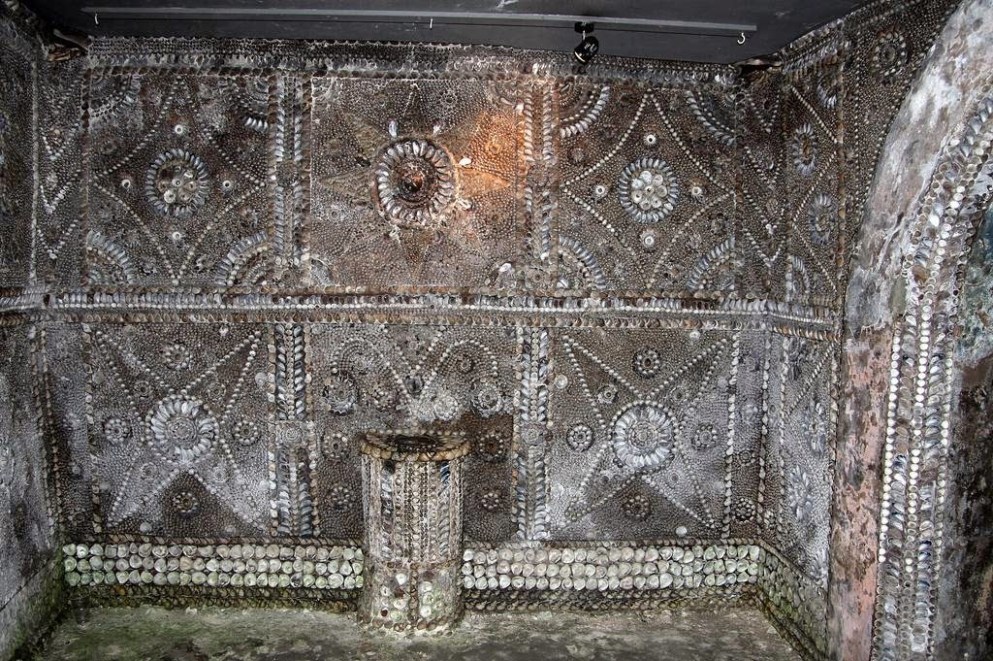
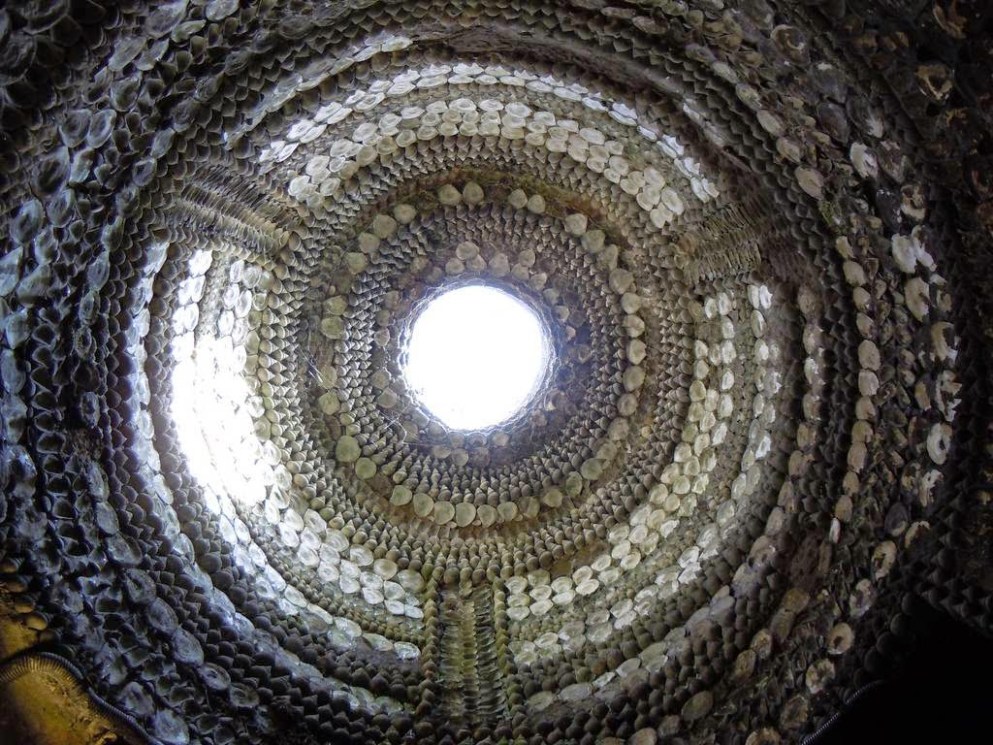
Joshua’s tale was nowhere near as tall as people may have at first imagined.  When the hole was widened enough for adults to enter they too witnessed the wondrous contents of the winding subterranean passageway, complete with an altar chamber and rotunda.  Newlove senior, a canny schoolmaster if ever there was one, was first to consider the financial benefits such a discovery might reap.  He hurriedly purchased the land above the mysterious chamber and began to adapt it so that visitors might enter – for a small charge of course. In 1837, just two years after its discovery, the grotto opened to a curious public.  Yet to this day debate rages (in a very English way, of course, involving polite discussion over tea and cucumber sandwiches) about it origins.

Image Credit Ben Sutherland
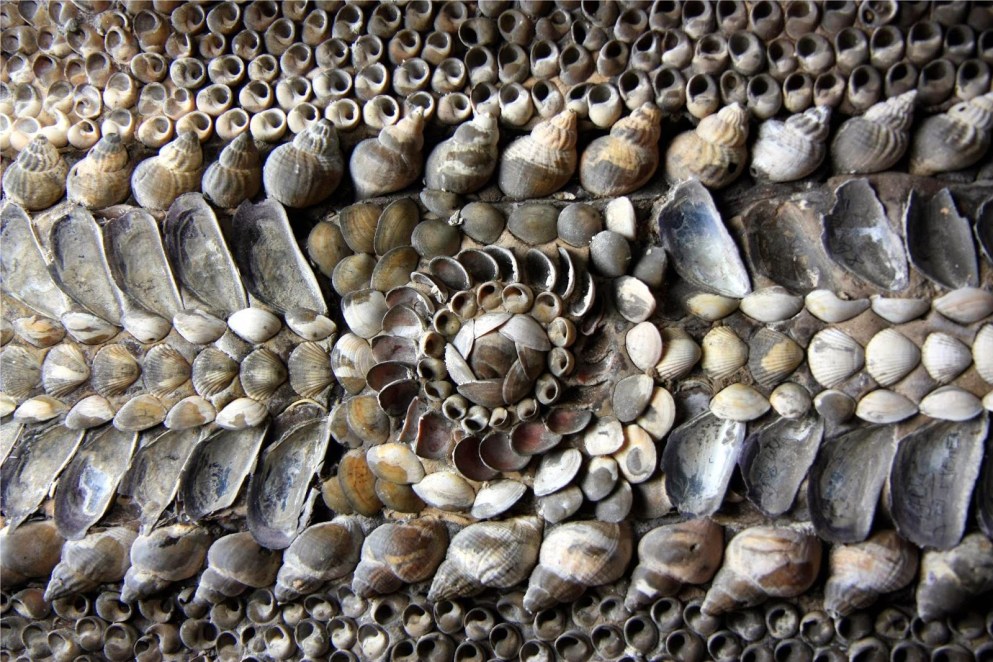
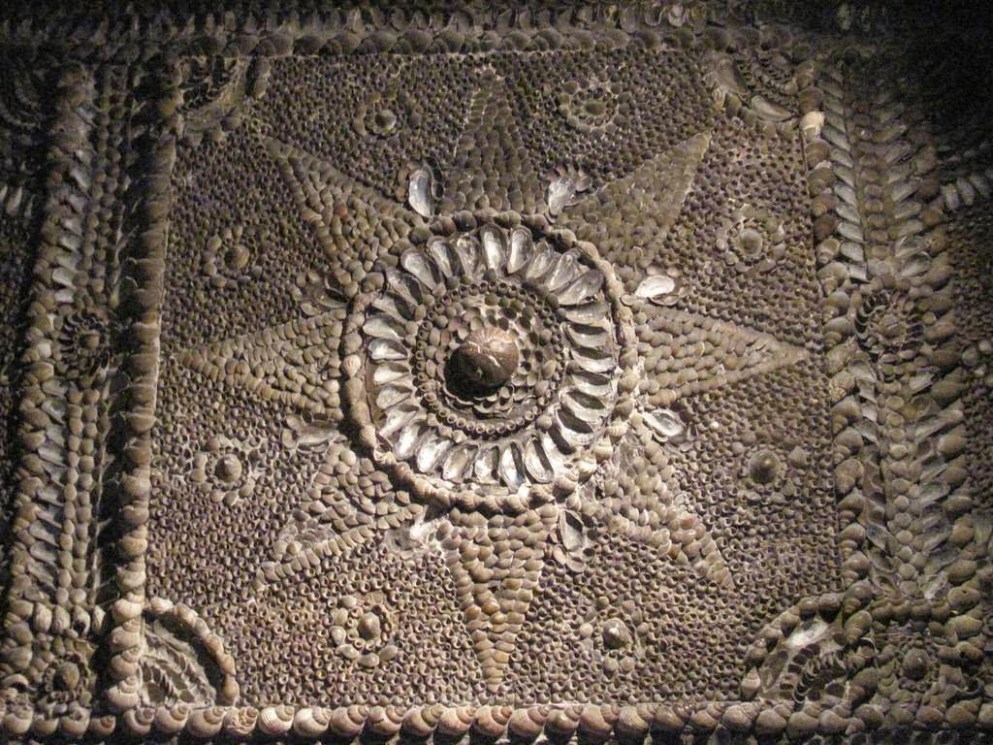
How it came to be originally built remains unexplained.  However, the 2000 square feet of mosaics, created from mussel, cockle, whelk and oyster shells have provoked a multitude of explanations none of which have been confirmed with any total surety.

Image Credut Ben Sutherland
Shell grottoes of this type were extremely popular in the Europe of the 1700s. Many suppose that this was the result of a local bigwig embarking on the Grand Tour and returning with a desire to recreate a highlight of his or her European expedition.  Yet although this is not without the realms of possibility, the land above the grotto never formed part of any large estate, which is where you would expect such an extravagance to be positioned – close enough to the big house to easily chaperone curious guests to its confines. These visitors would be impressed both by the owner’s wealth and aesthetics because, frankly, this kind of thing was built to do both.

Image Credit Kotomi

Image Credit Simon Lee
Moreover, had the grotto been built in the 1700s then there would have been some vestigial local memory (or legend) of its construction.  In order to get millions of shells in to this underground passage many local people would have to have been involved in their transport.  Yet the discovery in 1835 was a surprise to all – no one stepped forward with any explanation.

Image Credit Ben Sutherland
It has been suggested that the grotto was a smuggler’s cave – almost all the shells are British and so it could have been a hideaway made by locals for stolen and contraband goods.  Yet this idea doesn’t hold much water either. Although near to the sea, the waves remain stubbornly a number of miles away and there are no tunnels from coast to ‘cave’. Plus with a distinct lack of an escape route any smuggler would have been mad to hide their booty here – not to mention the fact that they would have had to spend more of their time decorating the place than doing any actual smuggling. So, it’s a no to that theory as well.

Image Credit Krondol

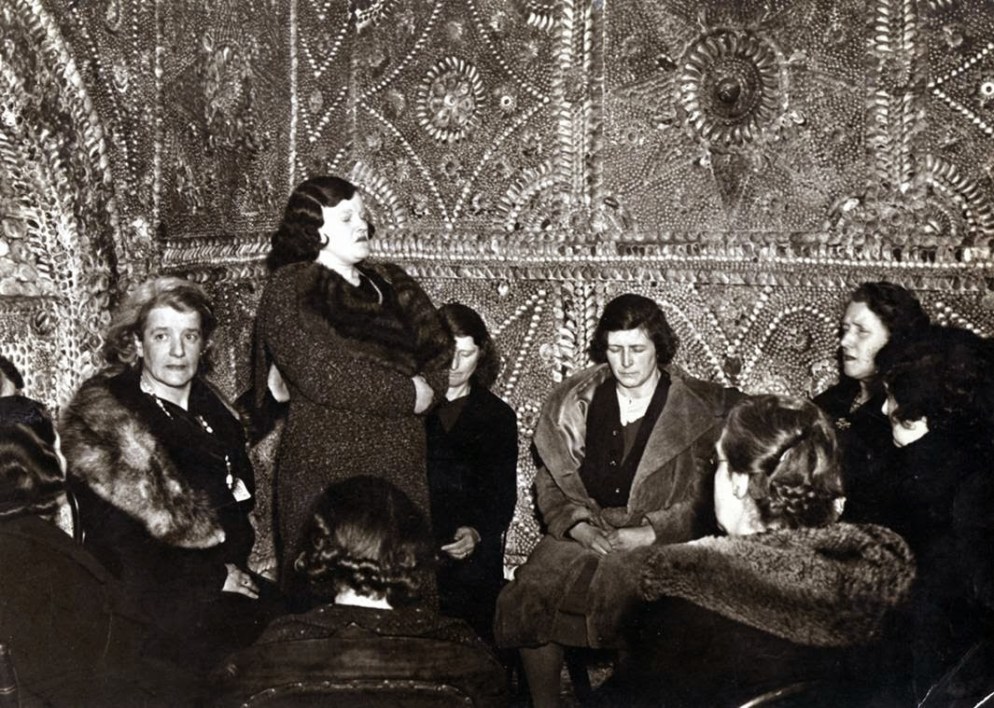
Could it be a Roman temple?  A remnant of dark-age rituals?  A prehistoric astronomical calendar? Make up a theory and it could well be feasible – and many have.  There have even been séances held in the grotto to try and contact the spirits of the builders, such as the one from the 1930s above.

Image Credit John C Bullas

Image Credit Feribrulu
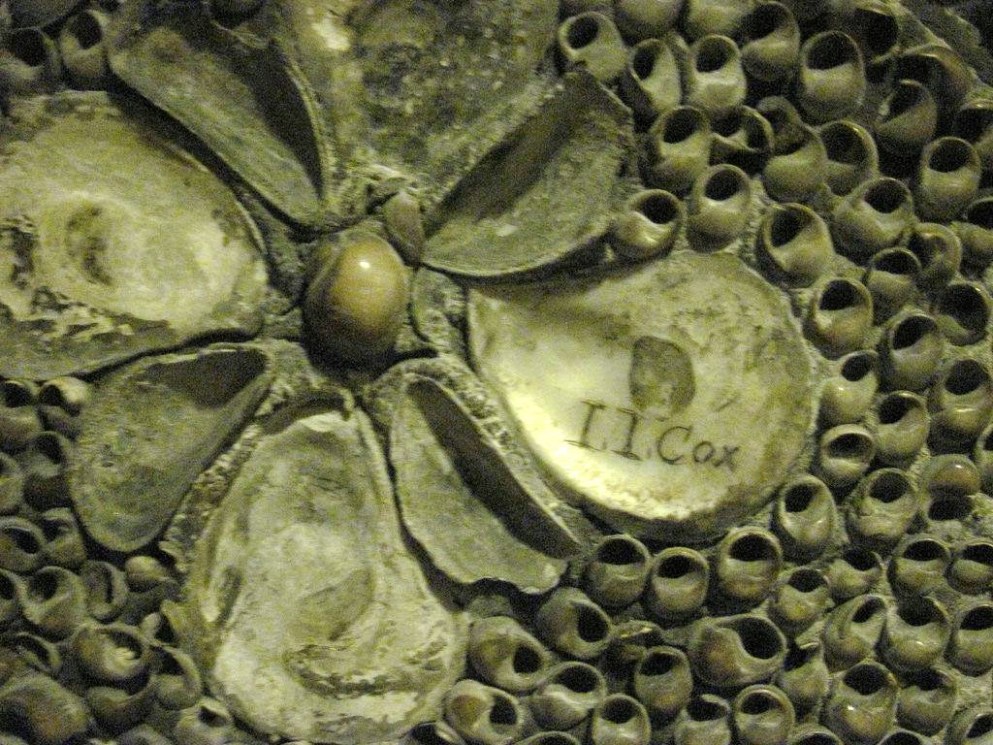
A number of the shells have been vandalised over the years by visitors.  Even though this is difficult to condone it adds an extra layer of history to the place.

Image Credit Kotomi

 
Image Credit Mr Moss
The latest research which took place in 2006 points towards an explanation which might please Indiana Jones fans.  Mick Twyman of the Margate Historical Society put forward the suggestion that the grotto was built by the Knights Templar or their associates sometime in the middle 1100s.  He has suggested this after a painstaking measurement of angles inside the grotto (a temple now, perhaps?) and the way that the sunlight is projected in to the inside of the dome.   The altar chamber certainly looks the part of an early temple for masonic rituals. Yet this kind of theory, unlike its scientific namesake, isn’t proof – just conjecture however sensible and enlightened.

Image Credit Simon Lee
Why not get the shells carbon-dated?  This is certainly a possibility for the current owner (the grotto has always been in private hands although recent restoration work has been done in partnership with English Heritage, the charity that looks after the National Heritage Collection of the country).  However, this has been advised against for a number of reasons.  First and foremost quite a number of shell samples would be needed to ensure that dating caught the earliest shells and not just those used in previous (unknown) restoration work over the centuries.  Secondly it’s expensive and money needs to be more urgently spent on conservation rather than speculative investigation, however scientific and potentially illuminating.

Image Credit Feribrilu

Image Credit Kotomi
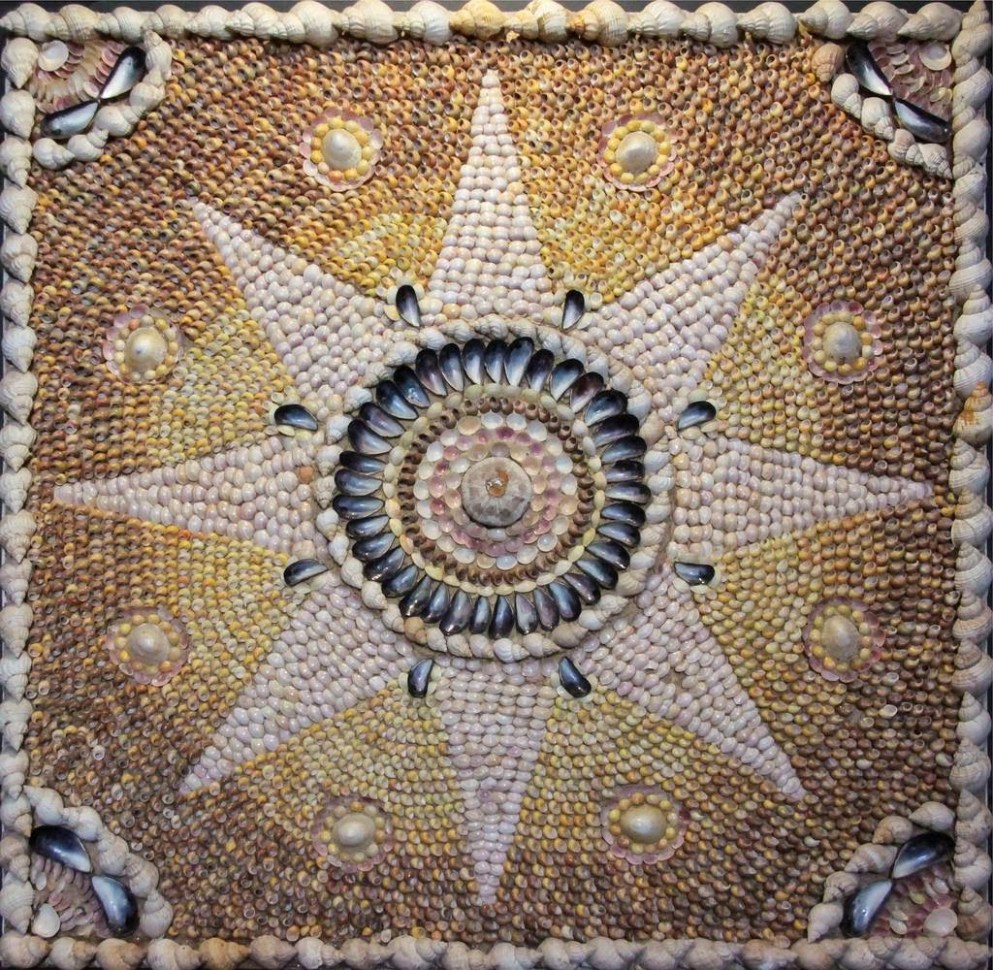
How did the shells look before the decades of gas-lit exhibition and when water damage had not bleached them? A modern recreation of a panel from the grotto shows how it must have dazzled visitors in its heyday.

Image Credit Kotomi
Yet, perhaps it is best to leave well alone in terms of a definitive origin story.  After all, even a secure dating of the oldest shells in the grotto would only establish their age – it would hardly go any further in discovering who built the grotto and why.  Sometimes it’s simply best to allow imagination to flourish and allow visitors to create their own history for this amazing place.

If you want to visit the Margate Shell Grotto, please check out its website for opening times.

Source…….www.kuriositas.com
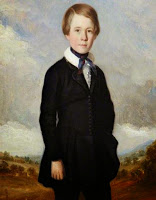
The picture of the c1835 schoolboy is by William McTaggart
First Image Credit DeadManJones


Natarajan

IN PICTURES: An Indian Artist Portrays Train Engines in a Way They Were Never Seen Before!

Kishore Pratim Biswas used to live near a locomotive workshop in Kolkata when he was a child. It was very easy for one to spot steam locomotives every now and then, and as an enthusiastic 5-year-old kid, he loved to run out and watch them go. He would then come back home and sketch what he saw. A giant locomotive surrounded by steam – the aura of that picturesque scene attracted him tremendously, and inspires him even today. The firemen and drivers at the workshop became his friends, and they would usually gather around to look at his sketches. He remembers listening to their stories and trying to sketch all their emotions on a piece of paper.

Today, 42-year-old Kishore has his art studio in Mumbai and he is working on a series of paintings based on this memory. He calls the series the ‘Nostalgia of Steam Locomotives’. He graduated in Fine Arts from Government College of Art & Craft, Kolkata, spent a few years in his hometown, and then moved to Mumbai in 2009.

In spite of all the years that have passed, the nostalgia still lingers on. Have a look at these incredible sketches to understand his bond with locomotives.

kishor10

kishor9


kishor8

kishor7

kishor6

kishor5

kishor3

kishor1


Source………Tanaya Singh in http://www.the betterindia.com

Natarajan
” இறைவனின் அழைப்பை உணர்ந்த போது……”

அண்ணல் காந்தி “நான் 125 ஆண்டுகள் வாழ்வேன்’ என்று பல முறை சொல்லியிருக்கிறார். ஆனால், தனது 79-ஆவது வயதிலேயே இறைவனடி சேர்ந்துவிட்டார்.
ஞானிகளும், யோகிகளும், சித்தர்களும் தாங்கள் இறக்கும் காலம் எப்போது என்பதை முன்னதாகவே உணர்ந்து, அறிவிக்கும் சக்தி படைத்தவர்கள் என்பார்கள். சுவாமி விவேகானந்தர் தன் ஆன்மா பிரியும் நாளை, வங்காளப் பஞ்சாங்கத்தைப் பார்த்து, தானே முடிவு செய்து கொண்டார்.
அதேபோல், மகான் காந்தியும் தனது இறுதிக் காலம் நெருங்கிவிட்டது; இறைவனின் அழைப்பு வந்துவிட்டது என்பதை உணர்ந்தார்; அந்த உள்ளுணர்வை வெளிப்படுத்தவும் செய்தார் தன் சொல்லாலும், செயலாலும்.
இறப்பதற்கு முந்தைய நாள் (29.01.1948) அந்த உள்ளுணர்வைத் தெளிவாக வெளிப்படுத்தினார்.
அன்று மதிய உணவு வேளையின் போது, தில்லி பிர்லா பவன் புல்வெளி அரங்கில் அமர்ந்திருந்தார். அப்பொழுது நேருஜியின் சகோதரி கிருஷ்ணா ஹதீசிங், கவிக்குயில் சரோஜினி நாயுடு, இந்திரா காந்தி, நான்கு வயதான ராஜீவ் காந்தி – ஆகிய நால்வரும் வந்தார்கள். வண்ண வண்ண உடைகள் அணிந்திருந்த அவர்களைப் பார்த்து “இந்த ஏழையைப் பார்ப்பதற்கு இளவரசிகள் வந்திருக்கிறார்களோ!’ என வேடிக்கையாகப் பேசி வரவேற்றார் காந்திஜி. “முன்பை விட உங்கள் உடல் தேறியிருக்கிறது: மிகவும் நேர்த்தியாகக் காணப்படுகிறீர்கள்’ என்று ஹதீசிங் சொன்னதற்கு, காந்திஜி பதில் எதுவும் பேசவில்லை.
அவ்வேளையில் சிறுவன் ராஜீவ், அங்கே சிதறிக்கிடந்த மலர்களை தன் இரு கைகளாலும் சேகரித்து எடுத்து, அண்ணலின் அருகில் சென்று, அவரது காலடிகளில் வைத்தான். உடனே காந்திஜி, ராஜீவைப் பிடித்து, அவரது காதை செல்லமாகக் கிள்ளியபடி “நீ இதைச் செய்யக் கூடாது. மலர்களை இறந்தவர்களின் காலடியில் வைப்பது தான் வழக்கம்’ என்று சொன்னார்.

ஒருமணி நேரம் கழித்து, பிரபலமான “லைஃப்’ பத்திரிகை நிருபர் “மார்கரெட் பூர்சி ஒயிட்’ அண்ணலிடம் பேட்டிக்காக சந்தித்தார். அதுவே காந்திஜி அளித்த கடைசிப் பேட்டியாக அமைந்தது. அந்த நிருபர் “125 வயதுவரை வாழ வேண்டும் என்ற விருப்பம் உங்களுக்கு இருக்கிறதா?’ என்று கேட்க, அதற்கு அண்ணல், “அந்த நம்பிக்கையை நான் இழந்துவிட்டேன். இன்று உலகில் நிகழும் கொடிய நிகழ்வுகளே அதற்குக் காரணம். இருண்ட உலகத்தில் நான் வாழ விரும்பவில்லை’ என்று சற்று அழுத்தமாகவே சொன்னார்.
அதன்பின் மதக்கலவரங்களால் பாதிக்கப்பட்டு, வீடுகளை, சொத்துக்களை இழந்த ஒரு கிராம மக்கள் கூட்டம் காந்தியைச் சந்தித்தது. வந்தவர்களில் பலர் கண்ணீர் விட்டு அழுது கொண்டே கை வணங்கி நின்ற போது, உணர்ச்சி வசப்பட்ட ஒரு நபர் கோபத்தோடும், வேகத்தோடும் காந்தியை நோக்கி “நீங்கள் எங்களுக்கு செய்த தீங்குகள் போதும், எங்களை முழுமையாக அழித்து விட்டீர்கள், எங்களை விட்டு விடுங்கள். நாங்கள் பார்த்துக் கொள்வோம். நீங்கள் இமயமலைக்குச் சென்று விடுங்கள். அது போதும் எங்களுக்கு’ என்று கொடிய சொற்களை கொட்டித் தீர்த்தார். இது அண்ணலின் மனதை அதிகம் பாதித்திருக்க வேண்டும். ஆகவேதான், தன் பேத்தி மனு பென் இடம் “ஏழைகளின் இந்த கோபக்குரல் எனக்கு இறைவனின் குரலாகவே தோன்றுகிறது. இறைவன் எனக்கு அனுப்பும் மரண எச்சரிக்கையாக இதனை நான் கருதுகிறேன். ஆனால், ஒன்றை உறுதியாகச் சொல்வேன். இமயமலையில் எனக்கு அமைதி கிடைக்காது. அவதியுறும் என் மக்களுக்கு உதவுவதே எனக்கு அமைதியைக் கொடுக்கும். மக்களுக்கு மத்தியில் நான் வாழ விரும்புகிறேன். குழப்பத்திற்கு மத்தியிலேயே நான் சாக விரும்புகிறேன். இறைவன் எப்பொழுது வேண்டுமானாலும் என்னை எடுத்துக் கொள்ளட்டும். (I want to find peace in the midst of my people: I want to die in the turmoil. God may take me away any time as He wills) என்று சொன்னார்.
இந்த நிகழ்வு அவர் நெஞ்சை மிகவும் பாதித்தது. ஆகவே தான், இரவு படுக்கைக்குச் செல்லும் முன்பு, தன் நீண்ட கால சகாவான பிரிஜ் கிருஷ்ணா சந்தி வாலாவிடம் “இதனை இறைவன் எனக்கு அனுப்பிய இறுதி எச்சரிக்கையாக எடுத்துக் கொள்ள வேண்டும்’ என்று திரும்பவும் சொன்னார்

கடுமையான இருமலுக்காக டாக்டர் சொன்ன பெனிசிலின் மாத்திரையை எடுத்துக் கொடுத்த போது, என்றுமில்லாத வகையில் கோபத்தை வெளிப்படுத்திச் சொன்னார். “நான் நோயால் அல்லது கட்டியால் இறக்க நேர்ந்தால், இவன் ஒரு “போலி மகாத்மா’ (False Mahatma) என்று எல்லோரும் ஒன்று சேர்ந்து உரக்கச் சொல்லுங்கள். ஆனால், ஒரு எதிர்பாராத நிகழ்வால் அல்லது ஒருவனின் துப்பாக்கிக் குண்டுகள் என் நெஞ்சிலே பாய்ந்து, எந்த ஏக்கமும் இல்லாமல், ராம நாமத்தை என் உதடுகள் உச்சரித்தவாறே, என் உயிர் போகுமானால், அப்பொழுது இவன் உண்மையான மகாத்மா (True Mahatma) என்று நீங்கள் சொல்லலாம்…’
அண்ணலின் இறுதி நாளான, ஜனவரி 30 அன்று, மாலை 4 மணி அளவில் சர்தார் படேலுடன் ஆழ்ந்த உரையாடலில் ஈடுபட்டிருந்தார். அது சமயம் அவரைச் சந்திப்பதற்காக, அவரது சொந்த மாநிலமான “கத்தியவாரி’லிருந்து இரண்டு தலைவர்கள், முன் அறிவிப்பு எதுவும் இல்லாமல் வந்திருப்பதாகச் சொன்னார்கள். அதைக் கேட்டவுடன் “பிரார்த்தனை கூட்டம் முடிந்த பின், அவர்களைச் சந்திப்பதாக சொல்லுங்கள். அதுவும் அப்பொழுது நான் உயிரோடு இருந்தால்’ என்று சொன்னார்.
இதற்கு சில மணி நேரத்திற்கு முன்னால், காந்தி இருமலுக்காக எடுக்க வேண்டிய மருந்தை – கிராம்பும் வெல்லமும் சேர்ந்த கலவையை – எடுத்து வருகிறேன் என்று மனு பென் சொன்ன போது “இன்று இரவுக்குள் என்ன நடக்கும் என்பதை யார் அறிவார்? நான் உயிருடன் இருப்பேனா? என்பது கூடத் தெரியாதே’ என்று குறிப்பிட்டார்.
இவ்வாறு, தனது இறுதிக் காலம் நெருங்கி விட்டது. இறைவனின் அழைப்பு வந்து விட்டது. தனது மரணம் ஒரிரு நாள்களில் நிகழும் என்பதை மற்ற மகான்கள், ஞானிகள், சித்தர்கள் போல் மகாத்மா காந்தி அடிகளும் முன்னதாகவே உணர்ந்தார். அந்த உள்ளுணர்வை பலமுறை வெளிப்படுத்தவும் செய்தார்.

ஜனவரி 30-ஆம் நாளன்று அண்ணல் மூன்று முக்கிய செயல்களில் ஈடுபட்டார் எனச் சொல்லலாம். “பிரிவினைக்குப் பின் நிகழ்ந்து வரும் குழப்பங்களையும் கொடுமைகளையும் பார்த்த பின்பும் காந்திஜி பாகிஸ்தானின் மீது மென்மையான போக்கைக் கடைப்பிடிக்கிறாரே என்று குற்றம் சாட்டி, காந்திஜியின் சேவை இனி தேசத்திற்குத் தேவை இல்லை. அவர் இமயமலைக்குத் துறவியாகச் செல்வதே உசிதம்’ என்ற குரல் வலது சாரிகள், மதவாதிகள், பிற்போக்குவாதிகளிடமிருந்து பலமாக ஒலிக்கத் தொடங்கியது. ÷ஆனால், காந்தியோ தன் அமைதிப்பணி, தான் இல்லாவிட்டாலும், தொடர வேண்டியது முன்பை விட மிகமிக அவசியம் எனக் கருதியிருக்க வேண்டும். ஆகவேதான், அன்று எவரும் எதிர்பாராத வகையில் அங்கிருந்தவர்களை ஒரு குறிப்பிட்ட குஜராத்தி பஜனைப் பாடலைப் பாடும்படி பணித்தார்.
அந்த பாடல் வரிகளின் பொருள்:
“ஓ! மனிதா! நீ களைப்படைந்தாலும், இல்லா விட்டாலும், ஓய்வு எடுக்காதே! உன் போராட்டத்தை நிறுத்தாதே! தனிமனிதனாக அதனைத் தொடர்ந்து நடத்து’ என்பதாகும்.
தான் மறைந்தாலும், ஒவ்வொரு தனிமனிதனும் தன் போராட்டத்தைத் தொடர வேண்டும் என மகாத்மா எண்ணியதால் தான், இப்பாடலைப் பாடச் சொல்லியிருக்க வேண்டும்.
“தேசம் இன்று இருக்கும் சூழலில் நேரு, படேல் ஆகிய இரு தலைவர்களும் இணைந்து செயல்பட வேண்டும். அவர்களது அறிவும், ஆற்றலும், சேவையும், அர்ப்பணிப்பும் தேசத்திற்குத் தொடர்ந்து கிடைக்க வேண்டும்’ – என்ற ஆவலை அண்ணல் உறுதிபட வெளிப்படுத்தினார். அதற்கு சர்தார் படேல் இசைவு தெரிவித்தார். அன்றைய தினத்தில் அண்ணலின் இரண்டாவது முக்கியமான பணி இது.
மூன்றாவதாக, காங்கிரஸ் பேரியக்கத்தின் இலட்சியம், அணுகுமுறை, செயல்பாடு ஆகியவற்றைத் திருத்தும், வரைவு ஆவணத்தைத் (Draft Document) தயாரிக்கும் பணியில் மும்முரமாக ஈடுபட்டிருந்தார். இதனை காங்கிரஸின் கடைசி அத்தியாயத்தைக் காந்திஜி எழுதிக் கொண்டிருந்ததாகச் சொல்வார்கள். அதே நாளில் தான், நாதுராம் கோட்சே, காந்திஜியின் கடைசி அத்தியாயம் எழுதப்படுவதற்கான திட்டத்தைத் தீர்க்கமாக, வகுத்துக் கொண்டிருந்தான்.

பிரார்த்தனைக் கூட்டத்திற்கு சரியாக 5 மணிக்கு செல்பவர் மகாத்மா. அன்று 10 நிமிடங்கள் தாமதமாகி விட்டதை அறிந்த அண்ணல், தன்னையே நொந்து கொண்டு “நான் என்னையே சிதைத்துக் கொள்ள வேண்டியது தான்’ என்று சொன்னார். அவைதான் அண்ணலின் வாயிலிருந்து வந்த கடைசி வார்த்தைகள்.
காலதாமதம் ஆகிவிட்டதால், என்றுமில்லாத வகையில் வேகமாக நடந்தார் காந்திஜி. எதிரே ராணுவ பாணியில் காக்கி உடை அணிந்திருந்த கோட்சே, காந்திஜியின் முன் வந்து வணங்கினான். பதிலுக்கு காந்திஜியும் இருகரம் கூப்பி வணங்கினார். கூப்பிய கைகளை எடுக்கும் முன்பாக, கோட்சே, தன் கைத் துப்பாக்கியால் காந்திஜியின் நெஞ்சை நோக்கி 3 முறை சுட்டான். “ஹே! ராம்’ என்ற வார்த்தைகள் அண்ணலின் வாயிலிருந்து கடைசியாக வந்தன. நிலைகுலைந்து மண்ணில் சாய்ந்தார் மகாத்மா.
கூடியிருந்தவர்கள் அனைவரும் அதிர்ச்சிக்குள்ளானார்கள். பலர் பயந்து ஓடினார்கள். பலர் கதறி அழுதார்கள். அதிர்ச்சிக்கு உள்ளாகாமல், ஆடாமல் அசையாமல் அப்படியே நின்றிருந்தான் கோட்சே. அவன் தப்பிச் செல்ல எந்த முயற்சியும் எடுக்கவில்லை. ஆனால், அமெரிக்கத் தூதரகத்தின் இளம் அதிகாரி-ஹெர்பர்ட் டாம் ரெய்னர்-கோட்சேயின் தோள்களைக் கெட்டியாகப் பிடித்துக் கொண்டு காவல் அதிகாரி வந்தவுடன் ஒப்படைத்தார்.
அண்ணலின் உடலை மனு பென் தன் மடியில் வைத்துக் கொண்டார். அங்கிருந்த ஓர் இளம் பெண் மருத்துவர், காந்திஜியைத் தொட்டுப் பார்த்தார். உயிர் பிரிந்து விட்டது என்பதை அறிந்தார். ஆனால், அதனை அறிவிக்க அவருக்கு மனோதிடம் வரவில்லை.
செய்தி அறிந்தவுடன் தன் மகள் மணிபென் உடன் முதலில் ஓடிவந்தவர் சர்தார் படேல். அதிர்ச்சியடைந்த நிலையில், அண்ணலின் மணிக்கட்டைப்(Wrist) பிடித்துப் பார்த்தார். இதயம் இன்னும் கொஞ்சமாவது இயங்கும் அறிகுறி இருக்கிறதா? என்ற ஏக்கத்தோடு பார்த்தார் படேல். ஆனால், அந்த அறிகுறி எதுவும் இல்லை போலும்.
அடுத்து வந்த டாக்டர் பி.பி. பார்கவா, உயிர்பிரிந்து 10 நிமிடங்கள் ஆகிவிட்டன என்பதை அறிவித்தார். கூடியிருந்தோர் அழுது புலம்பினர்.
அடுத்து ஓடிவந்து சேர்ந்தவர் அண்ணலின் மகன் தேவதாஸ் காந்தி. அவரது மகன் கோபாலும் உடன் வந்திருந்தார். தன் தந்தையின் கைகளைப் பிடித்துக் கொண்டு கதறினார். காந்திஜியின் காதருகே தன் முகத்தை வைத்துக் கொண்டு, “பாபு! ஏதாவது சொல்லுங்களேன் என்று அழுதுகொண்டே கேட்டார். அழு குரல் விண்ணை எட்டியது.

அப்போழுது, சர்தார் படேல் “மற்றவர்கள் அழலாம். கண்ணீர் வடித்து தங்கள் துக்கத்தைக் கரைத்துக் கொள்ளலாம். நான் அதைச் செய்ய முடியாதே! என் செய்வேன்! என்றார்.
அடுத்து வந்து சேர்ந்த பண்டித நேரு, ரத்தக் கறை தோய்ந்த காந்திஜியின் உடையில் முகத்தைப் புதைத்துக் கொண்டு, ஒரு குழந்தையைப் போல, தேம்பித் தேம்பி அழுதார். படேல், நேருஜியின் முதுகில் மெதுவாக வருடி, அவரை அமைதிப்படுத்த முயன்றார். நேருவும், படேலும் ஒருவரை ஒருவர் கட்டித் தழுவிக்கொண்டு எவரும் கட்டுப்படுத்த முடியாத அளவில் விம்மி, விம்மி அழுதார்கள். (They embraced each other and sobbed uncontrollably). இந்திய தேசத்தின் பிரதம மந்திரியும், உள்துறை அமைச்சரும், தன் தந்தையை இழந்த மகன்களைப் போல் ஒருவரை ஒருவர் தழுவிக் கொண்டு, அழுது கொண்டிருப்பதைப் பார்த்து பதை பதைத்துப் போனார்கள் மக்கள்.
மக்கள் கூட்டம் கூடிக் கொண்டே இருந்தது. கூட்டத்தை விலக்கிக் கொண்டு உள்ளே நுழைந்தார் கவர்னர் ஜெனரல் மௌண்ட் பேட்டன். அப்பொழுது ஒரு இளைஞன் கோபமாக “காந்திஜியை ஒரு முஸ்லிம் கொலை செய்து விட்டான்’ (It was a muslim who murdered gandhiji) எனக் கூக்குரலிட்டான்.
அது கேட்ட மௌண்ட் பேட்டன் “ஏ முட்டாள்! காந்தியைக் கொன்றவன் ஒரு இந்து’ (you fool! It was a Hindu) என்று உரக்கக் கத்தினார். இதனை உடனே சொல்லியிருக்காவிட்டால், நிலைமை பயங்கரமானதாக மாறியிருக்கும் என்கிறார்கள் வரலாற்று ஆய்வாளர்கள்.
நேருஜியும், படேலும் அதிர்ச்சியாலும் துக்கத்தாலும் நிலைகுலைந்து நின்றார்கள். அப்பொழுது மௌண்ட் பேட்டன், நேருஜியை படேல் அருகில் அழைத்துச் சென்று, இருவரிடமும் மெதுவாக “நீங்கள் இருவரும் இணைந்தே இருக்க வேண்டும் என்பது தான் காந்திஜியின் கடைசி ஆசை’ என்றார். அதனைக் கேட்டு, இருவரும் மனம் வெதும்பினார்கள். ஒருவரை ஒருவர் தழுவிக் கொண்டு அழுதார்கள். சமரசப் பேச்சு மூலம் சாதிக்க முடியாத இருவரின் ஒற்றுமையை, காந்திஜியின் மரணம் சாதித்துக் காட்டியது.
அண்ணலின் உடலைப் பதப்படுத்தி, பாதுகாப்பாக வைத்து, மக்களும், விஜயம் செய்யும் வெளி நாட்டுத் தலைவர்களும் அஞ்சலி செலுத்தும் வகையில், ஒரு நிரந்தர ஏற்பாட்டைச் செய்யலாமா? என்ற கேள்வி எழுந்தது. அப்பொழுது, அண்ணலின் செயலாளர் பியாரேலால் “அண்ணல் அது கூடாது என்று ஏற்கெனவே சொல்லியிருக்கிறார்’ என்றார்.

இந்த விவாதம் தொடர்ந்த போது, பொறுமை இழந்த நேருஜி, “ஏன் காலம் தாழ்த்துகிறீர்கள்? என்ன எற்பாடு செய்ய வேண்டும் என்பதை பாபு-விடமே கேட்போம்,’ (Why waste time! Lets us go and ask Babu what arrangements must be made) என்றார். அதனைக் கேட்டு கூடியிருந்த அனைவரும் அழத் தொடங்கிவிட்டார்கள்.
அண்ணலின் இறுதிப் பயணத்திற்கான ஏற்பாடுகள் செய்யப்பட்டன. காந்திஜி சுடப்பட்ட போது, மனுவின் கையிலிருந்து விழுந்த மலர் மாலை, அண்ணலுக்கு அணிவிக்கப்பட்டது. கதர் மாலையும் சூட்டப்பட்டது. தலைக்குப் பின்னால் “ஹே! ராம்’ என்று எழுதப்பட்டது. கால் அருகில் “ஓம்’ என எழுதப்பட்டது. உடம்பை மலர்களாலும், அண்ணலே நூற்று நெய்த கதர் ஆடையாலும் மூடத் தொடங்கினார்கன். அப்பொழுது மகன் தேவதாஸ். “பாபுவின் நெஞ்சை மட்டும் (மலர்களாலோ, ஆடையாலோ) மூடாதிர்கள். அது திறந்தே இருக்கட்டும். ஏனென்றால் பாபுவைப் போன்ற நேர்த்தியான நெஞ்சு, உலகில் எந்த வீரனுக்கும் இல்லை’ (I asked for the chest to be left bare. No soldier ever had a finer chest than Bapu’s  என்று சொன்னார்.
பாபுஜிக்குப் பிடித்தமான பஜனைப் பாடல்களை மிகவும் மென்மையான குரலில் பாடிக் கொண்டிருந்தார்கள். அதனைக் கேட்ட நேருஜி, பாடகர் குழுவை நோக்கி ஓடினார். “ஏன் மென்மையாகப் பாடுகீறீர்கள்! உரக்கப் பாடுங்கள்! யார் கண்டார்கள்! உங்கள் பாடல் கேட்டு பாபு எழுந்து வந்தாலும் வந்துவிடுவார்’ – (Sing louder; who knows Bapu may wake up) என்று உணர்ச்சி பொங்கக் கூறினார்.
காந்திஜியின் வாழ்க்கையே ஒரு வரலாறு. அவரது மரணமும் ஒரு தனி வரலாறு. அவர் சுடப்பட்ட போது “ஹே! ராம்!’ என்றார். அவரைச் சுட்டவனும் “ராம்’ என்ற பெயரைக் (நாதுராம் கோட்சே) கொண்டவனாக இருக்கிறானே! கொடுத்தவனே எடுத்துக் கொண்டானா! படைத்தவனே பறித்துக்கொண்டானா?
விடை காண முடியாத வினா இது!
அண்ணல் காந்தி ஓர் அணையா ஜோதி! அந்தத் தீப ஒளியில், அவர்காட்டிய வழியில் நடப்போம் நாம்!

(இன்று மகாத்மா காந்தியின்
69-ஆவது நினைவு தினம்.)
“ஒரு எதிர்பாராத நிகழ்வால் அல்லது ஒருவனின் துப்பாக்கிக் குண்டுகள் என் நெஞ்சிலே பாய்ந்து, எந்த ஏக்கமும் இல்லாமல், ராம நாமத்தை என் உதடுகள் உச்சரித்தவாறே, என் உயிர் போகுமானால், அப்பொழுது இவன் உண்மையான மகாத்மா என்று நீங்கள் சொல்லலாம்…’

Source……..முனைவர் அ. பிச்சை in http://www.dinamani.com

Natarajan
The Parallel Worlds Of Puddles In Toronto…!!!

With my Instagram account I try to demonstrate that you don’t need a professional camera to take a nice picture. With the use of a smartphone, one can take a beautiful picture that tells its own story.

Many people don’t like rain, but the puddles left behind can be more than magical. Every time I see a puddle I take out my smartphone and put my camera lens as close as I can to the water and capture its parallel world. These are some of my puddle reflections I have taken in Toronto, Canada last month.

More info: Instagram

Source………Guigurui

Guigurui

Community Member  in http://www.boredpanda.com

Natarajan
வாரம் ஒரு கவிதை …..” தொலைந்து போன கடிதம் ” !!!


தொலைந்து  போன  கடிதம்
……………………….
நம் முகவரி தேடி  நம்மை  நாடி    ஒரு கடிதம் வந்து  நாம் அதை
பிரிக்கும் நேரம்
பிறந்த குழந்தை ஒன்று நம் கைகளிலே தவழ்வதற்கு சமமான
பெருமித  நேரம் ! ஒரு பொன்னான நேரம் !
“நலம்  நலம் அறிய  ஆவல்”…..  கடிதத்தின் இதமான நுழை
வாயில்  இதில்  நம் கால் பதிக்கும்  நேரம் …  இளம்
 காலை இனிய தென்றல் நம்மை தொட்டு நடனமாடும்
புத்துணர்வு ஒரு ஊற்றாய் சுரக்கும் நம்முள் !
தகவல் தொழில் நுட்ப புரட்சியில் பிறந்த  புது முகம் தன்
முழு முகத்தையும்  காட்டும் முன்னர் , நம் கடித
பரிமாற்றம் எல்லாம் அடங்கின ஒரு அஞ்சல் அட்டையில் !
கிடைக்கும்  இடம் எல்லாம் எழுதி எழுதி கடிதம் அதை
திரும்பத் திரும்ப படிக்க வைக்கும் திறன் சிலருக்கு மட்டுமே
கை வந்த கலை !
கைப்பட எழதிய கடிதம் தொடுவது  நம் கைகளை மட்டுமல்ல ..நம்
உள்ளத்தையும்  உணர்வுகளையும்  சேர்த்துதான் ! இன்றைய
கைபேசியும், காண்  ஒளியும் ஒரு அஞ்சல் அட்டைக்கு இணையாகுமா ?
வலையின் அலையில் நாம் தொலைத்து  மறந்த  கடித பரிமாற்றம்
அதே வலையின் அலையால் மீண்டும் ஒரு நாள் கரை வந்து சேரும் !
காத்திருப்போம்  நாம் கரையில்  அதுவரை !
” மாற்றம் ஒன்றுதான் நிரந்தரம் ஒருவர் வாழ்வில் ” என்னும்
  கூற்றை  மறக்காமல் , மறுக்காமல் !!!
K .Natarajan

10 Facts about the Indian Army That Will Fill You With Pride……

T he Indian Army evokes a sense of pride in all Indians and rightly so. They guard our borders day and night and protect us from external attacks. Here are some little-known facts about the Indian Army that will fill your hearts with pride:

1. The birth of the Indian Army

17

The army in the Presidencies of Bengal, Bombay, and Madras were unified into a single Indian Army in 1895. However, for administrative needs, it was divided into Punjab, Bengal, Madras, and Bombay commands. The Indian Army fought many wars for the British Empire.

2. Various foreign troops are trained in India

18

The Indian Army conducts exercises with troops from many other countries. Some of the major drills that have been held are Yuddh Abhyas (with the US), Exercise Shakti (with France), and Exercise Nomadic Elephant (Mongolia).

3. Not a single attempt to overthrow the government

19

The Indian Army has never attempted a military coup since 1947. It has also never attacked first. There has not been an intention of gaining power or governing  a nation.

4. All are welcome to join the services

20

There is no discrimination in terms of recruitment. The Services Selection Board chooses the candidates. The selection process is apparently a very tough one and the quality standards are never compromised.

5. The largest surrender has been before the Indian Army

21

Over 93,000 Pakistani soldiers surrendered to India, at the end of the Bangladesh Liberation War. Lt. Gen. A.A.K. Niazi of the Pakistani army signed the Instrument of Surrender.

6. Guardians of the President of India

22

The President’s Bodyguard is an elite cavalry regiment. Its main aim is to protect and escort the President of India. The regiment is based in the Rashtrapati Bhawan. It is the senior most regiment of the Indian Army.

7. Building bridges, literally!

23

The Baily Bridge in Ladhak is built at an altitude of 5,602 meters above sea level. It is 30 meters long.

8. Earned praise from Adolf Hitler

24

Legend has it that Hitler’s very words were, “If I had Gurkhas, no army in the world could defeat me.”

9. Courage in the face of adversity

25

The Battle of Longewala was fought in Thar desert in Rajasthan. Major Chandpuri with his battalion of 120 soldiers and a handful of BSF jawans managed to defend the post of Longewala, till help arrived in the morning.

10. A rich legacy

26

The Assam Rifles has served in a number of conflicts, including World Wars I and II. Since 2002, it has been guarding the India-Myanmar border.

Take a bow, Indian Army. You make us proud.

Source…….Meryl Garcia in http://www.the better india .com

Natarajan
5 Things Every Indian Needs to Know about the Amar Jawan Jyoti – the Eternal Flame…..

T he India Gate, a war memorial, sits on the east end of the Rajpath in New Delhi since 1921. The memorial was built as a tribute to Indian soldiers who lost their lives in the First World War and the Third Anglo-Afghan War.

However, since 1971, after the Bangladesh Liberation War, a flame has been burning under the India Gate. This eternal flame honours every unknown soldier who sacrificed his life in the war and is aptly named the Amar Jawan Jyoti (Flame of the Immortal Soldier).

Every Republic Day, this historic monument is in the news again. Here are the things you need to know about this monument:

1. Celebrations begin with tributes paid by the Prime Minister

pm amar jawan

Photo source: Facebook

The Prime Minister of India visits the Amar Jawan Jyoti every year, before the annual parade begins. He is joined by the three heads of the Indian Armed Forces. Wreaths are placed at the monument, in honour of the soldiers.

2. It is India’s Tomb of the Unknown Soldier

4360605753_c54c728146_o

Photo source: Flickr/Vinay Bavdekar

The Amar Jawan Jyoti serves as India’s Tomb of the Unknown Soldier. It is a marble cenotaph, consisting of a rifle and a soldier’s helmet. The helmet and the rifle are said to belong to an unknown soldier who lost his life during the war.  The words Amar Jawan are inscribed on the cenotaph in golden words. Apart from the Prime Minister and the President, visiting dignitaries too pay their tributes here.

3. It is always guarded

soldier

Photo source: Flickr/Gaurav Trivedi

The Amar Jawan Jyoti is manned by soldiers drawn from the Army, Navy, and the Air Force. It is manned round the clock. The three flags of the Indian Armed Forces can be seen from it. The Chiefs of the Indian Armed Forces also pay tributes on Vijay Divas.

4. It has a rich history

indira gandhi

Photo source: Facebook

The Amar Jawan Jyoti was erected in December, 1971. It was inaugurated by then Prime Minister Indira Gandhi in1979. She paid homage to the soldiers on India’s 23rd Republic Day. Since then, it has been customary for the Prime Minister and the President to visit the structure on state occasions.

5. The flame is eternal

burning flame

Photo source: Facebook

The flame that burns at the Amar Jawan Jyoti is kept alive all year. There are four flames on each side of the cenotaph. Only one flame burns throughout the year. However, on Independence Day and Republic Day, all flames are lit. Though liquified petroleum gas was used to keep the flame alive till 2006, it is now lit using piped natural gas.

Source……..Meryl Garcia in http://www.thebetterindia.com

Natarajan
” ‘பீட்டா’ தோழர்களுக்கு ஓர் உள்ளூர்க்காரன் எழுதும் லெட்டர்!”

ஜல்லிக்கட்டு | கோப்புப் படம்: ஜி.மூர்த்தி

ஜல்லிக்கட்டு | கோப்புப் படம்: ஜி.மூர்த்தி

அன்புள்ள ‘பீட்டா’ தோழர்களுக்கு…

விலங்குகள் மீது நீங்கள் அன்பு செலுத்துவதாலேயே உங்கள் மீது எனக்கு அன்பு பெருக்கெடுக்கிறது. ஜல்லிக்கட்டு விளையாட்டு, ஜல்லிக்கட்டு காளைகள் வளர்ப்பு முதலான வேர்களின் ஆழம் அறியாது, போட்டி நடைபெறும் அந்த ஒற்றை தினத்தில் சில கணிப்புகளையொட்டி நீங்கள் எடுத்துவரும் முன்னெடுப்புகள் ஒருபுறம் இருக்கட்டும். உங்களிடன் எனக்குப் பகிர்வதற்கு சில சொந்த அனுபவங்கள் உள்ளன.

எனக்கும், நான் பிறந்த ஊருக்கும், வளர்ந்த ஊருக்கும் இப்போது வாழும் ஊருக்கும் ஜல்லிக்கட்டுக்கும் எந்தவிதமான தொடர்பும் கிடையாது.

பொங்கல் பண்டிகையில் 20-25 ஆண்டுகளுக்கு முன்பு சென்னம்பட்டியில் எருதாட்டம் என்ற பெயரில் வீதிகளில் கோமாளி ஒருவர் ஓட அவர் பின்னே சீற்றத்தோடு ஓடும் காளைகளை மிரட்சியோடு பார்த்ததுதான் என் ‘ஜல்லிக்கட்டு’ அல்லது ‘எருதாட்ட’ அனுபவம்

காலம் காலமாய் வளர்த்த காளைகளும், எருதுகளும் கிட்டத்தட்ட எங்கள் பகுதிகளில் அற்றுப்போன நிலையில், பாலுக்காக கலப்பின மாடுகள் பெருமளவில் நிரப்பப்பட்ட நிலையில், அறிவியல் வளர்ந்த(!) நிலையில், உலகமே உள்ளங்கைக்குள் அடங்கிவிட்ட நிலையில்…. ”போயும்.. போயும் மாட்டை விரட்டிவிட்டு அதன் மேல் கும்பலாகப் பாய்ந்து, சில நொடிகள் பிடித்து விட்டதை வீரம் என நினைத்துக்கொள்ளும்” ஜல்லிக்கட்டு தேவைதானா எனும் பெயரளவிலான அறிவார்ந்த(!) கேள்வி எனக்கும் இல்லாமல் இல்லை.

எனக்கு உண்மையில் ஜல்லிக்கட்டின் வரலாறு மற்றும் புவியியல், விலங்கு நேயர்களின் காருண்யம் குறித்தெல்லாம் பெரிய அறிவு கிடையாது.

எருமைகளின் இயல்பும், மாடுகளின் இயல்பும் பல்லாண்டுகளாக அவைகளை வளர்த்து, தீனி போட்டு, காலை நேரக் குளிரில் சாணி அள்ளி, தவிடு புண்ணாக்கு தாழிகளில் போட்டு, அவ்வப்போது பருத்திக்கொட்டை ஆட்டி ஊற்றி என பக்குவம் செய்ததோடு, அவைகளுக்கு அண்ணாங்கால் போட்டு காடு மேடுகளில் பல வருடங்கள் மேய்த்த அனுபவம் உண்டு.

பொதுவாக அவை யாவும் விலங்குகள் என்ற முறையில் மட்டும் அன்பும் அக்கறையும் செலுத்தப்பட்டதில்லை. விவசாயிகளின் குடும்பத்தில் அவையும் ஒரு அங்கம், அந்த வீட்டில் அது ஓர் உறவு. அவற்றின் பெயர்கள்கூட ஜிம்மி, பப்லு, பிங்கி, ஷங்கி என்றெல்லாம் இருக்காது. காளை (அ) மாடுகளுக்கு சின்னவன், பெரியவன், கருவாயன், வெள்ளையன், செவள என்றோ எருமைகளுக்கு கோணக்காலி, வெள்ளச்சி, பெரிய கெடா, வவுரி, சப்பக்காலி, காட்டேரி என்றோ அதனதன் இயல்புகளுக்கேற்ப, அவர்கள் புழங்கும் மொழியில் உரிமையாக, கிண்டலாகப் பெயர் சூட்டப்பட்டிருக்கும்.

ஒரு கட்டத்தில் காலம் காலமாக நாங்கள் வளர்த்த நாட்டு மாடுகள் எப்படியோ குறைந்துபோய், உயரம் குறைந்த, சற்று நீளமான, வயிறு தொங்கலான சிந்து மாடுகள் என்றொரு வகை கட்டுத்தரைகளில் வந்து இறக்குமதியாகின. நாட்டு மாடுகள் முக்கி முக்கி மூன்று படி கறந்த இடத்தில் இவை எட்டுப் படி என தாராளம் காட்டின. ஆனால் நாட்டு மாட்டுப் பாலின் ருசிக்கு பக்கத்தில்கூட சிந்து மாட்டுப் பாலின் ருசி வரவில்லை. ”பாலு என்ன பாலு, நம்ப மாடு (நாட்டு மாடு) போடற சாணி வாசத்துக்கு பக்கத்துல நிக்க முடியுமா அந்த மாடு எருவற சாணி” என்பார் எங்கள் கிராமத்தில் ஒருவர்.

ஆனாலும் கூட… ஃபேஸ்புக்கில் ஆங்க்ரிபேடு விளையாடத் தெரியாத, பாஃர்ம் வில்லாவில் விவசாயம் செய்யத் தெரியாத, உலகில் எந்த நல்ல மாற்றங்கள் நடந்தாலும் அது எவ்விதமும் தங்களை எட்டாதது குறித்து அலுப்பில்லாமல் வாழும் ஒரு கூட்டம் இருக்கின்றது. அவர்கள் இன்றும் தங்களிடம் இருக்கும் கொஞ்சம் நிலத்தை உழுவதற்காகவோ, என்னதான் ட்ராக்டரில் உழுதாலும் குட்டக் கலப்பையோ, கொத்துக் கலப்பையோ போட்டு மண்ணைக் கிளர்ந்து ஒரு உழவு ஓட்டிடனும் என கூப்பிடுவார்கள் என்ற நம்பிக்கையில் காளைகளை / எருதுகளை கொஞ்சம் நம்பிக்கையோடு வளர்த்து வருபவர்களும் இருக்கத்தான் செய்கிறார்கள்.

இதோ ஈரோடு நகரத்துக்குள் குட்டியானை எனச் சொல்லப்படும டாடா ஏஸ் வண்டிகள் வந்து குவிந்த பின்னும் கூட, இன்னும் ஜவுளிக் கடைப் பகுதிகளில் ஒற்றை மாடு பூட்டிய வண்டிகள் ஓரளவு இருக்கத்தான் செய்கின்றன.

அவசர வாழ்க்கையில் விரைகின்றவர்களுக்கு, சாலைகளில், வீதிகளில் ஆடி அசைந்து போகும் மாட்டு வண்டிகள் எரிச்சலை உண்டாக்கத்தான் செய்கின்றன. சில நேரங்களில் அவ்வண்டிகளால் போக்குவரத்து நெரிசல்கூட ஏற்படுகிறது. சாலைகளில் சாணம் போட்டுவிடுகின்றன. ”இன்னும் ஏன் தான் இவுங்க முன்னேறாம இருக்காங்களோ!? அதான் சின்னச் சின்னதா வண்டி வந்திருக்கே… வாங்கி ஓட்ட வேண்டியதுதானே… இவங்களால ட்ராபிக் ஆவுது… பெரிய இடைஞ்சலா இருக்கு” என நாட்டை எடுத்து நிமிர்த்தி வைக்க ஓடுபவர்களுக்கு ”அந்த வண்டிகள் ஒருபோதும் பெட்ரோல் பங்குகளில் வந்து டீசல் பிடிக்க நிற்பதில்லை என்பதும், டெல்லி போல ஒற்றை, இரட்டை இலக்க வாகன இயக்கப் பரிசோதனைக்குள் ஆட்பட்டு மாசுக் கட்டுப்பாட்டுக்கு முடங்க வேண்டிய அவசியமில்லை” என்பது தெரியுமா எனத் தெரியவில்லை.

ஆகவே இனியும் உழவுக்கும், பாரம் இழுக்கவும் எருதுகளே வந்துவிடும் என்றெல்லாம் சொல்ல முடியுமா எனத் தெரியவில்லை. ஆனால், எல்லாம் சுழற்சியில்தான் வருகின்றன.

ஒரு காலகட்டத்தில் காட்டில் கடலை விதைத்து, அறுவடை செய்து, உரித்து, மாடு பூட்டப்பட்ட செக்கில் கொடுத்து ஆட்டி எடுத்த கடலை எண்ணெய் தான் பயன்படுத்திக்கொண்டிருந்தோம். யாரோ எவ்விதமோ கடலை எண்ணெய் கொழுப்பு நிறைந்தது எனக் கிளப்பி விட்டார்கள். பனை எண்ணெய், சூரியகாந்தி எண்ணெய், தவிட்டு எண்ணெய் என ஏதேதோ எண்ணெய்கள் பயன்பாட்டுக்கு வந்தன. அவைகளின் வாயிலாக அவை சார்ந்த நிறுவனங்கள் கொழுத்தன. அதையனைத்தையும் தாண்டி மீண்டும் கடலை எண்ணெய்தான் வேண்டும், அதுவும் மரச்செக்கில் ஆட்டிய கடலை எண்ணெய்தான் வேண்டும், விலை கூடுதலாக இருந்தாலும் பரவாயில்லை எனக் கேட்க ஆரம்பித்திருக்கிறார்கள். இதேதான் நாட்டுக்கோழி முட்டைகளிலிருந்து பண்ணைக்கோழிக்கு மாறிவிட்டு மீண்டும் எவ்வளவு காசு ஆனாலும் நாட்டுக்கோழி முட்டை கிடைக்குமா என்பதும். இதுபோல் ஒவ்வொன்றிலும்.

சரி இந்த சுழற்சிகளுக்கும் ஜல்லிக்கட்டுக்கும் என்ன தொடர்பு என நினைக்கலாம். காலம்காலமாக மாடு கன்று ஈன்றால், அது பெண் கன்றாக இருந்தால் மகிழ்ச்சியாக வைத்துக்கொள்வார்கள். ஆண் கன்றாக இருந்தால் சிலர் காளையாக பின் காயடித்து எருதாக மாற்றி, பயன்படுத்த வைத்துக்கொள்வார்கள். இல்லாவிடில் காளைக்கன்றை விற்றுவிடுவார்கள். அப்படியாக தப்பிப்பிழைத்த காளைதான் அந்தப் பகுதியில் இருக்கும் அனைத்து பசுமாடுகளுடனும் இணை சேர்ந்து பிள்ளை வரம் கொடுக்கும். அந்தக் காளையின் பயன்பாடு பசுக்களோடு இணை சேர்வது அல்லது எருதாக உழவுக்கும், வண்டிகளிலும் பயன்படுவது.

அப்படியாக வளர்க்கப்பட்ட காளைகளைத்தான் தெற்கத்திச் சீமைகளில் விளையாட்டில் பயன்படுத்தி வந்திருக்கலாம் அல்லது வருகின்றனர். உண்மையில் பசுக்களுக்கு இணை சேர்க்காமலே செயற்கைக் கருவூட்டல் மூலம் 150 ரூபாய்க்கு ஊசி போட்டு வேறொரு இனத்தை விதைத்து கொஞ்சம் கொஞ்சமாக அதன் பரம்பரையைக் குழப்பி இப்போது என்ன வகை மாடு வளர்த்துகிறோம் என்றே தெரியாமல் வளர்த்துகிறோம். உழவுக்கும், வண்டி இழுப்பதற்கும் காளைகளைப் பயன்படுத்தாத இச்சூழலில், பாரம்பரிய இன மாடுகளை அழித்துவிடாமல் தொடர்ந்து வளர்த்துவதற்கு, அதற்காக காளைகளை வைத்து பராமரிக்க அந்தப் பகுதியில் ஜல்லிக்கட்டு அவசியமான ஒரு காரணமாக நான் எடுத்துக்கொள்கிறேன்.

யாரோ எங்கோ மாடுகளுக்கு சாராயம் புகட்டியிருக்கலாம், அடித்து கொடுமைப்படுத்தியிருக்கலாம். அதுவே பொதுவான நடைமுறையாக ஆகாது. உழவிலும், வண்டியிலும் இழுக்காத மாட்டை அடிக்கும் அதே உரிமையாளன்தான், கட்டுத்தரையில் பாராட்டிச் சீராட்டி கட்டியணைத்து நிற்பான். அடுத்து… தன் மண்ணில்… தான் ஆண்டு முழுதும் சீராட்டி, தாலாட்டி, பழக்கி வளர்த்தும் மாடுகளோடு, ஒரு நாள் ஓடவிட்டு திமில் பிடித்து சில நொடிகள் நிற்கும் விளையாட்டையெல்லாம் தடுக்க விஷமத்தனத்தோடு வருபவர்கள்…. செயற்கைக் கருவூட்டலிலியே பிறந்து, தன் வாழ்நாளில் உடலுறவின் சுகமே காணாமல், செயற்கை கருவூட்டலிலேயே கருத்தரித்து, கன்று ஈன்று, இயந்திரம் உறிந்துகொள்ள மடி கொடுத்து, எல்லாக் கொடுமைகளிலும் அமைதி காத்து, இயற்கை மேய்ச்சலை மறந்து வருடம் முழுவதும் இன்பமற்று, இலக்கற்று நிற்கும் பண்ணைகளில் விலங்குகளுக்கு நேயம் பேணிவிட்டு, தினவோடு ஆகிருதியாய் பாயும் காளைகளிடம் காருண்யம் காட்ட வரட்டும்.

இவ்வாறான ஒவ்வொரு முடக்கத்திற்குப் பின்னும், ஒவ்வொரு விரிவாக்கத்திற்குப் பின்னும், பலரின் வேர்கள் அவர்கள் அறியாமலே ஆழத்தில் மௌனமாக அறுக்கப்பட்டுவிடுகின்றன. அறுக்கப்படும் போதெல்லாம் ஏதோ ஒன்று கவர்ச்சியாகக் காட்டப்பட்டு அல்லது மிரட்டப்பட்டு ஒடுக்கிவிடுகிறார்கள்.

தன் வேர் அறுந்தது தெரியாமல் தலையாட்டிக்கொண்டே அவர்கள் கொஞ்சம் கொஞ்சமாக தம் ஜீவனை இழந்து கொண்டேயிருப்பார்கள். வேர் அறுந்த சமூகம் வீழ்ந்து தன்னை முழுவதும் இழந்தபின்பு அதே இடத்தில் வேறொரு விதை ஊன்றப்படும். அது விஷம் பரப்பும் மரமாகவும் இருக்கலாம்… ஆனால் அவ்வாறெல்லாம் தெரியா வண்ணம் அது பளபளப்பாகவும், அழகூட்டப்பட்டதாகவும், சுவையும் சுகமும் தருவதாகவும் கூட இருந்து தொலைக்கும்!

பீட்டா தோழர்களே… மீண்டும் சொல்ல விழைகிறேன்… விலங்குகள் மீது நீங்கள் அன்பு செலுத்துவதாலேயே உங்கள் மீது எனக்கு அன்பு பெருக்கெடுக்கிறது!

உங்களைப் போலவே விலங்குகளை நேசிக்கும்,

உள்ளூர்க்காரன்

| ஈரோடு கதிர் – தொடர்புக்கு kathir7@gmail.com |

Source……ஈரோடு கதிர் in http://www.tamil.thehindu.com

Natarajan