” Bruce Lee in Afghanistan …” ? !!!

Abbas Alizada not only looks like kung Fu legend Bruce Lee, but has the skills to prove it too. And he has become an instant internet sensation.

The 20-year-old, now being called the ‘Afghan Bruce Lee’, is from an impoverished Afghan family of 10, and hopes that his sudden internet fame pulls him away from his war-torn country and poverty.

“I want to be a champion in my country and a Hollywood star. The destruction here saddens me, but it also inspires me,” he told Reuters in an interview.

His parents did not have enough money for him to study Wushu, but after, realising his potential, the school’s trainer agreed to teach him.

He is disdainful of the name Bruce Hazara as he is known by his friends because it points to his ethnicity, which, in a country like Afghanistan can mean the difference between life and death.

“Afghan Bruce Lee is just fine,” he says.

Alizada owes his rising fame to the fall of the Taliban government which had  banned the internet, as well as TV and other forms of entertainment, until it was toppled by a United States invasion in 2001, following the September 11, 2001 attacks.
“The only news that comes from Afghanistan is about war; I am happy that my story is a positive one,” he told Reuters.

All photographs: Mohammad Ismail/Reuters 

SOURCE:::: http://www.rediff.com

Natarajan

M.S. Subbulakshmi in Thiagaraja Aradhana Festival 1986…. A Video Clip


SMT.M.S.SUBBULAKSHMI—MEMORIAL DAY–11TH DECEMBER.
———————————————————————————————
,
11th December 2014 marks the tenth anniversary of the demise of
Smt.M.S.Subbulakshmi, QUEEN OF MELODY. She will live in our hearts
with her divine music. Her “Rama nannu Brovara ” comes to help you to
pay homage to her. Please also enjoy her other songs on the site.
SOURCE:::You Tube
Natarajan


World”s Scariest Bus Ride …

Kishtwar Kailash – Road To Basecamp

In October 2013 Berghaus athlete Mick Fowler and his climbing partner, Paul Ramsden, succeeded in making the first ascent of Kishtwar Kailash in the Indian Himalaya.

Located in the remote Kishtwar region, it took the team 8 days just to reach basecamp. This hazardous stretch of road was part of the approach.

SOURCE:::: You Tube

Natarajan

Image of the Day…” Father , Son and The Moon …” !!!

The father, the son and the moon

Silhouette of statue in Sweden, under a waning moon, by a master sky photographer.

Photo by Göran Strand.  Used with permission.  Thank you, Göran!

Astrophotographer Göran Strand captured this beautiful shot on November 11, 2014, in the early morning. It features the silhouette of bronze statue in Östersund, Sweden – titledFather and Son – made by artist Olof Ahlberg in 1917. The moon was in a waning gibbous phase that morning, as it was in this morning’s sky.

SOURCE:::: http://www.earthsky.org

Natarajan

The First Website Ever Made !!!

Today I found out what the first website ever made was.  Simply put, it was a website made by the World Wide Web’s creator Tim Berners-Lee, who was working for CERN (European Organization for Nuclear Research).

first ever webserver

The first ever website was published on August 6, 1991 and served up a page explaining the World Wide Web project and giving information on how users could setup a web server and how to create their own websites and web pages, as well as how they could search the web for information.  The URL for the first ever web page put up on the first ever website was http://info.cern.ch/hypertext/WWW/TheProject.html

This link is no longer active and, unfortunately, nobody bothered to make a copy of this original page, which tended to be updated daily anyways.  The earliest version of it that was recorded was in 1992 and a copy of that page can be found here.

The first ever web browser, called WorldWideWeb, was also created by Tim Berners-Lee.  This browser had a nice graphical user interface; allowed for multiple fonts and font sizes; allowed for downloading and displaying images, sounds, animations, movies, etc.; and had the ability to let users edit the web pages being viewed in order to promote collaboration of information.  However, this browser only ran on NeXT Step’s OS, which most people didn’t have because of the high cost of these systems (this company was owned by Steve Jobs, so you can imagine the cost bloat ;-)).

In order to provide a browser anyone could use, the next browser he developed was much simpler and, thus, versions of it could be quickly developed to be able to run on just about any computer, pretty much regardless of processing power or operating system.  It was a bare-bones inline browser (command line / text only), which didn’t have most of the features of his original browser, but at least could be used on pretty much any computer out there at the time and allowed people to access the information on the web.

The first web server was also written by Tim Berners-Lee called CERN HTTPd, the latter part standing for “Hypertext Transfer Protocol daemon”.   For those not familiar, a daemon is simply a program that more or less runs in the background on a system doing whatever it is programmed to do; in this case, listening for and responding to requests for web pages that exist on the machine it is running on; thus this daemon would be called a “server”.

SOURCE::: Daven Hiskey in  today i found out .com

Natarajan

The First Computer Programmer !!!

The First Computer Programmer

Ada LovelaceAda Lovelace was born on December 10, 1815 and was the  daughter of Lord Byron. She never knew her father as he had left England for good in her early years and he died when she was 9 years old.  Lovelace was initially taught mathematics, something which was not typical for women of the age, due to the fact that her mother was trying to drive out any insanity that may have come from Lord Byron.  Ada showed an aptitude for math and science and one of her later tutors, the famous mathematician and logician Augustus De Morgan, noted that her exceptional skill in mathematics might someday lead her to become “an original mathematical investigator, perhaps of first-rate eminence.”  How right he was.

Besides her other accomplishments, Lovelace was the world’s first computer programmer all the way back in 1842. How did she do this when computers as we know them wouldn’t be invented until long after her death? Well, it turns out there was one Turing Complete computer designed in the mid-19th century.

You see, there are a lot of different ways to make a computer where the way it works “under the hood”, so to speak, is very similar to modern day computers which are “Turing Complete”. If you aren’t familiar, the class of machines known as “Turing Complete”, more or less, are just machines that can produce the result of any calculation.  Or, more aptly, that the machine can be used to simulate the simplest computer such that it is able to do everything this simplest computer can do.  Since this theoretical simplest computer, a “Turing Machine”, can do anything the most complicated computer can do, then any machine that can do everything it can do can also perform any calculation a modern day computer can do, assuming we are ignoring memory sizes and the like (assuming infinite memory).

There was one such computer designed by Charles Babbage in the 1800s. Babbage set out to build a machine that was capable of doing a variety of mathematical calculations correctly every time, getting rid of the inherent errors that happen when humans do calculations by hand.  Babbage’s earliest “computers” that he designed were not Turing Complete, however.  In addition to this, his computers did not run on electricity, but rather were entirely mechanical.  Some of his designs ran on steam, while others needed to be hand cranked to turn the thousands of gears and parts.

Babbage’s first “Difference Engine”, as he called it, was made up of over 25,000 parts, and would have weighed roughly fifteen tons.  However, it was never completed in terms of constructing the machine he had designed; it was only half built.  He then came up with a second Difference Engine, which was an improvement on the uncompleted first Difference Engine, capable of returning mathematical results up to 31 digits.  He never completed building this one either; though he did complete the designs for these machines that have since been proven to work.   For instance, in 1991, his second model of the Difference Engine was constructed and was demonstrated to work by doing a series of calculations.  In 2000, the printer he designed that hooked up to the Difference Engine was constructed and was also shown to work.

After failing to build the second Difference Engine, primarily due to funding problems, Babbage began designing a much more complex machine, which he called the “Analytical Engine”.  The Analytical Engine, unlike his Difference Engines, could be programmed using punch cards, very similar to how early electrical computers were programmed (note: there is some evidence that Ada Lovelace was the one that suggested this improvement to him).  This would then allow someone to make some program with the punch cards once and be able to use this program over and over again, without having to manually do everything every time they wanted to do some operation.

This machine was also able to automatically use results of previous calculations in future calculations.  So you could simply put in a program, crank the gears and let the machine work, spitting out all the results of your program’s execution.  This and other aspects of the underlying architecture made this machine surprisingly similar in architecture to how modern day computers work.  As such, Charles Babbage is known as the “father of the computer”.

Like his early machines that were way ahead of their time, this one was simply designed, never built.  Had he built it, it would have been the first machine ever to be Turing Complete.  Thus, in terms of capabilities, again assuming infinite memory, his machine would have been able to do any calculation a modern day computer could do.

Ada Lovelace, nicknamed by Babbage “The Enchantress of Numbers”, was impressed by Babbage’s Analytical Engine design and between 1842 and 1843 she translated an article by Italian mathematician Luigi Menabrea covering the engine.  She then supplemented the article with notes of her own on the engine, with the notes being longer than the memoir itself.  In these added notes, she included the world’s first computer program that would use the machine to calculate a sequence of Bernoulli numbers and has since been shown to be a valid algorithm that would have run correctly had the Analytical Engine ever been built.

Besides this, she also was one of the first to see that this computer Babbage designed could likely someday be used to do more than just crunch numbers, such as be used for music and other non-mathematical purposes.

Ada died a mere 9 years or so after writing this program, at the very young age of 36 years old on November 27, 1852, from uterine cancer and bloodletting by her physicians.

SOURCE::: www. today i found out .com
Natarajan

Image of the Day…A View From International Space Station !!!

From the International Space Station, Expedition 42 Commander Barry Wilmore took this photograph of the Great Lakes and central U.S. on Dec. 7, 2014, and posted it to social media.

This week on the station, the Expedition 42 crew has been busy with medical science and spacesuit work while preparing for the arrival of SpaceX’s Dragon commercial cargo craft, scheduled to launch on Dec. 16 on a two day trip to the station before it is captured by the Canadarm2 and berthed to the Harmony node.

Image Credit: NASA/Barry Wilmore 

SOURCE::::www.nasa.gov

Natarajan

Nobel Prize Winning Indians… 1913 to 2014 !!!

Rabindranath Tagore was the only Indian Nobel literature laureate. In 1913, In his acceptance speech, he said, “I beg to convey to the Swedish Academy my grateful appreciation of the breadth of understanding which has brought the distant near, and has made a stranger a brother.”
Sir C.V. Raman won the Nobel Prize for Physics in 1930 for his work in the field of light scattering. This effect is now named after him — the Raman scattering. In his speech, he said he was inspired by the “wonderful blue opalescence of the Mediterranean Sea”, during a voyage to Europe in 1921.
Hargobind Khorana (Far right) shared the Nobel Prize for Medicine in 1968, with Marshall W. Nirenberg and Robert W. Holley by showing the the order of nucleotides in nucleic acids. In his speech, he thanked ” a very large number of devoted colleagues, chemists and biochemists” .
S. Chandrasekhar, along with William A. Fowler won the Nobel Prize in Physics in 1983 for their mathematical theory of black holes. The Chandrasekhar limit is named after him. In his speech, he quoted Tagore’s Gitanjali and said, “May I, on behalf of my wife and myself, express our immense gratitude to the Nobel Foundation for this noble reception in this noble city?”
Again a first and only, Amartya Sen won The Prize in Economics in 1998. In his speech, which he began with a “silly thought”, he said, “economists too can learn from the kind of open minded reasoning employed by Tagore and Chandrasekhar”.
Mother Teresa won the Nobel Peace prize in 1979. In a lecture played on the day of the ceremony, she said, “We must give each other until it hurts. It is not enough for us to say: I love God, but I do not love my neighbour.”
Venkatraman Ramakrishnan won the Nobel Prize in Chemistry in 2009, along with Thomas A. Steitz and Ada E. Yonath, “for studies of the structure and function of the ribosome”. In his speech, he thanked “the dedicated work and intellectual contributions of generations of talented postdocs, students and research assistants”.
Kailash Satyarthi who won the Nobel Peace Prize 2014 at his Bachpan Bachao Aandolan office soon after announcement of the prize, in New Delhi. An avid follower of Gandhian philosophy, he vowed that “the fight would continue”. Photo: V. Sudershan
SOURCE:::: http://www.the hindu.com
Natarajan

” The Accidental Discovery of Saccharin….”

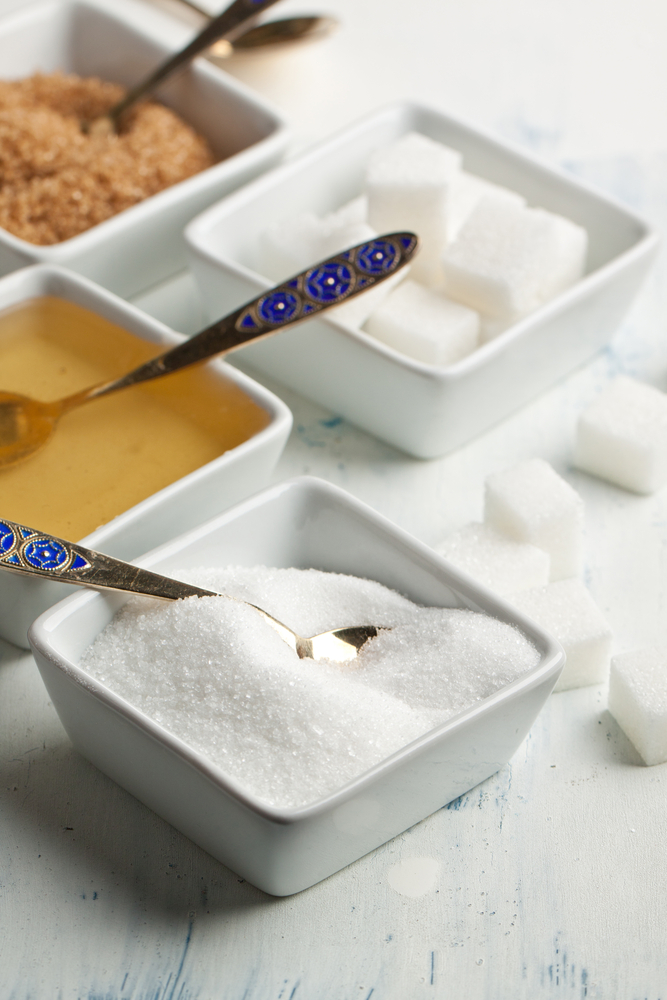
sweeteners

Saccharin is noted as being the first artificial sweetener, outside of the toxic Lead(II) acetate, and the first product to offer a cheap alternative to cane sugar.  Interestingly enough, like the Chocolate Chip Cookie, it was also discovered entirely by accident.

The chemical was discovered in 1878/9 in a small lab at Johns Hopkins University. The lab belonged to professor of chemistry and all around chemical boffin, Ira Remsen. Remsen was hired by the H.W. Perot Import Firm in 1877, primarily so that the firm could loan the use of his lab to a young Russian chemist and sugar-nerd, Constantin Fahlberg.

The H.W. Perot company wanted Fahlberg to test the purity of a shipment of sugar they’d had impounded by the US government using Remsen’s lab. Fahlberg agreed and happily conducted the tests. After he’d finished, Fahlberg continued to work in Remsen’s lab on various things, such as developing coal tar derivatives.

On the momentous day in question, after working in the lab, Fahlberg was at home about to tuck into his meal when he noticed that the bread roll he’d just taken a bite out of tasted incredibly sweet. After ruling out the possibility of the bread roll being made that way, Fahlberg came to the conclusion that he must have accidentally spilled a chemical onto his hands. Rather than immediately sticking his finger down his throat and throwing up, then rushing to a hospital, Fahlberg reportedly became positively excited at the thought of his new discovery. (Yes, the first non-toxic artificial sweetener was discovered because a scientist didn’t wash his hands after getting chemicals all over them- not unlike how the effects of LSD were discovered.)

At this point, Fahlberg didn’t know which of the many chemicals he’d been working with that day had caused the sweet taste he’d experienced. With no alternative in mind, he resorted to going back to his lab and tasting every chemical he’d left on his desk, FOR SCIENCE! (Note: Nobel Prize winner Barry J. Marshall once did something equally daring, FOR SCIENCE, when he chose to drink the bacteria he thought caused ulcers to prove that they did.)

In any event, Fahlberg eventually discovered the source of the sweet chemical, a beaker filled with sulfobenzoic acid, phosphorus chloride and ammonia. This deadly sounding cocktail had boiled over earlier in the day, creating benzoic sulfinide, a compound Fahlberg was familiar with, but had never had a reason to try shoving into his mouth before that day.

Fahlberg quickly penned a paper with Remsen describing the compound and the methods of creating it. Published in 1879, the paper listed both Remsen and Fahlberg as the compounds creators. However, just a few short years later, after realising the compound’s massive commercial potential, Fahlberg changed his mind and when he patented saccharin in 1886, he listed himself as the sole creative mind behind it. Fahlberg had also applied for an earlier patent on a method of creating saccharin cheaply and efficiently in 1884.

There is no agreed upon consensus on who exactly came up with what in regards to saccharin; some sources say Remsen wanted to be listed as a co-discovered purely because saccharin was discovered in his lab. This is supported by the fact that it’s noted that by the time Fahlberg came onto the scene, Remsen was the president of John Hopkins University and was, thus, absent from lab most of the time. Others claim Remsen was instrumental in the discovery, supported by the fact that earlier in his life he had published many papers on sulfobenzoic acids.  As for what Remsen had to say of the matter, “Fahlberg is a scoundrel. It nauseates me to hear my name mentioned in the same breath with him.”

Regardless, Fahlberg’s new artificial sweetener, advertised as a “non-fattening” alternative to sugar, was fairly successful right off the bat in the states, though it wouldn’t be until sugar shortages in WWI that it would became a widespread hit.

For those of you who are curious, the body doesn’t metabolise saccharin, meaning it has no caloric or nutritional value, unlike sugar. And for all you health conscious types- no, saccharin isn’t dangerous to humans.

This may come as a surprise considering that starting in the 1970s, and as recent as a a little over a decade ago, the widespread belief was that it caused cancer. This was despite the fact that in 1974 the National Academy of Sciences performed a review of all the studies done on saccharin and determined that there was no sound evidence that saccharin was a carcinogen and that the only studies that claimed to show it was were flawed or otherwise ambiguous in their results.

One particular flawed study from the 1970s was nearly the final nail in the coffin of saccharin when the researchers found that saccharin could lead to bladder cancer in rats.  This spurred the Saccharin Study and Labeling Act of 1977, which managed to thwart efforts to ban saccharin outright, instead simply getting it a severe warning label: “Use of this product may be hazardous to your health. This product contains saccharin which has been determined to cause cancer in laboratory animals.”

The rats in the study did indeed have a high rate of bladder tumors.  However, beyond any potential flaws in methodology, there is the obvious caveat that, while similar in some ways, rodents and humans aren’t exactly the same (shocker); so further studies needed to be done to see if the same thing occurred in humans.

What was happening with the rats is that specific attributes in their urine (high pH, high proteins, and high calcium phosphate) was, combined with the undigested saccharin, causing microcrystals to form in their bladders.  This led to damage of their bladder lining, which over time led to tumors forming as their bladders were continually having to be repaired.

Once the exact cause of the tumors was determined, exhaustive tests were done to see if the same thing was happening with primates. In the end, the results came up completely negative, with no such microcrystals forming.

Thanks to this, in 2000, saccharin was removed from U.S. National Toxicology Program’s list of substances that might cause cancer. The next year, both the state of California and the U.S. Food and Drug Administration removed it from their list of cancer causing substances.  In 2010, the Environmental Protection Agency concurred, stating that “saccharin is no longer considered a potential hazard to human health.”

The 1970s wasn’t the first time this compound came under fire. A much earlier and equally as unfounded panic occurred as a result of the Pure Food and Drug Act of 1906. Harvey Wiley, the director of the bureau of chemistry for the USDA, considered saccharin inferior to sugar and lobbied hard against it, even going so far as telling president Teddy Roosevelt that “Everyone who ate that sweet corn was deceived. He thought he was eating sugar, when in point of fact he was eating a coal tar product totally devoid of food value and extremely injurious to health.”

While he got the “totally devoid of food value” part correct, the latter “injurious to health” part wasn’t actually backed by any vetted evidence at the time (or since).

Roosevelt, who ate saccharin regularly, stated, “Anybody who says saccharin is injurious to health is an idiot.”

Needless to say, Wiley soon lost much of his credibility and his job. !!!

Bonus Fact:

  • Saccharin should technically be referred to as, “anhydroorthosulphaminebenzoic acid.” Fahlberg picked something different for obvious reasons. The name chosen, saccharin, is derived from the word, “saccharine” meaning “of or resembling sugar.”  This ultimately derived from the Latin “saccharon,” meaning “sugar,” which itself ultimately derived from the Sanskrit “sarkara,” meaning “gravel, grit.”

SOURCE:::: http://www.today i foundout.com

Natarajan