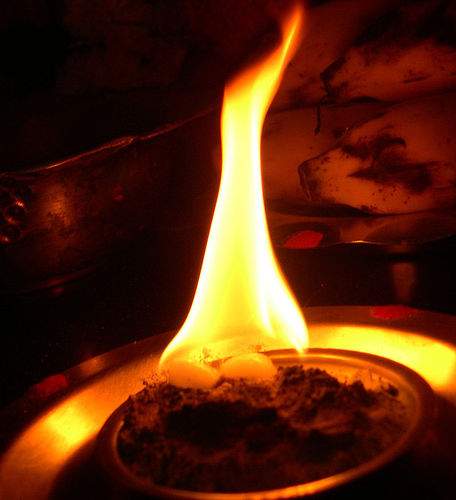
அறிவார்ந்த ஆன்மிகம்
விளக்கினின் முன்னே வேதனை மாறும்
விளக்கை விளக்கும் விளக்கு உடையார்கள்
விளக்கில் விளங்கும் விளக்காவர் தாமே!”


The distinctive Worldport terminal at New York’s JFK Airport is earmarked for demolition. It was orignally known as the Pan Am terminal, and with its flying saucer shape, has appeared in a number of films, including Live and Let Die. Its impending demise has upset many, who see it as an important relic of the air travel’s glamorous heydey, and a campaign group is fighting to have it saved.

TWA Flight Centre, JFK
Highlights: recently refurbished, stylish exterior (designed by Robert Stern) made to resemble a bird landing, impressive interior with “passenger tubes”, aviation museum.

Changi Airport, Singapore
Highlights: butterfly garden, orchids, five metre “Green Wall”, handles 46.5 million passengers a year, has won over 390 awards.

Dubai International Airport, UAE
Highlights: £3 billion Terminal 3, very cool elevators.

Madrid-Barajas Airport, Spain
Highlights: trendy Terminal 4, designed by Antonio Lamela and Richard Rogers, has won awards and is one of the world’s largest.

Samui Airport, Thailand
Highlights: relaxing departure lounge feels more like a hip bar than an airport

Marrakesh Menara Airport, Morocco
Highlights: stylish exterior covered in arabesques blends modernity with tradition

Los Angeles International Airport, US
Highlights: distinctive “Theme Building” resembles a flying saucer on four legs – a restaurant is suspended beneath

Denver International Airport, US
Highlights: Teflon-coated fibreglass roof resembles the Rocky Mountain views, artwork often displayed inside, solar powered

King Abdulaziz International Airport, Saudi Arabia
Highlights: Hajj terminal built specifically for pilgrims visiting Mecca covers 100 acres and is known for its tent-shaped roof

O’Hare International Airport, Chicago, US
Highlights: one of the world’s busiest airports, regularly voted America’s best

Wellington International Airport, New Zealand
Highlights: sleek, relaxing terminal interiors – useful as the airport is noted for crosswinds and turbulent landings.

London Heathrow Airport, UK
Highlights: Terminal 5 building (designed by Richard Rogers), Gordon Ramsay restaurant, colossal number of shops

Hong Kong International Airport, China
Highlights: built on an island, handles 53.3 million passengers annually, contains a golf course and 3D cinema

Kuala Lumpur International Airport, Malaysia
Highlights: eye-catching architecture, water fountain, free wifi

Suvarnabhumi Airport, Bangkok, Thailand
Highlights: only opened in 2006, artwork often on display, sophisticated design

Bilbao Airport, Spain
Highlights: The signature flourishes from its world famous designer Santiago Calatrava (also instrumental in the regeneration of Valencia). Look out for its curves, generous light, and a viewing gallery that allows your loved ones to see you as you collect your baggage.

Munich Airport, Germany
Highlights
The airport’s much praised glass-and-steel Terminal Two, which includes a massage room, prayer room with fir floors, and Plexiglass walls, a Bavarian deli, and even a brewery (between terminals one and two).

Incheon International Airport, Seoul, South Korea
Highlights: Built on reclaimed land, this arc-shaped construction – intended to suggest the ancient Korean temples – is the country’s largest building. Architects have noted its feeling of warmth and welcome, and there has been widespread praise of the airport’s design and clean lines. The airport has been voted best in the world several times.

Winnipeg James Armstrong Richardson International Airport, Canada
Highlights: Its main terminal was designed by world renowned architect César Pelli in association with Stantec Architecture Ltd. It was the first airport terminal to be certified for its environmental friendliness, and notable for its ultra-modern look and energy efficiency.
source:::: The Telegraph UK…
Natarajan

Indonesian workers prepare to remove the wreckage of a Lion Air jet after it crashed into the sea.
AN Indonesian salvage team is using a crane to haul seats and baggage out of a plane that crashed in Bali, as investigators probe what caused the jet to go down.
The Lion Air plane missed the runway as it came in to land on Saturday, slamming into the sea and splitting in two. Dozens of the 108 people on board were injured, but there were no fatalities.
Terrified passengers swam to shore or were plucked to safety by police in rubber dinghies. Witnesses and experts have suggested the crash could have been caused by a freak storm, although no official reason has yet been given.
The salvage team hauled the seats and baggage out of the Boeing 737-800, and were aiming to begin cutting the fuselage of the plane into pieces later in the evening, Bali army commander Colonel Anton Nugroho said.

Indonesian boys carry pieces of a Lion Air jet a day after the aircraft crashed into the ocean, at Jimbaran beach, in Bali, Indonesia on Sunday, April 14, 2013. All 108 passengers and crew survived after the new Lion Air jet crashed into the ocean and snapped into two while attempting to land Saturday on the Indonesian resort island of Bali, injuring up to 45 people. (AP Photo/Firdia Lisnawati)
However, local navy commander Lieutenant Colonel Edi Eka Susanto said the operation had to be carried out very carefully, as the plane “is not yet stable, and we fear there are still oxygen bottles inside that could explode”.
After the plane was cut up, the team planned to lift the parts by crane onto a truck, and from there they would be taken to a nearby beach, said Nugroho.
If that was not possible, then the parts would be pushed through the water using balloons to an area of coast where it was easier to lift them, he said.

This handout photo released by the Indonesian Search And Rescue Agency (SAR) on April 14, 2013 shows the aircraft cabin of a Lion Air Boeing 737 lying submerged in the water after skidding off the runaway during landing at Bali’s international airport near Denpasar.
The 70-strong team, made up of military, rescue agency, airport and Lion Air personnel, hoped to be finished by tomorrow.
The cockpit voice recorder was found wedged between a wing and the body of the aircraft on Monday, and was being flown to Jakarta on Tuesday, Masruri, from the national transportation safety committee, which is probing the crash, told AFP.

Indonesian workers prepare to remove the wreckage of a Lion Air jet in Bali, Indonesia on Tuesday, April 16, 2013. The new Lion Air jet that slammed into the sea as it tried to land on the Indonesian resort island of Bali over the weekend remains stuck in shallow water and must be cut into pieces for removal, vividly underlining the challenges facing the budget airline as it races to expand in Asia. (AP Photo/Firdia Lisnawati)
“The black box will be cleaned and checked for damage and hopefully we will be able to extract the data in it,” said Masruri, who like many Indonesians goes by one name, adding he would not comment further on an ongoing investigation.
Five passengers were still in hospital on Tuesday following the crash, said Lion Air airport service director Daniel Putut, although he said he did not have details of their conditions.

Indonesia rescuers remove the seats of a partially submerged Lion Air Boeing 737 three days after it crashed while trying to land at Bali’s international airport near Denpasar on April 16, 2013. The pilot and co-pilot of a Lion Air plane that crashed at Bali’s airport have passed initial drug tests, an official said on April 15, as investigators probe the causes of the accident that left dozens injured but no fatalities.
Government officials and the airline said at the time of the crash the weather had been fine, but the transport ministry has since said the jet flew through thick cloud and witnesses have spoken of torrential rain before the crash.
Indonesia, which relies heavily on air transport to connect its sprawling archipelago of more than 17,000 islands, has one of Asia’s worst aviation safety records.
source:::news.com.au
Natarajan
Read more: http://www.news.com.au/travel/news/so-what-happens-to-a-wrecked-jet/story-e6frfq80-1226622321516#ixzz2QhDGQT9g

Artist’s impression: Melbourne Airport’s new terminal extension.
A NEW domestic terminal at Melbourne Airport will ease congestion and help drive economic growth, the federal government says.
The terminal, capable of handling up to 10 million passengers a year, is part of the $400 million first stage development of the airport’s long-term southern precinct project.
The project, due to open in mid-2015, will include 17 new aircraft parking bays, extra car parking, ground transport facilities and road upgrades.
Approving the development on Tuesday, federal Infrastructure and Transport Minister Anthony Albanese said expanding airports is necessary to connect Australia to the world and drive economic growth.
He said increasing capacity will help the airport deal with an expected doubling of its annual number of passengers to 64 million by 2033.
“What that means is jobs and economic growth and positioning Australia in the Asian century,” he told reporters in Melbourne.
Melbourne Airport chief executive Chris Woodruff said the development will create jobs and provide a boost to the Victorian economy.
He said the expansion was driven by strong domestic passenger demand and will provide for further growth.
The works will focus on the area south of terminal 3 and around terminal 4.
source::: news .com.au
Natarajan
Read more: http://www.news.com.au/travel/news/new-melbourne-airport-terminal-approved/story-e6frfq80-1226622194511#ixzz2QhAfHtaT

All four of the world’s top pink diamonds have been found at Golconda…
One of the largest pink diamonds in the world has been sold at auction for more than $39.3m (£25m).
The Princie Diamond was purchased by an anonymous collector bidding by phone, Christie’s in New York said.
The 34.65 carat diamond’s origin can be traced back to the ancient diamond mines of Golconda in southern India.
It once belonged to the royal family of Hyderabad, rulers of one of the wealthiest provinces of Mughal India.
“The Princie Diamond carries a fabulous provenance, which brings together the legendary names of Golconda, [the] Nizam of Hyderabad, and the Maharani Sita Devi of Baroda,” said Christie’s jewellery department head Rahul Kadakia before the sale.
“The most beautiful stones discovered in Golconda were always reserved for kings and rulers as they represented the highest power, which was then magically transferred to the owner.
“It was a widely regarded belief that God’s gift to India became India’s gift to mankind and the Princie is undoubtedly one of the greatest gifts of Golconda.”
The diamond was once owned by the Nizam of Hyderabad, who was proclaimed the richest man in the world by Time magazine in 1937.
It had not seen in public since 1960 when Sotheby’s sold it as the “property of a gentleman”.
All four of the world’s top pink diamonds have been found at Golconda, Christie’s says. The area has the earliest known diamond mines in the world, producing the stones as early as 800BC.
In 2010 a diamond known as the Graff pink was sold in Geneva by Sotheby’s for $44m. At the time it was believed to be the most expensive gemstone bought at auction in history.
The two largest pink diamonds – the Darya-I Nur, weighing 175 to 195 carats, and the Nur ul-Ain, weighing about 60 carats – originally formed part of the Iranian Crown Jewels.
Experts say it has since been determined that they were cut from a single pink diamond weighing 242 carats.
Christie’s say that the Princie Diamond is believed to be the third largest pink diamond in the world and was found 300 years ago in the Golconda mines.
SOURCE:::bbc.com.news
Natarajan
|
Do not be carried away by the modern day talk of establishing absolute equality. Each one has a certain corpus of intelligence and a peculiar bundle of instincts, impulses and past impressions (vasanas). The more you divert or diminish their impact on you, greater the achievements. Use all chances you have to develop good health, skills and character. That is your highest duty. Seize every chance to serve the sick and needy with love. Do not by any action of yours, cause pain to another, nor suffer pain yourself by foolishness or sheer bravado. Make lasting friendships with good and the noble. Honour elders and women. Treat women with the highest respect. By honouring women, you bring honour to yourself and your society. Respect for women is the mark of real culture. |
Singapore’s Changi Airport is a major hub for international transport, with more than 135,000 passengers passing through every day.
But it’s no boring airport terminal. Changi was just named the Best Airport in The World by Skytrax, a company that tracks and rates airline and airport performance.
Realizing that travel can be stressful, the team behind Changi designed the airport to be an open, airy space with lots of greenery (Singapore is the garden city, after all), gardens, outdoor access, and comfortable seating areas.
There are also incredible amenities, like a butterfly garden, rooftop pool, movie theaters, hotels, spas, and showers, and even a four-story slide.


There’s also a lush vertical garden here called the “Green Wall.” It has over 20 varieties of plants, vines, and flowers growing on it.

It’s easy to get between terminals on the Skytrain.
One of the best things about Changi airport is its Balinese-themed outdoor rooftop pool, located in Terminal 1. Passengers can pay to use this pool for about $14. (It’s free for guests who are staying in the Ambassador Transit Hotel.)

You can watch planes take off and land directly from the pool garden.

The pool also has its own Tiki bar.

And its own fitness center (along with locker rooms, where you can shower after).

Each terminal has an Ambassador Transit Hotel, where passengers can rent hotel rooms for a minimum of six hours — perfect if you’re exhausted and have a long layover. Room rates start at $76 for a 6-hour block and are charged hourly after that.

Rooms here look like normal hotel rooms, with two twin or one double bed, bathrooms, TVs, and desks. Some rooms have windows that look out onto the tarmac.

The airport has a nature trail, which encourages passengers to go outdoors and breathe in fresh air while at the airport. There are five gardens in the airport, including a rooftop sunflower garden.

There’s even an enclosed butterfly garden — the first such garden in an airport — which is home to butterflies, flowers, lush greenery, and a 6-meter (20-ft.) waterfall.


When you’re tired of eating, drinking and shopping, you can watch a movie. There are two movie theaters in the airport, which show a rotating roster of current movies, like the Bourne Legacy.

Kids will love the awesome four-story, 40-ft. slide.
As will adults. If you spend $10 at any airport venue, you’re eligible to ride the slide.

The whole airport is designed to help people relax and to make the flying experience less stressful. You’ll find seating areas scattered throughout the airport with cushy chairs for napping, reading, or TV watching. The chairs were really comfortable.


source:::::businessinsider.comnet
Natarajan
Darryl’s Beatiful Flowers
Darryl Trott got his first watercolor paints for Christmas at age six. Since then, he has never stopped painting with them. He has achieved a feel and flow with his paintings that no other medium can really achieve. unfortunately, he died a few years ago, leaving us this beautiful artwork to remember him by.
Casablanca Lillies

Cherished

Harvest Of Spring

Iris Summer

Cascade Of Beauty

Opening Night

Awaking Fragrance
e
Dazzling Dhalias

Springtime Medley

Heart of Tropics

Tropics Alive

TBA

Crown of The Amazon

source:::: BABAMAILNET
Natarajan